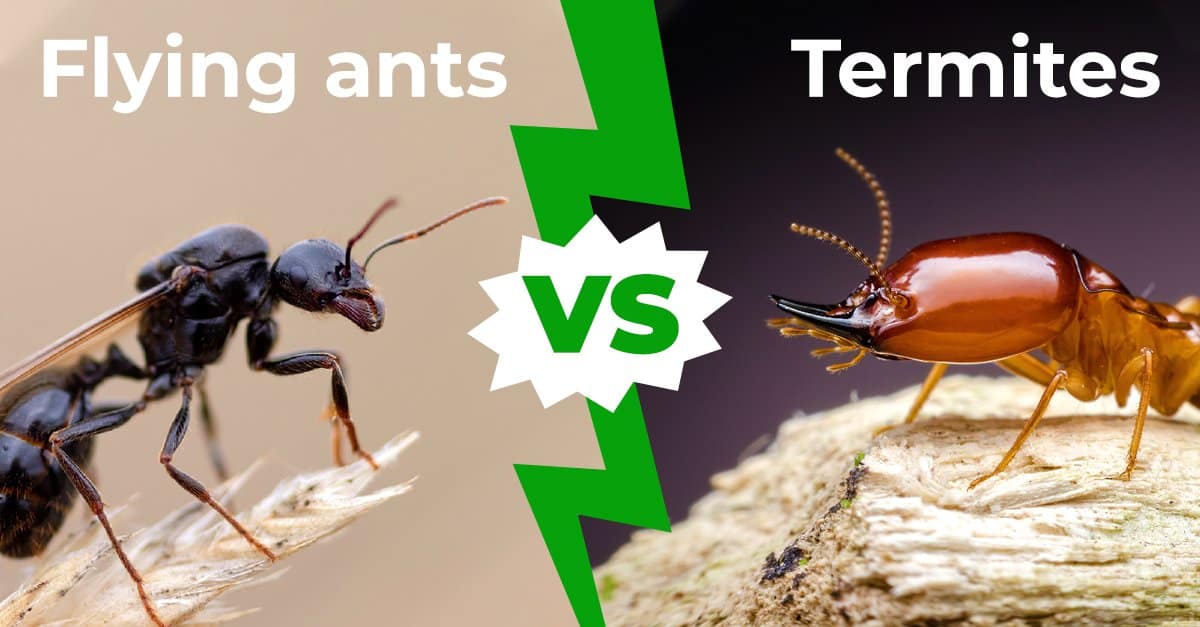

Flying ants and termites are often mistaken for each other during their flying stages. Even before they sprout wings, ants and termites dwell in the same habitats and can appear to be the same shape and color at first glance. However, they are two separate types of insects. Flying ants and termites have vastly different wings, as well as distinct antennae and abdomens. In many termite species, the king and queen form long-term pairs, while male ants typically die shortly after mating. Continue reading to discover the differences that separate flying ants from termites.
Termites vs. Flying Ants
Although flying ants and termites both fly, they are not typical flying insects; they only fly when mating and leaving to start new colonies. Flying ants are simply ants that have developed wings for this purpose. However, despite their similarities, there are key differences between the two:
| Termites | Flying Ants | |
|---|---|---|
| Size | Up to 1 inch long | Between 0.1 and 1.5 inches, with most species much smaller |
| Location | Every continent except Antarctica | Everywhere except Antarctica, Greenland, Iceland, and some small island nations |
| Color | White, dark brown, or black | Red, reddish-brown, or black |
| Antenna | Straight | Bent |
| Wings | Both pairs equal size and length, approximately twice the length of their body | Wings are proportionate to their body, second pair much smaller than first pair |
| Abdomen | Broad, straight abdomen | Thin abdomen, pinched waist |
| Diet | Dead plants and trees | Leaves, seeds, nectar, and small insects |
The 6 Key Differences Between Flying Ants and Termites
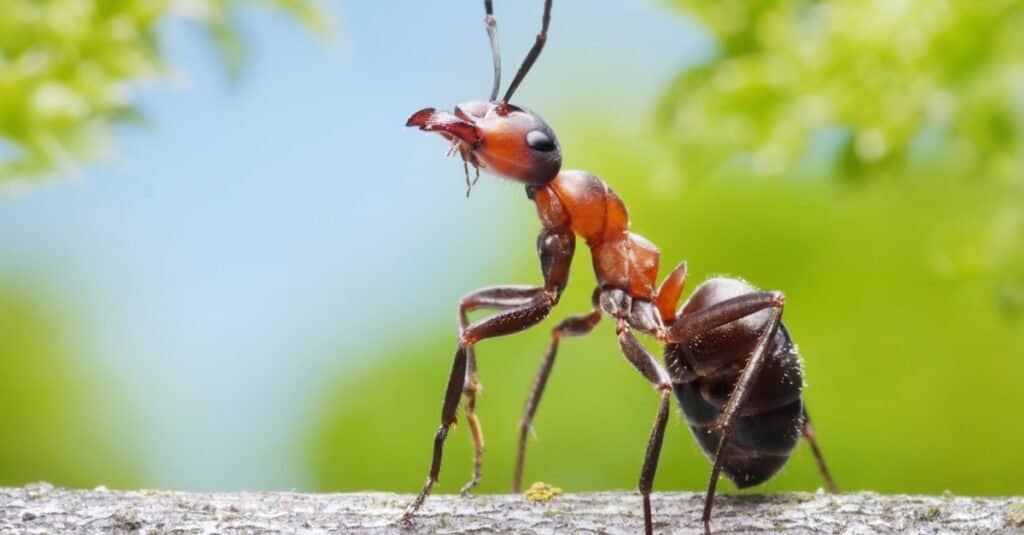
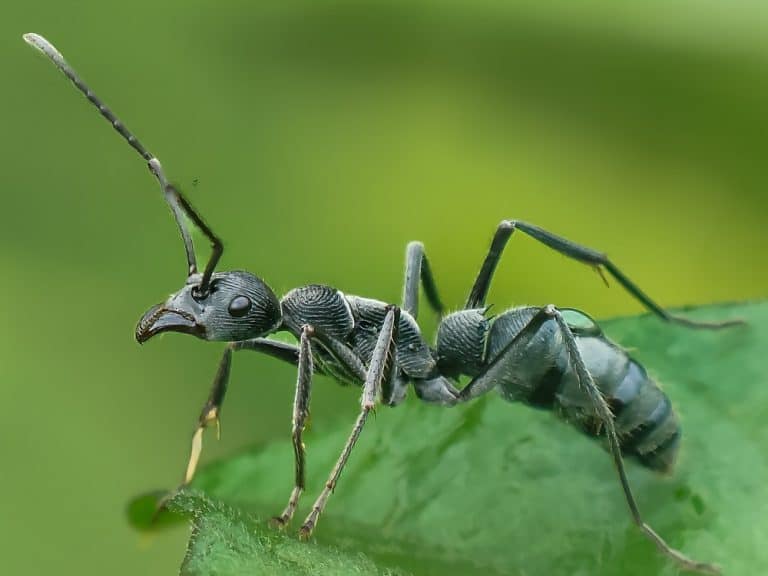
Ants grow wings to mate and create a new colony.
©iStock.com/Antrey
Flying Ants vs. Termites: Size
Termites can range in size from one-eighth of an inch up to one inch long. The size of flying ants depends on the species, but they usually range between 0.1 and 2 inches long, although some can be larger.
Flying Ants vs. Termites: Color
Termites are usually a creamy white, dark brown, or black color. Flying ants are generally red, reddish-brown, or black.
Flying Ants vs. Termites: Antenna
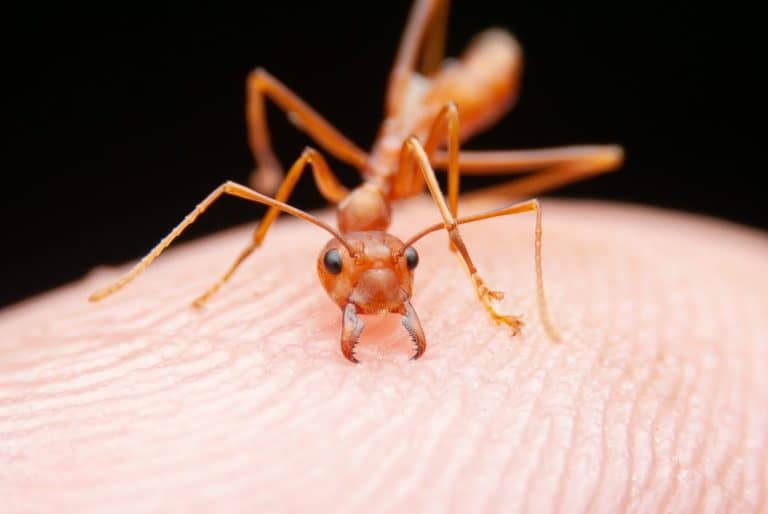
One of the main differences between flying ants and termites is the difference in their antennae. Termites have straight antennae while flying ants have bent antennae, which look like they have elbows.
Flying Ants vs. Termites: Wings
The biggest and most noticeable difference between flying ants and termites is in their wings. Although both have two pairs of wings, they differ vastly in size. Termites have large wings that are approximately twice the length of their bodies. Both pairs are the same size and length. Flying ants have wings that are more proportionate to their body size, but their second pair is much smaller than the first.
Flying Ants vs. Termites: Abdomen
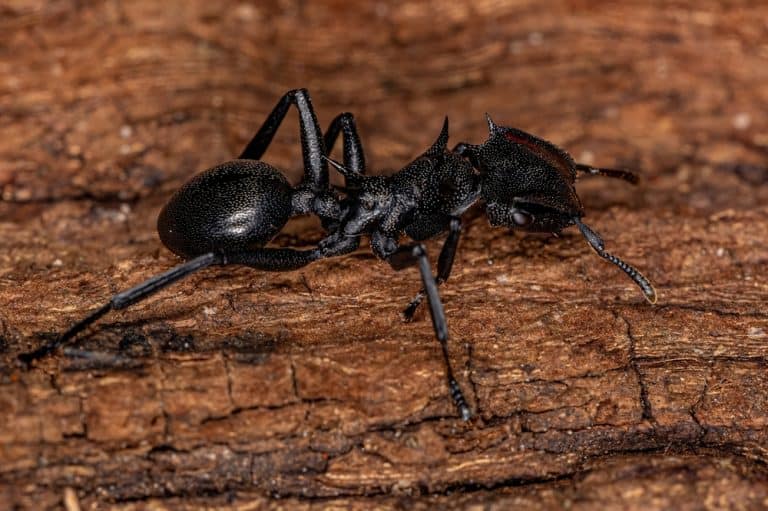
Another noticeable difference is the appearance of their abdomens. Termites have a broad, straight abdomen, while flying ants have a thin abdomen and a pinched waist.
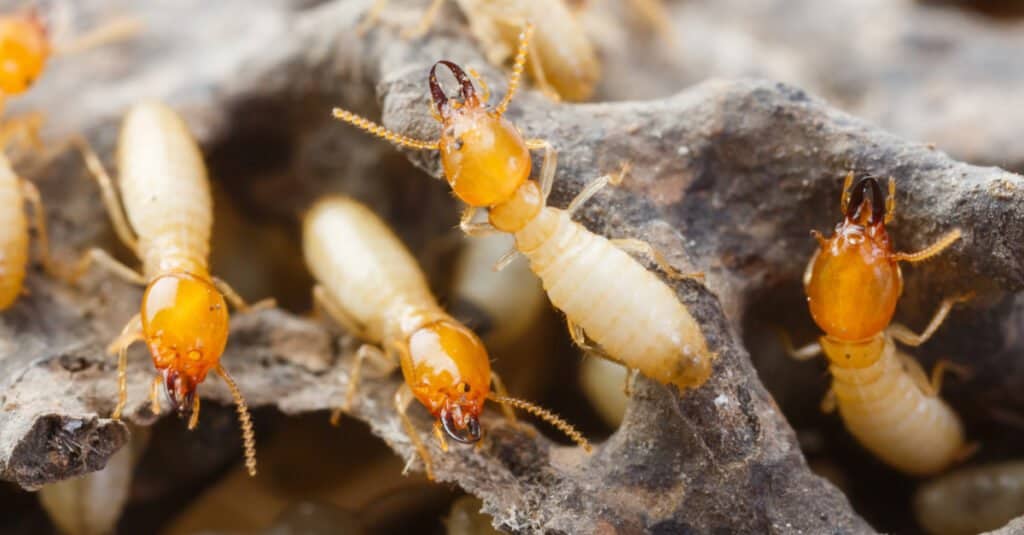
Termites have round-shaped abdomens
©7th Son Studio/Shutterstock.com
Flying Ants vs. Termites: Diet
Termites are detritivores, which means they feed on dead plants and trees, although wood makes up the majority of their diet. They get their nutrients from cellulose, which is found in wood and plants. Flying ants eat a range of leaves, seeds, nectar, small insects, and spiders.
Frequently Asked Questions
Are termites and flying ants related?
No, although they are both insects, they are not closely related. Flying ants are of the order Hymenoptera, a large group of insects that includes wasps and bees. Termites are from the order Blattodea, which includes termites and cockroaches.
Are flying ants just ants with wings?
Yes, flying ants are essentially just ants with wings. They are males and young queens who are setting off to start a new colony. This allows the queens to mate with males from a different colony. These winged individuals are known as alates. The wings usually develop over a few weeks, turning ants into flying ants. Once they have their wings, flying ants take to the air to search for a mate. Mating usually occurs in the air, a process known as the nuptial flight. Once they have successfully mated, queens usually chew off their wings and begin to search for a suitable spot to nest and begin a new colony. Males only exist for mating and generally die a couple of days later.
Do flying ants and termites live in the same habitat?
Yes, they both live in similar habitats. Termites can nest either underground, in tree stumps, in treetops, or in any structure that is made from wood. The individual species of ant determines exactly what habitat they live in, but flying ants are usually found in and around trees and vegetation. However, it’s important to remember that flying ants only have their wings for a short time and spend most of their time looking for a mate.