
Quick Take
- The great white wasn't being aggressive. It was doing something sharks do far more often than anglers realize. How depredation works →
- The real danger in this video may not be what viewers first assumed. Assess the real risk →
- Sharks circling boats aren't behaving randomly. They're responding to something most people never notice. Why sharks circle boats →
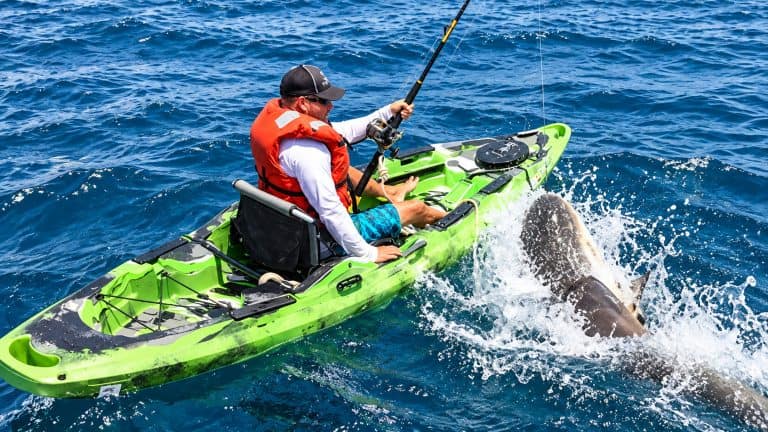
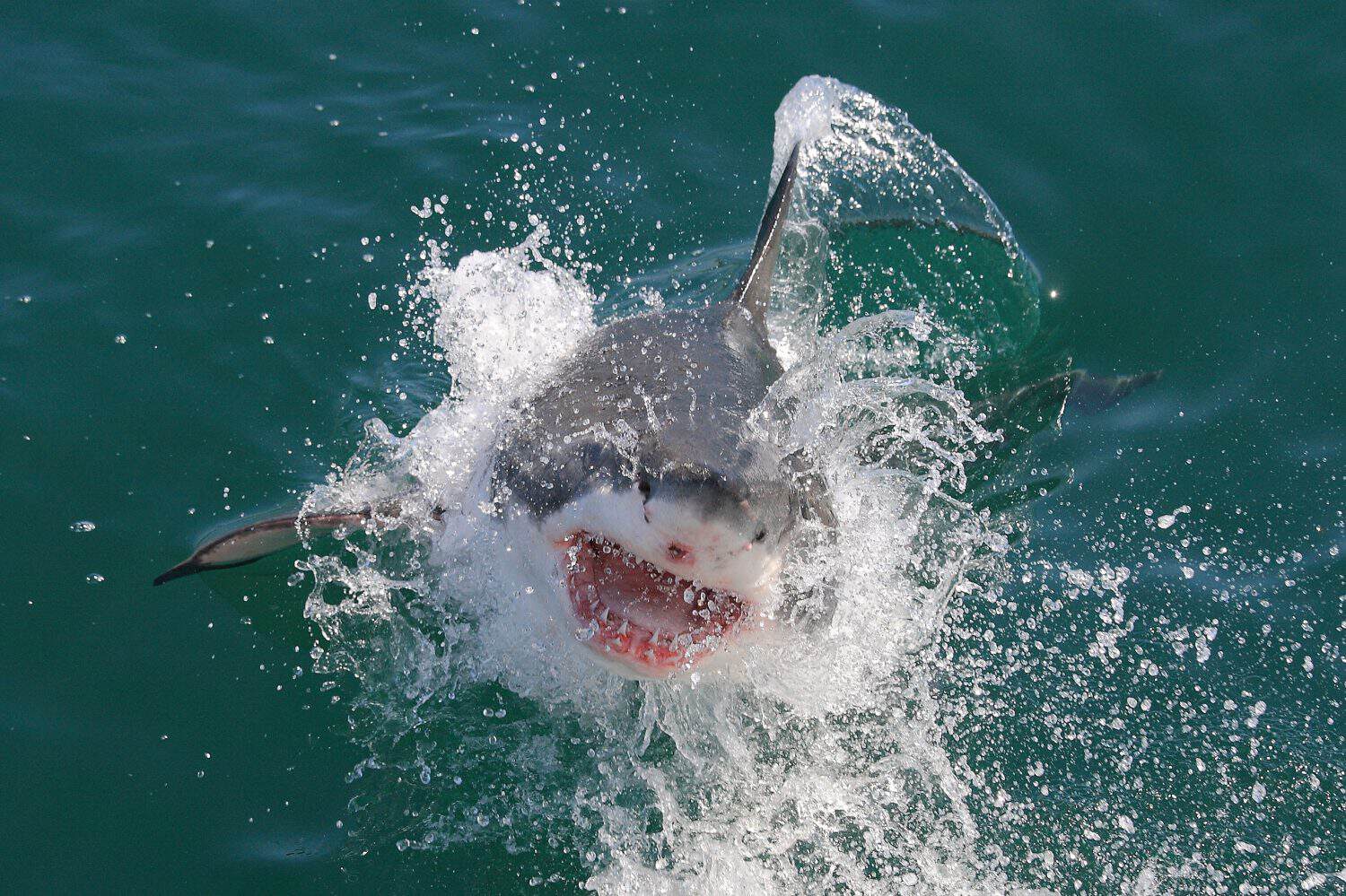
Anglers fishing in great white territory might have some competition. This Instagram reel, shared by @whitesharksweekly, shows just how competitive these apex predators are. The fishermen in the video may have been jazzed about catching a huge tuna, but they simply weren’t quick enough. All it takes is one leap from this great white to snag its next meal.
But is this behavior common? And were the anglers on this boat in any danger?
Continue reading
Great White Sharks Hunt Using Depredation
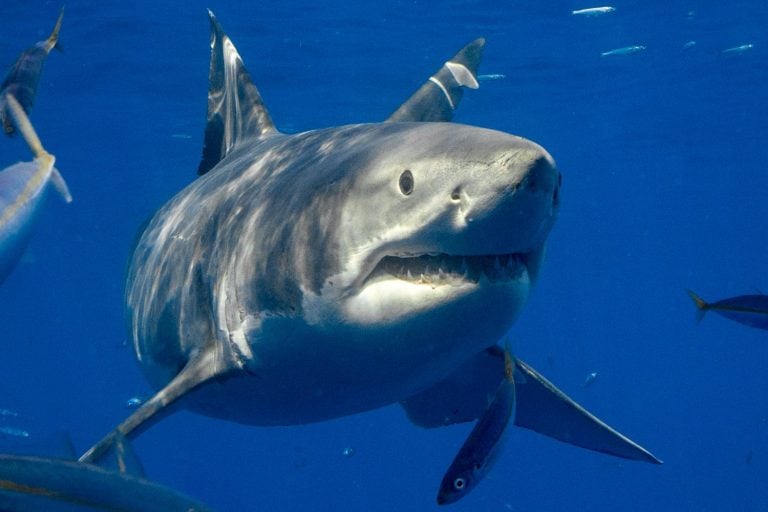
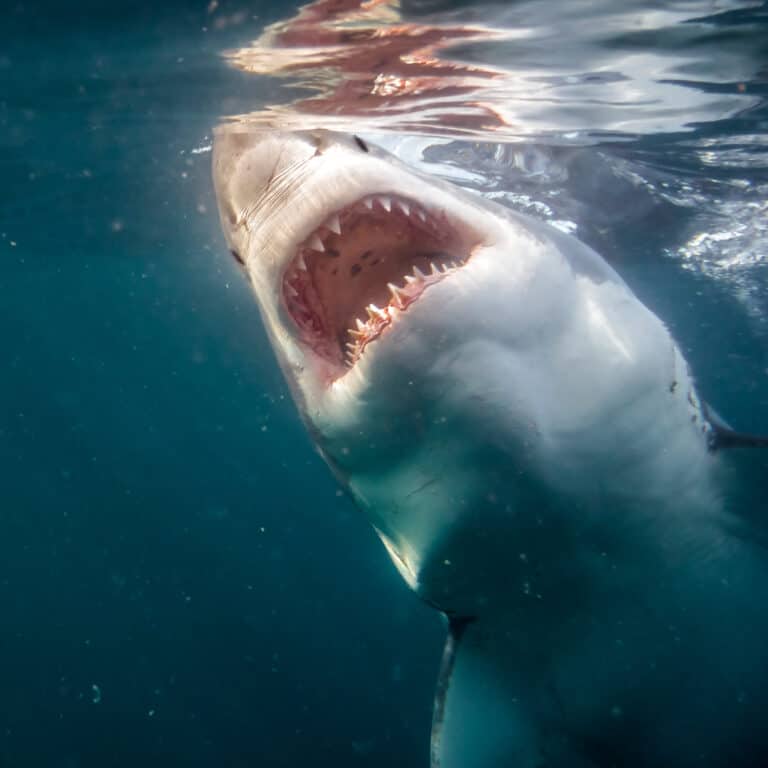
A great white’s size and strength make it a skilled hunter. It glides through the water effortlessly and is agile enough to surprise its prey, delivering a bite force estimated at up to 1,800 PSI. While its hunting prowess helps it survive, great whites sometimes prefer an easy kill.
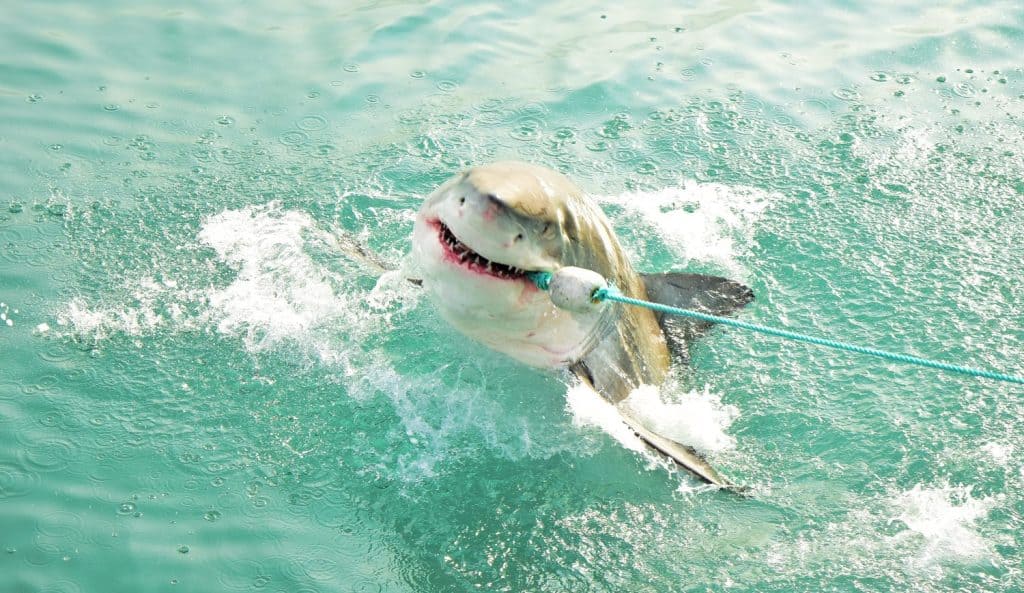
It’s not unusual for a shark to consume bait or a fish on the end of an angler’s line.
©Wirestock Creators/Shutterstock.com
As opportunistic hunters, they also find ways to get a free meal, such as feeding on whale falls, carrion, and, in some cases, angler bait and catches. That makes the struggling tuna from this video the perfect opportunity for a speedy shark.
This behavior is known as depredation, which occurs when a great white seizes the opportunity to prey on an easy target. In this case, an injured tuna caused enough commotion to catch the attention of the great white, which launched its attack. Ultimately, the shark was successful, swimming away with the fishermen’s catch of the day.
Is This Dangerous to Fishermen and Anglers?
There’s no denying that this video is jarring. The great white gets within inches of the boat before crashing back into the water, as all the anglers move back. The great white had one thing on its mind: the tuna in front of it. Contrary to popular belief in the media, great whites do not have an agenda. This one was not out to attack the anglers on the boat and was simply following its instincts toward a struggling fish.
The greatest danger was likely being too close to the shark as it breached the water. Falling off the boat would not necessarily have attracted the shark’s attention, but fortunately, sharks do not typically view humans as food. Most bites are a case of mistaken identity or curiosity. Great whites are also highly intelligent and extremely methodical when attacking prey.
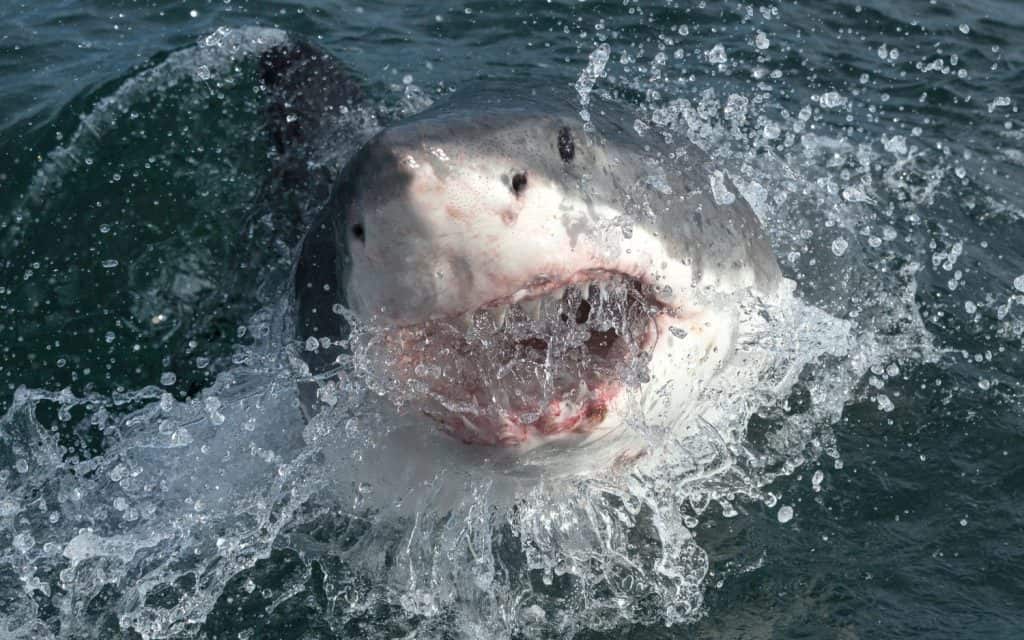
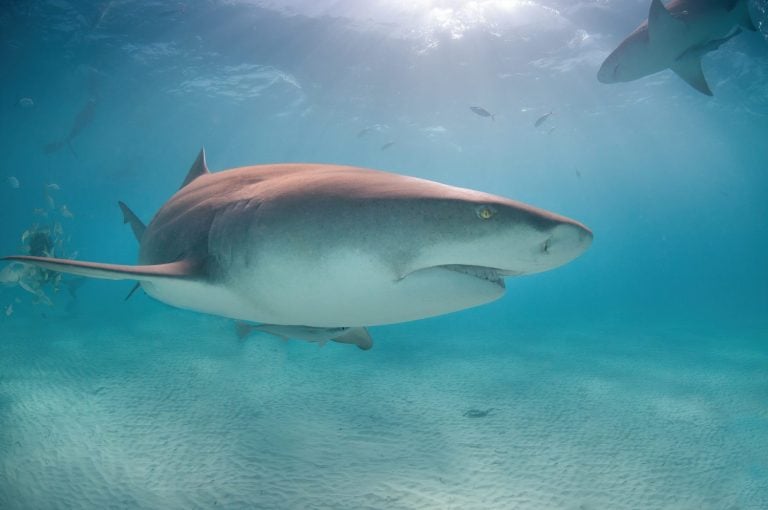
As opportunistic hunters, great whites take food where they can find it.
©Sergey Uryadnikov/Shutterstock.com
Although this behavior gives them a reputation for being vindictive and malicious, their true nature is quite the opposite. They are calculated hunters and typically won’t risk biting down on something that poses a threat. The reality is that depredation happens more often than most people realize. Sharks are typically drawn to boats by following the frequency of those vibrations. Sometimes, like in this case, they end up with a free meal.