
Nature creates incredible works of living art through its many different animal patterns, such as a leopard’s spots or a zebra’s stripes. But how do animals get these unique designs, and why are no two patterns ever exactly the same?
New research from the University of Colorado Boulder may provide the answer. Using advanced simulations and a brand-new model, researchers discovered that genetics is not the only factor determining these patterns. Instead, the secret lies in how cells move and interact in irregular and beautifully imperfect ways.
Turing’s Foundational Model
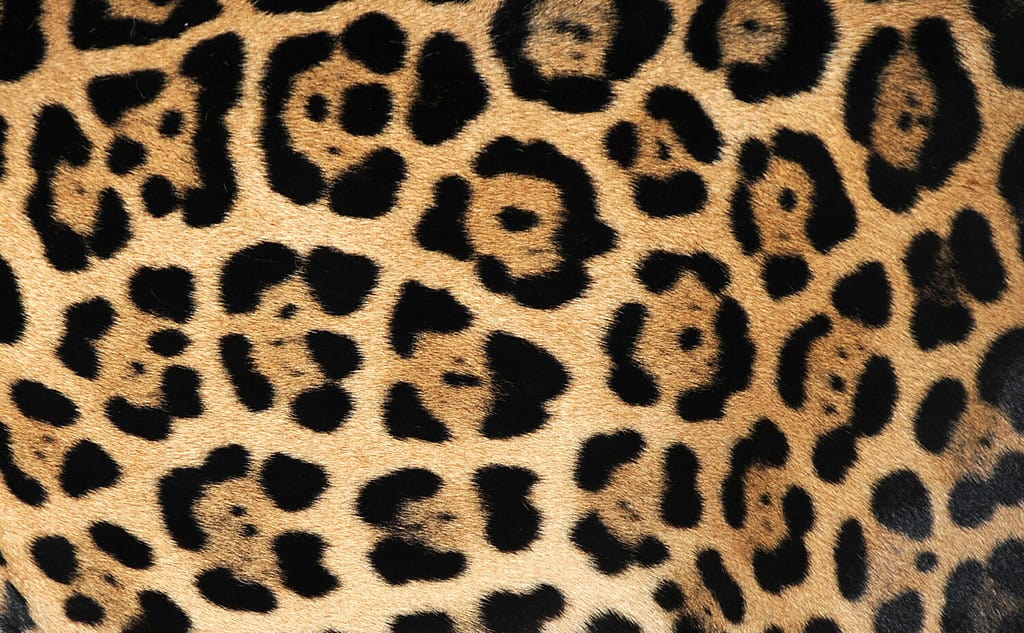
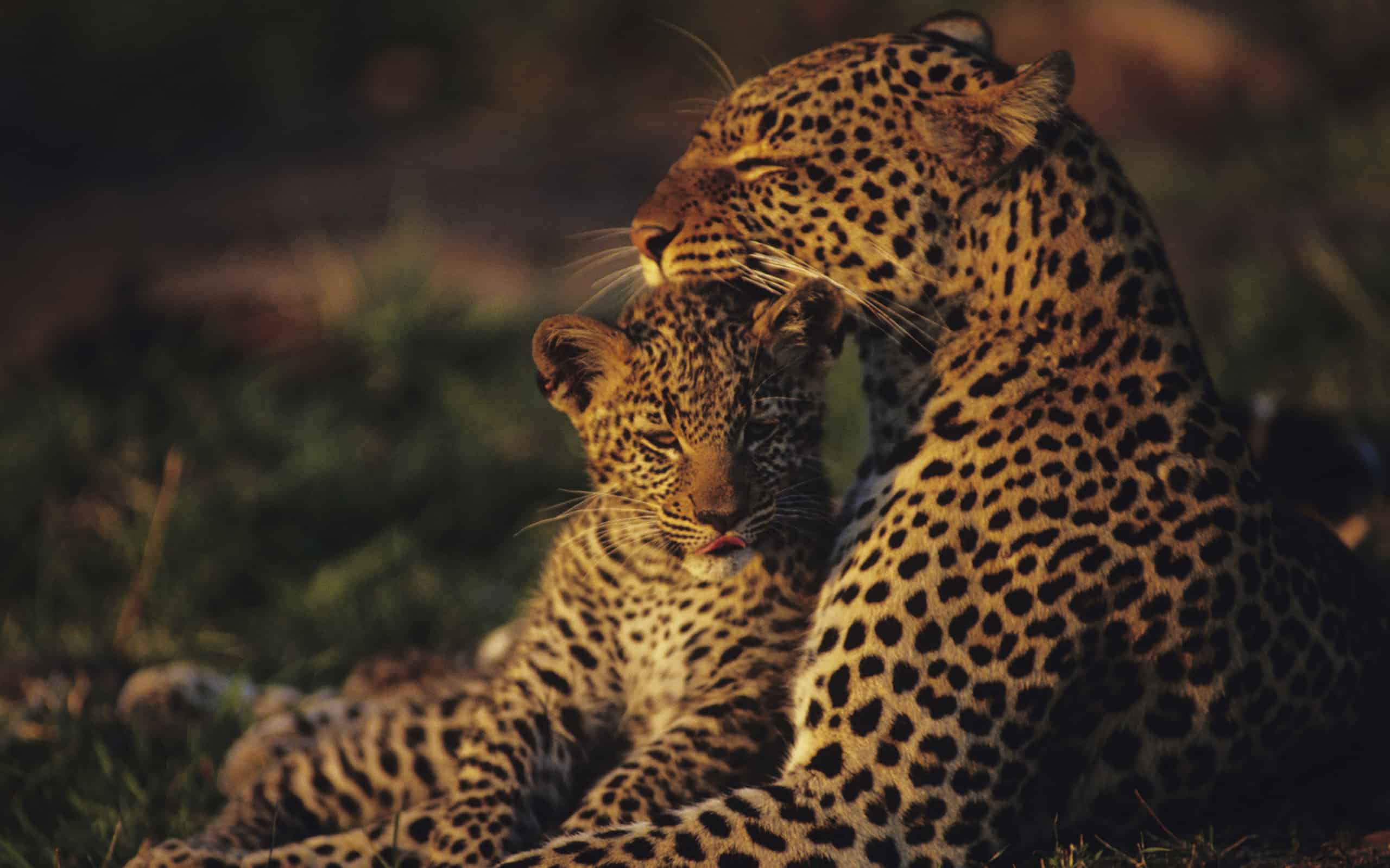
The rose-like spots on a jaguar’s coat are called rosettes.
©worldswildlifewonders/Shutterstock.com
For decades, scientists have relied on Alan Turing’s 1952 mathematical model to explain how animals develop their striking patterns. His reaction-diffusion theory suggests that two different chemical substances, called morphogens, spread out or diffuse through the developing tissue at different speeds. One chemical encourages pigment production, while the other blocks it.
The resulting push and pull between the two chemicals creates waves of high and low concentrations. These growing waves eventually define the final pattern—whether it’s spots, stripes, spirals, or even hexagons—with darker or lighter spaces in between. Although the mathematics of Turing’s model worked, the resulting patterns were blurry and more diffuse than those found in nature.
Adding Movement with Diffusiophoresis
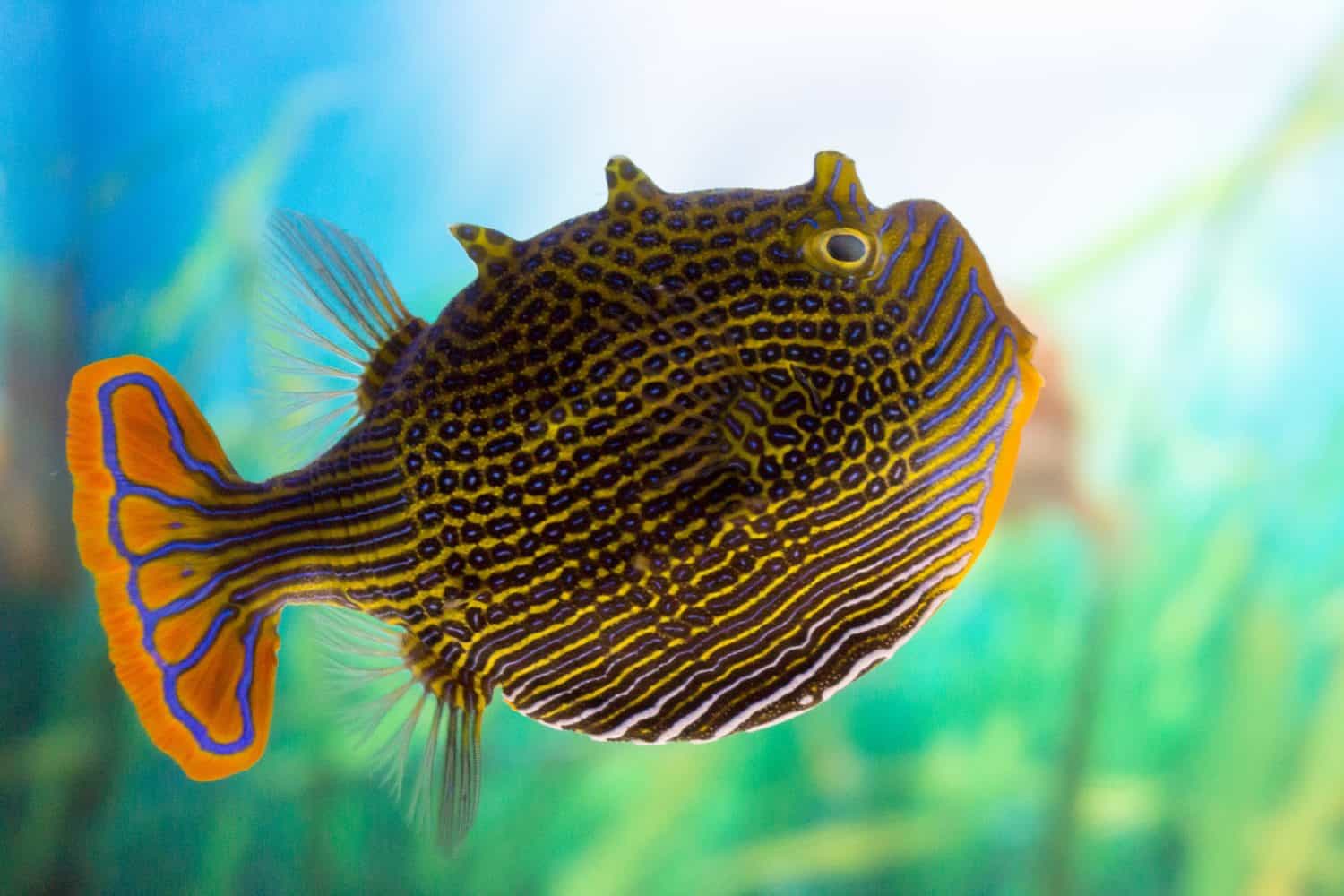
The ornate boxfish is endemic to Australia.
©wasilisa/Shutterstock.com
In 2023, physicists from the University of Colorado Boulder introduced what they felt was the missing piece to bridge the gap between Turing’s perfect math and nature’s more chaotic reality: diffusiophoresis.
Diffusiophoresis explains how physical objects, such as pigment-producing cells, are subtly moved by chemical gradients in the tissue, much like how currents move objects in water. These currents physically push and pull the pigment cells into new locations as the animal grows.
When researchers added this diffusiophoresis mechanism to the reaction-diffusion equations, the results immediately became sharper and more realistic. The new simulated patterns began to show features seen in real animals, such as the crisp hexagonal markings on an ornate boxfish (Aracana ornata).
However, even with diffusiophoresis included, the simulation results were still too uniform. The spots were all the same size, and the lines were spaced with near-perfect geometric precision. The patterns’ incredible consistency made them look artificial and computer-generated, which is the opposite of the organic, beautifully variable patterns we see in nature.
How Nature Embraces Imperfection
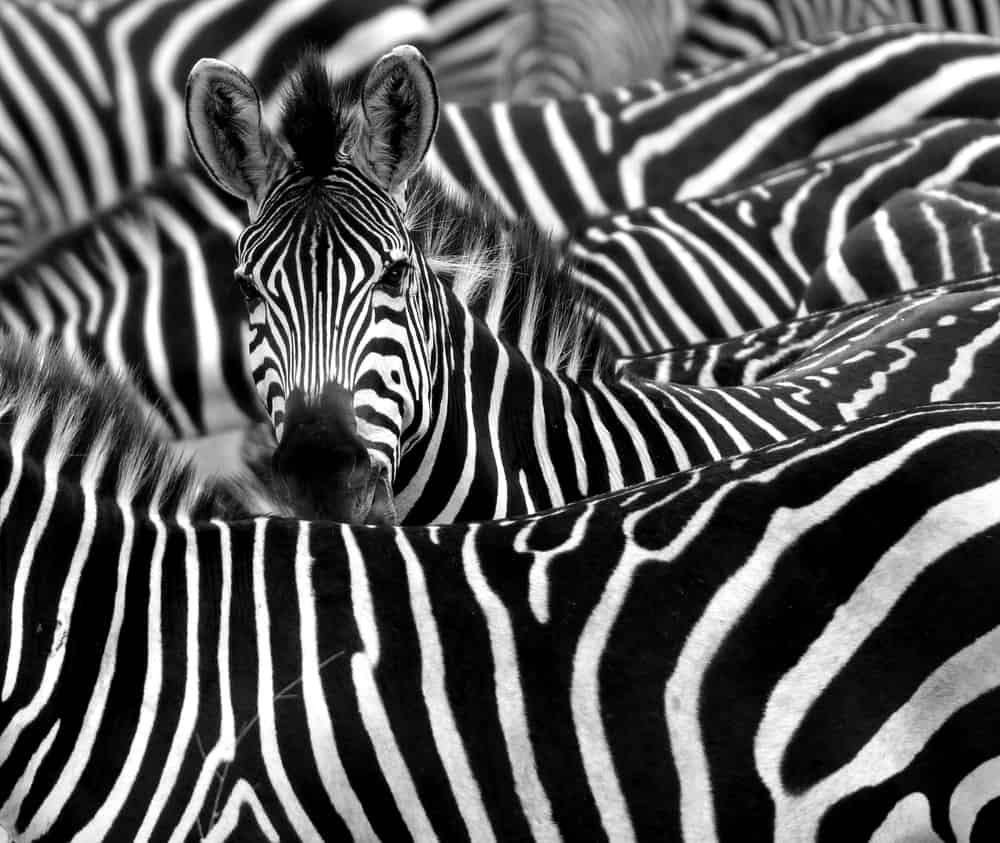
Similar to a human fingerprint, every zebra’s striped pattern is unique to that individual.
©Chantal de Bruijne/Shutterstock.com
The latest research, published in Matter in October 2025, has finally addressed the issue of perfection and uniformity in simulating natural patterns. This time, researchers moved beyond the old models and simulated realistic cell behavior.
Instead of treating the developing skin as a static, smooth surface, the researchers gave their virtual cells individual characteristics. They programmed each cell with its own size, movement patterns, and subtle physical quirks. The new simulation included cells that pushed, shifted, and expanded in slightly irregular ways, much like real animal cells.
This time, the results were much more organic. The model shifted from producing mathematically perfect lines to patterns that closely mirrored those found in nature. Stripes wavered and broke apart, while spots naturally varied in their size and spacing. The new model could even create tiny imperfections, mimicking the nearly imperceptible quirks found in real fur or fish scales.
Essentially, the new model put an end to generating static, perfect designs and began producing living patterns that evolved and changed. This final refinement—accounting for the random movement and non-uniformity of individual cells in nature—successfully generated the curved, broken stripes of a zebra and the varied spots of a jaguar.
This suggests that imperfection is not a flaw — it is fundamental to how nature builds and organizes life. Evolution also appears to favor irregularity. Uneven stripes and asymmetrical spots are not mistakes — they often enhance camouflage and improve recognition within species. Variation itself can help increase a population’s overall adaptability.
How Studying Animal Patterns Fuels Innovation

Animal skin patterns have influenced medical applications and targeted treatments.
©angellodeco/Shutterstock.com
Understanding how animal patterns form has wide-ranging applications beyond simple aesthetics. Similar mathematical principles used to model coat patterns on animals are also applied to understand complex biological processes, such as how skin wounds heal.
Beyond biology, these insights are also driving advances in technology. Engineers are already using these principles to create adaptive fabrics, optoelectronic skins, and self-organizing soft robots. A deeper understanding of natural pattern formation could lead to further breakthroughs in areas such as color-changing materials, advanced camouflage, and more efficient medical treatments.