
Many people have experienced seeing a swarm of bees. It may have been in the form of thousands of bees flying in the air at one time or seeing the swarm as it lands. The process is both mesmerizing and a bit frightening to witness. But why do bees swarm the queen?
Why Bees Swarm the Queen Bee
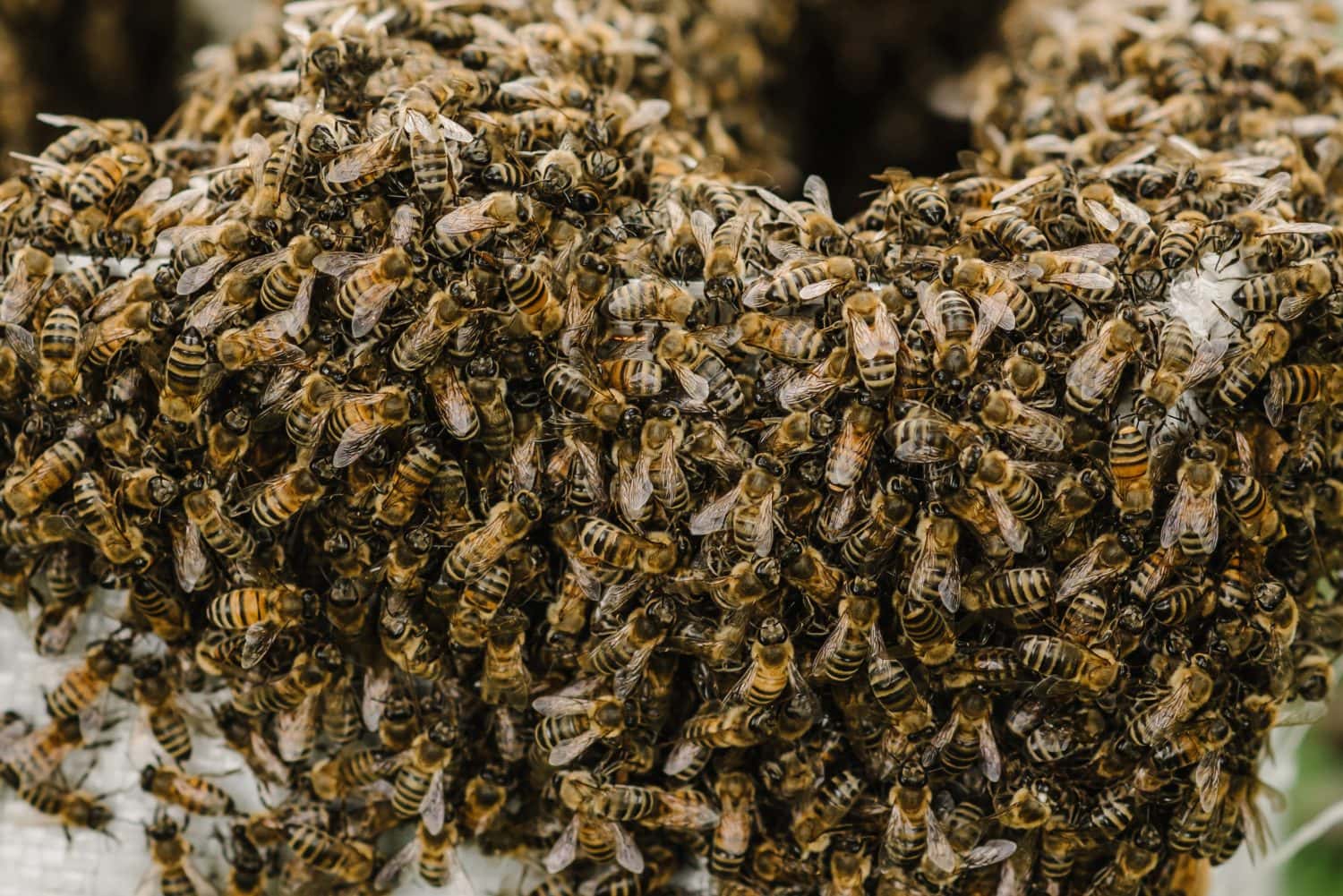
Bees swarm the queen when it is time to create a new colony.
©Sergii Sobolevskyi/Shutterstock.com
Bee swarming is a natural process that occurs with some species of bees. Swarming allows bee colonies to spread out, preventing any single colony from becoming too large and struggling to survive. The swarm can look dangerous when it lands, but, in most cases, if the swarm is left alone, it will not seek out people or animals to attack.
A YouTube video posted by @TropicalForestBees, shows the process of swarming. In the video, the queen bee is placed in a spiral cage where the worker and drone bees cannot get to her. However, within a short period, multiple bees begin to fly to the queen bee, forming a swarm.
The video does not specify whether the queen bee was originally from the colony or if the bees were searching for a new queen and colony to join. It is clear that the queen bee is releasing the necessary pheromones to attract the bees to create a healthy and strong colony, capable of reproduction.
Swarming will only happen when the colony becomes too large to sustain comfortably. As the colony becomes crowded and resources are harder to come by, the queen bee will decide the time to move on. She becomes heavy as she carries eggs destined to become the next generation of queens. After laying these eggs and losing some weight to make flying easier, she and about half of the colony will leave the nest, allowing a new queen to take over the original colony.
What Happens When Bees Swarm?
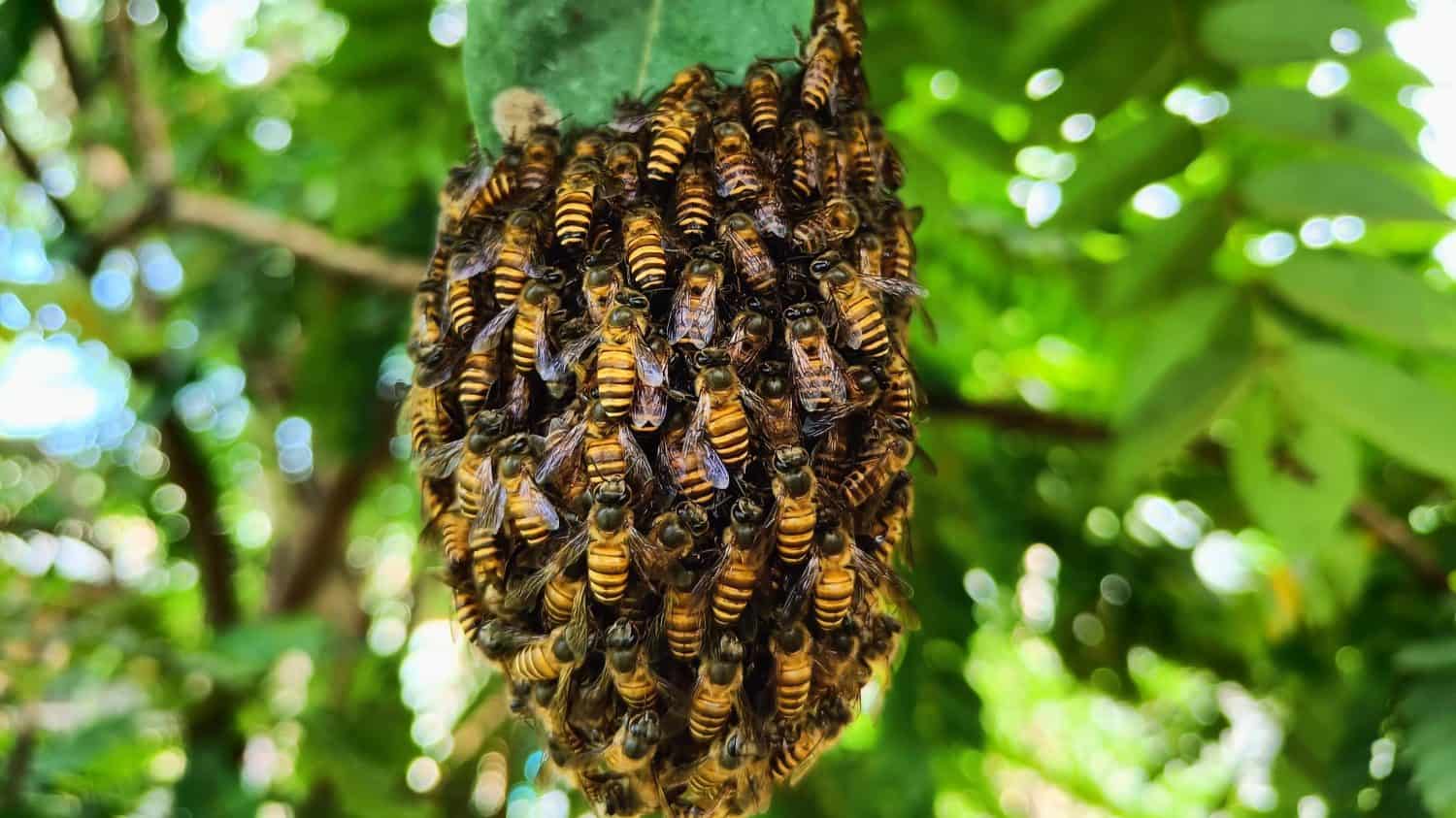
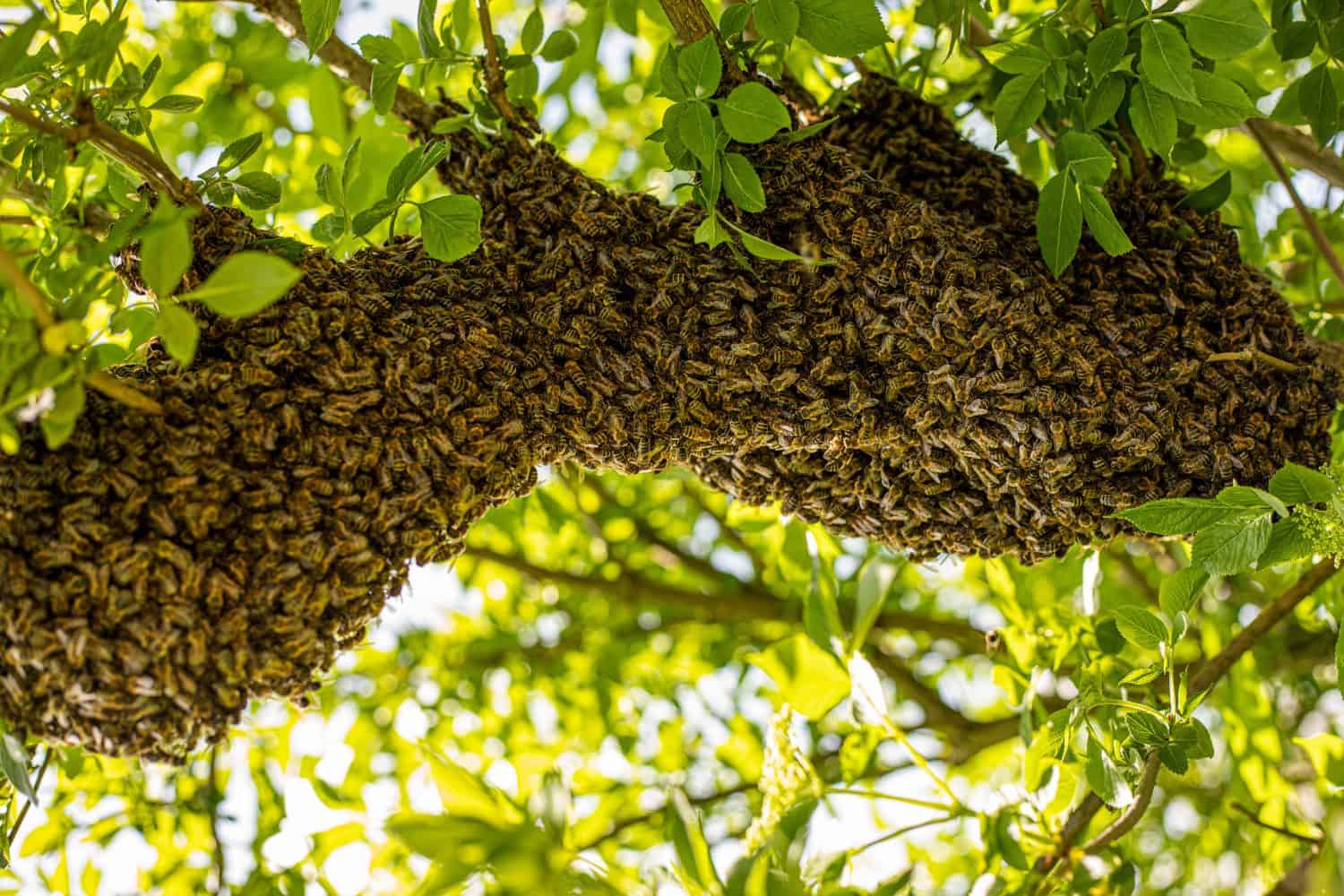
Bees swarm the queen by surrounding her when in flight and when landing before finding a permanent new place for a colony.
©FRESHTIO IMAGERYgw28/Shutterstock.com
As the process of swarming begins, the queen bee will lay her eggs to provide a new queen for the existing colony. Once the eggs have been laid, the queen is heavier than she normally would be. This makes it difficult for her to fly short distances, let alone long ones. Consequently, the queen bee’s diet is significantly reduced by the worker bees. This helps her lose the necessary weight before the swarm flight begins.
Even with the queen bee losing weight, she still cannot fly long distances. With each bit of progress, the queen bee is placed in the center of the swarm. This protects the queen bee from both predators and the elements. As the majority of the colony rests, scout bees will go off and look for locations where the colony can live. Once the location is chosen, the worker bees will again surround the queen until she safely makes it to the site of the new colony.
As the new colony is created, the queen will regain her strength, where she will find drone bees to reproduce with, growing the colony and potentially growing it to the size it originally was before swarming began.
A New Queen Bee Is Chosen
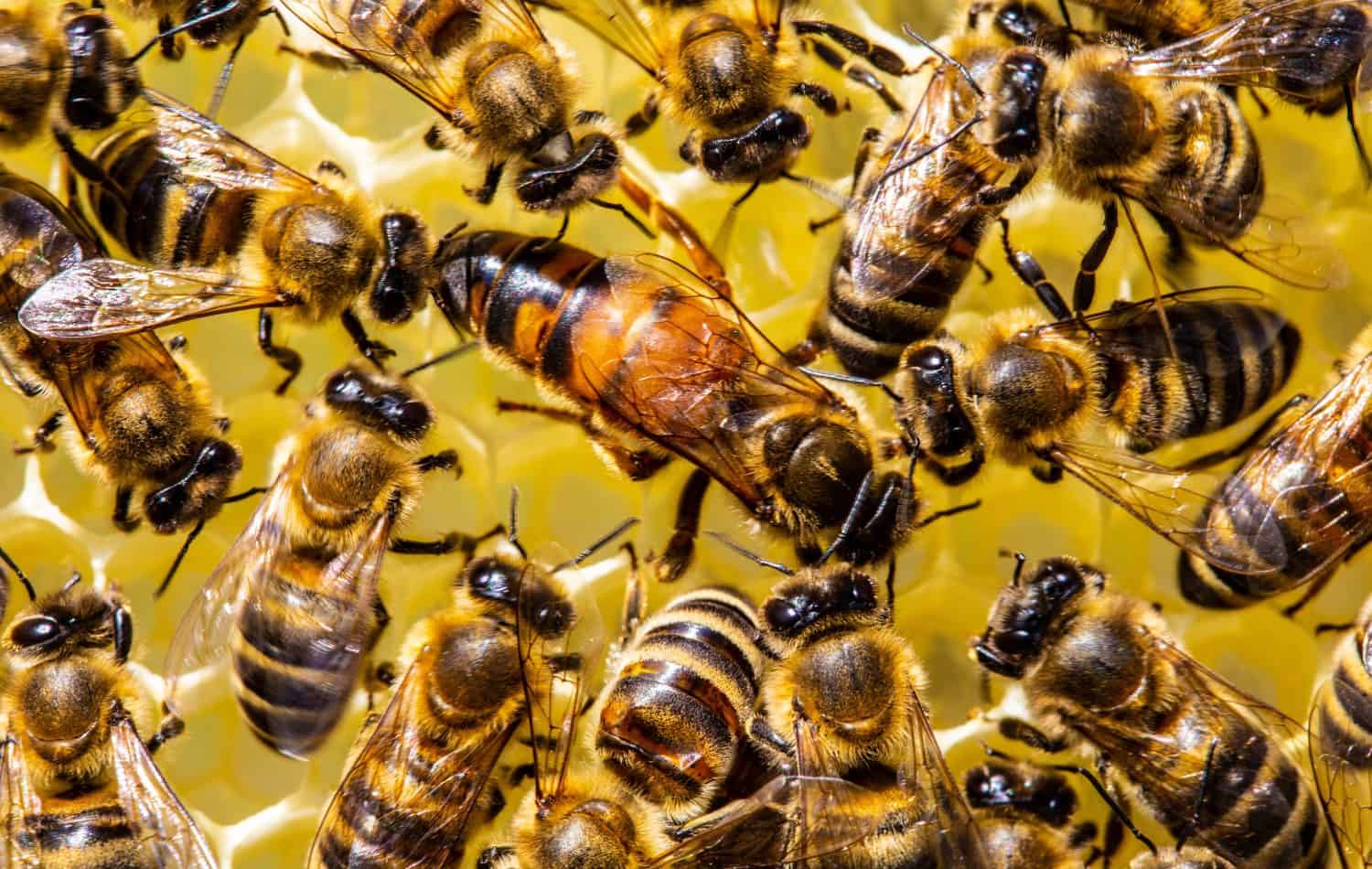
A new queen bee will be chosen for a new colony after proving to be the strongest of the female bees.
©Lehrer/Shutterstock.com
The queen bee that is about to leave the colony will lay a large number of eggs before she departs. The worker bees will randomly select approximately 20 of these eggs and place them in sealed queen cups within the hive, where they will develop for approximately 16 days.
When it is time to emerge from the queen cup, the first bee that does so will begin the process of killing the remaining female bees who have yet to break through the seal of the queen cup. The worker bees assist the fastest-developing female bee in opening the remaining queen cups, allowing her to eliminate the other potential queens by stinging them.
However, if more than one female bee emerges from the queen cups at the same time, there will be a literal fight to the death. The female bee that is victorious will be considered the new queen and will ensure there are no rivals left to take her place as queen.
Once the would-be queen bees have been dispatched, the remaining female bees will take a “mating flight” so that they can lay eggs and help the colony to grow. The worker bees are the ones who determine whether male or female bees are needed based on the needs of the colony. If drones are needed, special cells are created for the eggs to fit in. If worker bees are needed, cells are created for them. While the queen is the only one capable of laying eggs, it is not her say as to whether male or female eggs are laid. It is the rest of the colony that informs her of what is needed for the good of the colony, and the queen bee complies.
Why the New Bee Colony Halves in Size
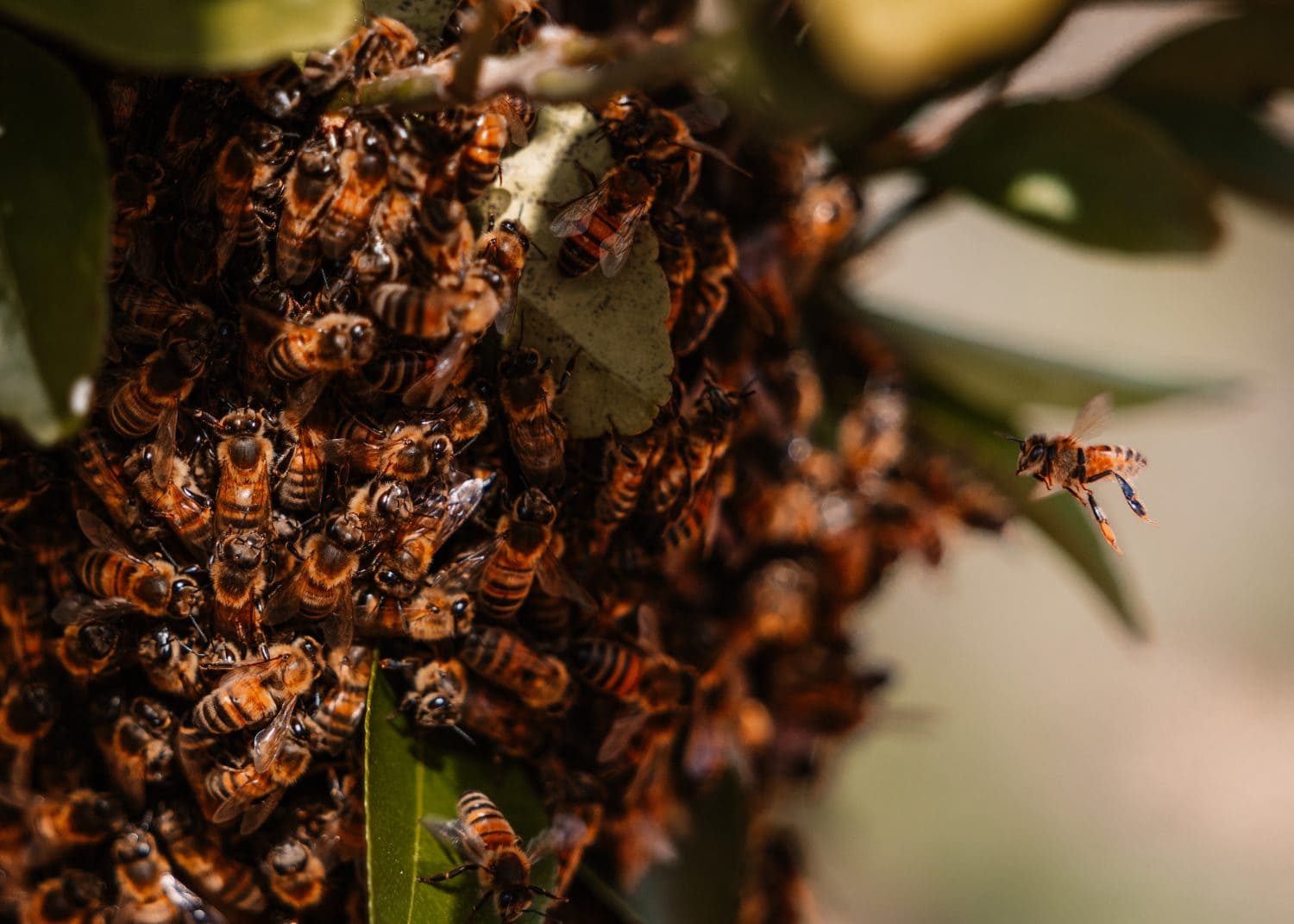
Bee colonies will split in half, creating two colonies that are a fraction of their original size.
©wildwandererinaus/Shutterstock.com
Bee colonies do not seek a new queen because they are weak; in fact, only the strongest colonies grow large enough to require splitting and a new queen. The contrary is true instead. This is because the strongest colonies are the ones that grow to large sizes and ultimately need to be made smaller for the greater good of all bees involved.
When a massive bee colony splits, it will generally divide into two hives that are each half the size of the original. If a beekeeper does this, it is known as splitting. When done by choice of the bees, it is known as swarming. In either case, the ultimate goal is to make sure there are enough resources to go around.
A massive colony will have to work extremely hard to ensure all the bees are taken care of. However, when a large, strong colony is divided into two smaller ones, the strength of each hive will increase. The bees will be healthier, and for those who are beekeepers, the honey production will be done more efficiently due to the bees being able to use the resources they have more effectively.
Not All Bee Species Swarm
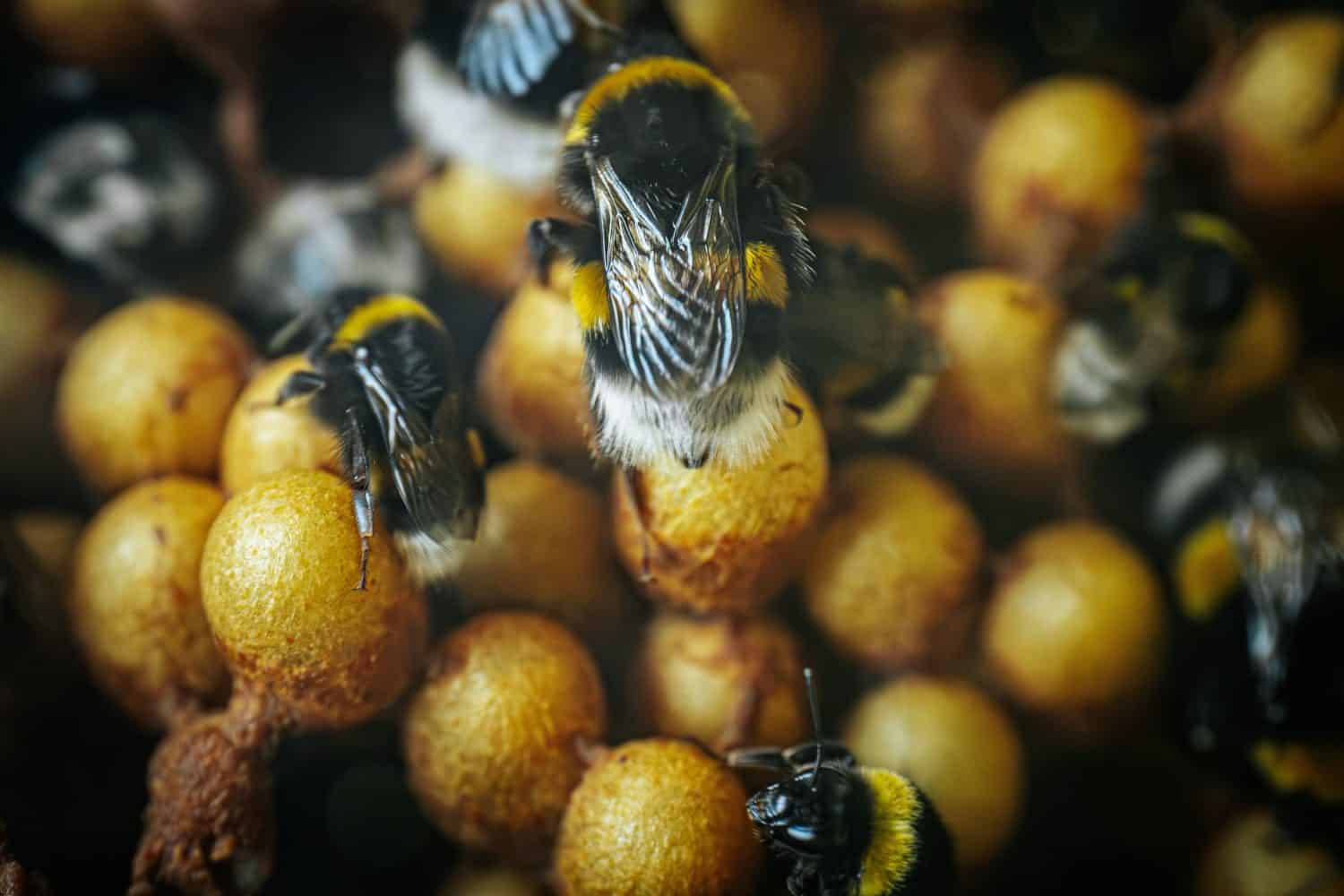
Bumblebees create nests rather than colonies that have populations significantly smaller than that of European honeybees.
©Emvat Mosakovskis/Shutterstock.com
While swarming is a natural process for some bees, there are some that are less prone to doing so. In fact, some would prefer to live in smaller numbers altogether, leaving swarming for more social bees.
The bees that have the highest tendency to swarm are European honeybees. These are the bees that beekeepers favor for their docile nature and prolific honey production. It is common for beekeepers to find their hives swarming and to need to act quickly to provide a new home for the bees that have left the original colony. This is because 20% of all European honeybees will swarm each year. If the beekeeper does not create a new home, the swarm will go elsewhere, potentially leaving the beekeeper with only half of a hive for honey production.
Other bees that are known to swarm, albeit less frequently, according to Beekeeper Corner, are Italian bees and Carniolan bees. Beekeepers less often keep these bees as they are more aggressive than their European counterparts. However, it is not unheard of for these bees to swarm and land on property where they are not necessarily welcome. Fortunately, swarms are often just a temporary resting spot for the bees. Once the queen bee is ready to fly again, the bees will take off in search of their forever home.
Bees that do not typically swarm are bumblebees. Instead of living in a hive, these bees live in a nest. The average size of the nest is between 50 to 400 bumblebees. However, it is not unheard of for nests to be as small as 20 or as large as 1,000 members.
Since the nest’s size does not exceed a certain point, there is no need for the bees to split from one another. However, unlike the honeybee queen, who can live for two to three years, the bumblebee queen only lives for a few months. The bumblebee queen only lives for two to three months, just long enough to lay eggs for the next generation of bees to live. Once the bumblebee queen dies, the worker bees do as well. The offspring will begin the process all over again, with no intention of leaving the nest during their lifetimes.