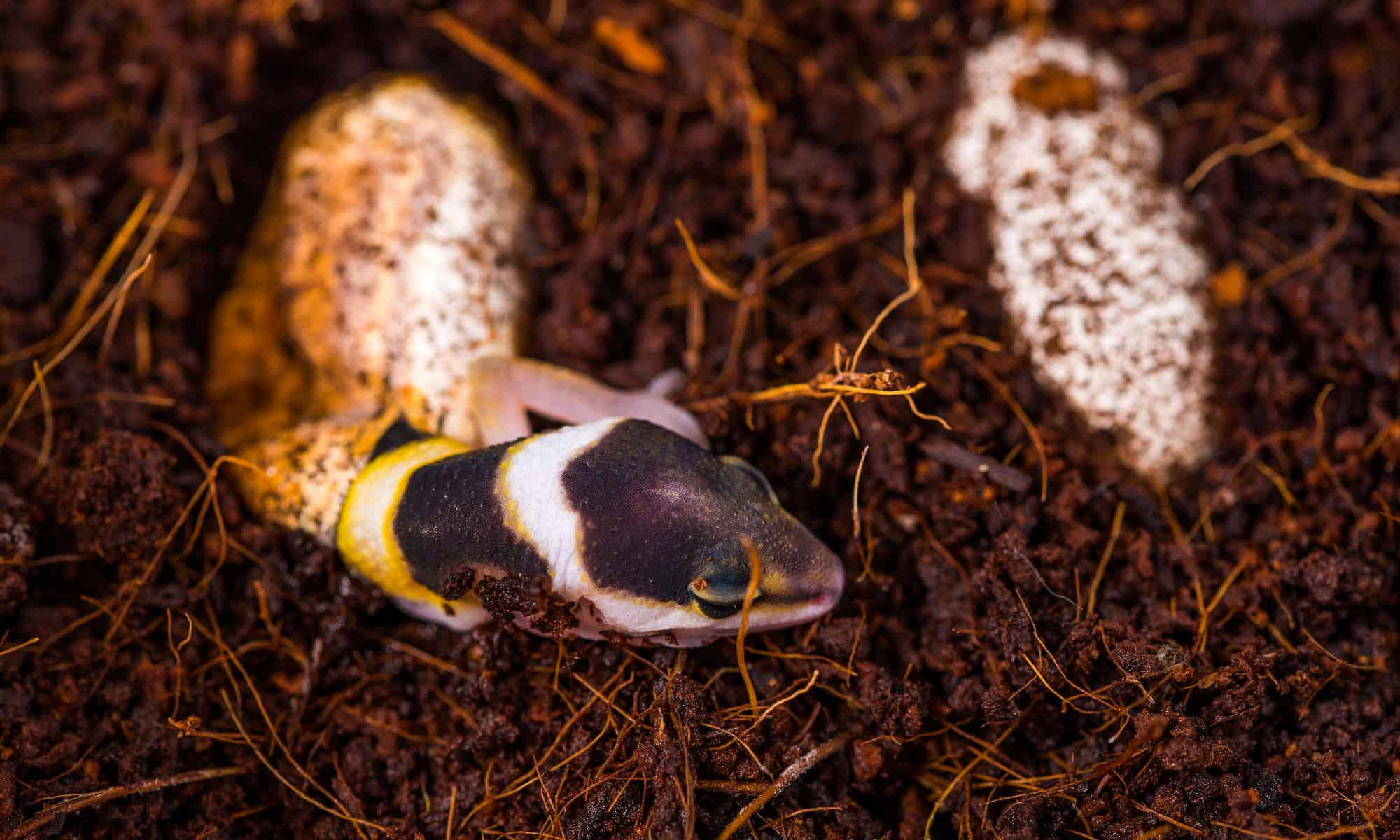

Quick Take
- Stimulating reptile eggs can help hatchlings emerge when they would otherwise stay in the shell.
- Professional handlers use gentle squeezing, rolling, or minor cuts to encourage hatching.
- Intervention targets incubation issues like low humidity or overcalcification.
If all it took was stimulating an egg that has finished incubating, many reptiles would have a much easier time hatching. This video by @herptime shows just how beneficial this can be. However, coaxing a lizard out of its shell is not always so simple. This practice should be performed only by professionals and can only be done at a specific time after the egg’s incubation period. While stimulating the exterior of a reptile egg can result in a hatchling emerging, there’s a reason experts take on the role of Mother Nature.
Does Stimulating a Reptile Egg Speed Up Hatching?
The answer is both yes and no, depending on the situation. In the Instagram video, we can see a professional reptile breeder nudging the shell of a Madrean alligator lizard. As he rubs his finger back and forth on the outside of the shell, the Madrean alligator lizard scurries out, ready to face this big new world. The process is swift and leaves many wondering if this is a common way to encourage hatchlings to break out of their shells. It’s called “pipping.” As it turns out, it is an accepted method for helping reptiles who are perfectly content to remain where they are.
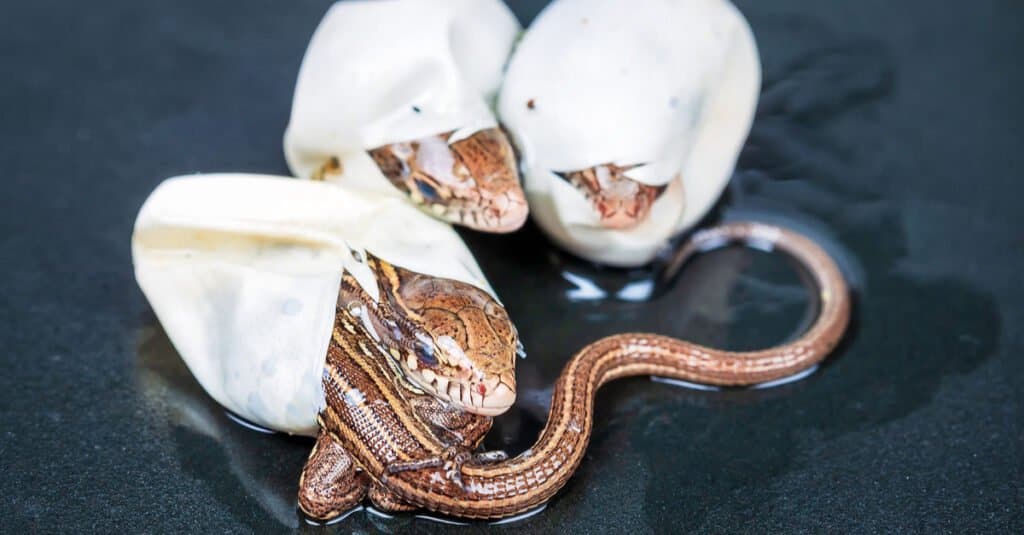
More often than not, reptiles emerge just fine on their own.
©Rashid Valitov/Shutterstock.com
Robby’s Reptiles, another professional reptile handler, explains how the gentle squeezing and rolling of an egg helps it hatch. Patience is also key in this process, as not every reptile emerges as quickly as the Madrean alligator lizard. This video by Robby’s Reptiles also shows a method that includes making a small cut into a reptile egg. Both methods help encourage the reptile inside to begin making its way out, though one is slightly more aggressive than the other.
Why Do Reptiles Need Help Hatching?
Reptiles in captivity may need help hatching for several reasons. The first is that, due to sheltered incubation, they may remain in their eggs for extended periods. While this isn’t inherently harmful to the reptile, it can affect its survival rate if it waits too long. If a reptile has passed its incubation period and is still inside the egg, but shows signs of healthy growth, handlers may choose to encourage hatching.
Another reason is related to the incubation conditions. If an egg is incubated at low humidity, it can stall the hatching process. To counteract this, handlers may need to increase the moisture of incubation tanks. If this doesn’t work, handlers may need to stimulate or cut open the egg to help the reptile emerge.
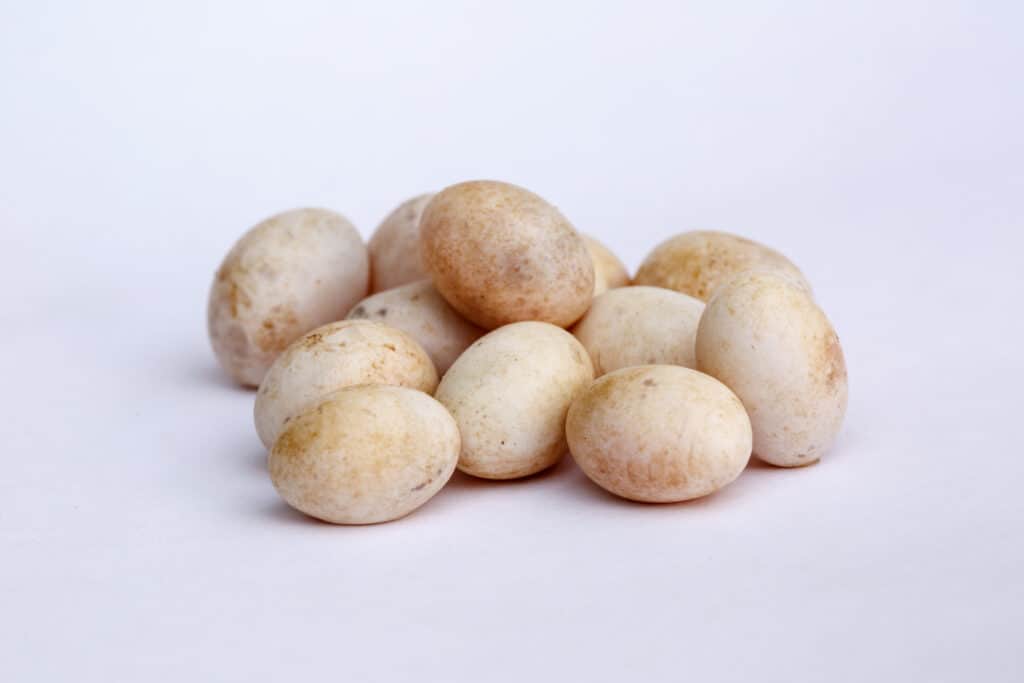
The shells of lizard eggs are often soft enough to manipulate, making it easier for hatchlings to emerge.
©Monticola/Shutterstock.com
Lastly, a reptile handler may need to intervene if a hatchling is stuck. Although this situation is not shown in the Instagram video above, it can occur in captivity in rare cases. If a reptile is stuck in a tiny hole with no signs of escaping on its own, handlers may need to cut open the shell to free it.
Why Stimulation Works to Hatch an Egg
The science behind stimulating an egg to encourage hatching is simple: it mimics real life. In captivity, reptiles aren’t always born in groups or with siblings. Therefore, they lack the motion or movement that comes with being part of a family of eggs. In the wild, as eggs near the end of their incubation, the reptiles inside often move around. As these eggs bump or rub against their neighbors, it signifies that it’s time to go. This occurs as a mass-hatching event, with most hatchlings breaking through their egg shells simultaneously.
In captivity, this is not always the case. Single eggs being incubated lack the movement needed to signal it’s time to hatch. This is why many breeders may stimulate the egg, mimicking the movements of the eggs that would typically be next to it. They may need a little extra help, but are usually born healthy, with no defects or lasting trauma from human intervention.
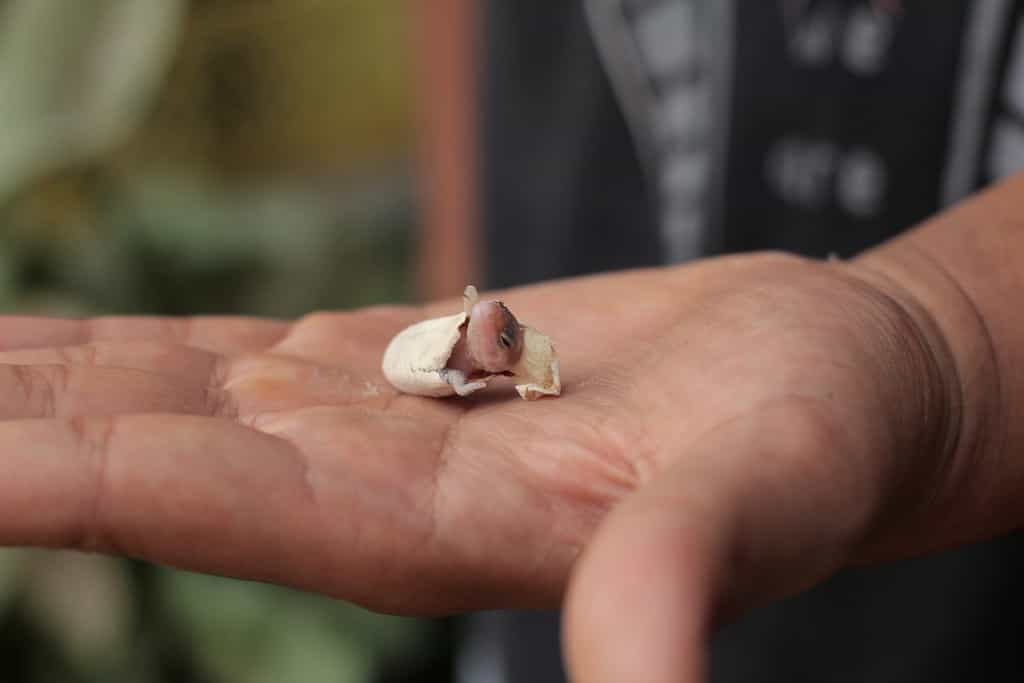
Reptiles in captivity are kept in humidity-controlled environments favorable for natural hatching.
©Mufti Adi Utomo/Shutterstock.com
In some cases, depending on the incubation environment, an egg shell may be thicker than usual. This is known as excessive overcalcification. It’s caused by a lack of balanced nutrients in a mother’s diet, defective shell glands, or stress while pregnant. When this happens, it becomes difficult for a hatchling to break its shell. This is when human intervention is paramount, and often means the difference between life and death for a reptile. Without outside help, a hatchling may suffocate, unable to escape its shell before running out of oxygen. While rare, it’s another instance where stimulation or cutting the egg open is necessary for survival.