
Quick Take
- Giant false leaf katydid ranks among the largest katydids, reaching 12-13 cm in body length and up to 22-24 cm wingspan.
- Male giant false leaf katydids sing after dark with a birdlike whistle to carry a mating signal.
- Some katydids exceed 120 dB at close range, with calls around 125 dB.
- Its exact geographic range tantalizes researchers; read on to discover the specific nearby regions where it thrives.
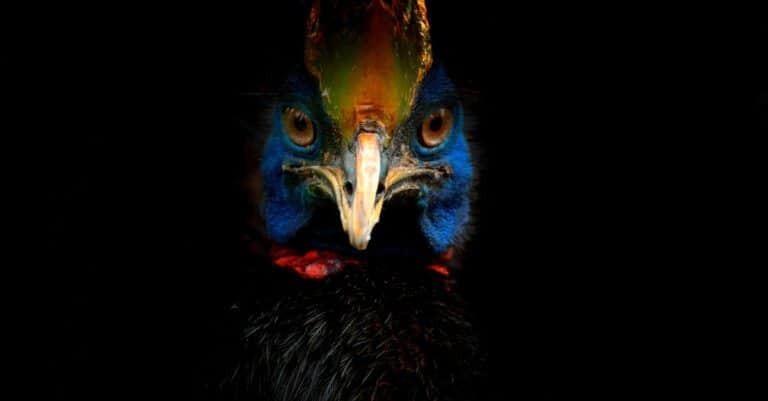
Standing in a tropical forest at night, you might hear what sounds like a small bird calling from high in the canopy. Listen more closely, though, and that “bird” turns out to be an insect with leaf-shaped wings and an unusually powerful voice, at least by insect standards. The giant false leaf katydid, also known as the giant false leaf bush-cricket, ranks among the largest and loudest katydids known to science. Its birdlike song, careful camouflage, and nocturnal habits make it a strong example of how unexpected insect life can be.
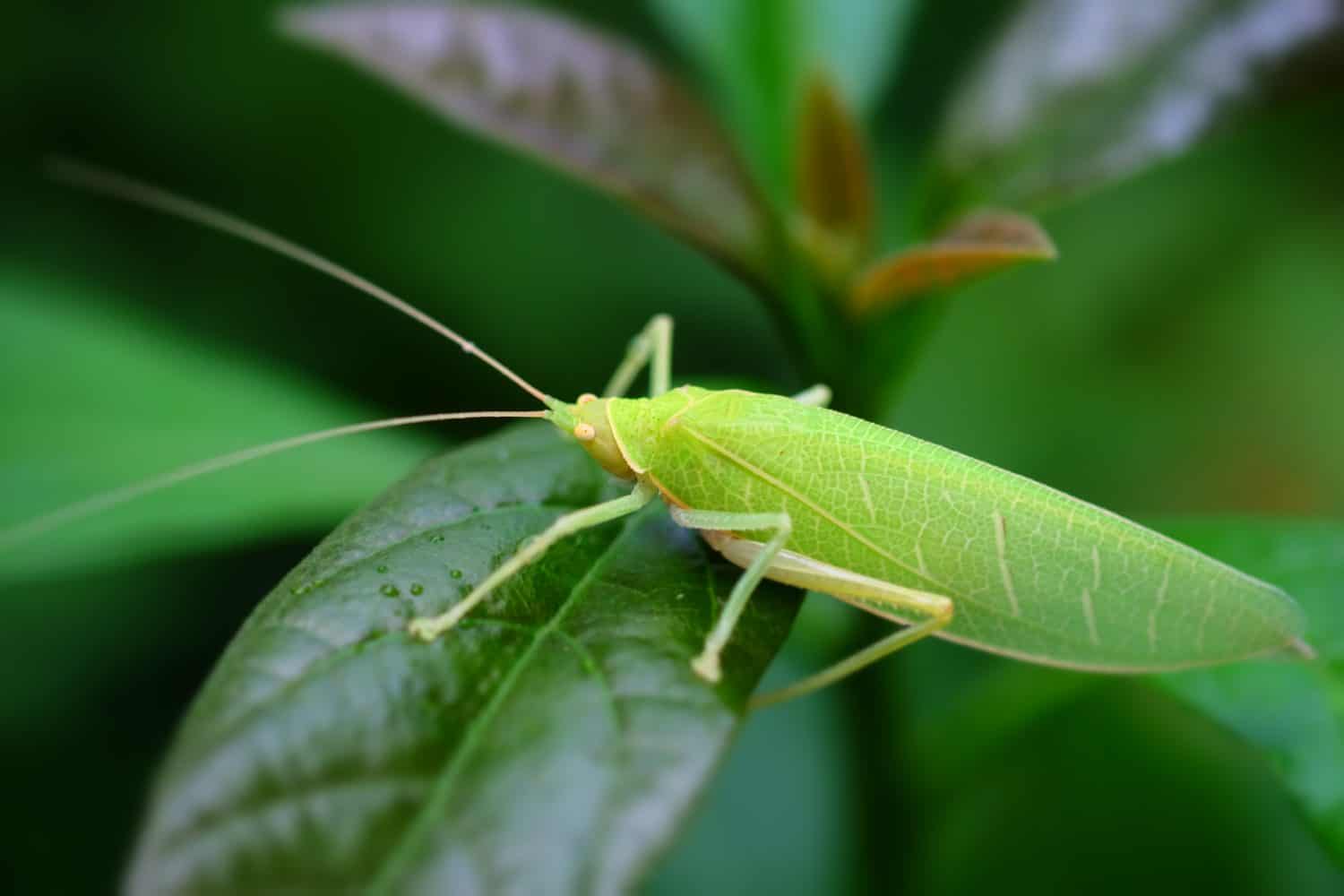
The giant false leaf katydid sounds like a bird and is similar in size to one as well.
©starbarts/Shutterstock.com
Giant False Leaf Katydid (Pseudophyllus titan)
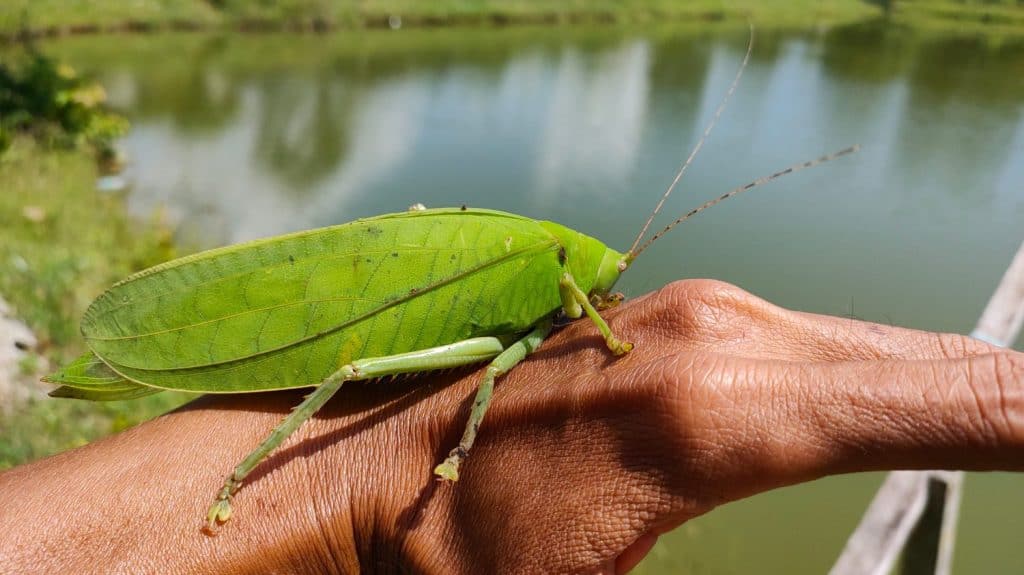
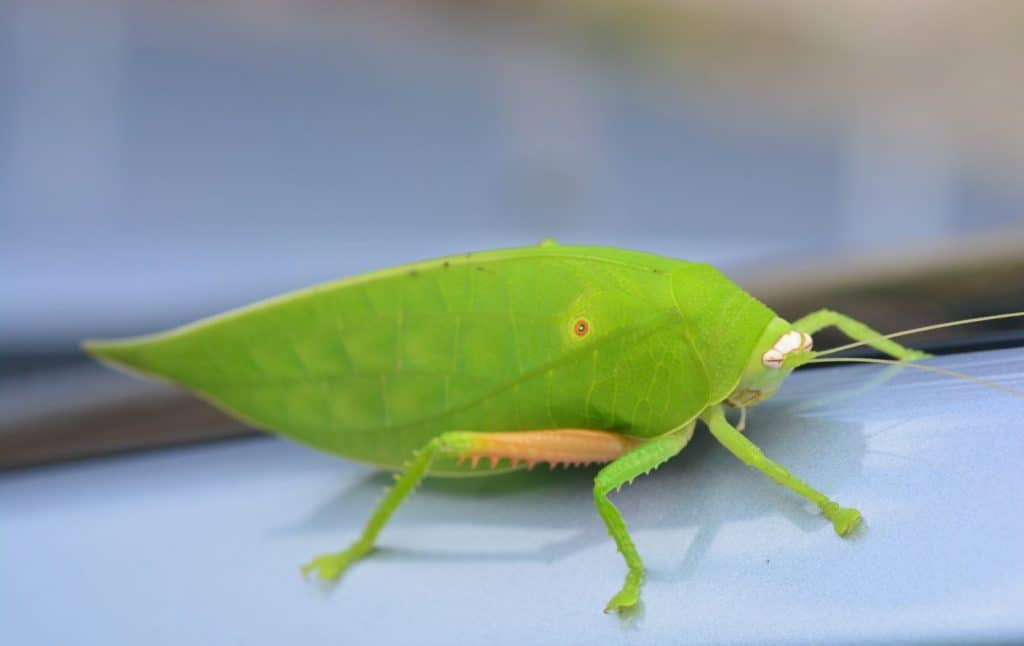
The giant false leaf katydid is a large, leaf-mimicking insect native to tropical forests across parts of South and Southeast Asia. Adults rank among the largest known katydids, typically reaching around 12 to 13 centimeters in length when measured from the head to the tip of their folded wings. When the wings are spread, the span can approach roughly 22 to 24 centimeters, giving the insect a surprisingly birdlike presence in flight. Its deep green body and vein-patterned wings closely resemble a broad leaf, allowing it to remain hidden among dense foliage.
What makes this insect so memorable is its clear, whistling call, which many listeners describe as more birdlike than insect-like. Males usually sing after dark, when cooler air and lower light levels reduce the risk from visual predators. The song is repeated in steady bursts from hidden perches among the leaves and branches. To casual listeners, especially those unfamiliar with tropical insects, the sound can easily blend with real bird calls. This effect is strongest in recordings in which the insect itself is out of view. The birdlike quality comes from a combination of pitch and rhythm that matches patterns humans associate with birdsong. For the katydid, the call serves a practical purpose rather than an artistic one: it functions as a mating signal meant to carry through a noisy forest filled with frogs, insects, and night birds. You can listen for yourself in this video.

The insect closely mimics the appearance of a leaf.
©Kiran Nagare/Shutterstock.com
Like many katydids, Pseudophyllus titan spends most of its life high in the trees rather than near the forest floor. Its leaf-like wings help it blend into surrounding vegetation while it rests during the day. Living in the canopy keeps it close to leaves, flowers, and other food sources while also reducing encounters with ground-based predators. Most sightings come from areas with relatively intact forest cover, suggesting that tall trees and a closed canopy provide the conditions this species prefers.
How Do Katydids Make Such Loud Sounds?
Katydids are known for producing some of the loudest insect sounds ever measured. In certain large species, sound levels recorded at very close range have exceeded 120 decibels. Studies of canopy-dwelling katydids show that some calls can reach around 125 decibels when measured just centimeters from the insect. This places them in a range comparable to loud machinery or amplified music heard up close.
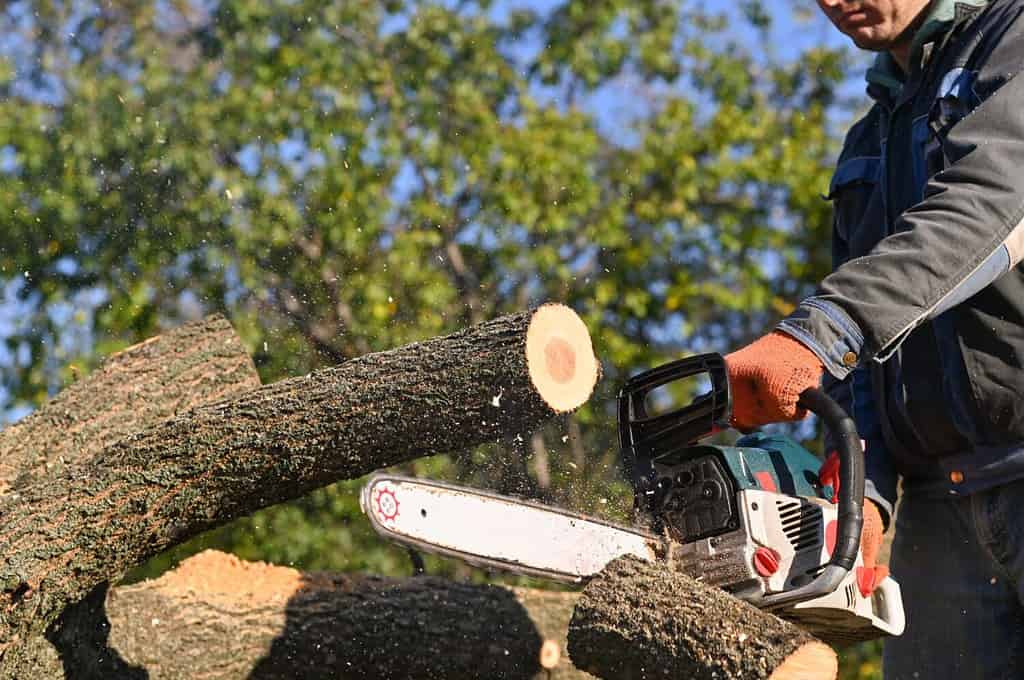
This insect makes a sound as loud as a chainsaw.
©ja-aljona/Shutterstock.com
Specific measurements for the giant false leaf katydid are limited, but field observers consistently describe its call as strikingly loud and capable of cutting through dense forest noise. Many loud katydids produce sounds in lower or mid-range frequencies that travel farther through vegetation than very high-pitched tones. In a forest filled with competing calls, volume can make the difference between being heard and being ignored.
Like other katydids, the giant false leaf katydid produces sounds through a process called stridulation. This involves rubbing parts of the forewings together to create vibrations. One forewing carries a hardened vein lined with tiny teeth, known as a file, while the opposite wing edge forms a scraper. As the insect closes its wings, the scraper moves across the file, producing rapid vibrations. These vibrations travel into a thin area of the wing called the mirror, which helps amplify and shape the sound. The mirror works in a way similar to that of the body of a musical instrument. Differences in tooth spacing, wing size, and movement speed affect the pitch and tone. In this species, these factors combine to produce a call that many people mistake for a bird.
High Notes and Ultrasonic Relatives
The giant false leaf katydid is impressive, but it is not the only katydid with notable acoustic traits. In South America, species in the genus Supersonus produce calls reaching far above the range of human hearing. Research shows that body size and wing structure strongly influence these frequencies. Larger species tend to produce lower-pitched sounds, while smaller ones more often use higher frequencies. The giant false leaf katydid fits the pattern, using its large body to generate a loud, lower-pitched call.
Why Sound Matters to Katydids
For katydids, sound plays a central role in both survival and reproduction. Males advertise their presence and condition through song, while females listen for signals that match their species. In some species, females respond with quiet answer calls or move toward the singer. Different katydid species can live in the same forest by using slightly different rhythms, pitches, or calling times. This separation reduces confusion and wasted effort.
Acoustic signals are important for reproductive behavior in katydids.
©ideation90/Shutterstock.com
Dangers of Being Noisy
Loud calls come with risks. Predators such as bats can use sound to locate prey. Many katydids have evolved ears sensitive to bat echolocation calls and may pause or change their singing when danger is detected. Others shift their calls into higher frequencies that fade quickly over distance. The balance between attracting mates and avoiding predators shapes how species such as the giant false leaf katydid use sound.
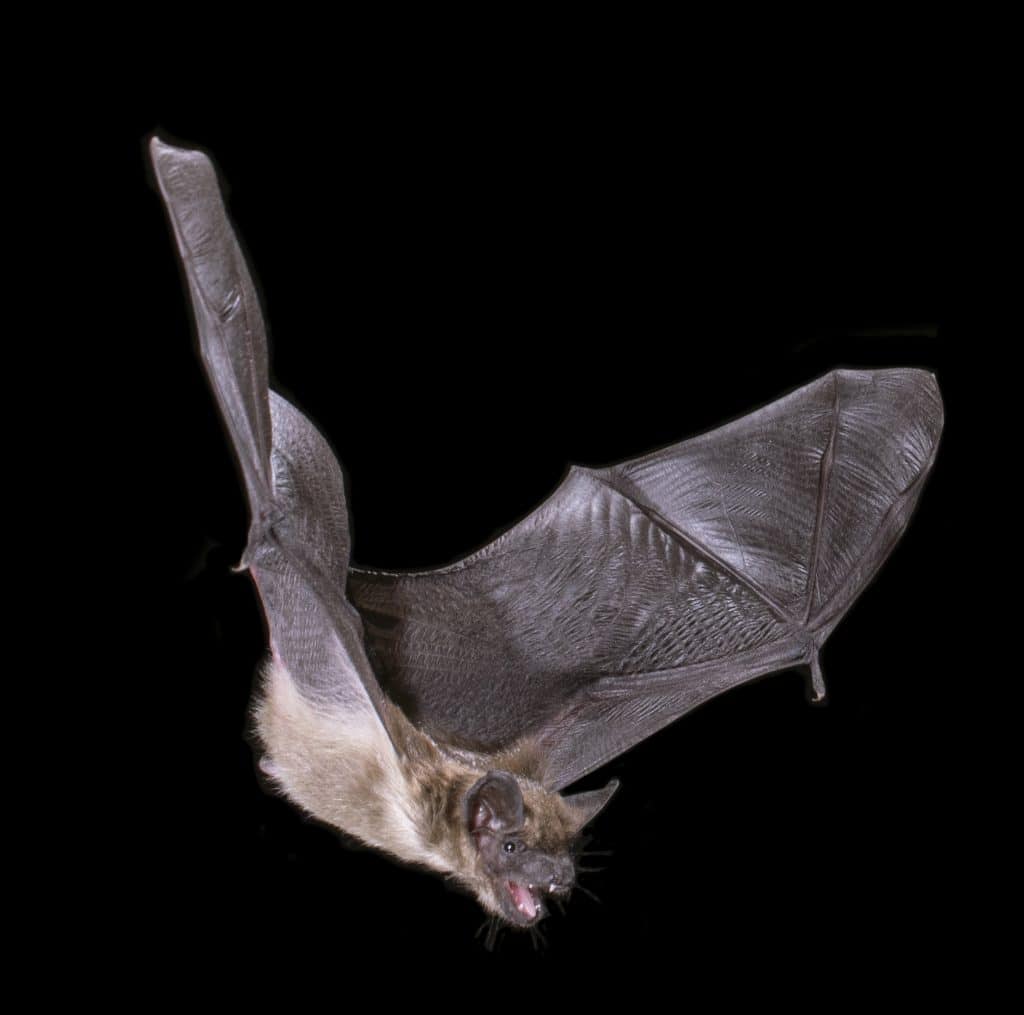
Some katydids shift the frequency of their calls when they detect echolocation signals from bats.
©Brock and Sherri Fenton
Playing a Vital Role in Forest Ecosystems
Although best known for its voice and leaflike wings, the giant false leaf katydid also plays an important role in forest ecosystems. Like many katydids, it likely feeds on a mix of plant material and small invertebrates. This places it in the role of a light herbivore and occasional predator. Detailed studies of its diet are limited, but related species show similar feeding habits. Its leaf mimicry helps protect it from birds and other visual hunters during daylight hours. Activity at night further reduces exposure to predators that rely on sight. In some regions, people roast and eat large katydids, adding them to the wide variety of insects consumed as food around the world. For naturalists and photographers, encountering this species is often a highlight, especially when the singer behind a mysterious nighttime call is finally revealed.
Listening to the Leaves
The giant false leaf katydid shows how an insect can combine a birdlike voice, a leaf’s disguise, and an unexpectedly powerful sound into a single form. Its song reminds listeners that many nighttime forest choruses come from insects rather than birds. Learning to recognize calls like this one adds depth to nighttime walks and helps people notice life that usually stays hidden above them. In the canopy, where leaves overlap and shadows gather, performers like this katydid continue their work unseen. The result is a living concert in which the forest itself speaks with beauty and purpose.