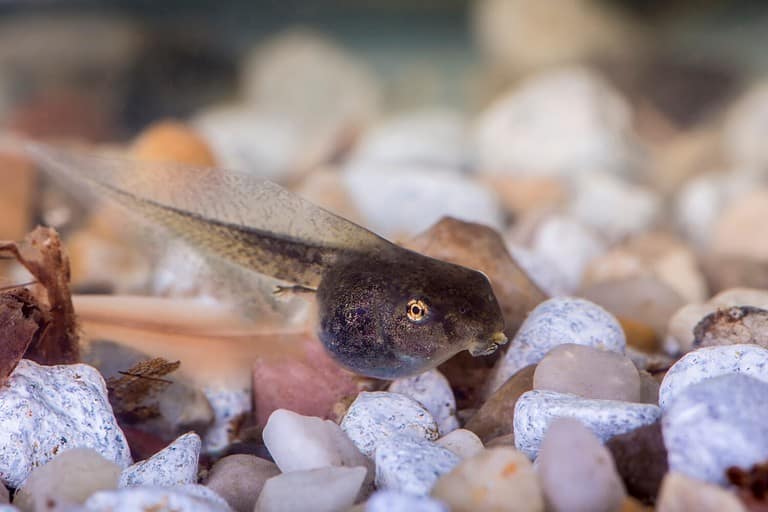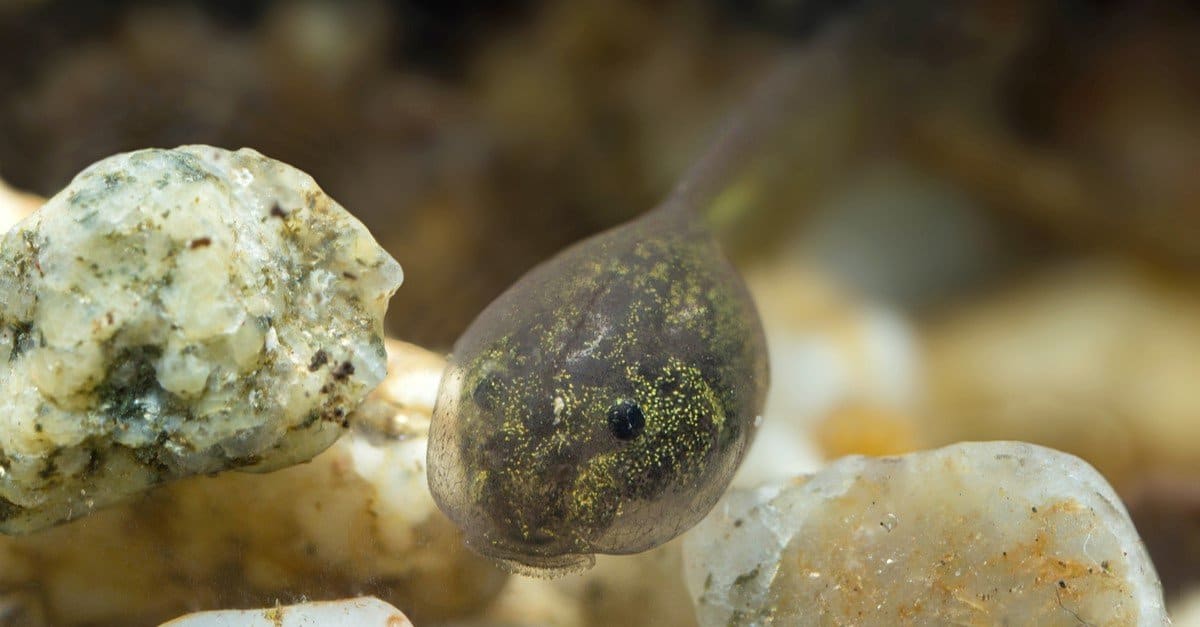

Scientists have discovered three new toad species in Tanzania that do not go through the tadpole stage of development. In a super-rare reproductive strategy, these toad species give birth to live young. This strategy has been encountered rarely in other species that either live away from water or live near water that is too fast-flowing to keep eggs and tadpoles safe. Read on to find out more about the toads that skip the tadpole stage of life!
New Tanzanian Toads Do It Differently
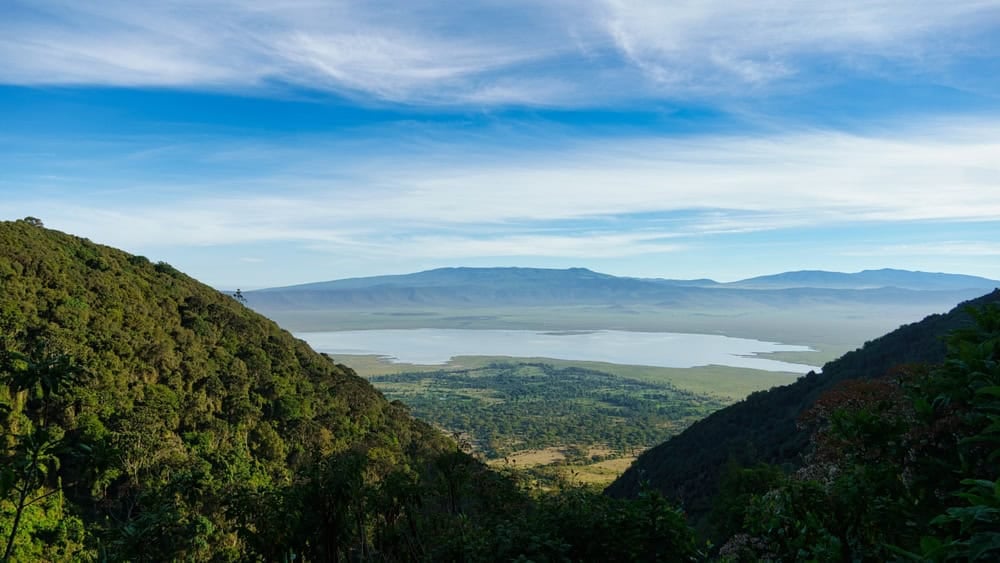
Species in the Tanzanian mountain ranges are isolated.
©travellenspro/Shutterstock.com
In a paper in the journal Vertebrate Zoology, scientists describe three new toad species in the Eastern Arc Mountains Range in Tanzania. This area is a hotspot of biodiversity, consisting of fragmented mountain and forest habitats. Amphibians are among the groups of animals that show great genetic diversity in this region.
One endemic genus is the Nectophrynoides, commonly called tree toads. Rather than laying eggs in water, females are fertilized internally by males and then carry the offspring inside them. She gives birth to live young instead of laying eggs, which develop into tadpoles. This strategy evolved to allow the toads to reproduce away from water.
Only a few frog species, from South America and Southeast Asia, use this reproduction strategy. H. Christoph Liedtke, a co-author of the paper from the Spanish National Research Council, said in this press release about the discovery, “Live-bearing is exceptionally rare among frogs and toads, practiced by less than 1% of frog species, making these new species exceptionally interesting.”
More Than One Species
Scientists previously believed that Nectophrynoides viviparus was a single species. It was first described in 1905, and a specimen was held at the Museum für Naturkunde in Berlin. This allowed scientists to compare its DNA, as well as the DNA of other toad specimens stored in European museums, to that of the newly discovered frogs. They found that what was thought to be a single species was actually a complex of genetically distinct lineages. Each lineage had become isolated on separate mountain ranges. Sadly, it is this very isolation that leaves these toads vulnerable to habitat loss caused by farming, logging, and mining. They are isolated survivors who illustrate nature’s fragility.