New animal species are being discovered every day. According to reporting by Atlas Obscura, scientists and researchers actually discover anywhere from 15,000 to 18,000 previously unknown species each year (though some of these are just fixing prior taxonomic mistakes). Even though we know so much about the world, it’s mind-blowing to realize that there are still species we’ve never heard of living on our planet. Of course, some species come from samples collected long ago that were never analyzed, or from new technological changes allowing scientists to better understand samples. But other species are discovered alive through research missions, including the Western Australian lantern shark (Etmopterus westraliensis).
Found, as you might guess, in the waters of Western Australia, the Western Australian lantern shark was one of several new species discovered on a 2022 Commonwealth Scientific and Industrial Research Organization (CSIRO) biodiversity discovery mission. The mission, designed to better understand the biodiversity of Gascoyne Marine Park, surveyed and collected samples at 52 stations. Read on to learn more about the new species of shark discovered and what else was found during this trip!
What are Lantern Sharks?
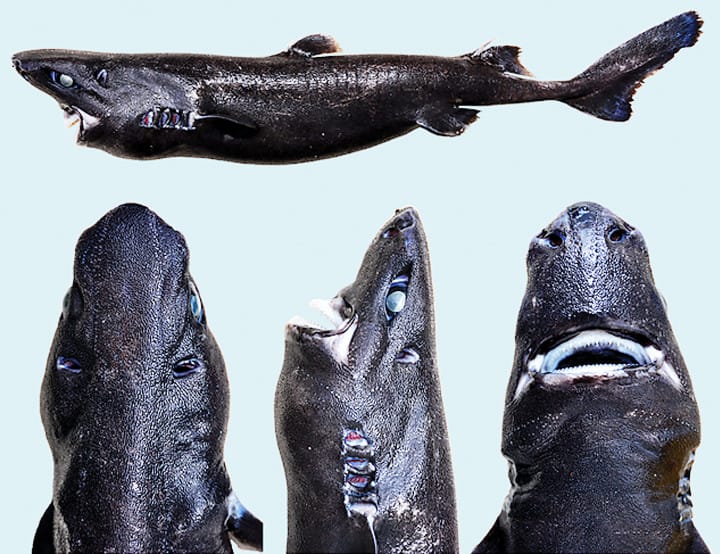
Scientists believe there are over 50 species of lantern sharks, including the Ninja lantern shark.
©Victoria Elena Vasquez/Journal of the Ocean Science Foundation, CC BY 4.0 – Original / License
Lantern sharks are deep-sea sharks which are typically small in size, ranging from 10 centimeters long to just under three feet long depending on the species. In 2022, a study published in Frontiers in Ecology and Evolution suggested there are around 50 known lantern shark species. Perhaps the most well-known is the dwarf lantern shark, making it the smallest known shark worldwide.
Lantern sharks are usually darker in color (brown or black) to help blend in underwater and camouflage against potential predators like large fish and larger sharks. Additionally, lantern sharks have large eyes to help them see in the deep, dark waters where they are usually found—typically at depths of 900 to over 2,000 feet.
If you’re wondering where lantern sharks get their name from, the “lantern” comes from the fact that they are bioluminescent. Essentially, they can produce light using organs called photophores found on their stomachs and flanks.
Finding the Western Australian Lanternshark
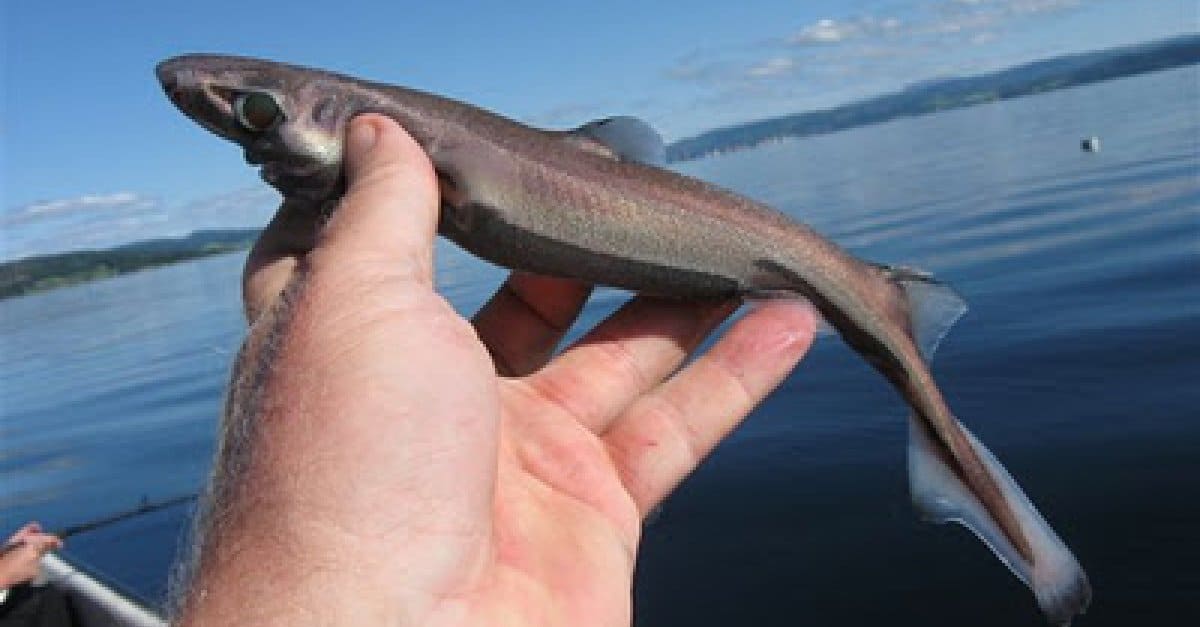
The Western Australian lanternshark was found swimming at depths of 2,000 feet underwater.
©By Javontaevious – Took a photographPreviously published: Javontae Murphy@ Facebook, CC BY-SA 3.0, https://en.wikipedia.org/w/index.php?curid=37516033 – Original / License
In 2022, Dr. Will White, an ichthyologist (a scientist who studies fish), set out on a biodiversity discovery mission aboard the CSIRO Investigator. Dr. White was a good choice for this mission, given that, throughout his career, he has already written descriptions of six new bony fishes and 50 new shark and rays species.
In a Youtube interview, Dr. White described how the trip sailed to the eastern Indian Ocean by Western Australia to collect marine creature specimens. Several, discovered through trawl collection, were evaluated and determined to be new species.
When asked why the species was named the Western Australian lantern shark, Dr. White explained, “We tend to stick to the lantern shark part of the common name, referring to the light organs on their side.” He described the new species as approximately 20-30 centimeters long (7.8 to 11.8 inches), and flashing like little blue lights in the ocean.
Similar to other lantern shark species, the Western Australian lantern shark was discovered in deep water: about 2,000 feet down. Because the species was found at such great depths and is newly discovered, scientists are unsure how many Western Australian lantern sharks exist.
How Does the Western Australian Lantern Shark Differ From Other Lantern Sharks?
In research on the Western Australian lantern shark published in the Journal of Fish Biology, Dr. White, alongside three other authors, compare the Western Australian lantern shark to two other species: the short-tailed lantern shark (Etmopterus brachyurus) and the Papuan lantern shark (Etmopterus samadiae). Their findings show the three species share:
- Hook-like dermal denticles
- A naked area under the snout
- Denticles on dorsal fins (fins located on the sharks’ back)
However, the new species also differs in some ways:
- Longer marking on the caudal fin (the tail fin)
- A longer mouth
- More single-centrum vertebrae
- Different shapes to the naked area under the snout
- Slight genetic differences relating to the NADH2 gene
What Does This Mean for Lantern Sharks?
At this time, it’s unclear what the discovery means for lantern sharks as a whole. However, finding a new species is always exciting and suggests that biodiversity in the deep ocean may be much greater and more complex than we currently realize. By continuing to study the Western Australian lantern shark and other emerging or changing species in our oceans, we can deepen our understanding of the natural world.
Other Species Discovered on the Survey
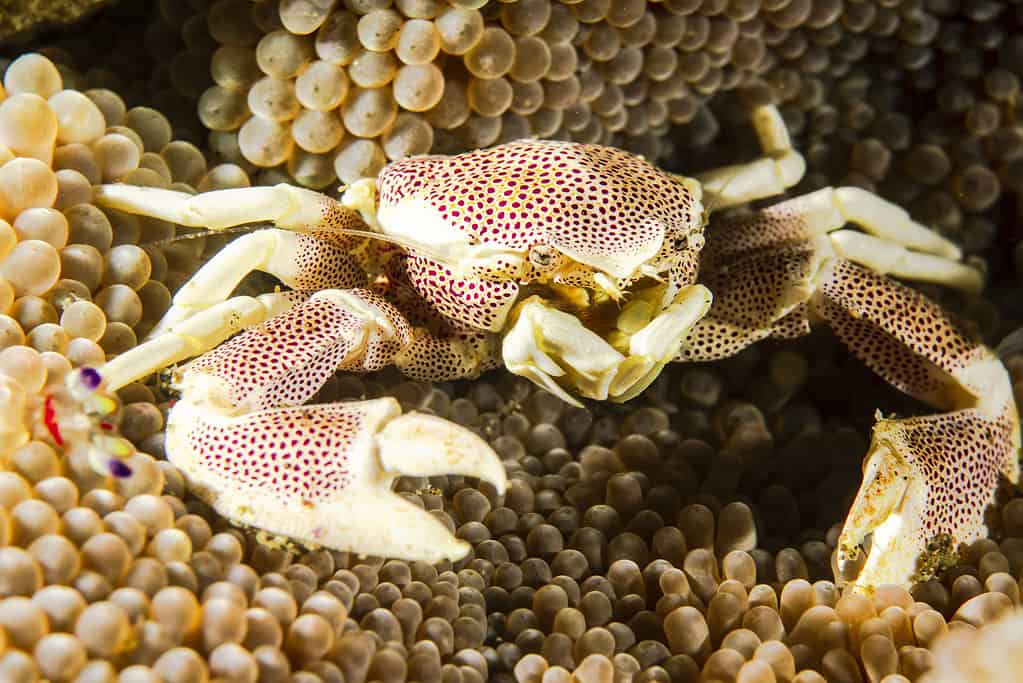
A newly discovered crab species does not catch food. It’s actually a filter feeder!
©atese/iStock via Getty Images
Dr. White worked closely with other scientists and researchers to examine all specimens collected on the trip. In his interview, he shares, “There could be close to potentially 600 new species just from that survey.”
While there may potentially be a new ghost shark species on the horizon, at least twenty other species have been named so far from this survey. These include:
- A new type of porcelain crab (Porcellanella brevidentata)
- Carnarvon Flapjack Octopus (Opisthoteuthis carnarvonensis)
Additionally, the team aboard the CSIRO Investigator also identified the Painted Hornshark (Heterodontus marshallae). According to CSIRO, the team already had several specimens, including a female. As such, says CSIRO, “They already had enough information to write a paper describing and naming the new shark [by the time they boarded the vessel].”
However, the team caught a male specimen during the trip and were grateful for this, as male sharks have external reproductive organs. Dr. White explains that this makes it easier to distinguish between different species. Are there more sharks that will be found in the Heterodontus genus moving forward? Dr. White believes not. As he shares in the CSIRO article, “This Order of sharks is now very well known. The last time a new species was described in this Order was in 2005. I’d be surprised if there were any more.”