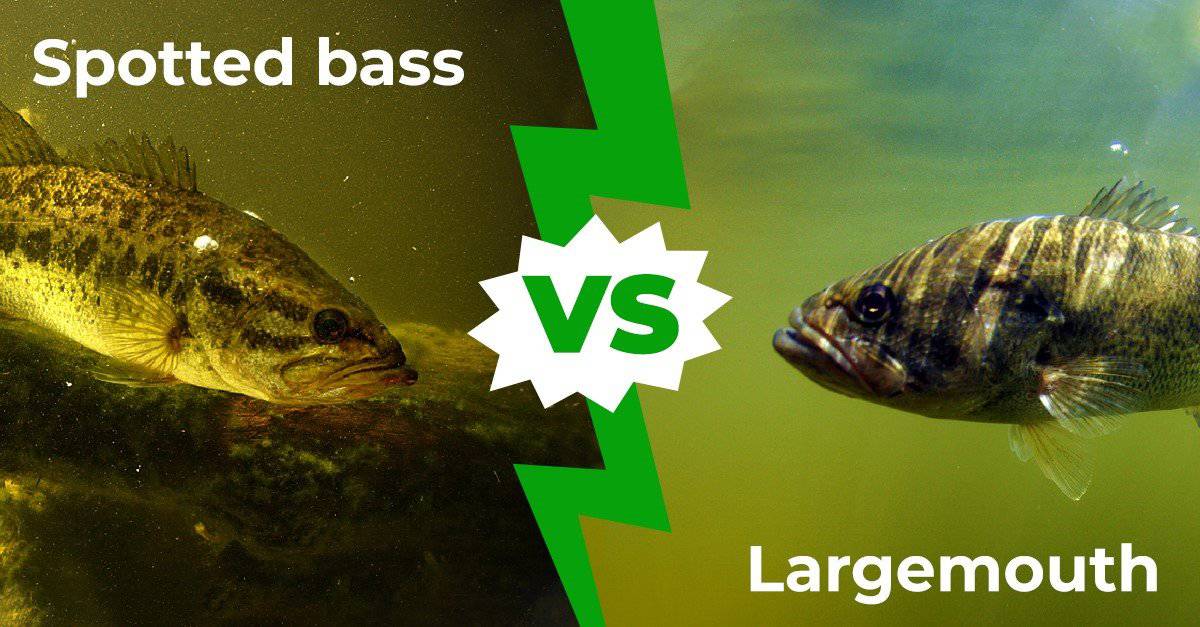

Can you spot the differences between a spotted bass vs. largemouth? Prized for their size, taste, and tendency to put up a fight, spotted and largemouth bass hold a special place in fishing culture. Native to the eastern and central United States, these carnivorous freshwater fish belong to the genus Micropterus, or black bass, in the sunfish family.
Due to several similarities in their appearance, they often get confused with one another. However, regulations governing catching these fish differ from state to state, so serious anglers need to know how to tell them apart. This article will compare these popular game fish and discuss nine key differences that distinguish them from each other.
Comparing Spotted Bass and Largemouth Bass
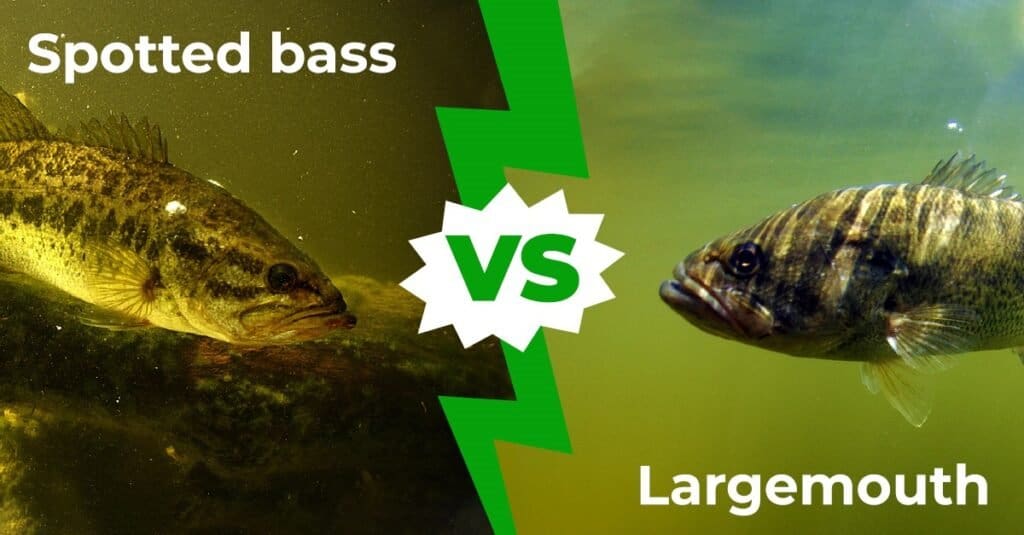
At a glance, these are some of the key differences between spotted and largemouth bass.
| Spotted bass | Largemouth bass | |
|---|---|---|
| Size | Shrimp, insects, water fleas, worms, snails, crawfish, frogs, snakes, salamanders, bats, small birds, mammals, turtles, alligators, and juvenile larger fish | Up to 29.5 inches long Official record of 22 pounds, 4 ounces |
| Lifespan | 6 to 7 years | 10 to 16 years |
| Diet | Small fish, crayfish, and aquatic insects | Dark green/brown Prominent spots on the lower sides in thin, dark lines |
| Habitat | Warmer, fast-moving water | Clear, slow-moving water |
| Jawline | Stops at eye | Extends past eye |
| Scales | Smaller cheek scales | Larger cheek scales |
| Dorsal Fin | Connected | Separated |
| Coloration | Dark green/brown Prominent spots on lower sides in thin, dark lines | Olive greenLight, less noticeable spots on lower sides |
| Lateral Line | Dark | Light |
The 9 Key Differences Between Spotted Bass and Largemouth Bass
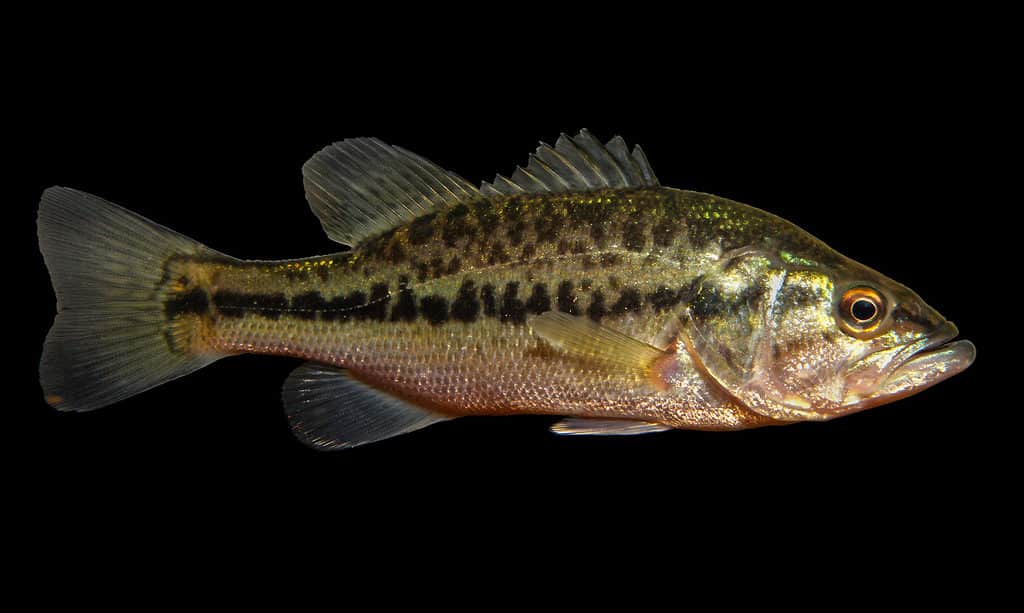
Spotted bass are smaller compared to largemouth bass.
©Sean McVey/Shutterstock.com
There are multiple differences between spotted bass and largemouth bass. These fish reach different sizes, have different diets, and reflect varying physical characteristics. These are the primary distinctions between these two similar types of fish.
Spotted vs. Largemouth: Size
Comparing these two fish side-by-side, it’s easy to see that the largemouth is significantly larger than the spotted bass. The average spotted bass can grow up to 25 inches long and weigh up to 11 pounds.
Meanwhile, the biggest largemouth bass can reach lengths up to 29.5 inches and weigh up to 22 pounds, 4 ounces. The longest, heaviest fish tend to be breeding females, which anglers usually catch and release to maintain the local population.
Spotted vs. Largemouth: Lifespan
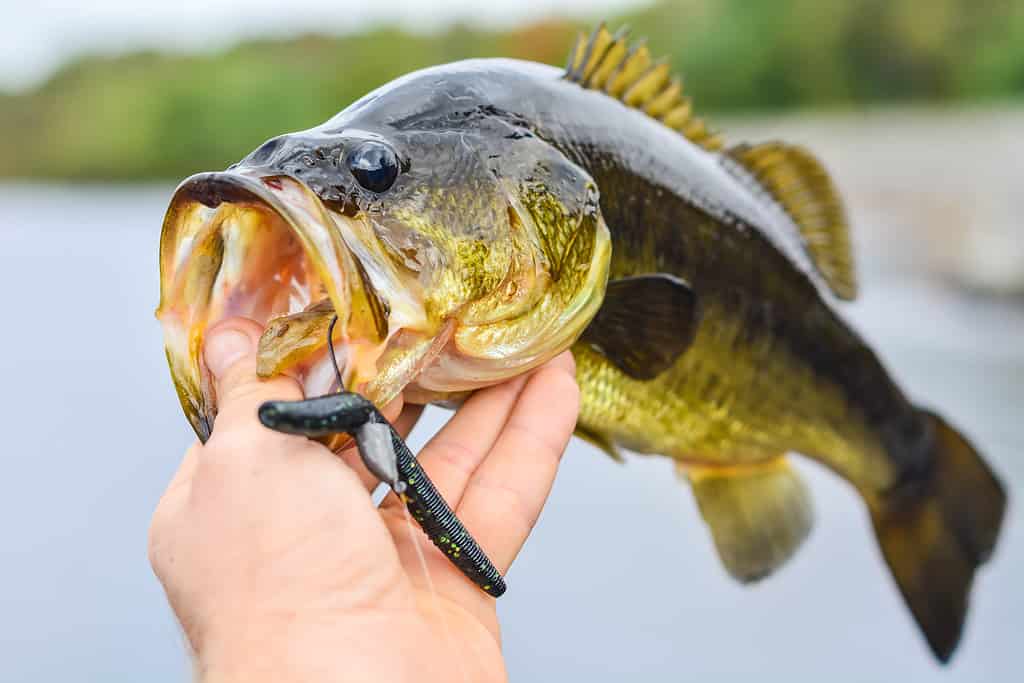
Largemouth bass tend to live longer than spotted bass.
©michal dziekonski/iStock / Getty Images Plus via Getty Images
While spotted and largemouth bass appear similar, they differ radically in terms of their lifespan. The average lifespan of most spotted bass is around 6-7 years in the wild, although some individuals can live up to 9 years or more. Largemouth bass can live up to 16 years, but their average lifespan in the wild is generally around 10-12 years.
Spotted vs. Largemouth: Diet
As juveniles, spotted bass and largemouths eat fairly similar diets. However, as they grow, their diets begin to vary, notably the diet of the largemouth bass. Spotted bass primarily subsist on insects and crayfish as juveniles and more small fish as adults. Like spotted bass, largemouths’ diet consists of insects, shrimp, worms, crawfish, and water fleas before their maturity.
Upon reaching adulthood, their tastes expand significantly. As apex predators, they will consume almost anything they can catch, including frogs, snakes, salamanders, bats, and small mammals. In addition, they will also eat juvenile turtles, alligators, and younger members of larger fish species.
Spotted vs. Largemouth: Habitat

The habitats of spotted and largemouth bass differ.
©iStock.com/Marek Trawczynski
Experienced anglers know that spotted and largemouth bass prefer different habitats. While both range throughout the central and eastern United States, they tend to congregate in separate bodies of water.
For example, you can generally find spotted bass in fast-moving rivers or streams with rocky bottoms. On the other hand, largemouth bass prefer slower-moving, clearer water. In addition, spotted bass tolerate warm water better than largemouths.
Spotted vs. Largemouth: Jawline
Another critical difference between spotted bass vs. largemouth bass is in the size of their jawlines. While they both feature the distinctive bass mouth, the largemouth bass’s jawline is more prominent.
It’s easy to see that the jawline on a spotted bass ends right in line with its eye. Meanwhile, the jawline of a largemouth bass extends past its eye. This feature is how it got its name “largemouth.”
Spotted vs. Largemouth: Scales
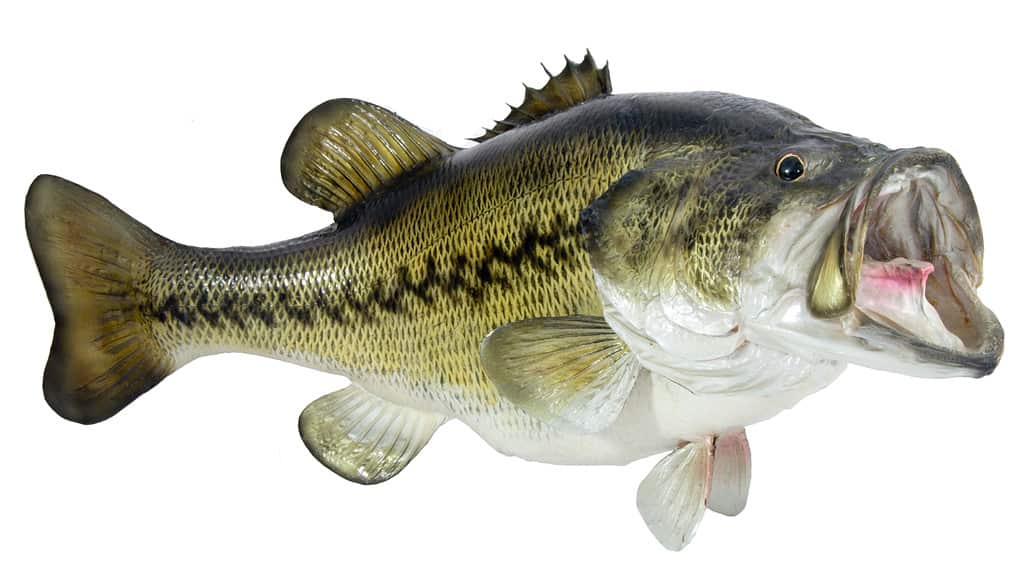
The scales on largemouth bass are larger than the scales on spotted bass.
©iStock.com/Joe_Potato
In addition to differences in the sizes of their bodies and mouths, the scales of spotted and largemouth bass also differ. Typically, the scales on the cheeks of spotted bass range in size depending on their position. Scales on the upper cheeks are more prominent, while the scales on the lower cheeks are smaller.
The scales on the cheeks of largemouth bass do not exhibit this same degree of change between the upper and lower cheeks. Furthermore, as a whole, the scales on the cheeks of largemouth bass are larger than those on spotted bass.
Spotted vs. Largemouth: Dorsal Fin
Unless you know where to look, you’re not likely to notice this slight difference between spotted and largemouth bass. Both species contain spiny and soft dorsal fins, and when laying flat, they appear identical.
However, if you raise the fins, the similarities begin to fade. In spotted bass, a membrane connects the two fins. Meanwhile, no such membrane exists in largemouth bass, so the two fins stand almost wholly separate from each other.
Spotted vs. Largemouth: Coloration
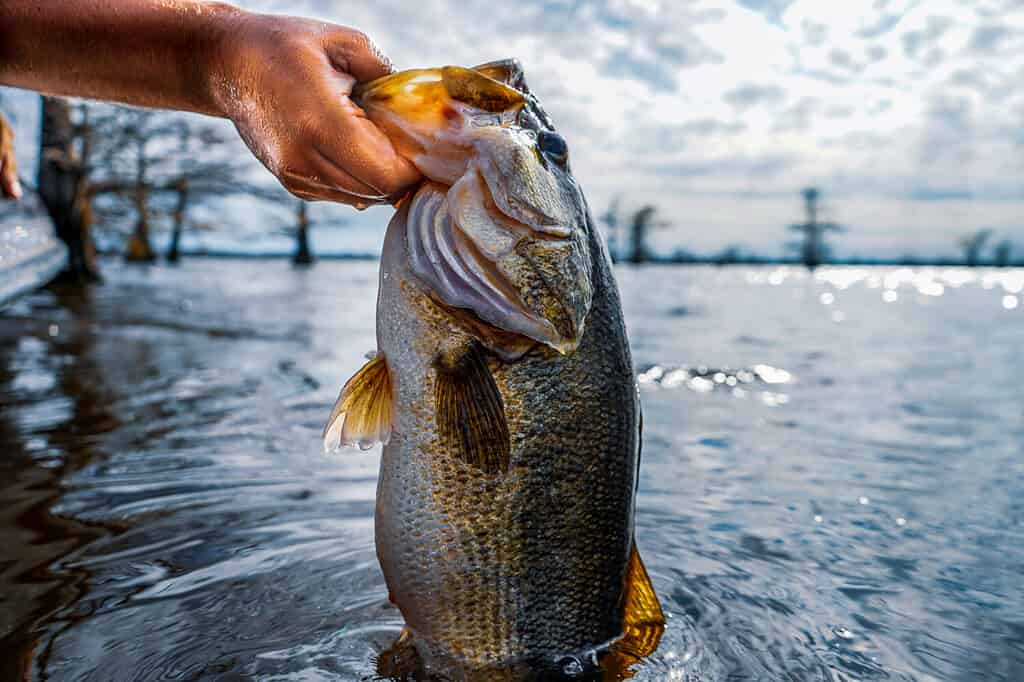
Spotted bass have more obvious spots compared to largemouth bass.
©Maclane Parker/Shutterstock.com
The coloration on spotted and largemouth bass is very similar. That said, a few slight color and pattern variations exist that allow a trained eye to differentiate the two easily. Spotted bass generally appear brownish-green, while largemouth bass look olive-green.
In addition, small dark spots run in thin, dark lines along the lower sides of spotted bass. These dark spots are where it gets its name. While the spots also exist on largemouth bass, they are not as dark, nor do they connect to form lines.
Spotted vs. Largemouth: Lateral Line
The final difference between spotted bass vs. largemouth is difficult to see, even for a trained eye. The lateral line is a sensory organ that allows fish to detect water motion and pressure gradients. In a spotted bass, the area between the lateral line and its dark horizontal band contains dark-edged, prominent scales. On the other hand, the scales in the same location on largemouth bass look less pronounced, giving them a smooth appearance.