
Quick Take
- The latest numbers on monarch butterfly populations in their overwintering habitat in Mexico show a 64 percent increase in the area where populations are found.
- Monarchs migrate up to 2,800 miles from their winter homes in Mexico to their summer homes in the U.S. and southern Canada.
- During the migration, several generations of monarchs are born.
Good news for butterfly lovers: Recent news out of Mexico offers an encouraging sign for future generations of monarchs. On March 17, 2026, the monarch winter 2025-2026 population numbers were released by the National Commission of Protected Natural Areas in Mexico (CONANP) and World Wildlife Fund (WWF).
What the Numbers Say About Monarch Butterfly Populations
Data shows that as of December 2025, monarchs occupied 2.93 hectares (7.24 acres) of land. That’s up from the same time the previous year, when monarch populations occupied 1.79 hectares (4.42 acres). The numbers represent a 64 percent increase over last year’s area. It’s also slightly higher than the average of the past decade, 2.81 hectares (6.94 acres).
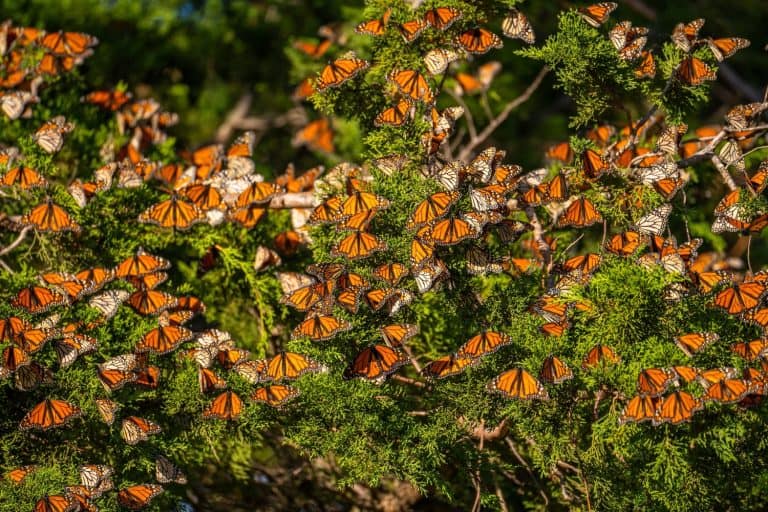
Monarch butterflies migrate to Mexico to escape freezing temperatures further north. They gather in high elevation oyamel fir forests that have a unique micro-climate. These “cloud forests” offer the perfect temperature for the monarchs to go dormant but not freeze. Adequate moisture from fog and dew keeps the butterflies from dehydrating during their months-long dormancy.
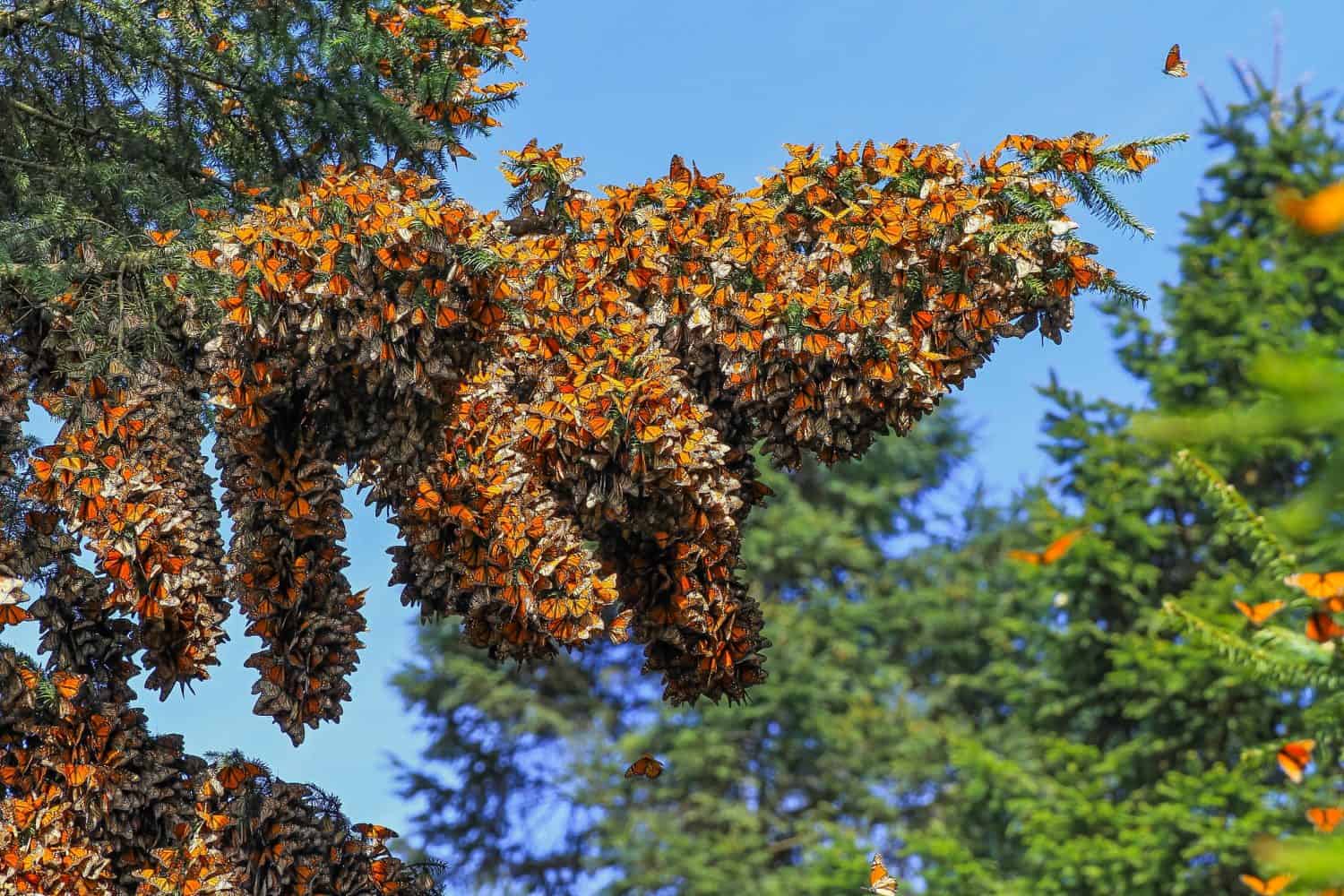
Monarch butterflies go dormant on oyamel fir trees in Mexico’s “cloud forests.”
©Leo Kohout/Shutterstock.com
The monarch population measurements are taken by studying trees within these forests that house clusters of monarchs. The sites have been monitored by WWF and CONANP since 2004. Before that, the Monarch Butterfly Biosphere Reserve (MBBR) collected data between 1993 to 2003. The reports also show a decrease in forest lost across the oyamel fir forests.
Karen Oberhauser, a monarch researcher and retired director of the University of Wisconsin-Arboretum, stated in a recent news article that the number of monarchs within a hectare varies from year to year but is estimated to be around 21 million.
The Monarch Butterfly Migration Story
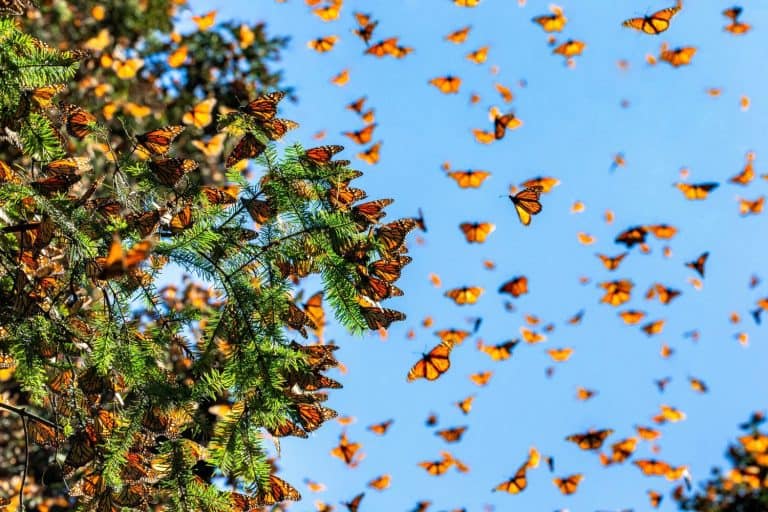
Monarch butterfly migration is a multi-generational affair that sees the butterflies traveling up to 2,800 miles one way. In the spring, adult monarchs leave their overwintering homes in Mexico to head north and spread out across the southeastern United States. Along the way, they mate and lay eggs.

The monarch butterfly migration route is up to 2,800 miles one way.
©Kate Besler/Shutterstock.com
Once the eggs hatch, the offspring spread further north, across the northeastern quarter of the United States and southern Canada. As those butterflies mature, they continue the breeding cycle from May through August. The last of the eggs hatched during that time start their journey back to Mexico between mid-August and October.
Those that survive the journey, spend the winter months in the warmer Mexican region. Once spring arrives the following year, the adult monarchs begin their journey north again to repeat the cycle.
What’s Helping Boost Monarch Butterfly Populations?
The number of monarchs that make it to Mexico each year is impacted by two factors: how the overall population fared in the previous three generations (within a single season) and how many survived the migration journey. Both factors are directly impacted by weather conditions, the availability of good habitats along the way, and the presence of environmental toxins like insecticides. Natural predators, diseases, and parasites also play a role.
As global temperatures heat up, monarch populations decline. Dry conditions and drought, especially in areas where second and third generations are born within a single season, have the most direct impact. The year 2024 proved to be hotter and drier in the upper-Midwest of the U.S., a key breeding area for later generations within the season. According to data from the Monarch Larva Monitoring Project, this resulted in lower-than-expected numbers for second and third generations of monarchs born that year.
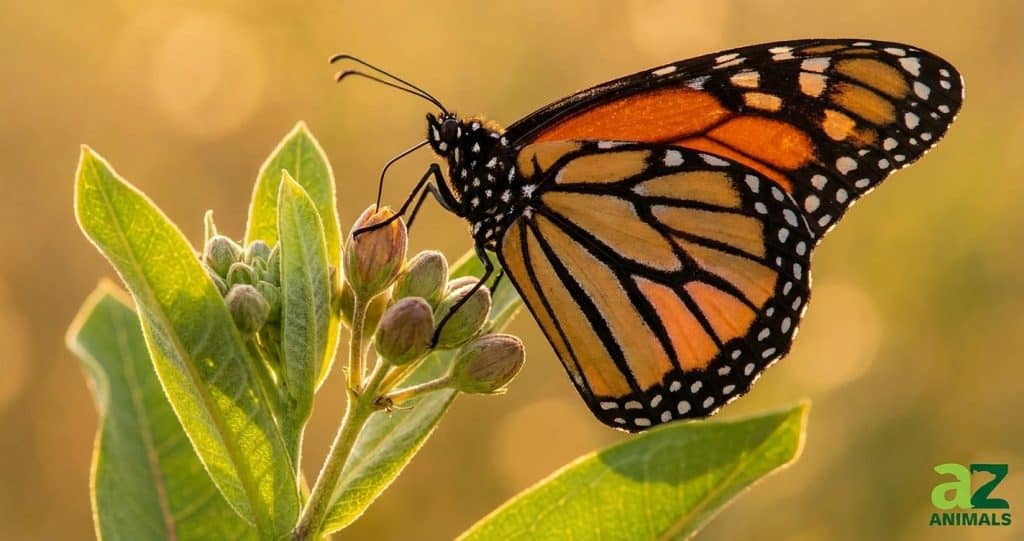
Monarch butterfly populations declined in 2024 due to dry conditions and drought in the U.S.
©A-Z Animals
The same group found that 2025 proved to be a more successful year for second and third generation populations. Weather conditions better supported survival numbers.
According to Oberhauser in her press release, other factors also helped boost monarch populations. People along the breeding and migration routes are restoring the butterflies’ natural habitats. Butterfly-friendly areas are springing up in yards, schools, churches, and workplaces.
How You Can Help Monarch Butterflies
No matter where you are in along the monarch butterfly migration path, you can help them. It starts by creating more healthy habitats for these beautiful insects. Monarchs like to hang out in backyard gardens, meadows, and other open, sunny areas, especially when milkweed is available. Taking steps to keep these areas insecticide-free is essential for their health.
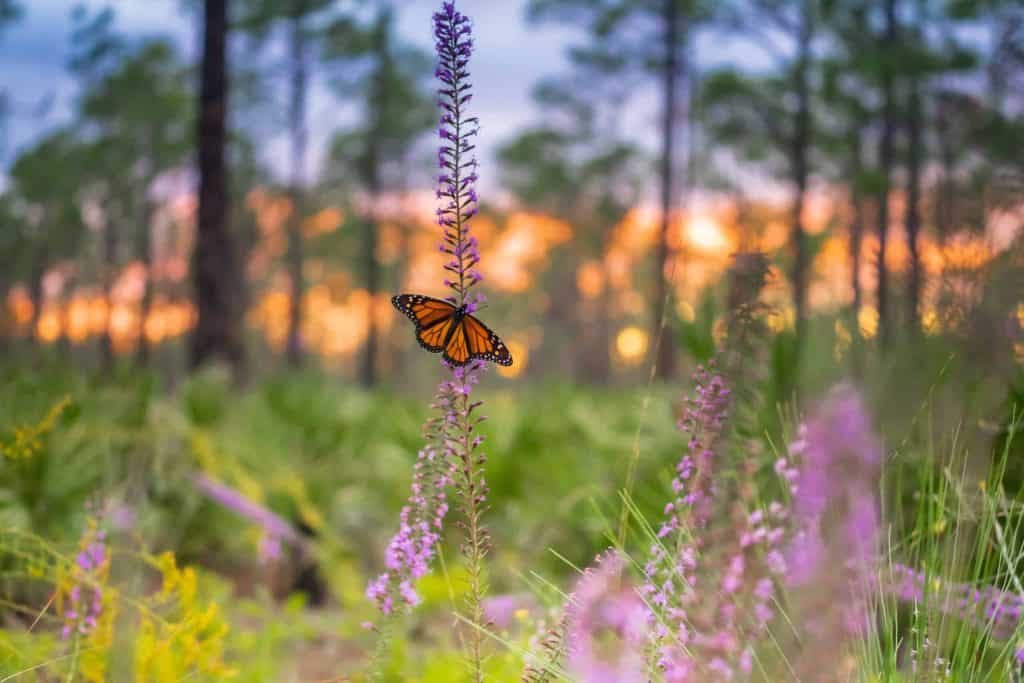
Creating healthy, pesticide-free habitats will help monarch butterfly populations grow.
©AlejandroCarnicero/Shutterstock.com
Reducing your climate change footprint will also help. Drier, hotter climates are bad for monarchs, just as they are unhealthy for humans and most other species. Extended droughts caused by increasing temperatures can have devastating effects on monarch populations.
Anyone interested in learning more about how these factors impact monarch populations can view Climate, Weather, and Monarchs, which is part of the Monarch Butterfly Conservation Webinar Series put on by the Monarch Joint Venture habitat program.
Where to See Monarchs on Their Migration
Seeing thousands of monarch butterflies on their annual migration is surely a sight. Luckily for us, there are places that these butterflies visit time and time again. Typically, the best time of year to see the eastern populations of these majestic insects is between early September and late October. According to the U.S. Fish & Wildlife Service, the following places are “super stops” on the Monarch Migration Trail:
- St. Marks National Wildlife Refuge in Florida
- Virginia’s Eastern Shore of Virginia National Wildlife Refuge
- Balcones Canyonlands National Wildlife Refuge in the Texas Hill Country
- Kansas’ Quivira National Wildlife Refuge
- Neal Smith National Wildlife Refuge in Iowa (Monarchs are here year-round.)
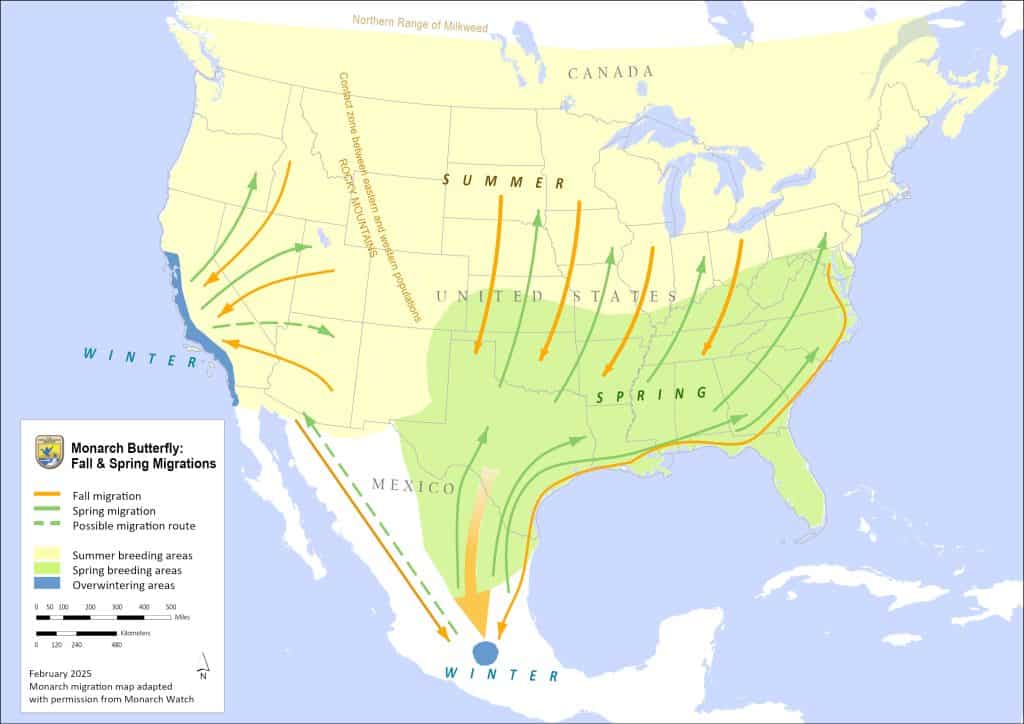
This map displays the North American monarch butterfly range. There are two monarch butterfly populations in North America—eastern (east of the Rocky Mountains) and western (west of the Rocky Mountains).
©Monarch butterfly migration map, USFWS, Public Domain, https://www.fws.gov/media/monarch-butterfly-migration-map – Original / License
To see the western monarch butterfly populations, check out the Pacific Grove Monarch Sanctuary in California. Known as “Butterfly Town, USA,” Pacific Grove is one of the largest publicly available overwintering sites in the state. Other notable sites in California include the Pismo State Beach Monarch Butterfly Grove and the Goleta Butterfly Grove near Santa Barbara.