
Quick Take
- Spotted lanternflies hatch in April, meaning their egg sacs must be removed in March.
- The invasive species is now found across 20 U.S. states.
- Spotted lanternflies attack tree groves, hardwood forests, and vineyards, spelling trouble for local agriculture.
- The Scrape for the Grape initiative highlights the necessity of early scouting for survival.
Spotted lanternflies damage more than 100 types of plants across the country each year. This invasive species was first found in the U.S. in 2014 and has caused significant agricultural losses in recent years. The spotted lanternfly’s reign of terror is not limited to farmland. The species also decimates tree groves, hardwood forests, and vineyards. This insect is not picky about its food source, often resulting in the loss of an entire season’s worth of growth.
Residents in areas with high spotted lanternfly populations have now taken matters into their own hands. Locals are joining the fight to stop future generations of lanternflies before they hatch. But the main question remains: Will it work?
Why the Spotted Lanternfly Needs to Be Stopped
In Asia, where the spotted lanternfly is native, it feeds on more than 100 plant and tree species. Now, it’s found in at least 20 U.S. states, including recent infestations in Massachusetts and Indiana. What makes the spotted lanternfly so deadly to plants is its diet. It feeds on sap from plant stems, leaves, and trees, zapping their nutrients in a matter of months. Its high reproductive rate only aids in its devastation, allowing it to take over entire groves and agricultural fields.
As the spotted lanternfly feeds, it excretes a sticky substance called honeydew. This is harmful to the plant and serves as a breeding ground for fungal infections and bacteria. Black sooty mold is one of the most common issues with honeydew. This tacky liquid also attracts other nearby pests, stressing the plant out even further. Honeydew is often one of the first signs of an infestation; sadly, by the time this is discovered, it’s often too late for the plant or tree.
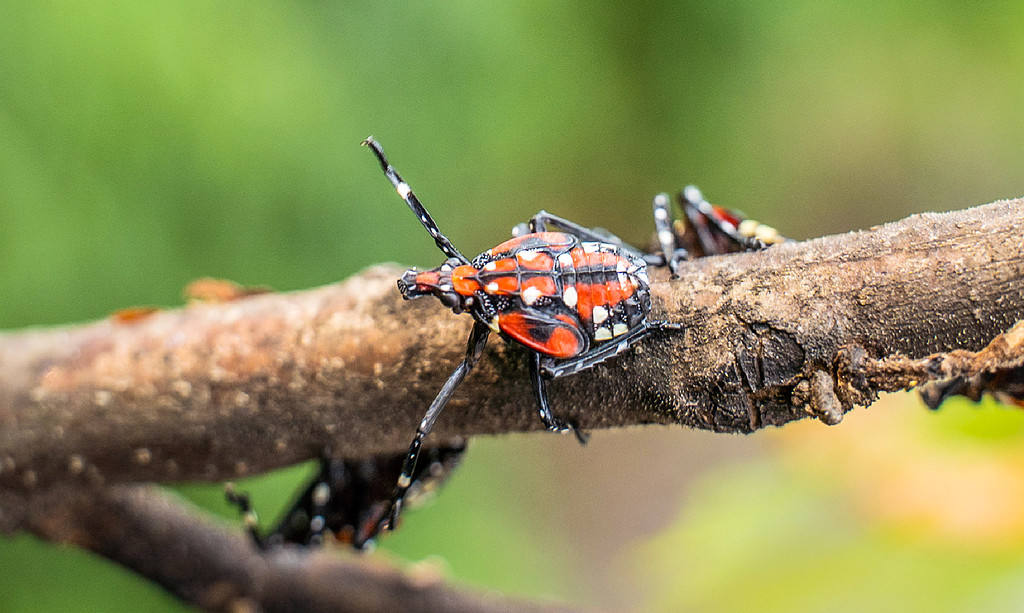
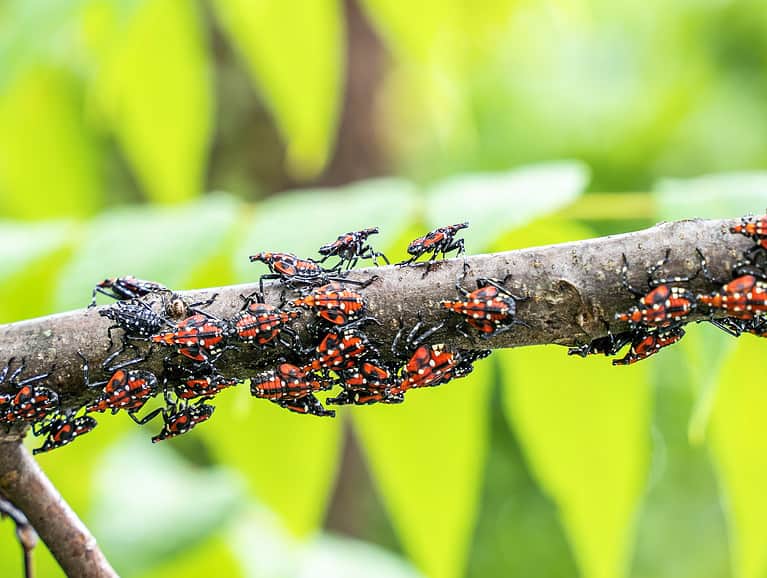
Spotted lanternfly nymphs are easily recognizable by their reddish-orange coloring and white spots.
©iStock.com/arlutz73
Since spotted lanternflies have no natural predators in the U.S., nothing stands in the way of their impact on native plant life. They hitchhike on vehicles and other modes of transportation, which is how they travel from state to state. And if their spread can’t be stopped, the next best thing is to keep them from hatching. To do this, 16 Virginia wineries started what they’re calling “Scrape for the Grape.”
Scrape for the Grape Recruits Community Help
Each spotted lanternfly mass contains between 30 and 50 eggs. These egg sacs can be hard to see against the dark brown of a tree bark or the greenish-brown of a vine. Each mature spotted lanternfly can lay one or two sacs per season, and these numbers add up by the time they hatch in the spring. At this point, it’s too late to control the population, and the damage has been done. Finding the egg sacs and destroying them, however, can prevent thousands of spotted lanternfly nymphs from emerging.
A total of 16 wineries throughout Loudoun County, Virginia, have teamed up to launch “Scrape for the Grape.” This initiative recruits locals to visit the vineyards and physically scrape spotted lanternfly egg sacs off grapevines. This prevents hundreds to thousands of spotted lanternflies from descending on the vineyard, which would otherwise kill a significant portion of its grapevines. The initiative not only engages the entire community but also helps small, family-owned businesses survive an invasive-species takeover.
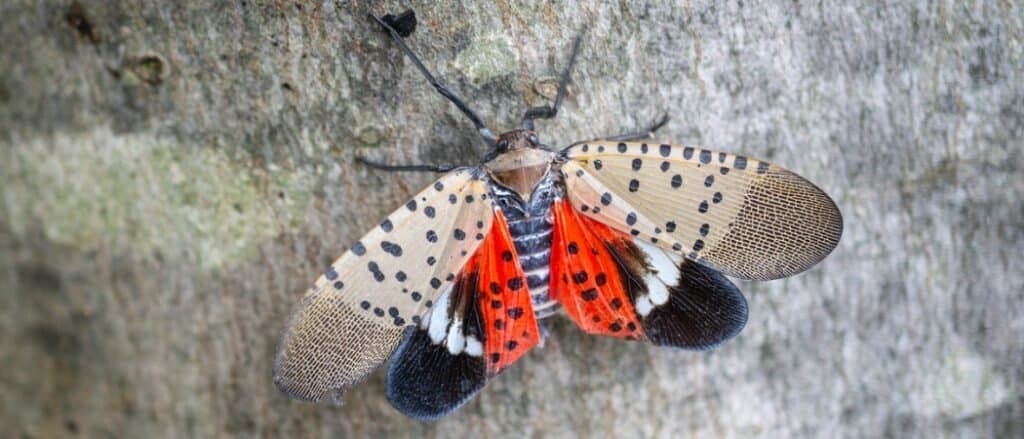
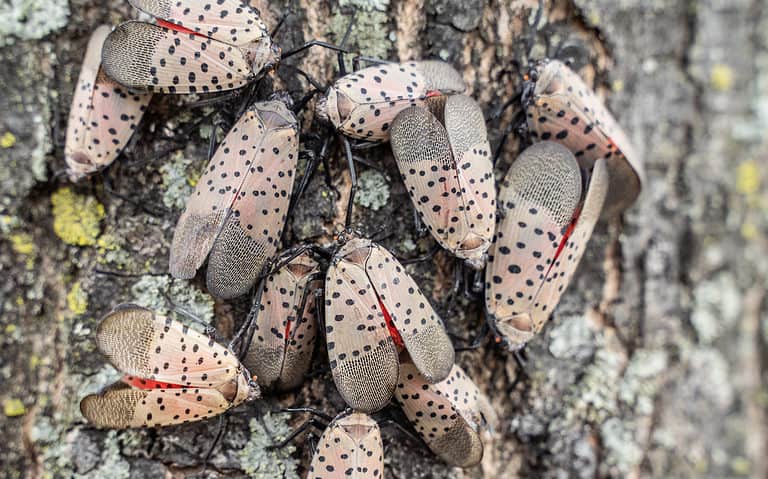
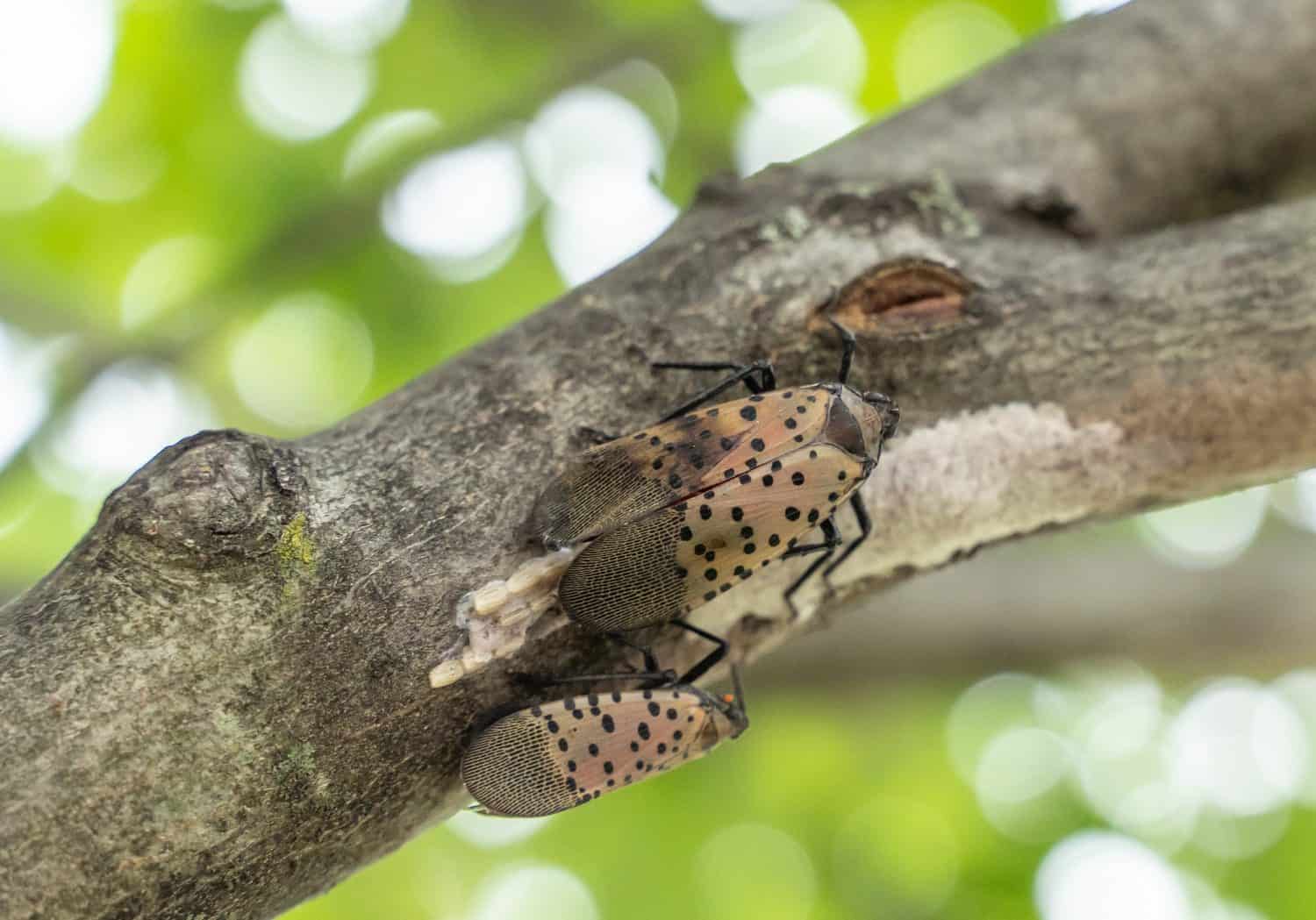
As adults, spotted lanternflies use partial camouflage to blend in with tree bark.
©iStock.com/arlutz73
Locals visit each vineyard to inspect 850 acres of grapevines, looking for greyish-brown sacs on the plants. Nearly 1,200 people have volunteered to remove the nests with credit-card-like scrapers. And it’s not only adults helping the vineyards—entire families have signed up to support the survival of their local winery’s grape fields. In return, locals receive discounts, free glasses of wine, and spotted lanternfly-shaped cookies for the kids.
Spotted Lanternfly Numbers Are Rising, and Locals Should Be Aware
In July 2025, officials began warning Massachusetts locals about increasing spotted lanternfly populations. A Springfield resident took a photo of an infestation on a tree-of-heaven, a favorite host of the species. This shocking image immediately prompted a warning to other locals. The resident also described their attempt to remove the pests: when vacuuming didn’t work, the insects simply hopped the fence into the neighbor’s yard. This is a prime example of how quickly the spotted lanternfly can move and how easily it can find another plant host.
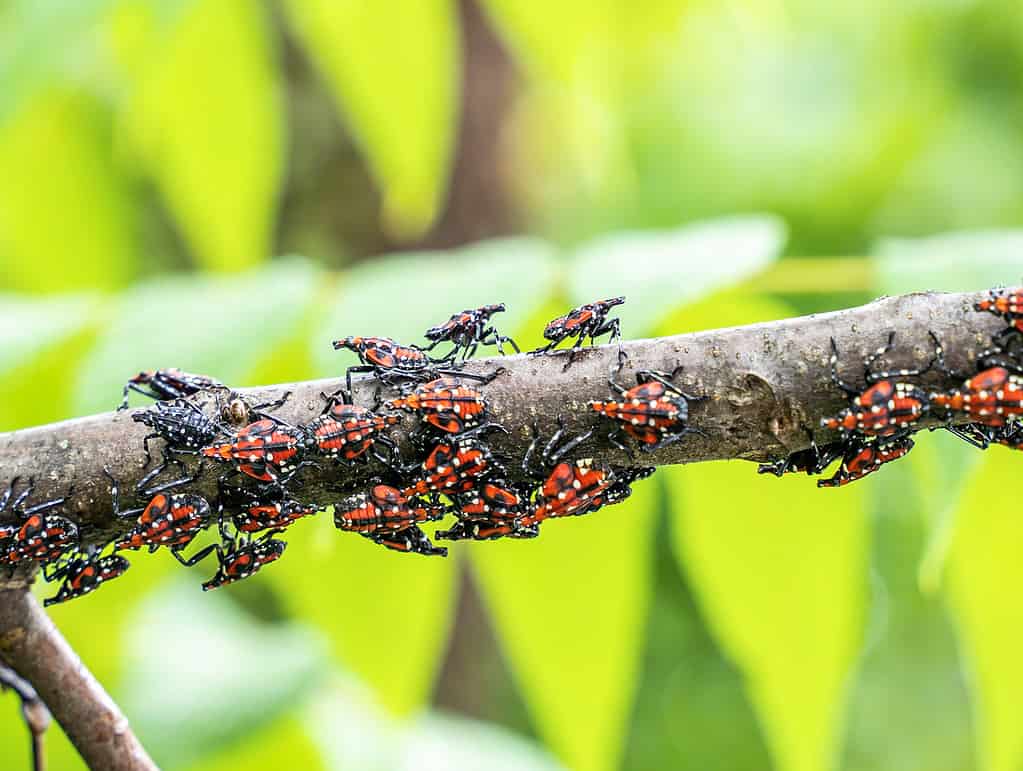
A spotted lanternfly infestation is nearly impossible to contain, and they must be stopped before they hatch.
©iStock.com/arlutz73
Warnings continued through the summer, with Massachusetts posting a helpful guide on what to do if locals found an infestation. However, once nymphs hatch, little can be done to contain the new generation. This is why Virginia’s Scrape for the Grape initiative is such a game-changer for halting spotted lanternflies. While initiatives have not been established in other states, experts are sharing methods of removing the insects before they have a chance to hatch.
Removing Spotted Lanternflies From Your Own Yard
Spotted lanternfly egg sacs look like mud packed on the bark of a tree or vine. They’re often mistaken for mud dauber nests, which is one reason they’re frequently missed. Other times, people look them over entirely as they blend into tree branches or the dirt at the base of a tree. But with a keen eye, you can notice the subtle differences that indicate a spotted lanternfly nest:
- If the egg sac appeared during the fall and wasn’t there throughout the summer.
- The sac has a waxy or wet appearance, resembling wet mud rather than dry mud.
- It’s found on a smooth portion of a tree surrounded by other similar-looking egg sacs.
- The egg sac is found on a smooth rock, patio furniture, siding, or fencing, and has no visible holes or patches.
Once you have identified an egg sac, the best way to remove it is by scraping. Use a credit card, a flat piece of plastic, a putty knife, or a pocket knife to peel the egg sac off any smooth surface. Do not throw it on the ground. Instead, place the egg sac into a bucket of soapy water or alcohol to ensure the nymphs are killed. If left on the ground, the nymphs may survive the winter and emerge in the spring.