
We are delving into the ten largest animals in the United States. This list ranges from majestic land mammals to colossal marine creatures. These species either make their permanent homes within U.S. borders or migrate through its territories, each showcasing extraordinary size, unique adaptations, and a strong connection to the environments they inhabit. From the mighty bison grazing across the open plains to the awe-inspiring blue whales navigating coastal waters, these creatures represent some of the most iconic and breathtaking wildlife in North America.
For each animal, we will explore key details, including:
- Size – Average and maximum dimensions of the species
- Location – Regions or habitats where they are commonly seen
- Diet – Primary food sources and feeding behavior
- Predators – Natural threats and challenges they face
- IUCN Status – Conservation classification by the International Union for Conservation of Nature (IUCN)
- Fun Fact – An intriguing or surprising detail about the species
Through these profiles, we aim to celebrate their remarkable presence while also raising awareness about the importance of conserving these giants for future generations. We begin our journey with the smallest of the large animals and conclude with the largest, showcasing the incredible diversity within the animal kingdom.
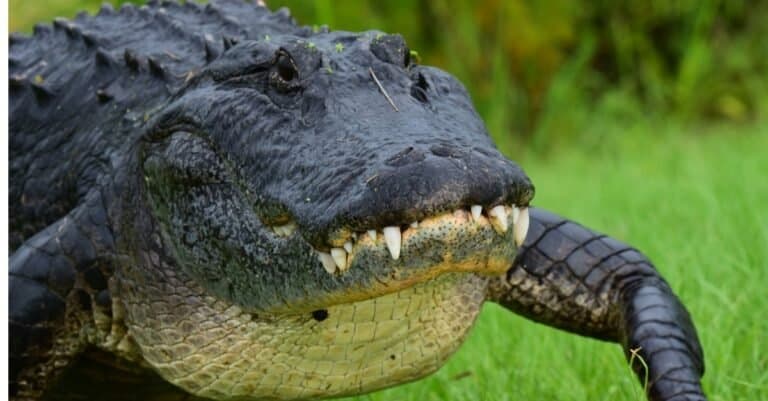
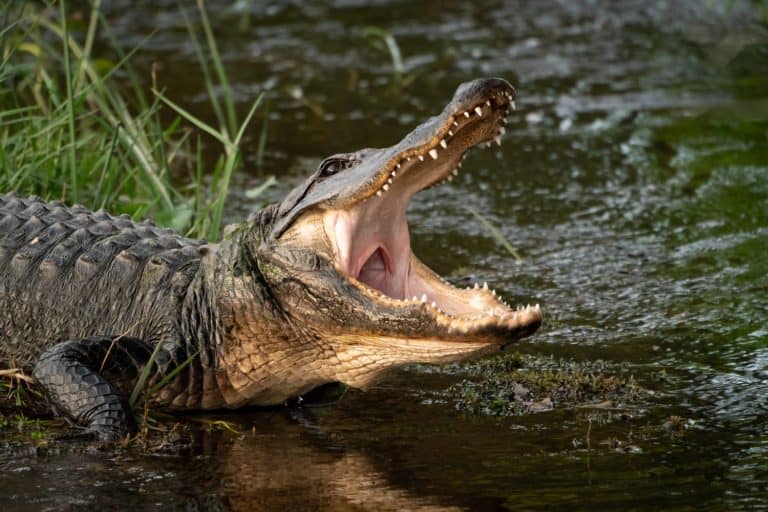
American Alligator
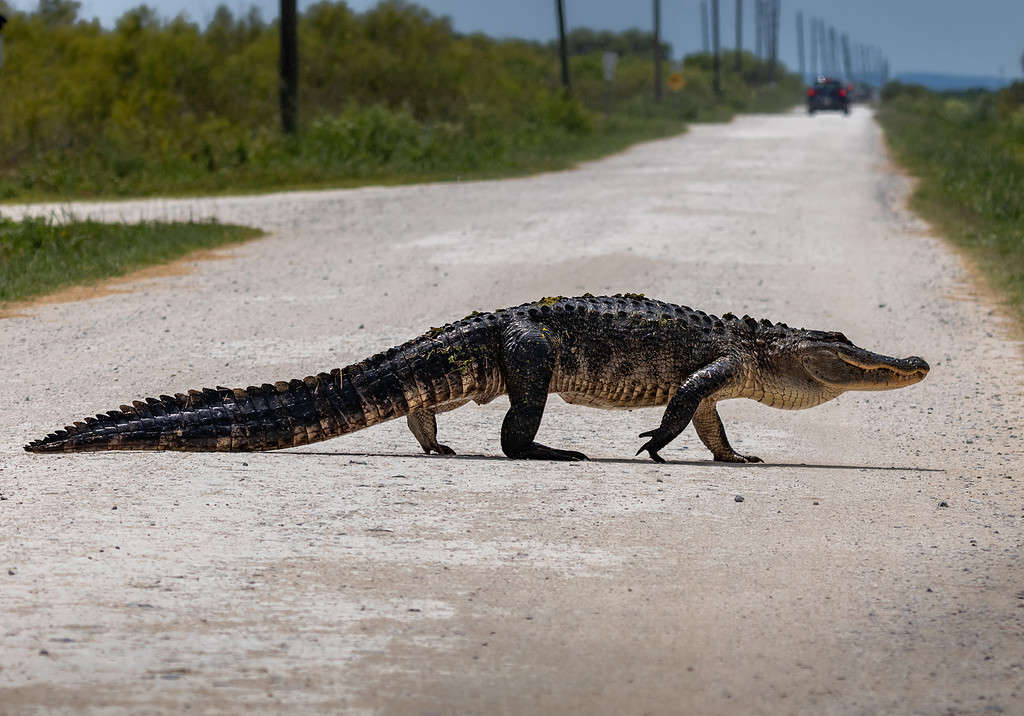
There are roughly 1.25 million American alligators in Florida and about 5 million across the United States.
©Benjamin Klinger/iStock via Getty Images
American alligators play a crucial role in their ecosystems as apex predators. They help control populations of fish and other aquatic species, which maintains a balanced environment. Their nesting behavior also creates habitats for other wildlife.
Statistics
- Size: Up to 15 feet long and weighs 500 lbs-1,000 lbs
- Location: Southeastern U.S., especially Florida and Louisiana wetlands
- Diet: Carnivores
- Predators: Humans (primary threat)
- IUCN Status: Least Concern (formerly endangered)
- Fun Fact: Can survive cold by creating an “ice snorkel” through frozen swamp water.
Elk
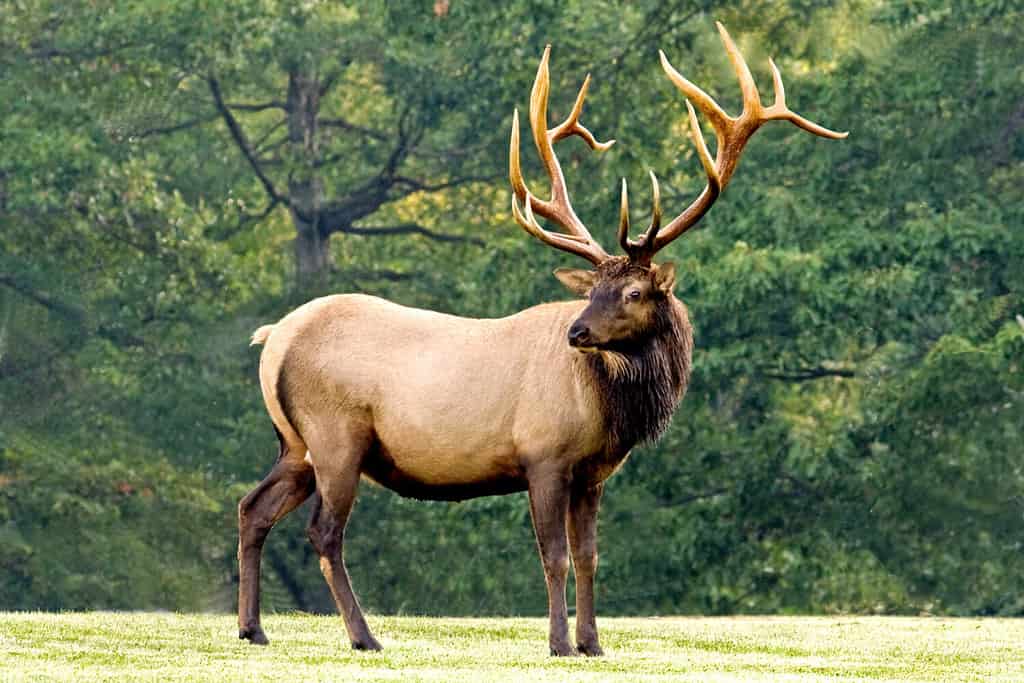
There is estimated to be approximately 1 million elk in North America.
©Paul Staniszewski/Shutterstock.com
Elk are known for their impressive antlers, which can span up to four feet and are shed annually. These antlers are not only a display of dominance during mating season but also serve as a critical tool for foraging in winter when snow covers vegetation.
Statistics
- Size: 4.5 to 5 feet at the shoulder and weighs 500-1,000 lbs
- Location: Western U.S., Rocky Mountains, and reintroduced in the East
- Diet: Mainly herbivores
- Predators: Wolves, bears, mountain lions
- IUCN Status: Least Concern
- Fun Fact: Bugling calls of bulls during rut can be heard for miles.
Grizzly Bear
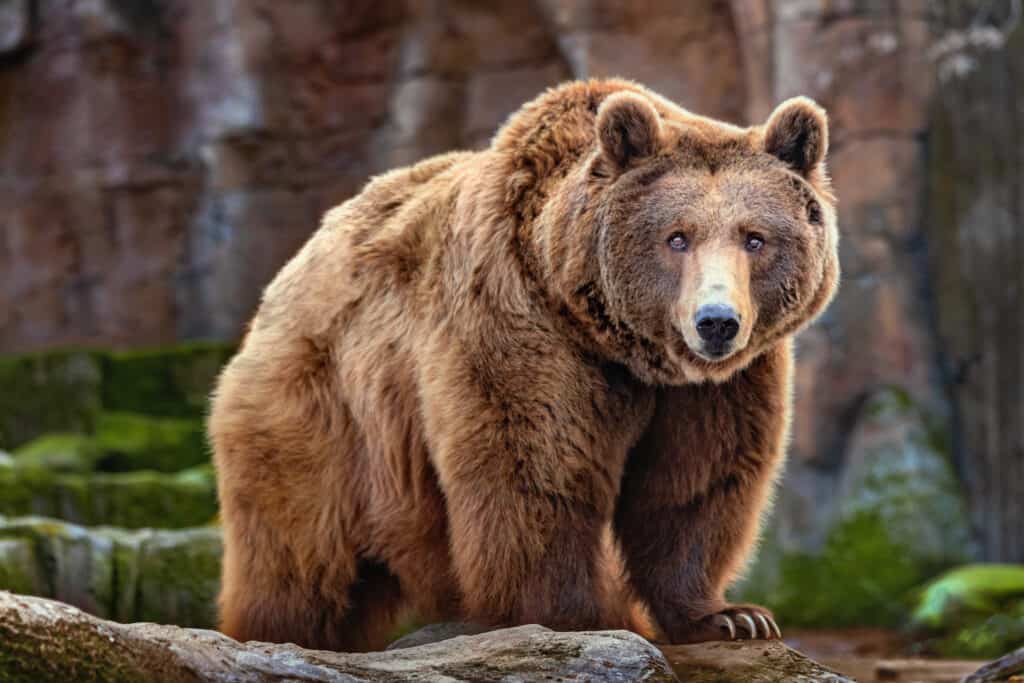
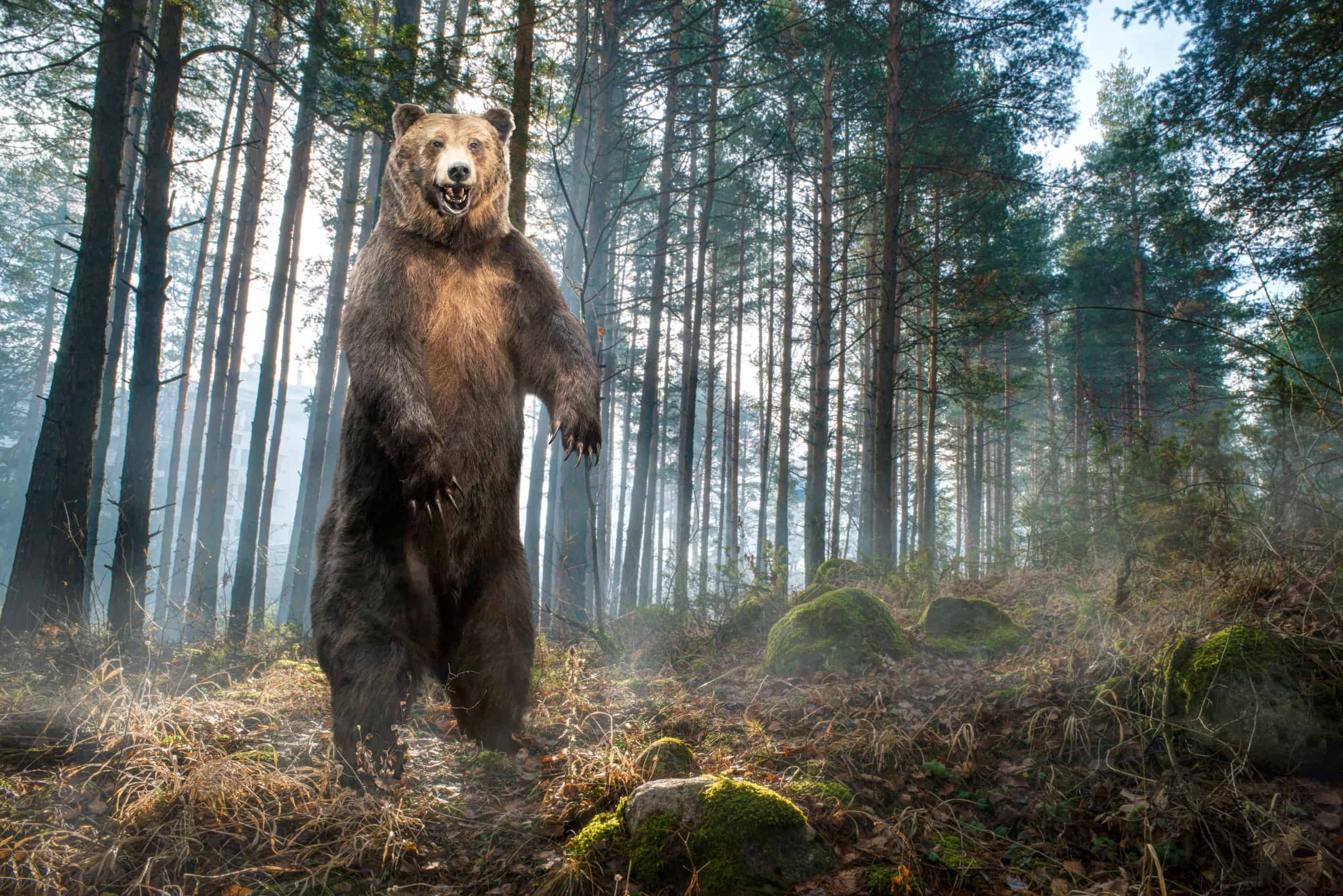
There are 1,900 grizzly bears in the lower 48 states, while Alaska is home to an estimated 30,000.
©Perpis/Shutterstock.com
Grizzly bears have an incredible sense of smell, which is estimated to be seven times stronger than that of a bloodhound. This acute sense allows them to detect food sources from great distances, including buried carcasses and even food from human camps.
Statistics
- Size: 6.5 to 8 feet long and weighs 600–1,200 lbs
- Location: Alaska, Yellowstone, parts of Montana, and Wyoming
- Diet: Omnivores
- Predators: Humans (primary threat)
- IUCN Status: Least Concern (globally), but threatened in the lower 48 states
- Fun Fact: They can run up to 35 mph despite their massive size, even though they can’t sustain that speed for long.
Polar Bear
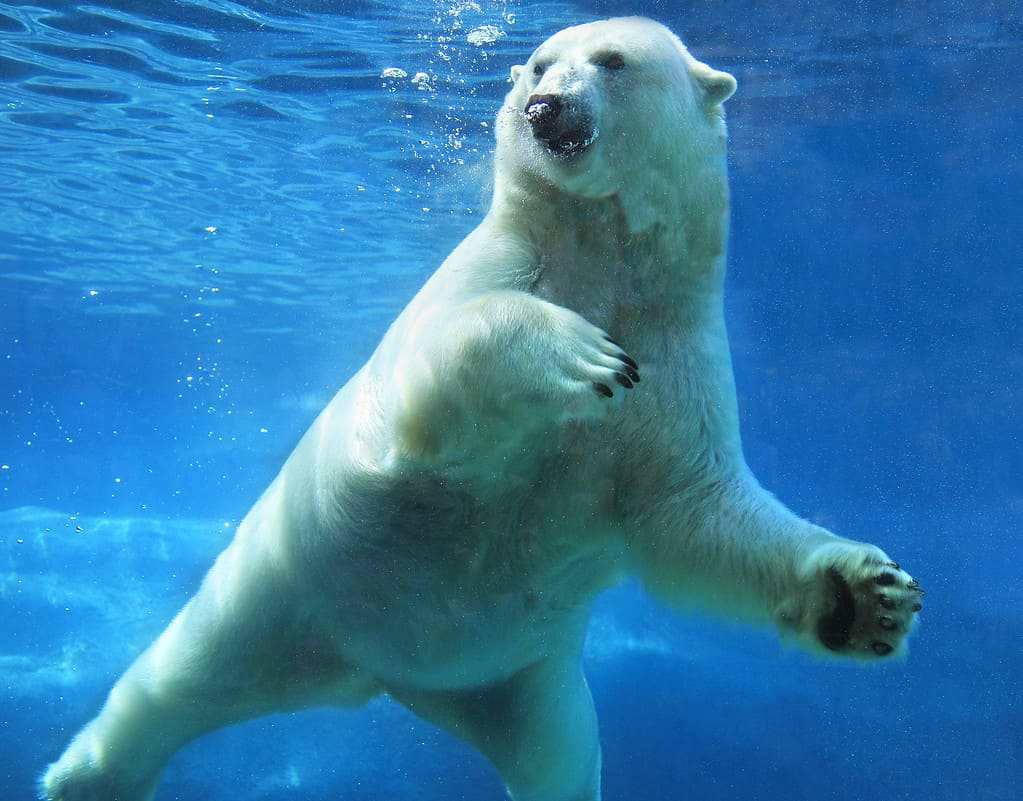
In the United States, polar bears are found only in Alaska, with an estimated population of 4,000 to 7,000.
©Vladone/iStock via Getty Images
Polar bears are exceptional swimmers and can hold their breath for up to two minutes while diving. They use their powerful limbs and partially webbed paws to navigate through icy waters, which is essential for hunting seals.
Statistics
- Size: 6 feet to almost 10 feet, and weighs 750-1,400 lbs
- Location: Alaska
- Diet: Carnivores
- Predators: Humans (primary threat)
- IUCN Status: Vulnerable
- Fun Fact: Despite their white appearance, polar bears actually have black skin, and their fur is transparent, appearing white because it reflects visible light. They also have blue tongues, and can swim up to 100 km continuously using partially webbed paws
Florida Manatee
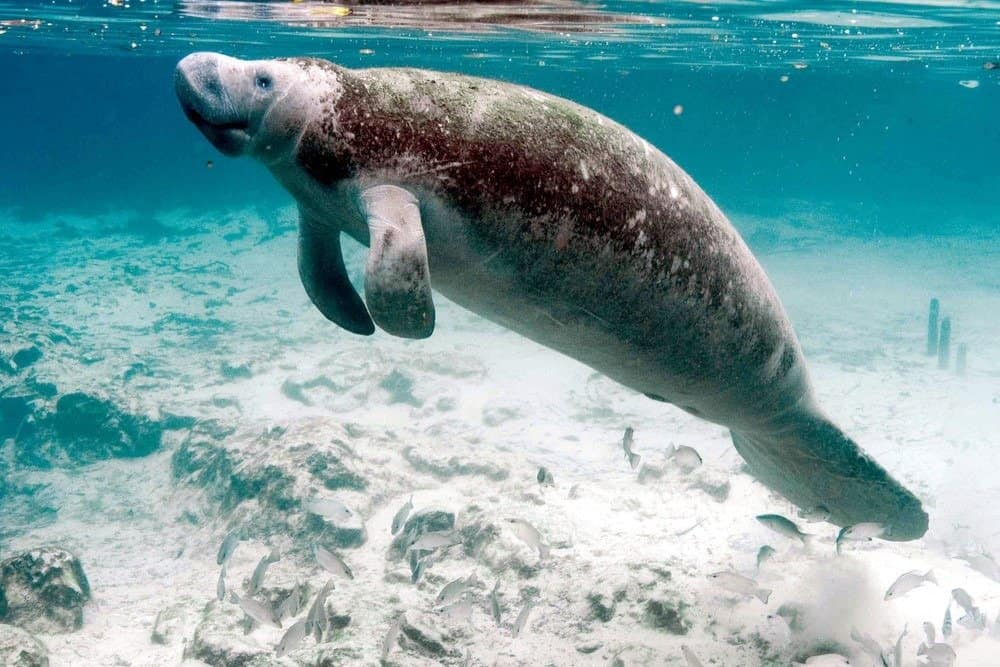
The estimated population of Florida manatees in the US is between 8,000 and 12,000 individuals.
©Ramos Keith, U.S. Fish and Wildlife Service / public domain – Original / License
Florida manatees have a unique social structure and often form bonds with one another, sometimes seen playing or interacting in groups. They communicate using a variety of sounds, including squeaks and whistles, which helps them maintain social connections.
Statistics
- Size: 9 to 10 feet long and weighs around 1,000 lbs (but some have reached 3,500 lbs)
- Location: Southeastern U.S., especially Florida in the winter, in summer, some venture into the Carolinas, and occasionally to Louisiana, or even Texas
- Diet: Herbivores
- Predators: Humans (primary threat)
- IUCN Status: Vulnerable
- Fun Fact: Manatees are often nicknamed “sea cows” because they are large, slow-moving, and herbivorous. They can live surprisingly long.
Moose
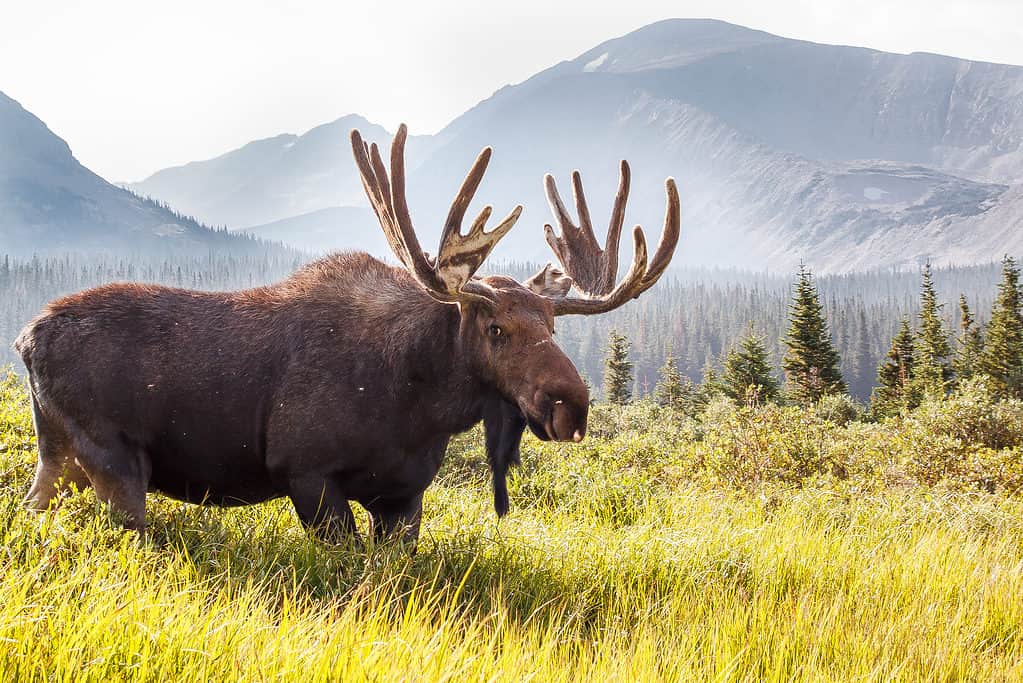
There are an estimated 300,000 moose in the US, with the largest population residing in Alaska.
©Michael Liggett/Shutterstock.com
Moose are known for their long legs, which allow them to navigate deep snow and wetlands effectively. Their large, broad hooves act like snowshoes, distributing their weight and preventing them from sinking.
Statistics
- Size: 5.5 to 6.9 feet at the shoulder and weighs 1,200 to 1,600 lbs
- Location: Northern U.S., especially Alaska, Maine, and the Rockies
- Diet: Herbivores
- Predators: Wolves, bears
- IUCN Status: Least Concern
- Fun Fact: The moose is an excellent swimmer.
American Bison
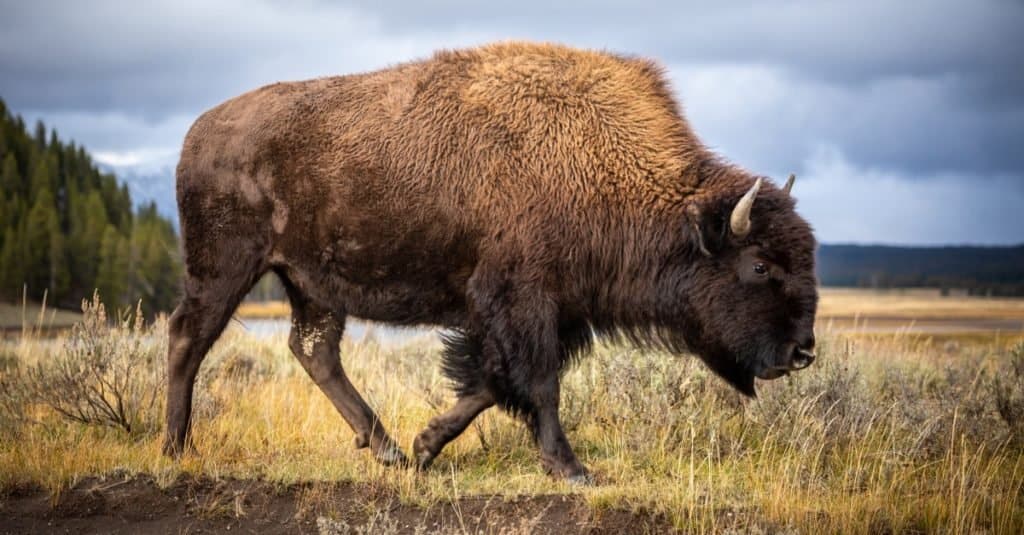
There are about 500,000 American bison. Most of that number is held by private ranchers.
©jack-sooksan/Shutterstock.com
The American Bison has a unique digestive system that allows them to thrive on tough grasses and other fibrous plant material. They possess a specialized stomach that ferments food, enabling them to extract maximum nutrients from their herbivorous diet.
Statistics
- Size: 4 to 6.5 feet tall at the shoulder and weighs 1,000-2,000 lbs
- Location: Plains, grasslands, Yellowstone, parts of Montana, and South Dakota
- Diet: Herbivores
- Predators: Wolves, bears (mostly prey on calves)
- IUCN Status: Near Threatened
- Population: Around 500,000 (mostly in private herds)
- Fun Fact: It was named the U.S. national mammal in 2016.
Northern Elephant Seal
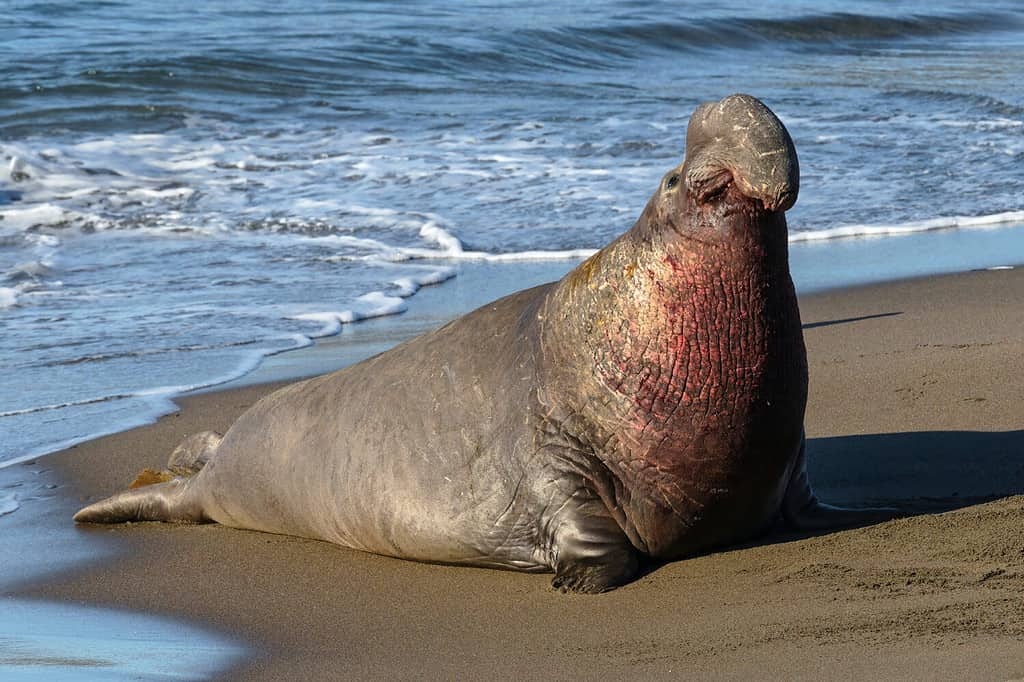
The population of Northern elephant seals in the U.S. is growing, currently estimated at around 170,000.
©David Osborn/Shutterstock.com
Northern elephant seals are known for their remarkable diving abilities, capable of reaching depths of over 5,000 feet. They can hold their breath for up to 100 minutes while foraging for fish and squid in the ocean.
Statistics
- Size: 13 to 16 feet long and weighs 3,300–5,100 lbs
- Location: Pacific Coast – California to Baja California
- Diet:- Carnivores
- Predators: Great white sharks, orcas
- IUCN Status: Least Concern
- Fun Fact: Males develop a large, inflatable proboscis used in mating displays.
Orca
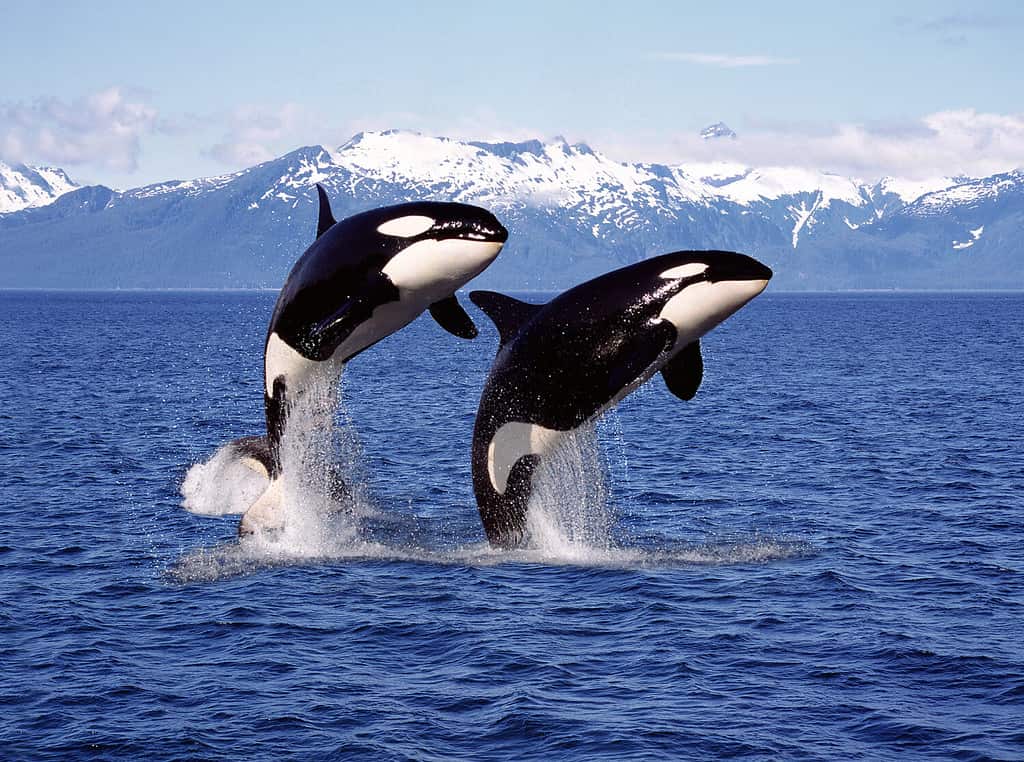
There are about 50,000 orcas worldwide, with approximately 2,500 living in the North Pacific Ocean.
©slowmotiongli/Shutterstock.com
Orcas (also known as Killer Whales) are highly social animals that live in matrilineal family groups called pods. These pods can consist of up to 40 individuals and display complex social behaviors, including cooperative hunting techniques and vocal communication.
Statistics
- Size: 20 to 32 feet long and weighs up to 11,000 lbs
- Location: Pacific Northwest, particularly Puget Sound and Alaska
- Diet: Carnivores
- Predators: Humans (primary threat)
- IUCN Status: Data Deficient (globally). Some populations are listed as Endangered under U.S. law.
- Fun Fact: Orcas are the largest living members of the dolphin family.
Blue Whale
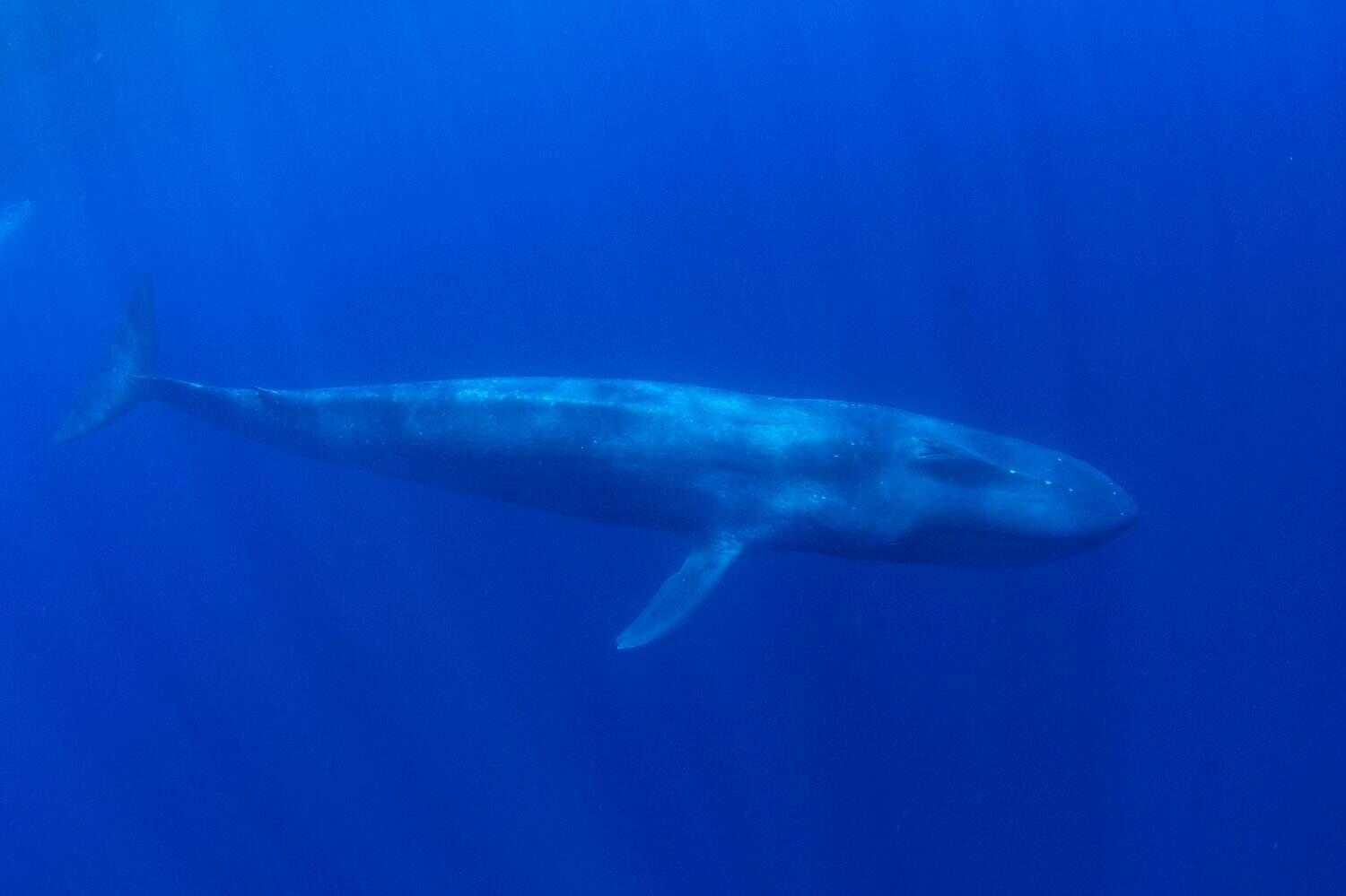
The global blue whale population is estimated at 10,000 to 25,000, with 2,000 summering off the California coast.
©Rich Carey/Shutterstock.com
Blue whales have a heart that can weigh as much as a small car, and their arteries are large enough for a human to swim through. Their massive size requires an extraordinary amount of food, leading them to consume vast quantities of krill during feeding season.
Statistics
- Size: Up to 100 feet long and weighs 200 tons
- Location: West Coast (California coast), Gulf of Alaska (seasonal)
- Diet: Carnivores (Specifically up to 4 tons of Krill daily!)
- Predators: Humans (primary threat)
- IUCN Status: Endangered
- Fun Fact: The blue whale is the largest animal to ever exist on Earth.
Conclusion
Each of these giant species plays a vital role in its ecosystem, serving as apex predators or essential foragers. Their unique adaptations and behaviors not only captivate us but also highlight the intricate balance of nature, even with these large creatures.
Unfortunately, many of these animals face significant threats, primarily due to human activities. Conservation efforts are essential to ensure that future generations can experience the beauty and wonder of these magnificent creatures. By raising awareness and promoting sustainable practices, we can help protect and preserve these species and their habitats. As we celebrate these remarkable big animals, let us commit to safeguarding their future. Our actions today will shape the health of our ecosystems tomorrow. Understanding and protecting these giants is not just a responsibility, it’s a privilege that enriches our connection to the natural world.