
Quick Take
- Maintaining wildlife populations favors public ownership over private interests.
- The Seven Pillars of the North American Model create specific legal barriers for private markets.
- In Europe, hunting is an elite sport requiring hunters to pay private landowners.
- License and hunting fees help fund wildlife restoration.
The North American Model of Conservation is what makes the U.S.’s wildlife protection one of the best in the world. It stands apart from many others, including the European conservation model. Whereas many countries leave wildlife in the hands of private landowners, the U.S. gives control to the public. This notion of shared responsibility for protecting the country’s vulnerable lands and species is what makes its model so successful. In the U.S., as the motto goes, conservation belongs to no one but is for everyone.

History of Conservation in America
The year 1937 was a pivotal moment for wildlife and land conservation in the U.S. Without the creation of the Pittman-Robertson Act, America’s ecological landscape would look drastically different today. The foundation of the act is a “user pays, user benefits” principle, which is at the core of wildlife preservation. It applies to hunting equipment and permits, which are taxed to restore huntable species. The taxes hunters pay each year fund wildlife conservation. As a result, the “user,” AKA the hunter, reaps the rewards of nature that’s protected under law. This act protects species such as white-tailed deer, ducks, turkeys, and other frequently hunted game.
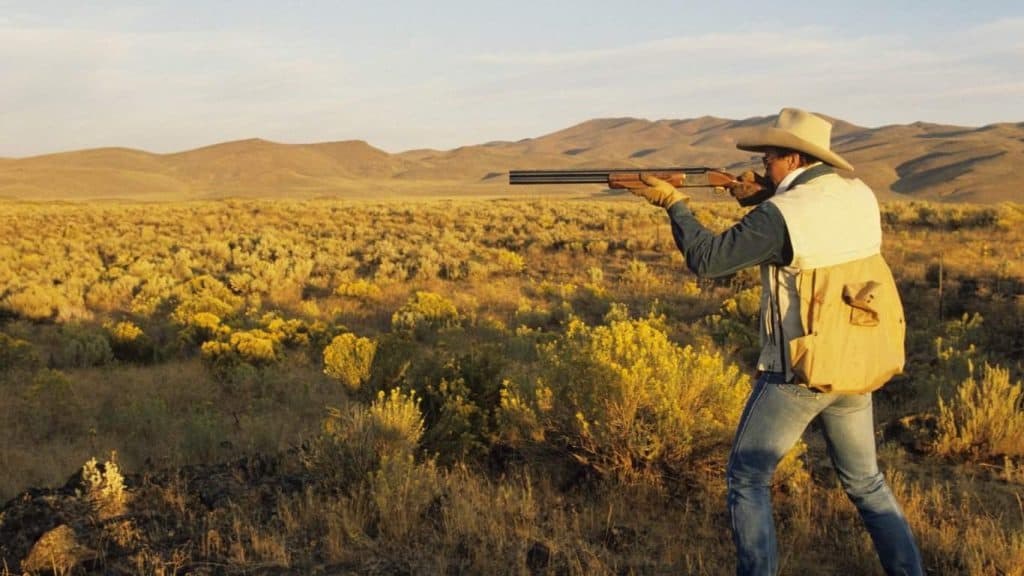
Hunters pay an 11% tax on equipment, which funds conservation efforts.
©Karl Weatherly / Photodisc via Getty Images
The Federal Aid in Wildlife Restoration Act (Pittman-Robertson Act) established an 11% excise tax on long guns, ammunition, and archery equipment, and a 10% tax on handguns. In 1950, this was expanded to include the Dingell-Johnson Act. As a result, fishing and archery equipment were also taxed. Each helped restore wildlife that’s hunted each year, thus continuing the cycle and guarding against overhunting and overfishing. Today, the Pittman-Robertson Act remains one of the largest sources of state-by-state funding for wildlife conservation in the U.S.
How Do Common Taxes Help Conservation?
Hunters aren’t the only ones who pay taxes that go right back into conservation. Some states also apply excise taxes or dedicate portions of sales tax revenue from outdoor equipment and licenses to conservation efforts. These also help protect marine and land ecosystems. Additionally, USDA programs often provide tax-reported payments, which reduce emissions and help keep soil clean. In some states, companies that contribute to pollution or greenhouse gas emissions may be subject to carbon pricing or cap-and-trade programs. In these cases, some of the revenue is directed toward environmental initiatives
National parks embody the notion that wildlife belongs to everyone.
©Cheri Alguire / iStock via Getty Images
Landowners can also donate development rights for income tax incentives. By doing this, a portion of their land is protected under federal law. This is how historic properties maintain their upkeep, and prevents anything from being built on land that houses large populations of wildlife. While taxes are not returned to the government, landowners help protect critical ecosystems by donating their land for conservation. This also marks a significant difference between wildlife conservation in the U.S. versus the European model.
North American Vs. European Conservation Models
In Europe, conservation comes down to private land ownership. Whereas the U.S. promotes public land, thereby dividing responsibility, Europe differs. Instead, the European model is rooted in landowners owning the wildlife that live on their property. This also grants them exclusive hunting rights to the land they own. Funding comes from private investments and relies heavily on national funds. This contrasts with the North American model, where users pay for the land, and taxes are a significant part of wildlife conservation.
Regarding hunting, this is a privilege that is typically afforded to those who can afford it in Europe. Some may see it as elite, especially given how much one must pay to use private land to do so. Europe’s hunting practices do not come with higher taxes, but hunters do pay a hefty fee to use someone’s land. However, the idea that wildlife is “owned” by whoever owns the land means that they also have a say in what is hunted and who hunts it.

Fees on fishing catches also go back into restoring marine species and conserving marine environments.
©Raissa Martins Nogueira/Shutterstock.com
In Europe, hunters spend an average of 25,000-30,000 euros per year. In the U.S., hunters pay a fraction of that, with a portion of the average $2,800 going back into species conservation. Wildlife restoration in Europe relies heavily on EU policies. Species are sometimes reintroduced, or strict quotas are set for hunting specific animals. To combat overhunting, protected areas, rewilding, and breeding programs are also used. Given that hunting is an elite sport in Europe, only protected areas can be managed. Wildlife on private land is at the landowner’s discretion. In the U.S., the use of public land for hunting prevents overhunting in any one area, while the taxes it generates help restore species populations.
How the North American Model of Conservation Protects Marine Environments
North American conservation doesn’t only protect wildlife on land. Marine environments and the marine life that inhabit them also follow a similar rule. The Public Trust Doctrine holds that certain natural and cultural resources are open to public use. This includes recreational fishing, boating, and general land and water use. This doctrine prevents the land from falling under private ownership, keeping it free and open to the general public.

The Pacific coast benefits greatly from the Public Trust Doctrine, which protects marine environments.
©Mariusz S. Jurgielewicz/Shutterstock.com
Taxes and other fees collected during use of these areas are used to conserve the land itself. As a result, the land is also managed by the government, further ensuring conservation efforts are successful. Again, this differs from the European model of conservation, which excludes the private sector from conservation entirely. The Public Trust Doctrine is particularly helpful in states such as California. Under the doctrine, tide pools, submerged land, and navigable waterways are protected but also open to general use. This is especially beneficial for marine parks and sanctuaries, as well as coastal locations with high recreational activity.
What Are the Seven Pillars of Conservation?
Another difference between models is North America’s Seven Pillars of Conservation. This speaks to the core beliefs of the North American Model of Conservation and explains how it all works. For nearly a century, these seven pillars have been the foundation of wildlife and land protection in the U.S.
The Seven Pillars
According to the Theodore Roosevelt Conservation Partnership, these are the seven pillars, defined by the U.S. Fish and Wildlife Service:
- Wildlife is a public resource and held in public trust. In the United States, wildlife is considered a public resource, independent of the land or water where wildlife may live. The government at various levels has a role in managing that resource on behalf of all citizens and to ensure the long-term sustainability of wildlife populations.
- Markets for game have been eliminated. Government actions that make it illegal to buy and sell meat and parts of game and non-game species have removed a major threat to their survival. A market in furbearers remains highly regulated.
- Allocation of wildlife by law. Wildlife is a public resource managed by the government. As a result, access to wildlife for hunting is regulated through mechanisms such as set hunting seasons, bag limits, and license requirements.
- Wildlife can only be killed for a legitimate purpose. Wildlife is a shared resource that must not be wasted. The law prohibits killing wildlife for frivolous reasons.
- Wildlife species are considered an international resource. Some species, such as migratory birds, cross national boundaries. Treaties such as the Migratory Bird Treaty and CITES recognize a shared responsibility to manage these species across national boundaries.
- Science is the proper tool for the discharge of wildlife policy. To manage wildlife as a shared resource fairly, objectively, and knowledgeably, decisions must be based on sound science, such as annual waterfowl population surveys and the work of professional wildlife biologists.
- The democracy of hunting and fishing. In keeping with democratic principles, government allocates access to wildlife without regard for wealth, prestige, or land ownership.