
Quick Take
- 1968 legislation mandated the Eastern Gray Squirrel as the official game species to preserve frontier history.
- The foraging behaviors of Sciurus carolinensis aid in Kentucky’s hardwood forest growth.
- Unrecovered nut caches serve as the essential catalyst for oak forest regeneration.
- State researchers prioritize mast production monitoring to determine the viability of squirrel population levels.
Eastern gray squirrels may appear to be routine backyard wildlife, yet in Kentucky, they hold formal recognition alongside animals such as white-tailed deer and northern cardinals. In 1968, state lawmakers selected the eastern gray squirrel as Kentucky’s official wild animal game species. The choice reflected more than population numbers. It acknowledged a species closely tied to hardwood forests, frontier survival, and a long tradition of small-game hunting. By honoring the gray squirrel, Kentucky recognized an animal whose daily habits parallel the state’s environmental history and its cultural relationship with the land.
A Forest Mammal of the Eastern Woodlands
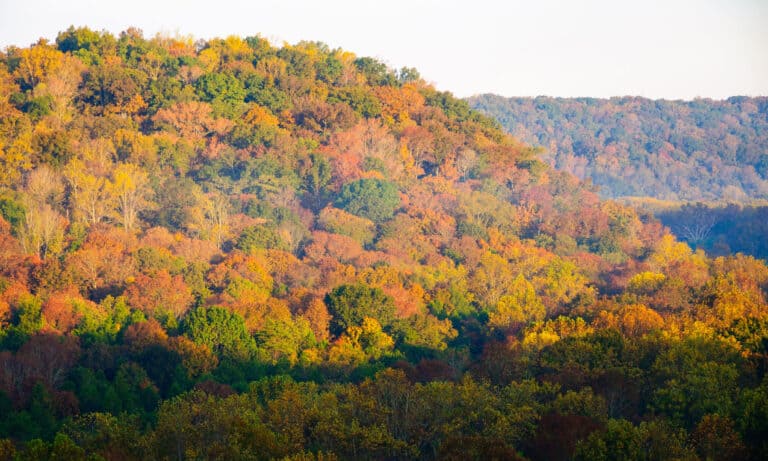
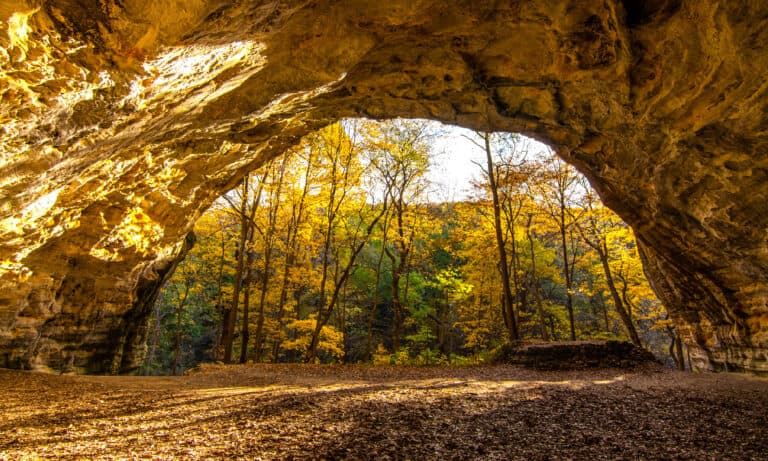
The eastern gray squirrel, known scientifically as Sciurus carolinensis, is native to the eastern United States and southeastern Canada. It thrives in mature hardwood and mixed forests dominated by oak, hickory, and beech trees. Kentucky’s landscape fits these needs well, offering extensive forest cover across ridges, hollows, and river valleys. Gray squirrels appear not only in remote woodlands but also in town parks, college campuses, and residential neighborhoods where large trees remain.
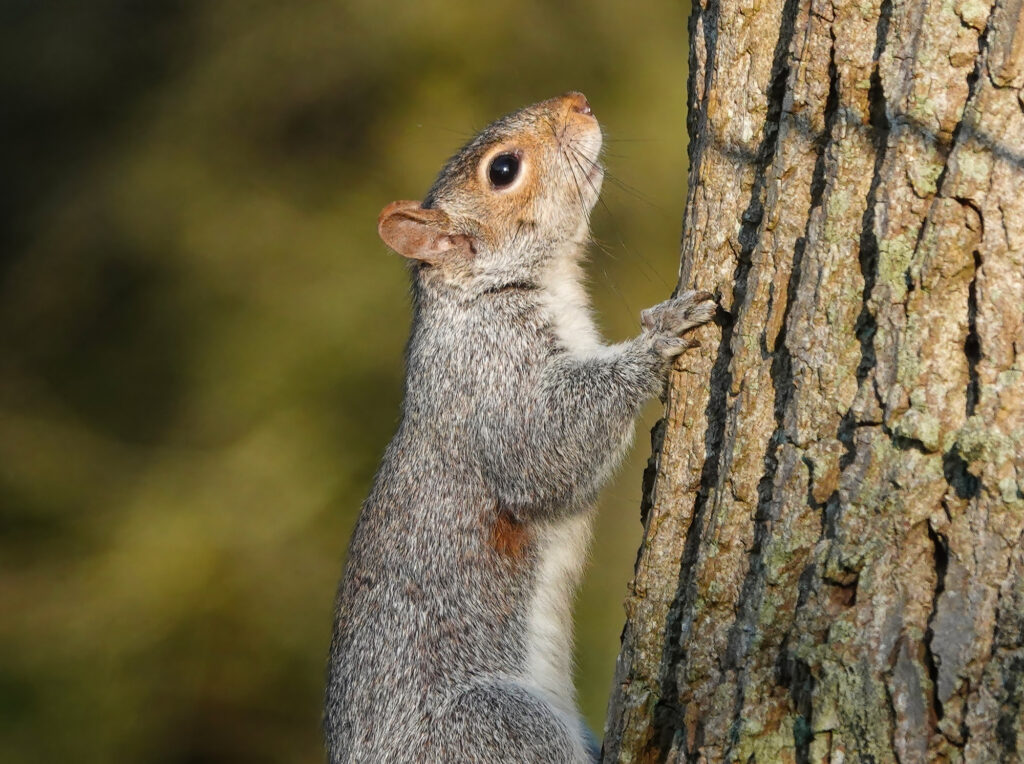
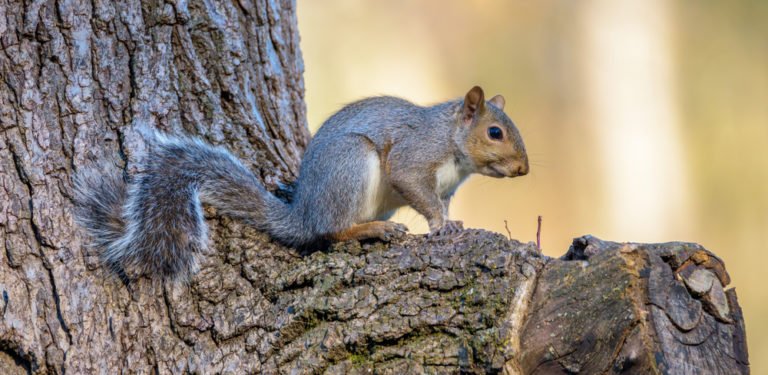
Strong claws, powerful hind legs, and a balancing tail allow eastern gray squirrels to navigate Kentucky’s trees with ease.
©iStock.com/Nigel Harris
Their physical traits suit life in the canopy. Gray fur provides camouflage against bark and shadow, while the pale underside blends with sky when viewed from below. The long tail acts as a balancing tool during leaps and as insulation during cold months. Sharp claws and strong hind legs allow squirrels to climb, leap, and descend headfirst with ease. These adaptations explain why the species has remained common in Kentucky despite changes in land use over time.
The Squirrel’s Role in Forest Renewal
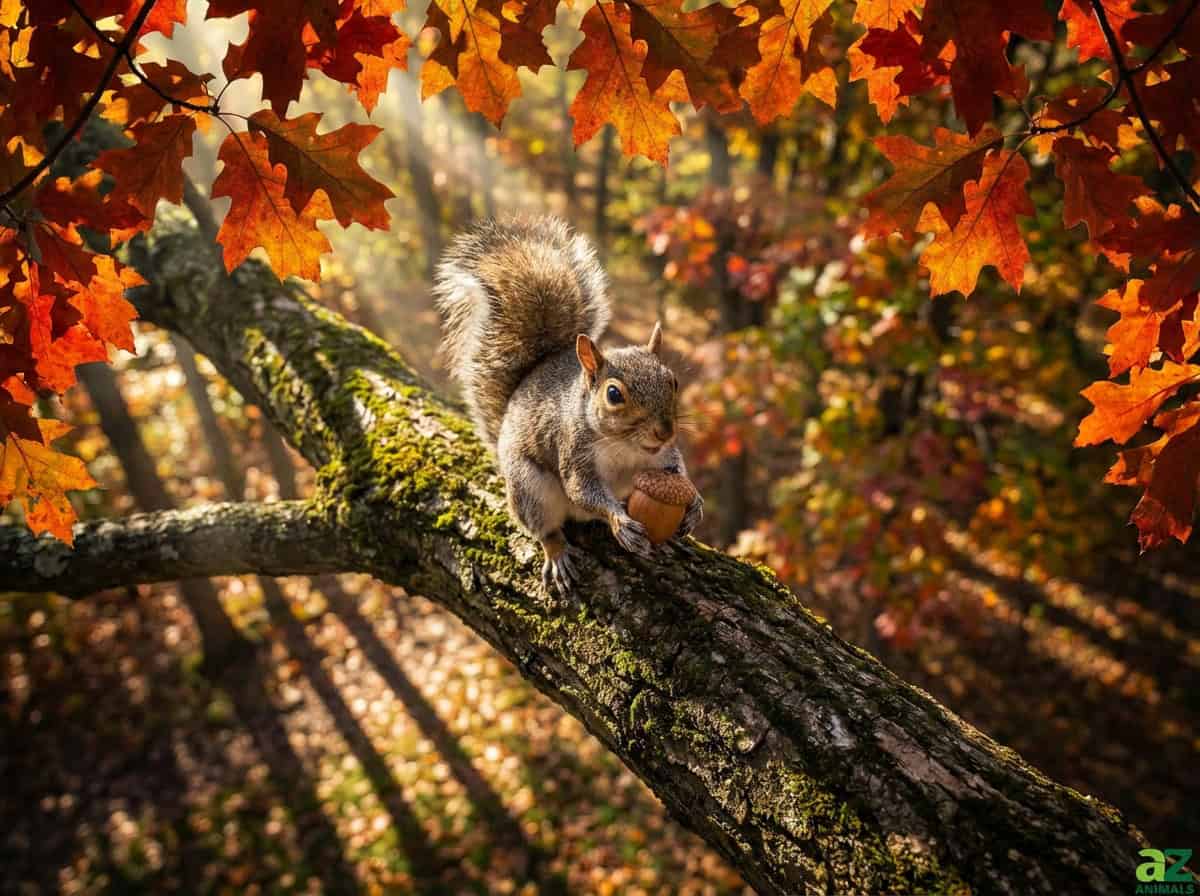
Gray squirrels influence forest composition through their feeding habits. Their practice of scatter hoarding spreads seeds across wide areas rather than concentrating them in single caches. Many buried nuts go unrecovered, allowing them to sprout into new trees. This behavior supports the regeneration of oak and hickory forests, which form a major part of Kentucky’s woodland ecosystems.
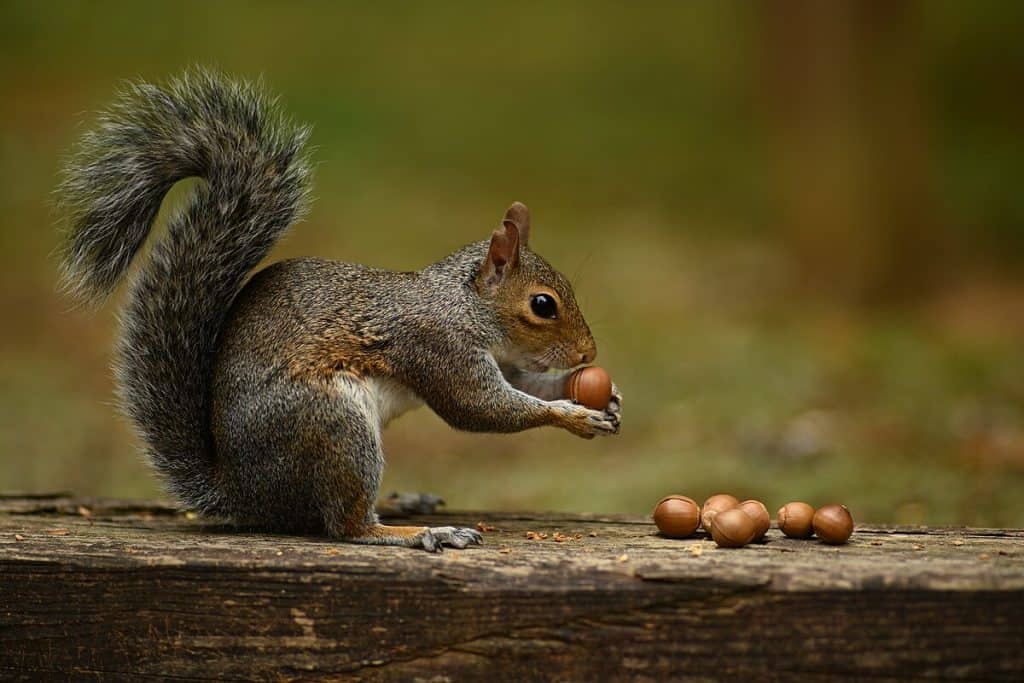
Feeding and scatter hoarding allow gray squirrels to spread seeds across forests, supporting the regeneration of Kentucky’s woodlands.
Researchers have shown that squirrels often transport seeds farther than gravity alone would allow. By moving mast away from parent trees, they reduce competition among seedlings and improve survival rates. Wildlife biologists in Kentucky monitor mast production partly because it affects squirrel reproduction and survival. Strong mast years often lead to higher squirrel numbers, while poor crops can reduce populations. In this way, gray squirrels also serve as indirect indicators of forest health.
A Staple of Frontier Diets
Long before formal wildlife management existed, gray squirrels played a practical role in Kentucky households. Early settlers relied on them as a dependable source of protein when larger animals were scarce or difficult to hunt. Squirrel meat appeared regularly in stews, pies, and communal meals, especially during fall and winter.
One dish often associated with this era is burgoo, a slow-cooked stew prepared for large gatherings. While recipes varied, squirrel frequently appeared among the meats used in early versions. Historical records also describe periods of unusually high squirrel numbers in the early nineteenth century. During these events, squirrels crossed rivers and farmland in large groups, damaging crops but also providing an abundant food supply. These moments reinforced the animal’s reputation as both resource and neighbor.
From Subsistence to Sport
As Kentucky moved away from subsistence living, squirrel hunting shifted from necessity to tradition. It became one of the most common entry points into hunting culture, particularly for young people. Learning to track squirrels, read forest signs, and practice safe firearm handling provided foundational skills later applied to other forms of hunting.
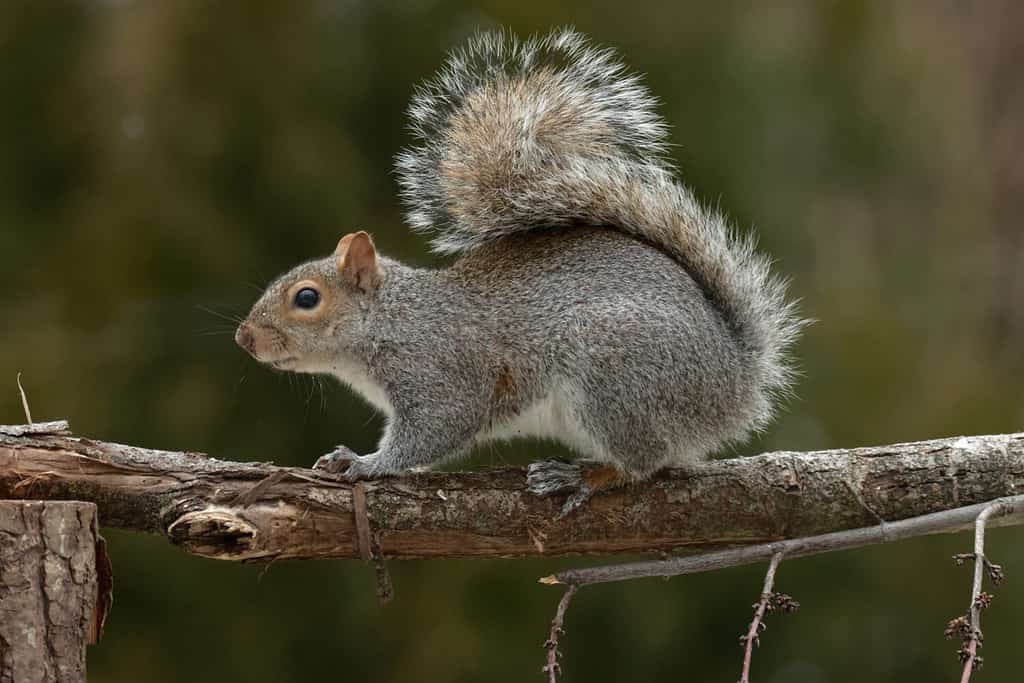
Long regulated through seasonal limits, gray squirrels remain a stable and familiar presence in Kentucky forests.
©My Generations Art/Shutterstock.com
The state continues to regulate squirrel hunting through seasonal limits and bag restrictions. These rules balance recreational use with population sustainability. Gray squirrels remain plentiful across much of Kentucky, in part because regulated hunting pressure has rarely exceeded reproductive capacity. This balance helped make the species a stable and familiar presence across generations.
Cultural Skills and Woodland Knowledge
Squirrel hunting fostered specialized skills that shaped Kentucky’s outdoor identity. Hunters learned to distinguish leaf movement caused by feeding squirrels from that caused by wind. Listening for barks, scolds, and rustling leaves became part of reading the woods. These skills passed through families and communities, often shared during early morning walks through familiar forest patches.
Historical accounts describe marksmanship practices designed to preserve meat quality. This was important as the animal is so small and has so little meat on it. These traditions tied patience, restraint, and observation to success, reinforcing values that extended beyond hunting itself. Over time, the gray squirrel became associated with teaching attention to detail and respect for the land.
Legislative Recognition in 1968
In 1968, Kentucky’s General Assembly designated the gray squirrel as the state’s official wild animal game species, recording the choice in state statute. Unlike some symbolic designations driven by promotion campaigns, this decision reflected widespread familiarity. Lawmakers selected a species that most residents recognized through daily encounters or seasonal hunts.
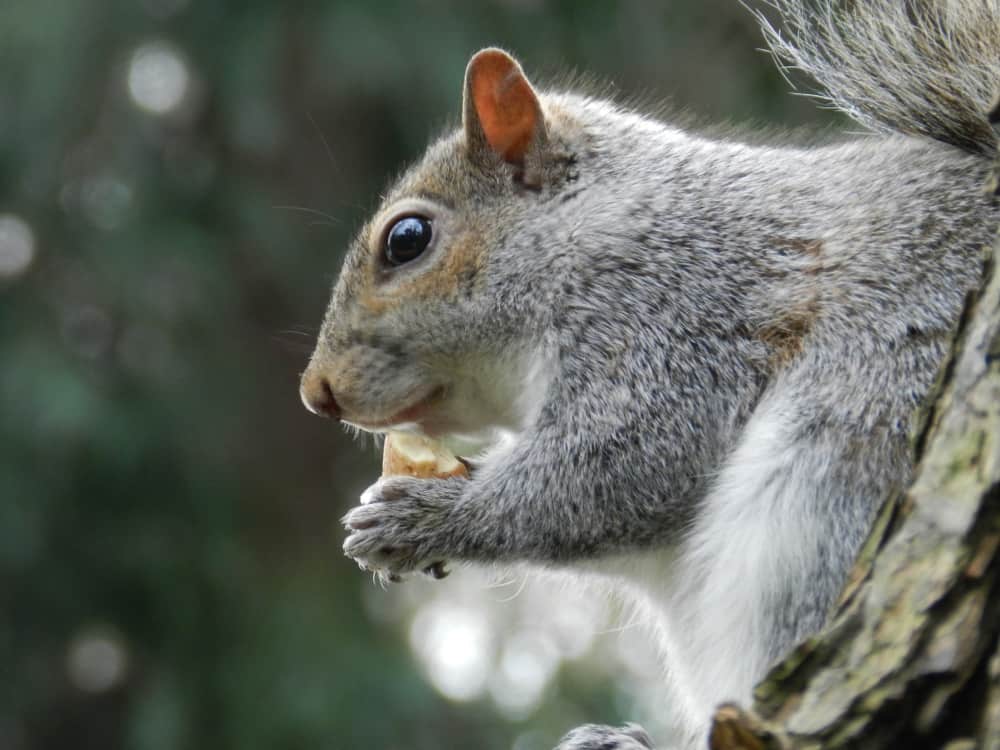
A common presence in forests and towns, the gray squirrel was formally recognized by Kentucky lawmakers in 1968.
©Millie Bond – Copyright A-Z Animals
The timing coincided with a growing emphasis on wildlife management and conservation science. By choosing a common game animal rather than a rare one, the state highlighted responsible use of renewable wildlife resources. The designation placed the gray squirrel among other state symbols that emphasize everyday connections to land and history rather than ceremonial display.
Education and Public Awareness
Gray squirrels play a role in environmental education throughout Kentucky. Their visibility makes them useful examples when teaching food chains, habitat requirements, and seasonal adaptation. Schools, nature centers, and parks often use squirrels to introduce basic ecological concepts because students can observe them directly.
Children watching squirrels bury acorns or chase one another across lawns gain early exposure to wildlife behavior. These experiences can encourage curiosity and respect for nature. Because squirrels live close to people, they provide opportunities for learning that do not require travel to remote areas or specialized equipment.
Adaptation to Modern Landscapes
Urban growth and agricultural expansion have altered Kentucky’s environment, yet gray squirrels have shown flexibility. They occupy city parks, suburban neighborhoods, and wooded corridors along rivers and greenways. While they still depend on trees, they can survive in fragmented habitats if adequate food and cover exist.
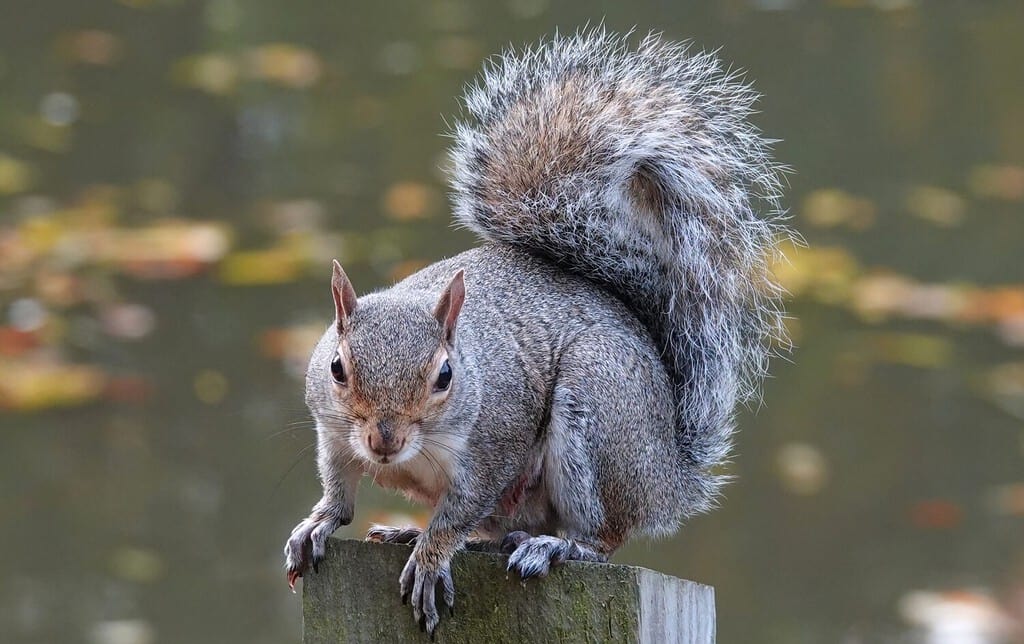
Able to thrive in changing landscapes, gray squirrels remain a familiar presence across both rural and urban Kentucky.
©Nigel J. Harris/Shutterstock.com
This adaptability helps explain why the gray squirrel remains a relevant symbol today. Many residents encounter squirrels regularly, even if they no longer hunt or live near large forests. The species bridges rural and urban experiences, linking modern life with older woodland traditions.
Where to See Gray Squirrels in Kentucky
Opportunities to observe gray squirrels exist throughout the state. Large public parks with mature hardwood trees provide reliable viewing, especially during morning and late afternoon hours. State parks in central and eastern Kentucky often support high squirrel densities due to extensive forest cover and limited disturbance.
Urban settings also offer viewing chances. College campuses, historic neighborhoods, and city greenways frequently host resident squirrel populations. Quiet observation near nut-producing trees during autumn increases the likelihood of seeing feeding and caching behavior.
Squirrel “Black Panthers”
On a personal note, this author lived in a neighborhood that had a single black squirrel in it. Sighting it was like seeing a sleek “black panther” of the squirrel kingdom. As it turns out, black squirrels are not a separate species, but are a genetic variation of grey squirrels with the melanin gene dialed up to maximum. Although overall they account for only 1-5% of the grey squirrel population, they do tend to show up in clusters and can be 50% or more of the population in a local area. This is because squirrels tend not to travel far from where they were born and because the black color helps them retain heat in cold climates, such as the Great Lakes region.
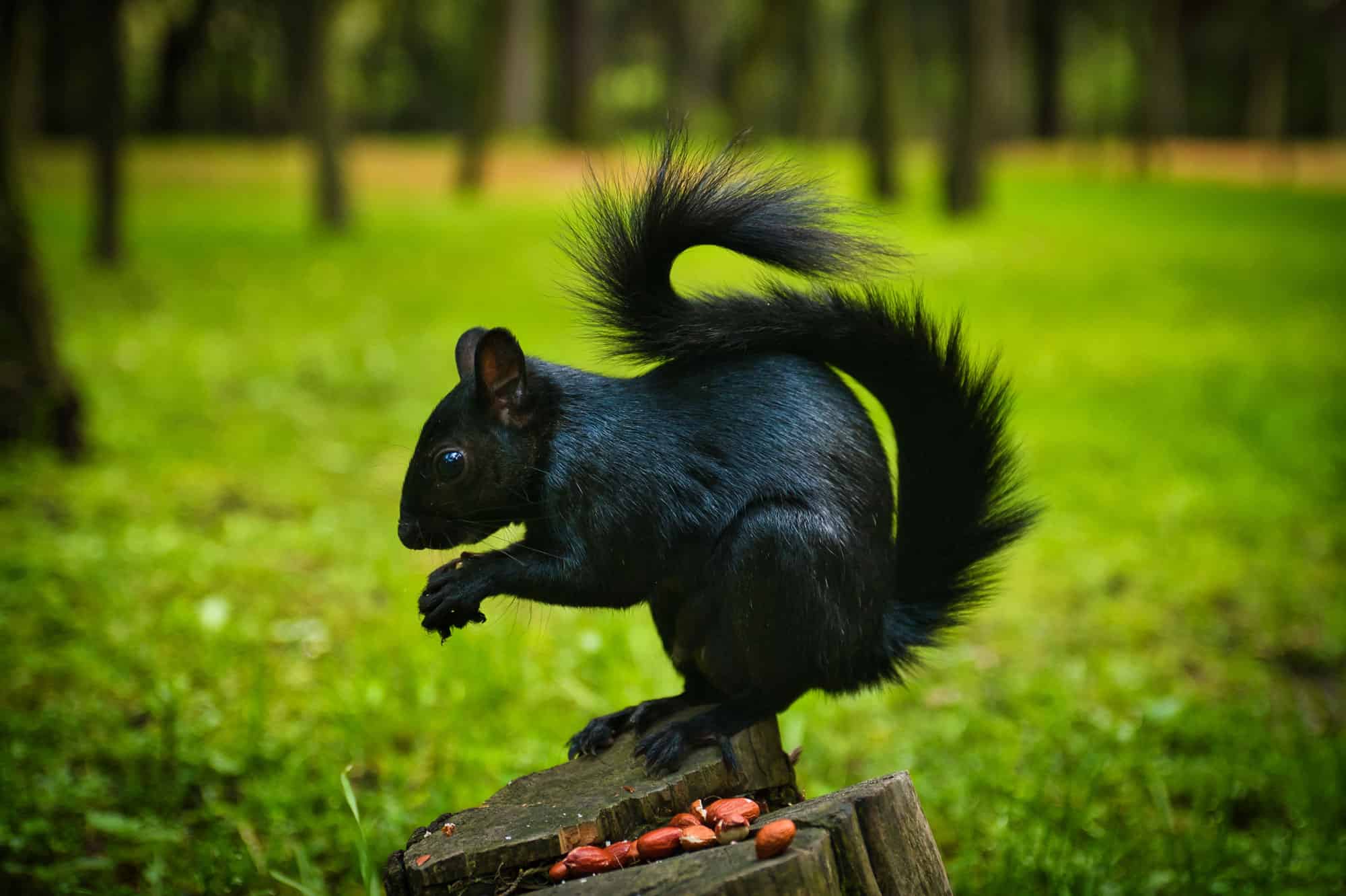
Black squirrels are a stunning sight, but are actually just a genetic variation of the gray squirrel.
©Gill_figueroa/Shutterstock.com
Enduring Relevance
More than fifty years after its designation, the gray squirrel continues to fit Kentucky’s identity. Forests remain a defining feature of the state, and small-game hunting remains part of cultural life. Conservation efforts now emphasize habitat quality and biodiversity, reinforcing the importance of species that support forest structure.
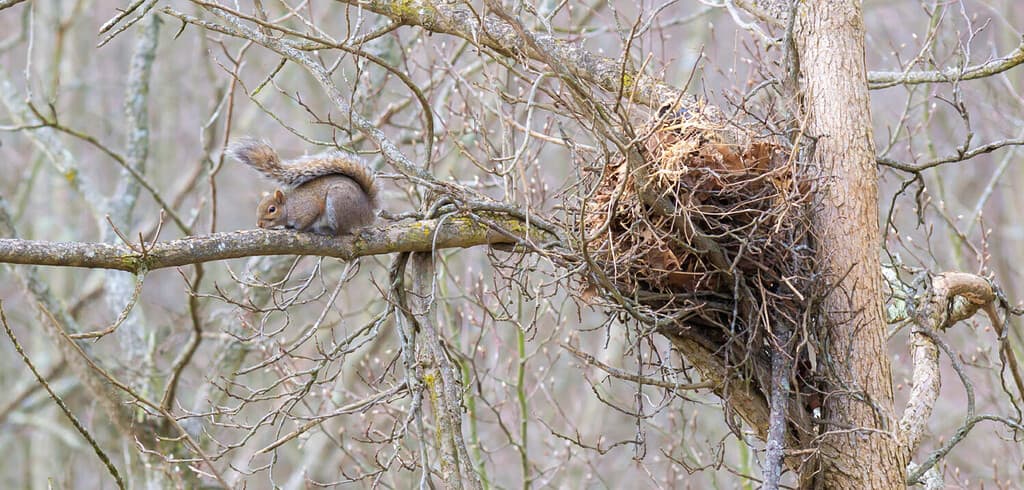
Nesting in Kentucky’s forests, gray squirrels reflect the persistence of everyday ecological relationships across generations.
©Rob Dunn Nichols/Shutterstock.com
As landscapes evolve, the gray squirrel’s ability to persist offers reassurance that traditional ecological relationships can endure. Its official status reflects not nostalgia, but recognition of a species that remains woven into daily life across the Commonwealth.
A Small Animal with Lasting Meaning
Selecting the gray squirrel as Kentucky’s state wild animal game species ties together history, ecology, and everyday experience. From frontier kitchens to modern parks, the species has shaped how residents interact with forests. Its presence continues to mirror the state’s reliance on healthy woodlands and responsible stewardship. In acknowledging this animal, Kentucky affirmed that identity can be found not only in sweeping vistas, but also in familiar creatures that quietly sustain the land year after year.