
Quick Take
- The great tit achieves a massive energy boost by targeting nutrient-dense organs to survive freezing nights.
- The great tit’s powerful, heavy beak creates a lethal hazard for small animals during winter.
- The discovery of counterintuitive predatory behaviors in this bird contradicts standard assumptions.
- Cornering hibernating bats is a vital process for obtaining essential fats when insects vanish.
The great tit (Parus major) is the picture-perfect garden bird. With its colorful feathers and melodic, two-note whistle, it is a beloved visitor to backyards across Europe. However, its “cute” reputation hides a surprisingly dark reality. When winter food becomes scarce, this cheery songbird transforms and adopts a chilling survival strategy. To endure the bitter cold and lack of food, some great tits have learned to target other small birds and bats, hunting them to feast on their most nutrient-dense organ: the brain.
A High-Protein Heist
While they usually eat seeds and insects, great tits are highly intelligent and adaptable creatures. When temperatures drop and their usual food sources vanish, they turn to high-protein alternatives to get them through the winter. Occasionally, great tits may corner hibernating bats or smaller songbirds and use their powerful, heavy beaks to crack open the animals’ skulls. Although this behavior seems like something out of a zombie thriller, it is actually an ingenious survival strategy. The brain is rich in fats and essential nutrients, providing a massive energy boost that helps the great tits survive freezing nights.
An Avian Jekyll and Hyde
During the summer, the great tit is an active and cheerful garden visitor. These bright birds are easily spotted hopping through branches or probing tree bark for insects and seeds. They are extremely intelligent and have been observed using tools to reach food. They are also often the first to move into man-made nest boxes.
As winter arrives and food becomes scarce, the great tit’s behavior changes. While they usually forage high in the tree canopy (23 to 29 feet up) for caterpillars and insects, the cold forces them closer to the ground. They become more aggressive and use their robust bodies, sharp claws, and powerful beaks to hunt larger prey, including other birds and small mammals.
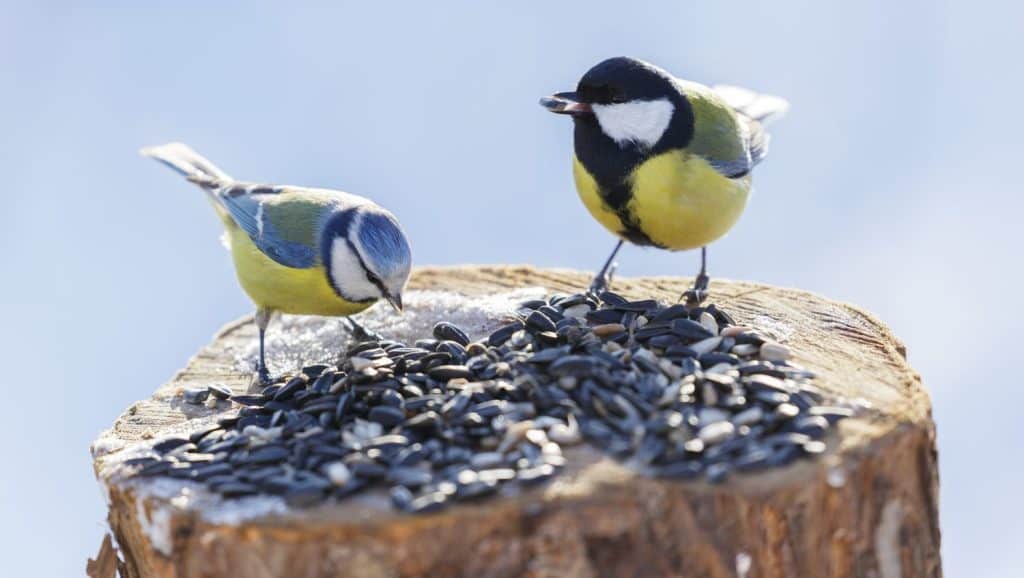
Great tits forage for seeds, berries, and nuts in the winter.
©Nitr/Shutterstock.com
Hunting in Caves
In the chilling depths of Hungary’s Istállós-kői cave, researchers documented a behavior that sounds more like a plot from a horror film than a nature documentary. During the harsh winter months, the great tit transforms from a friendly garden visitor into a calculated predator that hunts hibernating bats.
When their usual food sources vanish in the cold, great tits enter the total darkness of caves to seek out the common pipistrelle bat. These clever birds fly slowly along the damp walls and ceilings of the cave, meticulously inspecting every dark crevice. Once a bird locates a sleeping bat, it uses its powerful beak to peck through the animal’s skull, consuming the energy-rich brain and muscle tissue.
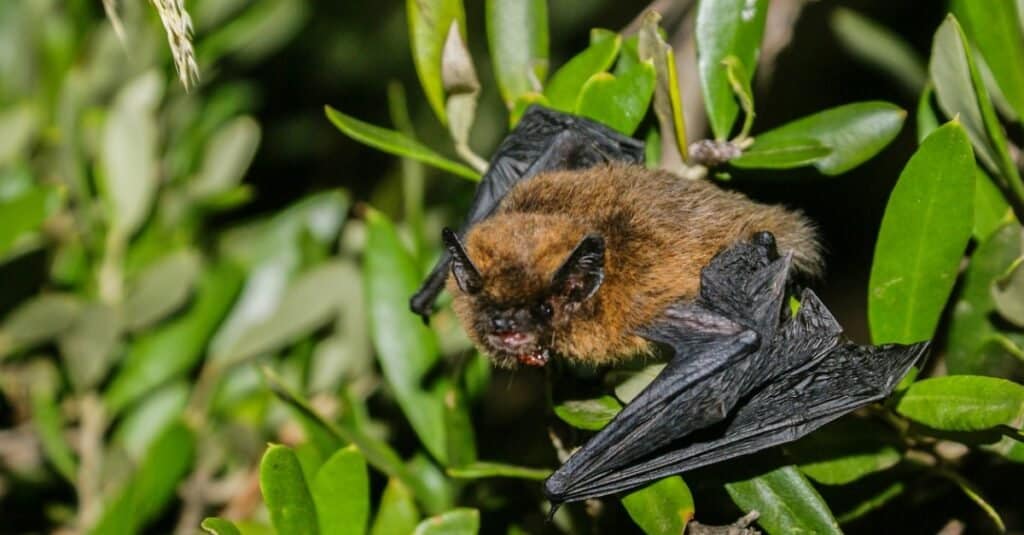
Great tits do not hunt bats if other food sources are available.
©iStock.com/ACM1988
Instead of relying on sight, great tits have learned to “eavesdrop” on their victims. When a hibernating bat is disturbed, it lets out a series of warning calls to wake up and alert the rest of its colony. Great tits listen for these specific low-frequency sounds, which can be as low as 3.9 kilohertz. By following these vocalizations, the birds can pinpoint a bat’s exact location with lethal precision.
Eviction by Force
The great tit’s reputation for violence isn’t confined to the dark of caves; it also follows them into the sunshine of Europe’s national parks. In the Dutch forests of Dwingelderveld and Drents-Friese Wold, a decade-long study led by biologist Jelmer Samplonius revealed a grim conflict between great tits and migratory pied flycatchers. What often began as a simple competition for territory frequently ended in scenes reminiscent of a zombie thriller.
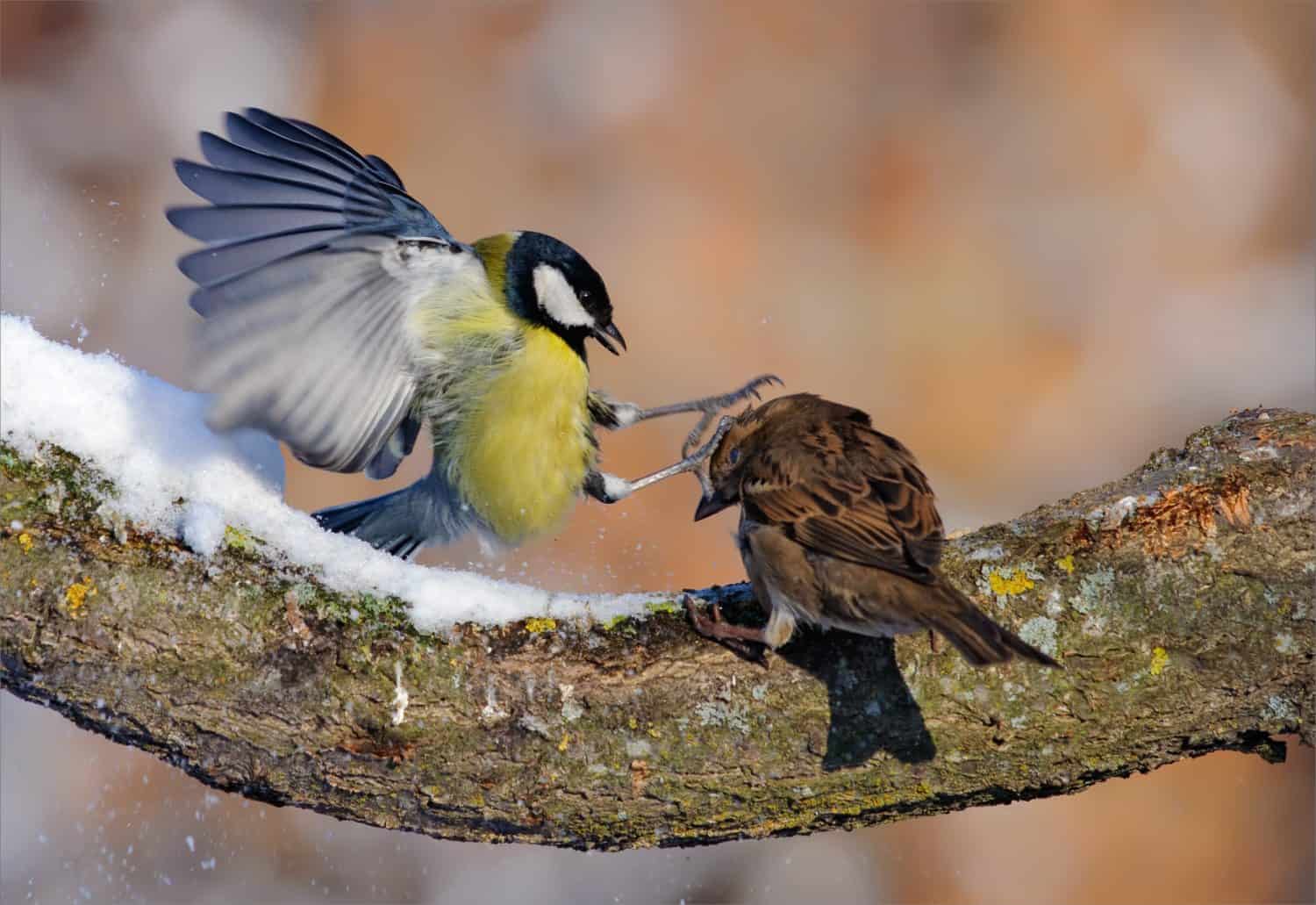
During the study, researchers discovered the remains of nearly 90 flycatchers inside nesting boxes. Most of the victims were males that had been pinned down by the larger, heavier great tits. Using their powerful beaks, the tits delivered a series of lethal blows to the back of the flycatchers’ heads. Often, the great tit also ate the flycatcher’s brain.
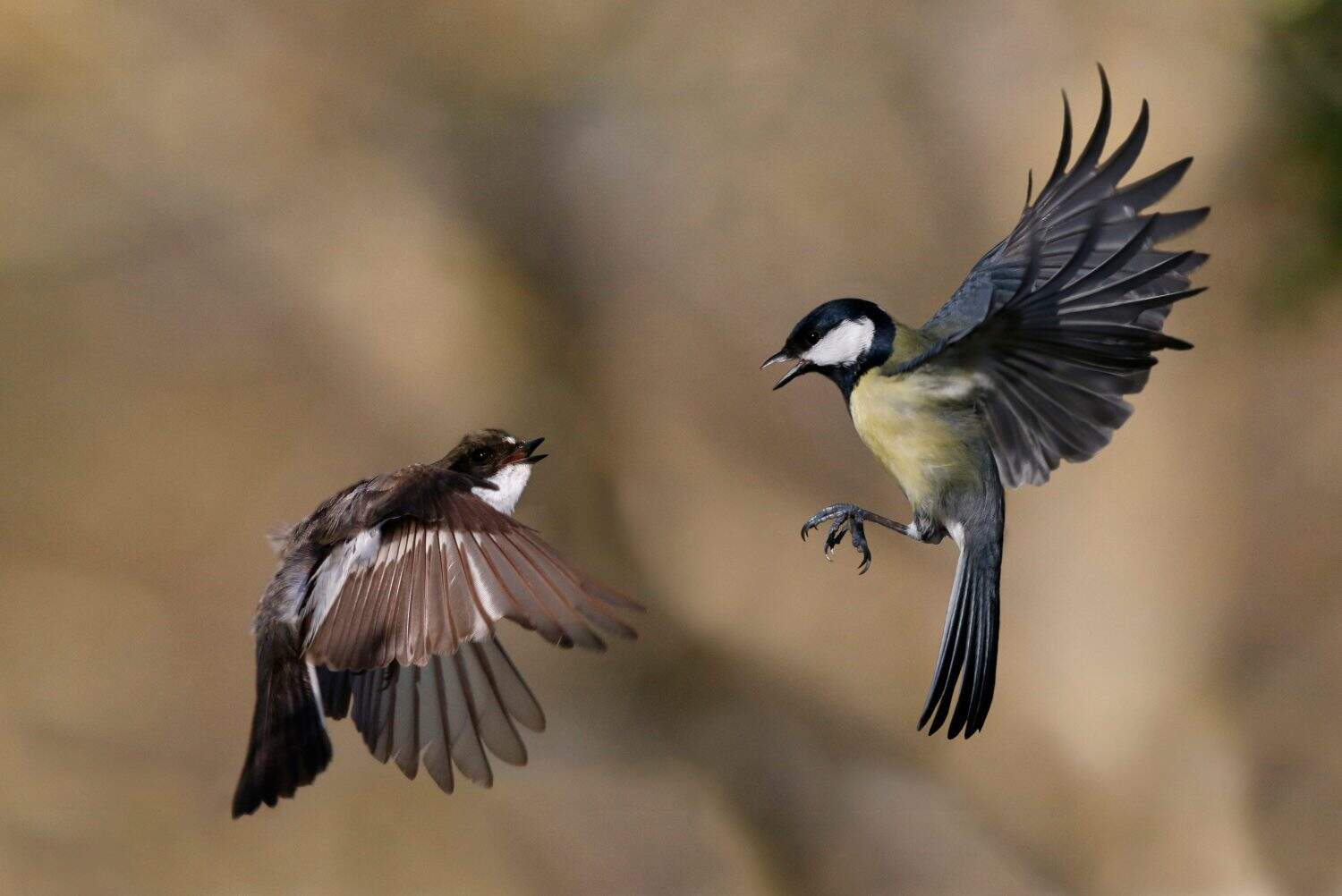
Pied flycatchers are quite a bit smaller than great tits.
©Gejo Wassink/Shutterstock.com
While this behavior may seem unnecessarily brutal, it is driven by cold biological logic. In young forests, natural nesting holes are scarce. This shortage leaves both bird species desperate for a safe place to raise their young. By killing the competition, the great tit secures its home. Additionally, by consuming the brains of their rivals, great tits turn these territorial disputes into high-energy meals, ensuring they have the fuel necessary to defend their newly won territory.
Climate Chaos and Desperate Measures
The great tit’s zombie-like behavior is a direct result of what scientists call “climate breakdown.” The delicate timing of the natural world is being thrown out of sync. This creates a phenological mismatch that forces great tits and pied flycatchers into a deadly collision course.
In a stable environment, the resident great tits and the migratory pied flycatchers usually manage to avoid one another. However, milder winters — a hallmark of a changing climate — allow a much larger number of great tits to survive until spring. This leads to a population surge, making the competition for prime nesting spots fiercer than ever before.
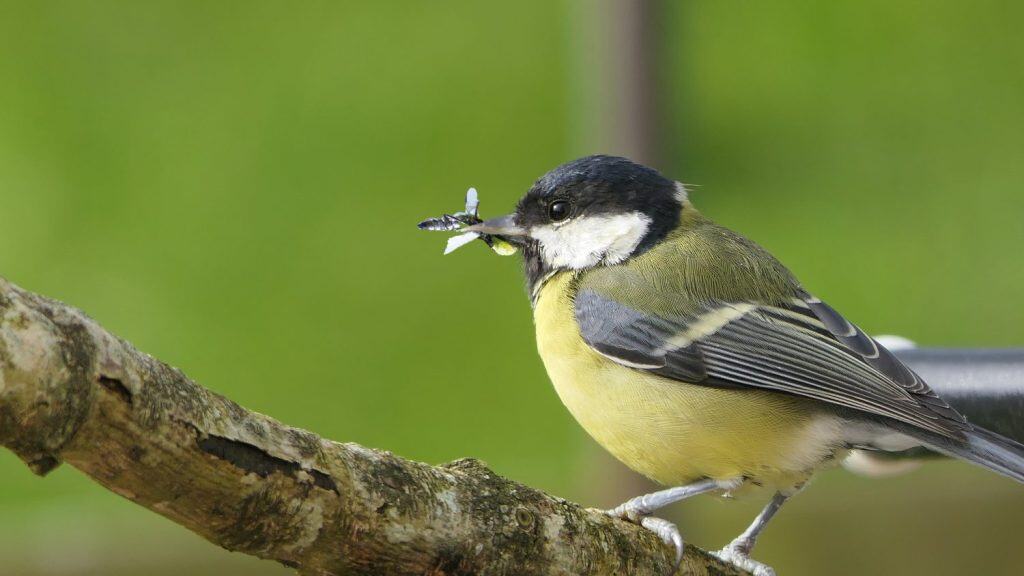
Great tits mainly eat caterpillars and insects during the summer.
©Ballygally View Images/Shutterstock.com
Great tits typically time their nesting to coincide with the emergence of caterpillars, an important prey item in their diet. If an unseasonably cold spring occurs, the tits delay their nesting schedule. This delay is catastrophic for the pied flycatchers arriving from Africa, as they rely on fixed environmental cues to migrate and cannot adapt their arrival time as quickly as the resident birds.
The mismatched timing results in a fatal overlap: the peak territorial phase of the great tit — the larger and more powerful of the two species — now coincides with the arrival of the smaller flycatchers. When a weary flycatcher enters a nesting box to claim a home, it often finds a great tit already inside, ready to defend its territory with lethal force. As the climate continues to shift, these violent encounters are becoming increasingly common.
A Deadly Cultural Legacy
What makes the great tit truly formidable is not just its physical strength, but its remarkable ability to learn and pass information down through generations. Biologists believe that the birds’ specialized hunting techniques are not merely a matter of instinct, but a form of cultural transmission. In the animal kingdom, this represents a high level of intelligence where knowledge is taught and shared within a community.
Moreover, this isn’t the first time these birds have shown such cleverness. Decades ago, great tits in Britain famously learned how to peel the foil tops off milk bottles, allowing them to reach the cream inside. The current bat-hunting behavior in Hungary has been documented for over ten years — far longer than the lifespan of a single bird — suggesting that older birds are actively teaching their young how to hunt vertebrates.
This shared knowledge has sparked an evolutionary “arms race” between predator and prey. As the great tit continues to use sophisticated vocal cues to find its targets in the dark, it puts increased pressure on other species to adapt. To survive, bats may eventually be forced to remain silent even when disturbed, while flycatchers may need to find even more remote and hidden nesting sites to avoid fatal encounters.
The Ecological Outlook
While the great tit’s “brain-eating” behavior is grisly, it has not yet led to a population collapse of pied flycatchers. For now, the victims are primarily males who arrive late in the migration season. Since these latecomers probably wouldn’t have found a mate anyway, their loss — while gruesome and dramatic — doesn’t yet threaten the species’ survival as a whole.

The current population of pied flycatchers is stable.
©Leny Silina Helmig/Shutterstock.com
However, scientists warn that as climate change continues to destabilize seasonal temperatures, this could quickly change. If the timing of spring continues to shift, the overlap between these two species will intensify. This could potentially become a genuine threat to migratory bird populations across Europe.