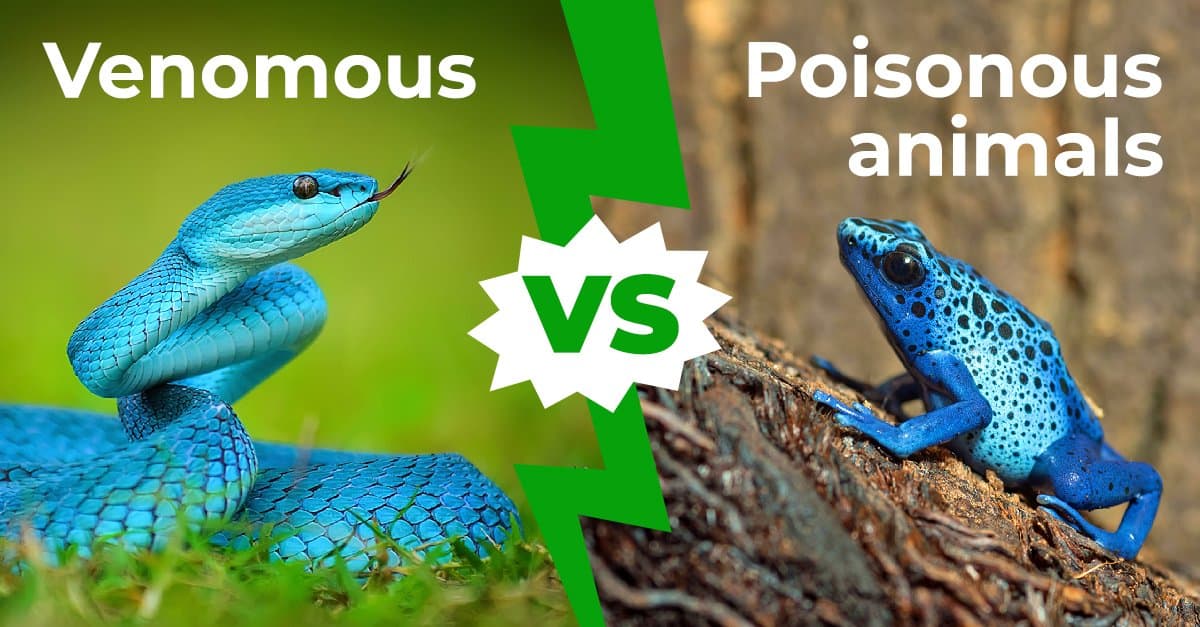

We often hear people talking about venomous and poisonous animals, so you’d easily be forgiven for thinking that they mean the same thing. However, the truth is that they actually mean completely different things, although the two terms are often used interchangeably. Both venomous and poisonous animals use toxins as a weapon to either kill prey or defend themselves from predators. So, exactly how are they different? Keep reading to learn the differences between venomous vs. poisonous animals.
Comparing Venomous Animals vs. Poisonous Animals
The words “poisonous” and “venomous” can be as frightening as they are fascinating when we’re discussing animals. This is especially true when it comes to some of the deadliest animals in the world. Although it’s an easy mistake to make, the words are often used incorrectly. There are actually significant differences between poisonous and venomous animals. However, just to make things even more interesting — and confusing — some animals are both poisonous and venomous. Check out the chart below to see the main differences, which we will discuss below.
| Venomous | Poisonous | |
|---|---|---|
| Delivery method | Injected; the animal must cause a wound to deliver it | Ingested; the poison is inhaled, eaten, or touched |
| Toxin origins | The animal produces its own venom | The animal produces it, or the poison comes from their habitat, or their diet |
The Two Key Differences Between Poisonous Animals and Venomous Animals
The biggest differences between poisonous and venomous animals are the delivery method of the toxin and the origin of the toxin. Continue reading to go over these distinctions in greater detail.
Toxin Delivery Method
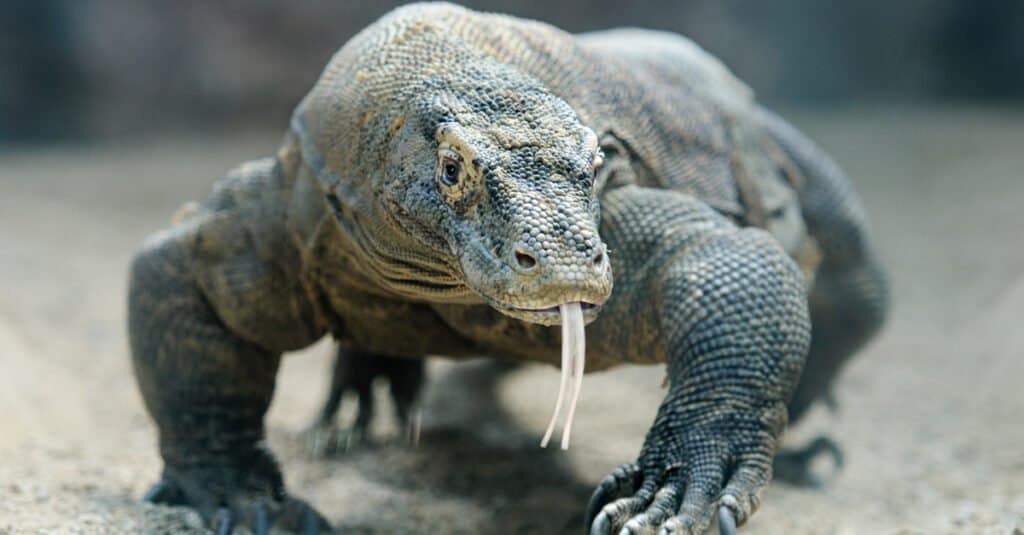
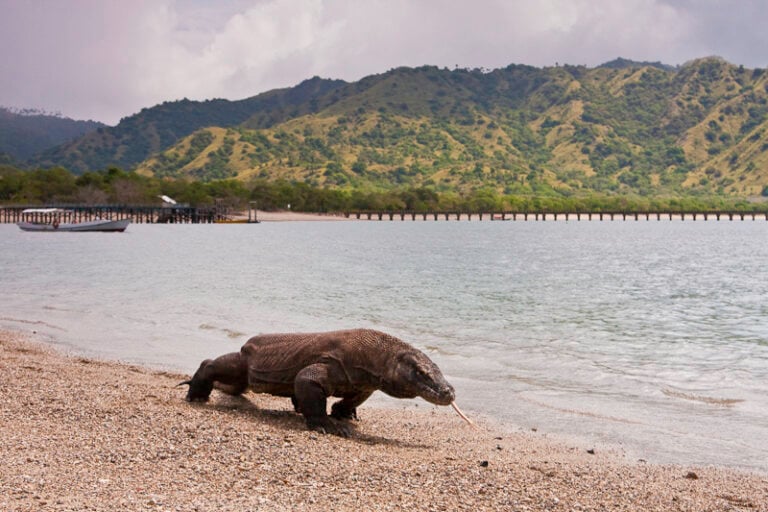
Komodo dragons have venomous saliva, which is injected when they bite their prey.
©Anna Kucherova/Shutterstock.com
Venom must be injected to be effective. Therefore, the delivery method must cause a wound. Venom can be injected through fangs, stingers, or spines. By injecting the venom directly into the body of its target, the venom bypasses the digestive system and enters the bloodstream. Venomous animals usually use their venom to kill or subdue prey. One of the most interesting venomous animals is the komodo dragon. Komodo dragons don’t have fangs, stingers, or spines, but they do have venom glands in their lower jaws that secrete toxins. This venomous saliva is injected into its prey’s body when the Komodo dragon bites.
In contrast, with poisonous animals, the toxins must be ingested, inhaled, or absorbed through the skin. This occurs either by touching the animal, eating the animal, or breathing in the toxins. This is known as passive delivery. Poisonous animals usually only use their poison as a defense mechanism to avoid being eaten by a predator. Many poisonous animals secrete their poison through their skin, such as poisonous frogs. However, pufferfish contain tetrodotoxin in their liver, ovaries, and intestines, which makes them extremely dangerous to eat or touch.
Where Does the Toxin Come From?
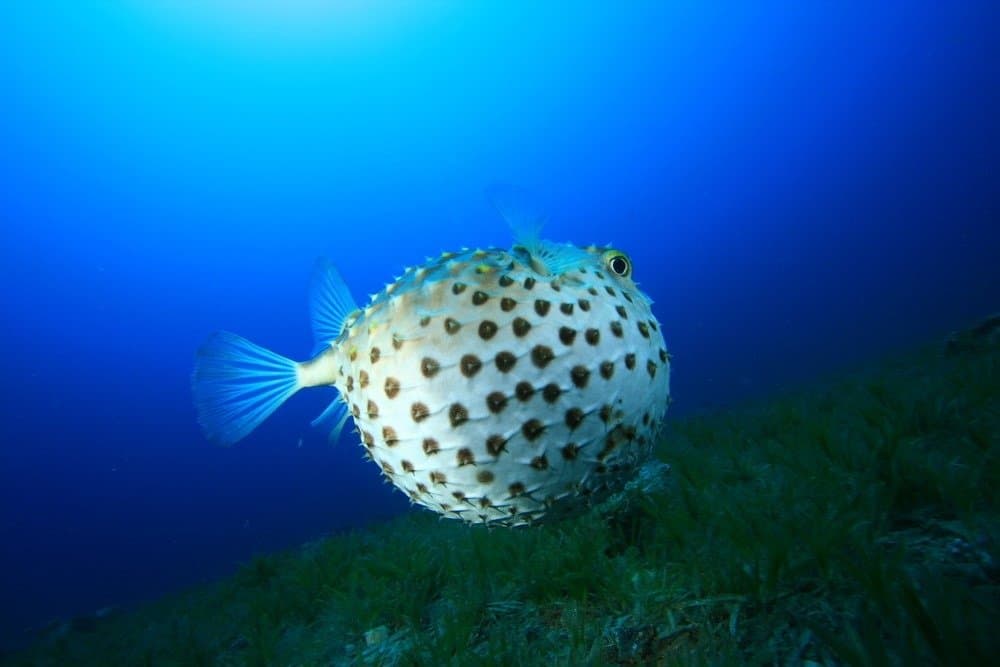
Pufferfish are some of the most poisonous animals in the world.
©Rich Carey/Shutterstock.com
Another major difference between poisonous and venomous animals is where their venom or poison comes from. Venomous animals produce their own venom within their body. The exact composition varies depending on the species, but venom generally contains peptides and proteins, as well as enzymes and other types of organic molecules. For example, snakes have between 20 to over 100 components in their venom. These substances act on an animal’s neurological, cardiovascular, and circulatory systems, among others. This is one of the reasons venom needs to be injected into the bloodstream to be effective.
However, poisonous animals get their toxin by producing it or acquiring it from their environment or diet. This can come from bacteria in their surroundings, animals that they eat, or even from toxic plants. Poisonous frogs get their poison from the ants, beetles, and other small insects they eat that contain the poison. The frogs aren’t harmed when they eat these insects, but the poison is then secreted through their skin, making them extremely dangerous to touch.
The Most Toxic Animals in the World
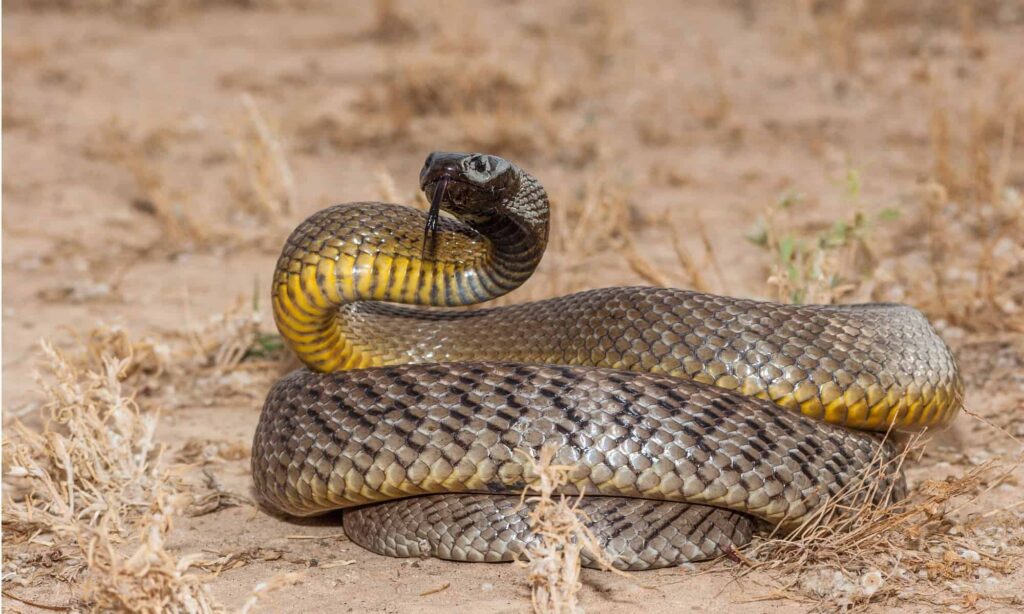
The inland taipan snake is the world’s most venomous and deadliest snake.
©Ken Griffiths/Shutterstock.com
There are a few animals that are both venomous and poisonous. The Asian tiger snake is a good example. They not only have fangs that inject venom, but they also have rows of glands on their neck that release toxins derived from the poisonous toads they eat. The blue-ringed octopus is another example, as it has a venomous bite but is also poisonous if eaten by a predator.
The most venomous animal in the world is the inland taipan snake. Inland taipan snakes are endemic to Australia and have the most potent venom yet discovered. These snakes contain enough venom in a single bite to kill 100 people. Fortunately, there is an effective antidote, but immediate treatment is crucial, as death can occur in as little as 30 minutes.
The most poisonous animal in the world is believed to be the golden poison frog. This frog contains enough poison to kill 10 humans. While that may not sound as dangerous as a snake that can kill hundreds, scientists have found that the amount of golden poison frog toxin equal to just two grains of salt is enough to kill a human. Death can occur in less than 10 minutes, and there is no known cure.