Though they have been around for millions of years, all dogs evolved from a common wolf ancestor. They belong to the same genus, Canis, which includes coyotes, dogs, foxes, jackals, and wolves. And while humans have managed to domesticate many, from the huge Irish wolfhound to the tiny chihuahua, there are quite a few wild dog breeds still found in the world. Unlike domesticated dogs, most wild breeds have slender but strong bodies, long muzzles, long bushy tails, large ears, and powerful jaws. Wild dogs may be solitary or hunt in packs, and some are endangered. Continue reading to discover 10 wild dog breeds that exist today.
Red Wolf
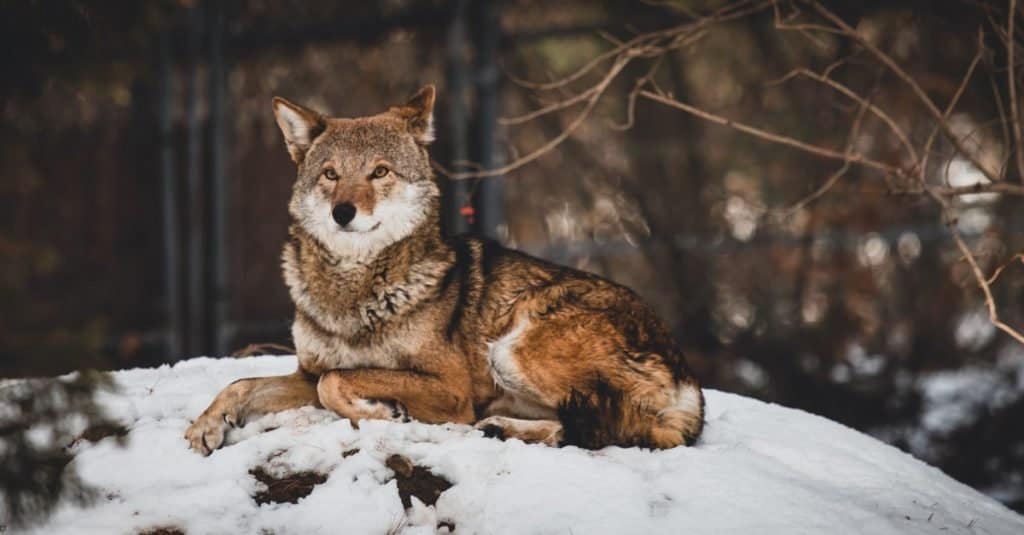
Wolves are the largest members of the dog family. Wolves can roam large areas and long distances, sometimes up to 12 miles (20 kilometers) daily.
©mruizseda/Shutterstock.com
Biologists still don’t quite know if the red wolf is its own species, a cross between a gray wolf and a coyote, or a subspecies of the eastern wolf that lives in Canada. The red wolf is found in the southeastern part of the United States. Whatever sort of dog it is, the red wolf is considered critically endangered by the IUCN and was almost wiped out due to bounty hunting, destruction of its habitat, and interbreeding with coyotes.
The red wolf is a bit bigger than a coyote but smaller than a gray wolf and gets its name because of areas of red on its coat. Its ears are larger than both the gray wolf’s and the coyote’s, and its legs and muzzle are long and slender. In terms of sociability, it is also in the middle between the gray wolf and the coyote, as it’s more sociable than the latter and less sociable than the former. Red Wolves are monogamous, and both parents help raise the cubs, who are born in early spring.
Gray Wolf
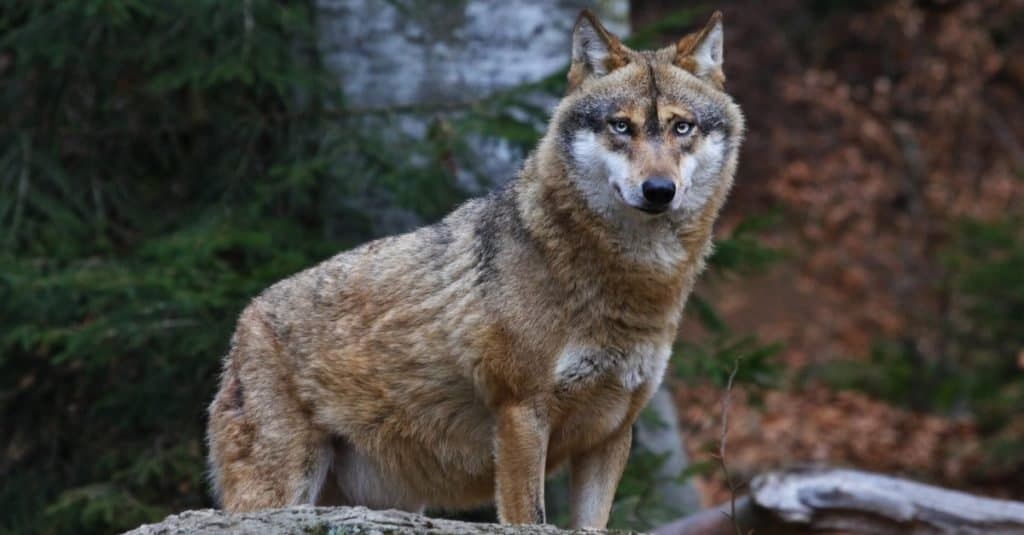
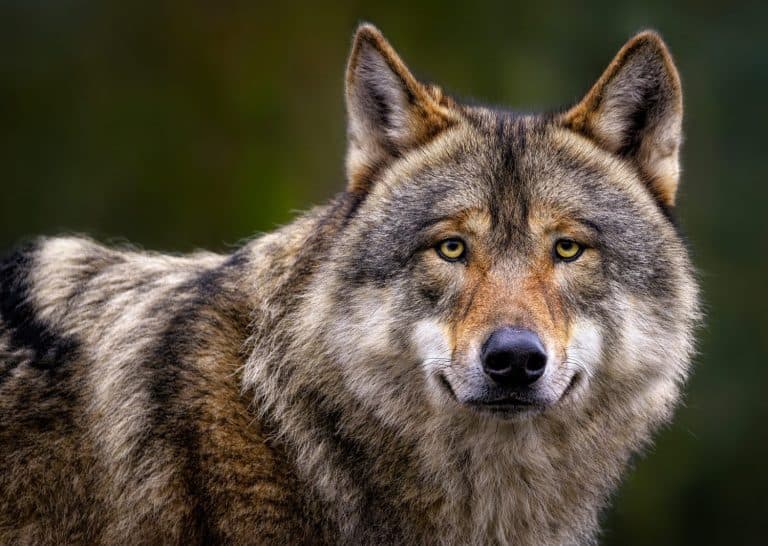
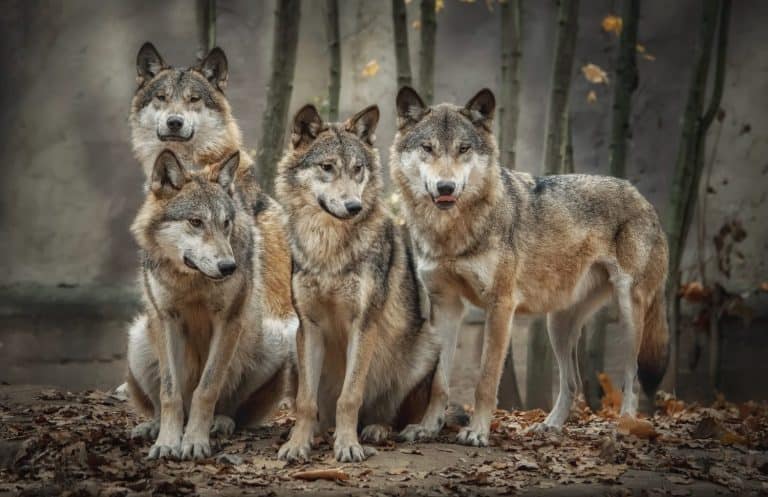
Wolves live and hunt in packs. They are known to roam large distances — as much as 20km in a single day.
©Bildagentur Zoonar GmbH/Shutterstock.com
The forebear of the modern dog, the gray wolf has been the subject of mythology, persecution, and overall fascination for millennia. The biggest of the canids, gray wolves are 3.25 to 5 feet long with a tail that’s 1.25 feet long and stands between 1.97 to 2.95 feet at the shoulder. Males are a little larger than females. The gray wolf ranges widely in most of the Northern Hemisphere. The color of its thick coat varies depending on where it lives. Wolves in the extreme north will have white coats, while wolves in more southern areas have the iconic gray coat or coats in shades of brown or black. Most wolves have a mix of colors in their coat.
Wolves famously live in packs with a dominant, or alpha, male and female. The alphas eat first at a kill, which could be an animal as large as an elk. Their occasional predation of livestock has led to their persecution, and wolves have been extirpated in many of their native hunting grounds.
Gray wolves have been known to breed with coyotes and with domestic dogs. Czechoslovakian wolf dogs, a cross between a wolf and a German shepherd, are used as police dogs in Slovakia and the Czech Republic.
Red Fox
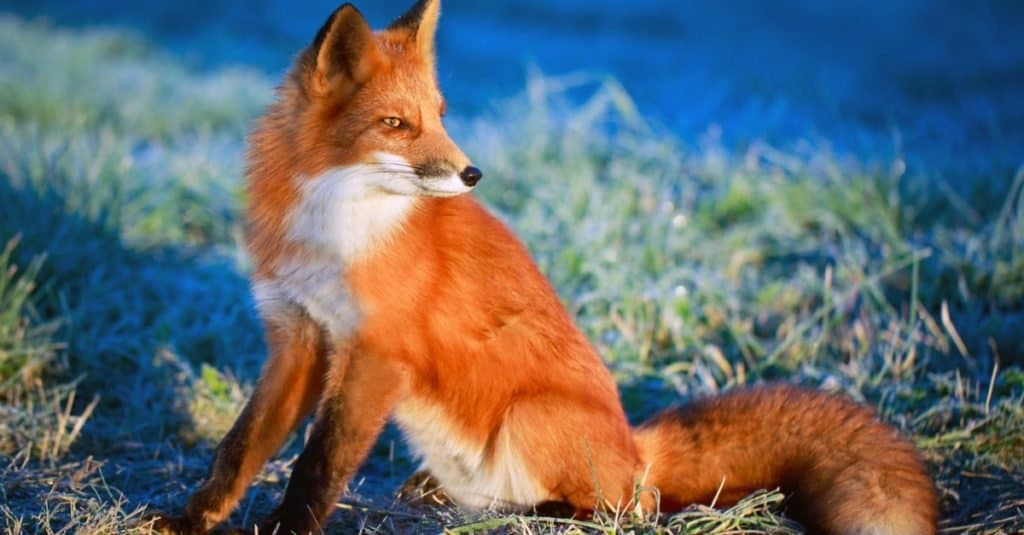
Red foxes play among themselves, as well as with other animals. They love balls, which they will steal from backyards and golf courses.
©DragoNika/Shutterstock.com
The red fox is the subject of nearly as many myths and tales as the gray wolf, but it’s not quite as persecuted. This fox can have a classic red coat, but its coat can also be shades of silver and rust. Its tail is wonderfully bushy with a white tip. The lower parts of the red fox’s legs are black and its belly is white. Its muzzle and ears are pointed.
Foxes hunt both night and day. Primary prey include rabbits and rodents, though they will take chickens if the opportunity presents itself. Red foxes often hunt in thickets and find prey using their acute hearing.
Foxes live as pairs, in overlapping territories that may be shared by relatives who are too young to breed. Cubs are cared for by both parents and non-reproductive females. The red fox is even more widely distributed than the gray wolf and is found in many areas in the northern hemisphere.
Maned Wolf
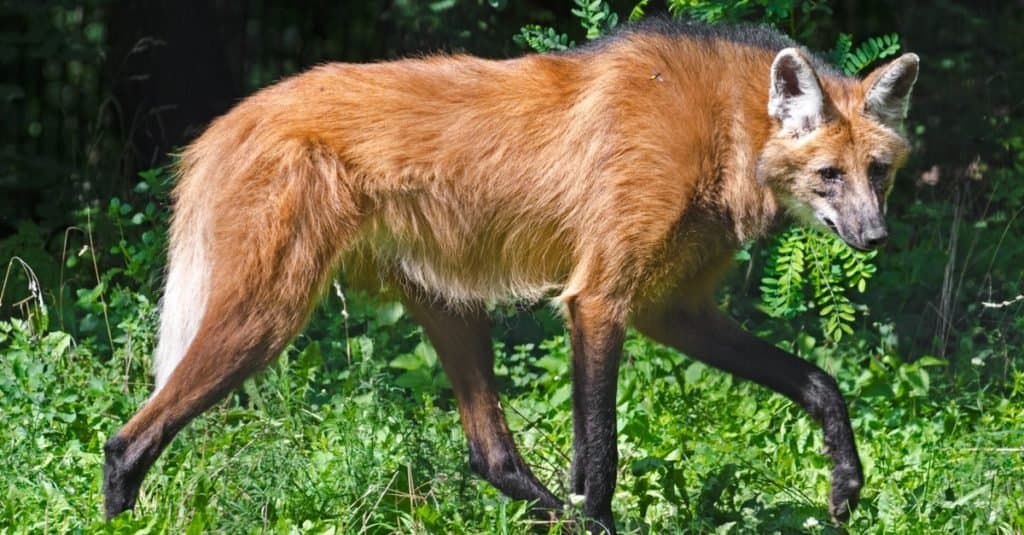
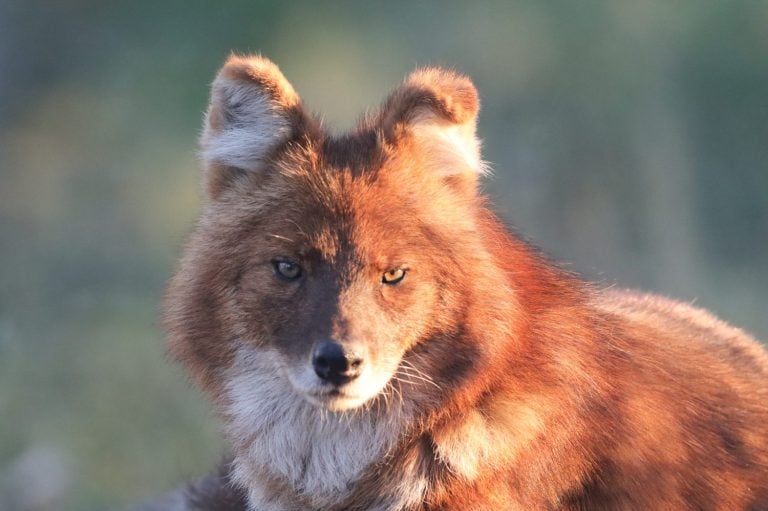
The particularly long legs of the maned wolf are likely an adaptation that allows them to see above the tall grass in which they often hunt.
©JWKS Photomancy/Shutterstock.com
Found in the central and eastern countries of South America, maned wolves are known for their disproportionately long legs and dark mane. Their coat is reddish, rather like the red fox, though its long tail may be white or black. Maned wolves grow to between 4 and 4.5 feet long with an 11 to 18-inch long tail. These wild dogs weigh between 44 and 51 pounds.
Maned wolves live in open grasslands and have benefited, somewhat, from the clearing of forests. Their diet includes ants, birds, mice, and rabbits. Maned wolves also eat fruit. Maned wolves form pairs whose territories overlap, though they only seem to come together to mate. This is why the maned wolf is usually classified as a solitary animal.
Arctic Fox
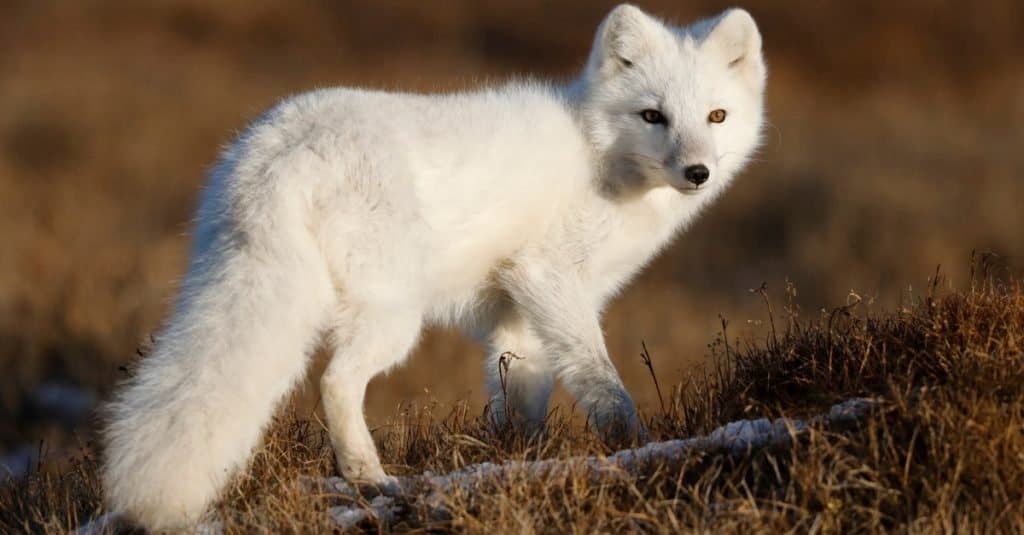
The Arctic fox has the warmest pelt of any animal found in the Arctic, enduring temperatures as low as -70 °C.
©Agami Photo Agency/Shutterstock.com
This little fox is known for the pure white coat it develops during winters in the Arctic, where it lives, though in the summer the fox’s coat looks gray. Both colors are a form of camouflage. The pure white coat helps the fox disappear in the snowy landscape, while the gray blends in with the grayish hills and plains. The Arctic fox has a short muzzle and small ears, short legs, and a short tail. These adaptations help the animal retain heat during the Arctic’s intensely cold winters.
Arctic foxes subsist primarily on lemmings, which regulate arctic fox populations. In banner years, when lemmings are abundant, fox populations rebound. However, climate change is affecting both lemming and fox viability, mostly from habitat loss.
Jackal
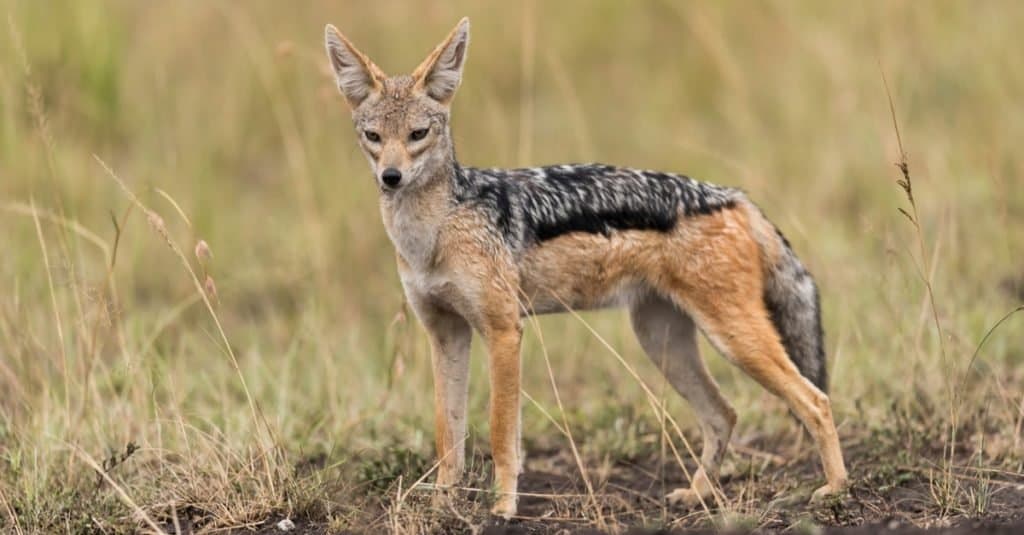
Black-backed jackals are native to Africa.
©Sharon Haeger/Shutterstock.com
Jackals belong to the Canis family and are closely related to dogs. They look like wolves but lack the courage that is associated with wolves and are compared with hyenas. There are several species of jackal, and their characteristics depend on where they live. Most species live in Africa, though the golden jackal can be found in Eurasia. Jackals prefer wide open grassy land. These wild dogs are crepuscular, meaning that they hunt in the twilight hours around dusk and dawn.
With no fixed social structure, they may live alone, in pairs, or in a pack. Medium-sized wild dogs, jackals are omnivores that will eat whatever is available. This includes smaller mammals, reptiles, and birds. Jackals sometimes follow lions and other larger predators, so that they might eat their leftovers.
Dhole
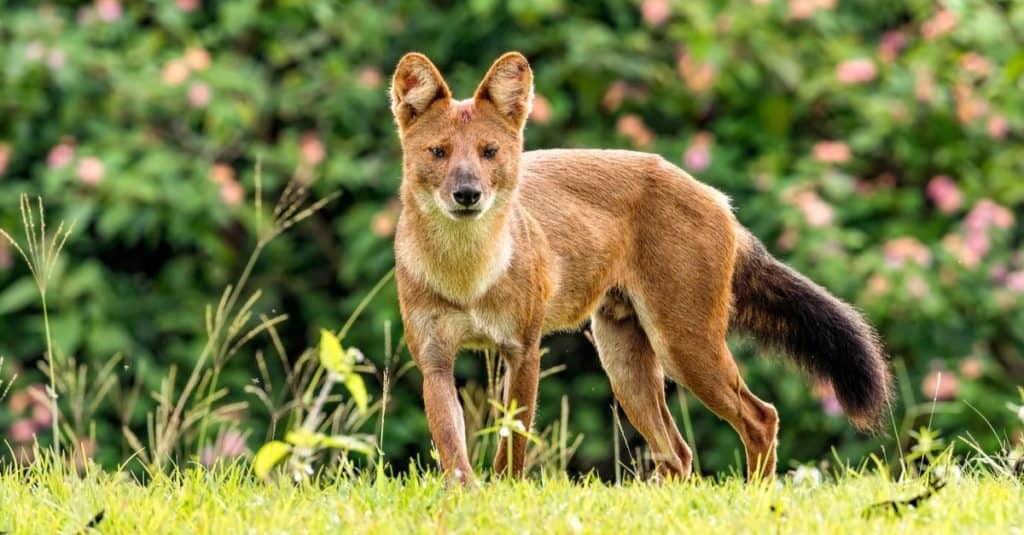
The dhole lives in big, loosely organized groups with several breeding females.
©Nimit Virdi/Shutterstock.com
The dhole, also called the Asian Wild Dog or Indian Wild Dog, is an average-sized dog that stands about 20 inches at the shoulder with a body length of about 35 inches and a 16 to 18-inch long tail. It is found across Southeast Asia. Like jackals, dholes are omnivores and will eat mammals as large as wild pigs and deer. They will also eat insects, lizards, and fruit.
Dholes are highly social animals and packs may contain as many as 40 of these wild dogs. When they hunt in packs, dholes behave very much like hyenas, with the prey being disemboweled and eaten while it’s still alive. Dholes are long-lived for dogs, living up to 16 years in captivity. They are an endangered species, with fewer than 2500 dholes left in the world.
Coyote
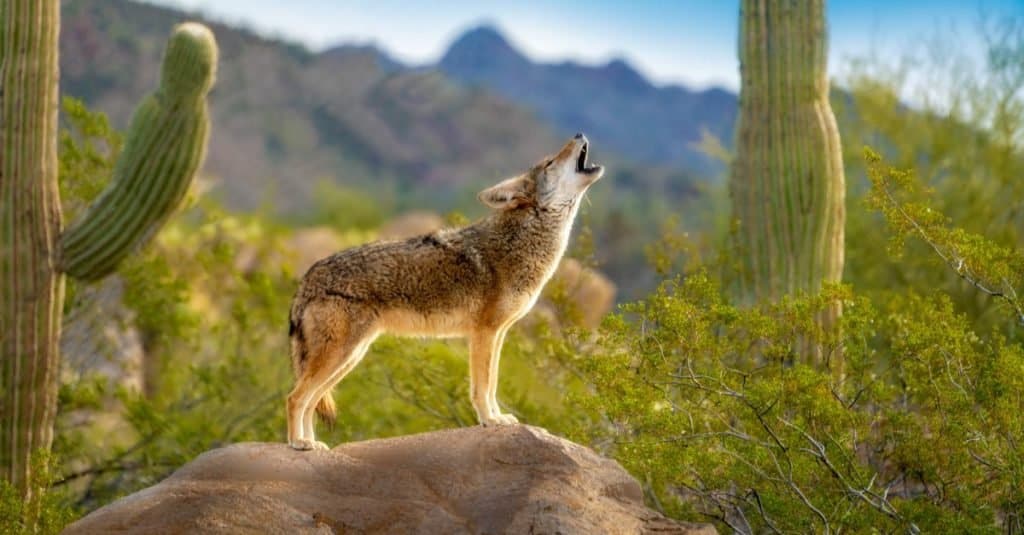
Large, active, and highly intelligent members of the dog family, coyotes are described as wily, cunning, and sneaky, but what they really are is flat-out smart.
©JayPierstorff/Shutterstock.com
The coyote, found across Canada, Mexico, and the United States, has a grizzled coat that’s yellowish around the ears, feet, and legs and gray and white elsewhere. There may be a black tinge on the animal’s back, tail, and shoulders. This very adaptable dog has even been found in urban settings. Coyotes stalk their prey and pounce upon it. Natural prey includes deer, pronghorns, wild sheep, and livestock. It will also eat carrion and garbage.
The coyote population is flourishing despite making enemies of humans for their tendency to prey on livestock. Originally found in the prairies and deserts of Central and Western North America, as humans settled they killed off the wolves and cougars that had been the coyote’s natural enemies, allowing these wild dogs to expand their territory.
Dingo
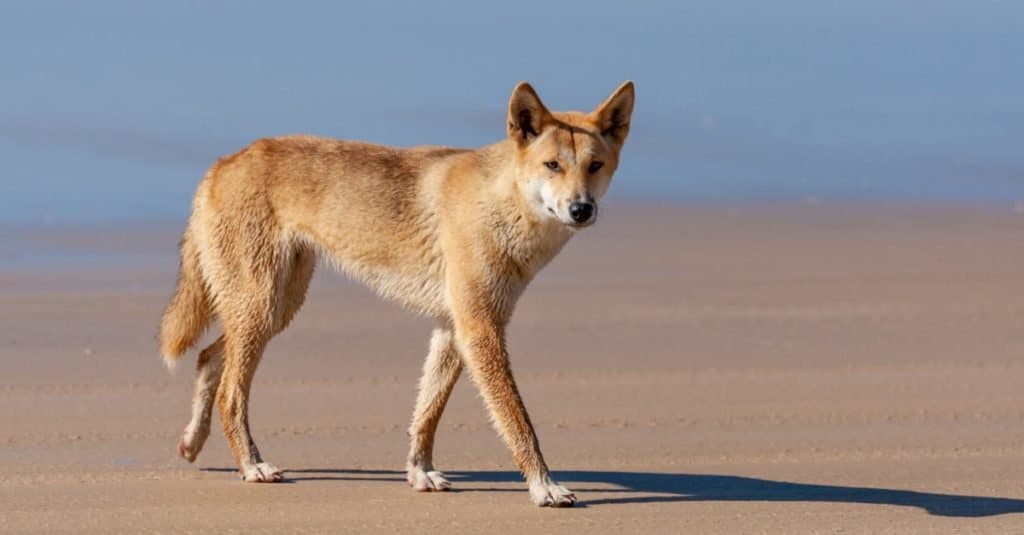
Dingoes do not bark, but they howl, chortle, yelp, whine, growl, chatter, snort, cough, and purr.
©Jason Cassidy/Shutterstock.com
Like the red wolf, biologists aren’t sure if the dingo is its own species or a subspecies of a domestic dog/wolf. Whatever its origins, it has been wild for a least 10,000 years and has the typical body type and coloration of a wild dog, with brown and reddish fur on its body, and white on its feet, chest, and the tip of its tail.
Dingos are considered apex predators and the among the largest on the Australian continent. They are carnivores but will eat fruits, nuts, and grains. Dingos are highly intelligent, possessing the ability to solve problems and create plans. Dingos sometimes form packs in which there is one dominant male and one dominant female. The dominant female often kills the offspring of other females in the pack.
African Wild Dog
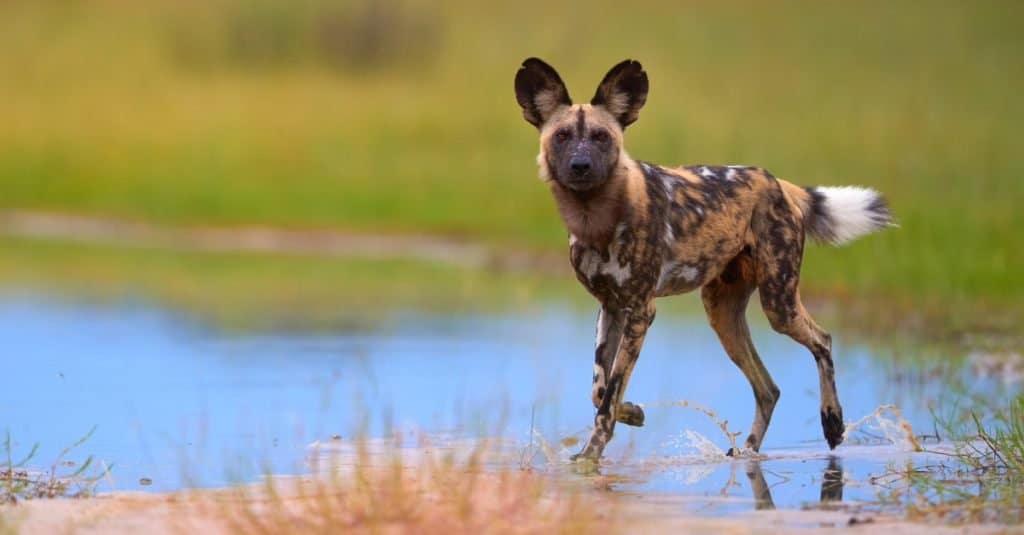
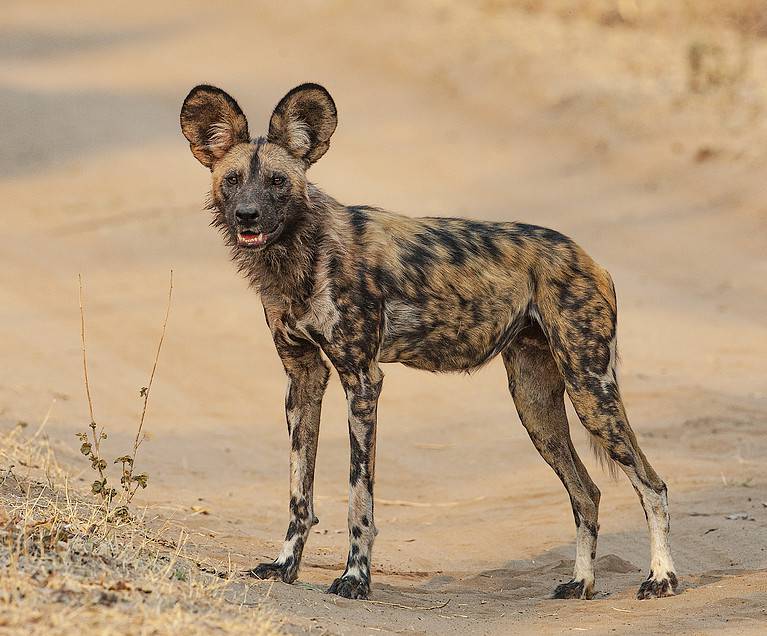
Wild dogs communicate with one another through touch, tail wags, and a variety of vocalizations.
©Martin Mecnarowski/Shutterstock.com
The African wild dog, an endangered species with only around 6600 remaining, has a distinctive look, with its lean body, huge ears, and coat that’s mottled white, black, and tan. Its coat has given it the scientific name of Lycaon pictus, which means painted wolf. Once found throughout Africa, its range has dwindled to the Southeastern part of the continent. Extremely social, these wild dogs can form packs of up to 30. They do not make good pets and if encountered in the wild, they should be treated with extreme caution. African wild dogs hunt during the day, preying on antelope. Because the packs are so large, the prey can be chased until it drops from exhaustion. Then, unlike wolves, cubs are allowed to eat first. There are five subspecies of African wild dogs.