
Quick Take
- Over 5,195 iguanas were collected during the 2026 cold snap to meet state requirements.
- Temperatures hitting 50 degrees trigger immediate failure of the nervous system and metabolism.
- Many frozen iguanas appearing dead are actually experiencing a counterintuitive state of survival.
- Official FWC drop-off sites became necessary to manage the infrastructure damage caused by these animals.
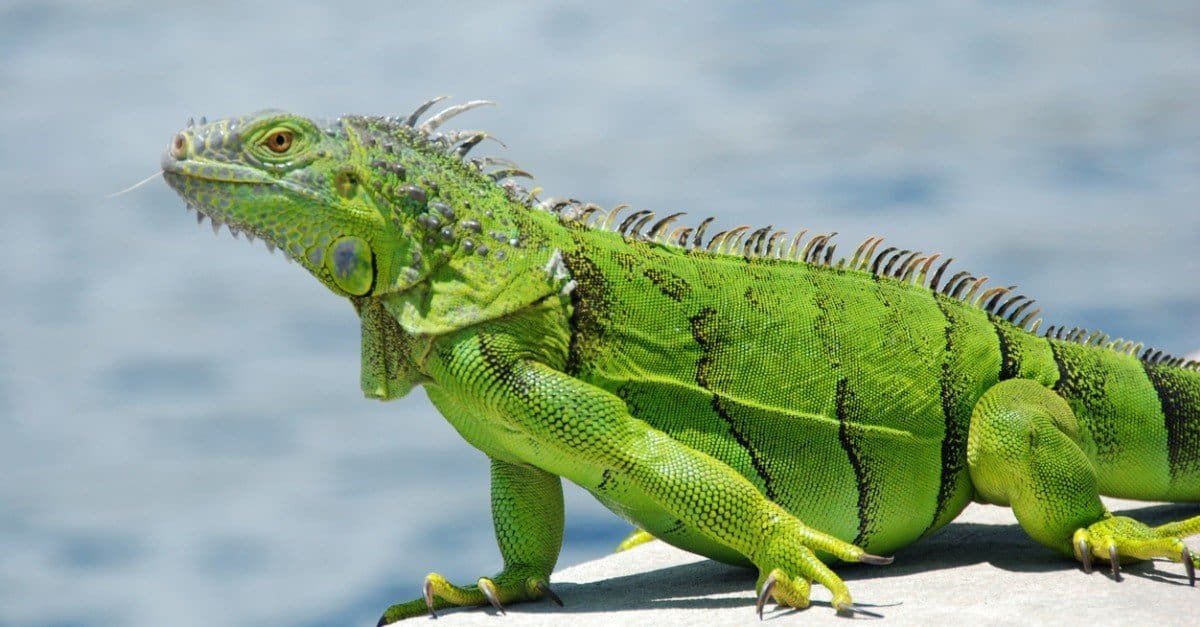
In the past few weeks, cold snaps have affected millions throughout the southern United States. These cold snaps greatly affect the wildlife, including the iguanas of Florida. Due to below-freezing temperatures, many iguanas become “frozen” because they cannot withstand the cold. This Instagram post by @wlrn covers the recent freeze. Read on to learn what happens to frozen iguanas in Florida.
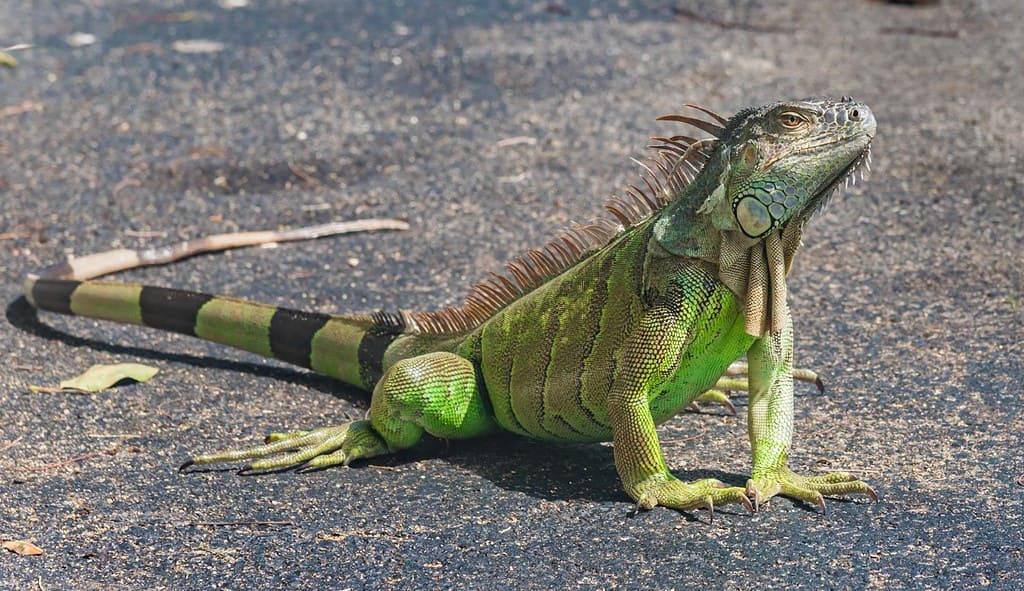
Green iguanas are an invasive species in Florida.
©David A Litman/Shutterstock.com
Frozen Iguanas
Iguanas freezing is not a new phenomenon in Florida, but it always takes some by surprise. Florida, more specifically South Florida, does not normally experience cold fronts with temperatures dropping below 30 degrees. Because of this, the iguanas that live there are not well adapted to survive in these temperatures. Iguanas, like many other lizards, are ectotherms. Ectotherms rely on external heat from the sun and warm air to regulate their body temperatures. So when the temperature drops, iguanas begin to lose control not only of their body temperature but also of their overall bodily functions. When temperatures drop below 50 degrees, their muscles, metabolism, and nervous system begin to slow. This causes them to lose their grip on the tree branches where they live, causing iguanas to fall.
The reason they freeze up like this is due to cold stunning. While they may initially look dead, they are not. Heartbeat, movement, and breathing all slow greatly, but when temperatures rise again, many thaw out and become active again. Not all iguanas can do this, however. If the cold exposure is prolonged or if a fall from a tree causes injury, some iguanas may unfortunately die. The freezing of iguanas reflects how changes in climate and temperature can affect animal physiology in unexpected ways. Since the green iguana, for example, is not native to Florida, it is not adapted to survive the state’s climate. This reinforces the importance of invasive species management in the future. So, what ultimately happens to the frozen iguanas?
Where Do The Iguanas Go?
There are a few possible outcomes for iguanas affected by cold snaps, but most do not return to the wild. During the February 2026 cold snap, the Florida Fish and Wildlife Conservation Commission (FWC) temporarily set up specific drop-off sites where the public could bring cold-stunned iguanas. The drop-offs were made by various people, including members of the public and professional pest controllers. As of February 5, 2026, a total of 5,195 iguanas were brought to FWC drop-off sites during the temporary collection program in response to the cold snap. However, because iguanas are considered invasive and cause damage to infrastructure, those collected during the February 2026 cold snap were humanely euthanized by wildlife officials.