
Despite our best efforts, there are many species of animals that become extinct every year. There are thousands of species of fish in the world, but sadly, many species of fish have disappeared entirely due to reasons such as overfishing, pollution, and fragmentation. In the last 100 years in North America, around 82% of fish types have dwindled or gone extinct. Let’s look at some of the extinct fish from our planet so we can better understand their ecology and how human activity is damaging animal life.
1. Ukrainian Migratory Lamprey
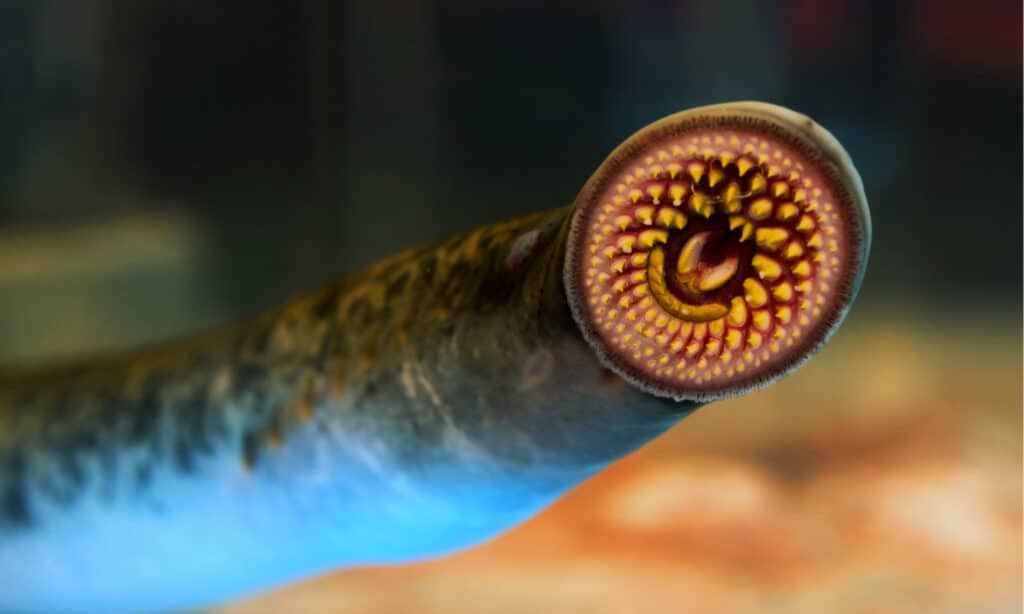
The Ukrainian migratory lamprey was officially declared extinct in 2008.
©Gena Melendrez/Shutterstock.com
Lampreys lack a skeleton, including jaws. They can’t use their mouths to move water across their gills to breathe, so they rely on the natural movement of water. Lampreys need swift-moving water and lose embankments for breeding and survival. Structures like dams for hydropower or other modifications to naturally flowing rivers hinder the life cycle of lampreys. The Ukrainian migratory lamprey was officially declared extinct in 2008, although the last recorded sighting was in the late 1800s. As the name implies, it was found in Ukraine. Some lamprey species around the world are threatened or near threatened, while others remain relatively stable; their conservation status varies widely by species and region.
2. Silver Trout
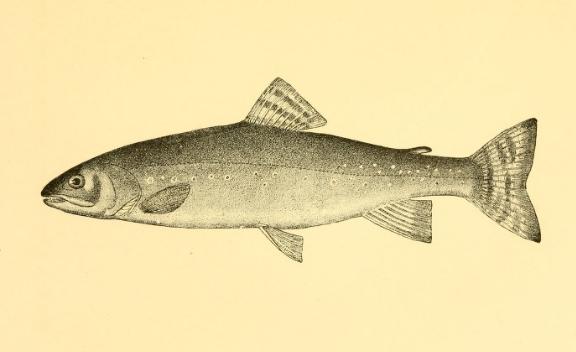
Silver trout were a type of ray-finned char.
Next is the silver trout, which was a type of ray-finned char and has been extinct since 1939. These fish were about a foot long and olive green in color, which is surprising since silver is in their name. Introduced invasive species finished this trout off, which was already rare on its own. It was endemic to a few areas of New Hampshire before the population drastically declined.
3. Santa Cruz Pupfish
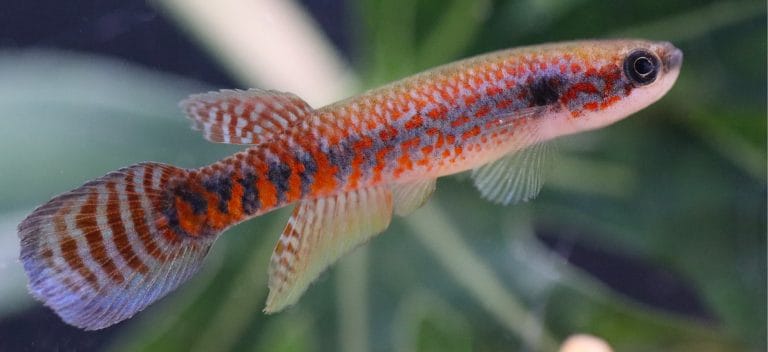
Pupfish often live in isolated and extreme situations, making them vulnerable to extinction. Santa Cruz pupfish were endemic to the Santa Cruz River in Arizona. They were tiny fish, averaging just 1.26 to 1.46 inches, with males being larger than females. However, they were declared extinct in 2011. Changes to the river’s ecosystem pushed them to a natural spring called Monkey Spring. There, the introduced game fish killed the remaining ones.
4. Snake River Sucker
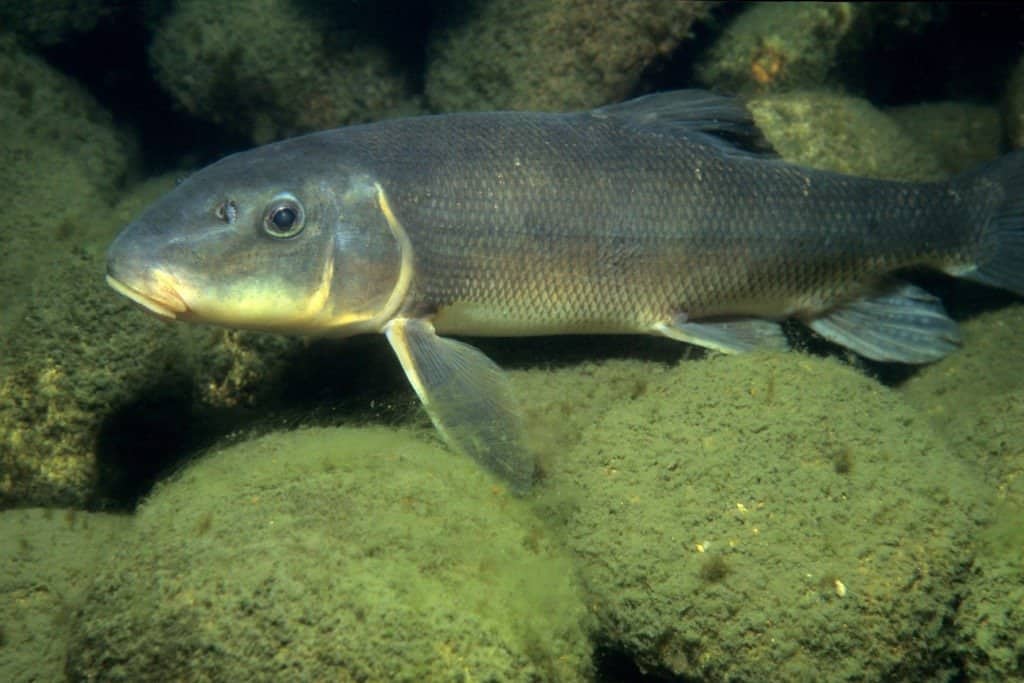
This white sucker fish also spawns in gravel like the extinct Snake River sucker.
©RLS Photo/Shutterstock.com
Snake River suckers were ray-finned fish that were endemic to the Snake River in Wyoming, below the Jackson Hole Dam. It’s likely that they originally had a larger range before human interference. However, suckers migrate into certain streams to spawn their young in gravel, leaving the eggs there. The interruption of these migration routes is believed to have contributed to the extinction of this species.
5. Mexican Dace
The Mexican dace was a minnow that was endemic to the streams and canals in the Valley of Mexico. They became extinct around 1983 due to their habitat drying up. Water bodies in the Valley of Mexico began to dry up due to the amount of water required by agriculture and the expanding population of Mexico City.
6. New Zealand Grayling
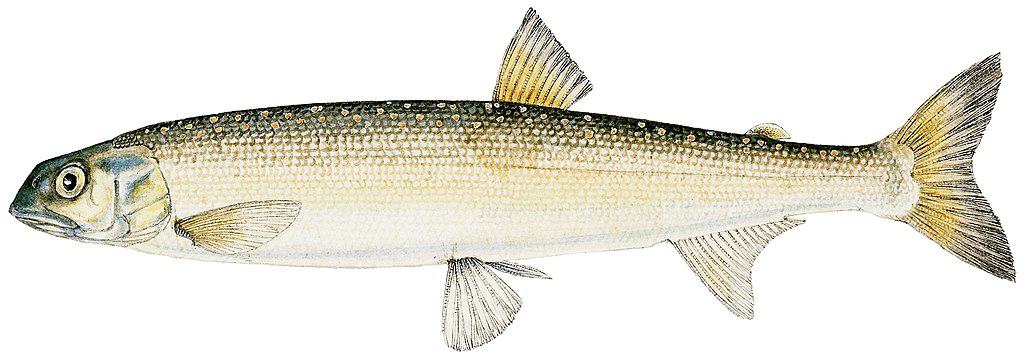
The New Zealand grayling (Prototroctes oxyrhynchus) is another fish that became extinct. These fish were endemic to New Zealand and lived in both freshwater and saltwater, depending on the season. They were last sighted in 1923 and were officially declared extinct in 2018. The reason for their decline is not truly known, although speculations suggest several factors contributed to it. One such one was deforestation, which caused run-off into the rivers and streams, causing erosion and increased river sediment. However, another factor is the theory of source-sink dynamics. The basic idea is that a few bad habitats within a larger organism’s community will eventually degrade the whole system.
7. Siamese Flat-Barbelled Catfish
Siamese flat-barbelled catfish were native to the Bang Pakong and Chao Phraya rivers in Thailand. They were around eight inches long and ate a variety of insects and shrimp. Although no one had seen a Siamese flat-barbelled catfish since 1977, they weren’t officially declared extinct until 2011.
8. Utah Lake Sculpin
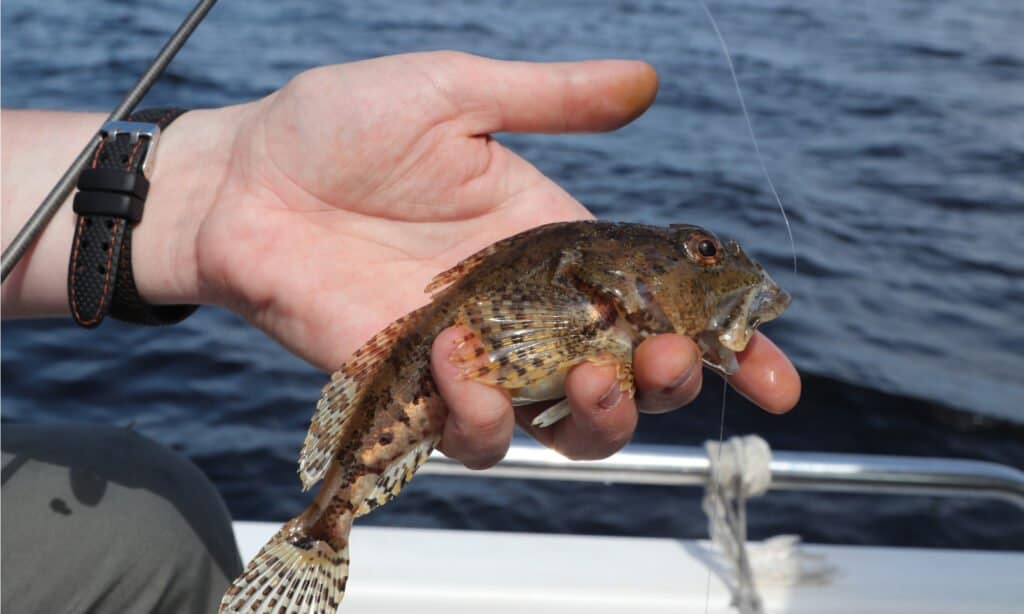
Sculpins are bottom dwellers (Utah Lake sculpin not shown).
©Nadezhda Malysheva/Shutterstock.com
The Utah Lake sculpin was endemic to Utah Lake. Utah Lake is part of the system that feeds the Great Salt Lake via the Jordan River tributary. The lake itself is slightly saline, but not as much as the Great Salt Lake. Utah Lake sculpins were bottom dwellers that primarily ate invertebrates. They were last seen in 1928 and are believed to have become extinct sometime in the 1930s. Factors contributing to their extinction are thought to include a large drought, which caused the water levels in the lake to drop rapidly, resulting in overcrowding. Another factor is agricultural runoff, which caused the water quality to decline, again affecting the fish populations.
9. Chinese Paddlefish
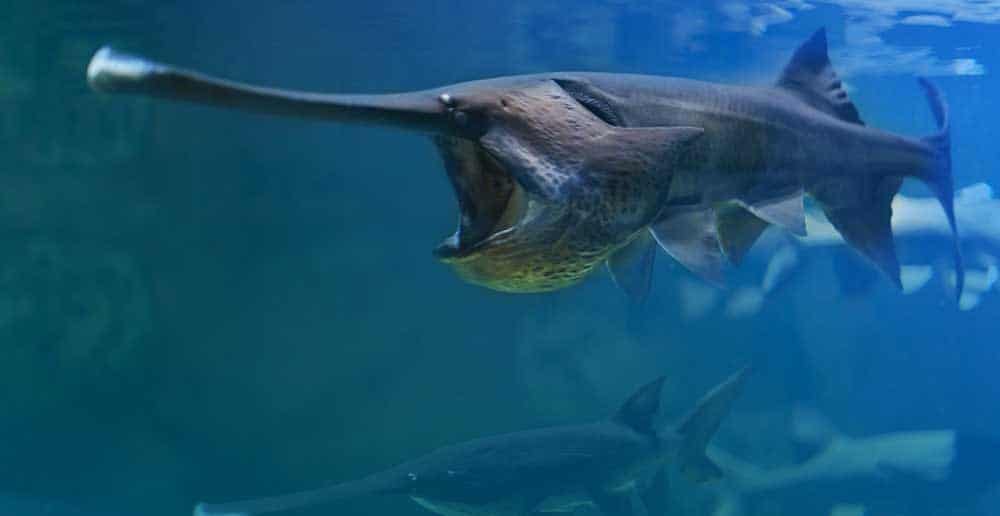
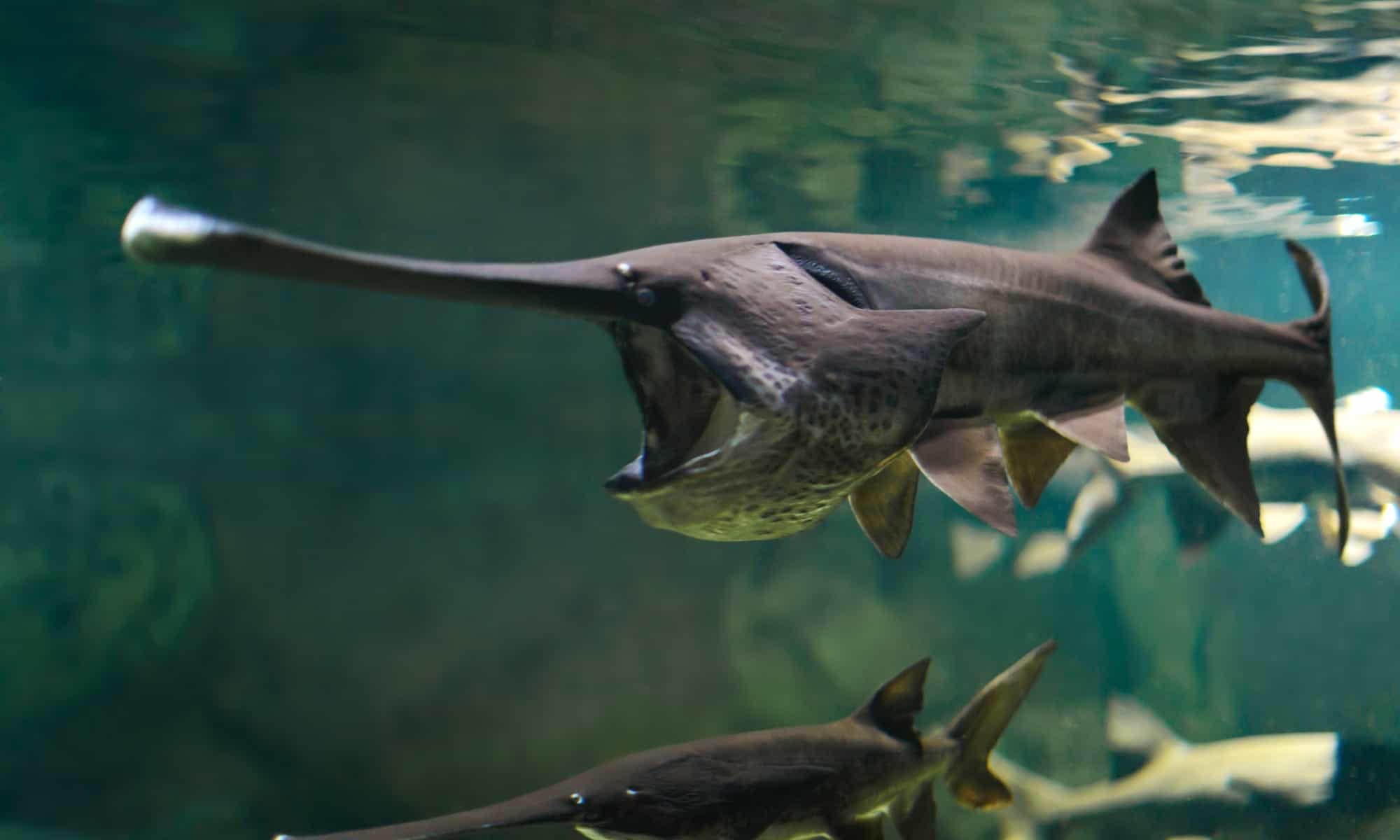
The Chinese paddlefish was old from an evolutionary standpoint, having been the same for 200 million years.
©Natalia Belay/Shutterstock.com
The final fish on our list is the Chinese paddlefish. Chinese paddlefish lived in the Yangtze River and Yellow River basins in China. They were large fish, often reaching around ten feet long, and were known for their distinctive paddle-shaped snout. Chinese paddlefish were functionally extinct by 1993 and were officially declared extinct in 2022. The main factors contributing to their decline were the construction of the Gezhouba and the Three Gorges dams, which fragmented the population by blocking the migration routes that they followed for spawning. Other factors included overfishing, but although it became illegal to hunt them, the effort ultimately proved futile.