
Quick Take
- A tower of skulls sounds like a horror prop, yet for one caterpillar it turns out to be a surprisingly strategic survival tool that makes predators hesitate. See the survival strategy →
- The 'Mad Hatterpillar' has a second, hidden defense that has nothing to do with its bizarre crown, and this defense can affect humans too. Discover the hidden defense →
- Its creepy nickname isn't actually about the heads. The real reason it's called the 'skeletonizer' is somehow even more sinister. Uncover the sinister feeding habit →
- One country thought it had wiped this invasive caterpillar out. Then things got dramatically worse. Read about the failed eradication →
There are 160,000 moth species worldwide, compared with 17,500 butterfly species. This means the vast majority of caterpillars observed will transform into moths rather than butterflies.
Each moth species has a unique look. However, one of the most distinct caterpillars wears a tower of its former heads. This species is the gum leaf skeletonizer, also known as the Mad Hatter of caterpillars, because it sports several molted heads as a crown.
The Gum Leaf Skeletonizer Wears a Tower of Its Former Heads
When the gum leaf skeletonizer larvae hatches from its egg, it looks like the majority of other moth larvae. Tiny gum leaf skeletonizer larvae immediately begin consuming gum leaves to grow rapidly into caterpillars.
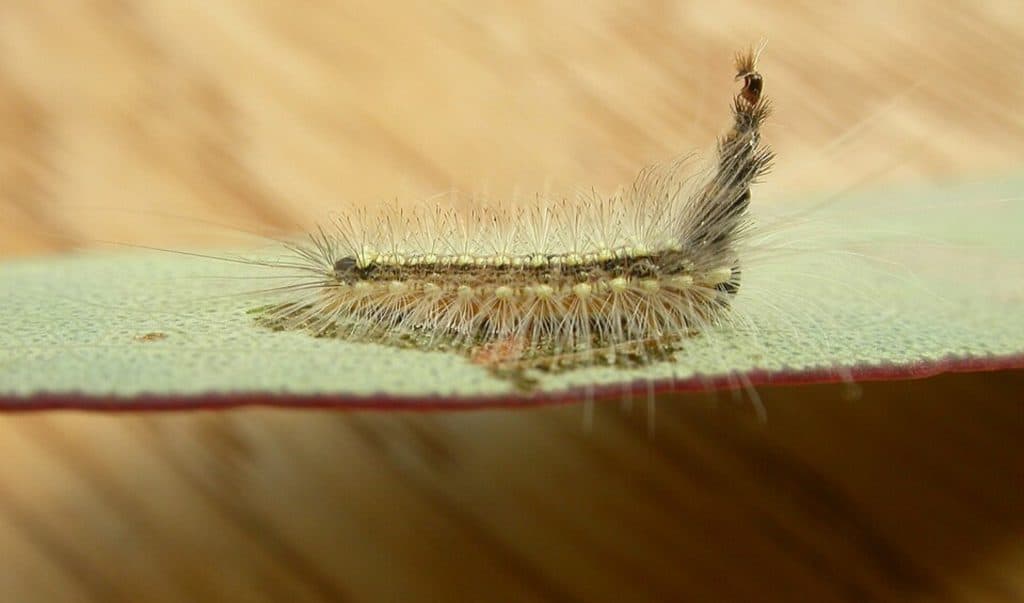
The gum leaf skeletonizer will continue to grow its tower of heads during its caterpillar stage.
©Donald Hobern, CC BY 2.0 , via Wikimedia Commons – Original / License
As the larvae and eventually the caterpillars grow, they need to shed their exoskeletons. This keeps growth from being restricted. As the caterpillars shed their exoskeleton, they retain the head portion of the exoskeleton. With each shed, the head exoskeletons stack on top of one another, with the largest on the bottom and smallest on top.
It is not uncommon for these caterpillars to have a handful or more exoskeleton heads balanced together. They retain the heads until they form a cocoon and pupate. Then they emerge from the cocoon as brown moths that easily camouflage themselves in the surrounding vegetation for the remainder of their life cycle.
Why Does the Gum Leaf Skeletonizer Wear a Tower of Heads?
The reason for the gum leaf skeletonizer’s odd look of carrying around a tower of heads has never been fully explained. However, most of the scientific community agrees that the best hypothesis is that the heads serve as a defensive mechanism.
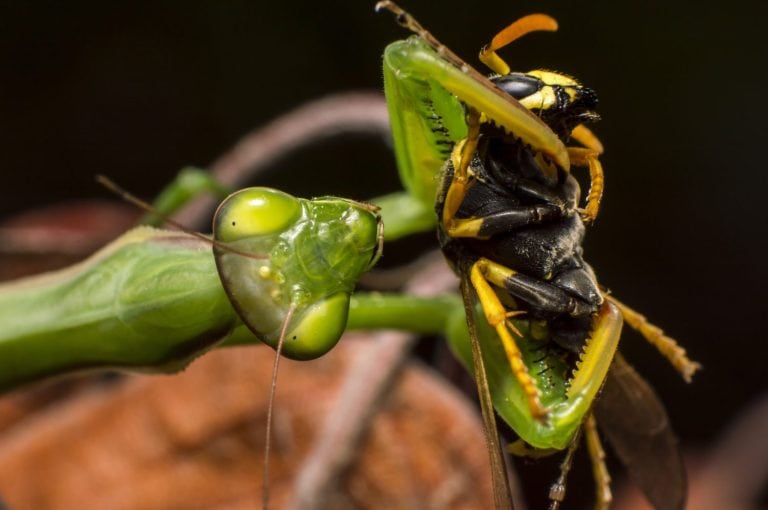
Gum leaf skeletonizers are targeted by spiders and stink bugs. When they attack, predators target the head. Stink bugs, in particular, stab the gum leaf skeletonizer in the head with their beaks to immobilize and kill it.
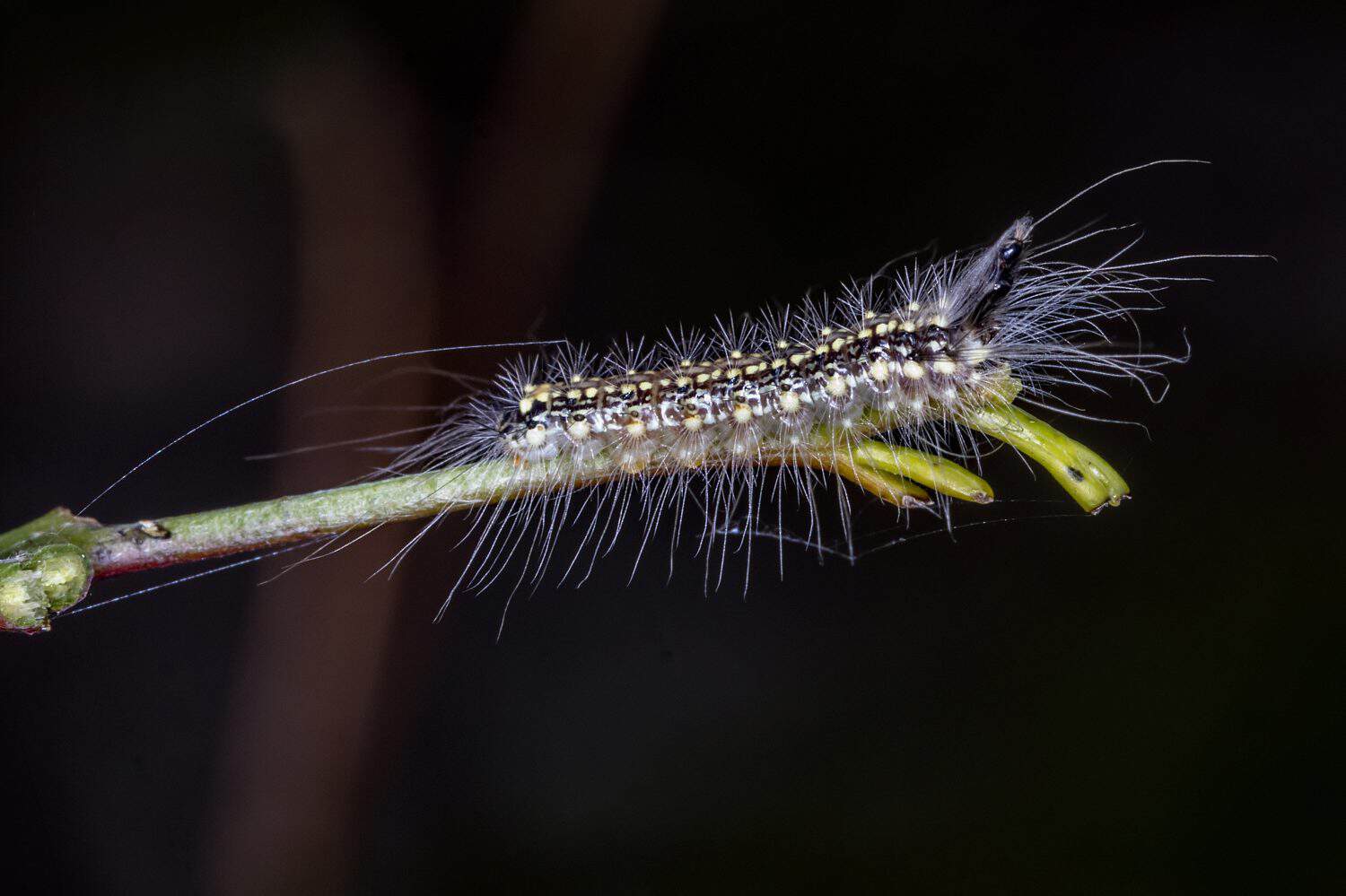
Gum leaf skeletonizer caterpillars are believed to have multiple heads to confuse predators.
©Andrew Allen Photography/Shutterstock.com
Researchers have observed that when gum leaf skeletonizers have multiple heads, spiders and stink bugs do not attack immediately. Instead, compared with younger caterpillars that have yet to molt and therefore do not have multiple heads stacked on one another, predators take 10 times longer to attack caterpillars with more than one head.
Multiple heads alone do not stop the attack. Stink bugs may still attack, stabbing one of the heads with their beaks and injecting venom. But if the stink bug injects venom into an empty head, the caterpillar remains unharmed. In the confusion, the gum leaf skeletonizer can escape, leaving predators wondering where their hunting techniques went south.
How the Gum Leaf Skeletonizer Got Its Name
Surprisingly, the number of heads the gum leaf skeletonizer can stack on top of one another is not the reason Uraba lugens was given its common name. Instead, the ominous-sounding nickname comes from the caterpillar’s eating habits.
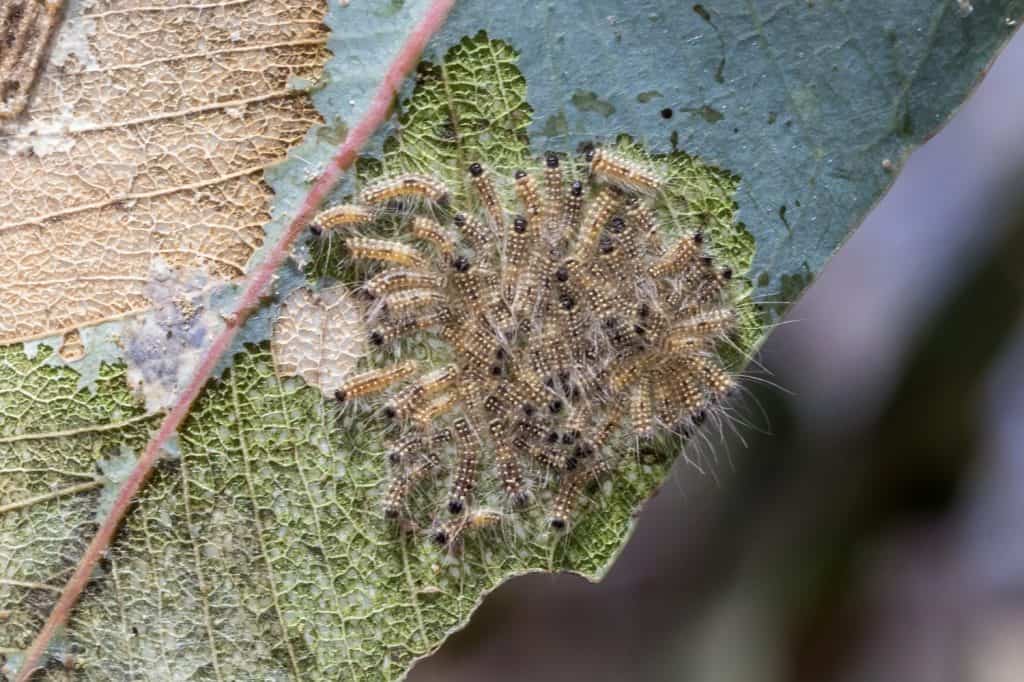
The species got its name for the damage the caterpillars do to gum leaves as they consume them.
©Andrew Allen Photography/Shutterstock.com
The gum leaf skeletonizer moth typically lays eggs on gum tree leaves. As these eggs hatch, the larvae begin consuming leaves to grow rapidly. When feeding on leaves, the larvae eat the entire leaf except the veins. This leaves the leaves looking like a skeleton.
While this may look like it is saving the tree, consuming too many leaves this way stresses it. The tree’s ability to grow, defend itself, or reproduce is severely limited because it cannot photosynthesize. Therefore, when too many caterpillars consume the leaves of one gum tree, it becomes too compromised to survive.
Is the Gum Leaf Skeletonizer Venomous?
The multiple heads that adorn the gum leaf skeletonizer’s head have proven to be a good deterrent to predators, as they cause them to delay an attack. However, delaying is not the same as stopping. This is why the caterpillars have a second line of defense. That line of defense is being venomous.
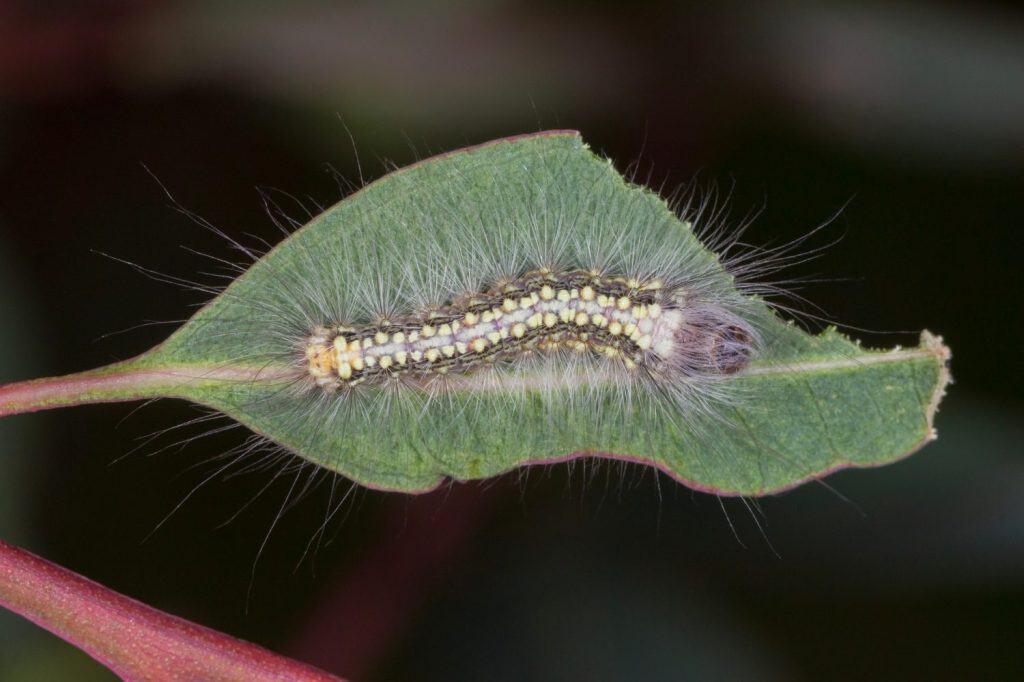
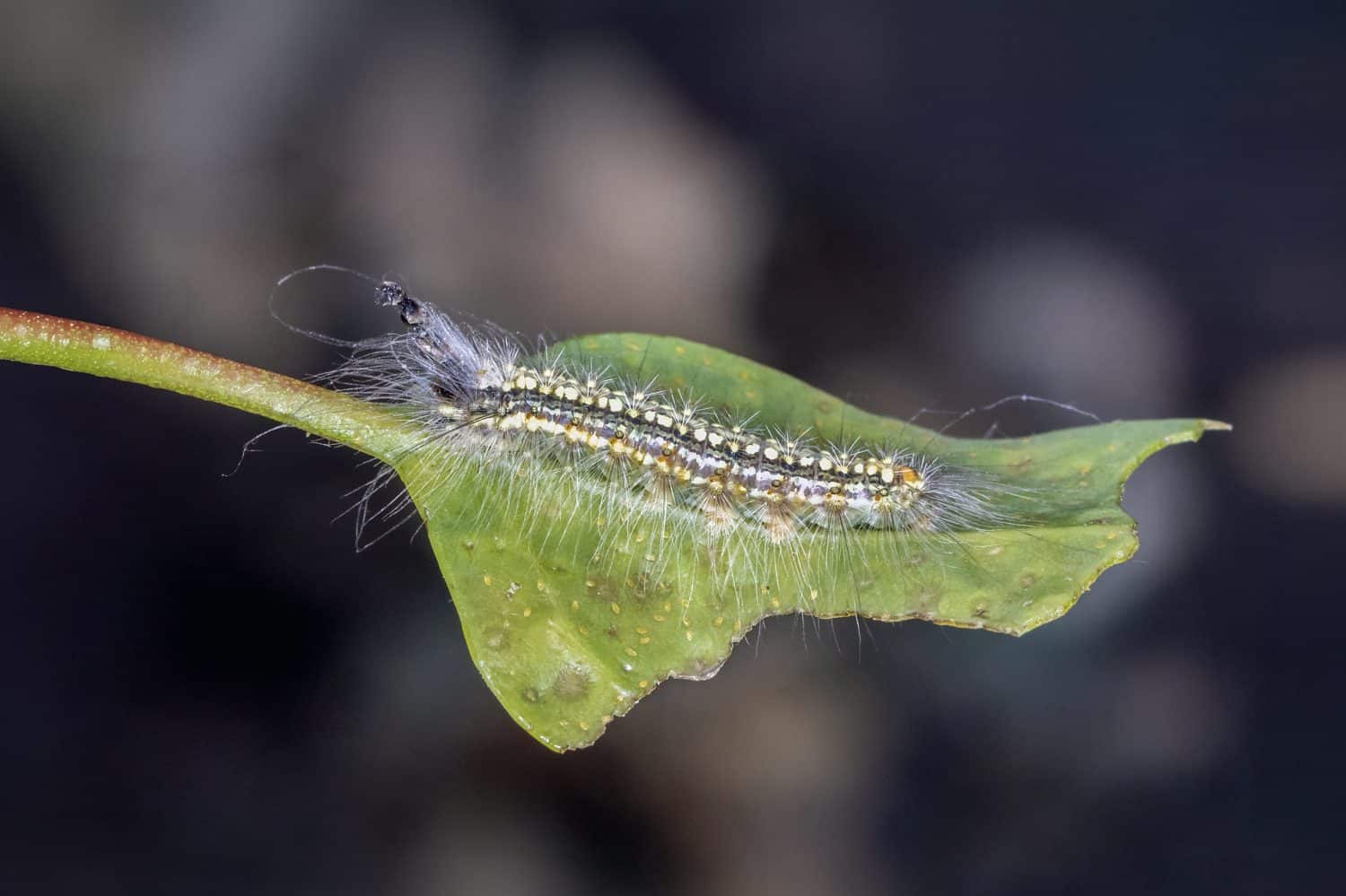
The gum leaf skeletonizer is covered in white, hollow, venomous spines.
©Andrew Allen Photography/Shutterstock.com
Once the shock of seeing the gum leaf skeletonizer wander around with a stack of empty heads wears off, white hairs can be observed covering the caterpillar’s body. These hairs are actually hollow, venomous spines. They are not lethal to predators, but the irritation they cause may give the caterpillar enough time to escape an attack.
If people come into contact with the gum leaf skeletonizer, they should not touch it. The same venom can cause itching, redness, swelling, and a rash at the site of contact. If the spines prick the skin, wash the area and apply a cool compress to reduce the reaction. For those who experience shortness of breath or other breathing problems, seek medical attention immediately to treat the venom allergy.
Gum Leaf Skeletonizers Are an Invasive Species in New Zealand
Native to Australia, the gum leaf skeletonizer is problematic there because its larvae can rapidly decimate a tree’s foliage. While there is no widespread control of the caterpillars, residents can take matters into their own hands if they feel the caterpillar population has exploded beyond control and use pesticides to keep the stinging caterpillars from consuming their foliage.
The caterpillars are not native to New Zealand. There, they are considered invasive.
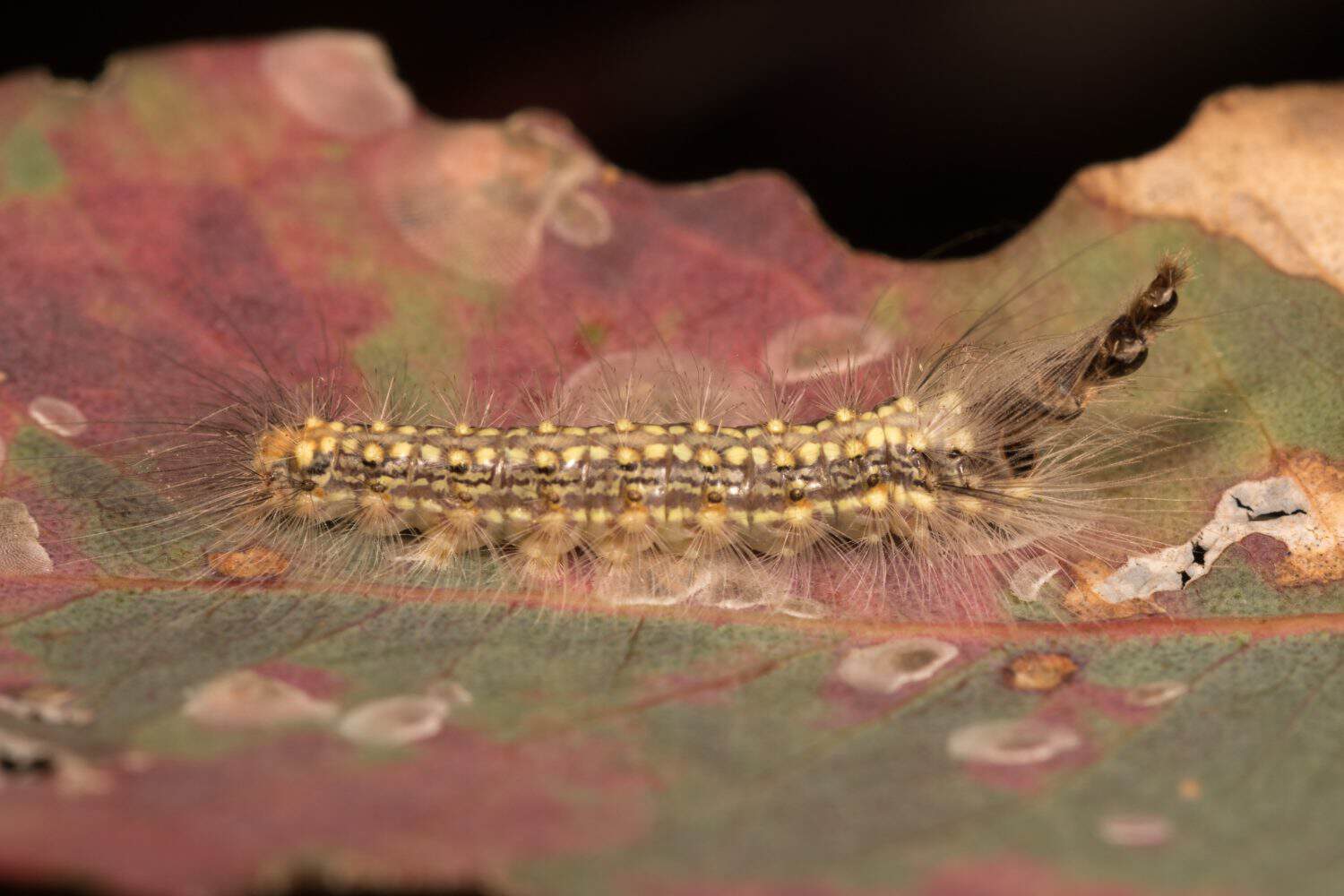
Gum leaf skeletonizers are not native to New Zealand and have become an invasive species over the past several decades.
©Katarina Christenson/Shutterstock.com
First discovered in multiple trees on a golf course near Mount Maunganui in 1992, it is believed that the caterpillar reached New Zealand by accidental human transport. However, no one knows for sure if this is true.
The country decided to combat the invasive caterpillars, and the population near Mount Maunganui was eradicated by the late 1990s. Unfortunately, this was short-lived, as another population was discovered in Auckland in 2001. This population was significantly larger, and many believed it was too difficult to eradicate. Consequently, the caterpillars remained in New Zealand and have spread to other regions over the last two decades.
The gum leaf skeletonizer is an incredible moth caterpillar. While its presence is not appreciated due to the damage it can inflict on tree foliage, the lengths it goes to protect itself from predators, with both its multiple heads and spikes, are impressive.