
Quick Take
- A species vanished from a Massachusetts forest for over 80 years. What finally made the habitat livable again? See what changed →
- Releasing 529 salamanders sounds like a win, but the real milestone happened when conservationists stopped releasing them entirely. Why releases stopped →
- The salamanders were gone for nearly a century, and even after the forest recovered, they still couldn't come back on their own. Here's why. Trace the local extinction →
- Schoolchildren played a real, meaningful role in bringing a locally extinct species back from the brink, and their contribution was far from symbolic. See how students helped →
More and more species are becoming locally extinct. Due to habitat loss, climate change, poaching, or disease, many regions that were once rich in diverse plant and animal life have lost much of their biodiversity.
This is why when conservation efforts pay off, they make headlines. Such is the case for the marbled salamanders, now thriving in a Massachusetts forest after 80-plus years of absence. If not for years of dedicated conservation work, salamanders would not have returned to Middlesex Fells.
Continue reading
Marbled Salamanders Reappear in Massachusetts After Multi-Decade Disappearance
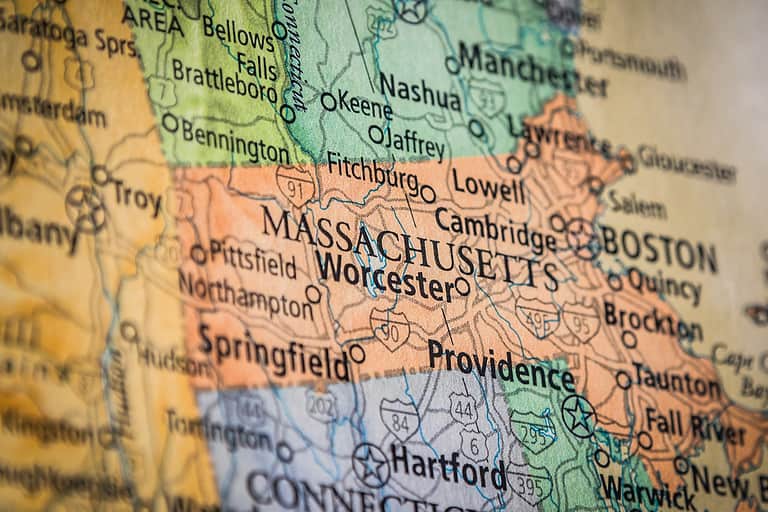
Marbled salamanders were once common in Middlesex Fells, Massachusetts. Unfortunately, as the region expanded and became more urbanized, the salamanders suffered. By the 1930s, the marbled salamander was locally extinct in the Fells.
Thanks to conservation efforts spurred by Zoo New England, marbled salamanders are now once again found in Middlesex Fells and appear to be reproducing successfully.
Recently, staff from Zoo New England traveled to Middlesex Fells after an afternoon rain, hoping to see a few marbled salamanders near vernal pools. If the salamanders were near the pools, they might lay eggs, since it is breeding season.
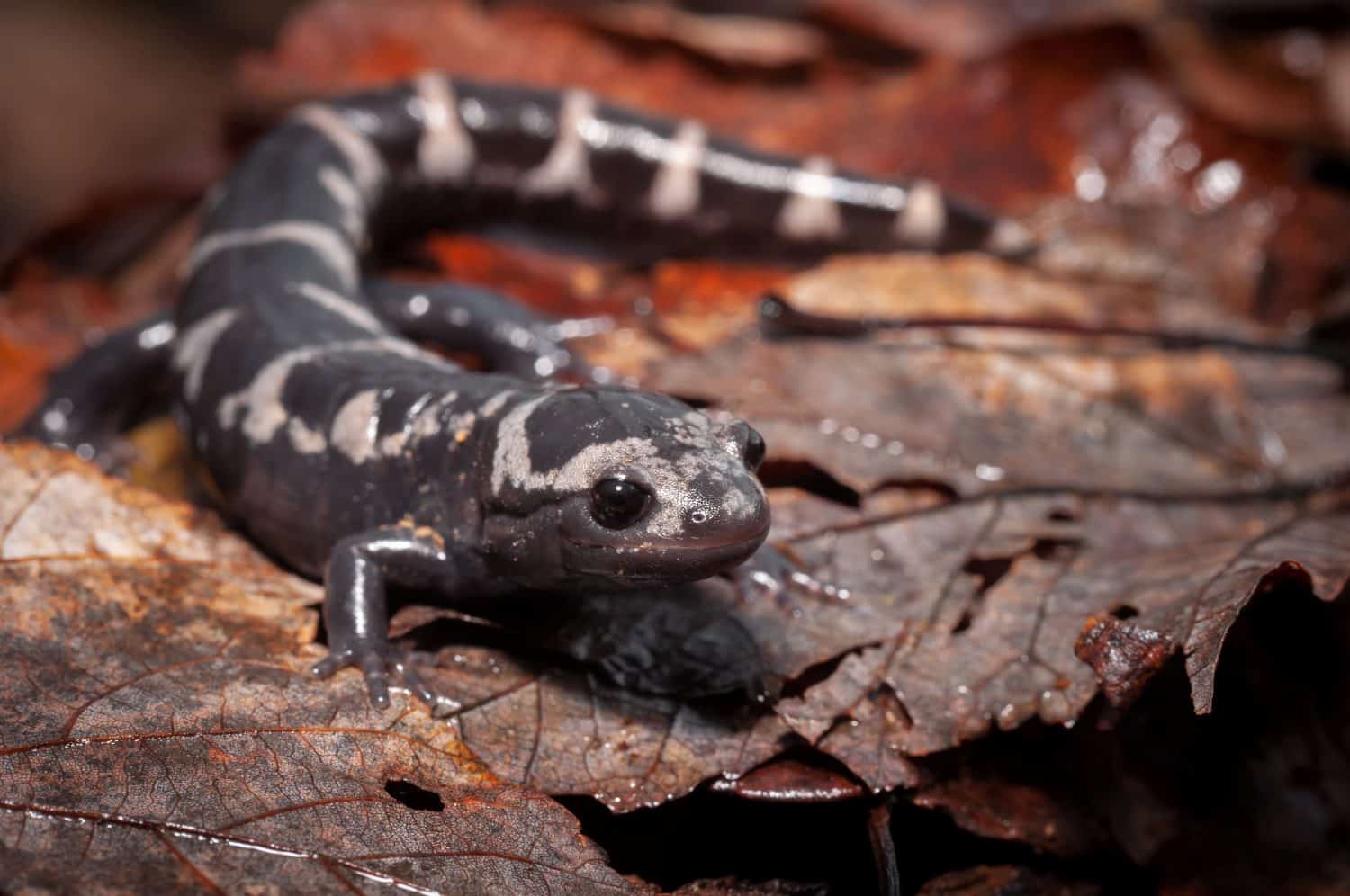
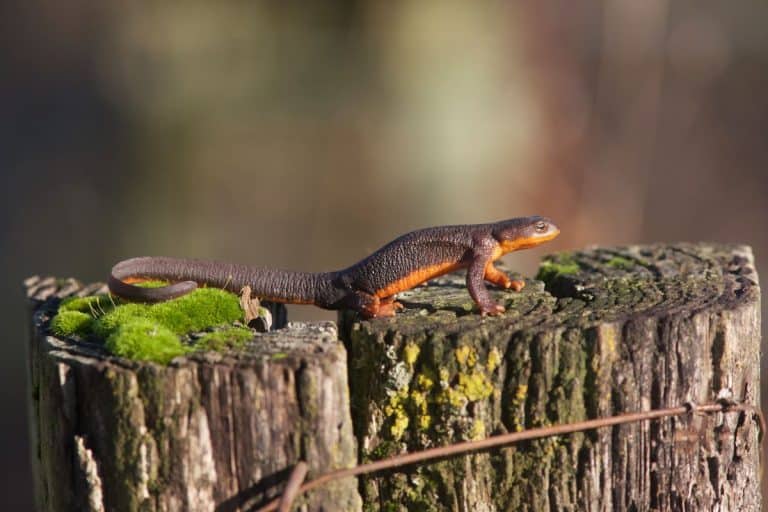
Adult marbled salamanders are once again being found in Middlesex Fells in Massachusetts.
©Mike Wilhelm/Shutterstock.com
What the staff found far exceeded their expectations. There were 15 marbled salamanders near vernal pools, including a vernal pool never before used by the salamanders. According to Matthew Kamm, Zoo New England Associate Director of Field Conservation, seeing these salamanders is proof that conservation efforts have paid off.
“The recent sightings show us that our reintroduction efforts have worked, and that salamanders are persisting at this site even though we have not released salamanders here since 2024,” Kamm explained to Zoo New England. “This is a conservation success story showing that rare species can be brought back given sufficient protected habitat and a collaborative approach.”
How Conservationists Helped Marbled Salamanders Reclaim Middlesex Fells
By the 2010s, Middlesex Fells was determined to be marbled salamander-friendly. However, fragmentation prevented the salamanders from returning to their native habitat. To help the salamanders, Zoo New England began a multi-year, multi-agency project in 2016 to help marbled salamanders become self-sustaining in the region again.
With help from MassWildlife, Friends of the Fells, and local schoolchildren, Zoo New England began collecting newly hatched marbled salamander larvae from vernal pools in western Massachusetts. This helped ensure the salamanders survived to become juveniles.
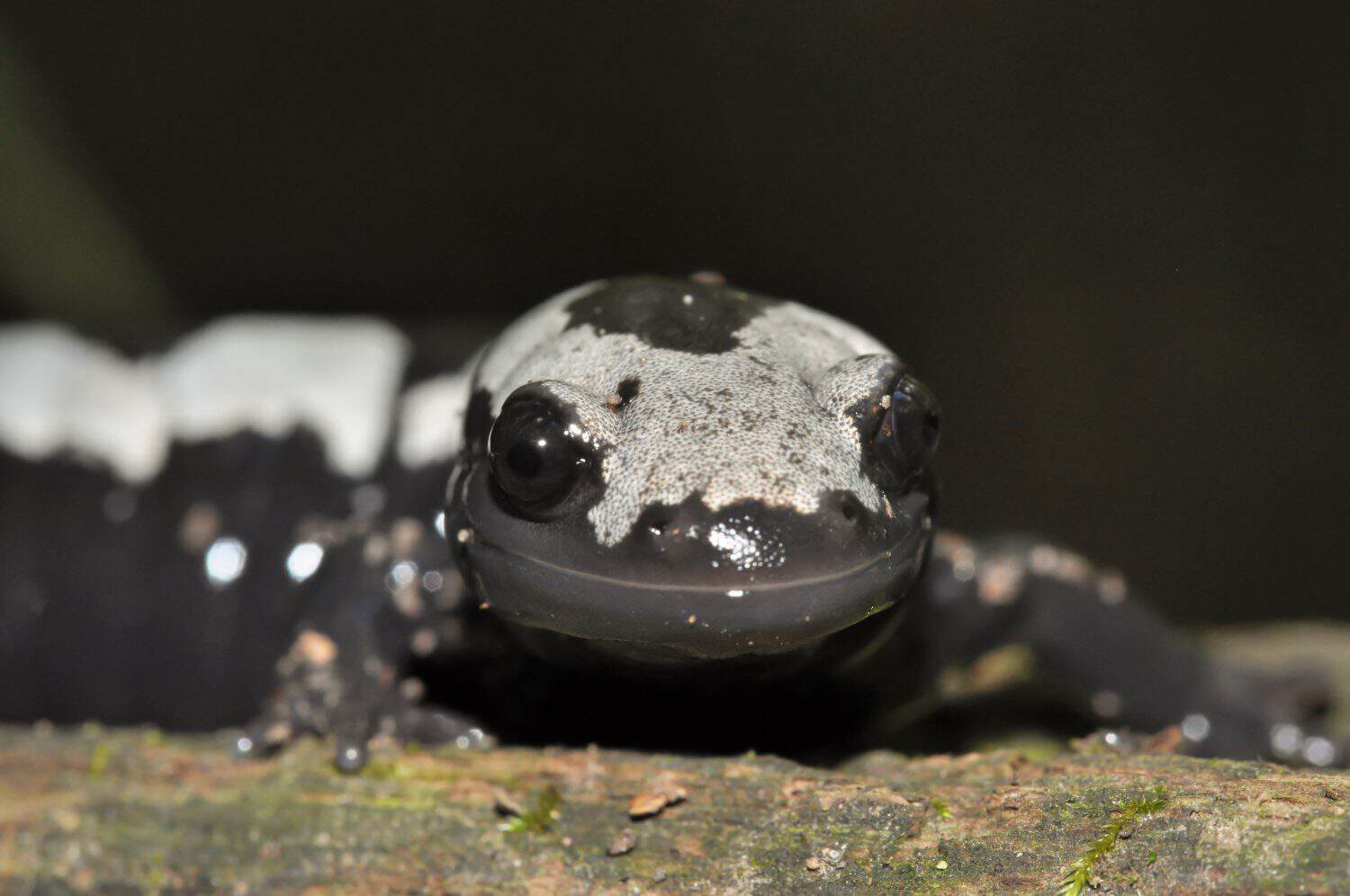
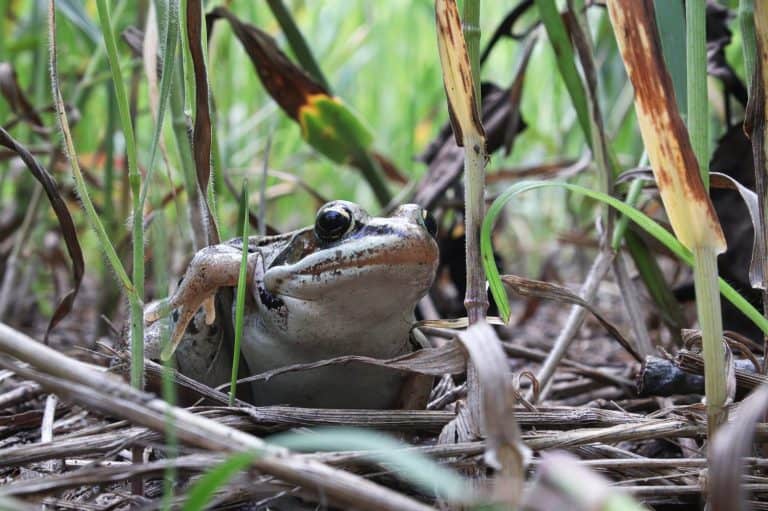
Marbled salamanders were brought back to Middlesex Fells after years of relocating juvenile salamanders from western Massachusetts to the Fells.
©Mike Wilhelm/Shutterstock.com
As the juveniles were released, each step was carefully planned and monitored. Juveniles with similar genetic backgrounds were placed in separate locations to reduce the risk of inbreeding. Conservationists placed juveniles near predator-free vernal pools to help eggs and, later, larvae survive.
In total, 529 marbled salamanders were released in Middlesex Fells between 2016 and 2024. After several years, researchers finally found marbled salamander larvae alive and thriving in vernal pools at Middlesex Fells.
Marbled Salamanders Had Not Been Released in Middlesex Fells for Two Years
For nearly a decade, conservationists at Zoo New England have worked with local schools, Friends of the Fells, and MassWildlife to bring marbled salamanders back to Middlesex Fells. However, this work ended in 2024, and no salamanders have been released since then.
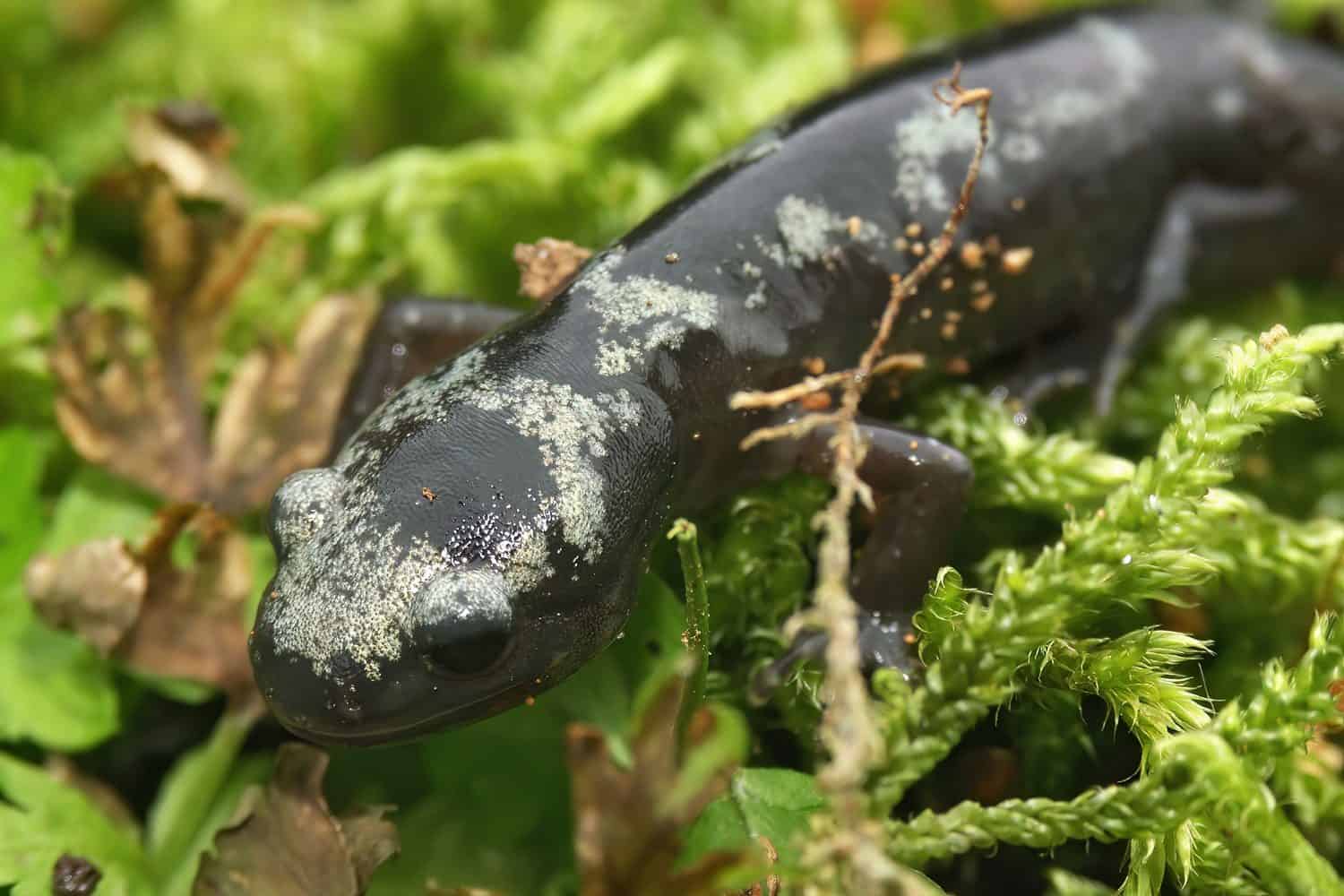
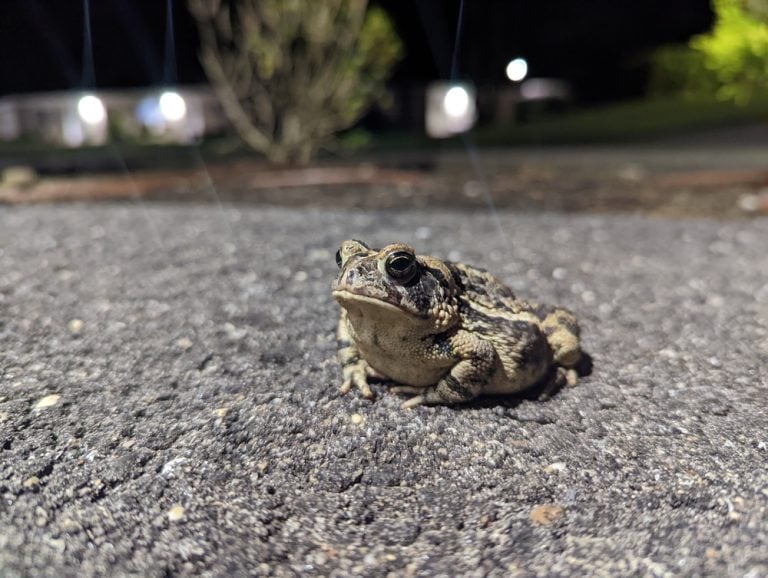
Juvenile marbled salamanders have not been released in Middlesex Fells since 2024.
©Wirestock Creators/Shutterstock.com
Marbled salamanders have not been released since 2024. This is because the work that began in 2016 to help them reestablish their presence in Middlesex Fells paid off. In 2023, marbled salamander larvae hatched in vernal pools for the first time in over nine decades. This meant the salamander population was sustaining itself. Human intervention was no longer needed.
While conservationists continue to monitor the marbled salamander population in Middlesex Fells, the salamanders have demonstrated that they can thrive when their habitat is restored.
Why Did the Marbled Salamander Go Locally Extinct?
Up until the 1930s, marbled salamanders were commonplace in Middlesex Fells, according to Zoo New England. Unfortunately, as urbanization increased, people did not consider the salamanders’ needs. This led to the marbled salamander’s localized extinction for nearly a century.
Urbanization in Middlesex Fells began in the 19th century. As more people moved into the marbled salamanders’ environment, there was no space for the salamanders to survive. Because of habitat fragmentation and the destruction of vernal pools, marbled salamanders could not survive in the area.
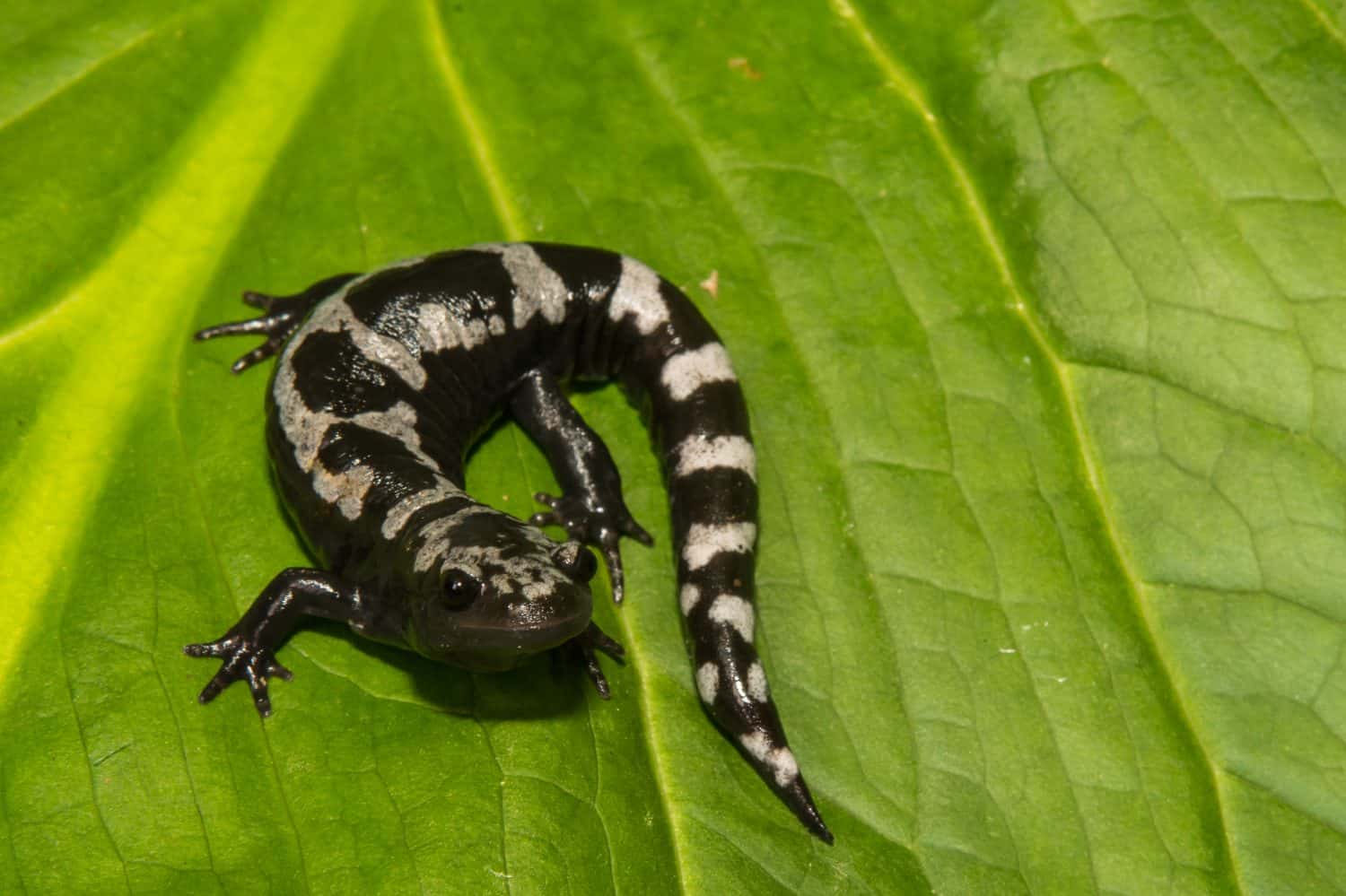
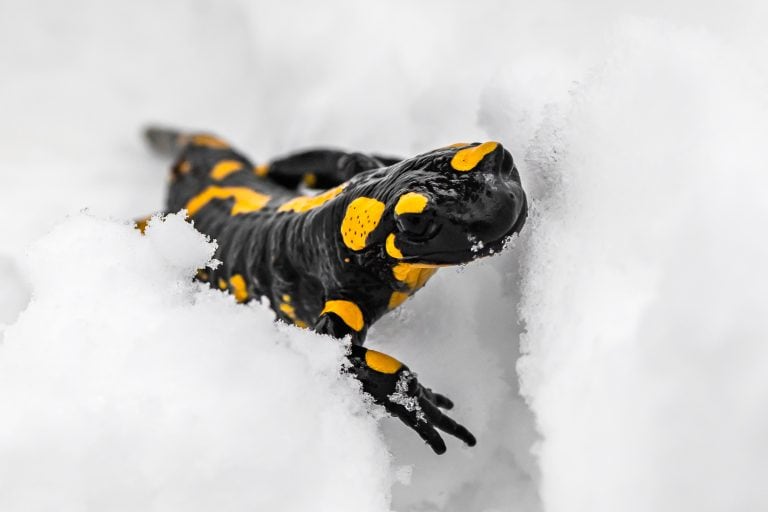
Marbled salamanders went locally extinct due to urbanization, deforestation, and habitat fragmentation.
©Jay Ondreicka/Shutterstock.com
Even after the Middlesex Fells Reservation was established in 1893, the damage had already been done. Deforestation and industrial development had removed the trees and ground cover that salamanders needed.
Even as the forest began to recover, marbled salamanders could not return to their native habitat because it remained too fragmented. Their habitat was too fragmented. There were no habitat corridors to allow salamanders to move between suitable areas. Consequently, populations remained isolated from one another for decades.
Threats Marbled Salamanders Face Today
Although marbled salamanders are considered a species of least concern globally, populations are declining or threatened in some regions, and threats still exist. If these threats are not addressed, salamander populations could face further declines.
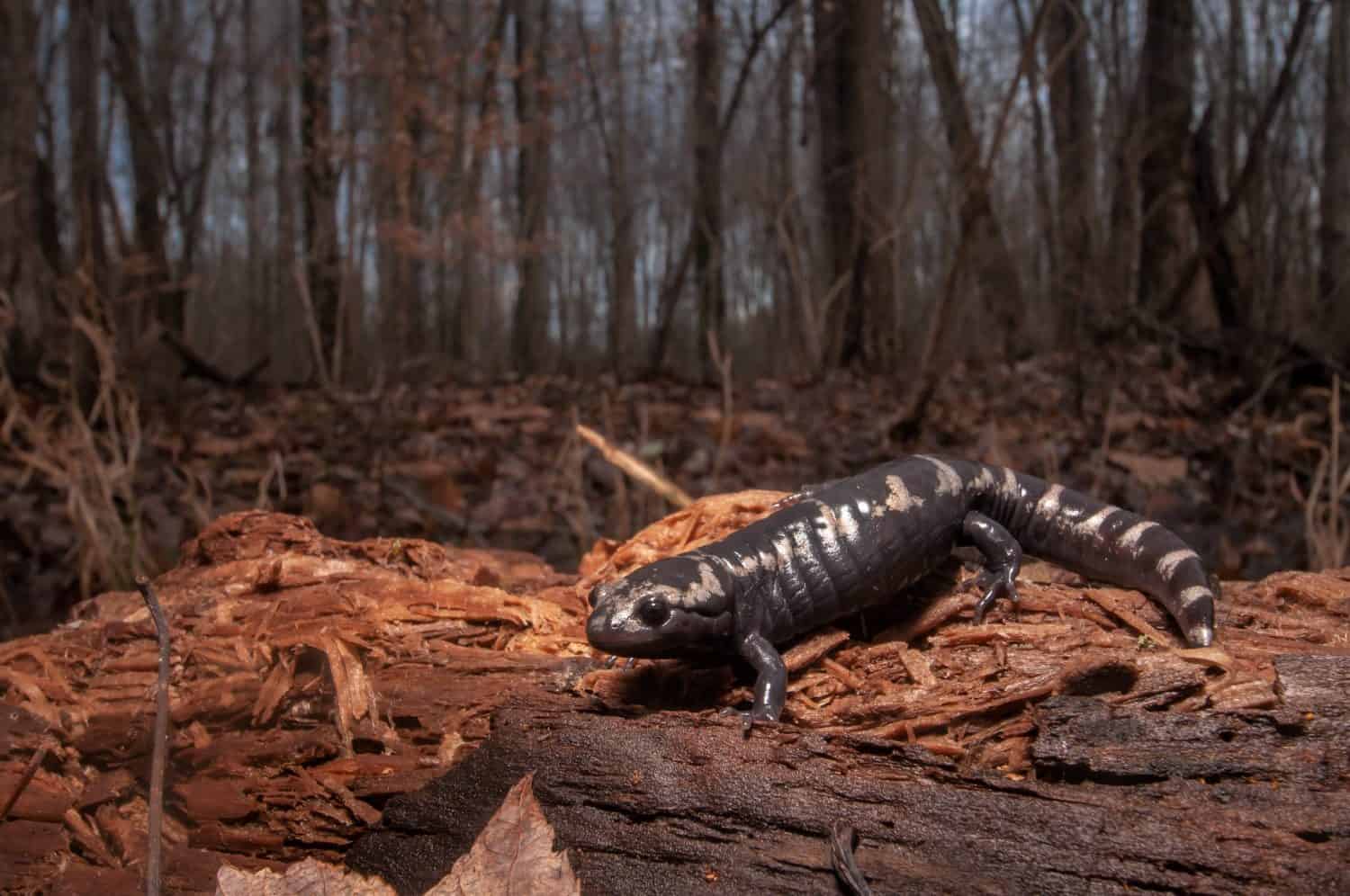
Marbled salamanders still face threats of drought, habitat loss, predation, and more.
©Mike Wilhelm/Shutterstock.com
The current threats that marbled salamanders face today include:
- Climate change
- Drought
- Habitat loss
- Disease
- Predation
It may not be possible to protect marbled salamanders from every threat they face. But as has been proven with the marbled salamanders in Middlesex Fells, when given suitable habitat, salamanders can recover and reproduce.