
The African wild dog (Lycaon pictus) is an iconic canid species endemic to continental Africa. Unfortunately, it is also one of the world’s most endangered canids, with an increasingly fragmented and declining population. Read on to find out how many African wild dogs we think are left in the world, along with current conservation status and top threats to species survival.
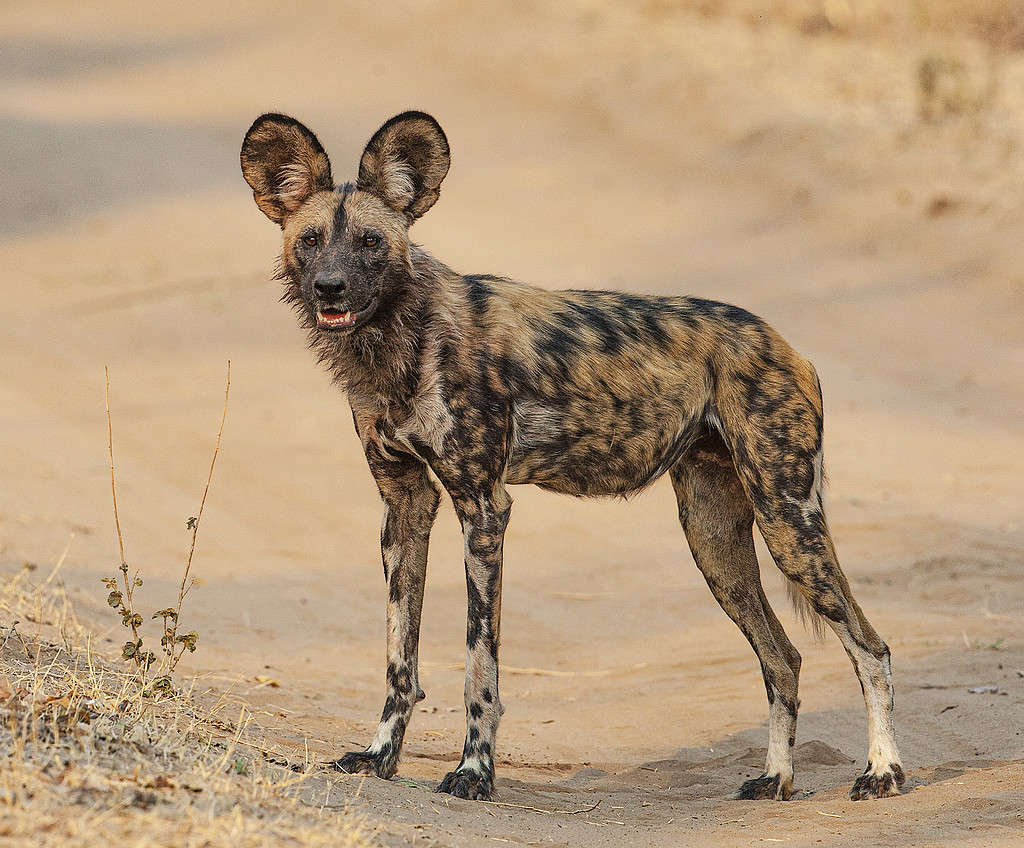
There are several names for the African wild dog, including African hunting dog, Cape hunting dog, painted hunting dog, painted dog, painted wolf, and painted lycaon.
©Steve Adams/iStock via Getty Images
Global African Wild Dog Population
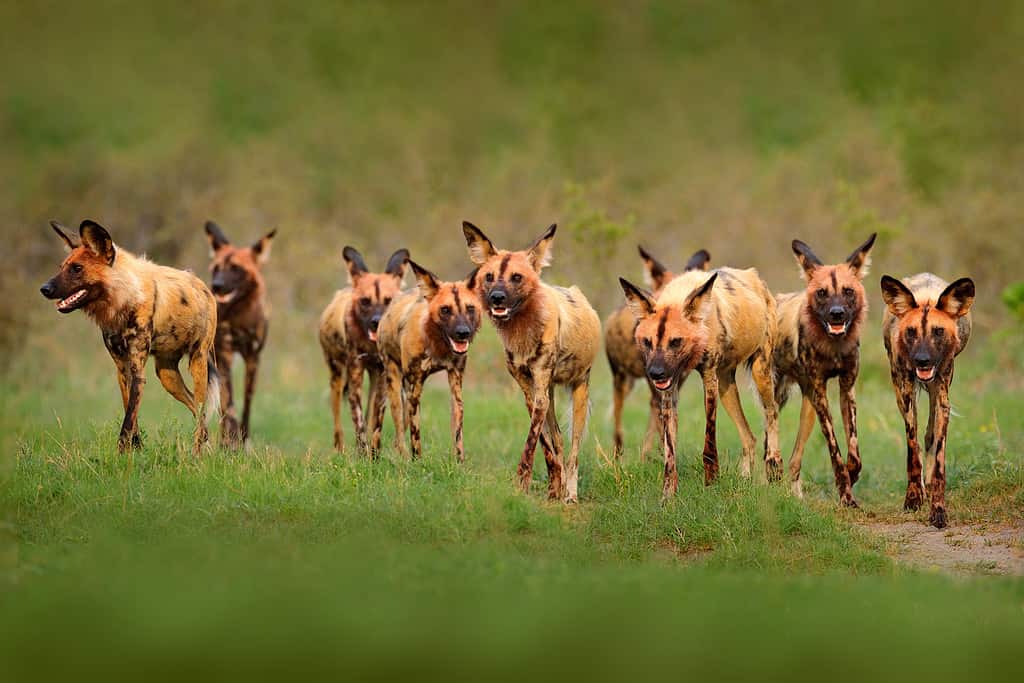
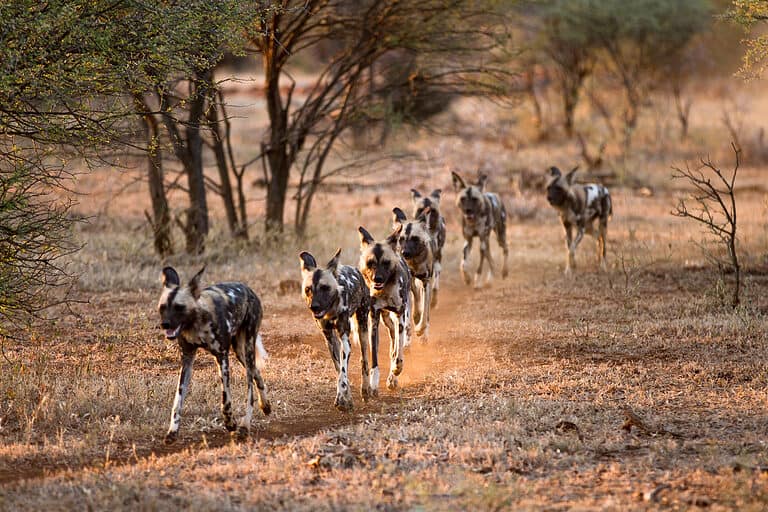
African wild dogs are impressively efficient pack hunters, with an average success rate of 80%.
©Ondrej Prosicky/iStock via Getty Images
The IUCN Red List estimates the current total African wild dog population to be just over 6700 adults. Of these, only about 1400 are classified as “mature individuals.” This designation, an important factor in projecting population changes, is defined as “those considered capable of reproduction within the current breeding season.” This population is further divided into 39 subpopulations with estimated populations ranging from just two to 276 mature individuals each. Furthermore, the species’ overall population trend is one of continued decline.
In addition to this wild population, there are also about 600 in captivity at zoos around the world.
African Wild Dog Range and Distribution
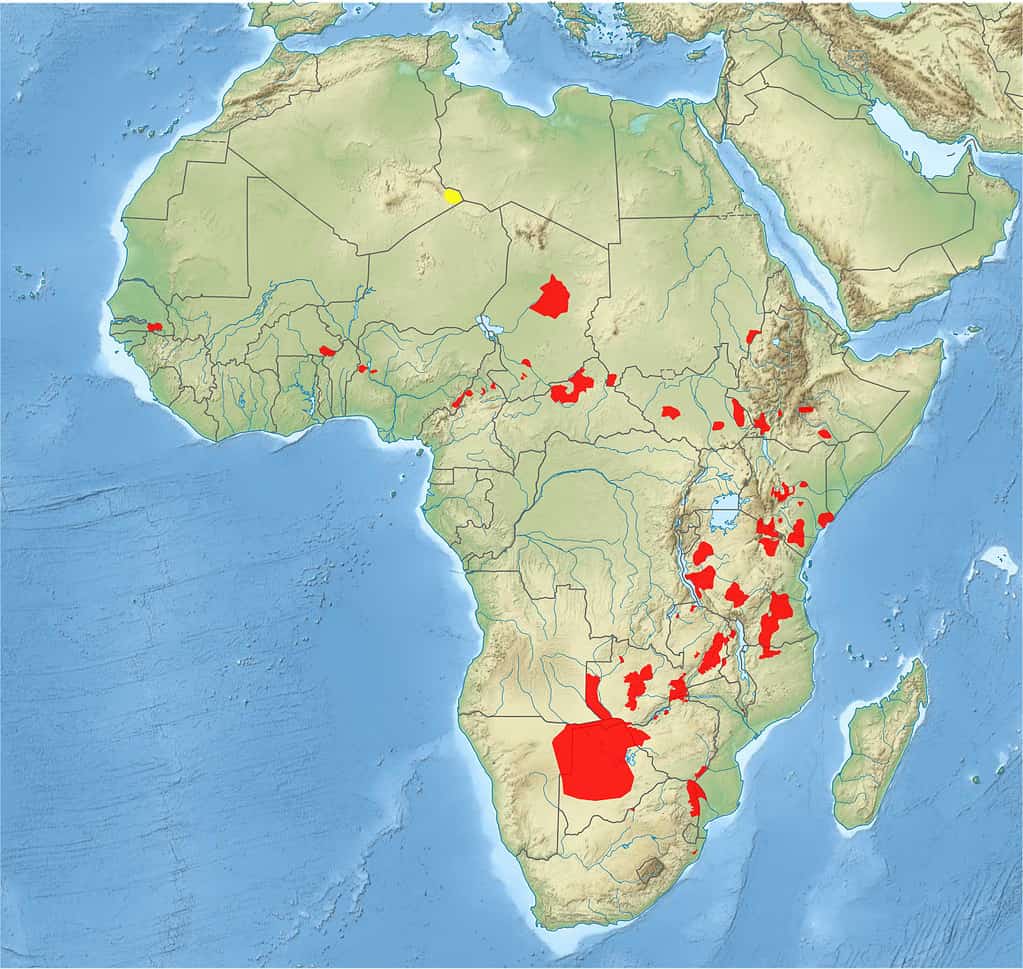
The African wild dog has a patchy distribution across the African continent.
African wild dogs once ranged across the African continent, primarily in Sub-Saharan Africa. Unfortunately, they have disappeared from much of this historical range in modern times, with their remaining distribution highly fragmented. They are on the verge of extinction in both North and West Africa and have also lost much of their former foothold in Central Africa and Northeast Africa. Their largest remaining populations are currently found in the southern part of East Africa (mainly Tanzania and northern Mozambique) and Southern Africa (mainly northern Botswana, western Zimbabwe, eastern Namibia, and western Zambia).
African Wild Dog Global Conservation Status
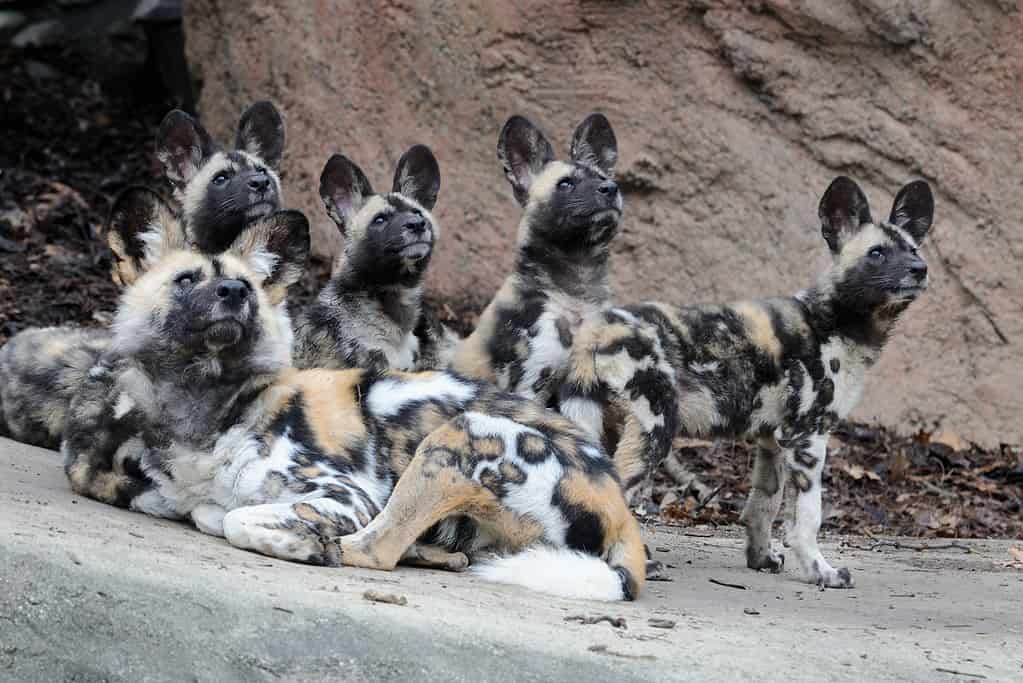
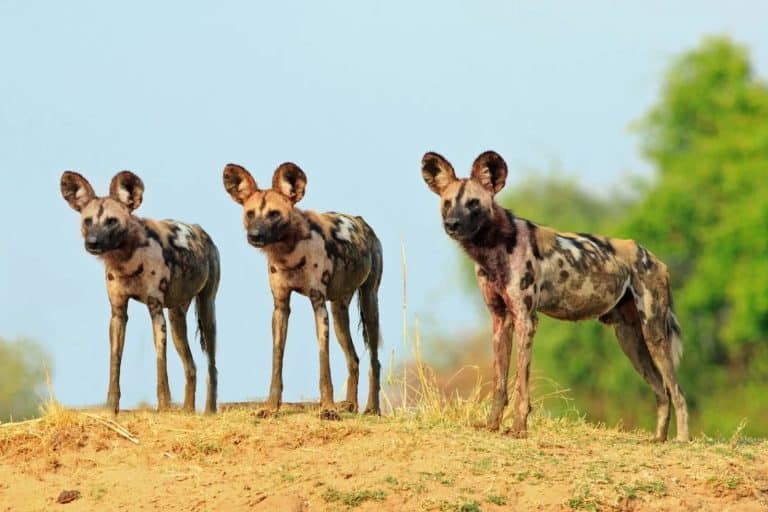
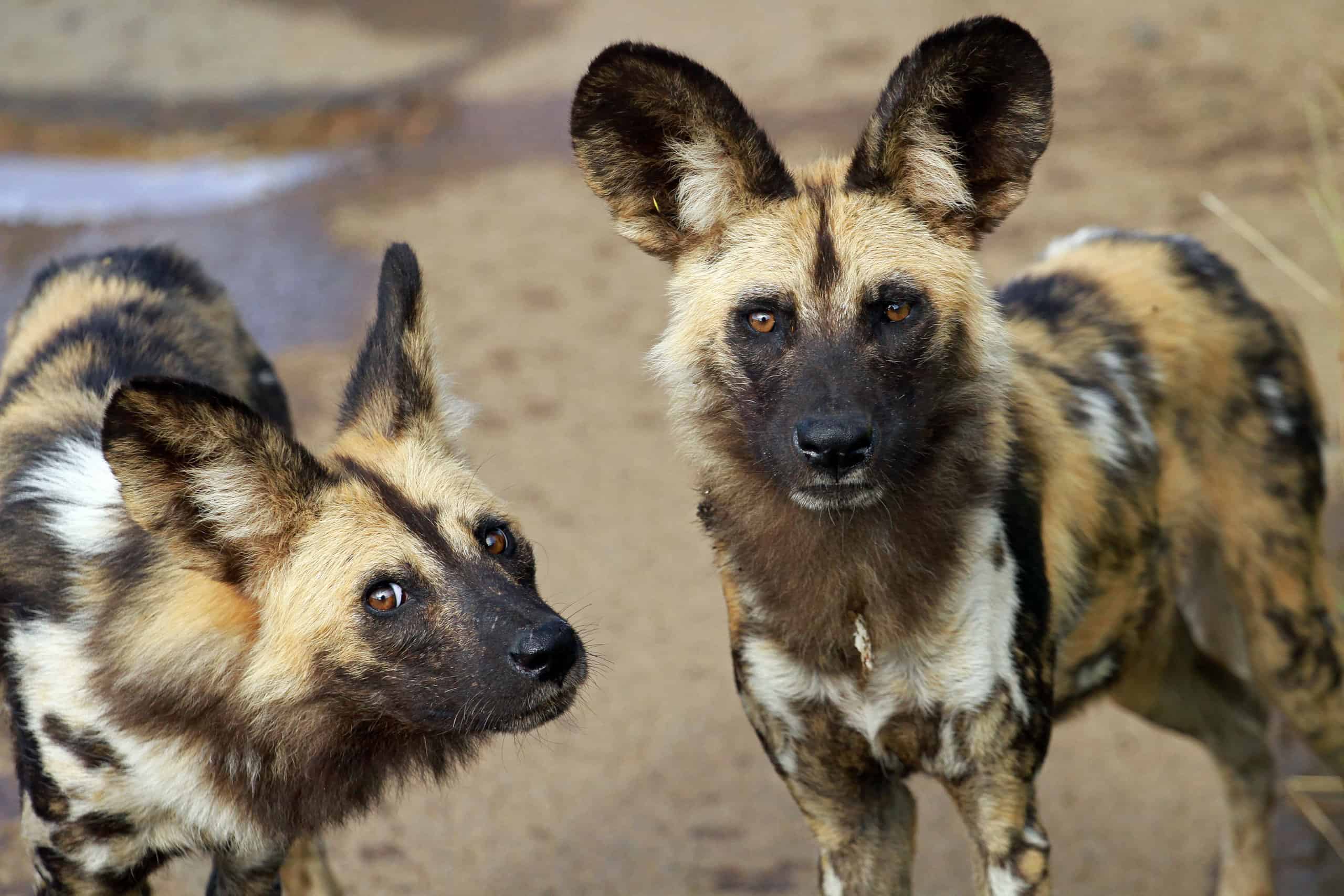
African wild dogs have magnificent multicolor coats, with every individual sporting a unique pattern.
©Glenn Nagel/iStock via Getty Images
The IUCN Red List currently lists the African wild dog as Endangered on its extinction scale. This status denotes that a species faces a very high risk of extinction in the wild without intervention. Additionally, both the North Africa and West Africa subpopulations are listed separately as Critically Endangered, an even more dire status that warns of extremely high extinction risk.
Although African wild dogs are only native to Africa, they are also listed as Endangered under the U.S. Endangered Species Act. As with other foreign animals listed under this law, the purpose is to “ensure that people under the jurisdiction of the United States do not contribute to the further decline of listed species.” This is done by regulating or prohibiting activities such as import/export, take, and commercial trade in the listed species. This means that only certain institutions such as accredited zoos can care for and transport African wild dogs in the U.S.
Threats to African Wild Dogs
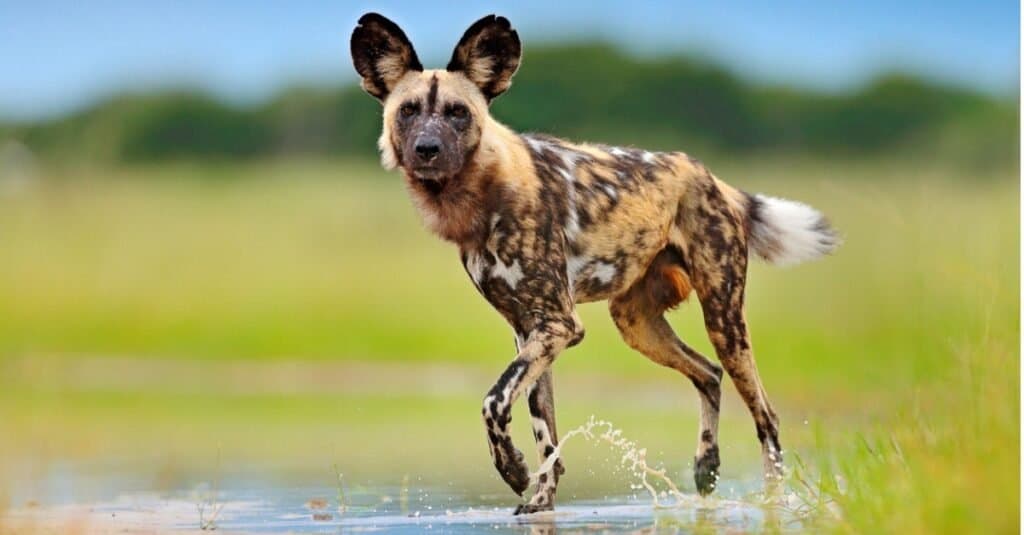
In addition to their mottled coats, African wild dogs are also identifiable by their large ears and white-tipped tails.
©iStock.com/Ondrej Prosicky
The primary threat to African Wild Dogs is continued habitat fragmentation due to human encroachment. This increases their contact with both people and domesticated animals. This, in turn, causes conflicts with farmers and other landowners, road mortality, and disease transmission (especially via domestic dogs).
In addition, recent ZSL studies warn that climate change also threatens species survival via both direct and indirect effects. Rising temperatures are negatively impacting African wild dog hunting behavior, reproduction, and survival. Then, as packs are forced to shift their habitat choices and timing of hunts, they are pushed into closer contact with humans. As noted above, this then exacerbates the risk of death due to human-wildlife conflict and disease transmission.
Further complicating matters is the fact that, as a naturally wide-roaming pack species, smaller protected areas are often ineffective at protecting those that regularly range outside their borders. As the IUCN observes, only the largest reserves can combat this “edge effect” and ensure pack safety. The IUCN further reports that while fencing has helped confine packs in smaller reserves in South Africa, it is not a 100% effective solution, nor is it a viable long-term remedy for the species.
Conclusion
The African wild dog population is currently estimated to be about 6700 in the wild and 600 in captivity. The African wild dog is a globally Endangered species. Furthermore, two of its subpopulations in North and West Africa are listed as Critically Endangered. The top threat to the species’ survival is habitat fragmentation, which in turn increases human-wildlife conflicts and disease transmission. These threats are further exacerbated by climate change.