
Quick Take
- One color clue on the underside separates a deadly spider from a harmless lookalike.
- Males of both species look nothing like the spiders you picture, and the reason is surprisingly practical.
- Your shipping container, shoes, and basement may be quietly helping these spiders spread.
- Guess wrong about which spider bit you, and the right response changes drastically.
Encountering a venomous spider can be unsettling, especially when you’re unsure whether it’s a black widow or a false widow. Fortunately, there are a few key differences that can help you tell them apart.
Black Widows and False Widows Can Look Very Similar
Black widow spiders and false widow spiders can look remarkably similar to one another. However, with the black widow being from the genus Latrodectus and the false widows being from the genus Steatoda, they are two very different species of spiders.
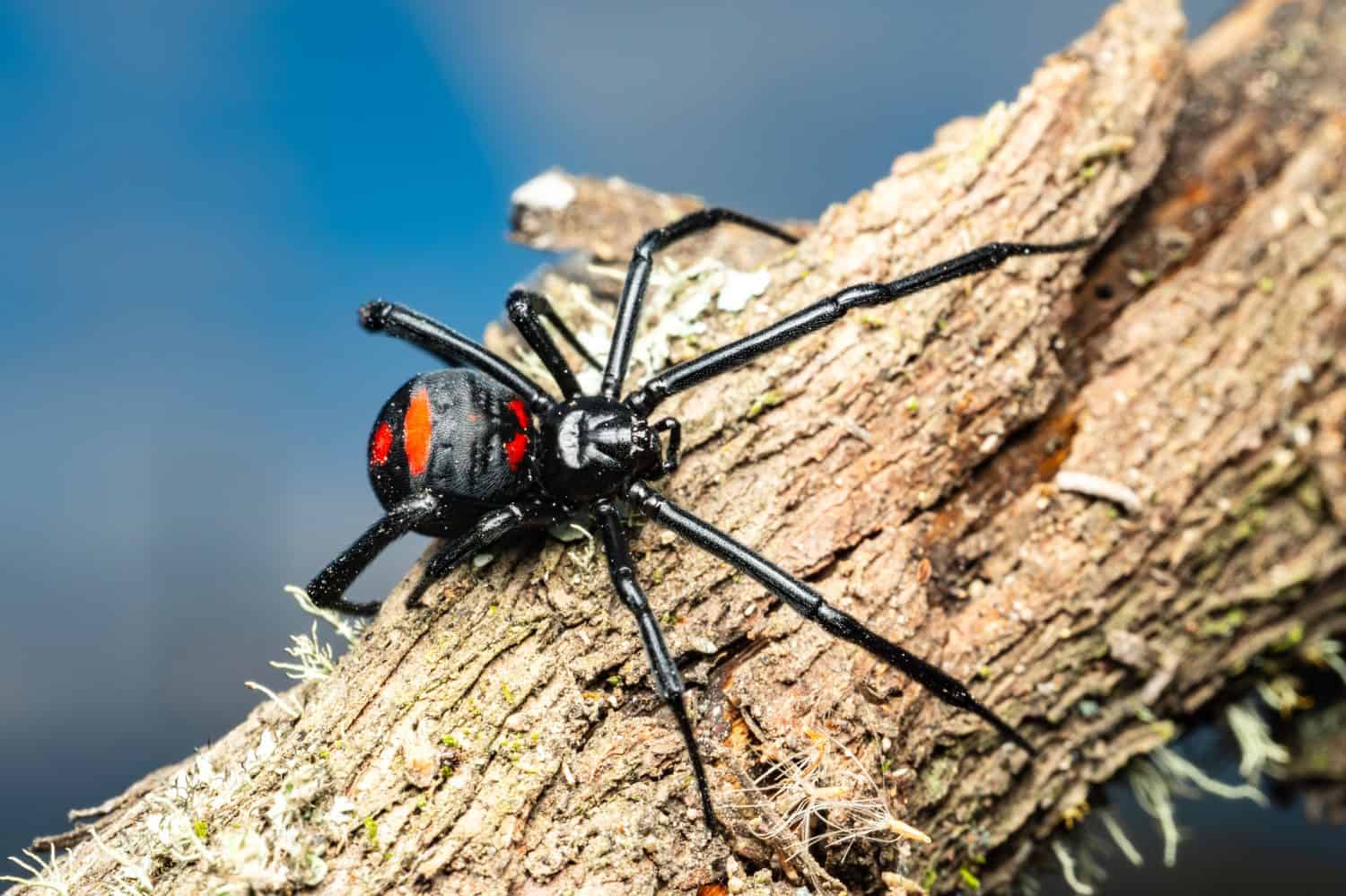
Females are the most frequently identified of both species. This is due to their size and coloration. While both species have bulbous bodies, there are significant differences between the two, most notably in their coloration.
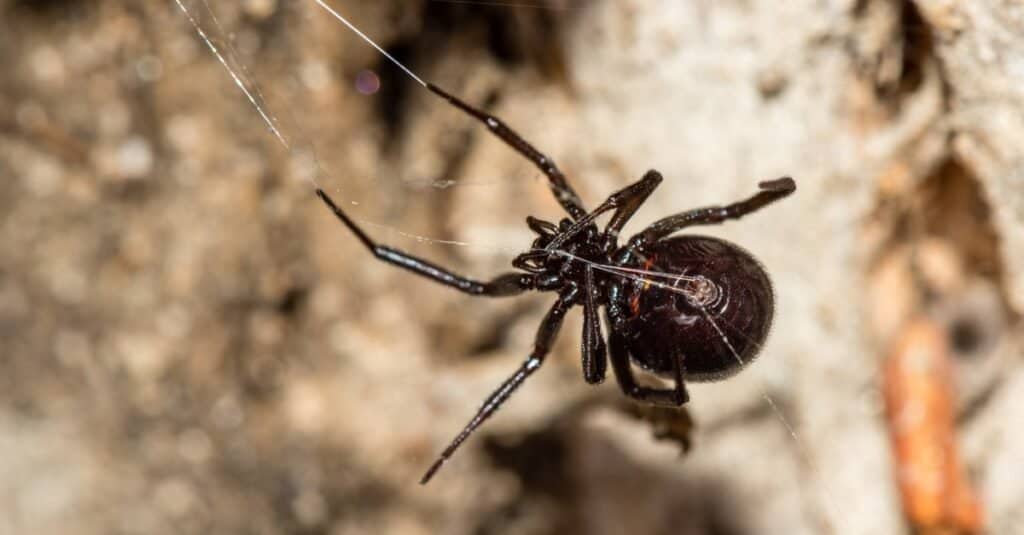
False widow spiders can look remarkably similar to black widow spiders.
©Danie Spreeth Photography/Shutterstock.com
Black widow spiders are glossy black. They have an orange or red hourglass on the underside of their abdomen. Black widow spiders also have jet black legs.
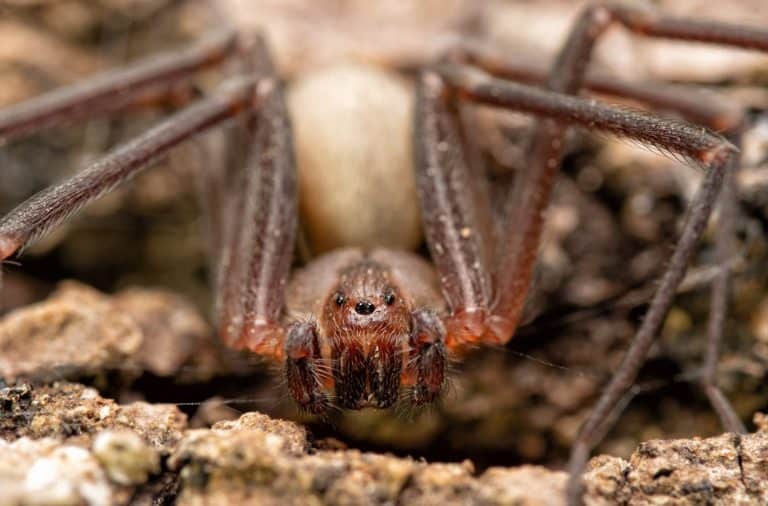
False widow spiders can range from dark brown to purple-brown. They do not have an hourglass shape. Instead, they have beige- to cream-colored markings on the underside of their abdomens. Unlike the black widow, the false widow’s legs tend to be reddish-brown.
Female black widows also tend to be slightly larger than female false widows, ranging from 1.5 to two inches versus 0.59 to 1.2 inches.
Female coloration
-
Black widow
- black
glossy black body; orange or red hourglass underneath
-
False widow
- dark brown
dark brown to purple-brown; beige- to cream-colored markings underneath
Male Black Widows and False Widows Look Nothing Like Females
Unlike the females of both species, which are known for having bulbous bodies, males of both species lack these plump bodies. In fact, they look nothing like the females of their species.
Male black widows and false widows are significantly smaller than their female counterparts, measuring about 0.25 inches. This is known as sexual dimorphism, where one sex of the species is significantly larger than the other.
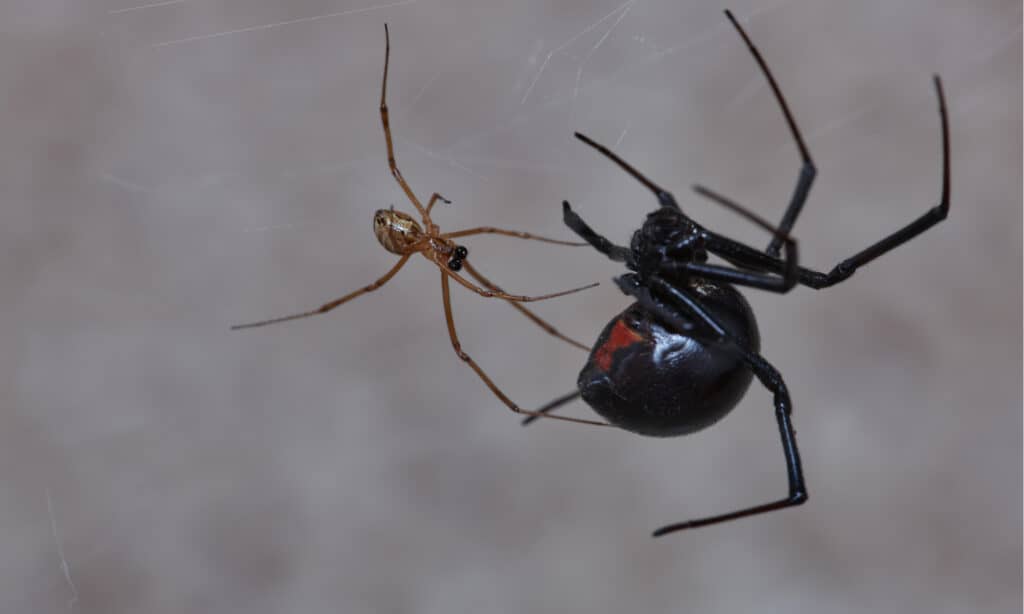
Male and female black widow and false widow spiders look very different from each other.
©lighTTrace Studio/Shutterstock.com
The differences in size and shape between males and females reflect their reproductive roles. Females need larger bodies to carry developing eggs, while males are adapted for finding mates and reproducing.
The coloration between the sexes also differs. Black widow females are shiny, with their signature hourglass shape on their abdomens. Male black widows are a lighter brown or grey color and have yellow, red, or white banding on their bodies.
Male false widows have a purple-brown to dark tan body. They do have a crescent shape or light-colored banding on their abdomen, but their coloration is not as bright as the females’.
Where Black Widows and False Widows Are Found in the U.S.
Black widows and false widows occur in virtually every state in the U.S. However, some states have them in higher quantities than others.
There are three different species of black widow spiders: the northern black widow, the southern black widow, and the western black widow. The range of these spiders is fairly self-explanatory from their names.
- Southern Black Widow: Atlantic coastline to Texas, Oklahoma, and Kansas. Also found in all four U.S. deserts.
- Western Black Widow: Rockies, Western Great Plains, and the Pacific coastline
- Northern Black Widow: Parts of the Southeast, and throughout the Midwest and Northeast
The spiders’ habitats overlap, so it is not uncommon to find more than one species of black widow in each region.
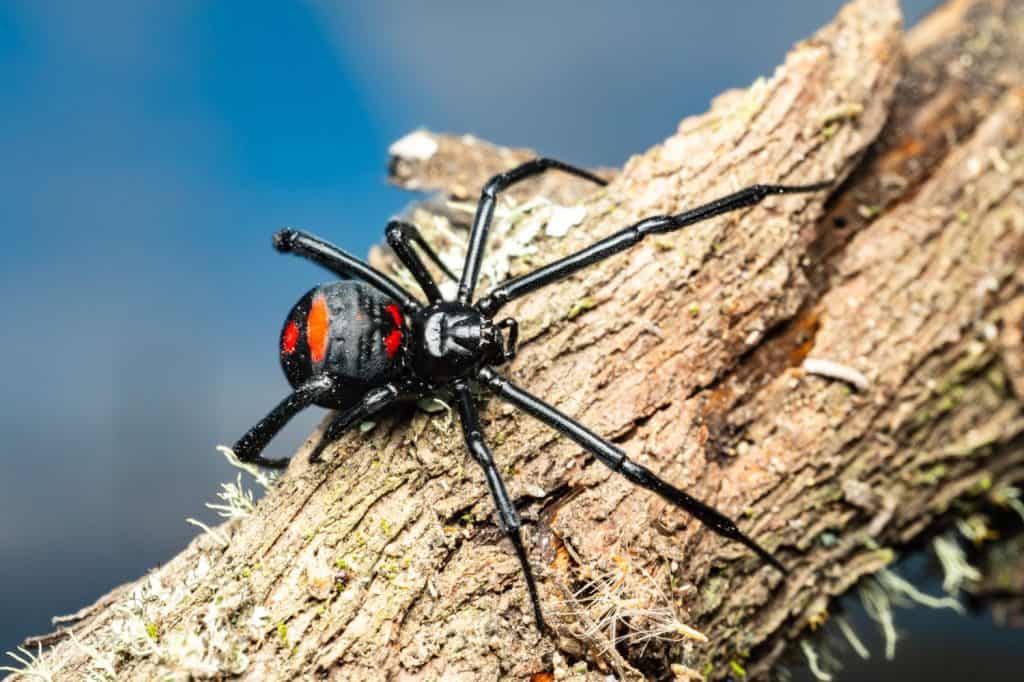
Black widow and false widow spiders are found in nearly every state in the U.S.
©Carlos Aguilar Moncayo/Shutterstock.com
False widow spiders can be found in every state in the U.S. They occur in every habitat, from temperate to tropical, and even in freezing temperatures. The wide range of these spiders is due to their tendency to hitchhike on shipping containers and relocate from one state to the next.
The majority of false widows are found in and around indoor spaces, including basements, storage rooms, and corners of rooms that are rarely disturbed.
Are False Widows Venomous Like Black Widows?
Black widows have incredibly potent venom that is 15 times stronger than a rattlesnake’s venom and is designed to stop prey in its tracks. This neurotoxin, alpha‑latrotoxin, causes people incredible pain, muscle cramps, nausea, vomiting, increased heart rate, and, in some instances, difficulty breathing. Fortunately, despite such symptoms, black widow bites are rarely fatal.

False widow spiders have a venomous bite, but it does not contain as many neurotoxins as a black widow bite does.
©iStock.com/Macronatura.es
False widows also have a venomous bite. Their venom, like that of the black widow, contains neurotoxins. However, the neurotoxins are far less potent. Typical symptoms range from redness around the bite site to swelling, itching, slight pain, and occasional numbness.
Both species are shy. They do not want to attack people and would prefer to hide, tucked away in the shadows if given the opportunity. Most bites occur when they are trapped, like when caught in clothing or shoes, or when disturbed. Therefore, if precautions are taken and shoes are shaken out before use, the likelihood of being bitten is small.
What to do if Bitten by a Black Widow or False Widow
When it comes to spider bites, treatment varies greatly depending on species. While black widows can cause life-threatening health issues, false widows only cause discomfort. By being able to identify one from the other, the proper treatment can be sought in a timely manner.
If bitten by a black widow, the following should be done:
- Call 9-1-1 to receive emergency aid, as muscle cramps, pain, weakness, and difficulty breathing can occur within 20 to 60 minutes of the bite
- Wash the wound with soap and water
- Place a cold compress on the wound
- Elevate the site of the bite if possible
- Never squeeze the bite site or cut it and try to suck the venom out
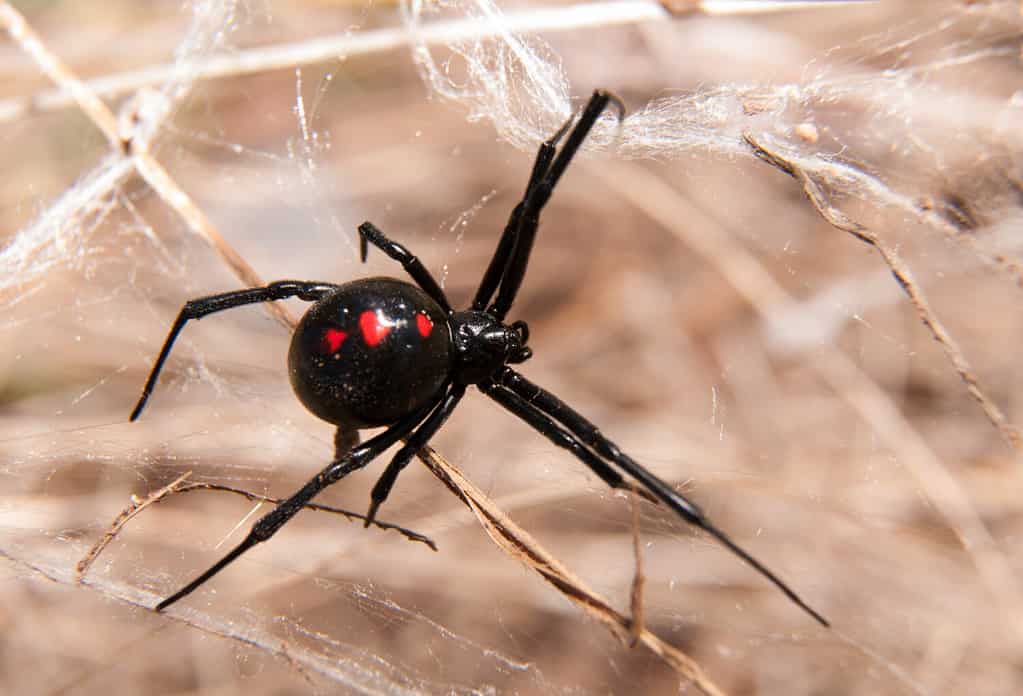
If bitten by a black widow spider, seek medical attention immediately. A false widow bite can be treated with a more wait-and-see approach.
©Sari ONeal/Shutterstock.com
Should a false widow bite, the following steps should be taken:
- Wash the bite with soap and water and keep the bite area clean
- Use pain relievers for any discomfort from the bite
- If signs of infection show, contact a doctor immediately
Of course, if you’re unsure what species of spider is responsible for the bite, seek emergency care. This way, the patient can be monitored for any signs of the black widow neurotoxin and treated appropriately.