
Quick Take
- One eye-count clue separates a dangerous spider from a harmless one. Check the eye count →
- Many have blamed roughly 40 different conditions on a spider that may not even live in your state. See the misdiagnosis problem →
- A simple three-letter mnemonic can rule out a recluse bite fast. Learn the REC mnemonic →
Many people fear the venomous, threatening brown recluse spider. Unfortunately, many also confuse the recluse with the common, harmless wolf spider.
“Brown recluses and wolf spiders are often mistaken for each other, but they do each have distinctive behaviors and appearances,” says Jeff Schumacher, pest control expert and second-generation family owner of All-Safe Pest & Termite.
This article will detail how to tell the two spiders apart, where they’re located, and how to know whether you’ve been bitten by a recluse.
Brown Recluse Spider vs. Wolf Spider
Brown Recluse Spiders
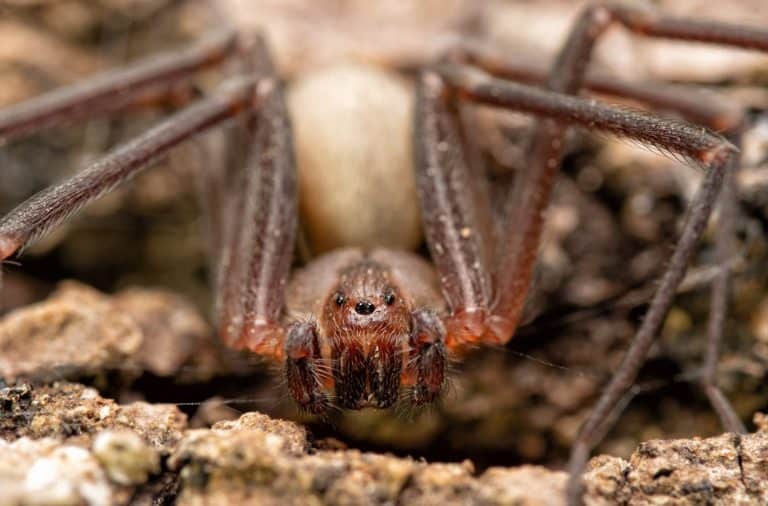
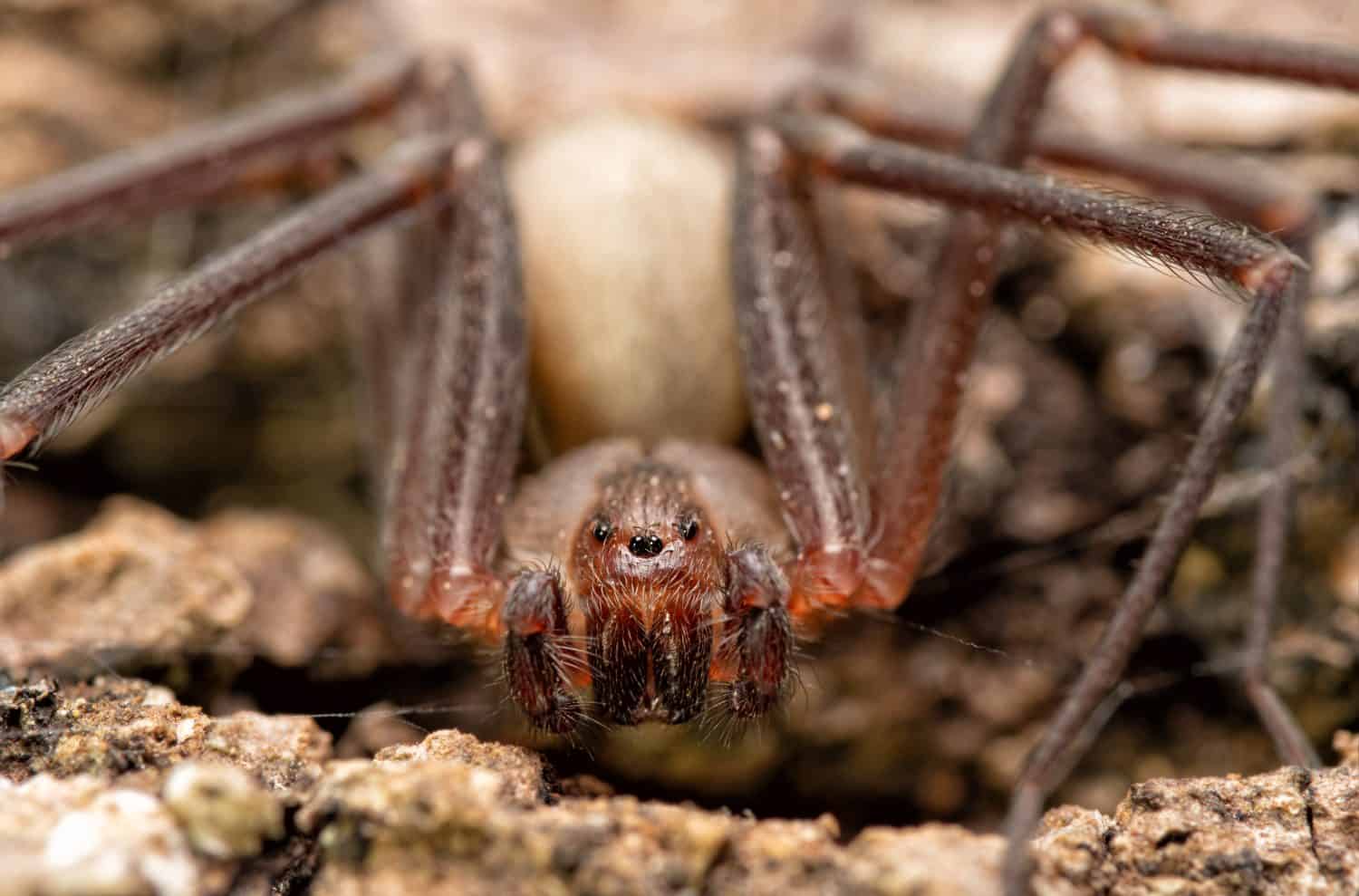
The brown recluse spider has six eyes in three pairs. This key trait sets it apart from wolf spiders and others, as most spiders have eight eyes. Typically, these spiders are light brown and around the size of a quarter, Schumacher says.
“Brown recluses build irregular webs at ground level and are usually found in dry, dark, quiet places,” he adds. “Indoors, that means they are likely to be found in undisturbed cardboard boxes, piles of clothes or linens that haven’t been touched in a while, underneath furniture, and inside cabinets. Outside, they go for leaf piles, piles of wood, sheds, gardens, and shrubbery.”
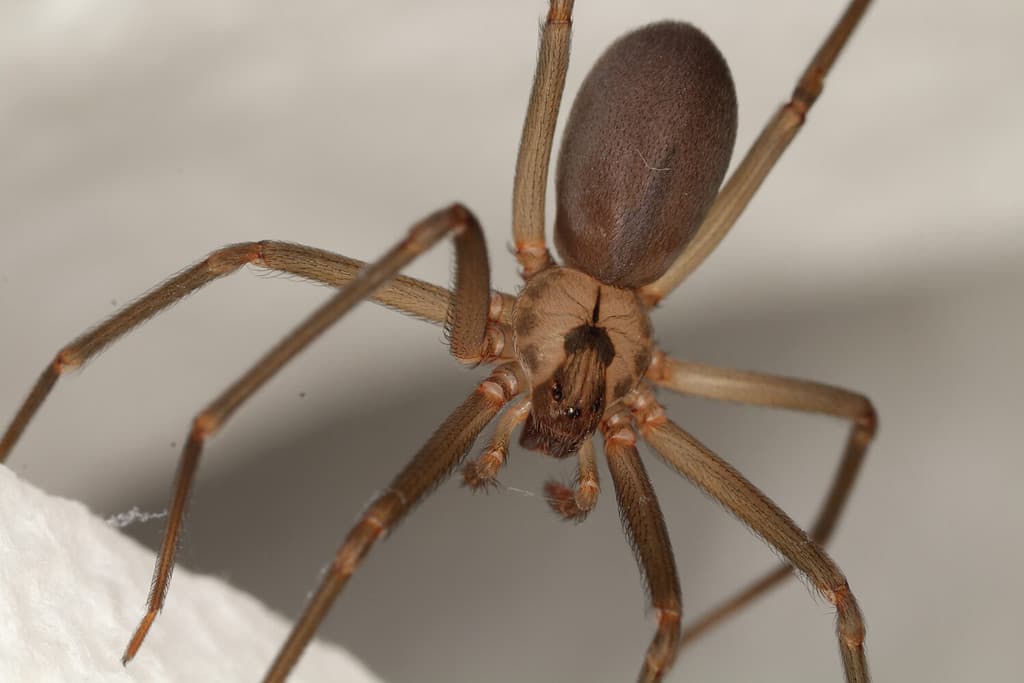
Brown recluse spiders have a violin-shaped marking, though experts warn against using this as a reliable indication
©Nick626/Shutterstock.com
Thankfully, as their bite can be deadly, brown recluses are usually shy and non-aggressive.
“If they do bite, it’s usually when someone reaches into a space where the spider is trapped and can’t scurry away, like into a box where they have settled,” Schumacher explains. “You reach into a box and feel a sharp pain—that could be a brown recluse spider biting!”
According to Schumacher, if bitten, you should seek immediate medical attention. These venomous spiders can cause serious, sometimes fatal health problems.
Wolf Spiders
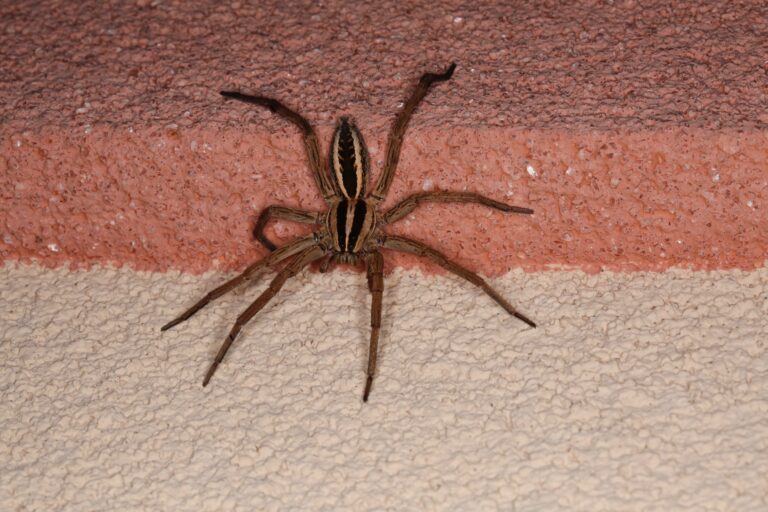
Unlike the recluse, wolf spiders have eight eyes in three rows.
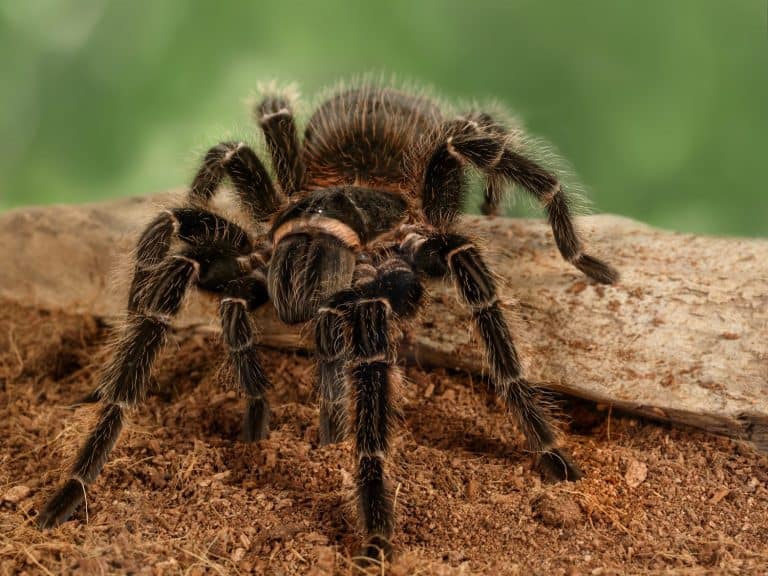
“They are big, hairy, and fast!” Schumacher says. “In general, they have two large forward-facing eyes with four smaller eyes in a row beneath them; they are a pale tan with cream-colored stripes running the length of their body. Females carry their egg sacs on the back of the body, and newly hatched spiderlings will ride on the mother’s back for a week or more.”
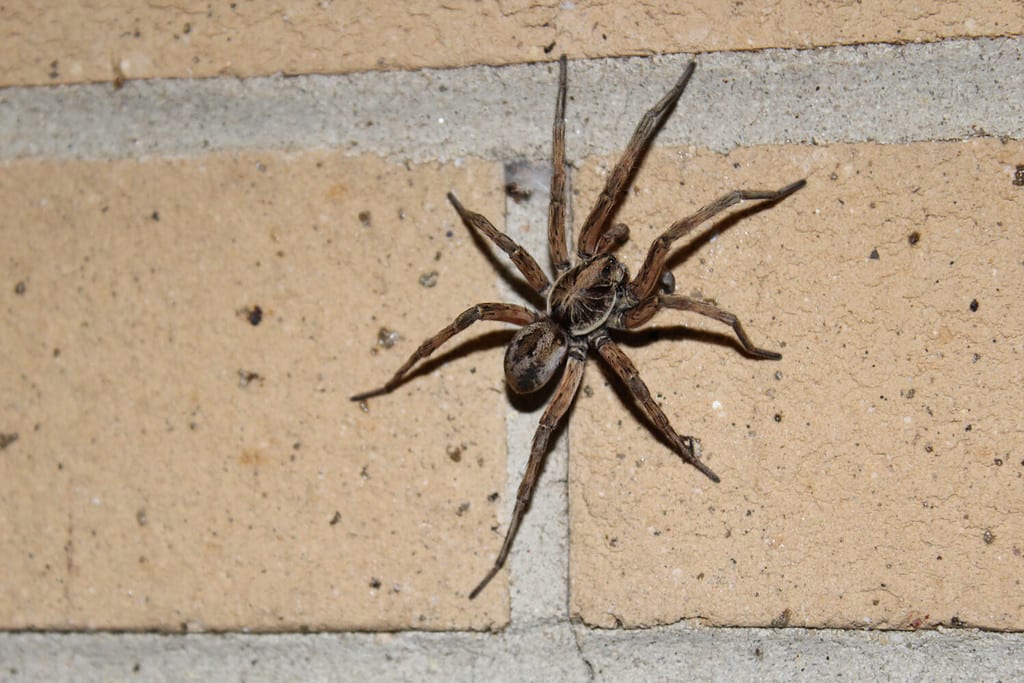
Wolf spiders and brown recluse spiders are similar colors, which might be why so many people confuse them.
©Clayton Nichols/Shutterstock.com
Unlike other spiders, however, wolf spiders do not spin webs. They hunt and chase their prey instead of trapping them.
“They will pounce on crickets, roaches, beetles, and other various insects,” Schumacher states. “Outside, they live at ground level, under mulch, ivy, firewood, and potted plants. Indoors, you may find them under furniture, in closets, basements, the garage, and inside sheds.”
While wolf spiders can bite, they’re not venomous enough to cause any real health implications.
Brown recluse vs. wolf spider, as the post describes them
| Builds webs | Hunts and chases prey | Found indoors | Found outdoors | Bite can cause serious health problems | |
|---|---|---|---|---|---|
| Brown recluse | Builds webs | Found indoors | Found outdoors | Bite can cause serious health problems | |
| Wolf spider | Hunts and chases prey | Found indoors | Found outdoors |
Where Are Brown Recluse Spiders Found?
Many people confuse brown recluse spiders with wolf spiders, but recluses are not as widespread as wolf spiders. According to Penn State Extension, “brown recluse spiders are established in sixteen states: Alabama, Arkansas, Georgia, Illinois, Indiana, Iowa, Kansas, Kentucky, Louisiana, Mississippi, Missouri, Nebraska, Ohio, Oklahoma, Tennessee, and Texas.”
Additionally, these venomous spiders have been reported in Arizona, California, the District of Columbia, Florida, North Carolina, New Jersey, Pennsylvania, Washington, and Wyoming.
What Does a Brown Recluse Spider Bite Look Like?
Many common skin wounds have been (and continue to be) misdiagnosed as “spider bites.” In fact, some individuals have falsely reported brown recluse spider bites in states where the spider does not exist.
Entomologist Rick Vetter, a retired research associate at the University of California, along with Dr. W. Van Stoecker and Dr. Jonathan Dyer, dermatologists in Missouri who specialize in treating brown recluse bites, penned a JAMA Dermatology paper on this very topic. Titled “NOT RECLUSE—A Mnemonic Device to Avoid False Diagnoses of Brown Recluse Spider Bites,” the paper explores the common misdiagnosis of a brown recluse bite.
According to the lead authors, “About 40 medical conditions have been or could be misdiagnosed as recluse bites. A sampling of these misdiagnoses includes infections caused by Staphylococcus aureus, Bacillus anthracis, Borrelia burgdorferi, Sporothrix schenckii, the herpes zoster virus, and even lymphoproliferative conditions such as lymphomatoid papulosis.”
Brown recluses build irregular webs at ground level and are usually found in dry, dark, quiet places.
Jeff Schumacher, pest control expert and owner of All-Safe Pest & Termite
To help patients understand whether their skin condition is, in fact, a brown recluse bite, they developed a mnemonic device. Refer to “REC”: red, elevated, and chronic. If a wound matches any of these labels, then it is likely not a recluse bite.
Brown recluse spider bites are whitish-blue or purple, flat, and do not persist for more than three months, per UC Riverside Department of Entomology. Additionally, Vetter explained that 90% of brown recluse bites self-heal. About 10% of bites result in a rotting flesh lesion. Less than 1% cause a potentially fatal, systemic reaction.
Even so, if you suspect you’ve been bitten by a brown recluse spider, seek medical help as soon as possible. It’s always better to be safe than sorry.