
Every state in the United States has designated a bird (or multiple birds) as state symbols. Some choose the birds for their unique qualities, others for their distinctive habitation in the state. For Florida, a bird was chosen that could inhabit the varied terrains and tolerate the extreme weather shifts and unique climate of the state. Let’s take a look at the official state bird of Florida and see what we can learn.
What is the Official State Bird of Florida?
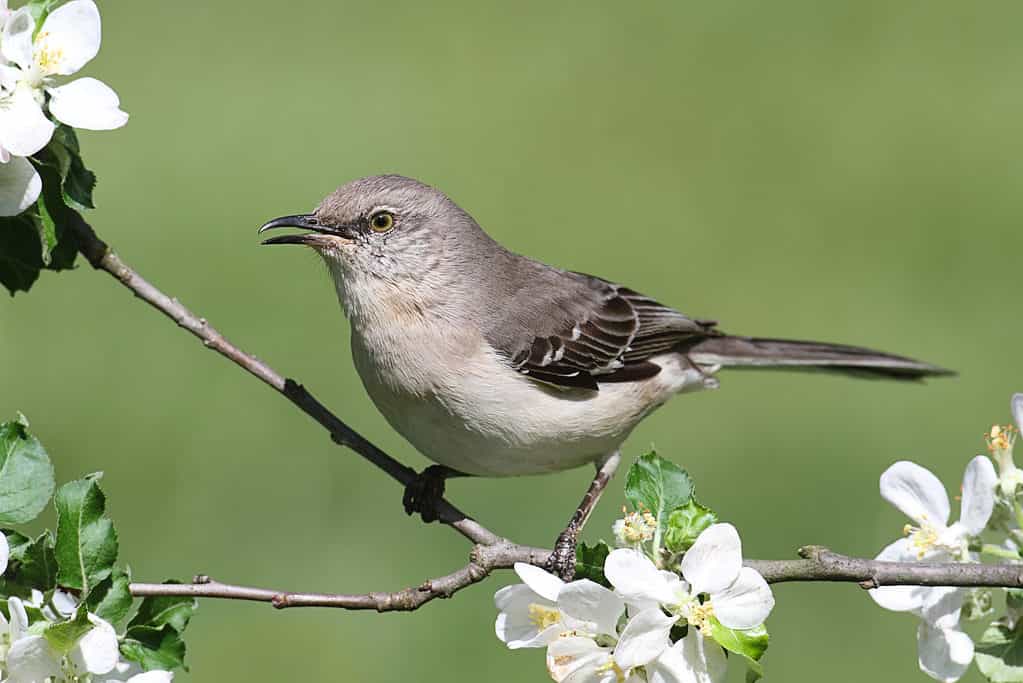
Mockingbirds are incredible mimics that can learn up to 200 songs.
©Steve Byland/Shutterstock.com
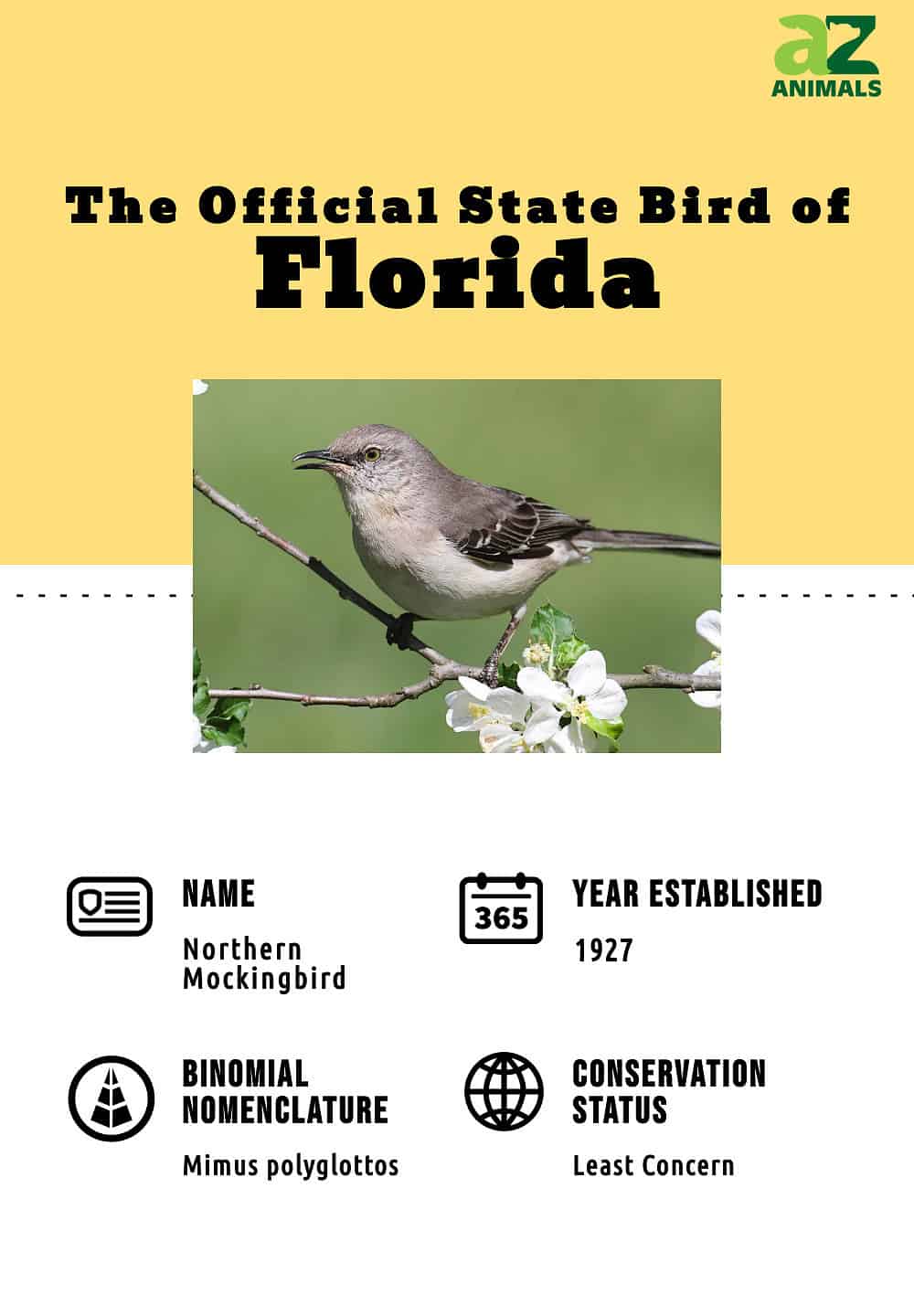
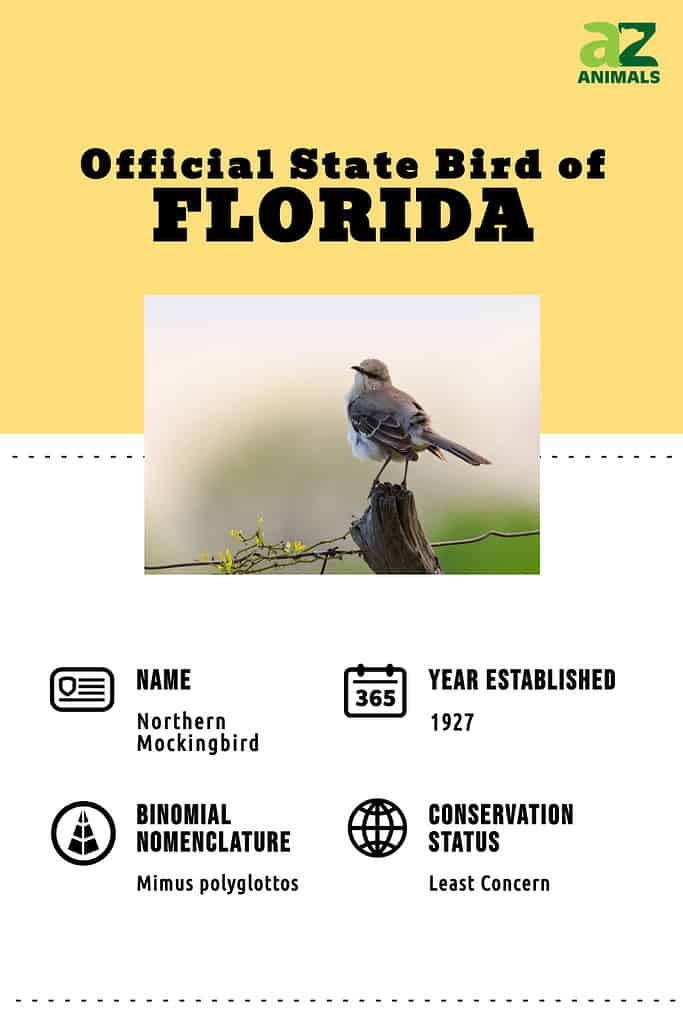
The official Florida state bird is the northern mockingbird. This common gray bird has the habit of mimicking other birds in their songs, along with using their own lilting sounds. Bright springtime moons encourage them to sing all night long. These beautiful birds were voted in as the Florida state bird in 1927 when the legislature met. The nonmigratory bird is said to have been chosen because of its ability to adapt to the unique, diverse environments and terrains found within the state.
Description of the Florida State Bird
With a wingspan of about 12.2 to 13.8 inches, the northern mockingbird is considered a medium-sized songbird. They weigh between 1.6 and 2 ounces. Small heads, long thin bills with a downward curve, and long legs also help to identify them. Their tails appear particularly long when they’re flying. Their backs are gray, with a gray-white underbelly and dark legs and bill.
What Does the Northern Mockingbird Eat?
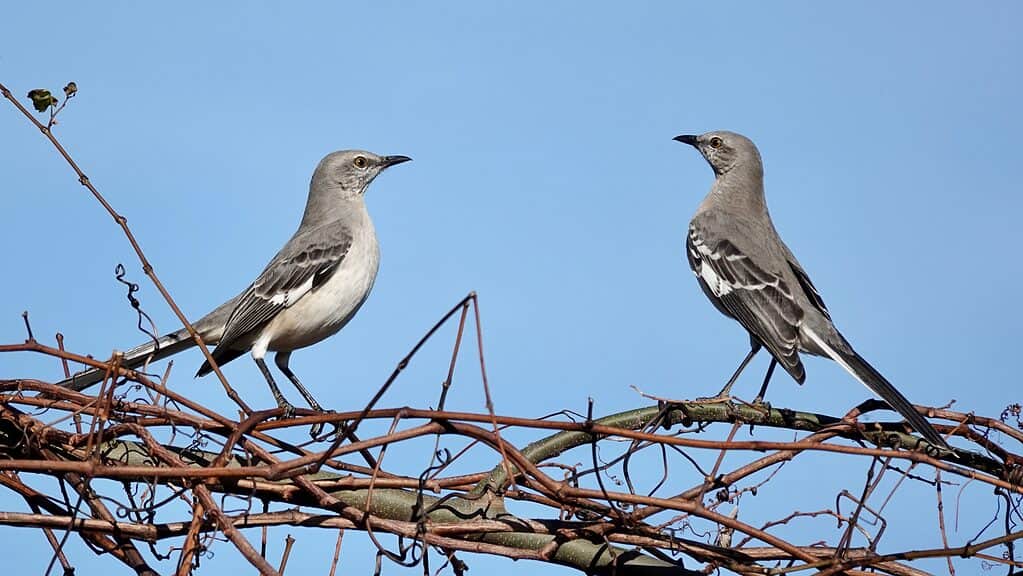
Northern mockingbirds enjoy a wide range throughout North America, in many terrains.
©Chris Klonowski/Shutterstock.com
Northern mockingbirds enjoy an omnivorous diet. And though they’ll frequently hang out in your backyard, they’re unlikely to ever make it to a bird feeder. Generally, their diets contain:
- Beetles
- Grasshoppers
- Caterpillars
- Ants
- Wasps
- Spiders
- Snails
- Sowbugs
- Earthworms
- Crayfish
- Small lizards
- Berries
- Wild fruits
- (Limited) cultivated fruits
How Common are Northern Mockingbirds?
Northern mockingbirds are listed as birds under the “least concern” category. Meaning, they’re not particularly threatened and are extremely common. Some 43 million northern mockingbirds exist in the world. Of course, all of nature is under some threat, due to wildfires, deforestation, and other causes of habitat destruction.
Where Can You See the State Bird of Florida in the State?
Pretty much no matter where you go in Florida, you have the chance of seeing a northern mockingbird. They live in scrubs, urban areas, open fields, forests, and nearly anywhere else they can find to build their nests.
Where Else do Northern Mockingbirds Live?
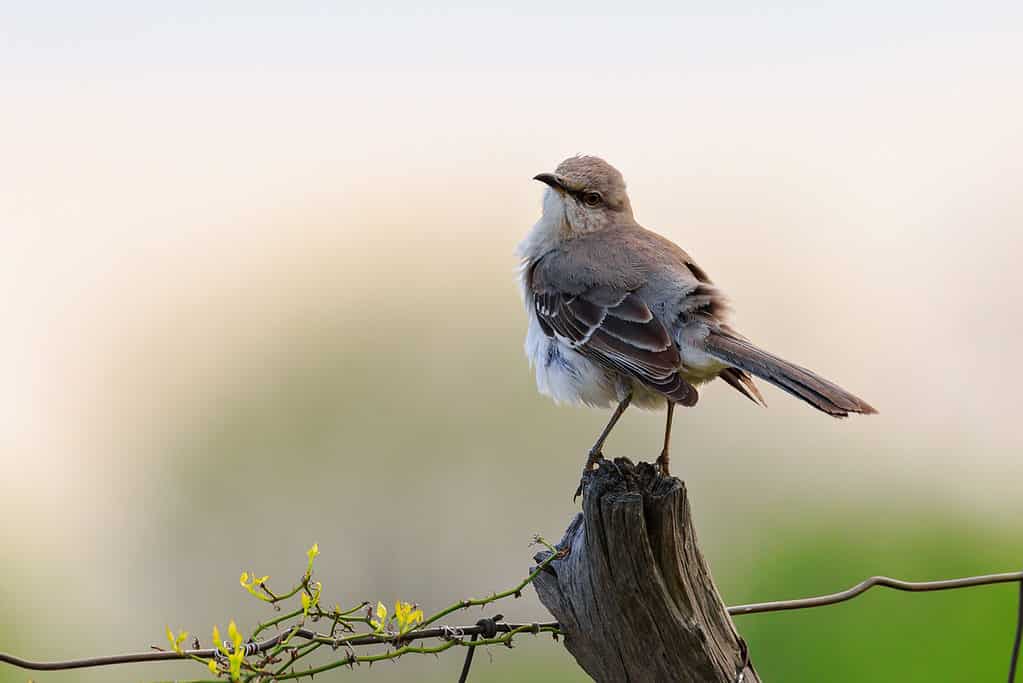
The state bird of Florida frequently hangs out in urban and suburban areas, but they’re not particularly likely to hit up the local bird feeder.
©iStock.com/cmcneill17
These beautiful, mimicking birds live throughout North America, particularly in the following locales. Additionally, some have been seen in Britain.
- Maritime provinces of Canada westward to British Columbia
- Nearly every part of the United States south of the northern Plains states and Pacific Northwest
- Greater Antilles
- Much of Mexico from Oaxaca to Veracruz
- Hawaii
- Alaska
Does Florida Have Any Other Official State Birds?
Additionally, the American flamingo has been deemed a secondary Florida state bird, though it hasn’t made it to all the official documents. In fact, there are campaigns out there to bump the mockingbird altogether with the flamingo as its sole replacement.
The bird was thought to be a nonnative species until 2018. But that year, a study came out revealing that the species was actually native. This meant the species could be considered a new state bird.
Description of the American Flamingo
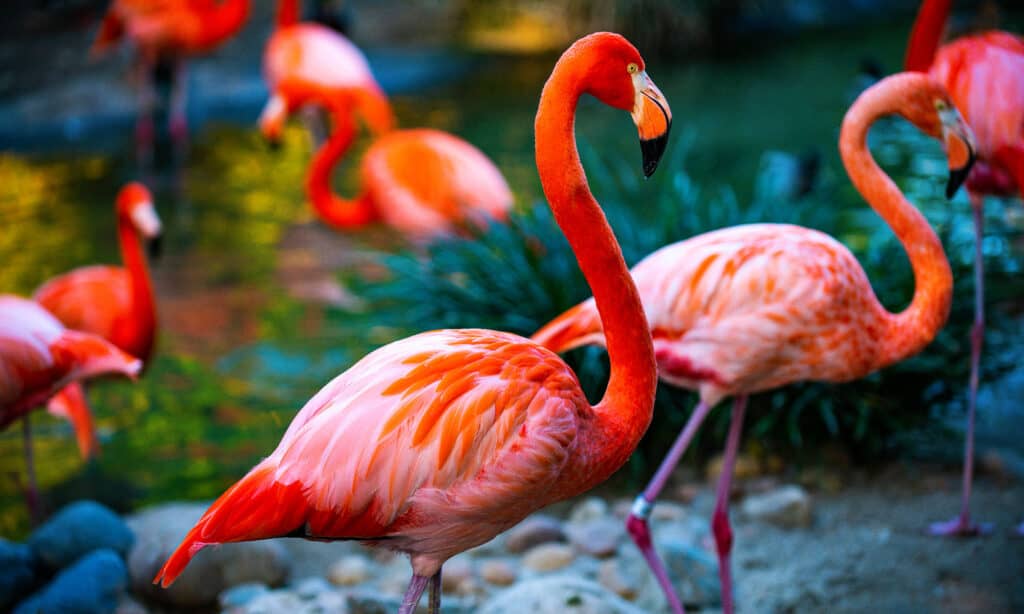
American Flamingos can sleep while standing.
©Volodymyr TVERDOKHLIB/Shutterstock.com
These birds were formerly known as rosy flamingos. Generically, flamingos are long-legged pink to red birds that wade. The various species of flamingo can all fit this basic description. However, the American flamingo has a few distinctions. For one, the bird is smaller than the greater flamingos but is the largest flamingo species in the Americas. They stand between 47 and 57 inches tall, with males weighing 6.2 pounds and females weighing 4.9 pounds on average. American flamingos are also brighter pink than greater flamingos.
Their wing coverts come in red, with primary and secondary feathers in black. They have pink and white bills with black tips. Their legs are extremely long.
If you hear a goose-like honking in the Florida Keys, you may well be hearing one of these birds calling.
Is it True that Flamingoes Are Pink Because of Their Diet?
Two components in the diet of flamingos do, in fact, give the birds their coloring. Examples are plants with orange, yellow, and red pigments, such as carrots, which make flamingos orange, or tomatoes which make them red. Inadvertently, the brine shrimp that flamingos primarily nosh on eat microscopic algae containing these pigments. This means the shrimp pass these carotenoids on to the flamingos who metabolize them. This turns their feathers pink.
How Common Are American Flamingos?
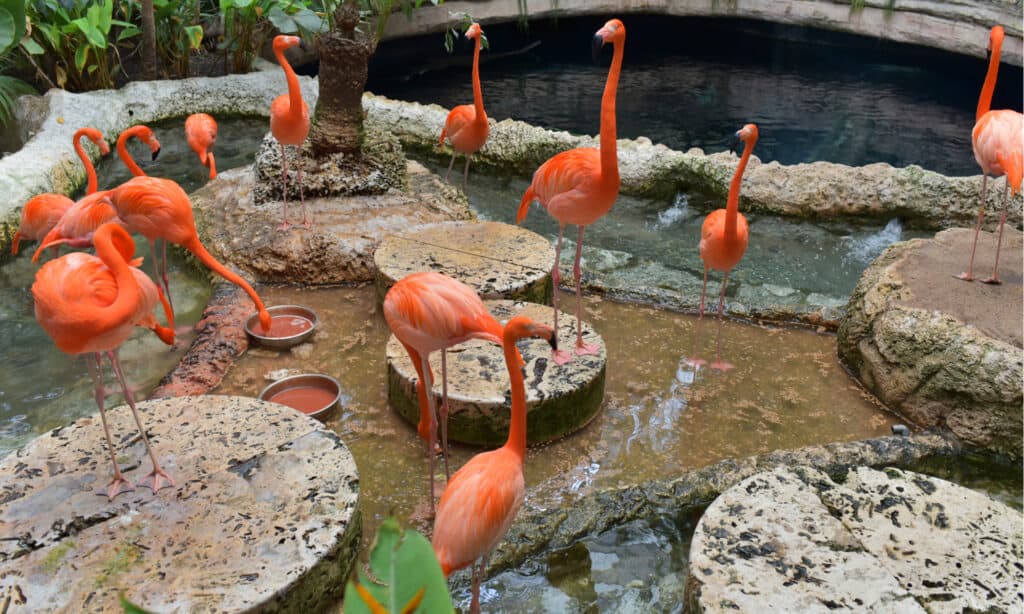
Most often, you’ll spot American flamingos in zoos and bird sanctuaries, rather than in the wild.
©Si Vo/Shutterstock.com
Unfortunately, like many species, American flamingos face threats via the loss of habitat throughout their distribution area. Currently, “endangered” is not currently a term applied to these birds. Some 80,000 to 90,000 of the birds live in four major breeding colonies in the wild.
Where in Florida Can You See the American Flamingo in the Wild?
For many years, American flamingos were believed to be an invasive species in Florida. However, in 2018, a study reversed this thought, showing the birds are indeed native to the Sunshine State—many more of the birds used to live here, perhaps in a larger area than today. Now, you may find them in the wild in the Florida Keys or in South Florida, including in the Everglades National Park.
Can You Find the American Flamingo Anywhere Else?
The American flamingo isn’t just a bird of North America, but rather of all the Americas. You’ll primarily find them in the Yucatan peninsula, the Galapagos Islands, along the coast of Colombia and Venezuela, various Caribbean islands, and in Northern Brazil. You might even spot them in Louisiana. Look for them in salty lagoons, mudflats, and brackish lakes.