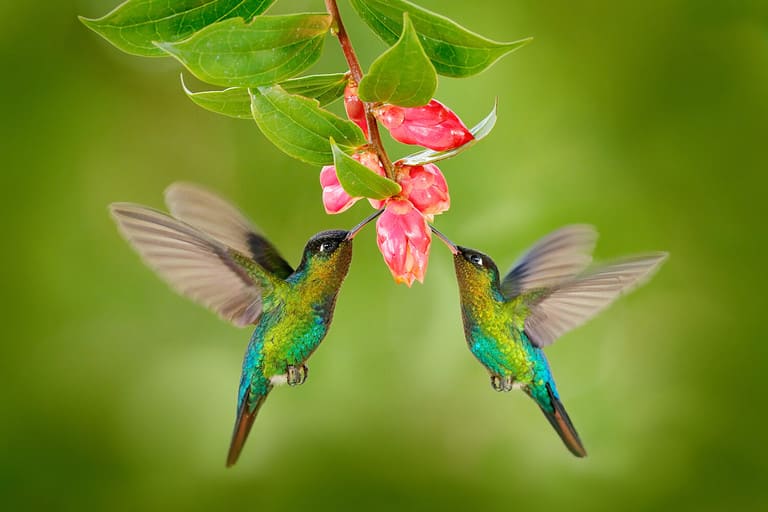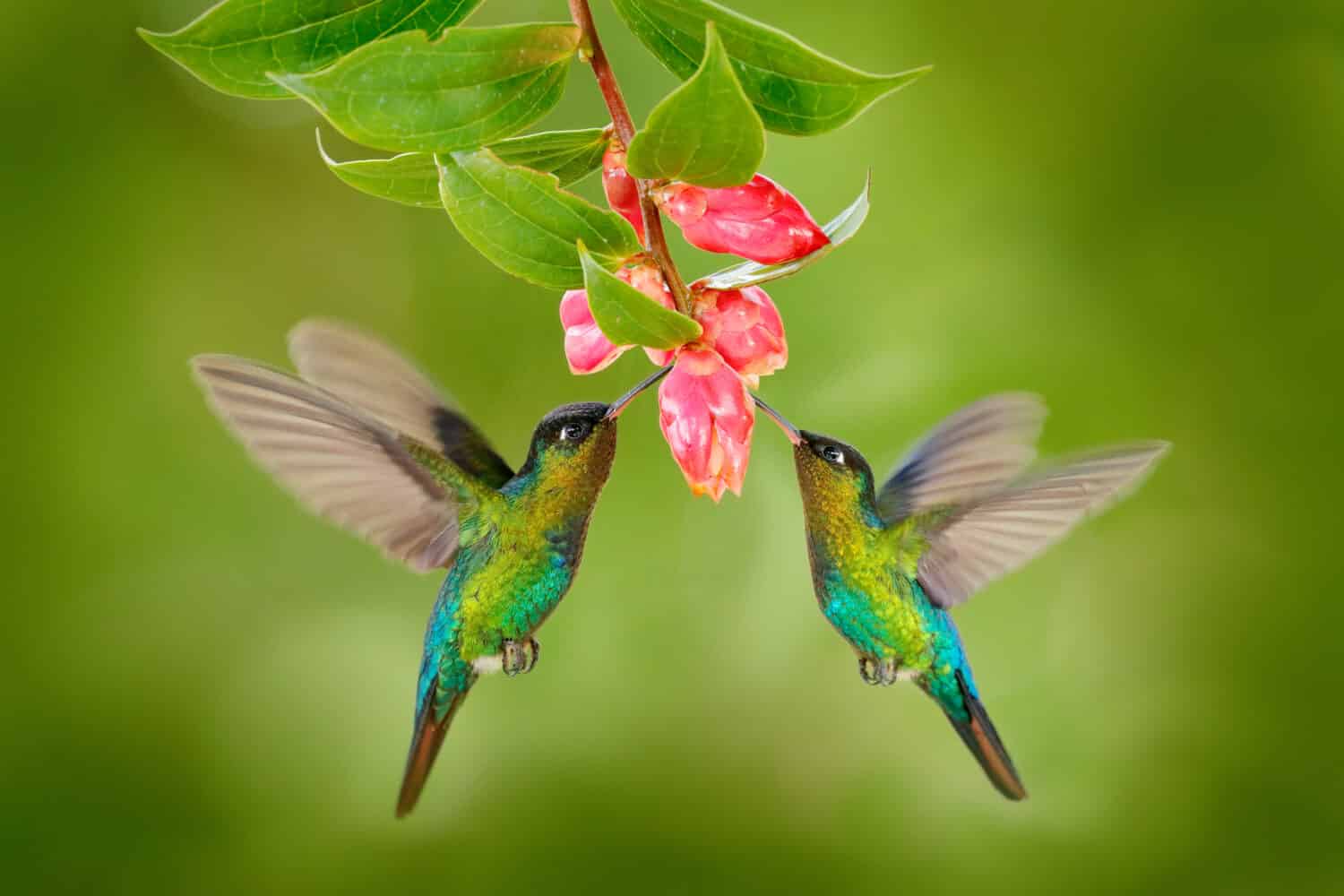

With their iridescent feathers and rapid wings, hummingbirds are easily recognizable and a fascination for birdwatchers. Even small kids know a hummingbird when they see one! But if you live in Montana, you may not see these hummingbirds throughout the year. Most hummingbirds are set to flee Montana in the fall, traveling thousands of miles to warmer areas.
From their departure to their return, we’ll explore the timing, destinations, and unique characteristics of Montana’s migrating hummingbirds in the article below.
Hummingbird Species in Montana
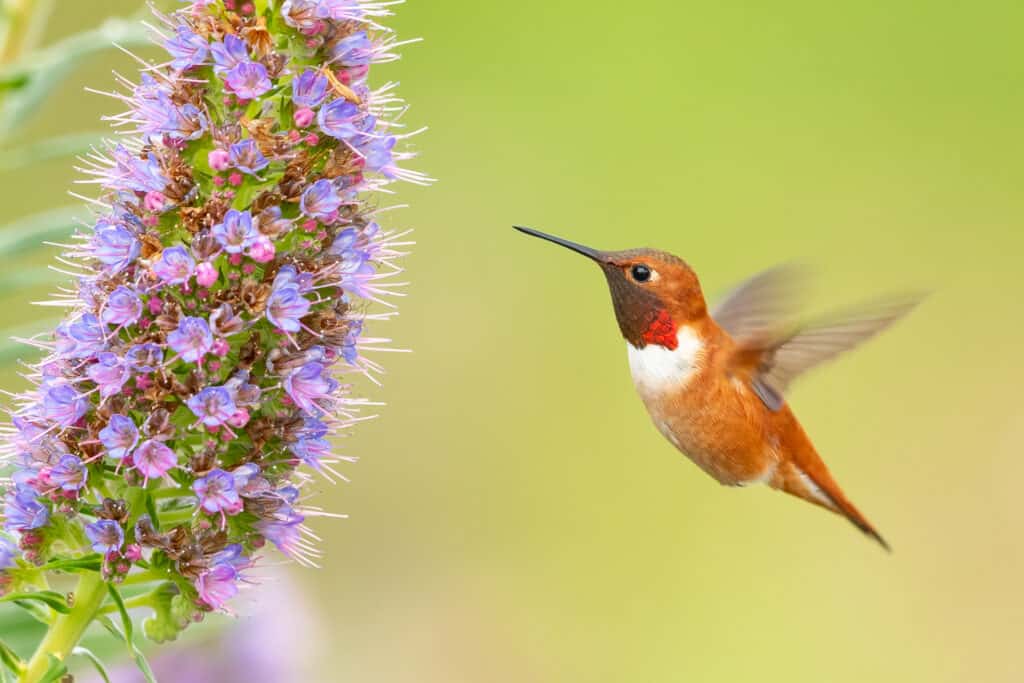
Male Rufous Hummingbirds are brightly colored, with a reddish-orange face.
©Keneva Photography/Shutterstock.com
Many species of hummingbirds call Montana home – at least for part of the year. If you live in the state, you’ve probably seen several of these species around.
- Rufous Hummingbird: One of the rarer visitors of Montana, these hummingbirds are known for their bright plumage and feisty personality. They’re territorial and may engage in aerial battles to defend their feeding spot.
- Broad-tailed Hummingbird: This species is recognizable thanks to its iridescent green color, though this only appears in the males. Their wings produce a distinctive trill when beating, as well. They prefer high-altitude areas, making the more mountainous regions of Montana home.
- Calliope Hummingbird: The Calliope Hummingbird is a summer resident of Montana and the smallest hummingbird in the area. The males have vibrant magenta streaks on their throats.
- Black-chinned Hummingbird: As their name suggests, these hummingbirds have an iridescent black chin.
Most of these hummingbirds are only found in Montana in the warmer months. Below, we’ll take a look at migration patterns and exceptions.
When Hummingbirds are Set to Flee Montana
As the hot summer of Montana fades to fall, many hummingbirds will begin preparing for migration. The timing of this migration is linked to the length of the days, as well as the weather. Therefore, the exact day can vary a bit from individual to individual.
Often, hummingbirds begin leaving in the late summer to early fall, usually around August or September. There are usually plenty of flowers still around at this point, but the hummingbirds must leave before the last petal hits the ground.
Of course, it’s thought that hummingbirds migrate due to food availability. We don’t know everything about migration, though. We didn’t even know that birds did migrate until the 1800s, after all.
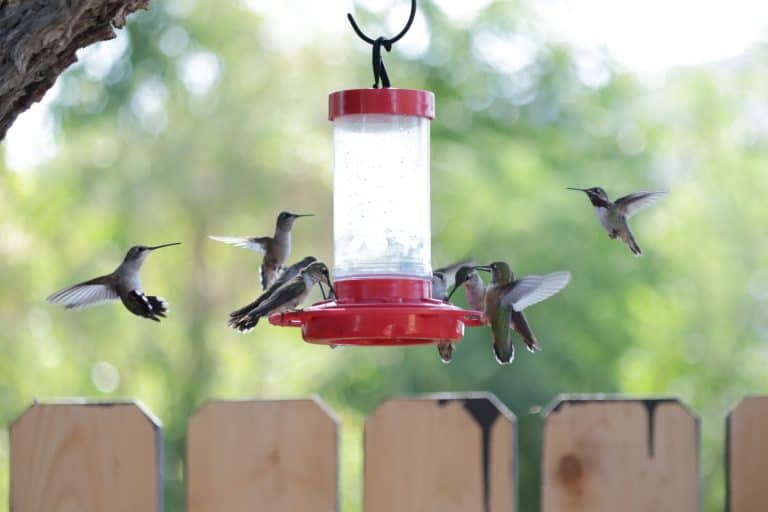
Before migrating, hummingbirds will stock up on calories for the approaching journey. Therefore, you may see more hummingbirds around your feeder or flowers. Even if you don’t have feeders, you may notice hummingbirds out and about more.
The timing of migration will vary from bird to bird. It may also depend on the elevation and local climate conditions. For instance, birds tend to be less active during migration periods when the sky is cloudy, as they often use the sun and stars to navigate. Cloudy days may push back the migration, therefore.
Migration Routes and Destinations
Montana’s hummingbirds embark on a remarkable journey of thousands of miles to their winter homes. These tiny creatures just weigh a few grams, but they travel great distances when migrating.
Where exactly the hummingbirds go varies. We don’t know exactly how these birds know where to go, but it is likely “programmed” into new hummingbirds. The exact destination and route differ heavily from species to species, and there are even differing destinations within certain species.
Usually, hummingbirds head south, stopping along the way to refuel. Once again, where they refuel varies; some may refuel more than others. Typically, they do stop in the same areas every year.
Hummingbirds that migrate tend to end up in Central and South America. Some popular wintering destinations include Mexico, Costa Rica, and others. It’s important that the area remains warm and provides plenty of flowers through the winter.
Of course, migration is very challenging. Hummingbirds must navigate through changing weather and predators. They must also find food sources along the way. A lot is working against them.
Non-Migratory Species
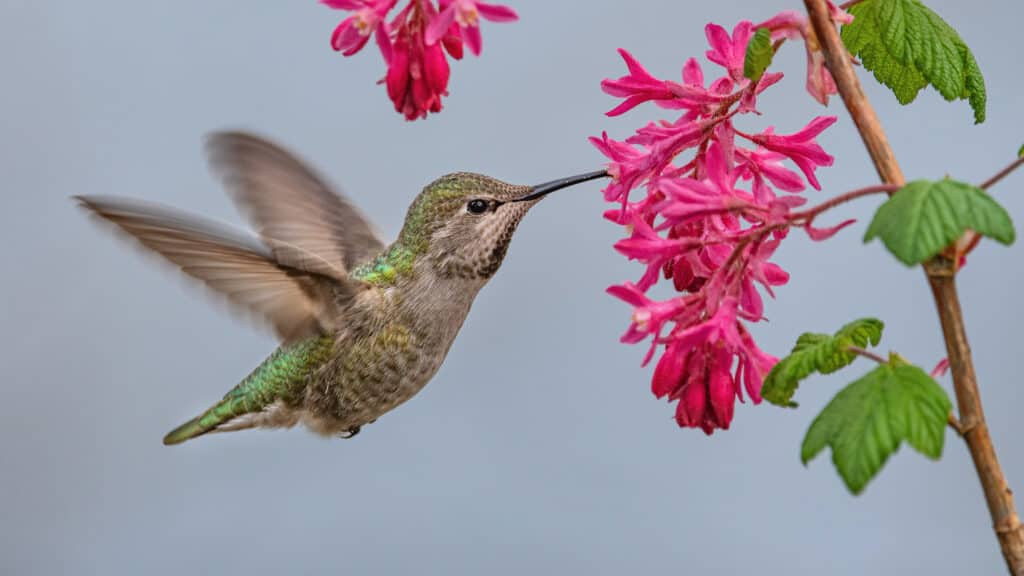
Anna’s Hummingbird uses their long beak and tongue to extract nectar from flowers.
©Mason Maron /Shutterstock.com
While the vast majority of hummingbirds do migrate, not all of them do. Some species are decidedly non-migratory, meaning they stay within their preferred range all year. To make things even more confusing, some individuals in these species may migrate while others may not.
Some may only migrate a few miles down the road, which doesn’t technically count as a “migration.”
The Anna’s Hummingbird (Calypte anna) is a prime example of a non-migratory species. This hummingbird isn’t often found in Montana, but it can be found in some western parts of the state. These hummingbirds live a more sedentary lifestyle, which may be what allows them to live in the area through the winter.
We’re still learning a lot about what hummingbirds migrate and which don’t. Migration has been a huge mystery for hundreds of years, and we’re still cracking the code today.
Studying Hummingbird Migration in Montana
We’re still actively studying migration today, and there is still a lot we don’t know. Montana has played a key role in studying hummingbird migration, as the majority of hummingbirds in the area do migrate. Many studies have occurred in the area.
For instance, one study involved the tagging of Rufous Hummingbirds and then their recapture in Montana. To study migration, hummingbirds are often “tagged” with information about their origins. Then, they are recaptured after migration. In this way, we can tell what hummingbirds ended up where.
Local organizations, universities, and citizen scientists also play an integral role in hummingbird migration research. Often, it is birdwatchers that notice tagged birds, leading to their capture.
Helping Hummingbirds in Montana
If you’re interested in helping hummingbirds in Montana, there are several ways you can assist their migration efforts.
As we’ve stated, hummingbirds must eat extra calories to assist in their migration. Therefore, it’s important that you continue to feed them throughout September (if you have a feeder). Hummingbirds may eat more in July and August, so be sure to plan refills accordingly.
You can also plant native plants that bloom later in the season. Examples of native plants that hummingbirds like include bee balm, penstemon, and columbine. Simply leaving a portion of your yard wild can help hummingbirds find the necessary food.
It’s important to ensure consistent nectar for your local hummingbirds. You can do this by keeping your feeders full consistently or planting a range of flowers.
Minimize the use of pesticides and herbicides, as these can harm not only hummingbirds but also the insects they rely on for protein. Hummingbirds also like shallow birdbaths, which they bathe in and drink from.
How Long Do Hummingbirds Stay in Montana?
Generally, hummingbirds begin to arrive in Montana in the late spring and early summer, usually around May. This month marks the blooming of nectar-rich flowers, their main food source.
However, some hummingbirds may arrive later or sooner than this date. You may want to start putting out your hummingbird feeders in April to ensure early arrivals have something to eat.
Many factors affect when Hummingbirds get to Montana. The exact species, food availability, and weather conditions all affect when hummingbirds may show up.
As we’ve stated, hummingbirds leave Montana in the late summer to early fall – around August and September. They’ll fly to Central and South America, where they spend the winter months.
The length of time hummingbirds stay in Montana can range from a few months for the summer breeding season to a few weeks during the migration period. You must remember that there are hummingbirds north of Montana that migrate, and these individuals may stop in Montana to refuel.
Some hummingbirds may linger in Montana longer than others, especially if they find your feeder. However, most will eventually move to warmer areas.