One is venomous with a barber stinger that sends pain signals through its prey’s body. The other is speedy with a built-in sword protruding from its face. Both grow impressively large. But in an epic deep sea battle between a stingray vs. a blue marlin, which sea creature would win? Let’s find out!
Comparing a Stingray vs. a Blue Marlin
| Stingray | Blue Marlin | |
|---|---|---|
| Size | Up to 16.5 feet (tail included); may weigh up to 1,300 pounds | 11 and 14 feet; may weigh up to 2,000 pounds |
| Speed and Movement | Up to 30 miles per hour | Up to 68 miles per hour |
| Defenses | Venomous spine | Gathering in a group, sword-like pointed bill |
| Offensive Capabilities | Skilled ambush, crushing teeth | Sharp-edged bill, agility |
| Predatory Behavior | Powerful jaws, electroreception | Rapid bursts of speed, bill slashing |
What Are the Key Differences Between a Stingray and a Blue Marlin?
Stingrays can easily camouflage with the bottom of the ocean as their color is similar to their surroundings. To defend themselves, they are quick to use the venomous spine on their tail. They have an underside mouth, and their eyes are on top whereas blue marlins are much bigger than stingrays. They are part of the largest species of their kind. They have a big bill which they use as their primary weapon to hunt and slash their prey (and then finally to eat).
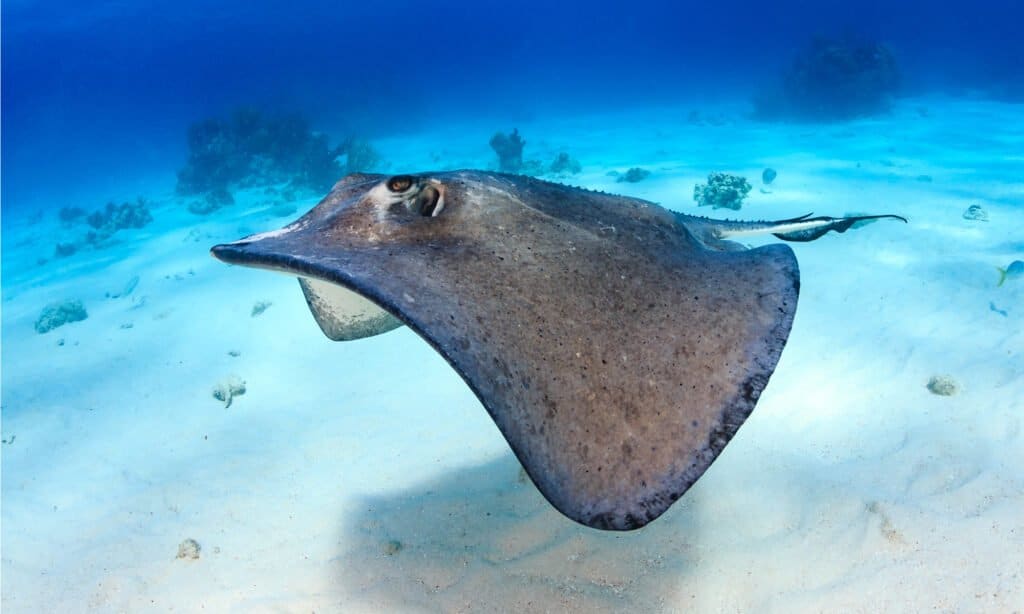
Stingrays are venomous fish that prefer shallow waters.
©Richard Whitcombe/Shutterstock.com
What Are the Key Factors in a Fight Between a Stingray and a Blue Marlin?
Blue marlins are significantly heavier, heftier, and more powerful than stingrays. If they were to fight, it might seem like an easy victory for the blue marlin. That is unless the stingray uses its tail to sting. The venomous spine could do damage to the blue marlin’s body. It’s not clear how much venom it would take to bring down a blue marlin, but the stingray is sure to give it all it has!
Stingray vs. Blue Marlin: Size
Stingrays can measure up to 16.5 feet. According to the last confirmed Guinness World Record, a freshwater stingray was caught and registered in Cambodia on June 23, 2022. It was 13 feet long, weighing 661 pounds. A blue marlin can reach up to 14 feet in length and if old enough can reach a massive weight of 2,000 pounds. The biggest marlin was caught in Kona in 1984 and weighed 1,656 pounds.
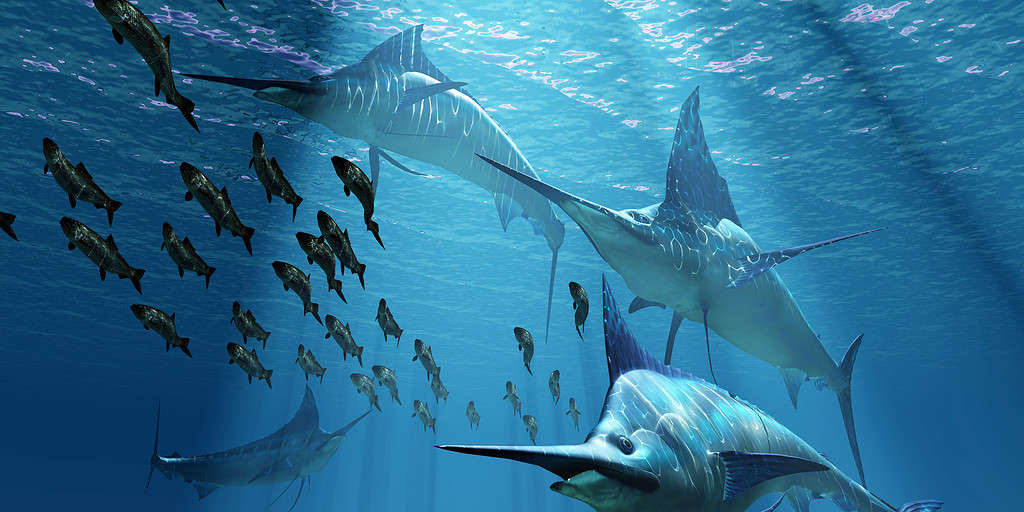
A blue marlin can reach up to 14 feet in length and if old enough can reach a massive weight of 2,000 pounds.
©iStock.com/CoreyFord
Stingray vs. Blue Marlin: Speed and Movement
Blue marlins are well known for their speed and how agile and gracefully they move in the ocean. They were made for rapid movement, and they know how to use their tail and powerful body to help them propel themselves to reach their goals when they need to. They can reach 68 miles per hour in the water. Stingrays are slower swimmers, their shape is flat, and the way they move is by undulating their fins creating a wave-like motion. They bury themselves in the sand rather quickly to evade predators.
Stingray vs. Blue Marlin: Defenses
Stingrays have a great defense mechanism as they automatically use their tail and inject their venom into anyone that threatens their survival. Their venom is known to cause tissue damage and is extremely painful. They can also form a disturbance by clouding the water, so they can camouflage easier. Then they twist and turn as they swim away. Blue marlins have an advantage in the water due to their speed. When they need to, they can quickly flee from any perceived threat.
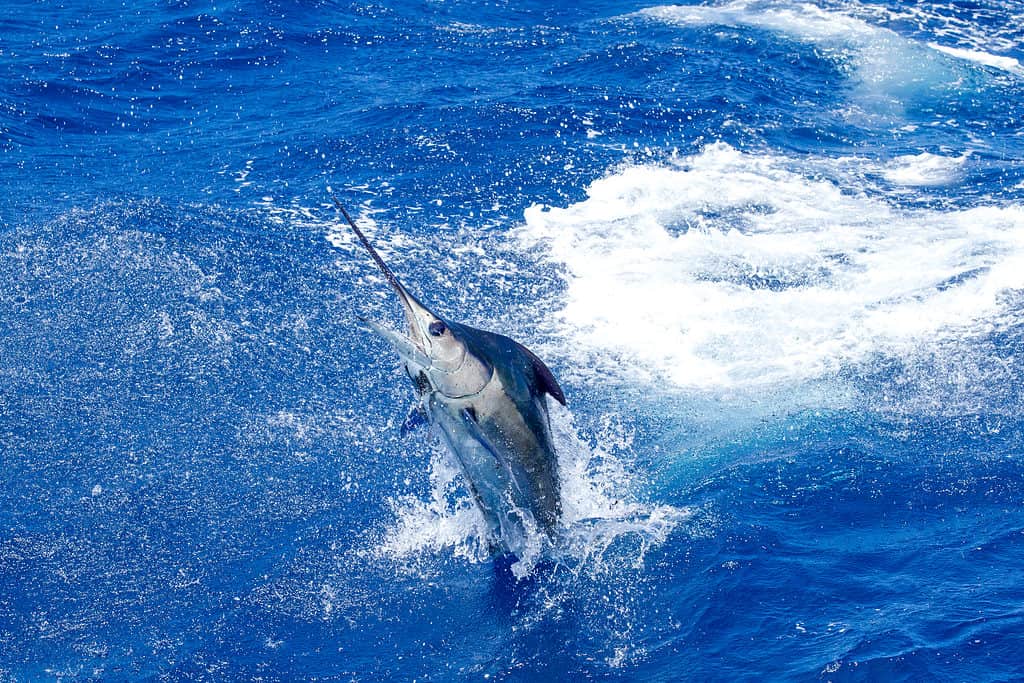
Blue marlins use their speed and weaponize their pointed bills.
©kelldallfall/Shutterstock.com
Stingray vs. Blue Marlin: Offensive Capabilities
When stingrays find their prey, they position themselves directly in front of it. Then they swing their tail forward like a scorpion to inject their venom. Their unusually positioned mouths with strong teeth can then bite right through the shells of crustaceans and the bodies of fish so they can devour their fleshy bits. Blue marlins can chase and stun their prey using their sharp bill.
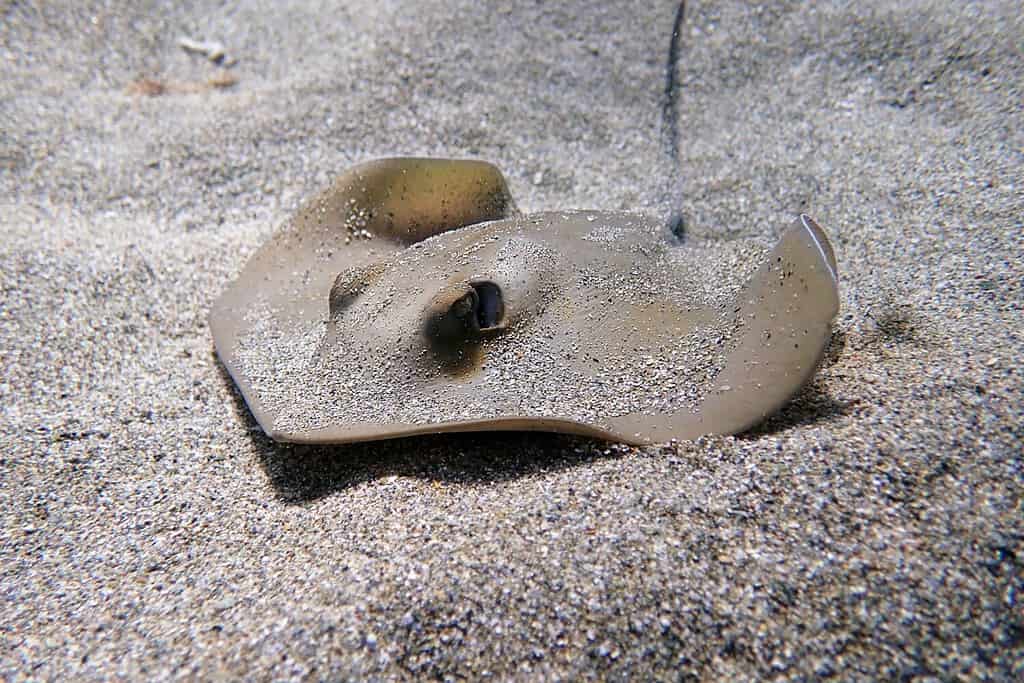
Stingrays bury themselves in the sand rather quickly to evade predators.
©Vojce/Shutterstock.com
Stingray vs. Blue Marlin: Predatory Behavior
Stingrays use their large fins to trap their prey or even pin it to the sandy ocean floor in shallow waters. They use their venom and enjoy their meal. Blue marlins, on the other hand, use their speed and the weapon that is their pointed bill to attack schools of fish. They bulldoze through, lashing back and forth, stunning and injuring their prey. Then, they return to snack on the fish injured by the attack.
Who Would Win in a Fight Between a Stingray and a Blue Marlin?
In a fight between a stingray and a blue marlin, a blue marlin would win. A blue marlin could use its speed to confuse the stingray, which has limited visibility. The way it does with schools of fish, a blue marlin could also lash out wildly, severely injuring the stingray’s fins, eventually rendering it lifeless.