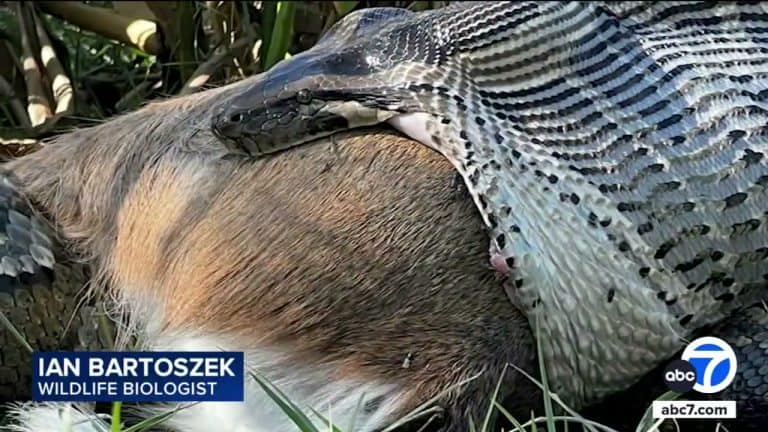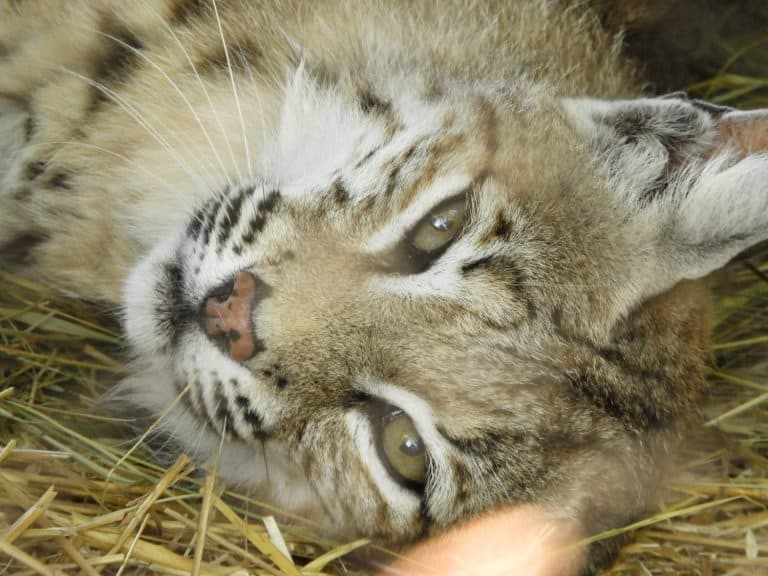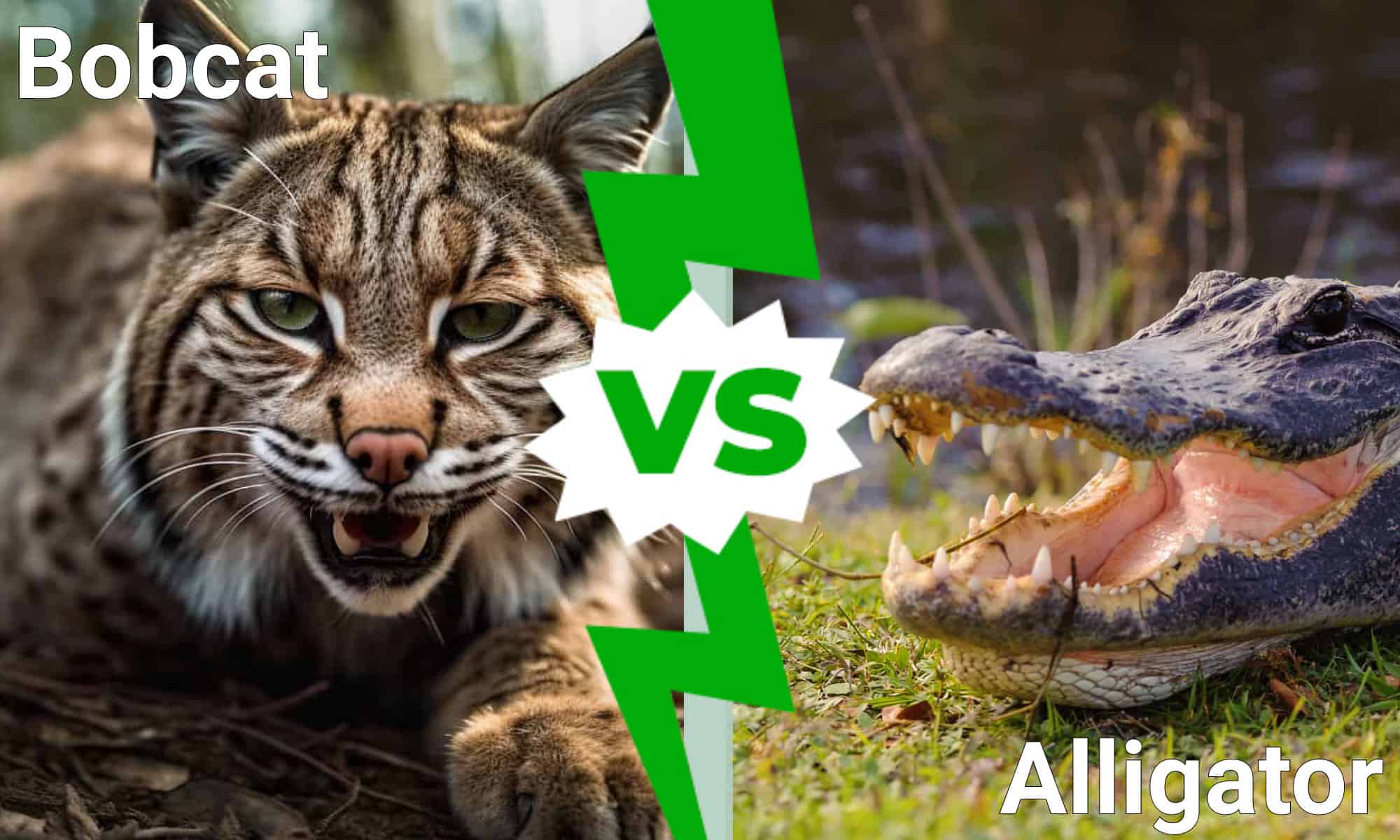

Who will be the winner in this bobcat vs. alligator animal battle?
Around 300,000 bobcats and just over 1,000,000 alligators live throughout Florida. Today we will explore what would happen if one of these wildcats got into a brawl with a fully-grown alligator. Would the bobcat stand a chance at winning against a 15-foot alligator? Or is this going to be a quick win for team reptile? Let’s find out as we uncover the key factors in a bobcat-alligator showdown!
Overview: Bobcat
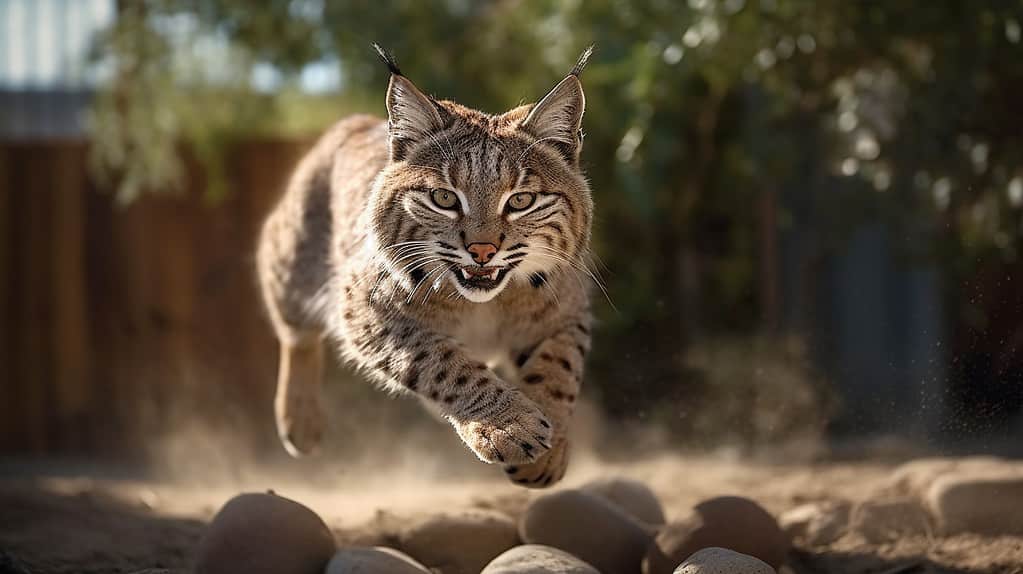
Our first competitor is a fully-grown eastern bobcat. These felines live up to 12 years in the wild and weigh as much as 30 pounds. Their size is similar to that of a small to a medium-sized dog.
Bobcats are one of the four lynx species. These fierce predators can survive in swamps, woodlands, grasslands, and sometimes cities. And since they’re nocturnal, they’re rarely ever spotted.
If you’re lucky enough to see a bobcat in the wild, you’ll notice it has a tiny black-tipped tail. The short tail gives them their name because it appears to be bobbed. You can also identify these wildcats by looking for ruff fur around the sides of their face.
The bobcat’s coat color can vary, with some bobcats having shades of gray, brown, red-brown, and yellow-brown. You’ll also find patterned spots on the sides, chest, and possibly back. Their coat helps them blend into the environment, making it easier to evade predators and sneak up on prey.
Will the bobcat be sneaky enough to ambush an alligator? If so, will the wild cat have enough strength to win the fight? It’s time to find out as we dive into the bobcat’s physical stats, starting with size and speed.
Bobcat: Size and Speed
The first key factor in a bobcat vs. alligator animal battle is each species’ size and speed. Alligators are bigger than bobcats, but size alone won’t win this fight. In the animal kingdom, speed often determines which animals have the advantage.
On average, an adult bobcat is 4 feet long, from its head to tail tip. Male bobcats are usually larger than females. Average males weigh between 14 and 40 pounds, while females typically weigh around 33.7 pounds. Exact sizes vary based on the wildcat’s geographic location. For instance, northern regions usually produce larger bobcats.
Since 1984, Wisconsin’s record for the largest bobcat ever was 48.84 pounds. However, that record was broken when a hunter shot and killed an even bigger bobcat on December 31st, 2008. Now the state has a new big cat record. The largest bobcat ever recorded is officially 52 pounds.
What the bobcat lacks in size, it more than makes up for in speed. These wild cats can race at speeds of 30 mph. And unlike species that tire out easily, bobcats have a lot of stamina. They can travel for miles before needing to take a break.
If running doesn’t work, there are other ways these wild cats can use their speed against the alligator. Along with being able to sprint 30 mph, bobcats are also fast tree climbers and strong swimmers. The feline challenger could swim out to attack an alligator for this animal showdown. It’d be a gutsy choice, and the bobcat must use all of its attack abilities to stand a chance at victory. In the real world, bobcats don’t swim to hunt their prey. Instead, they launch ambush attacks on land, sometimes pouncing on prey from trees.
Bobcat: Attack Abilities
Now it’s time to look at the bobcat’s attack abilities and how they stack up in a bobcat vs. alligator battle. Bobcats are carnivorous predators. Rather than scavenging their meals, these felines have to hunt and kill everything they eat. And one of the ways they go about subduing prey is their razor-sharp canines.
A bobcat’s teeth are made for shredding. These felines have 28 teeth, including incisors, premolars, molars, and canines. They use these teeth to grab hold of prey and rip them apart. The canines and incisors help tear the flesh into digestible pieces. This allows the bobcat to swallow the meat chunks whole without even chewing.
As if their teeth weren’t deadly enough, bobcats also have retractable claws. They use these claws when hunting rabbits, birds, squirrels, snakes, mice, and other small mammals. They dig in with their sharp claws when they pounce on their prey. And since bobcats can leap over 10 feet, there’s plenty of force behind the attack.
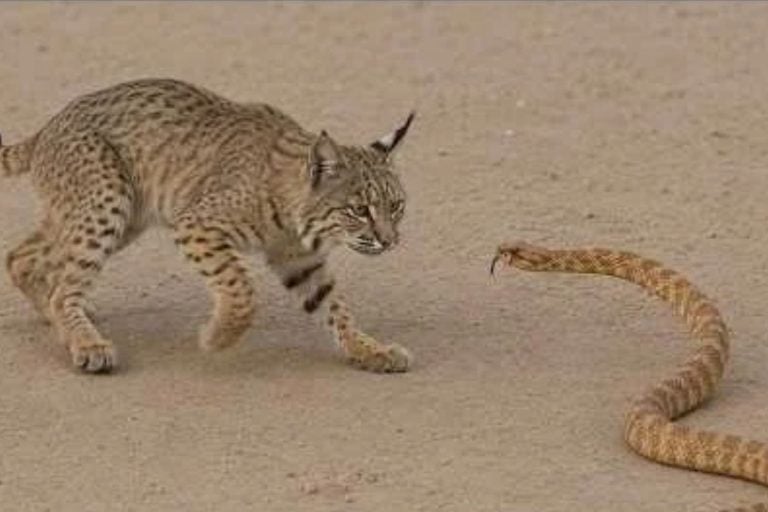
Finally, sometimes bobcats slap their prey into submission. This is especially true when they’re targeting venomous reptiles like rattlesnakes. Rattlesnakes are pit vipers with highly potent venom. They can kill prey with a single bite. But the bobcat never gives the snake a chance to strike. Instead, they slap the snake silly, hitting its head and fangs toward the ground and disorienting it.
The bobcat’s slap attack might work for snakes, but will it protect them against an alligator? Let’s look at the bobcat’s defenses to see if they’re strong enough against their armored foe.
Bobcat: Defenses
How will the bobcat defend itself? By running away! The bobcat’s speed is one of its best defenses. These agile cats can quickly evade threats, zipping through the forest at speeds of 30 mph. And if that doesn’t work, the bobcat can seek safety up high in a tree.
Bobcats are muscular creatures whose strong legs help them climb trees in seconds. Sometimes they use the height of the tree for hunting from above. But other times, trees are the perfect escape route. They’re so comfortable with heights that these cats can nap while hiding in the branches.
The long legs that help the bobcat scale trees also help them jump and leap. When the alligator attacks the bobcat, the feline can leap 10 feet or more to escape harm.
Bobcat: Survival Instincts
Last, it’s time to compare each competitor’s survival instincts. We’ll start by looking at how bobcats survive in the wild. For instance, did you know bobcats do most of their hunting in low-light conditions? They become active a few hours before sunset and spend their waking hours stalking and hunting prey. Around midnight they go back to sleep, only to wake up again right before dawn.
The bobcats’ nocturnal hunting schedule helps them target their favorite types of prey. A bobcat delicacy, eastern cottontail rabbits, forage for food after the sun goes down. This perfectly matches up with the wild cat’s hunting schedule. And it’s not just tiny rabbits that they’re targeting.
Bobcats can subdue large prey such as adult deer; there are records of bobcats killing deer that weigh over 200 pounds! These solitary hunters claim a large home range, ensuring they always have plenty to eat.
Overview: Alligator
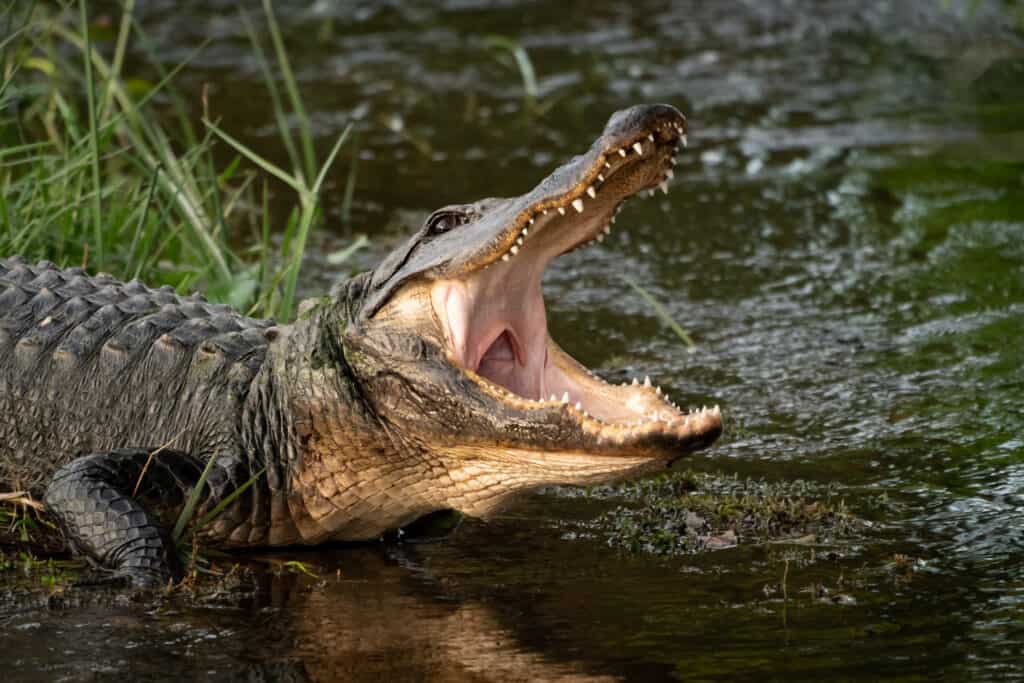
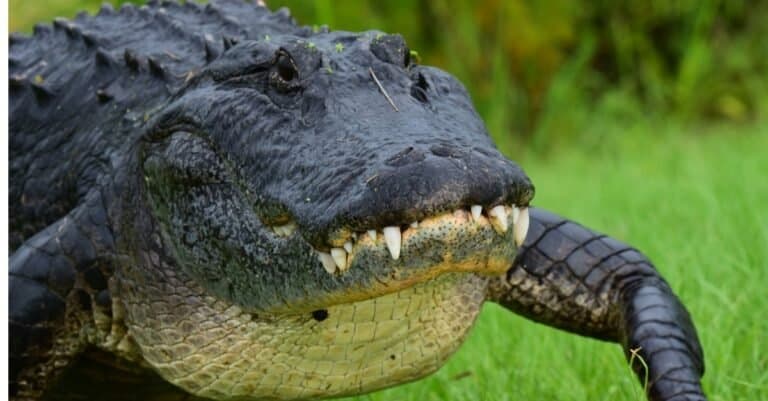
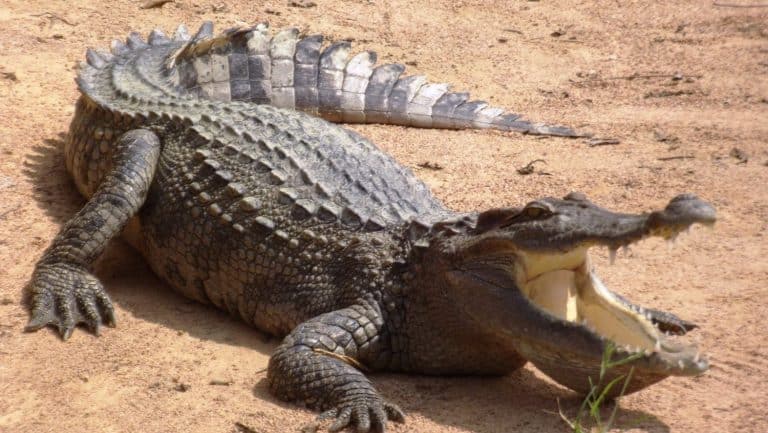
On average, a male American alligator will grow 10 to 15 feet long and weigh between 550 and 600 pounds.
©Deborah Ferrin/Shutterstock.com
Hiding in the swampy waters, it’s our second competitor, the alligator! This reptile is always making the news. Take, for instance, the story about the alligator arrested in Florida.
Answering a service call at the Tampa Bay Stadium, officers quickly found out that it wasn’t a person who was causing the trouble but rather an alligator. The 9-foot alligator was wandering around the streets close by the Raymond James Stadium, which is the home of the Tampa Bay Buccaneers. It took three police officers to subdue the alligator, taping his legs behind his back instead of handcuffing him.
If this troublemaking reptile targets a small bobcat, will it be an easy win? Or could the bobcat outsmart and somehow overpower a full-grown alligator? It’s time to find out!
Alligator: Size and Speed
It’s time to compare the alligator’s size and speed to that of the bobcat. These reptiles are living dinosaurs. If you had a time machine and went back eight million years, the alligators you’d see walking around would look like American alligators today. These large reptiles regularly grow 9 feet long and weigh half a ton.
Males are usually slightly larger than females. On average, a male American alligator will grow 10 to 15 feet long and weigh between 550 and 600 pounds, whereas females are usually between 8 to 11 feet long and weigh 300 to 500 pounds.
Alligators can run 35 mph. These reptiles use different speeds for different situations. Alligators walk very slowly and methodically as they move their big bodies. But don’t let this lazy-looking lizard fool you. These reptiles can jog at 20 mph when chasing prey or evading a threat. Top speeds of 35 mph are usually reserved for hunting.
These semi-aquatic reptiles can also zip through the water. Alligators have a top swim speed of 20 mph. Their flat muscular tails and webbed feet, help propel them through the water. However, even though they’re made for swimming, alligators can only maintain top speeds for short distances.
Things aren’t looking good for the bobcat. Alligators outweigh their feline competitor, and they can outrun them too! A bobcat’s top running speed is 30 mph, fast enough to escape many predators but not an alligator. An alligator’s top running speed is 35 mph, giving it a 5 mph advantage over the bobcat.
Alligator: Attack Abilities
How would an alligator attack a bobcat? Alligators have several attack abilities. These reptiles can bite, drag, drown, and dismember prey. They can also attack using their flat, muscular tails. Along with using their tails as a weapon, alligators also use them for swimming and digging nesting burrows.
An alligator’s tail makes up nearly half of its body size. So if you’re dealing with a 16-foot alligator, the tail could be 8 feet long. That’s 8 feet of armored muscle whipping around with enough force to snap bones. All it would take is one hit, and the bobcat would be down for the count.
Moving to the front of the alligator’s body, let’s talk teeth. For starters, did you know that alligators can’t chew? Their large jaw muscles make it impossible. These reptiles rely on their multiple stomachs to grind up and digest prey.
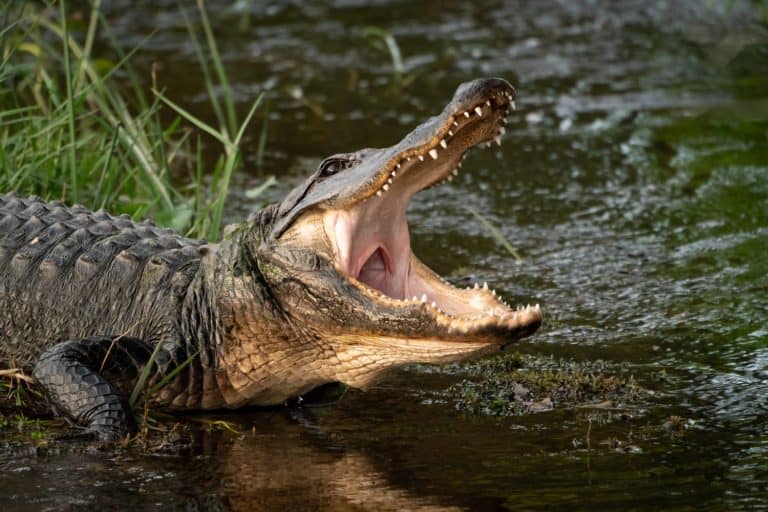
Alligators use their 74 to 80 blunted teeth to clamp down on prey. Once an alligator closes its mouth, nothing gets out. At least not alive.
After clamping down, alligators drown their victim or use a death roll maneuver. Either way, it will be a tricky spot for the bobcat to get out of. If the alligator bites down on the wild cat, the bobcat vs. alligator battle will come to a swift end.
Alligator: Defenses
Now to review the alligator’s top defenses. Alligators have thick skin and bony armored scutes along their back. These armored scales help protect them from the elements and protect them from rival alligators.
Another one of the alligator’s defenses is its ability to hide. Alligators walk close to the ground on land, making it easy to move through the brush without being detected. They also have black to brownish-colored bodies that blend perfectly with their watery environment.
Like a hippo, an alligator’s nostrils, eyes, and ears sit on the top of its head. Their entire body can safely float beneath the water, and the alligator will still be fully aware of everything happening at the surface.
Speed and agility are the alligator’s next top defenses if being sneaky doesn’t work. These reptiles can outrun and outswim almost any threat. They can even climb ladders, trees, and fences! All they need is a little bit of incline. Then the alligator uses their muscular legs to pull themselves up and over all sorts of objects, tail and all.
Alligator: Survival Instincts
What type of survival instincts does an alligator have? For starters, these reptiles are crafty. Alligators use sticks to lure nesting birds closer to their mouth. When an unsuspecting bird flies down to pick up the nest material, it becomes a gator snack.
Another notable survival instinct is the alligator’s mothering abilities. Alligators are ruthless hunters, but they still have strong maternal instincts. These reptiles will fight to the death to protect their young, even before they hatch. If the alligator catches the bobcat trying to steal an egg, it’ll be fueled with motherly rage.
Male alligators are also more aggressive during the courtship, mating, and nesting season. The courtship season starts when temperatures heat up, which is usually April. Then follows the mating and nesting season through June.
If you ever hear the thunderous bellow of a male alligator calling for a mate, it’s an experience you’ll never forget. Along with bellowing, males viciously fight with one another in competition for females. If this bobcat vs. alligator showdown happens during April, May, or June, the wild cat will be up against angry alligator parents-to-be.
Bobcat vs. Alligator: Who Wins in a Fight?
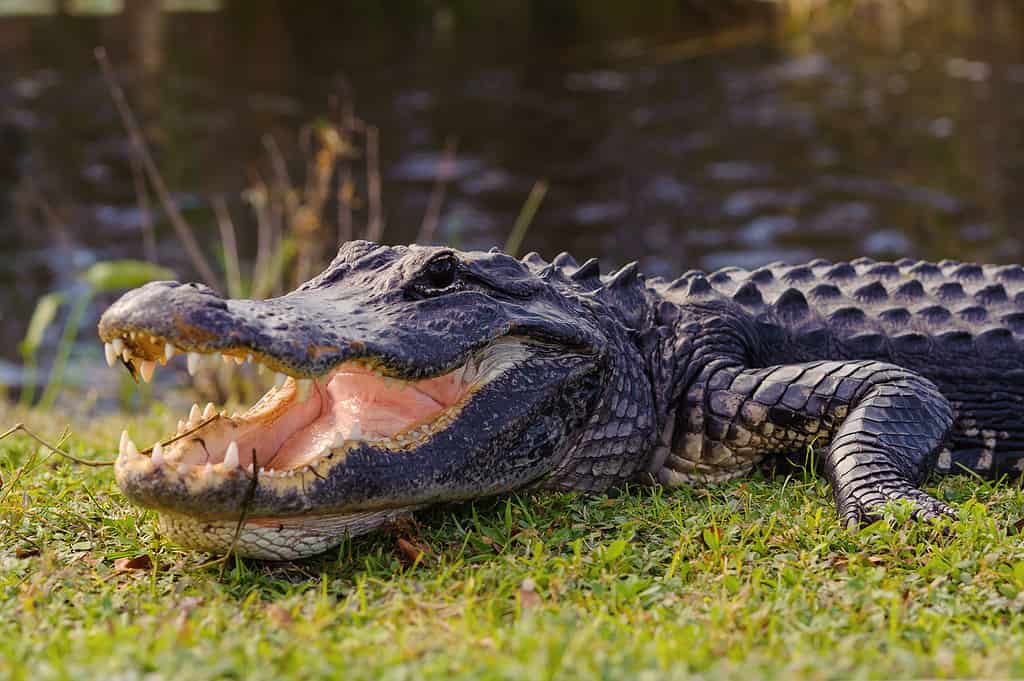
Alligators are fast, agile, and strong. The bobcat would never stand a chance against this reptile.
©Sorbis/Shutterstock.com
The alligator would win in a bobcat vs. alligator animal battle. The only way the bobcat would have an advantage is if the alligator was a hatchling. There are a lot of animals that dine on baby alligators, such as raccoons and birds of prey.
If the bobcat came across the baby alligator, it could turn it into a quick snack! But then the wild cat would have to answer to an angry alligator mom. Alligators have great maternal instincts and will kill anything that threatens their young.
We compared each species’ size, speed, attack abilities, defenses, and survival instincts for this animal battle. The alligator had a distinct advantage in every category, especially size! This reptile competitor sometimes grows to be over 15 feet long! That’s much bigger than a 3-foot-long bobcat. When you add into play the armored body and flat muscular tail, it’s an easy win for the alligator.
How would a bobcat vs. alligator battle play out? In the real world, the alligator would ambush the bobcat in the water. Or the alligator might lunge out of the water, grab the bobcat off the beach, and drag it back into the water to drown. But what about an absurd situation? What if a bobcat tried attacking an alligator who was sunning itself?
Would the wildcat stand a chance at winning if they launched a surprise attack? Not likely. The bobcat could reach 30 mph, leap through the air, and pounce on the alligator’s back. Then the cat could try driving its claws into the alligator’s eyes. The sleeping alligator would respond by flailing its body, throwing the bobcat to the ground. Then the reptile could open its mouth, clamp down on the bobcat, and proceed with the death roll. Alligators are fast, agile, and strong. The bobcat would never stand a chance against this reptile.