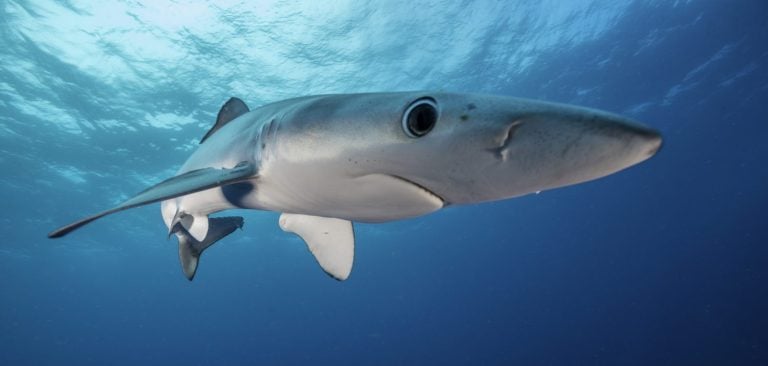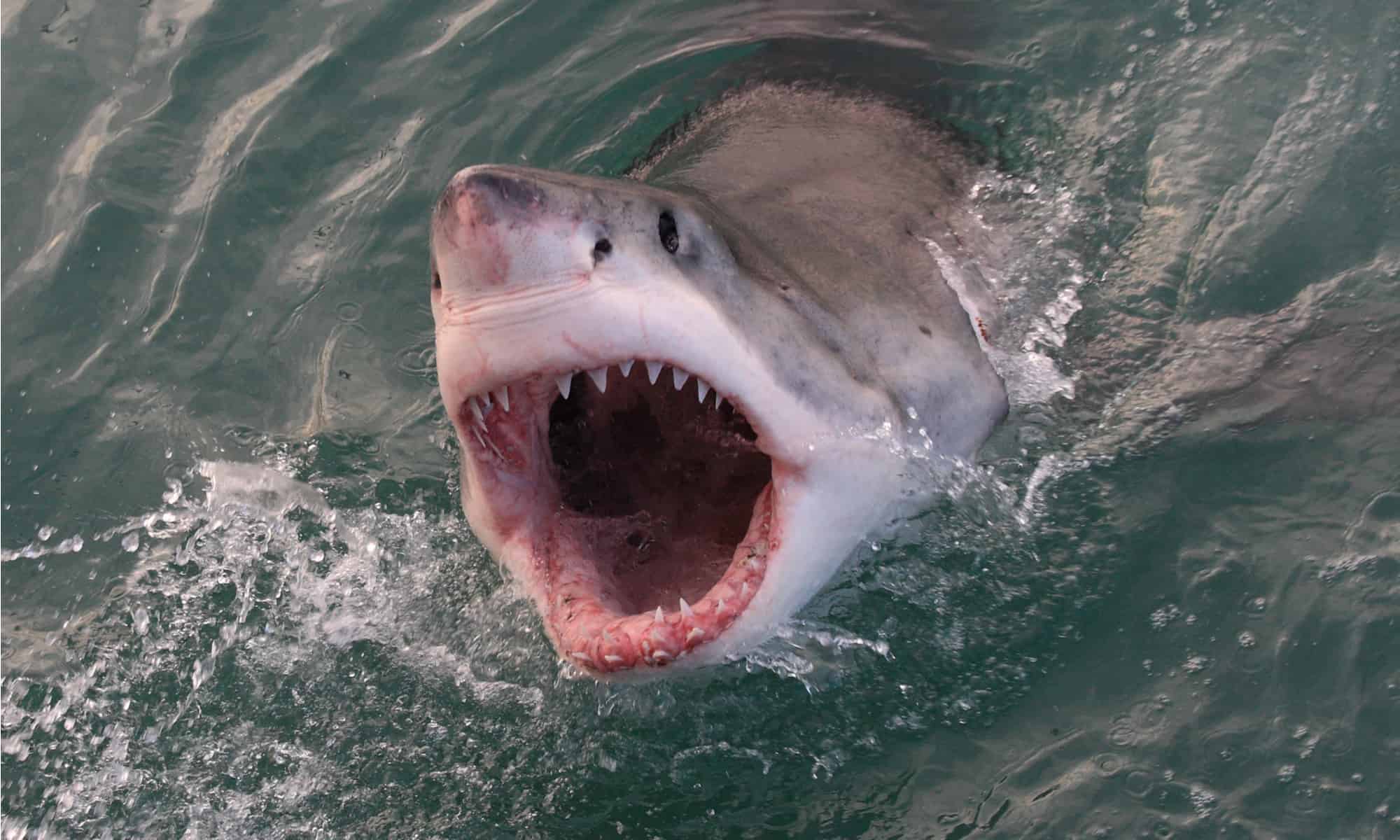
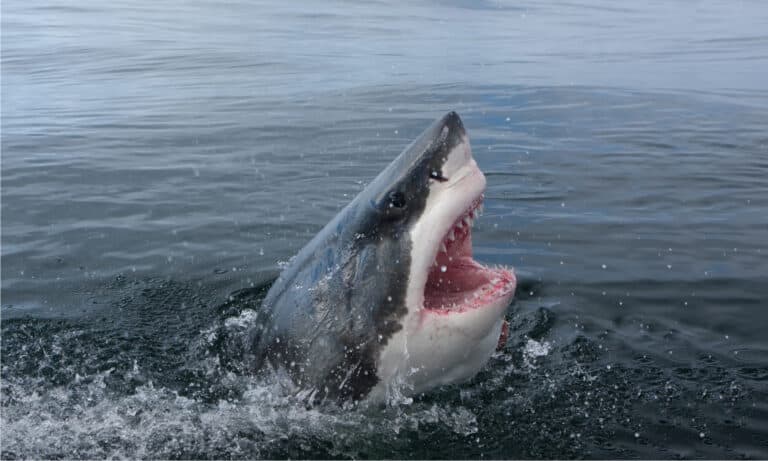
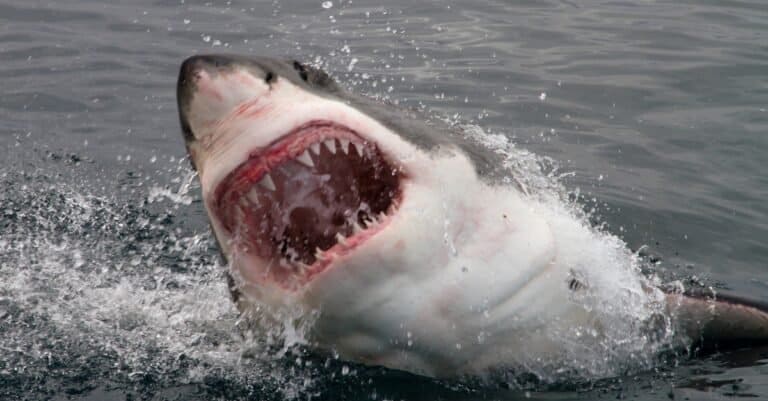








This formidable predator, the Great White Shark, has one of the most recognizable sets of teeth of all sharks.
Just hearing a couple of tones on a movie soundtrack is enough to have anyone in the water scanning the ocean for the telltale sign of a shark fin. While movies like “Jaws” take some Hollywood liberties, the depiction of a fierce predator is accurate for the Great White Shark. These sharks are some of the largest in the ocean and call all of the world’s oceans home.
5 White Shark Facts
- White Sharks live in all of the world’s oceans.
- White Sharks are the largest predatory shark.
- White Sharks have up to 300 teeth.
- These sharks can live up to 60 years.
- White Sharks give birth to pups after a full year of gestation.
Classification and Scientific Name
The scientific name of the Great White Shark is Carcharodon carcharias. They are the only species within their genus that still survives. The White Shark is a member of the Lamnidae family which includes other types of white sharks and is an order of sharks known as mackerel sharks. All of the sharks within this family are predator sharks, which means that they feed on other fish, sharks, and ocean life. They have pointed snouts and large gills. The Great White Shark is one of the best-known members of the family.
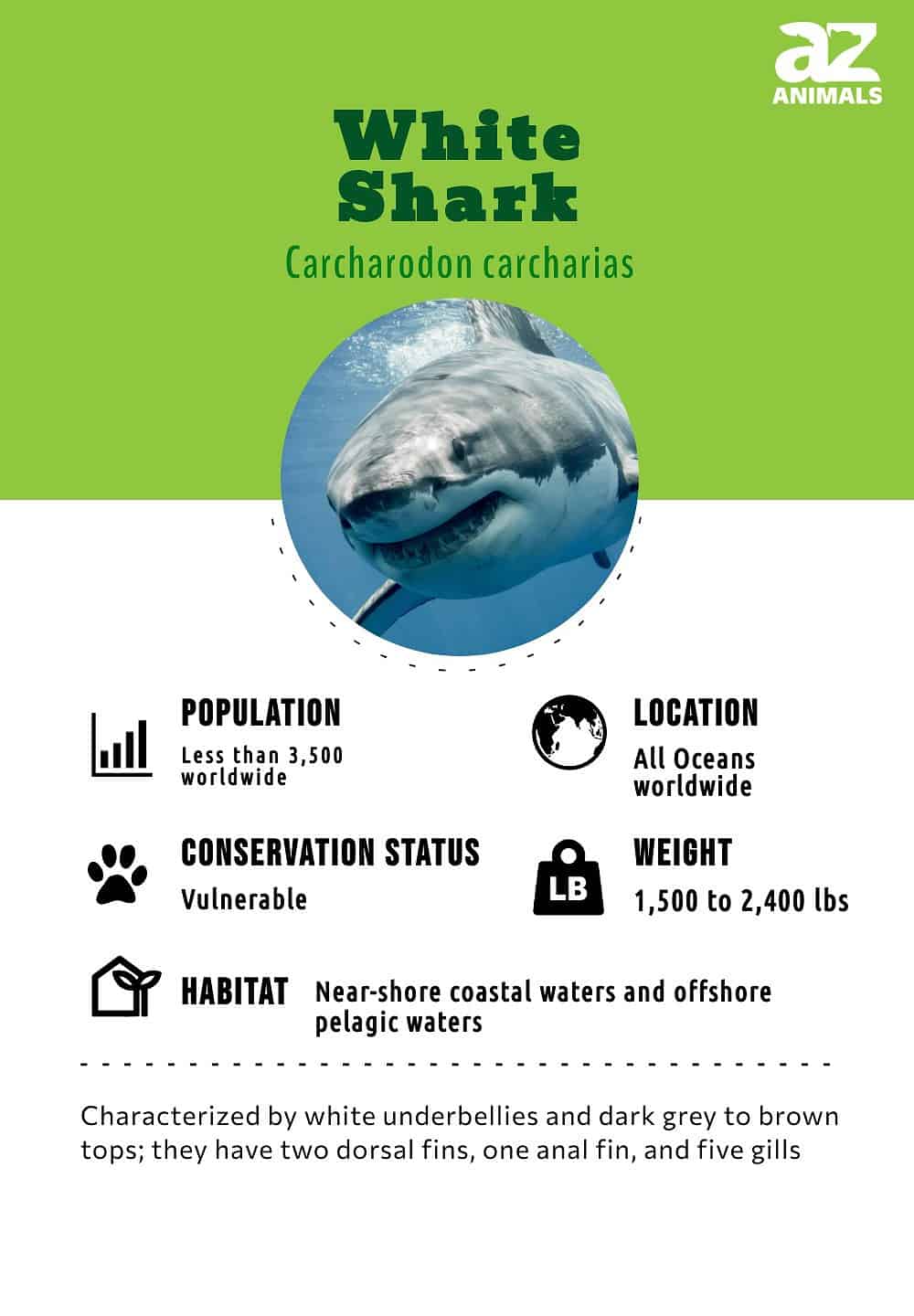
They are part of the Lamniformes order, or mackerel sharks, and the Selachimorpha superorder, which includes all sharks. Mackerel sharks are characterized by their two dorsal fins, one anal fin, and five gills. Unlike some other species of sharks, mackerel sharks do not have clear membranes that go over their eyes to protect them as they swim.
White Sharks belong to the Chondrichthyes class, which includes all fish species with skeletons made out of cartilage. They are part of the Chordata phylum and Animalia kingdom.
Evolution And History
Contrary to popular belief, the great white shark did not evolve from the megalodon shark. Distant relatives to the mako shark, this white shark was believed to have diverged sometime around 30 million to 35 million years ago, during the late Eocene or the early Oligocene era. Fossil evidence for the great white was found in the early 2000s which indicates the evolution transition was from an extinct mako shark, Macrorhizodus Americana. The great white shark of today most likely appeared during the late Miocene era, around 6 million to 8 million years ago.
Types Of
While the great white shark is the only one of its kind and species, it does belong to the larger family of mackerel sharks, a diverse order which includes 15 sharks. Here are just a few of those:
- Longfin Mako Shark (Isurus paucus)
- Shortfin Mako Shark (Isurus oxyrinchus)
- Goblin Shark (Mitsukurina owstoni)
- Megalodon (Otodus megalodon) – extinct
White Shark
| Kingdom | Animalia | |
| Phylum | Chordata | |
| Class | Chondrichthyes | |
| Clade | Selachimorpha | |
| Order | Lamniformes | |
| Family | Lamnidae | |
| Genus | Carcharodon | |
| Species | Carcharodon carcharias |
Appearance
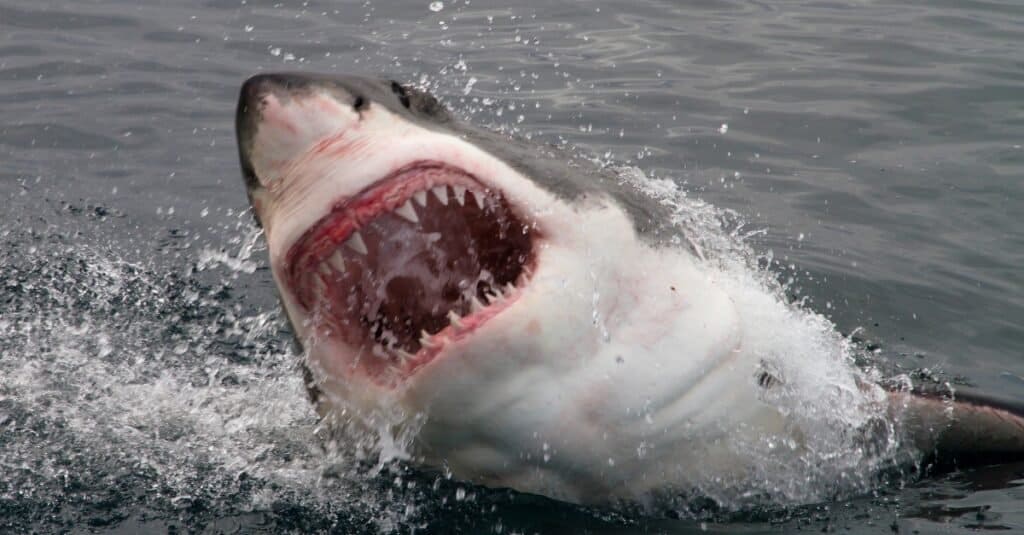
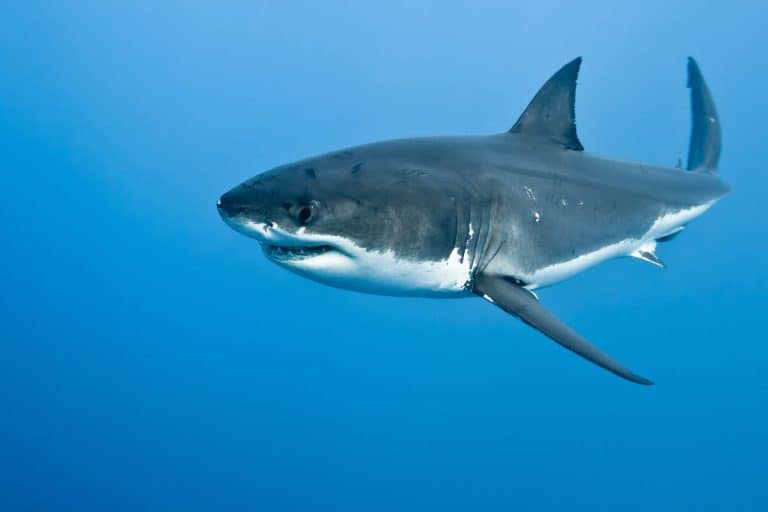
The largest predatory shark in the ocean, the great white shark can reach 20 feet in length and 5,000 pounds.
©iStock.com/Peter_Nile
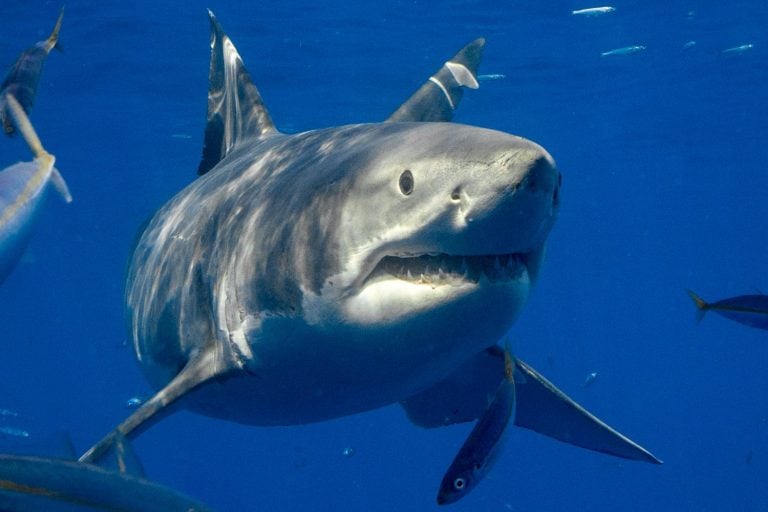
The Great White Shark is the largest predatory shark in the ocean. They can get up to 20 feet in length and 5,000 pounds. Average Great White Sharks are between 11 to 16 feet long and weigh between 1,100 to 2,450 pounds. They are not the largest sharks overall, however. That distinction belongs to the plankton-eating Whale Shark.
Great White Shark females tend to be larger than males by a few feet and at least a few hundred pounds. Both males and females have a white underside and a grey body. Their bodies can have a blue or brown tint, depending on the individual animal. This helps them blend into their environment and makes it harder for potential prey to spot them. From the side, they look much smaller than their full size due to the two contrasting colors. From above, they blend into the ocean environment.
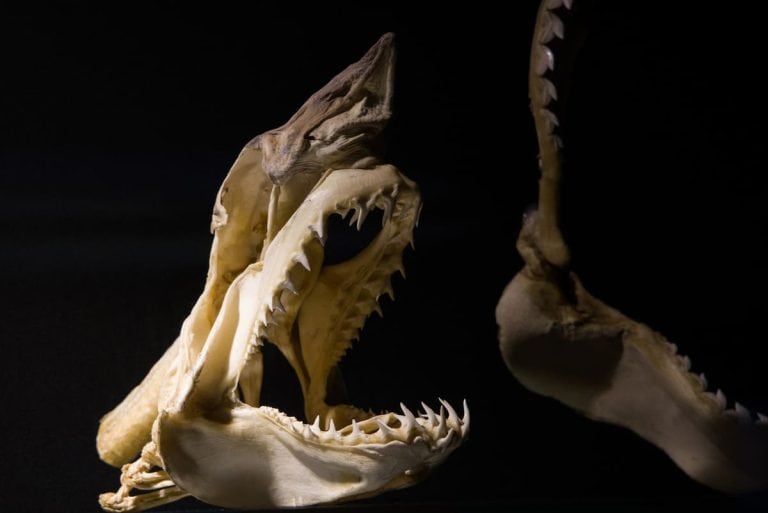
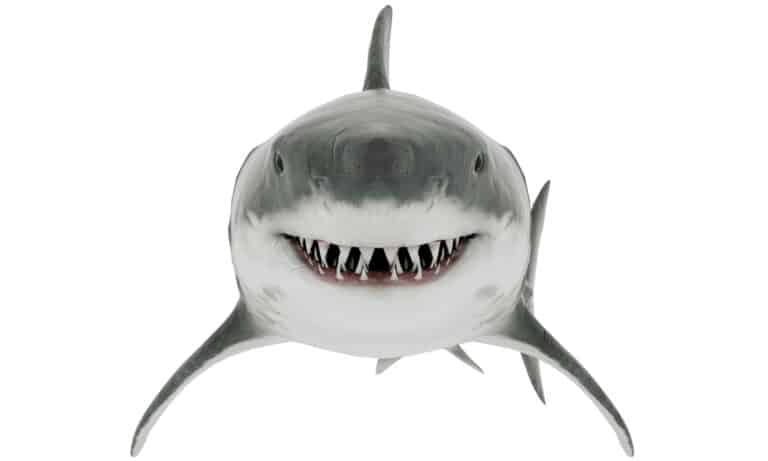
The White Shark has noticeably sharp teeth that it uses to eat other fish and animals in the ocean. Their snouts are pointed and their mouths extend to behind their eyes to accommodate their numerous teeth. They have multiple rows of serrated teeth, usually around 300 in a full-grown adult. When they use their teeth, they shake their heads from side to side to help them cut into the meat.
Distribution, Population, And Habitat
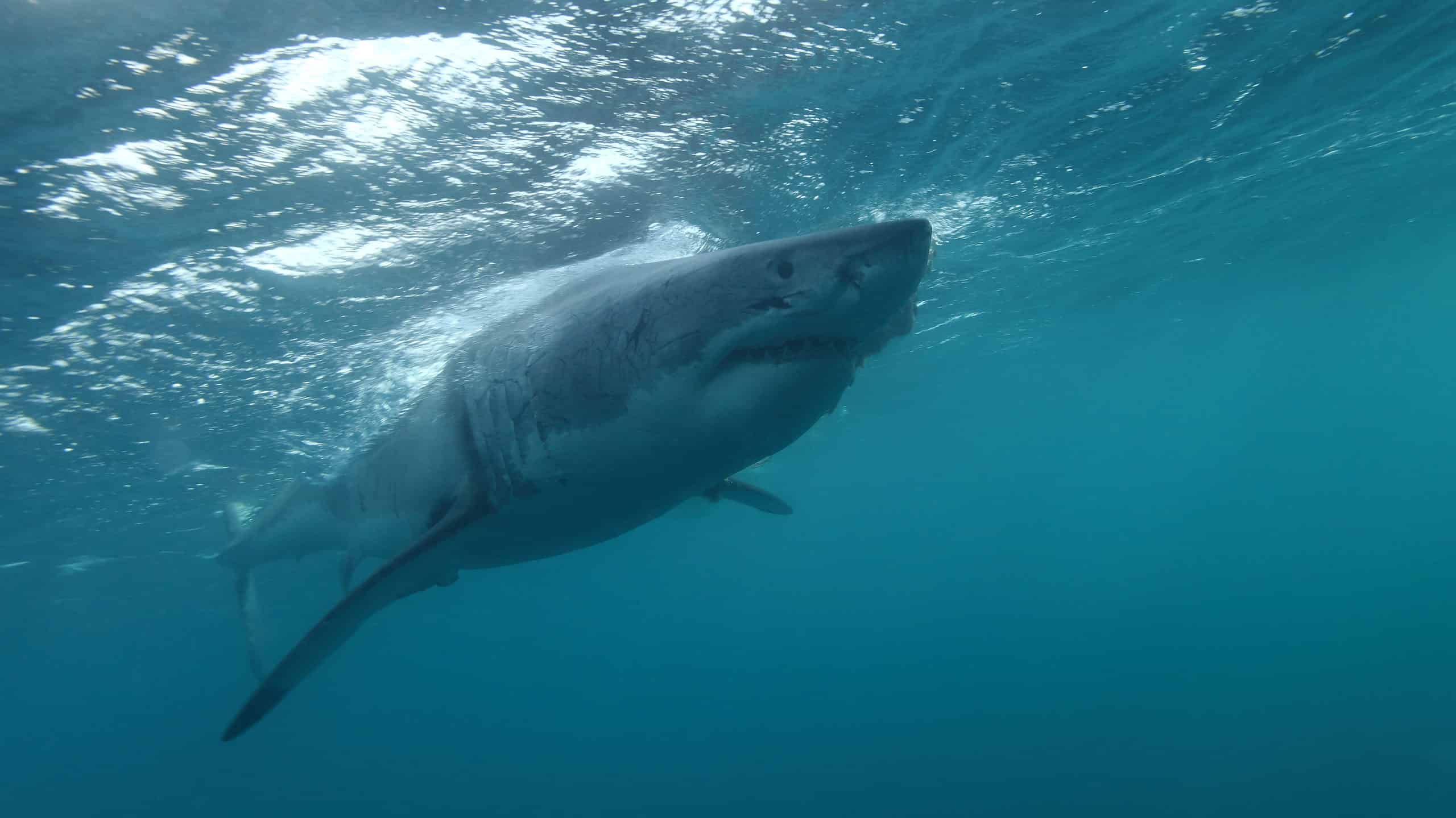
One of the largest great white sharks ever observed was an 18 foot female named Jumbo, Neptune Islands, South Australia
©iStock.com/Alessandro De Maddalena
Great White Sharks go where they can find food and swim in every ocean. They are often found near the coast due to the abundance of other species that they can eat. They can also swim in the deep ocean and have been recorded at depths up to 3,900 feet.
Because they like coastal waters and the food sources they find there, many swimmers and researchers have seen Great White Sharks. Due to their large size and formidable teeth, they get quite a bit of attention when they are spotted. Great White Sharks don’t usually go after human prey but it is not out of the question. They are not aggressive toward humans as a rule but if they are threatened or hungry, they can attack a person. It happens around 10 times per year worldwide.
These sharks are listed as Vulnerable by the World Wildlife Fund. Their worldwide population is estimated at around 3,500 in total. They can live for a long time and often return to the same areas. This makes it easier for scientists to track and study their behavior.
Where To Find White Sharks
There are a few known areas that White Sharks frequent. These include an area between Baja California and Hawaii known as the White Shark Cafe. Sharks migrate to this spot in the Pacific Ocean in the winter and spring while going back and forth between the two coasts.
Researchers trap and tag Great White Sharks to keep track of their movements and learn more about them. In 2020, scientists tagged one 50-year-old female Great White. They named her “Nukumi,” which means “Grandmother.” They were able to track her movements around the Atlantic Ocean. This helps them learn more about their habitat, mating habits, feeding habits, and other behavior.
Predators And Prey
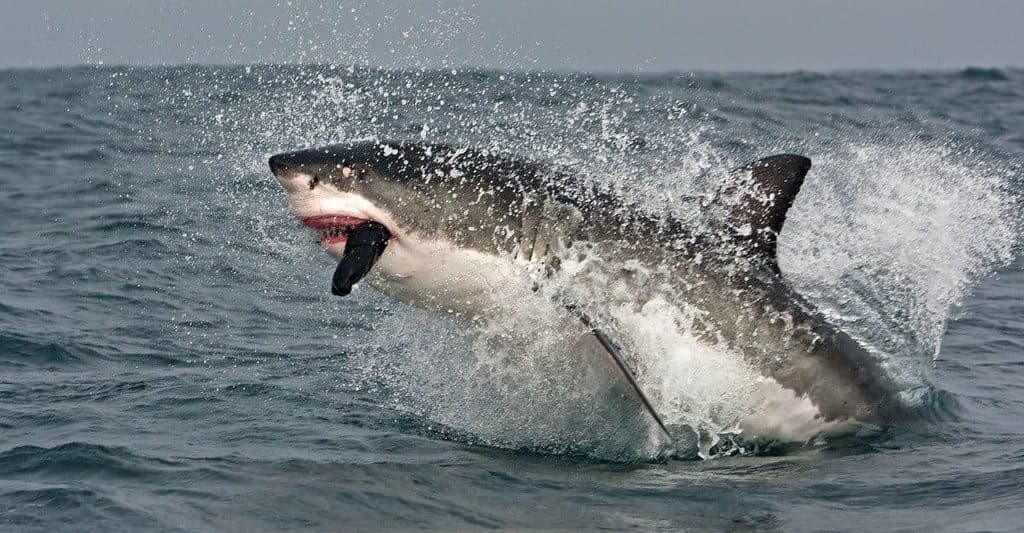
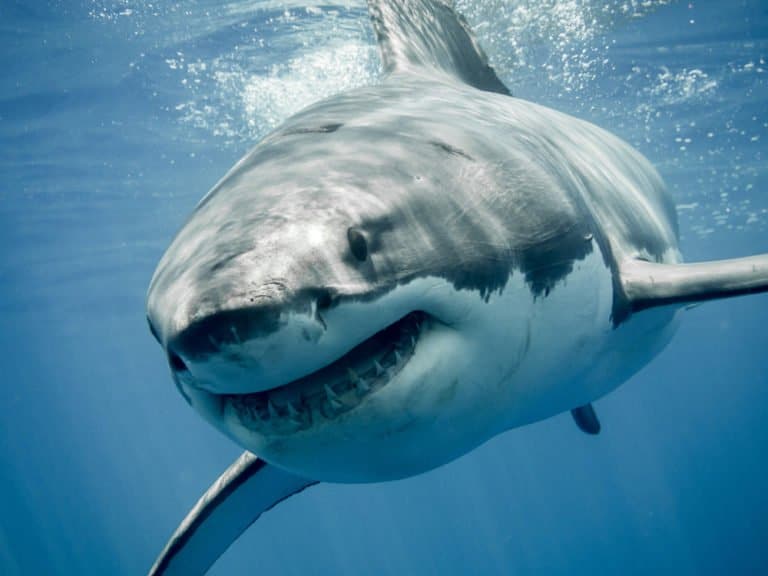
This shark is the apex predator of the ocean and is at the top of the food chain.
©Martin Prochazkacz/Shutterstock.com
Great White Sharks are the apex predators in their environment. This means that they are at the top of the food chain and eat just about everything below them. No other predators specifically hunt Great White Sharks. This doesn’t mean that they aren’t at risk, however. Environmental changes and the reduction of their food source and habitat are major threats to this shark.
What Eats White Sharks?
White Sharks were hunted by humans for their fins and teeth. Now as a protected species, it is illegal to hunt Great White Sharks. Occasionally, they are still caught as a by-product when fishing for other species. They can also get caught in man-made items like beach protection netting.
There have been reports of some Orca hunting and killing Great White Sharks. While this does happen often, there are reliable records of these animals going after the large shark.
What Do White Sharks Eat?

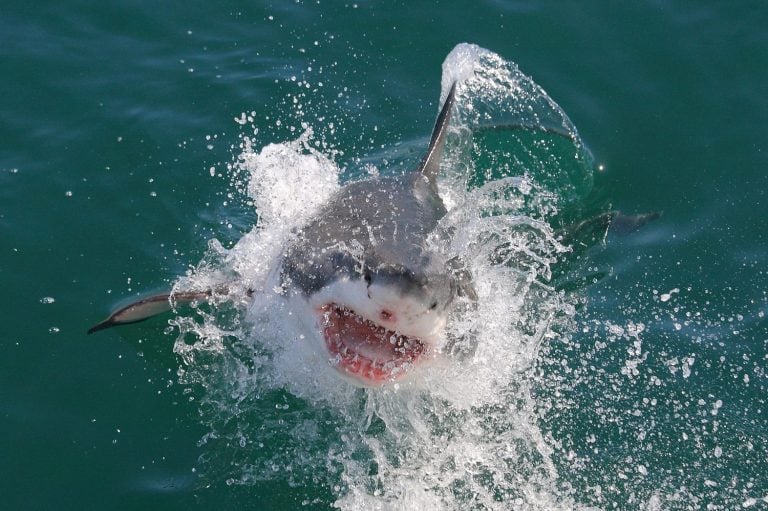
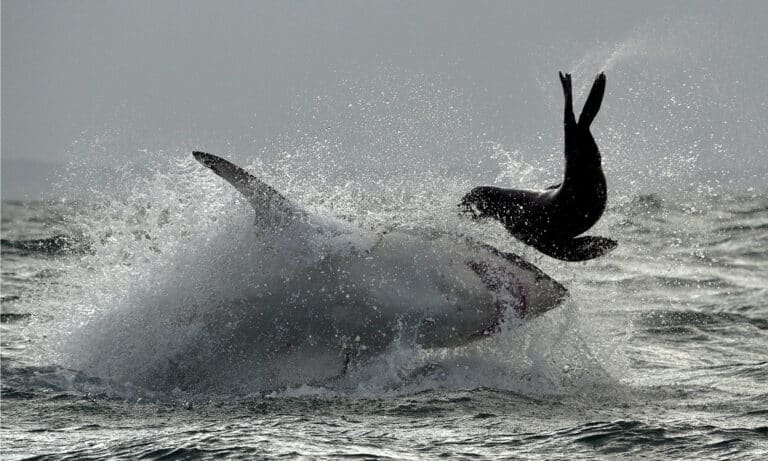
A Great White Shark breaching during an attack on a seal.
©iStock.com/USO
White Sharks eat everything from fish like halibut to dolphins and seals. They are a vital part of the ecosystem that eats larger sea mammals that would decimate the fish population if these sharks did not keep their numbers in check.
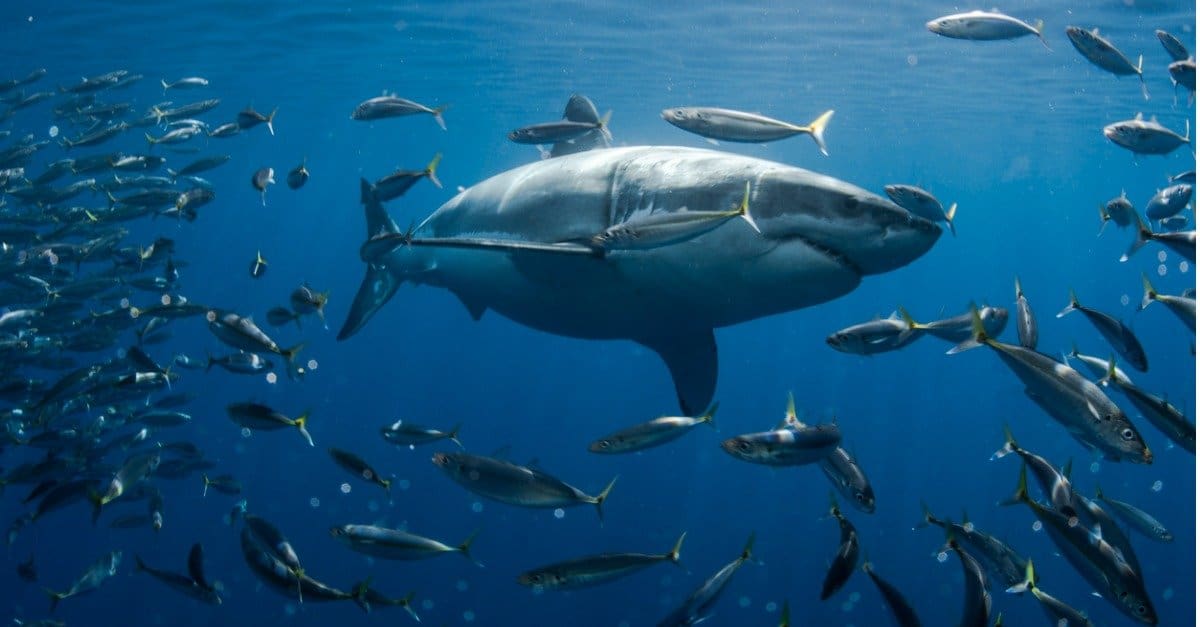
Great White Sharks eat large fish that other predators may not be large enough to take on. These include tuna, rays, and even other sharks. Adult Great White Sharks tend to favor sea mammals, including dolphins, seals, otters, and some whales. They also go after seabirds and sea turtles. Amazingly, scientists have found that individual sharks exhibit their own preferences for different types of food. Their preferred meals also vary based on what is available in their environment.
Reproduction And Lifespan
Great white sharks give birth to a live baby shark that is usually around 4 feet long.
©iStock.com/atese
Female White Sharks gestate their young for around a year. They are born live, like other sharks. When they are born, baby White Sharks are around 4 feet long. They grow around 10 inches each year until they reach adulthood. Males reach adulthood around 26 years while females can take as long as 30 years or more.
Great White Sharks can live for 60 years, possibly more. Some of the oldest and largest specimens found were around 50 years old. Tracking these sharks tells scientists more about their lifespans in the wild. Because they live so long and take so long to reach adulthood, changes to their habitat and overfishing can cause significant damage to the Great White Shark population.
In Fishing And Cooking
It is illegal to fish for White Sharks, as they are a protected species. Not only can it cause harm to the shark population that has ramifications for the entire ocean ecosystem, but it can also result in hefty fines and even ongoing legal problems.
If you do catch a Great White Shark, you should release it as soon as possible. Do not try to take it to shore or onboard your boat. Great White Sharks are most often caught when fishing for other species. They can get tangled in the nets or go after larger bait. If you suspect that you are dealing with a White Shark, it is best to let the line go rather than risk getting hurt or hurting the shark.
Sharks were once caught and cooked in things like Shark Fin soup. It was considered a delicacy in Asian cuisine. It is illegal in many parts of the world. Instead, try one of the tasty alternatives that have been developed using sustainably sourced fish.
White Shark Pictures
View all of our White Shark pictures in the gallery.

iStock.com/Sefa kart
Sources
- WWF
- Smithsonian Mag
- National Geographic
- Fossil Guy / Accessed March 28, 2023