Quick Take
- Leafcutter ants harvest leaves they can't actually eat, so what is the real reason they're cutting them? See why leaves aren't the meal →
- Their underground farms span thousands of chambers, and keeping them clean requires an unexpected biological partner. Explore the underground farms →
- These ants have held an agricultural monopoly for longer than most species have existed, and here is how they pulled it off. Discover their ancient agriculture →
- The fungus isn't just food. It does something for the ants that they are completely incapable of doing themselves. See what the fungus provides →
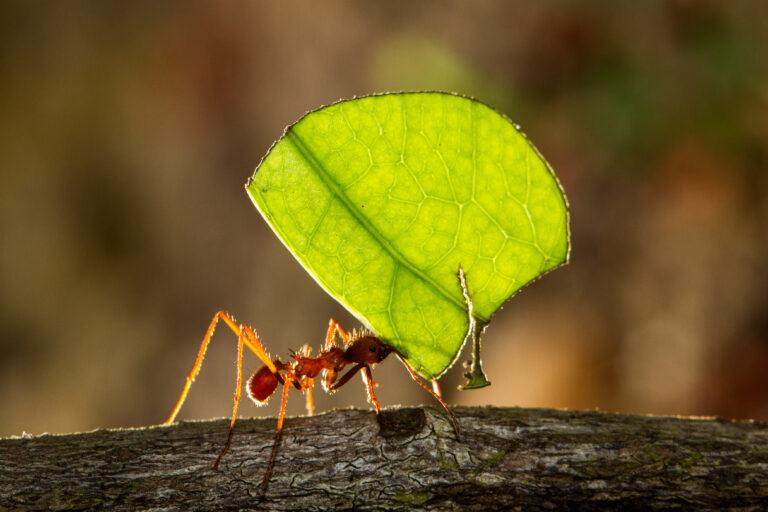
Farming isn’t a human-only behavior. Leafcutter ants farm fungus as one of their primary foods, by using pieces of leaves. This YouTube Short by @EAGLECAM-x2g shows these ants carrying the leaves back to their farm.
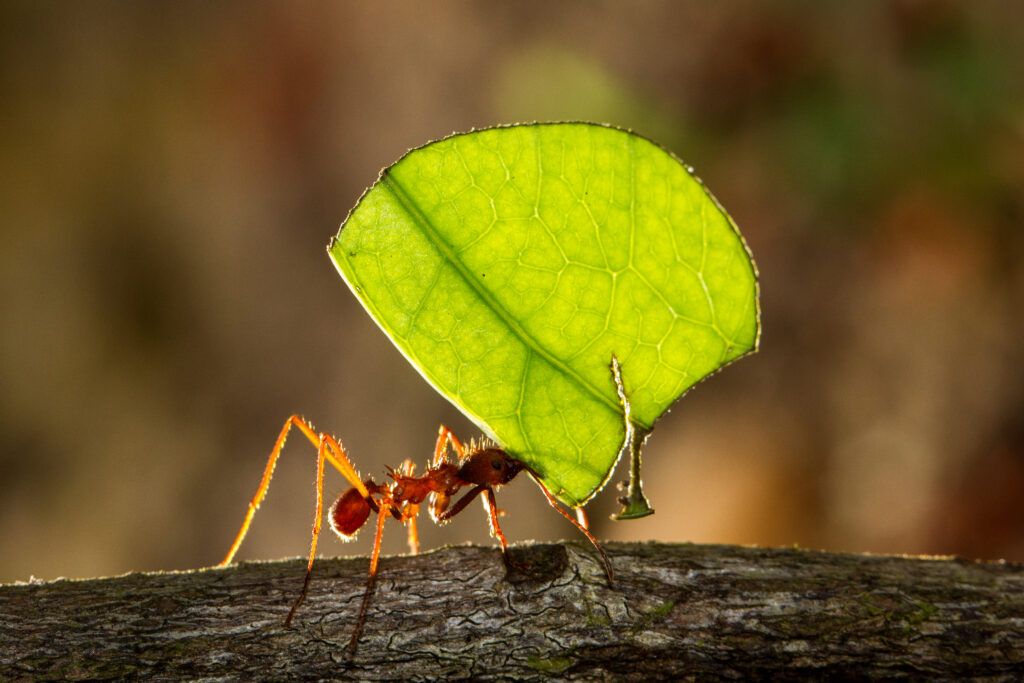
A leafcutter ant can carry loads equivalent to a human being carrying a car.
©Ken Griffiths/Shutterstock.com
Leafcutter Ant Farm
Leafcutter ants are some of the tiniest farmers on Earth. They grow underground fungus that feeds the whole colony. As their name suggests, these ants cut pieces of leaves from living plants and carry them to their nests. The workers then process the leaves. This includes cutting them into smaller pieces, cleaning them, and incorporating them into their underground gardens. The leaves then become compost for their fungal crop. The fungus breaks down the compounds inside the plant material so that the ants can eat them, though scientists continue to debate the extent to which the fungus metabolizes specific components like cellulose. Since these ant gardens are susceptible to other fungi and microbes, they keep them extremely clean. They often groom and maintain their gardens by removing unwanted fungal growth.
An interesting part about these ant gardens is that they are underground. Leafcutter colonies can have thousands of interconnected underground fungus chambers, with different areas containing different stages of the growing process. Rather than maintaining one simple pile of fungus, they actively farm with proper infrastructure. They don’t do this alone either. Leafcutter ants have a bacterial partner called Pseudonocardia. This bacterium lives on the ants’ bodies and produces compounds that suppress unwanted fungi from growing. Over time, the ants, bacteria, and fungi all become interdependent on each other. This relationship highlights how evolution can allow multiple species to thrive through mutually beneficial partnerships.