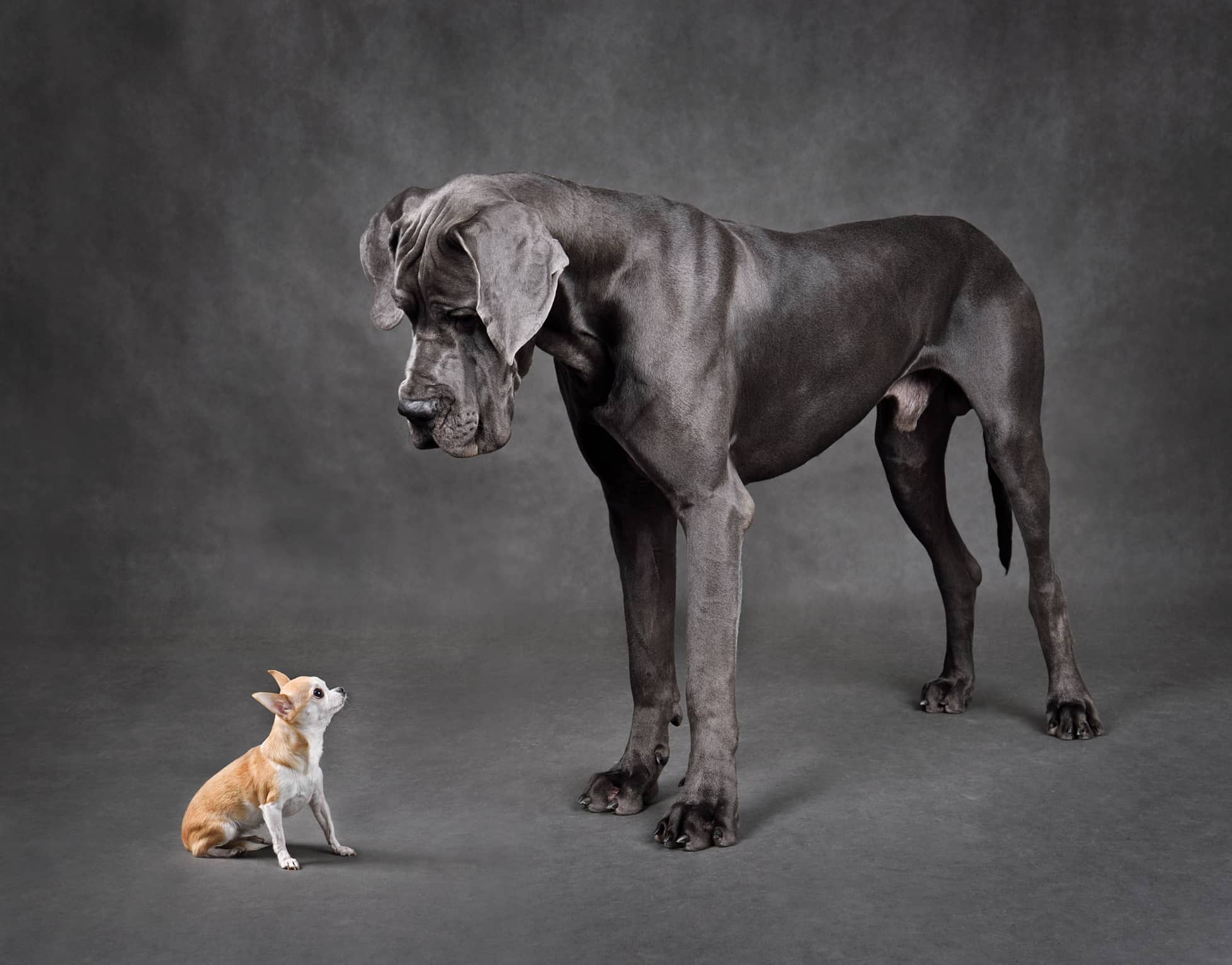

“Small dog syndrome” is a term used to describe behavioral problems that often occur in smaller breeds. Due to their size, small dogs are often treated differently from larger dogs. They may be more pampered and allowed to get away with more bad behaviors.
For instance, a small dog may not be reprimanded for begging, while a German Shepherd is more likely to be corrected. It’s easy to ignore a begging Chihuahua – not so much a Great Dane.
However, this difference in training and socialization increases a small dog’s likelihood of developing behavioral issues, such as:
- Aggression: Many small dogs are carried and not allowed to interact with the world like a larger dog. Therefore, they’re more likely to develop confidence problems and the aggression that often comes along with them.
- Resource Guarding: Small dogs are more likely to guard “their” resources, likely also due to confidence problems (though this can also stem from a lack of socialization). Sometimes, people are included in this category.
- Attention-seeking: Smaller dogs are often kept in their owner’s laps and arms a lot. When they become adults, this often translates to the dog always wanting to be in a lap or held. They may become clingy and bossy.
- Bad House Manners: Many smaller dogs develop bad house manners without proper training. They may bark or even growl at visitors, for instance.
Not all small dogs have these behaviors. Instead, they are a result of how the dog is raised, though some dog breeds are more prone to these behaviors than others. Larger dogs can also develop these problems.
Luckily, this also means that preventing and fixing small dog syndrome often involves simple fixes in how the dog is raised and trained.
How to Prevent Small Dog Syndrome

All dogs can develop the behavior problems associated with small dog syndrome. It’s all about how the dog is raised.
©Abby Blumhardt/Shutterstock.com
You can avoid many of the behavioral issues grouped together as small dog syndrome by properly training and socializing your canine. You should aim to provide very consistent training for your smaller dog, just like you would a big dog. Get them enrolled in puppy classes (or adult training classes) and teach them the basic commands.
A great example is leash walking. A bigger dog can easily pull their owner around, so a lot of priority is put on walking correctly on a leash. However, smaller dogs just don’t have the capacity to pull very hard. Some aren’t even put on a leash at all. They may be carried instead.
This is a mistake. A small dog should be taught how to walk properly on a leash and allowed to walk on a leash. This simple training teaches obedience and builds the dog’s confidence.
You should also socialize your dog regularly. Puppy classes can help them to some extent, as your dog will be able to interact with other people and puppies. However, don’t only rely on classes to socialize your canine. Take them to dog parks and stores (and let them walk on a leash).
Don’t reinforce bad behavior, even if it is “cute.” Many little dogs end up yappy, as they are often rewarded for barking. Avoid bad habits by setting clear boundaries early on. Don’t let your dog’s smaller size dictate what is acceptable and what isn’t. A smaller dog should not beg, just like a larger one.
Smaller dogs also need plenty of exercise, but many sadly overlook this. If your dog has too much energy, they may be hyperactive and boisterous, which can lead to all sorts of behavioral problems.
Fixing Small Dog Syndrome
If your dog already has some of these behavioral problems, we may be in the realm of fixing – not preventing.
Luckily, the process is very similar. Fixing takes longer, as you have to compete with bad habits.
Start by teaching your dog basic obedience if they don’t know the basic commands. Even if they do, now might be a good time to revisit them. If your dog has never been in obedience classes, consider enrolling them in group classes.
Start socializing your dog more, even if you think they’re already well-socialized. Practically all of the behavioral issues associated with small dog syndrome can be corrected with socialization. Take your dog everywhere dog-friendly you can think of, preferably several times a week.
Start setting consistent rules right away. Ensure that everyone in your household is on board. Your dog will likely buck against the new boundaries for the first few days. However, these first few days are some of the most important, so don’t give in.
Of course, stop reinforcing negative behaviors, as well. For instance, don’t give your dog attention when they start excessively barking. Don’t give them food for begging.
Try to introduce your dog to a consistent exercise schedule if they aren’t getting exercised currently. Often, many problem behaviors are due to the dog having too much pent-up energy.
Sometimes, you may need professional help. If your dog really can’t be with other dogs due to aggression or fear, talk to your local dog trainer about private classes. These classes allow the trainer to work on the specific issues you’re having, and they should help your dog work up to group classes.
The first week or so is the hardest for everyone. However, dogs adapt to changes relatively quickly, and your small dog will learn the new household boundaries if you’re consistent.