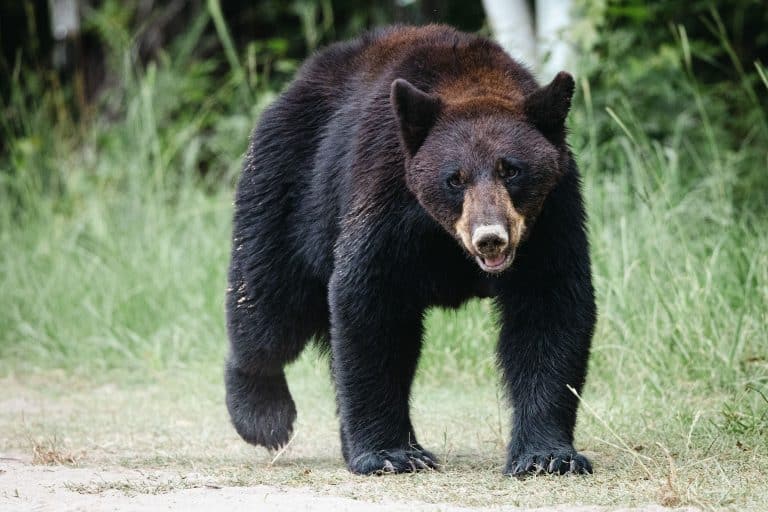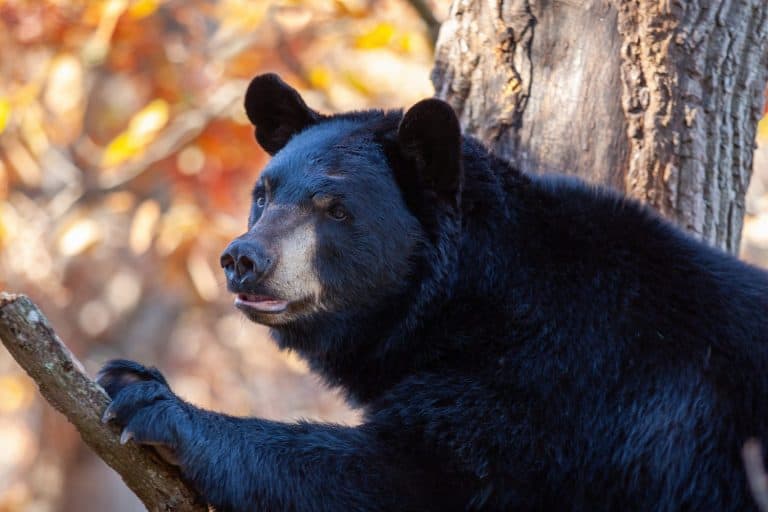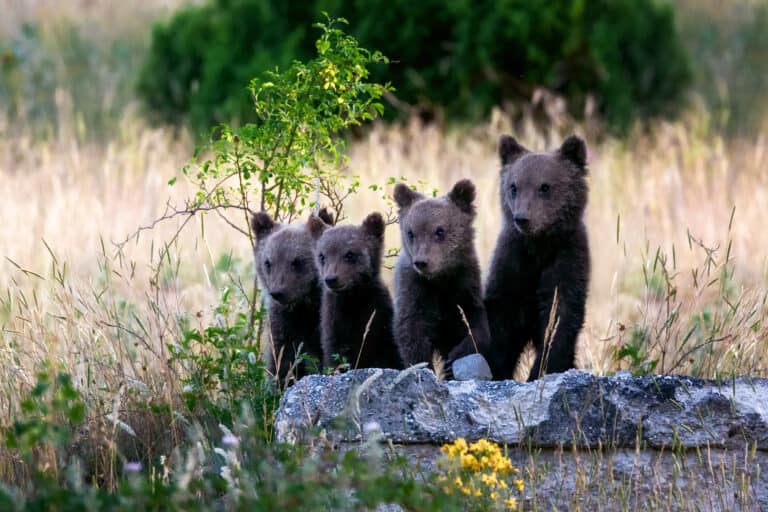

In the United States, there are about 300,000 black bears in the wild. In Wisconsin alone, experts estimate there are 24,000. North American black bear sightings, though, are rare. These large bears are rather shy but have ventured into neighborhoods looking for food. Most of the black bear population in Wisconsin lives in the northern part of the state. Although not the largest bear species in the United States, black bears can reach up to 900 pounds, although most black bears are about a third of this size or less. Can you guess the size of the largest black bear ever harvested in Wisconsin? Follow along to find out.
What Is the Largest Black Bear Ever Taken in Wisconsin?
How Records Are Calculated
In 1887, with growing concerns over the possibility of losing hunting privileges and wildlife populations such as bison and elk being hunted to the brink of extinction, Theodore Roosevelt and others founded the Boone and Crockett Club for the purposes of conservation and wildlife management. This group also sets guidelines for and maintains trophy hunting records for big game animals, including the black bear.
So, when it comes to determining what garners a trophy record for black bears, the focus is not on the body size or weight of the animal but rather on its skull size. Scores are tallied based on the greatest length and greatest width of the skull measured to the nearest 1/16 of an inch and then added together; there is no reduction of fractions. A score above 21 for the black bear is in all-time record territory.
The score chart for the black bears states the following:
- Greatest length is measured between perpendiculars parallel to the long axis of the skull, without the lower jaw and excluding malformations
- Greatest width is measured between perpendiculars at right angles to the long axis
Consequently, hunters do not always report an animal’s weight as it is not a factor taken into account by Boone & Crockett for the organization’s trophy hunting records.
The Largest Black Bear Ever Taken in Wisconsin
The year was 2010, and Wade W. Brockman stumbled across the remains of what was later confirmed to be a black bear in one of his crop fields. According to Boone and Crocket’s official records, the skull scored 23-5/16 inches.
The second-largest black bear on record with Boone & Crockett scored 23-3/16, but it also has the distinction of being the largest black bear ever hunter-killed in the state. The bear was harvested by Kurk A. Mackrill in Clark County in 2011.
About Black Bears
North American black bears are the most common bears in North America, but they are also the smallest. These widely distributed animals are listed as Least Concern on the IUCN Red List. They live for about 18 years in the wild, and a lot more in captivity.
Encounters in the wild between black bears and people are rare, and attacks on humans even rarer. They are usually wary of people, but it’s best not to rely on that. If you do come face-to-face with a black bear, do not turn your back to it. Make loud noises and attempt to make yourself appear larger by putting your arms in the air. Keep your eyes on them and walk away. Typically, they will run away.
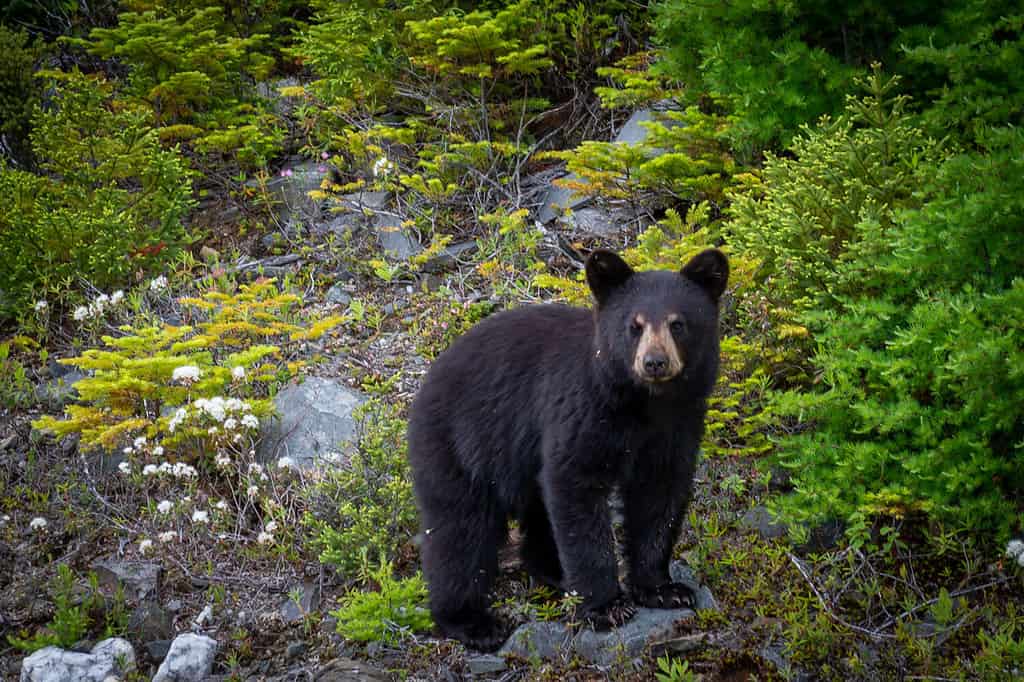
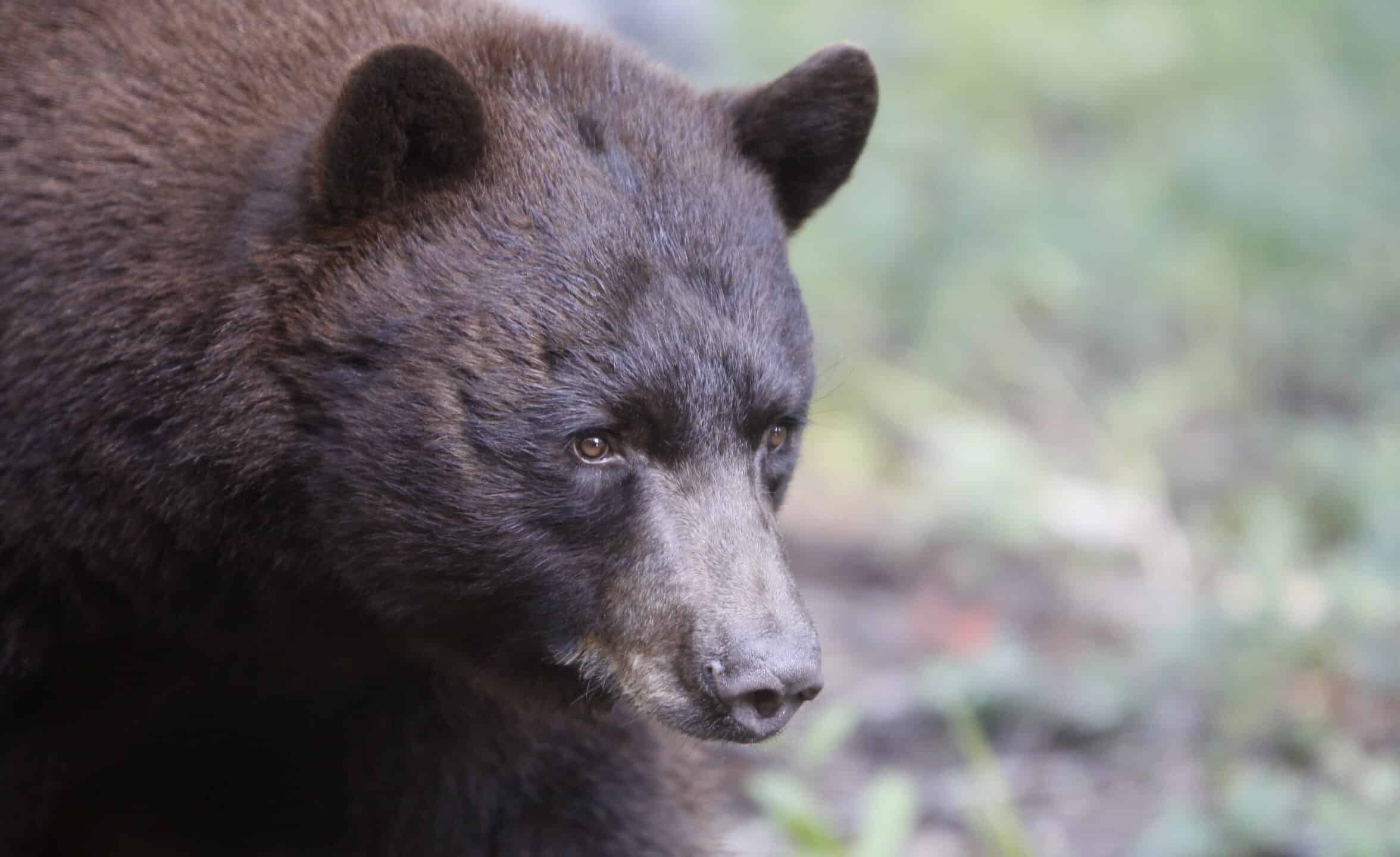
North American black bear attacks on humans are rare.
©Dolores M. Harvey/Shutterstock.com
Appearance and Size
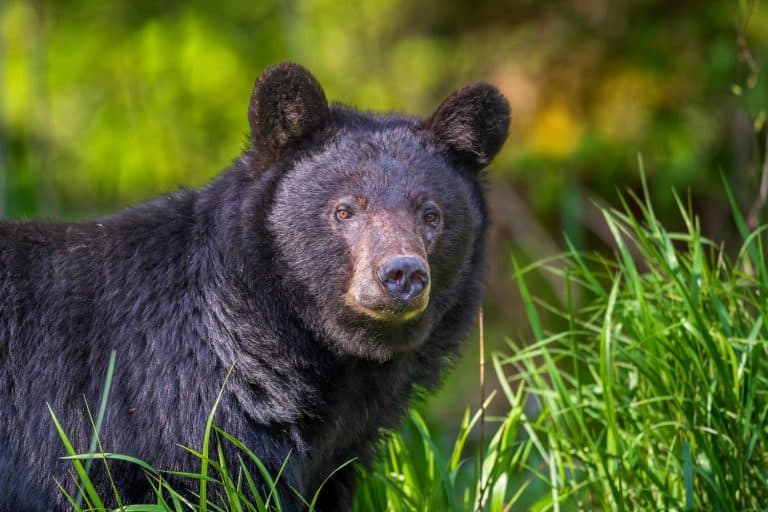
Although black bears are called black bears, they aren’t entirely black. Instead, most North American black bears have cinnamon-colored coats, while others have black and red coats. The thickness of their coats varies depending on the season. The season though also affects their weight. Still, black bears are large. A black bear’s weight has a large range, anywhere between about 90 and 550 pounds. Females are a lot smaller than male black bears. Their size also depends on the region. In California, male black bears on average weigh 190 pounds; n north-central Minnesota, they typically weigh about 276 pounds.
Distribution and Habitat
While North American black bears are listed as Least Concern on the IUCN Red List, their population and range have decreased by a lot. Previously, black bears populated nearly all forested areas in North America. Now, they are only found in some dense forests. Some black bears though may venture into neighborhoods alongside forests looking for food or out of confusion from habitat destruction.
Black bears adapt well to different environments. They can live in mountainous or flat terrain. However, all black bear habitats have large quantities of edible flora. The majority of black bears in the United States live in mountainous areas.
Diet
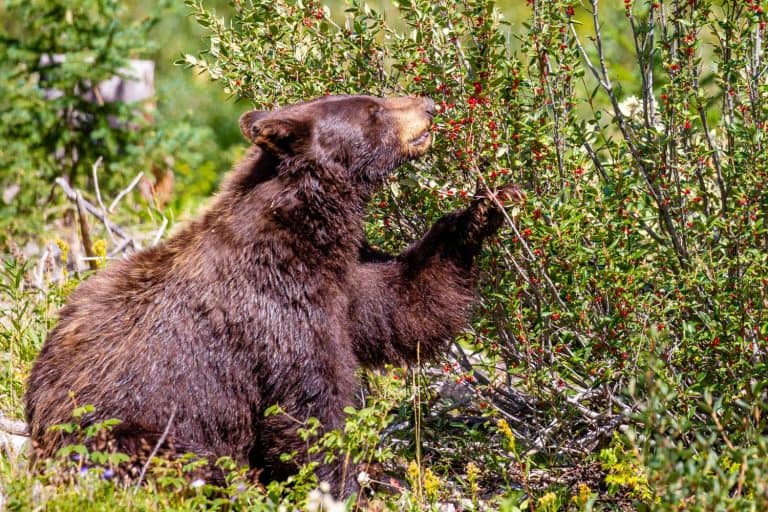
So, what do black bears eat? These large mammals mainly consume vegetation, not meat. They mainly forage for vegetation, like roots and bulbs, which are found by digging. About 80% of a North American black bear’s diet consists of vegetation. However, the specific vegetation depends on the region.
Apart from vegetation, black bears eat insects, fish, and white-tailed deer (although, not as common). Did you know that the stereotype of a bear eating honey has some truth to it? Black bears love honey. Even while getting stung, black bears will continue to eat honeycombs.
Some black bears also hunt for large animals, like moose, but this is rare. Black bears typically stick to easier and smaller prey.
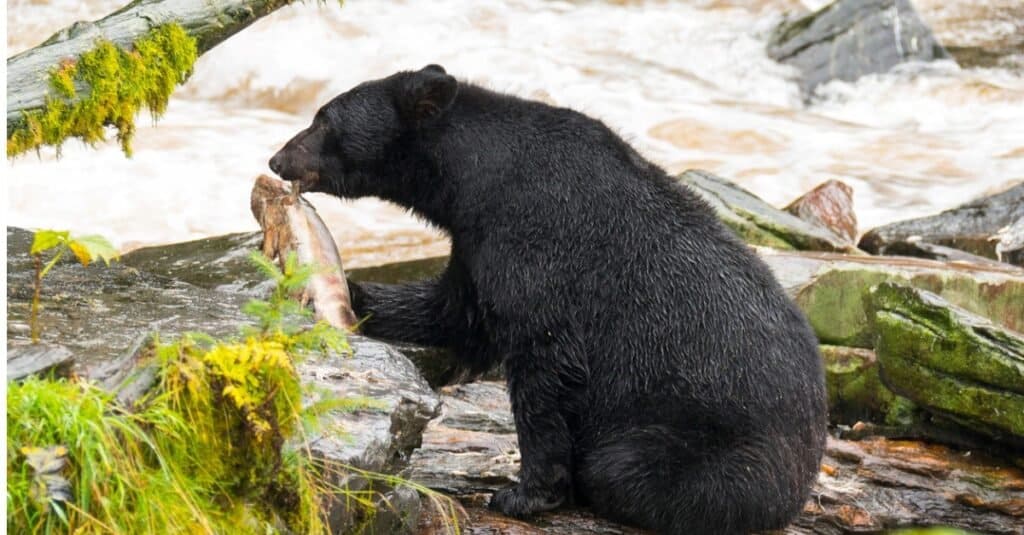
North American black bears have a wide diet. They eat insects, vegetation, and fish.
©iStock.com/ElliotHurwitt
Predators
North American black bears have few predators. They are massive creatures with powerful claws and an intense bite force. The bite force of a black bear is up to 800 PSI. Young black bears are vulnerable to prey, although mother black bears are excellent protectors. Sometimes, young or sick black bears are hunted by mountain lions, wolves, and brown bears. However, people are the main predator of a black bear.