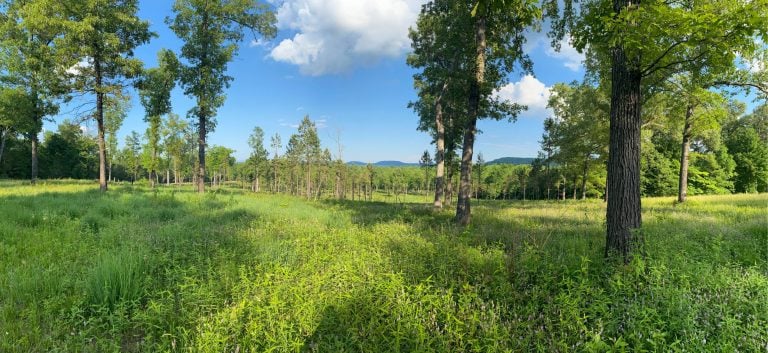

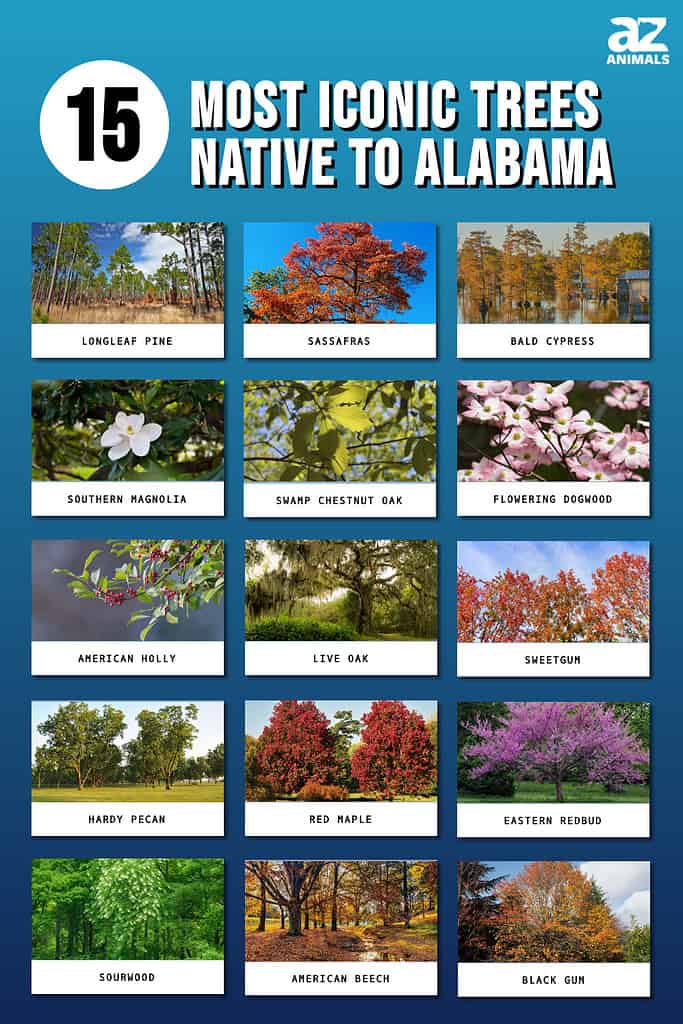
Alabama offers a ton of topographical diversity. Bordered by Tennessee, Mississippi, Florida, and Georgia, this state has a variety of regions. From rivers to prairie lowlands, it is no surprise that Alabama has a large variety of trees. In this article, we cover the 15 most iconic trees native to Alabama. Whether it is a unique physical characteristic, interactions with wildlife, or an interesting fact, these trees have something that makes them stand out.
1. Longleaf Pine (Pinus palustris)
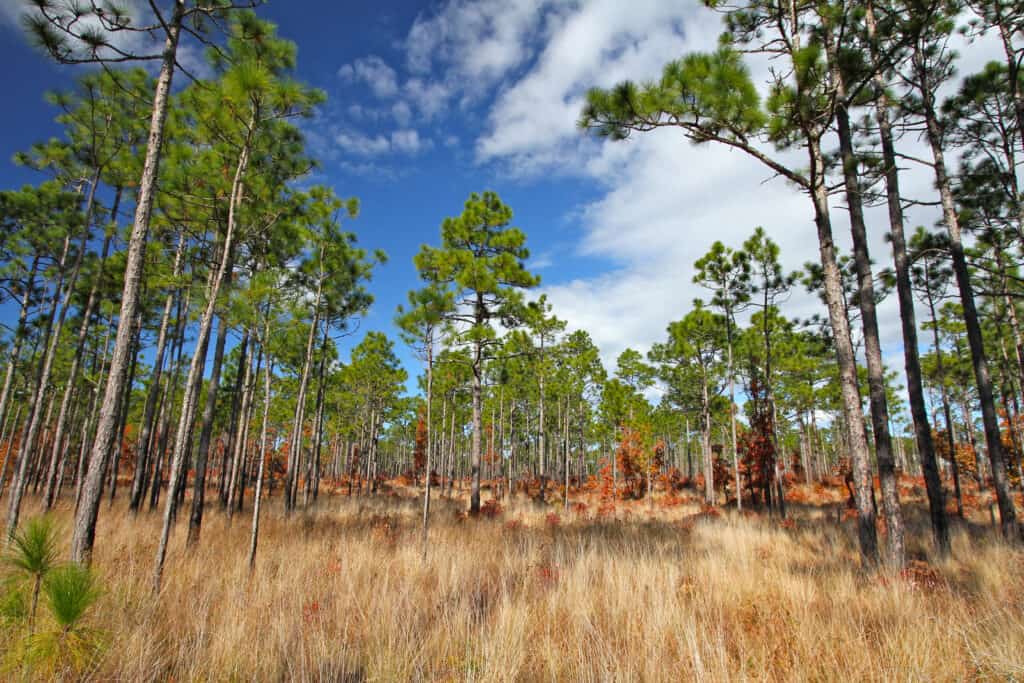
Longleaf pine trees are the state tree of Alabama.
©Ryan McGurl/Shutterstock.com
As the state tree of Alabama, the longleaf pine definitely deserves its spot on the list of top iconic trees native to Alabama. Longleaf pines used to be common across the entire state. The only places they were not common were the northern portions of the state. Now, they are harder to find. According to the Encyclopedia of Alabama, the longleaf pine forest is now reduced to an estimated 2.7 million acres. Urban development, containing fires, and logging are among the reasons for the rapid reduction of these trees. Human activities have caused such a huge decline in longleaf pine growth that experts have deemed the entire forest ecosystem endangered. A large variety of plants and wildlife has begun to dwindle in population because of the decline of longleaf pines.
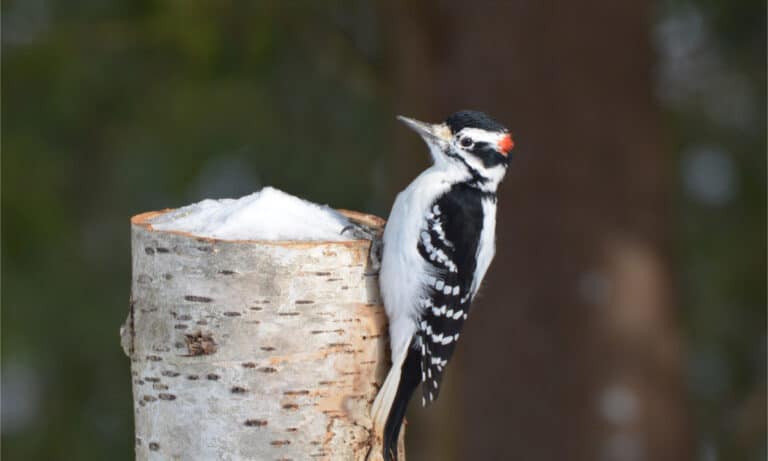
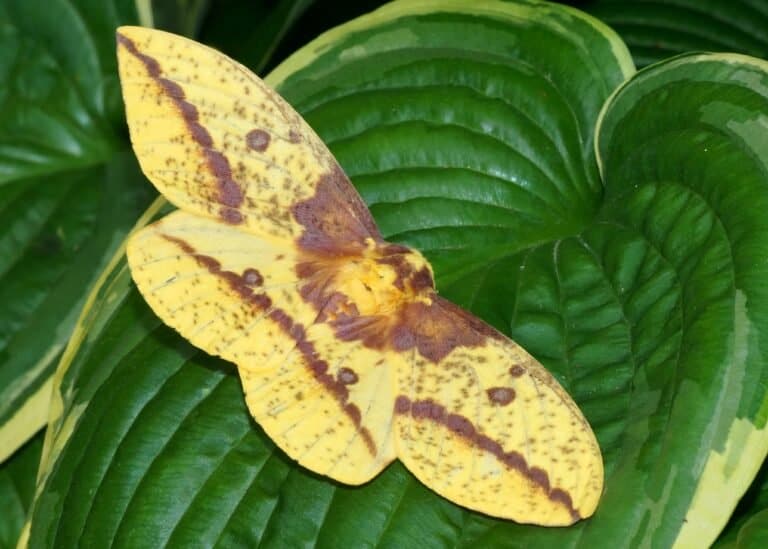
As their name suggests, longleaf pines have long, slender needles that can range from 8-18 inches. They are tall trees, ranging from 80-100 feet tall. Longleaf pines are renowned for their strong, durable tree bark that is used for lumber, tar, and turpentine. In addition, the longleaf pine is home to a variety of wildlife. It provides shelter and food to creatures such as the imperial moth, foxes, quail, and even the endangered red-cockaded woodpecker.
A special feature of the longleaf pine is that it is more fire-resistant than many other tree types. While not fireproof, it does have thick bark that helps insulate and protect it from heat. This native tree’s long needles also protect the buds within by absorbing and deflecting the heat of the fires.
2. Sassafras (Sassafras albidum)
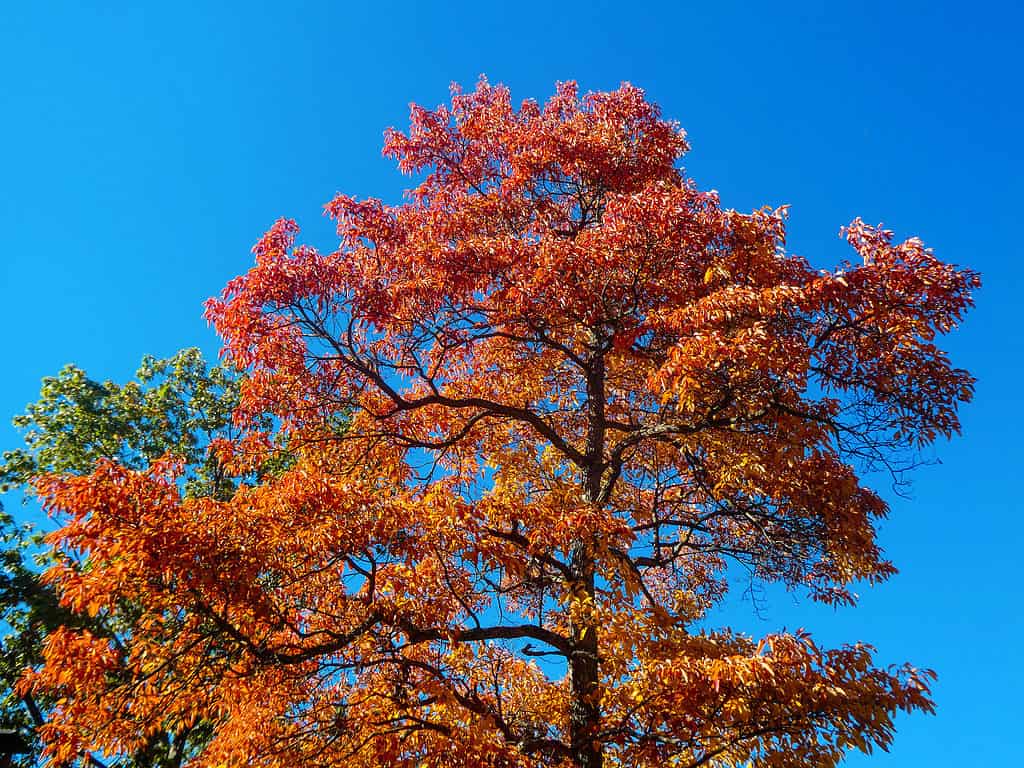
Humans have found a use for all parts of the Sassafras albidum plants, including its leaves, stems, bark, roots, wood, flowers, and fruit.
©ForestSeasons/Shutterstock.com
Apart from its interesting name, the sassafras tree is also interesting in its physical appearance. Ranging from 40-50 feet high, the sassafras’s beautiful green leaves come in a variety of three shapes. The tree produces lobed, oval, or mitten-shaped leaves. While lovely to look at in the summer months, the sassafras tree is even more stunning to behold in the autumn months with its remarkable shades of red, yellow, and orange. This tree also sprouts aromatic yellow flowers throughout the months of April and May.
The sassafras tree is not only pretty to look at, but it also plays a vital role in its environment. It provides food to a variety of animals. From white-tailed deer, who nibble on the leaves and twigs, to rabbits who feast on the bark. This iconic tree also plays a role in our environment. From using its wood to make furniture to extracting oils from the roots for perfume. In the past, people even used extracts from the roots to add flavor to root beer!
A unique property of the sassafras tree is that it has been used to aid a variety of medical conditions. Teas made from its berries treat nausea. Also, poultices made from its roots treat wounds; this plant packs a powerful healing punch.
3. Bald Cypress (Taxodium distichum)
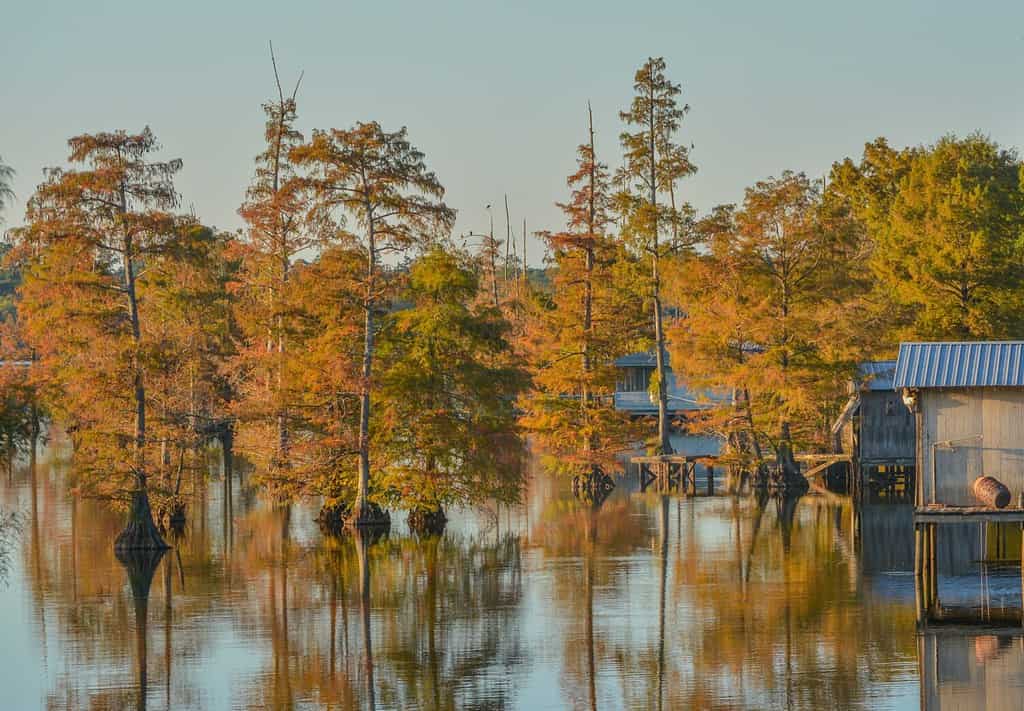
A distinguishing feature of the bald cypress tree is the large mounds that it often sprouts. These mounds appear like knees.
©Norm Lane/Shutterstock.com
This iconic native tree in Alabama can grow to be 150 feet tall, but that is not its only distinguishable physical attribute. These trees often sprout large mounds that some say appear like knees. In reality, they are the roots of the tree growing horizontally outward. These growths are known as cypress knees. Another unique characteristic of this tree is that it loses its needles each winter. Thus drawing the connection to its name of being bald.
The bald cypress tree provides a variety of resources for wildlife. For example, its seeds provide nourishment to animals like squirrels and wild turkeys. Whereas its distinctive domes provide a safe haven for animals like frogs to breed. Bald eagles will often make their nests in these trees!
Besides having a unique root system that allows it to grow in swamps, this tree is also resistant to decay and disease. This makes it an ideal wood to use for construction. Also, growing in and around sources of water, such as swamps and rivers, allows the trees to help with the issue of erosion.
4. Southern Magnolia (Magnolia grandiflora)
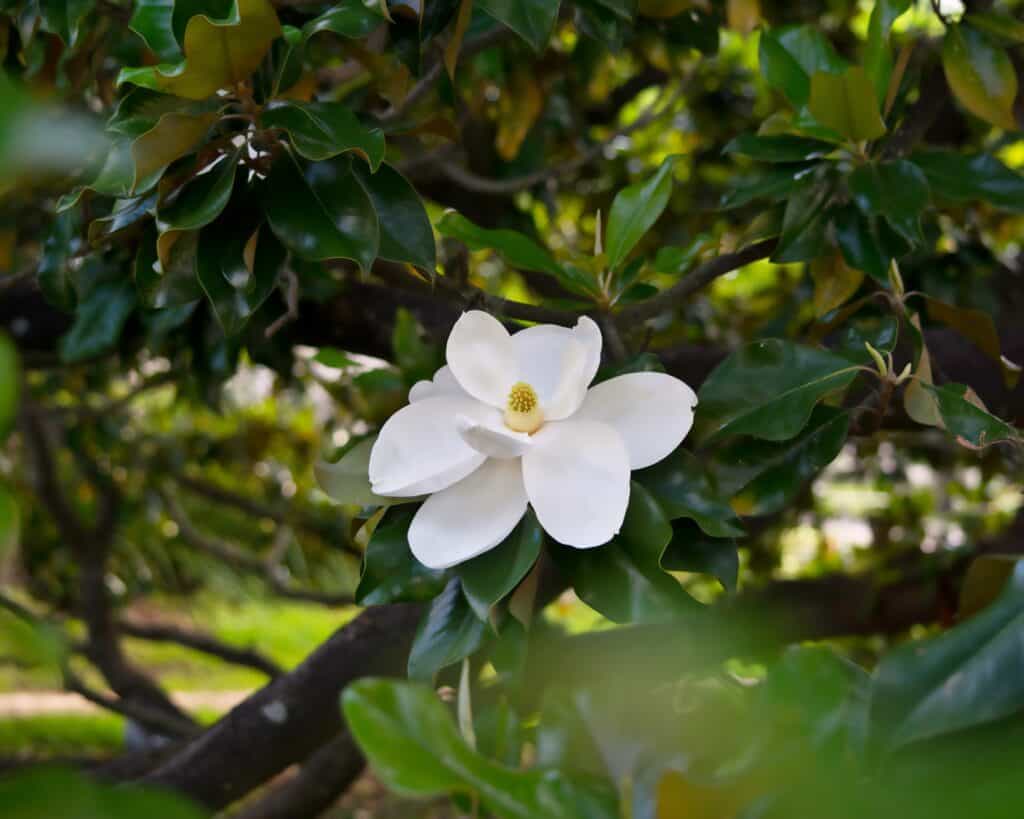
Southern magnolia flowers are well-known for their sweet, lemony fragrance, which is often used in aromatherapy to induce a calm feeling and atmosphere.
©iStock.com/Dwbenjam
When asked to picture an iconic southern tree, many people would picture the southern magnolia tree. This iconic, native tree has been featured in many places in film and literature. Some would even argue that it is symbolic of the South. This tree grows between 60-100 feet high, and it boasts fragrant white flowers among its many dark green leaves.
Apart from offering people a shady place to sit during the hot summer days; the southern magnolia also offers food and shelter to a variety of wildlife. Squirrels, opossums, and wild turkeys are among the many who gather their nutrients from these trees, as well as a wide array of insects. One animal that may not benefit from this tree as much is the deer. This is due to the fact that this tree happens to be deer-resistant. This can help make it an ideal tree to use for ornamental purposes in home landscaping and in parks.
Besides being pretty to look at, this tree offers more benefits. The magnolia also helps alleviate or aid in a variety of medical conditions. High blood pressure, heart disturbances, and discomfort in the abdomen area are just a few of these conditions.
5. Swamp Chestnut Oak (Quercus michauxii )
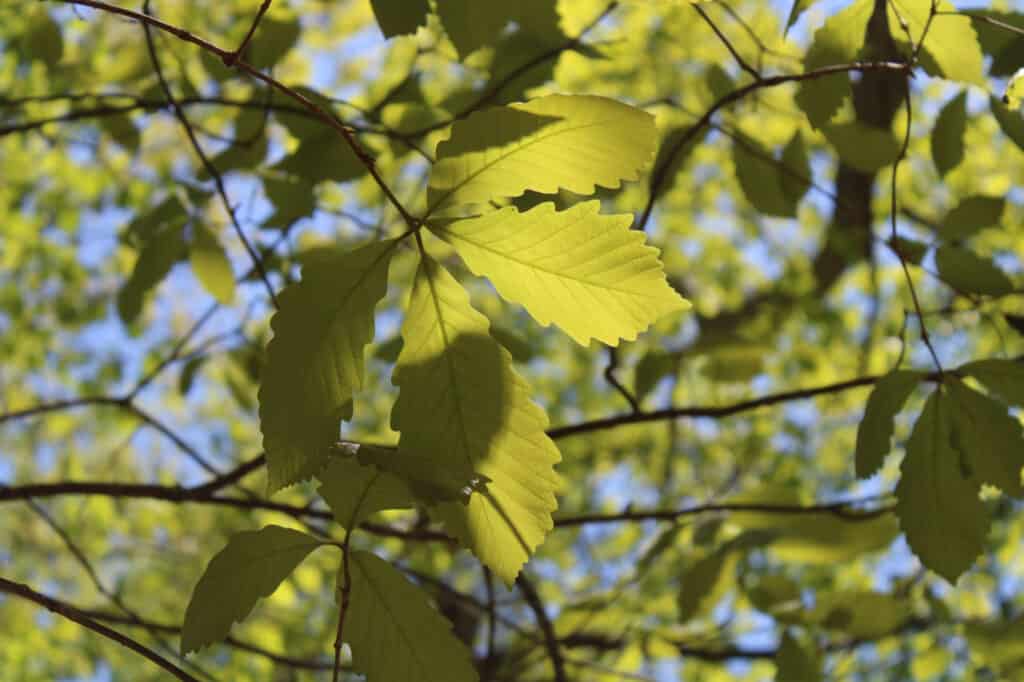
Attractive and producing large acorns, chestnut oaks have distinct bark patterns.
©Roca Mharas/Shutterstock.com
This iconic, native oak tree is found across Alabama. Particularly in swamp regions or along river floodplains. Apart from reaching heights up to 100 feet tall, another distinguishing characteristic of this tree is its bark. Unlike the typical brown bark on most trees, the bark of these majestic oaks is light gray in color and rough to the touch. Their leaves are usually dark green, but they boast beautiful red and orange colors in the autumn.
This tree is often referred to as the cow oak because cows enjoy the acorns that the trees produce. In addition to cows, this tree helps out other wildlife, such as squirrels, wild hogs, and white-tailed deer. The squirrels and this tree have a mutually beneficial relationship. As the tree provides acorns for the squirrels, they often hoard more than they can consume. Leaving those extra acorns to germinate and grow into more, future swamp chestnut oak trees.
These trees don’t produce their beloved acorns until they reach about 20 years old. While that may seem like a long time to wait, it is still early on in these trees’ lives. Their average lifespan is usually around 200 years. Something that makes this tree unique is that it is one of the most valuable trees for timber. Also, although it does well in swamps, as its name suggests, it also does well on the streets of Alabama. That is because once it is an established tree, it does not require irrigation, making it an iconic tree of Alabama.
6. Flowering Dogwood (Cornus florida)
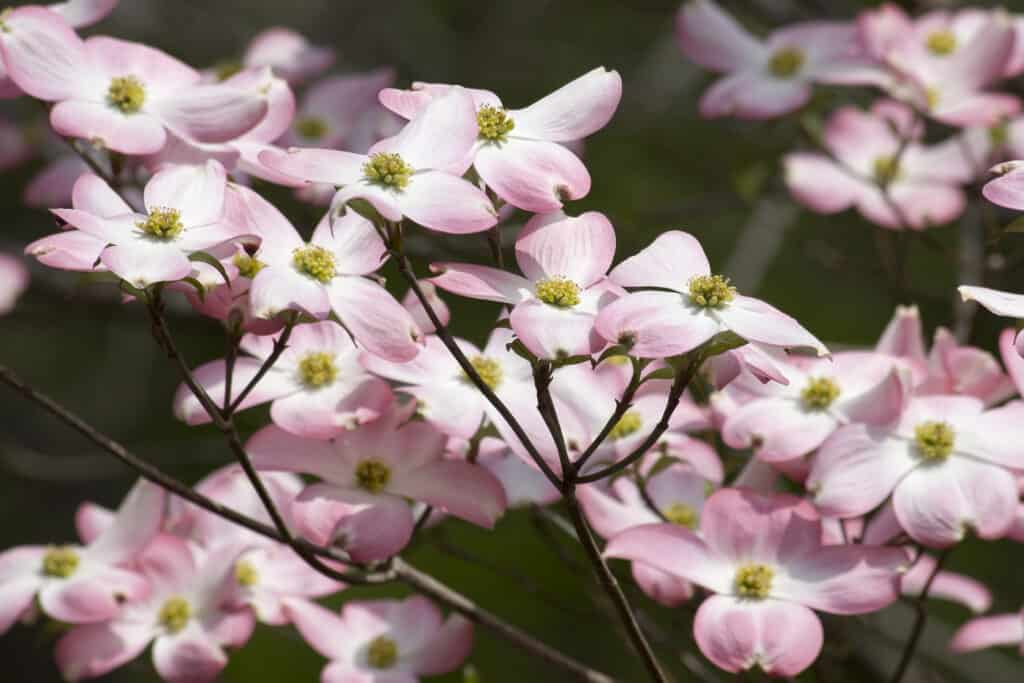
The flowering dogwood has many common names such as Indian arrowwood, white cornel, and false box.
©iStock.com/JillLang
The flowering dogwood is a smaller tree, only between 15-30 feet tall, and bushy in appearance. One of the flowering dogwood’s most distinctive features is its beautiful white flowers. Due to their beauty, and their ability to grow almost anywhere, they are one of the most popular trees among gardeners.
The fruits of this native tree are a valuable food source for a variety of birds, as well as chipmunks, black bears, skunks, and more. Other animals gather nutrients from their bark and leaves.
There are many uses for this tree, both modern and old. Some manufacturers make wood into a specific variety of items such as jewelry boxes and golf club heads. Additionally, people can use pieces of the tree, such as the roots and bark, as a substitute for quinine.
7. American Holly (Ilex opaca)
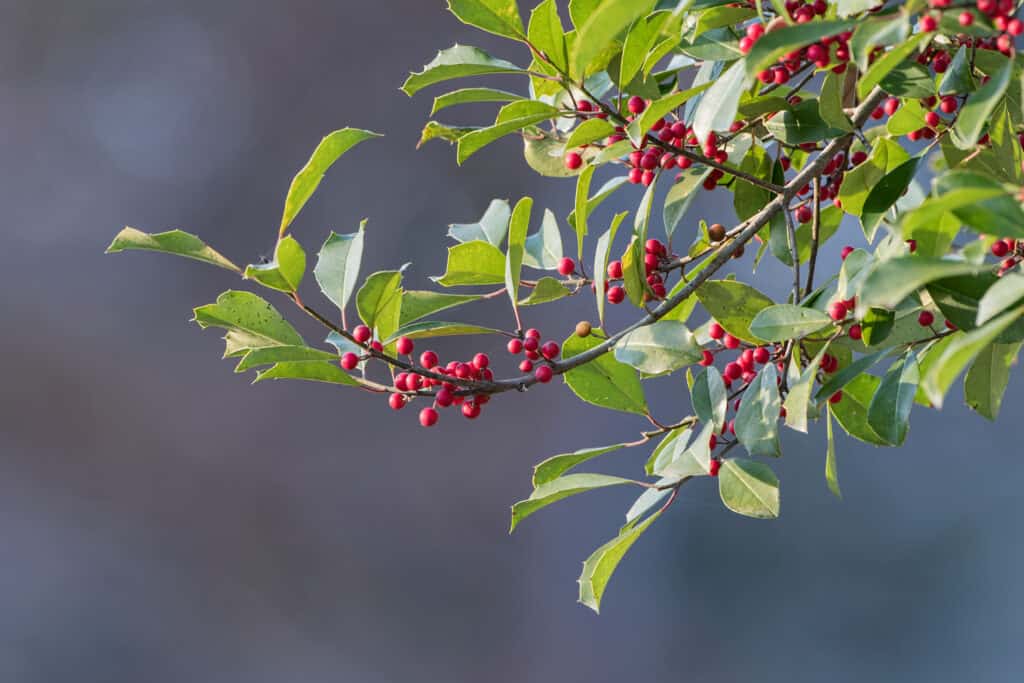
American holly leaves are well known and are often associated with Christmas.
©Bonnie Taylor Barry/Shutterstock.com
Although this tree often invokes images of Christmas and snow-covered fields, it is found across the warm, southern state of Alabama. American holly is an evergreen tree, meaning that it keeps its beautiful green leaves all throughout the year. The American holly is considered a dioecious plant. This means that the trees are distinctly male or female, rather than containing both parts in the same tree. Only the female holly trees produce their well-known red berries.
The juicy red berries and bright green leaves are some of the only colors you may see during the winter. They are also some of the only food available to wildlife during those cold winter months. Many birds, such as wild turkeys and songbirds, will use the berries as their main food source. Birds use the shrub of the tree for shelter during the autumn and winter months as well. Then, as the seasons switch to warmer weather, bees will feed on the sweet nectar of the flowers.
Holly has a lot of significance in a variety of different cultures. It is one of the most respected trees in Celtic mythology. People wore holly as a crown for good luck. The Druids also considered it a sacred plant, believing it brought fertility and eternal life. Today, holly often holds significance in the religion of Christianity. The leaves of a holly wreath represent the crown of thorns worn by Christ. It is one of the many reasons that it is so popular during the holiday season.
8. Live Oak ( Quercus virginiana)
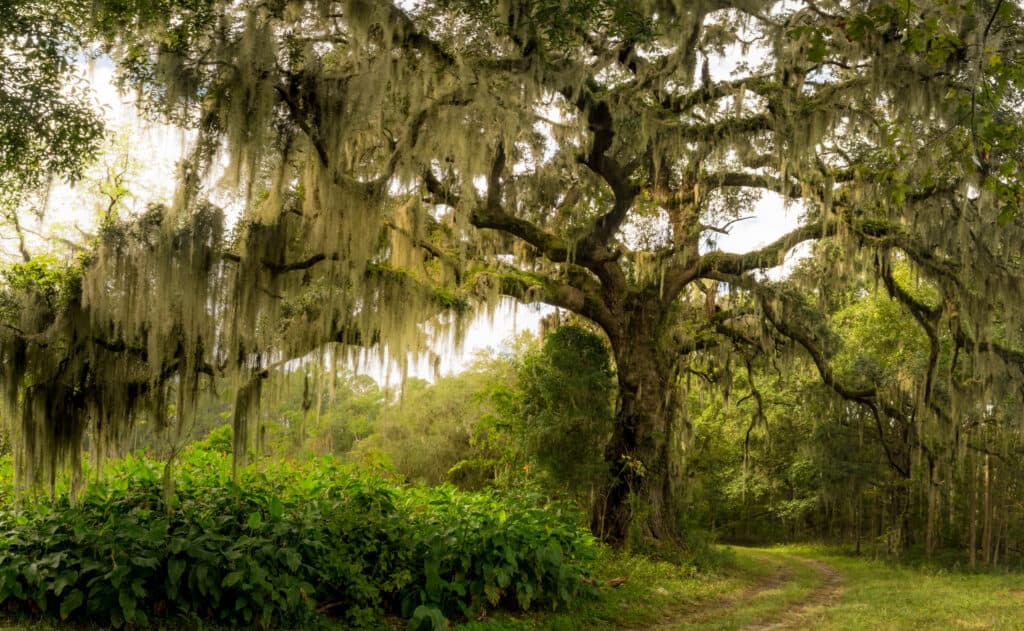
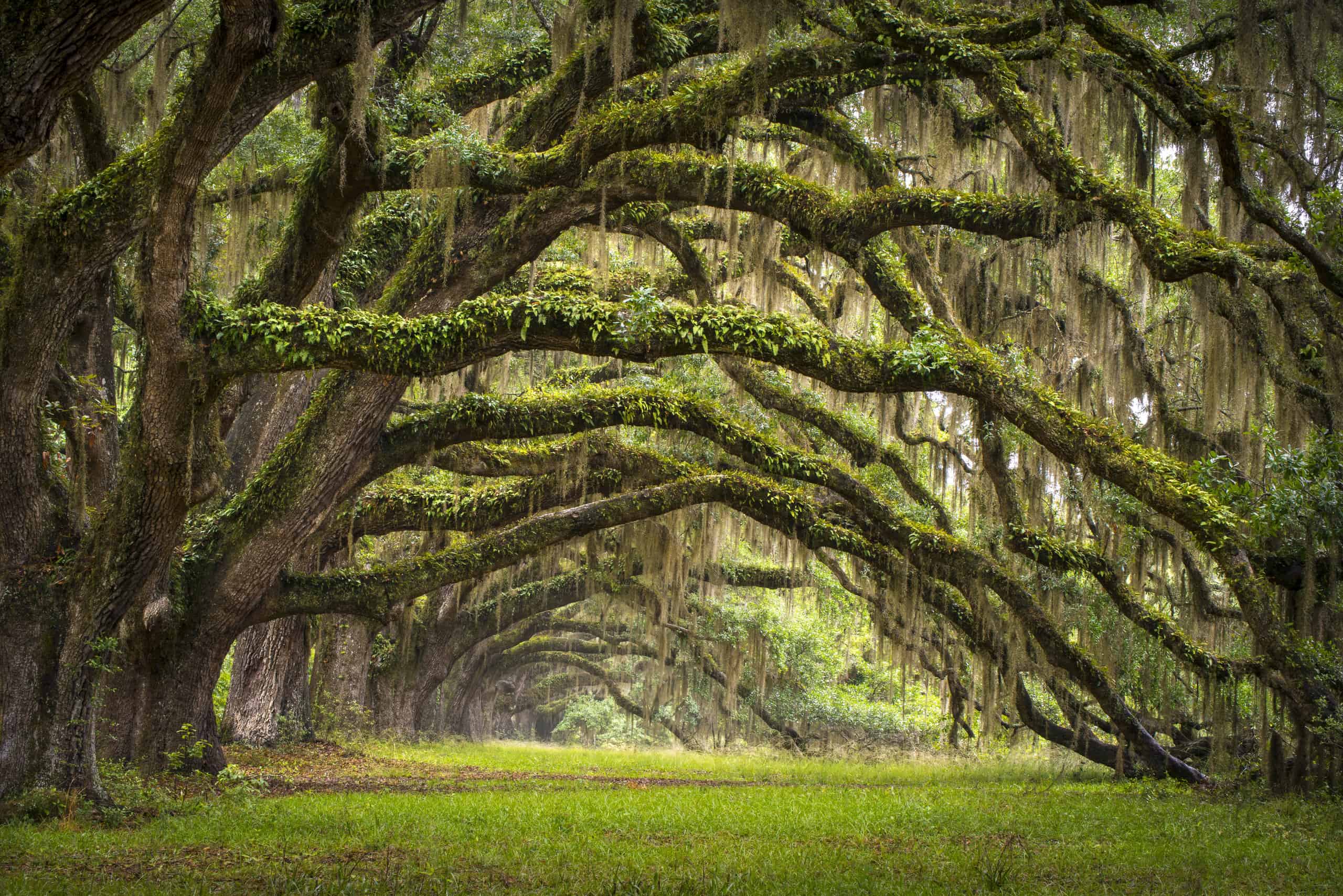
This iconic native Alabama tree has a large crown, which makes it easy to recognize. Their crowns can spread out to 80 feet wide.
©Serge Skiba/Shutterstock.com
These oak trees are an impressive sight to behold. Usually around 50 feet in height, these trees may not be the tallest but their expansive crown makes them iconic. Multiple, thick branches stem out from the single trunk and the crown of the live oak can spread out to about 80 feet. The large crown of this tree allows it to appear much larger than it is, which differs greatly from Alabama’s 15-foot dwarf oak tree.
Live oaks have quite an impressive lifespan, living for hundreds of years, easily. Their impressive lifespan is great for wildlife, as many birds and mammals rely on it for their nutrients. Species such as sapsuckers, mallards, and wild turkeys eat the delicious acorns that fall from the trees. Other species of birds use this tree as a great nesting space as well.
The live oak gets its name because, unlike other deciduous trees, this tree never quite looks dead. This tree is like an evergreen in the sense that it often keeps its green leaves throughout portions of the winter. However, the live oak tree will gradually lose and replace its leaves throughout the year, which makes it deciduous.
9. Sweetgum (Liquidambar styraciflua)
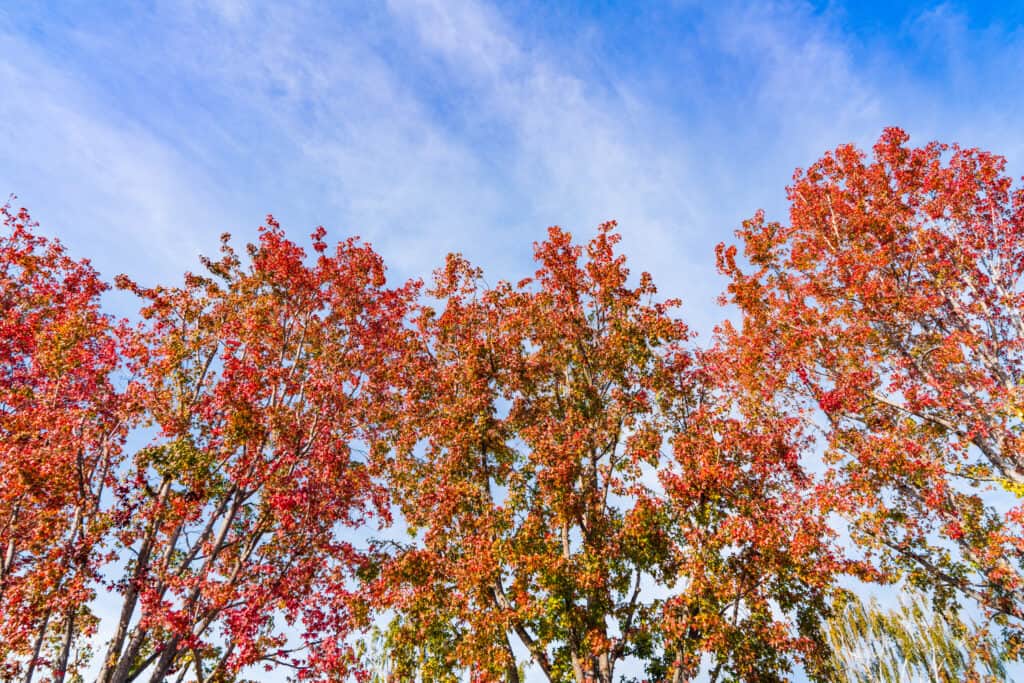
American sweetgum (Liquidambar styraciflua) trees turn bright orange and red during fall.
©iStock.com/sundry photography
Also known as the redgum tree, this tree usually grows to around 80 feet in height. It can be found across the entire state of Alabama. It also has an impressive crown that changes appearance throughout the seasons. Other distinguishing features of this tree are its star-shaped leaves and fruit that resembles round, spiky balls.
While the spikes on the fruit may be a deterrent for some, it is not for all. The spikes don’t stop animals like goldfinches, white-throated sparrows, and chipmunks from getting into the seeds inside for a nutritious snack. In addition, beavers also use the wood from these trees to help construct their dams.
The tree gets its name from the sap that oozes from the bark. When that sap hardens, it has a sweet fragrance. Native American tribes used to use the sap for chewing gum, and for salves to heal wounds. Drinking tea made from the bark and roots of the tree-treated skin sores.
10. Hardy Pecan (Carya illinoensis)
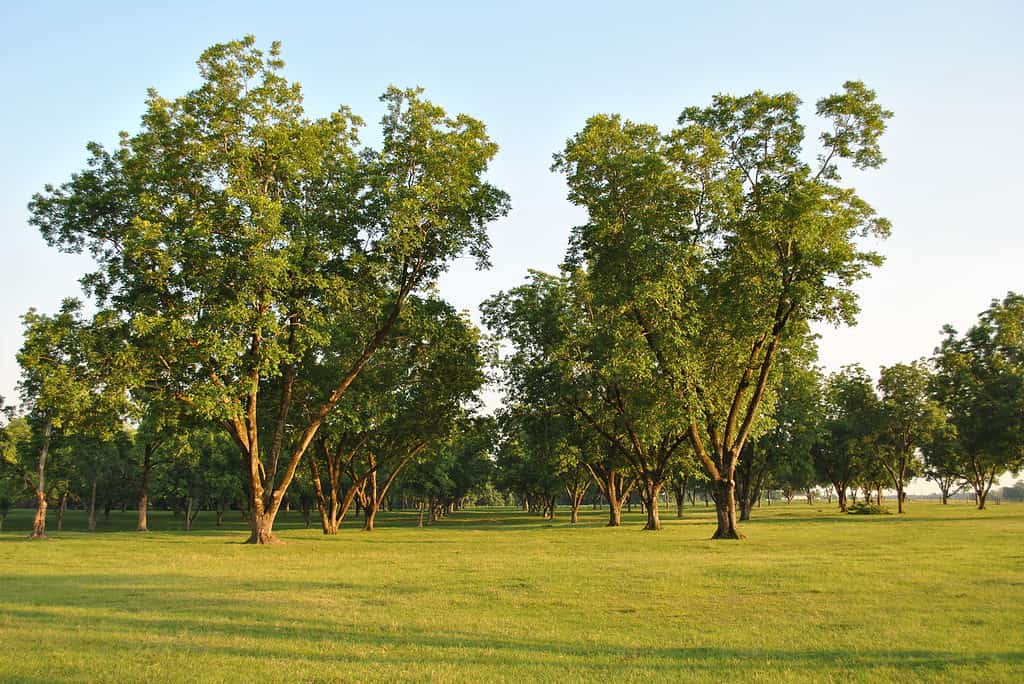
Pecan trees are common in the southern United States.
©Tayloradempsey/Shutterstock.com
This native Alabama tree produces one of America’s favorite nuts. Reaching 90-100 feet in height, these trees are not only important to the South, but to all pecan lovers everywhere. The hardy pecan tree begins to bear nuts between 6-10 years of maturity. It can produce anywhere between 70-150 pounds of nuts per year.
Humans are not the only ones who enjoy pecans. A variety of wildlife enjoys them as well. Raccoons, foxes, blue jays, and wood ducks are among some of the species that enjoy the nuts from this tree.
To continue producing healthy pecans, you need to give hardy pecan trees extra care. These trees are susceptible to a variety of insects, including stinkbugs, aphids, and pecan weevils. Also, the brittle branches of these trees often do not hold up against strong winds and late frosts. All of these factors can affect pecan production and quality.
11. Red Maple (Acer rubrum)
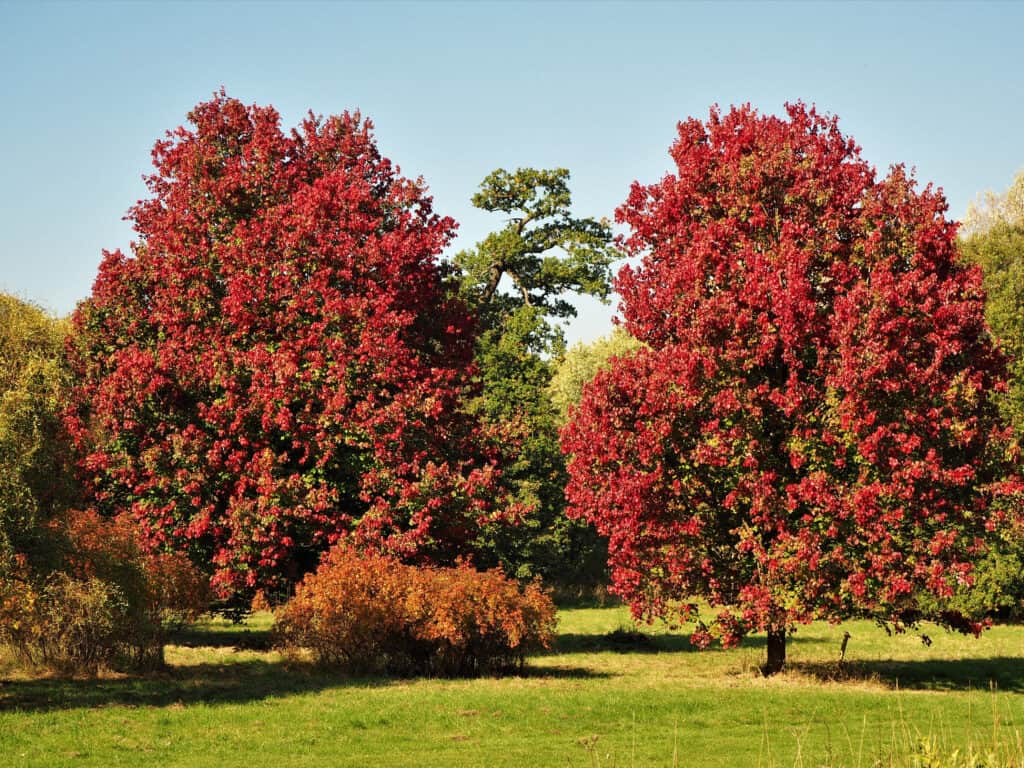
Red maples prefer moist soils along stream banks and swamps, but they also do well on upland sites if there are no competing trees or shrubs.
©AngieC333/Shutterstock.com
While this iconic native Alabama tree can range from 50-100 feet high, it is not the size alone that makes it stand out. Instead, the magnificent fall foliage is often what captivates onlookers. Red maples get their name from their impressive red coloring. However, despite the name, some of these trees also sprout yellow and orange leaves in the autumn. Red maples are also one of the earliest trees to bloom. They grant us our first glance at the beautiful fall foliage.
These majestic trees offer shade, food, and protection to a diverse range of wildlife. Squirrels and rodents enjoy the trees’ fruit, while rabbits and deer direct their attention toward the leaves and shoots. Screech owls and pileated woodpeckers often find shelter in these trees.
People make furniture, crates, flooring, and railroad ties from this tree’s wood. However, another fun use of this tree is something that would be on top of the table. Syrup! While sugar maple trees are the more common choice for syrup, you can also use the fruits of the red maple for this purpose.
12. Eastern Redbud (Cercis canadensis)
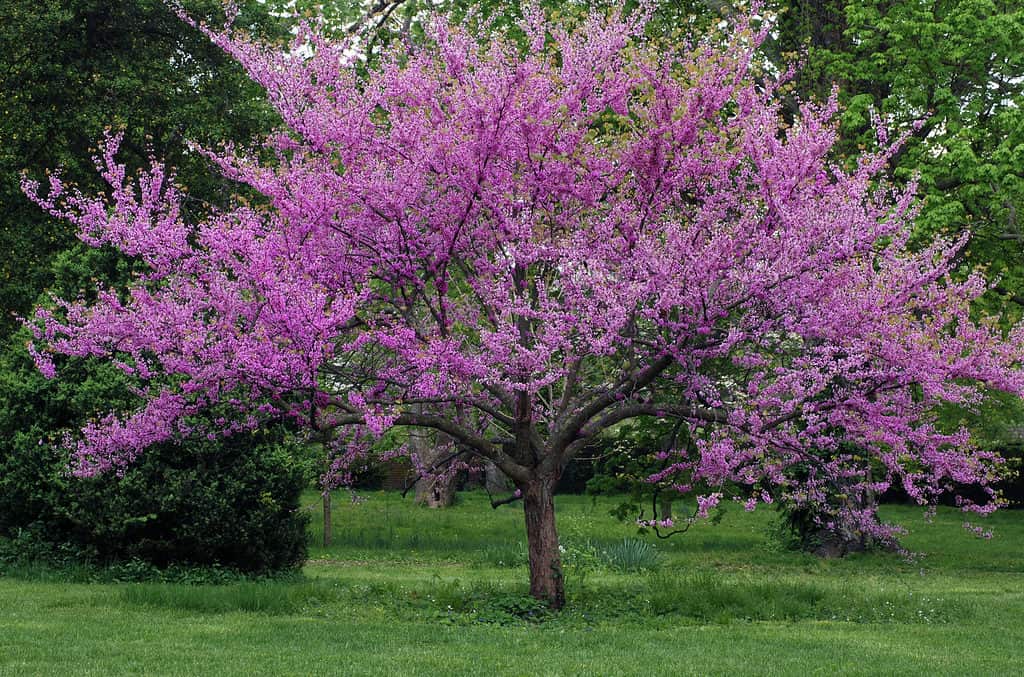
Eastern redbud trees grow beautiful lavender-pink flowers and heart-shaped leaves.
©Marie C Fields/Shutterstock.com
These trees usually only grow to about 40 feet tall, but that does not make them any less impressive. People often recognize this tree from its unique heart-shaped leaves. They bloom with beautiful pink flowers and pinkish-red color leaves in the spring. Those leaves then turn to dark green in the summer, and eventually yellow in the autumn. Some even refer to this tree as the harbinger of spring, as the buds dramatically welcome you into the season.
In addition to being beautiful, the eastern redbud’s flowers are also edible! The flowers have a mild, sweet flavor and can be added to dishes like salads or cookies! Humans are not the only ones enjoying the beautiful flowers, the eastern redbud is also host to a diverse group of pollinators. Some of those pollinators include honey bees, bumble bees, and cuckoo bees, as well as several butterfly and moth species.
An interesting fact about this tree is that while it may appear small and brittle, it is actually quite durable. There are not many pests or diseases that affect these trees. Redbuds also easily tolerate fire, deer, windstorms, and ice, some of the biggest issues for a majority of trees. Native Americans also used the bark of this tree to make teas that cured many ailments, including whooping cough.
13. Sourwood (Oxydendrum arboreum)
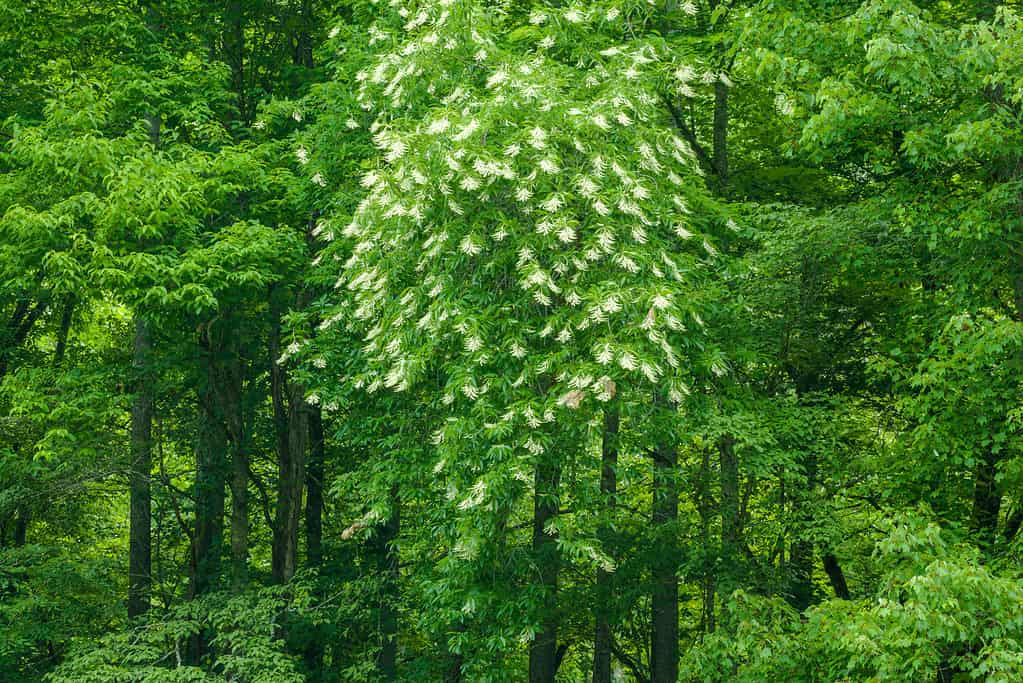
Sourwood trees sprout fragrant, white flowers during the months of June and July.
©Jerry Whaley/Shutterstock.com
The sourwood tree is not as well known as some of the other iconic trees on this list. However, it is still an impressive native species. Growing between 20-30 feet tall, this tree does showcase incredible beauty during the autumn months. A majority of the time, its leaves boast beautiful reddish-purple foliage. Occasionally, they will have some yellow foliage too. When it is not stunning viewers with its autumn colors, it sprouts fragrant white flowers in the months of June and July.
These are very popular in the world of beekeeping, as they produce sourwood honey. Sourwood honey is one of the most sought-after kinds of honey in America. Sourwood honey has flavors similar to caramel, anise, and maple. Its honey-producing flowers are not the only interesting part of this tree, as its bark is unique as well. This tree has gray bark with reddish streaks. The bark can even flake and resemble rough skin, similar to a reptile.
One of the main threats to these trees is insects. Borers, weevils, and webworms are among the offenders. Many of these insects create webs or place their larvae on this tree. When the insects emerge, they feast on the new growth, preventing the tree from further producing buds and leaves.
14. American Beech (Fagus grandifolia)
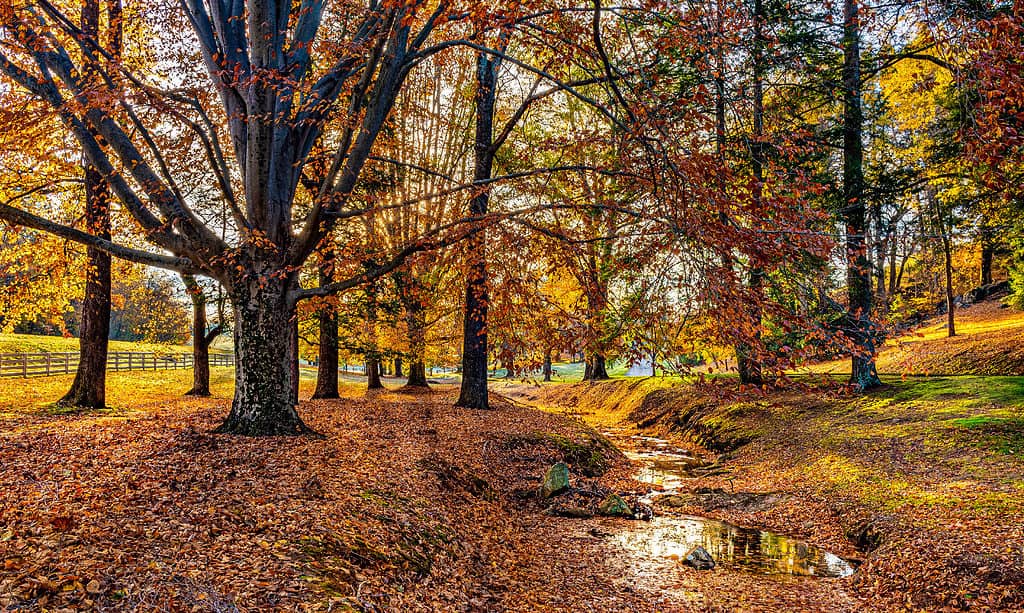
American beech trees are a unique native species. They are marcescent trees, keeping their dry, brown leaves all winter until new leaves appear.
©Gerry Bishop/Shutterstock.com
The American beech tree is usually 50-60 feet tall. Its smooth gray bark with cluttered dark spots makes it captivating to look at. Another captivating feature of this tree is the brilliant golden color of its leaves during the fall season. American beech tree leaves are different from many others because they are marcescent. This means that the leaves of the tree stay on during the winter. Unlike evergreen trees, however, the leaves do not stay green. They do wither and turn brown, but they stay clung to the tree throughout the winter. The leaves do not fall off until the new leaves have already begun to bud.
The American beech tree is very important to local wildlife. Some of the animals that enjoy the beech nut are opossums, squirrels, and deer. In addition to helping animals survive, the American beech tree is also home to an array of insects, including ants, aphids, and over 100 species of moths.
An interesting fact about these trees is that many of them do not reach their potential 400-year lifespan. One of the main reasons for that is that they are one of the most popular trees in the making of firewood. Additionally, due to the tree’s unique bark, many people decide to carve their names or initials into it. People have romanticized this act, but it should be avoided. The bark of a tree is equivalent to the skin of a human. When carved, it leaves an opening for infections from either fungus or pests. Please be mindful of the trees and appreciate their beauty with respect.
15. Black Gum (Nyssa sylvatica)
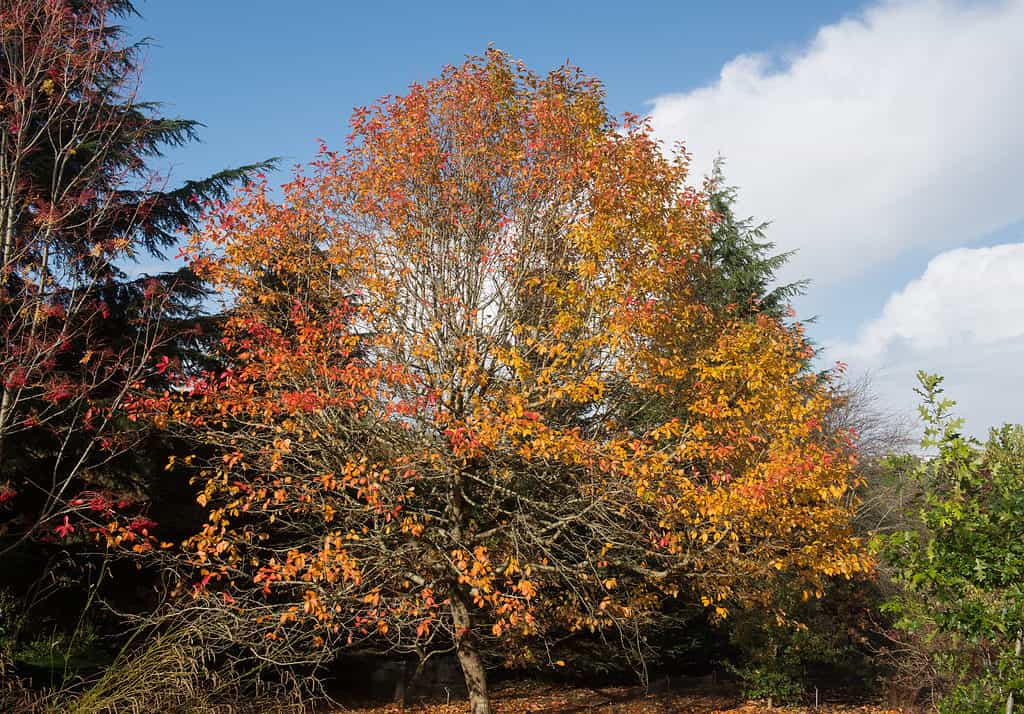
Black gum trees have amazing fall colors, with beautiful shades of red, yellow, and orange.
©Peter Turner Photography/Shutterstock.com
Also known as the black tupelo, this tree grows between 40-70 feet tall. It sprouts beautiful colors during the autumn months. Many consider it the longest-lived species of hardwood tree in the eastern United States. Its elongated, oval leaves and spectacular colors make it a favorite in landscape design.
White flowers bloom along the tree between the months of May and June. These flowers attract many pollinators, such as honey bees. People actually consider the black gum tree a honey tree. This means that the honey bees are able to gather enough nectar from it to make harvestable amounts of honey. The fruit of the tree is also a favorite among a diverse group of birds, including robins, mockingbirds, woodpeckers, and brown thrashers. Deer also feed on the seedlings and foliage of these trees. An overpopulation of deer in an area can negatively affect the tree’s growth rate.
These trees contribute to wildlife throughout their entire life cycle. As the trees age, they tend to get hollow within their bark. Owls, raccoons, and bats use these hollow trees for shelter. Honey bee colonies use the hollowed logs as well. This tree truly is a friend to the bees!
How Many Trees Are in Alabama?
There are an estimated 5,700,000,000 trees in Alabama. It is among the states that have the most trees in the entire country.
What Is the Climate of Alabama?
Even though Alabama is a very warm state, it does have a varied climate. It has mild winters and scorching summers. Those mild winters are cool enough to allow a wide variety of trees to flourish. Some native trees, such as the flowering dogwood, are found as high up as Maine. However, those scorching summers do allow certain, expected, tropical trees to grow. There are some palm trees that call Alabama home as well.
Conclusion
Native trees are an important resource to any ecosystem and luckily for Alabama, they have a wide variety of them. Whether it is offering shelter, food, or beauty, all of these trees play an important role in their environment. Keep in mind, this is just a list of the most iconic trees in Alabama. There are many other native species. When exploring this state, or any other wildlife, remember to view and interact with it with respect.
Summary of the Top 15 Most Iconic Trees Native to Alabama
Here is a quick recap of the top 15 most iconic trees native to Alabama.
| Tree Type | Scientific Name | Average Height | |
|---|---|---|---|
| 1. | Longleaf Pine | Pinus palustris | 80-100 feet |
| 2. | Sassafras | Sassafras albidum | 40-50 feet |
| 3. | Bald Cypress | Taxodium distichum | 150 feet |
| 4. | Southern Magnolia | Magnolia grandiflora | 60-100 feet |
| 5. | Swamp Chestnut Oak | Quercus michauxii | 100 feet |
| 6. | Flowering Dogwood | Cornus florida | 15-30 feet |
| 7. | American Holly | Ilex opaca | 20-30 feet |
| 8. | Live Oak | Quercus virginiana | 50 feet |
| 9. | Sweetgum | Liquidambar styraciflua | 80 feet |
| 10. | Hardy Pecan | Carya illinoensis | 90-100 feet |
| 11. | Red Maple | Acer rubrum | 50-100 feet |
| 12. | Eastern Redbud | Cercis canadensis | 40 feet |
| 13. | Sourwood | Oxydendrum arboreum | 20-30 feet |
| 14. | American Beech | Fagus grandifolia | 50-60 feet |
| 15. | Black Gum | Nyssa sylvatica | 40-70 feet |