
Quick Take
- Emperor penguins are carnivores, eating a diet of fish, squid, and crustaceans.
- They do not have teeth, but their tongues and the roofs of their mouths have spiny structures allowing them to prevent slippery prey from escaping.
- Male penguins fast for nearly 4 months during the breeding season.
- Penguin parents take turns regurgitating partially digested food to feed their chick.
Emperor penguins are large, black and white marine birds with orange and yellow patches on their heads and chests. They are found in Antarctica and the sub-Antarctic islands. These penguins have also been recorded in the Falkland Islands (Islas Malvinas), the remote Argentine island of Isla de los Estados, and Tierra del Fuego, an archipelago at the southern tip of South America.
Emperor penguins (Aptenodytes forsteri) are the largest penguins on Earth. With heights between 40 and 52 inches and wingspans of nearly 3 feet, these massive, flightless birds can weigh up to 99 pounds as adults. Yet, how do they grow so large in such harsh conditions? Read on to find out what emperor penguins eat and how they find food in the frigid Antarctic.
What Do Emperor Penguins Eat?
Like all penguins, emperor penguins are carnivores. Their diet consists of fish, crustaceans, and cephalopods in varying amounts depending on the seasonal availability of prey, the location of the colony, and changes in foraging sites. One study of the emperor penguin diet determined that during spring chick-rearing, 89% to 95% of their diet by mass was fish. Their most common prey is the Antarctic silverfish (Pleuragramma antarcticum), which in some populations may account for up to 89% of their fish intake.

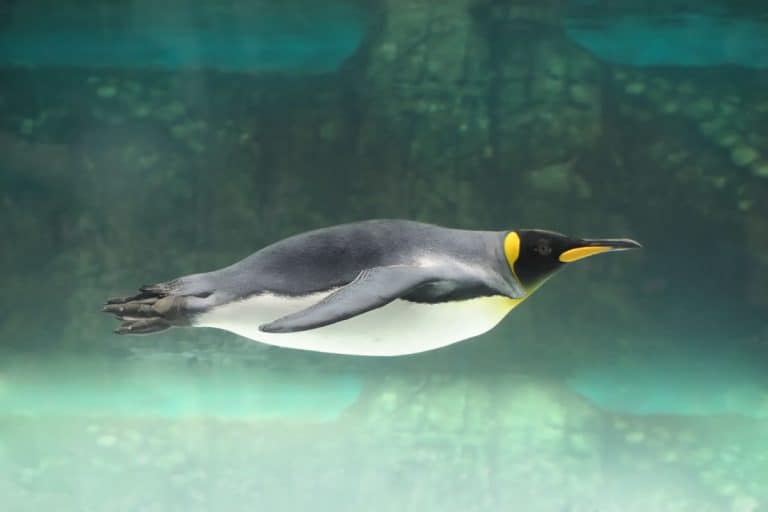
Emperor penguins are carnivores that primarily consume fish.
©Midnight In Summer/Shutterstock.com
In addition to Antarctic silverfish, these penguins consume fish in the family Channichthyidae, which are known as Antarctic icefishes. Emperor penguins have also been found to consume squid, specifically the glacial squid (Psychroteuthis glacialis). Crustaceans in their diet include euphasiids such as Antarctic krill (Euphausia superba) and ice krill (Euphausia crystallorophias), shrimp-like crustaceans called amphipods, which include Eusirus microps and Abyssorchomene rossi, and aquatic isopods.
While there is some variation depending on season and location, emperor penguins primarily eat the following foods:
- Antarctic silverfish
- Antarctic icefishes (particularly juveniles)
- Glacial squid
- Amphipods like Eusirus microps and Abyssorchomene rossi
- Euphausiids including Antarctic krill and ice krill
- Aquatic isopods
Building Fat Reserves
From January to March, adult emperor penguins build up body fat for the breeding season. Adult penguins eat up to 4.4 to 6.6 pounds daily, but before the breeding season or molting, they may consume as much as 13 pounds each day. Female penguins lay only one egg in April or May. Then the females leave the colony to forage for food during the winter while the male stays behind to incubate the egg.
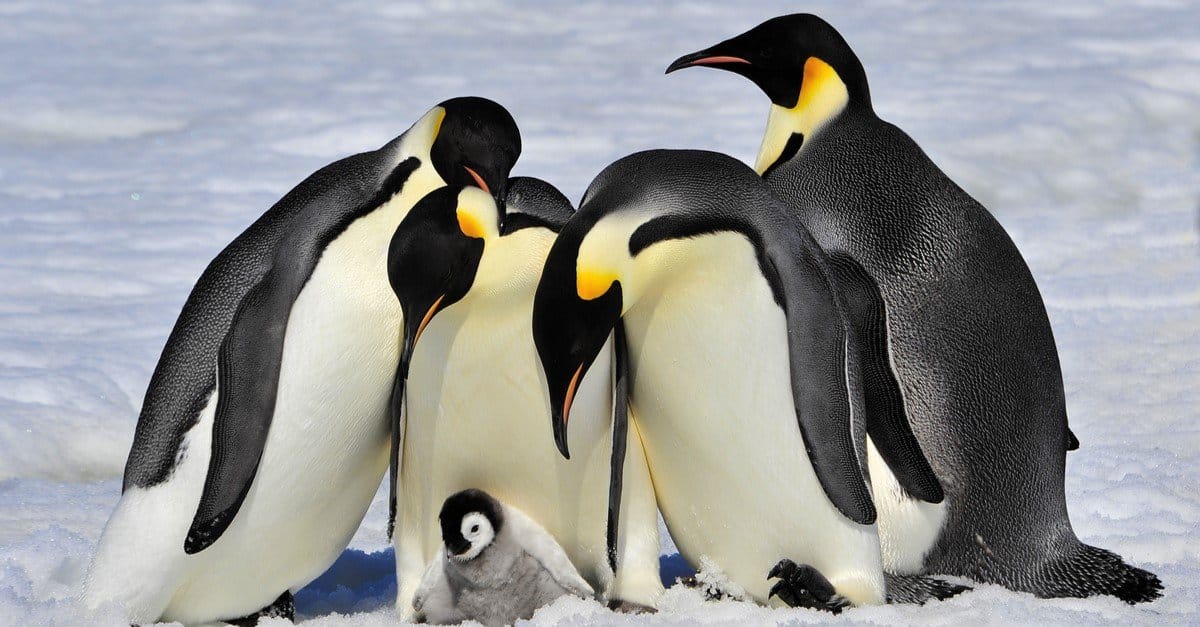
Male emperor penguins fast for nearly 4 months during the breeding season.
©vladsilver/Shutterstock.com
The male emperor penguin incubates the egg for 65 to 75 days, balancing it on top of his feet and completely covering it with a fold of skin to keep it warm. During this time, the males are unable to leave the colony to search for food. Emperor penguins do not eat during courtship and mating, so by the time the chick hatches, males have been fasting for nearly 4 months.
What Do Emperor Penguin Chicks Eat?
If the female has not returned from foraging by the time the egg hatches, the male produces a milky, high-protein substance in a pouch-like structure in his esophagus that functions as a crop. The males feed the chicks this “crop milk” until the female returns. When the female returns to her mate, both parents take turns providing food and caring for the chick.
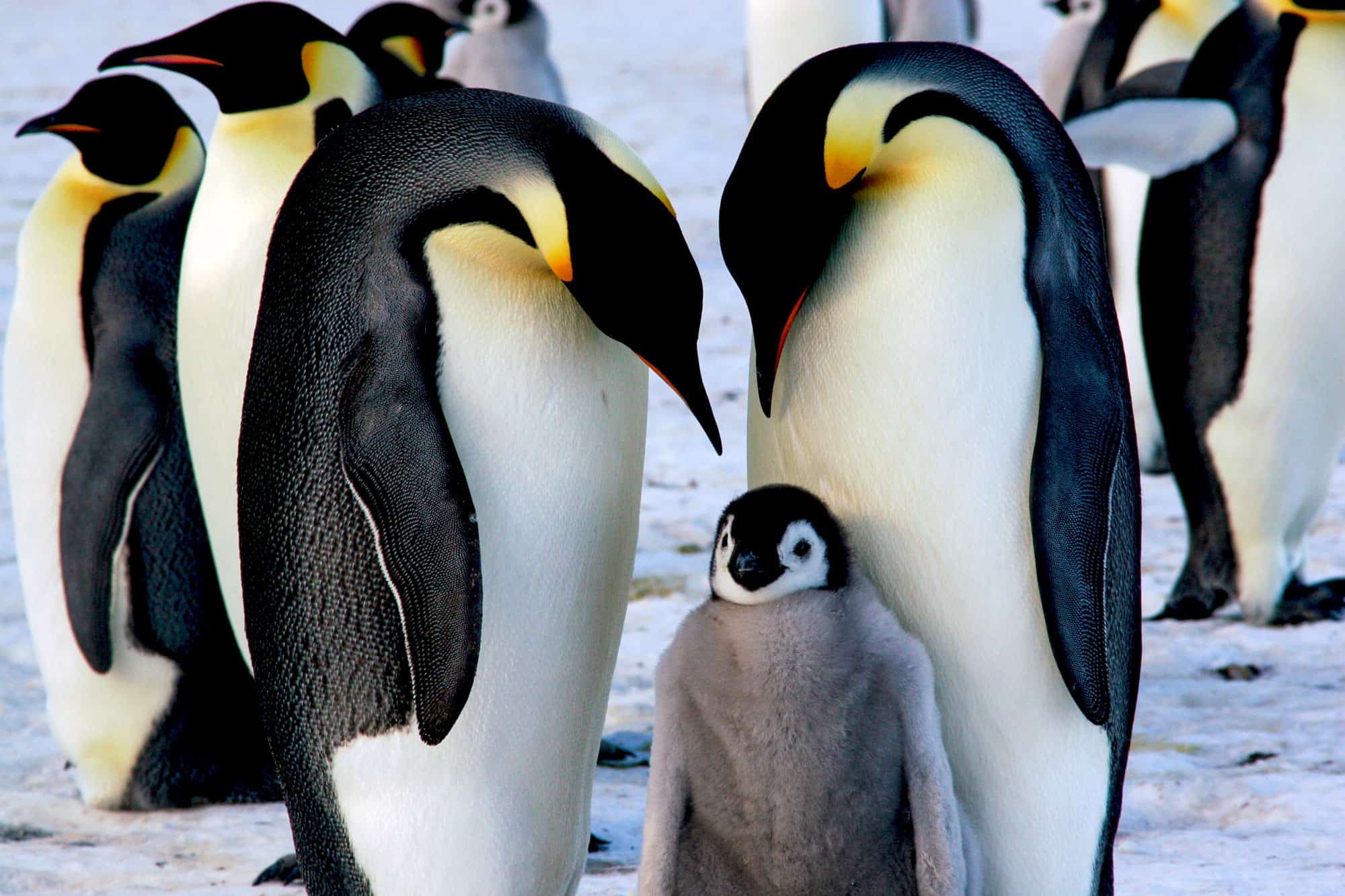
Emperor penguin chicks generally eat the same diet as the parents, although there may be variations between colonies. However, chicks cannot digest fully solid food until they are around 5-6 months old. So, parents partially digest the food before regurgitating it to feed their chicks directly from their beaks.
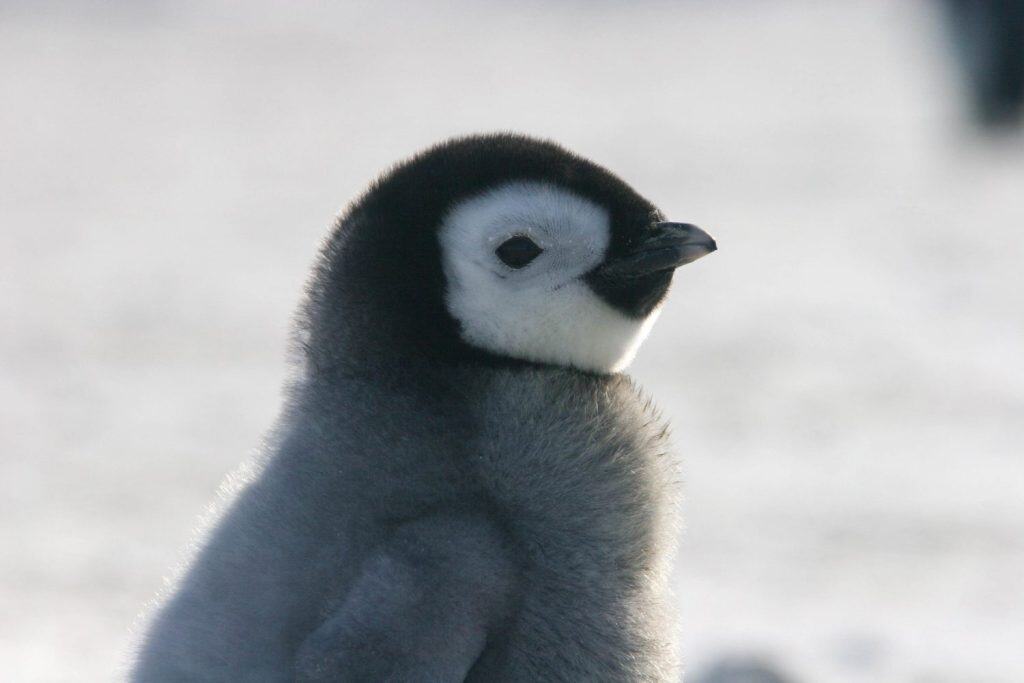
Emperor penguin chicks eat regurgitated food provided by their parents.
©Nataliia Kravchenko/Shutterstock.com
Studies have shown that on average, chicks eat every 1.44 days. Emperor penguin chicks require a total of 92 pounds during the five-month period when parents are responsible for their care. This is approximately 9.5% of the adult penguin’s needs for the same period.
Hunting and Foraging
Emperor penguins hunt and forage for food in the open sea. They execute shallow dives to explore the underside of sea ice where krill is found. Deeper dives allow them to hunt for fish and squid in the mesopelagic, or “twilight” zone, characterized by rapid temperature drops and decreasing sunlight. Most foraging takes place at depths of 492 to 820 feet. Most dives last up to 6 minutes, but scientists have recorded a dive as long as 22 minutes.
Emperor penguins do not have teeth, but their tongues and the roofs of their mouths have rearward-facing barbs called papillae. These spiny structures allow them to grip slippery prey and prevent it from escaping. The papillae also help move the prey from the throat to the stomach. Emperor penguins also swallow stones to help the gizzard break down prey for digestion. These stones eventually wear down and pass through the digestive system.