
There are over 700 different species of tree frogs in existence. While they can vary significantly in terms of both physiology and habits, their shared ancestry ensures that most of them enjoy similar diets and employ similar methods of hunting prey and evading predators. They also share similar ecosystems. While tree frogs are present on every continent except for Antarctica, around 75% of them are found in Central and South America. Not every species of tree frog spends the majority of its time in trees, but their dietary and hunting habits were developed for survival in wet habitats. So, what do tree frogs eat? Keep reading to learn more about their diets and how they hunt for food.
The Tree Frog’s Diet
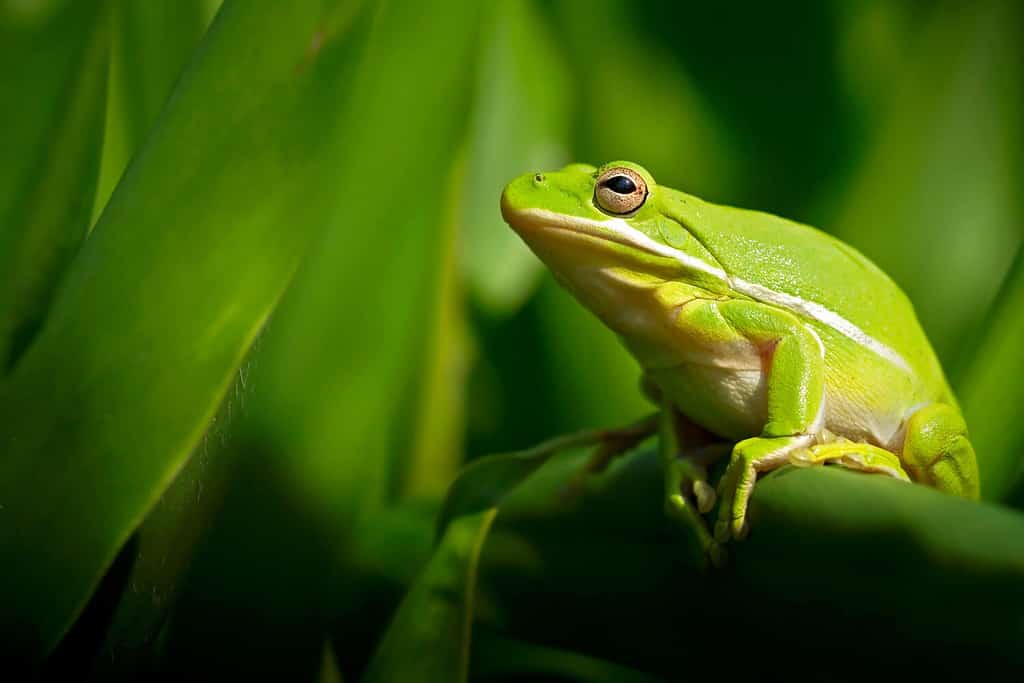
The American green tree frog is an opportunistic insectivore.
©LorraineHudgins/Shutterstock.com
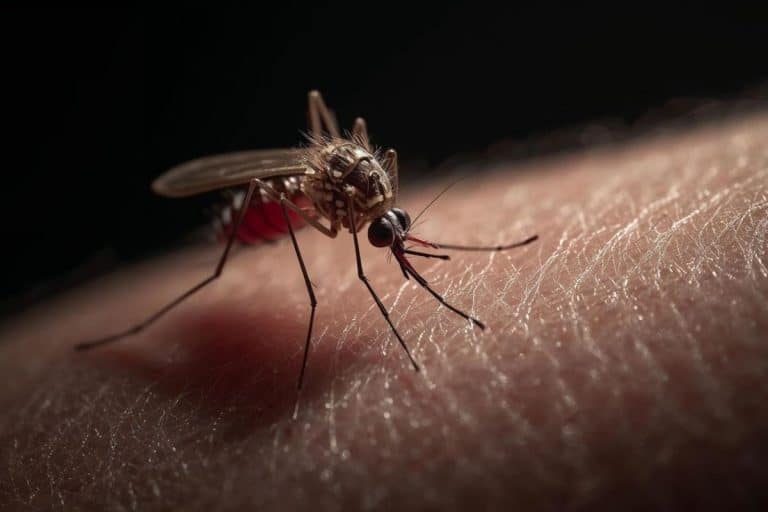
Most adult tree frog species are insectivores with opportunistic feeding patterns. This means they primarily feed on insects and other invertebrates, with a rare few exceptions, but they adjust their diets to accommodate environmental availability. The American green tree frog is found along the Atlantic coast and the southern United States. The marshy habitats it prefers provide a diet rich in mosquitoes, flies, crickets, and moths. These frogs may also eat worms, spiders, and smaller frogs.
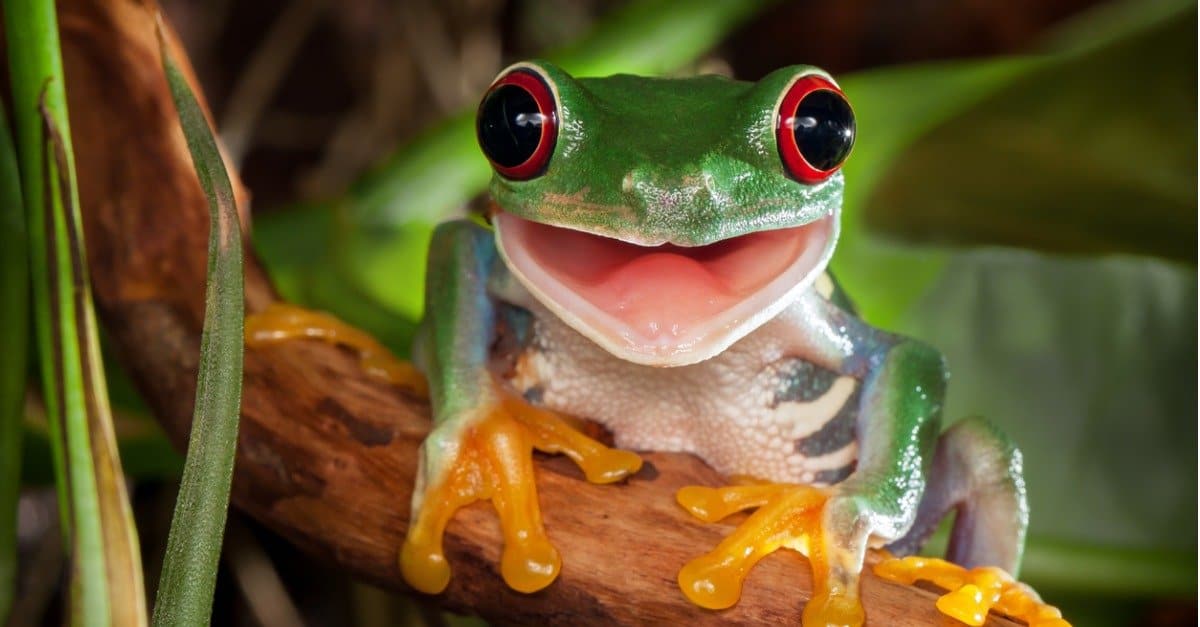
The gray tree frog, found in the eastern U.S., is a close relative of the green tree frog. Common prey includes spiders, plant lice, mites, slugs, and snails. They may also sometimes eat smaller frogs, as well as their own larvae. Like the green tree frog, the distinctive and iconic red-eyed tree frog has a rich diet of flying insects that include flies, moths, and grasshoppers. The red-eyed tree frog also sometimes cannibalizes smaller frogs — a habit that’s shared with invasive species like the Cuban and Japanese tree frogs.
Adult tree frogs may be pure insectivores, but baby frogs need to work their way up to that. Tadpoles typically feed on algae and other aquatic plants. As they grow from the tadpole stage into adulthood, they’ll begin to adopt a diet that prioritizes animal matter. However, plant matter is both small enough for them to easily consume and rich in vitamin C, which they need to grow to adulthood.
What Do Tree Frogs Eat in Captivity vs. in the Wild?
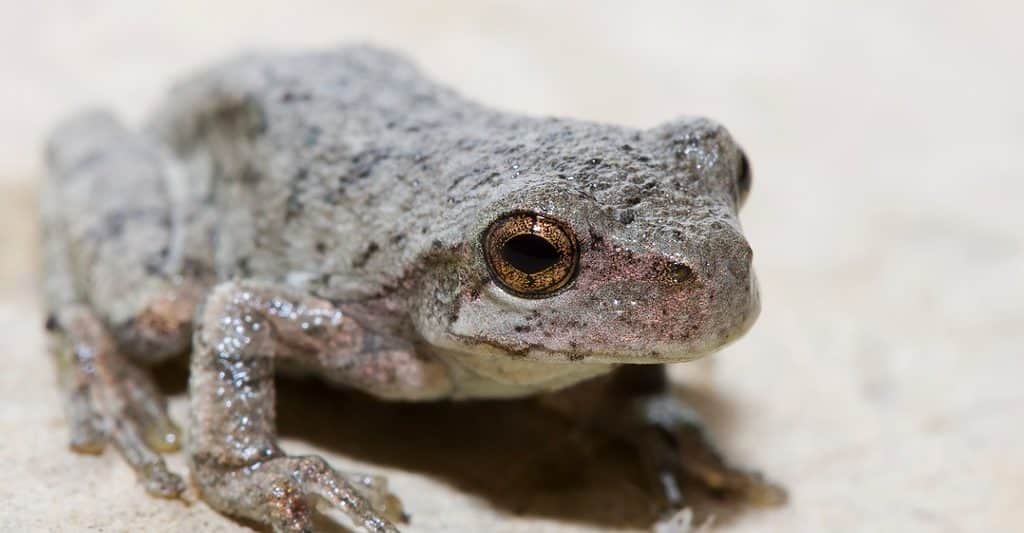
Pet tree frogs, like this little gray tree frog, should be fed only insects.
©iStock.com/Coffee999
Environmental variables have led to different tree frogs having slightly different diets, but these distinctions are much less important for pet frogs. Whether you have a pet gray tree frog or a red-eyed tree frog, their diet is essentially going to be the same. Pet tree frogs in captivity should be fed a diet consisting exclusively of insects. Crickets and grasshoppers are popular food choices because they are readily available in pet supply stores and are high in protein. Bait worms are also popular, and a varied diet is best for these opportunistic insectivores.
Whether they are wild or captive, regardless of species, most tree frogs eat a diet that includes:
- Flying insects (flies, moths, crickets)
- Terrestrial insects (beetles, ants)
- Larvae (insect and frog)
- Plankton and algae (as tadpoles)
- Worms (mealworms and waxworms in captivity)
- Smaller frogs
How Do Tree Frogs Hunt for Food?
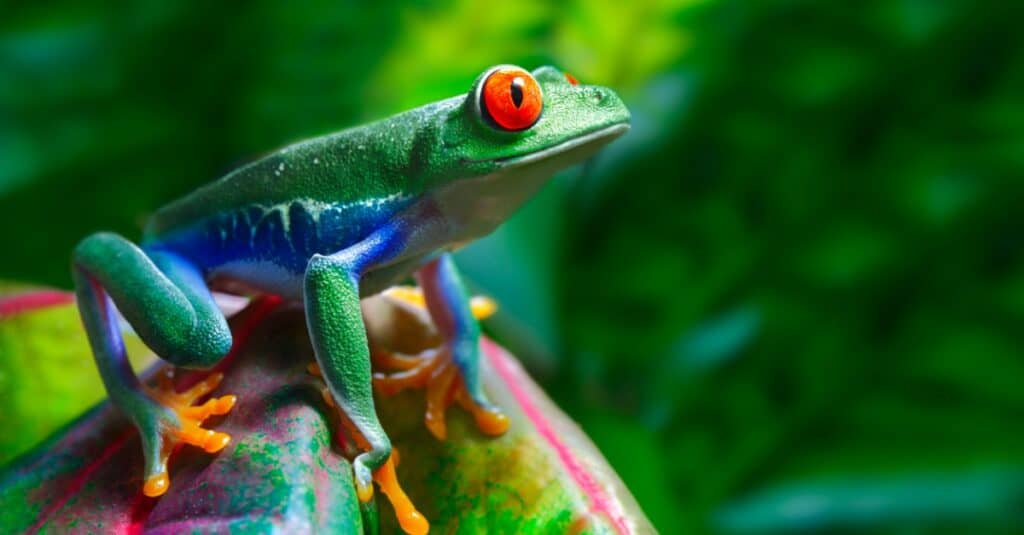
Tree frogs rely on their tongues to catch prey.
©Brandon Alms/Shutterstock.com
As with most other frog species, tree frogs rely on their incredible tongues to catch prey. Frog saliva can function as both a solid and a liquid. When it comes into contact with prey, it thins out so it can cover the prey. When the tongue retracts, the saliva thickens, helping to grip the prey. It’s an incredibly effective tool for hunting down insects, but the tree frog is further assisted by their adhesive feet. The pads on their toes contain fluids that help them stick to different surfaces. They can adjust their grip to accommodate a wide range of textures. Arboreal tree frog species use these skills to get within reach of flying prey.
As nocturnal hunters, tree frogs have exceptional eyesight that functions well at night. Their forward-facing eyes give them a narrower field of view, which allows them to follow insects more closely and strike with precision. The primary factor determining which insects end up as dinner and which escape is how much they move. The American green tree frog, in particular, tends to prioritize frequently moving prey over larger prey. This indicates that motion is the primary trigger for an attack. It’s a smart evolutionary adaptation, considering that frogs can’t chew and must swallow their prey whole. There’s even some evidence that frogs have developed a preference for specific prey based on movement patterns.