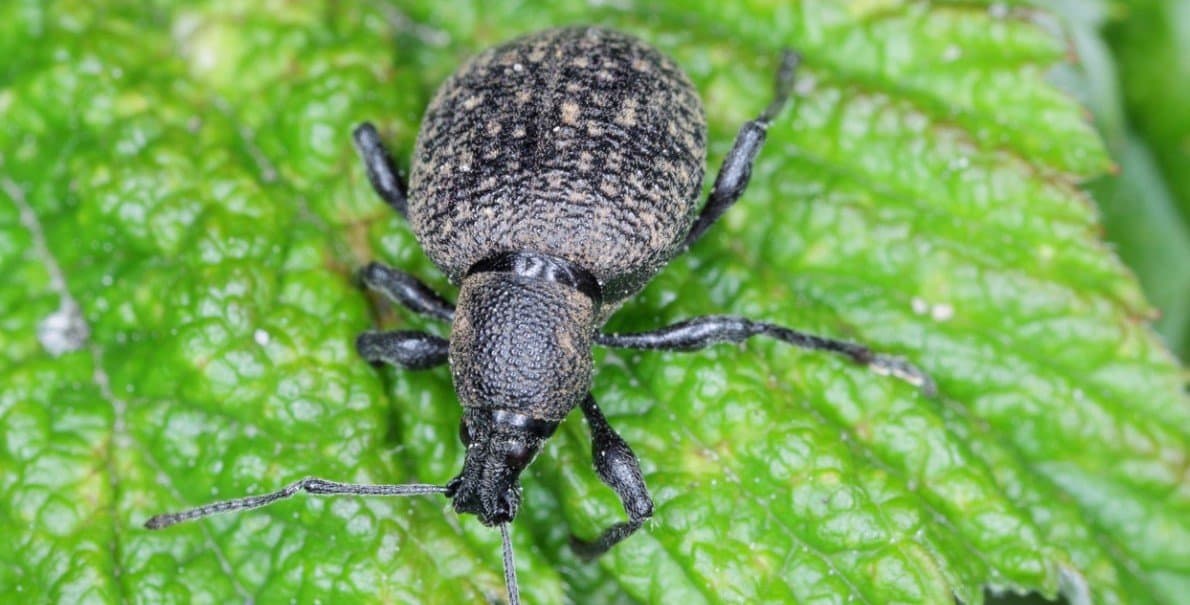

Beetles are part of the Coleoptera family of insects. There are 400,000 species worldwide, including the big black beetle found in the house or in the yard. Beetles have been around for over 270 million years. These insects evolved into separate species, making identification based on traits and distribution possible. These beetles exist in all land areas aside from the polar regions.
With such a large number of species, it’s not surprising that there’s a huge variation in their appearances. However, one type that most people have come across at one point or another is a large, black beetle. If you’ve found one of these in your house, then you’re probably wondering what species it is. Let’s find out which one it could be!
Black Carpet Beetle
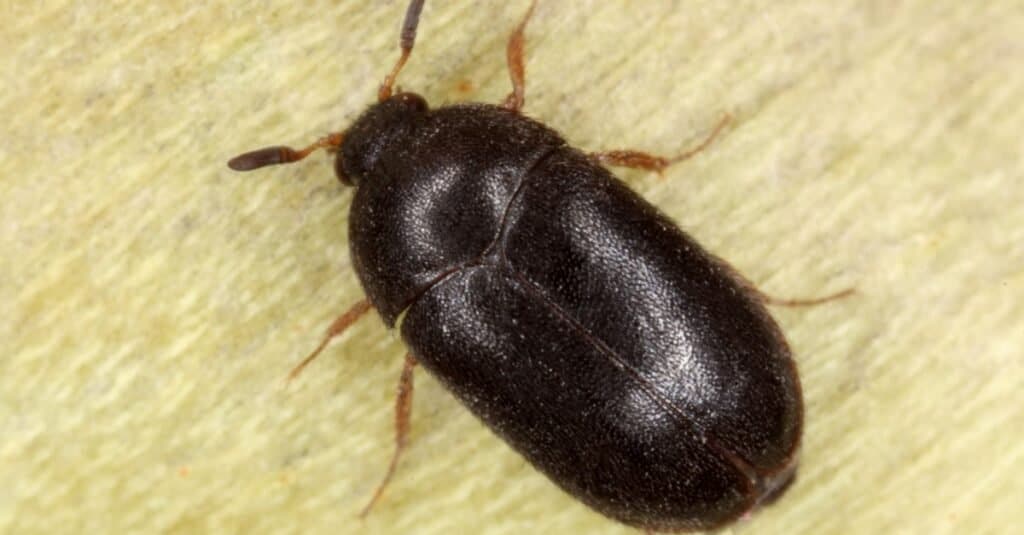
One of the most common big black beetles found in the yard is the black carpet beetle.
©Tomasz Klejdysz/Shutterstock.com
Black carpet beetles are one of the most common beetles seen around people’s homes and yards. Although these insects are not poisonous, they are destructive to the point of being considered pests. At the first signs of these beetles, homeowners will want to consider finding out how to get rid of them.
Adult black carpet beetles typically live for a few weeks, but the larval stage — which causes the most damage — can last from several months up to nearly a year. Females lay eggs directly on or near larval food sources such as carpets, furs, and wool. Though lifespans vary based on the type of carpet beetle and the weather, eggs usually hatch within an average of two weeks.
Carpet beetles are usually tiny, measuring around one-eighth to three-sixteenths of an inch. These beetles’ bodies are short and oval-shaped, with inconspicuous antennae. They can fly or crawl, but move slowly when crawling. These beetles can damage fiber products and spoil food.
Common Furniture Beetle
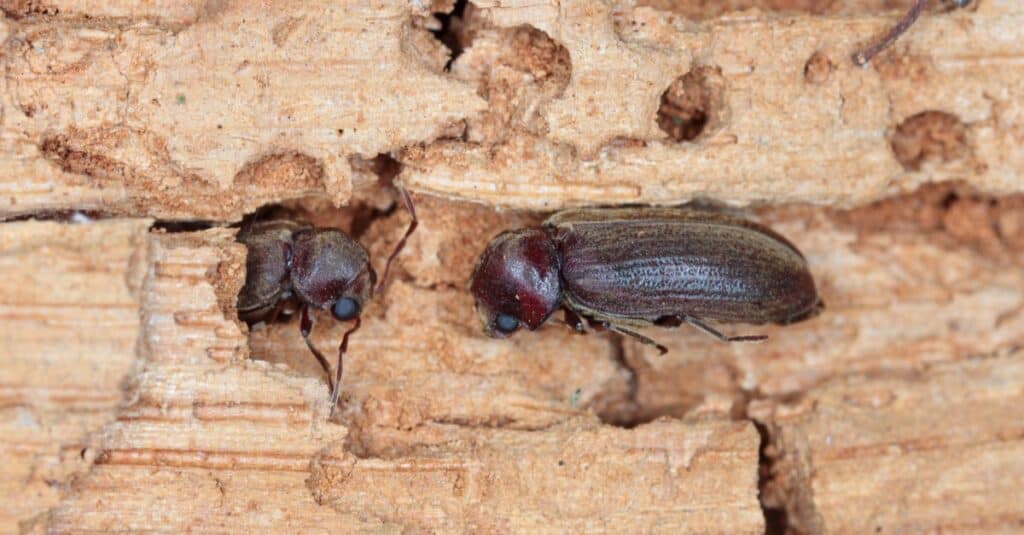
The common furniture beetle feeds on wood.
©Tomasz Klejdysz/Shutterstock.com
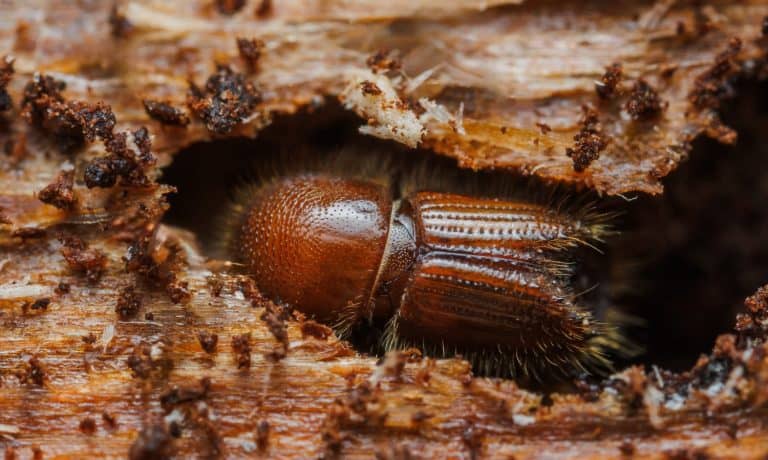
Common furniture beetles (Anobium punctatum) live in and feed exclusively on wood. These beetles have long, pill-shaped bodies measuring about 0.25 inches long. The appearance helps them blend in with the woodwork when spotted in the house. Furniture beetles spend the greatest part of their lives in the larval stage, and this is the stage where the insect consumes the most wood.
Black Vine Weevil
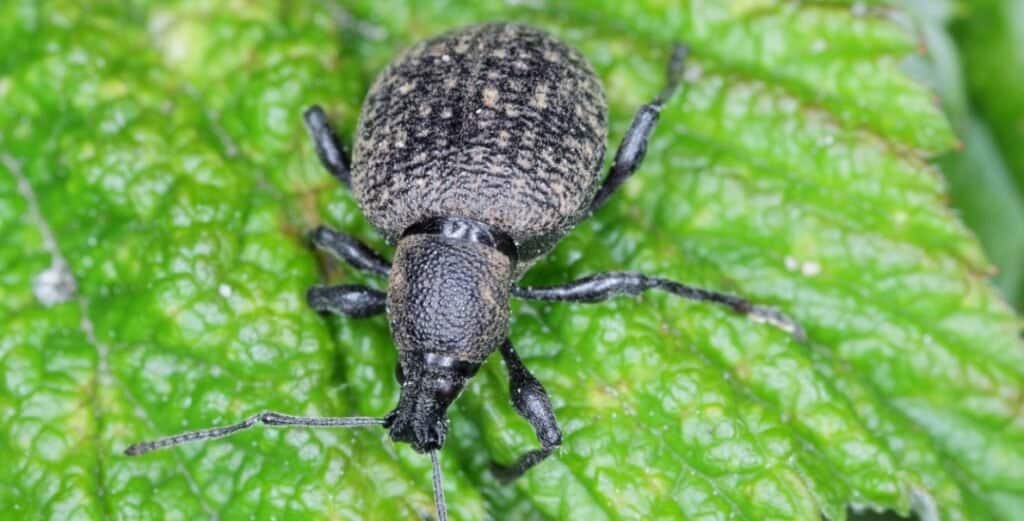
The black vine weevil is a herbivore.
©iStock.com/Tomasz Klejdysz
Black vine weevils (Otiorhynchus sulcatus) are one of the smaller types of beetles spotted in the yard. Despite having small bodies with non-functional wings, the insects have large antennae. This species cannot fly because its wings are fused. These beetles have a herbivorous diet that includes plants, such as flowers.
American Oil Beetle
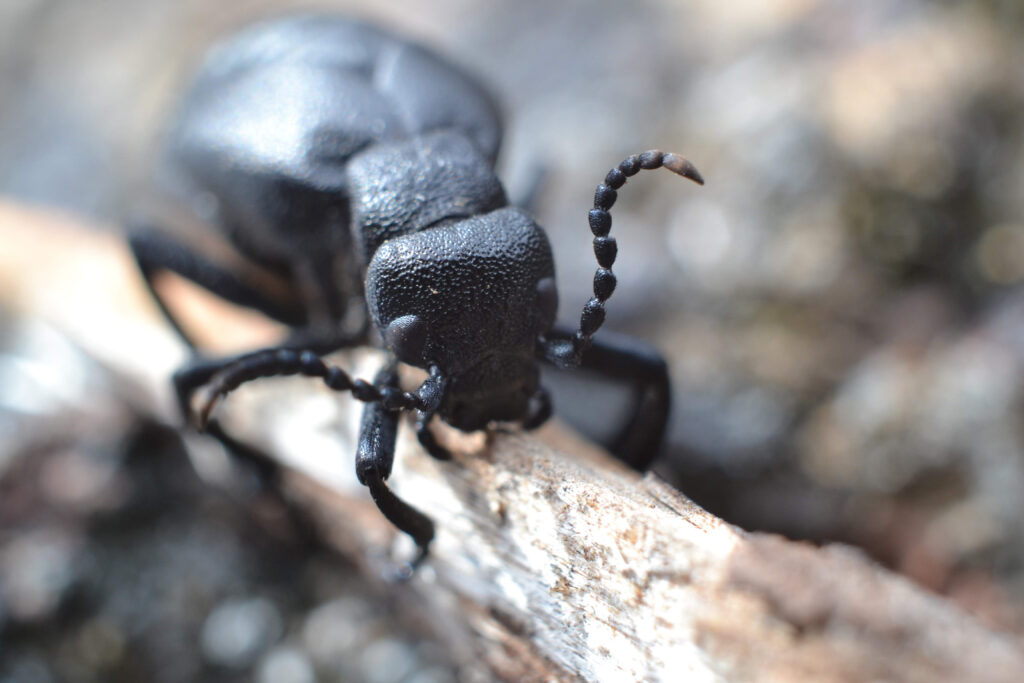
The American oil beetle produces an oily substance.
©Bernadette Davis/Shutterstock.com
The American oil beetle (Meloidae meloe) has some unique features that make identification easier. This beetle has a length of up to 1.2 inches, with a large body in proportion to the head. Spindly legs and large antennae in an upside-down L shape help set the insect apart. This beetle emits an oily substance in response to threats, which is capable of causing blisters.
What Damage Might Big Black Beetles Cause?
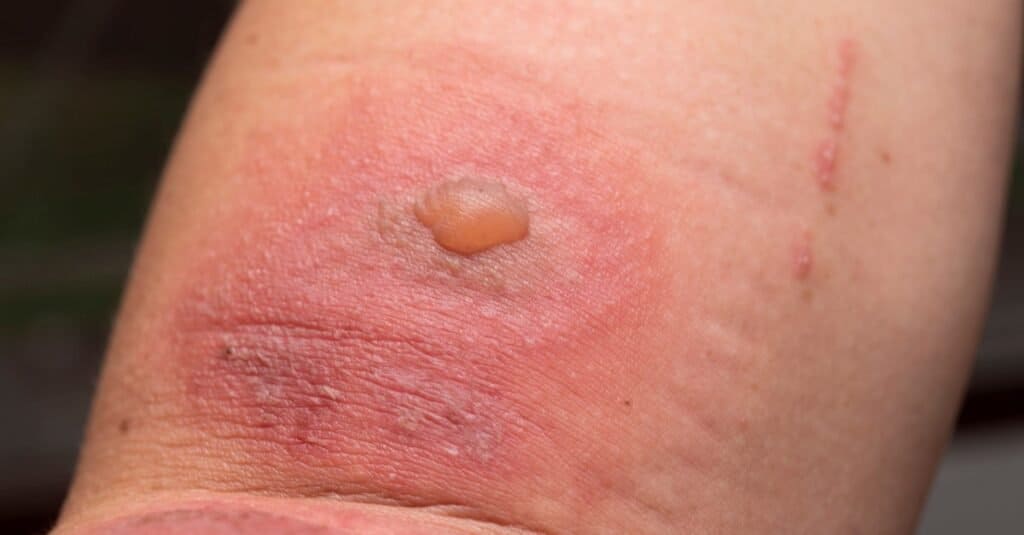
Some beetles secrete a substance that can cause blisters.
©Kittibowornphatnon/Shutterstock.com
An infestation of these big black beetles can cause damage inside and outside a home. The type of treatment required depends on what kind of beetle is involved, as there are different reasons for the destruction these creatures cause. Some of the signs of destruction caused by beetles are difficult to miss.
Carpet beetles can present a problem when an infestation occurs indoors. When these insects get into clothing or furniture, they can create significant damage. The beetles can also ruin cereal and similar food items.
Many homeowners want to find out how to get rid of furniture beetles because they eat wood. These beetles often infest furniture and other wooden items. However, it is the larvae, not the adults, that burrow into and eat wood. Some of the damage that the larvae cause is cosmetic, but the damage can also weaken structures.
Like many ground beetle species, black vine weevils are unable to fly. Most people will not encounter these insects in the house, and they don’t cause damage indoors. However, the weevils are destructive in the yard because they eat asters, lilacs, lilies, and rhododendrons.
Some beetle species are problematic because of defensive traits that can cause discomfort or injury. Many beetle species have strong jaws, although they seldom cause severe damage. Defensive substances used to deter predators are the most likely to cause problems.
American Oil Beetles spray substances that may cause blisters if threatened. These blisters are often painful. Children and pets are more likely to get blisters from encounters with these insects.
What Treatments Do You Use to Get Rid of Big Black Beetles?
Regardless of how easily you can identify them, most people who encounter beetles in their homes or yards want them gone. Having big black beetles get into food, clothing, or ornamental plants is never pleasant. The methods used depend on what beetles are presenting a problem.
Preventative measures can help keep beetles from causing significant damage. Open doors or windows provide pathways for these pests, as well as holes in walls or screens. Sometimes, beetles may enter homes or yards through pet food or birdseed.
Vacuuming carpeting and upholstered furniture is an effective treatment for removing beetles. Most of the species that get into people’s homes prefer dark hiding places. Baseboard and corner areas should also get attention.
Dry foods in your kitchen or pantry require proper sealing. Otherwise, you will need to contend with some types of beetles trying to eat your dry goods and ruining them for use. Putting foods such as pasta, cornmeal, flour, barley, rice, and oats in airtight containers before the first signs of beetle infestations will help.
Insecticides are one method for removing an infestation of beetles. However, caution is necessary because some of these products are unsafe around children and pets. Alternatively, food-grade diatomaceous earth is non-toxic while effectively killing insects, including ground beetle species.
Cedar spray is also safe and effective, especially for the types of beetles common in baseboards and closets. Boric acid-based powders are also effective for killing beetles without the poison risk. Steam cleaning carpeting and upholstery regularly also kills beetles and larvae that have gotten into your home.