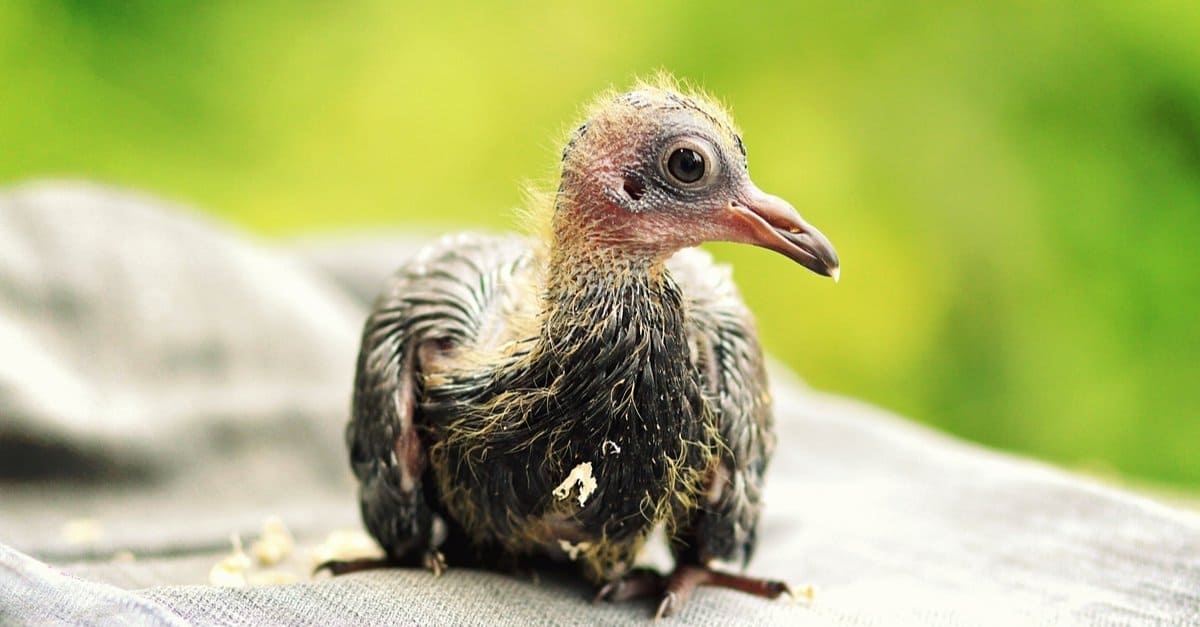

Pigeons (Columbidae) are a diverse group of birds with 352 distinct species contained in 50 genera. They are known for their stout bodies, short necks, and proportionally small heads. These birds are found throughout the world, excluding Antarctica and the Sahara Desert. North America is home to 12 separate species of Columbidae, the most common of which is the Rock pigeon (Columba livia). Columba livia are also called rock doves or city pigeons. These pigeons are highly adaptable and are frequently found in urban areas, where they scavenge for food. They are known for their distinctive cooing sounds and are often associated with city life. So, why are baby pigeons so hard to spot? Baby pigeons are rarely seen because they don’t leave the nest (fledge) until they are several weeks old. Continue reading to discover more about why you rarely see baby pigeons and more.

Pigeons are highly adaptable and are frequently found in urban areas, where they scavenge for food.
©MNStudio/Shutterstock.com
Why Are Baby Pigeons So Hard To Spot?: Pigeons
Pigeons have been domesticated throughout history. They have been used as messenger birds, pets, and for their meat. In some cultures, pigeons are considered symbols of peace and love. Doves are often depicted as harbingers of peace in art and literature. Rock pigeons are commonly found in urban areas across the globe. Their primary habitats are cliffs, bridges, and buildings. Their nests are often found on ledges and in crevices. This adaptable bird has a remarkable ability to thrive in urban environments, making it a familiar sight in many cities.
The rock pigeon is mostly herbivorous. Its main food source includes grains and seeds, with a particular fondness for cereal crops like wheat, barley, and corn. These birds forage for food on the ground, scavenging in parks, plazas, and agricultural fields, where they can find a variety of seeds and grains. They will also consume small insects and invertebrates occasionally, supplementing their diet with protein-rich food sources when available. This dietary adaptability, combined with their ability to nest in urban environments, has allowed the rock dove to thrive in diverse ecosystems and become one of the most common and recognizable bird species in urban landscapes around the world.
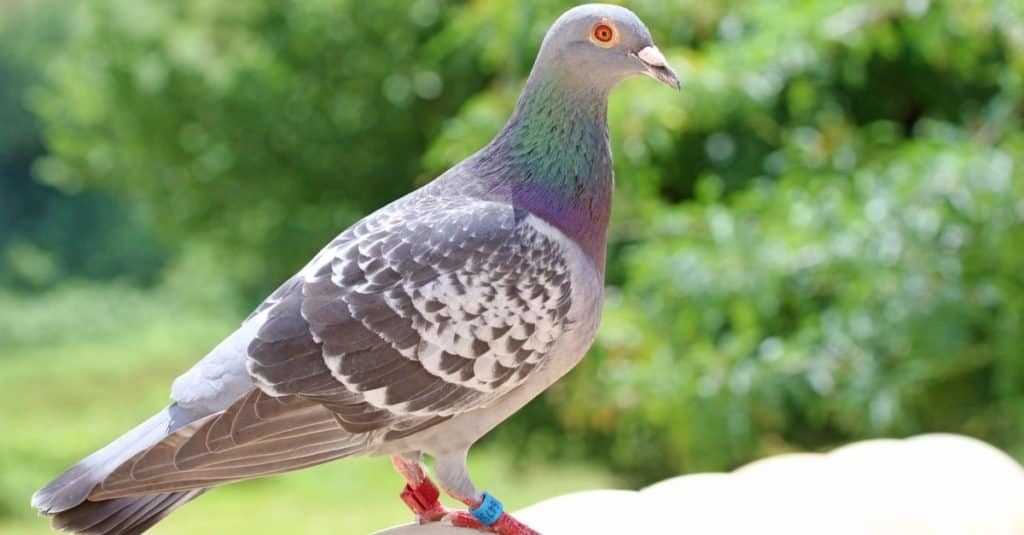
Pigeons have been domesticated throughout history. They have been used as messenger birds, pets, and for their meat.
©Ruth Swan/Shutterstock.com
Why Are Baby Pigeons So Hard To Spot? Lifecycle
The lifecycle of the rock pigeon consists of several distinct stages. Rock pigeons engage in courtship rituals. Courting behaviors as males may include head bobbing, feather puffing, and cooing. Once a pair of pigeons forms a bond, they search for a suitable nesting site. Rock pigeons commonly build their nests on ledges, rooftops, or cliffs. They use sticks, twigs, and other materials to construct a simple nest.
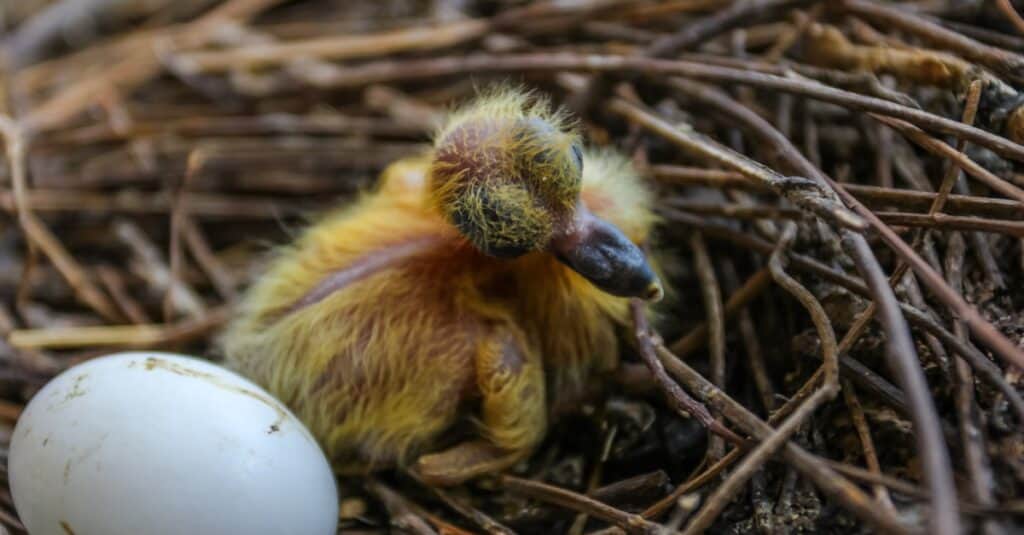
Rock pigeons use sticks, twigs, and other materials to construct a simple nest.
©iStock.com/icestylecg
After selecting a nesting site, the female pigeon lays one or two eggs, typically within a day or two of each other. Male and female pigeons both take turns incubating the eggs. Each partner incubates for several hours at a time. The incubation period lasts about 17 to 19 days. Once the eggs hatch, the parents continue to share the responsibilities of caring for the chicks.
The chicks are initially fed a specialized secretion called pigeon milk, which is produced in the crop of both parents. Pigeon milk is highly nutritious and essential for the rapid growth of the chicks.
During the nestling stage, the chicks grow rapidly, and their primary feathers begin to develop. The chicks transition to more solid food as they get older.
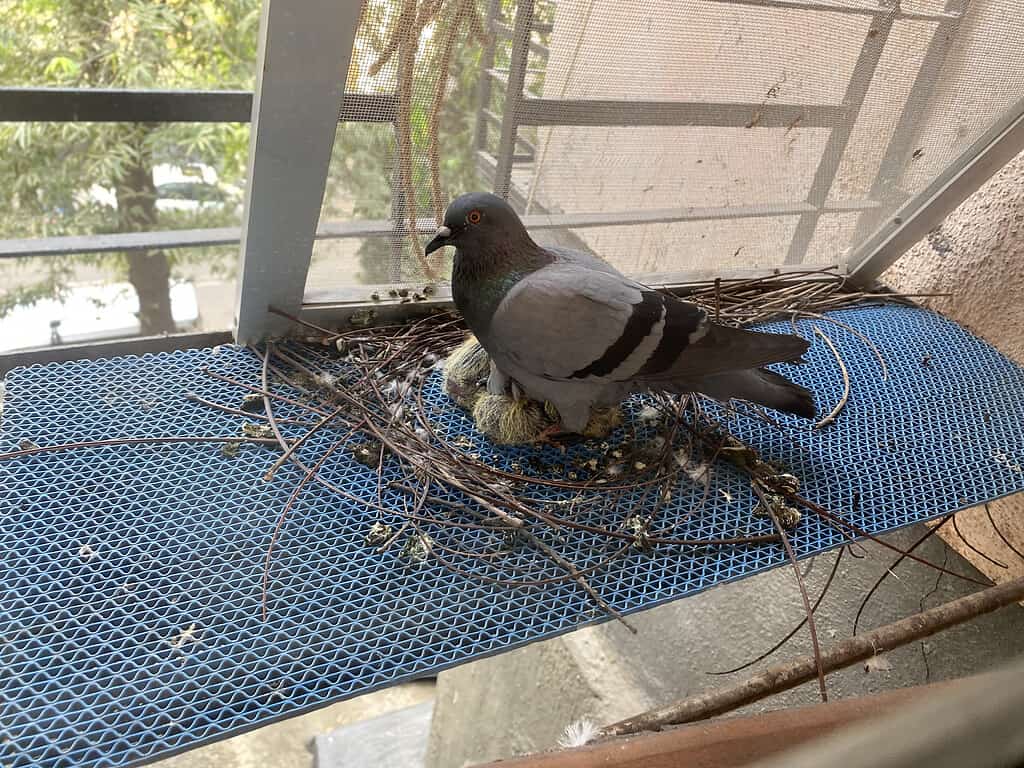
Both the male and female pigeons take turns incubating the eggs, with each partner incubating for several hours at a time.
©iStock.com/Vatsal Sheth
Fledging
The nestling stage lasts from 4-5 weeks. After which the young pigeons, known as squabs, fledge and leave the nest. After fledging, young pigeons are still dependent on their parents for food and guidance. They continue to learn important survival skills from their parents, including foraging for food and avoiding predators. the young pigeons become increasingly independent and self-sufficient. By the time they are 7-8 weeks old, the squabs have become completely self-sufficient. Rock pigeons usually reach sexual maturity at approximately six months of age. Individuals will vary depending on factors like food availability and environmental conditions. Once mature, they are ready to form pairs and engage in the breeding cycle themselves, starting the process over again.
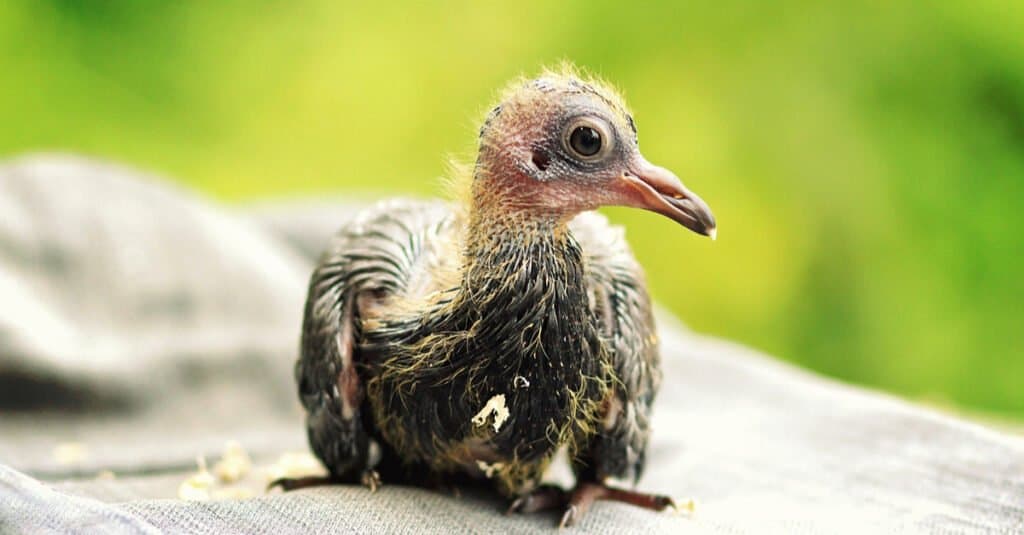
Pigeon parents remain in the nest for several weeks to tend to their babies, known as squabs.
©ARTFULLY PHOTOGRAPHER/Shutterstock.com
Why Are Baby Pigeons So Hard To Spot? Here Is Why
The belief that you never see a baby pigeon is a common misconception. It’s true that baby pigeons, or fledglings, are not as commonly seen in the same way that adult pigeons are often observed. However, this is not because fledglings do not resemble their parents but rather because of the way pigeons nest and care for their young.
Rock pigeons often build their nests in elevated and hidden locations, such as on building ledges, rooftops, or other sheltered spots. These nesting sites are not easily visible to people. Adult pigeons are known for their diligent nesting and parenting behaviors. They provide good protection and care for their chicks, which means that the chicks are not frequently exposed to view.
Pigeon chicks grow quickly, and they spend a relatively long time in the nest before they fledge. This means that the period during which they are small and downy is relatively short, and spent entirely within the nest.
Fledgling pigeons do resemble their parents in terms of general pigeon characteristics. They may appear less colorful and have slightly softer plumage. As they grow and mature, their appearance becomes increasingly similar to that of adult pigeons. The principal reason that baby pigeons are rarely seen is because there are not many opportunities to observe pigeon nests up close.
Why Are Baby Pigeons So Hard To Spot? Predators and Threats
Pigeons face a range of predators and threats in their natural and urban habitats. Raptors such as peregrine falcons, hawks, and owls are natural predators of rock pigeons. These birds are known for their aerial hunting skills and often target pigeons as prey. Raptors are skilled hunters, capable of locating and raiding pigeon nests to obtain eggs or even young chicks as a food source. Besides raptors, pigeon nests, and eggs can be vulnerable to predation by rodents like rats and squirrels.
Domestic pets, like cats and dogs, especially those allowed to roam freely, pose a threat to pigeons. As ground feeders, pigeons spend a lot of time on the ground where they are vulnerable to attack.
While not predators in the traditional sense, humans can pose threats to rock pigeons through various means. Humans hunt and trap pigeons for sport and as a pest control measure. Pigeons can also be affected by habitat destruction and pollution caused by human activities. Harsh weather conditions, including extreme temperatures, heavy rains, and strong winds are a growing concern. Extreme weather can be challenging for pigeons. Such factors can affect their ability to find food and shelter.
Five Farflung Facts about Pigeons
- Pigeons are quite possibly the first domesticated birds. Pigeons are depicted on artifacts dating to 4,500 BC.
- International Pigeon Appreciation Day is celebrated on June 13th. President Woodrow Wilson created the day to honor the scores of carrier pigeons that delivered valuable messages and information to troops behind enemy lines during World War II.
- Rock Pigeons have homing instincts and can find their way home from over 1,000 miles (1,609 km) away. The longest recorded flight was 7,200 miles (11,600 km). The flight took 24 days.
- These birds can predict the weather and other natural phenomena like volcanic eruptions thanks to their ability to hear sounds with frequencies as low as 0.5 Hz.
- Pigeons have the ability to accurately discern malignant from benign tumors in breast tissue. Pigeons were trained using a reward-based system. They learned to peck at the images that contained cancerous cells or tumors. Over time, the pigeons became quite proficient at identifying the presence or absence of malignant tumors in the images. While these experiments have shown that pigeons can be trained to recognize certain patterns associated with malignancies in medical images, it’s important to note that this research is still in its early stages and has not yet led to practical applications in medical diagnosis