Quick Take
- Decorator crabs don't just grab the nearest object. Their selection process is far more strategic than you'd expect. See their selection strategy →
- Stinging anemones sound like a terrible thing to strap to your body, yet these crabs actively seek them out for reasons that might surprise you. Discover the anemone defense →
- The bristles covering a decorator crab's shell serve a purpose most people would never guess. Learn about those bristles →
- Camouflage is only part of the story, as decorator crabs pack a second line of defense that predators really don't want to encounter. Explore their second defense →
Humans aren’t the only animals that enjoy dressing up. The decorator crab, or the dresser crab, literally wears its environment. Using pieces of algae and seaweed, they cover the surface of their body. This YouTube video by BBC Earth shows one of these crabs getting gussied up.
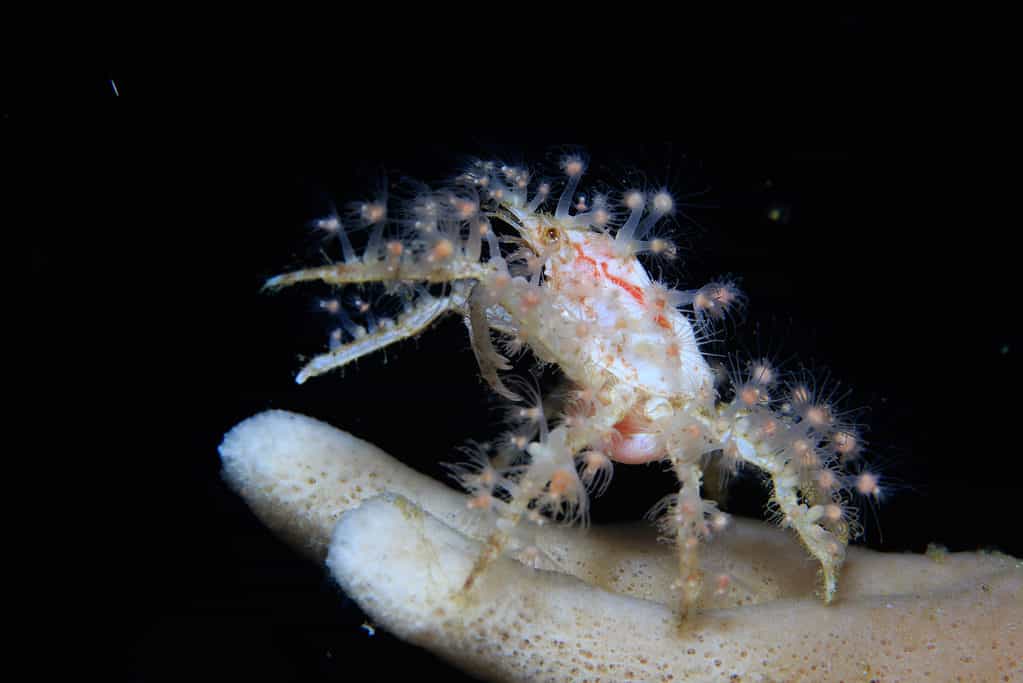
Decorator crabs often cover themselves with stinging animals like anemones and sea urchins to protect themselves from predators.
©SergeiUWPhoto/Shutterstock.com
About the Decorator Crab
The decorator crab is a name shared by a number of different crab species. They all share the trait of deliberately attaching pieces of their surroundings to their body. In the video above, a decorator crab is using underwater treasure like pearls to dress itself up. However, most of the time, they use natural items like algae, seaweed, sponges, anemones, and other organisms. They attach these items to the hard surface of their body called the carapace. Decorator crabs have special bristles, or setae, that act like a natural Velcro of sorts to hold the materials in place. Some individuals may even trim materials to their liking before creating their suits. But why do they do this?
The main reason that decorator crabs craft their own outfits is for camouflage. Crabs sitting on the seafloor can be pretty obvious to predators. To hide in their surroundings, they cover themselves in different materials. Algae and seaweed are popular for these animals as they are abundant. Sea sponges are also popular for the same reason, but they also provide other defenses. Certain sea sponges contain chemicals that are unpleasant or toxic to predators. Similarly, some crabs may even use sea anemones as a weaponize. Sea anemones have stinging cells on their surface, so predators that try to eat the crab will be met with some pretty intense pain. One of the coolest aspects of this process is that the crabs deliberately choose their material. Rather than going for the first object they see, they specifically pick items based on what predators are nearby and how well the materials provide camouflage.