
Quick Take
- Letting a golden retriever puppy run and play freely sounds harmless, yet it can trigger a joint condition that follows them for life. Puppy exercise limits →
- If your golden still bounces off the walls after a long walk, more exercise isn't the answer. Why personality drives needs →
- Most golden retriever owners default to fetch, even though experts consider it the weaker option for a reason. Better alternatives to fetch →
- One everyday behavior after exercise is your dog's way of telling you you've gone too far, and most owners miss it entirely. Warning signs to watch →
You likely know that golden retrievers are active, playful dogs that require plenty of exercise, but how much activity do they need per day? In this article, we’ll discuss how much exercise golden retrievers need based on age, health, personality, and even your fitness levels. We’ll also talk about how to exercise your dog, plus tips on how to provide mental enrichment.
How Much Daily Activity Do Golden Retrievers Need?
Every golden retriever is different. Their exercise needs can vary based on age, personality, physical fitness, and health. For instance, puppies shouldn’t participate in strenuous activities such as jumping or running long distances. Dogs with health problems may need their activities restricted as they heal or even permanently. Let’s dive into all of the factors at play when it comes to golden retriever activity levels.
Golden Retriever Exercise Level by Age
Golden retriever puppies can be overexercised easily, and this can affect their growth and development. Puppies who get too much exercise are more at risk of joint issues such as hip dysplasia. Puppies also have shorter attention spans than adult dogs and sleep much more — up to 20 hours each day. They do best with short but frequent bursts of activity rather than long walks or runs. Vets recommend 15-30 minutes at 2-4 months of age, extended to 45-60 minutes at 4-6 months.
Once fully grown, they can tolerate more vigorous exercise and have more stamina. Young adults should get 60-120 minutes of exercise each day, broken into at least two sessions. Two good walks plus playing fetch for 30 minutes is a good place to start.
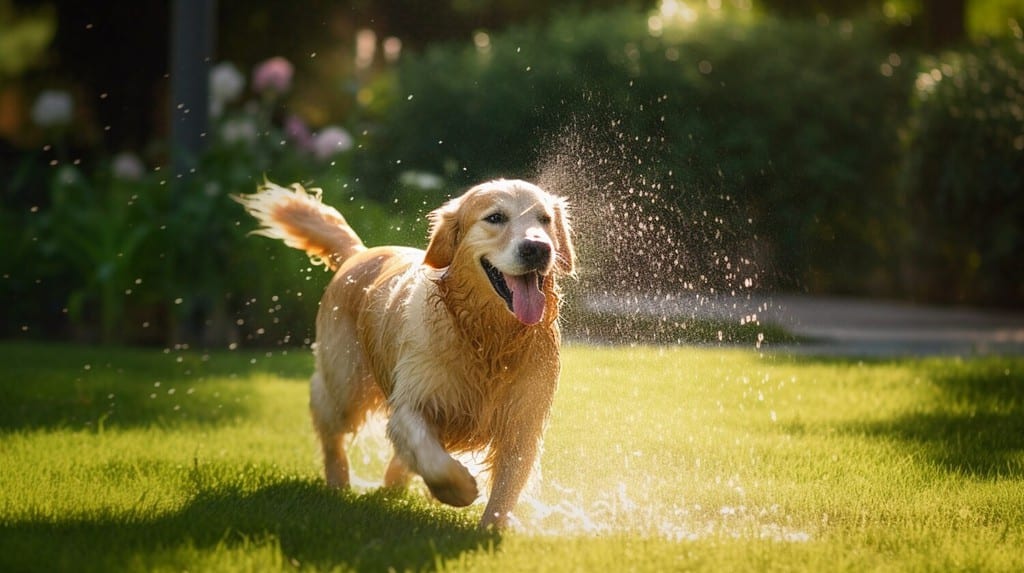
Adult golden retrievers 1-2 hours or more of exercise per day.
©Donamen/Shutterstock.com
Senior golden retrievers will typically slow down with age, but every dog is different. Take things at their pace and pay attention to signs that they’re overtired. Retrievers typically love water, so swimming is a great, low-impact exercise you can do with your senior pup.
Golden Retriever Exercise Level by Personality
Personality also plays a role in how much exercise your golden retriever will need. Some are content with an hour of exercise, while others that are more active may need more than two hours of exercise.
Just like people, some dogs will be ready to go no matter how much exercise they get, while others will be content to lounge around the house after they’ve been tired out. However, even couch potatoes need some exercise each day.
Golden Retriever Exercise Level by Fitness Level
If you consistently go on long hikes or runs with your golden retriever, they’re going to get used to this activity level. As a result, on days when you’re exercising less at home, they’ll need more activity than a dog that’s used to a slower pace.
However, golden retrievers are adaptable dogs. As long as they’re getting their 1-2 hours of exercise in, they can typically adjust to your routine and preferences.
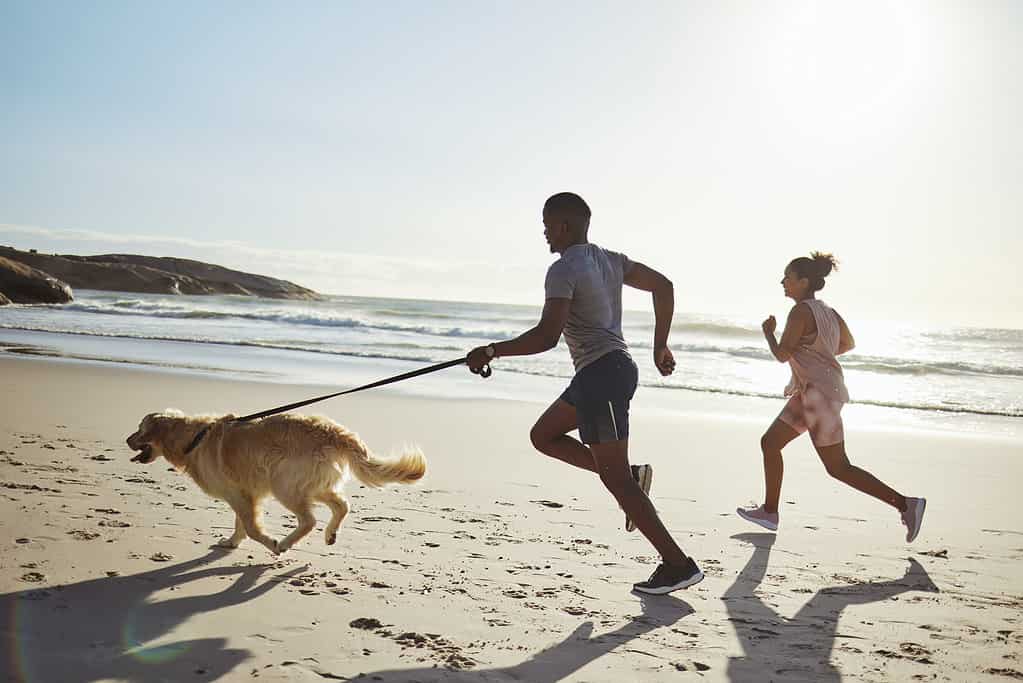
Your golden retriever can generally adapt to your activity levels.
©PeopleImages/iStock via Getty Images
Golden Retriever Exercise Level by General Health
Various health conditions can slow a golden retriever down. Joint issues, heart problems, and other conditions can make exercise difficult. Seniors are more likely to have health issues than puppies or adult dogs.
If your dog has a health problem, consult with their veterinarian to see if you need to change your exercise routine or exercise less to compensate. It’s also important to take things at your dog’s pace, never pushing them for more than they can handle.
How to Exercise Your Golden Retriever
Every dog is different, so your pup will have its preferred activities. If you aren’t sure where to start, here are a few ways you can exercise your golden retriever.
Daily exercises may include:
- Walks, runs, or hikes provide plenty of mental stimulation and exercise for your golden retriever. Ideally, they’ll be getting multiple walks per day.
- Flirt poles are like giant cat toys that allow your dog to act on their prey drive without hurting real animals.
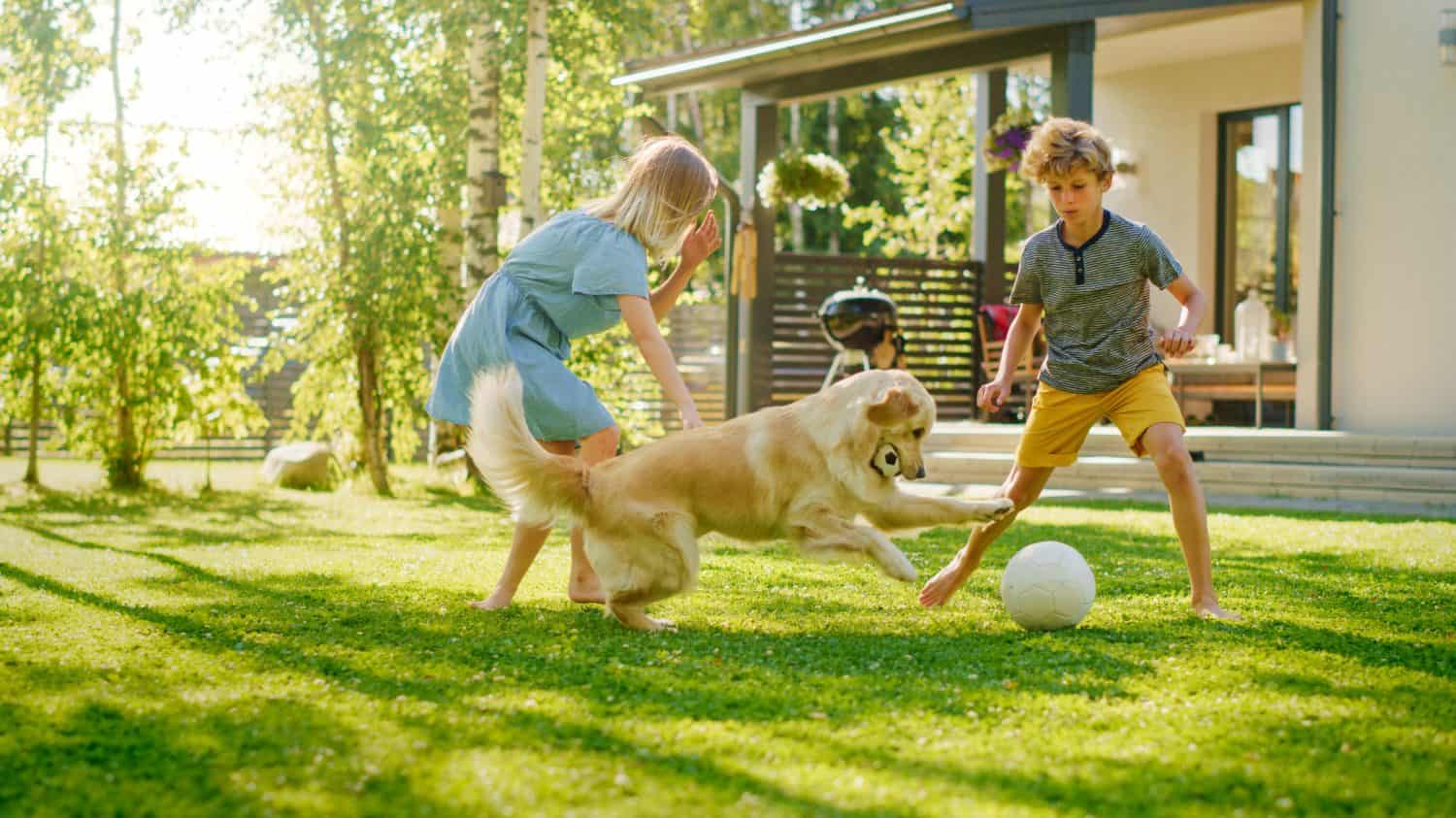
- Games of fetch can still be great, especially for retrievers. Just make sure your dog doesn’t get obsessed with the game and overexert themselves.
- Games of tug let your golden use their teeth and strength. Remember that it’s important to let your dog win frequently so that the game stays fun.
- Swimming is an activity that most golden retrievers love since they were bred to hunt birds in the water. Adding toys for them to retrieve can increase the fun.
- Dog sports such as agility or tracking can provide entertainment for you and your dog. Just be sure not to start agility training too early, as jumping can be detrimental to a puppy’s joint health.
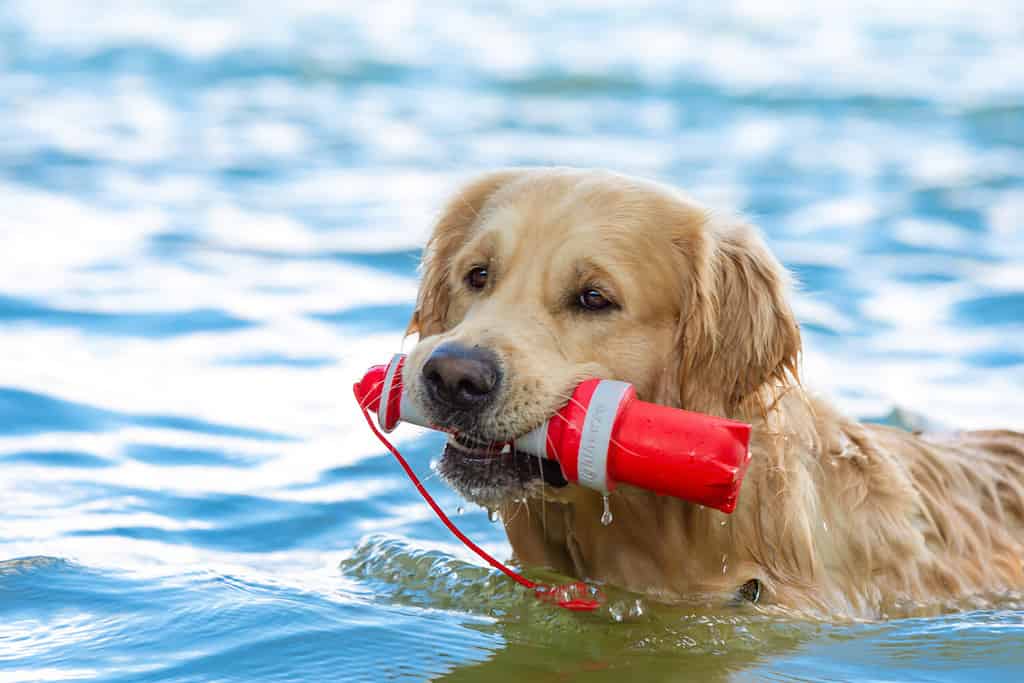
Swimming provides great exercise for golden retrievers and is gentle on the joints.
©demanescale/Shutterstock.com
Mental Enrichment for Golden Retrievers
Mental enrichment is just as important as physical activity. Without it, goldens can become bored, anxious, and destructive. If you exercise your dog regularly and they still aren’t tired, they likely need more mental stimulation.
Here are some ways to keep your golden retriever from becoming bored:
- Daily training helps whether you’re practicing old cues or learning new ones. Goldens are intelligent dogs that can learn quickly and enjoy training.
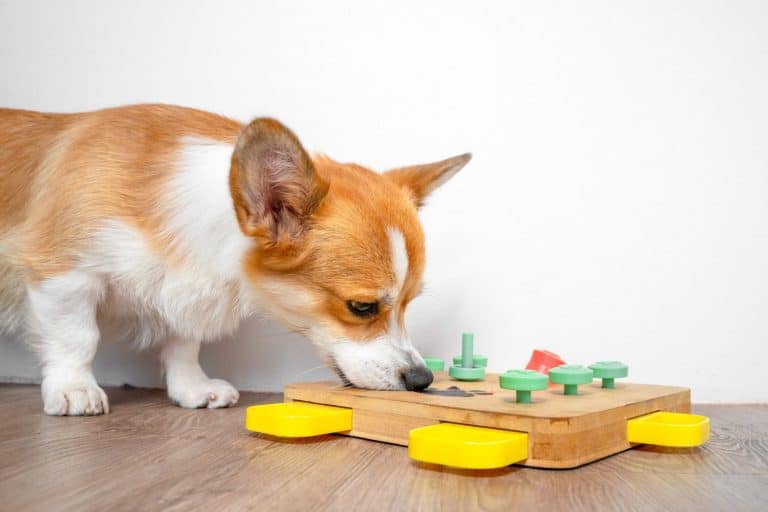
- Puzzle toys make a golden retriever think about how to retrieve treats and are a great way to make kibble more engaging.
- Hide and seek can be played using treats, toys, or even people. Start with the smelliest treats and work your way toward items with a harder-to-find scent.
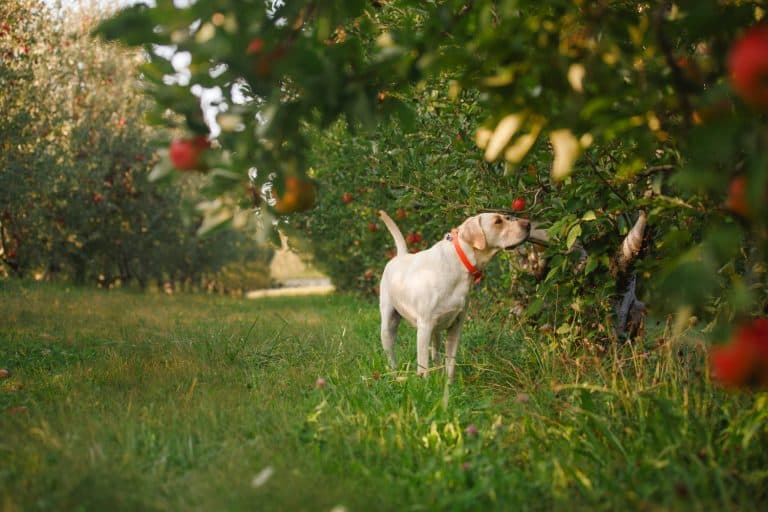
- Sniff walks are walks where your golden gets to go at their pace and sniff as much as they want, which can be quite tiring as it provides a lot of mental stimulation.
- Learning to fetch items such as the remote or bottles of water engages their retrieving instincts in a useful way.
- Learning the names of toys is an easy way to keep them engaged. You can ask them to find individual toys, bring them to you, or even put them away in a toy basket.
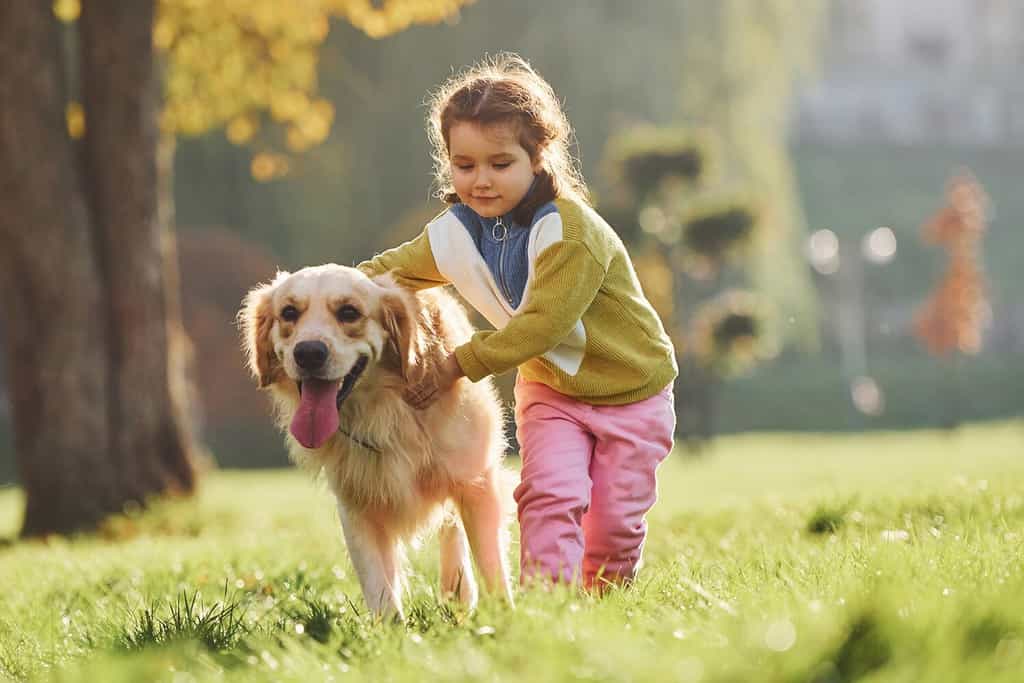
Your dog can become easily bored, so incorporate daily training and sniff walks for mental enrichment.
©Standret/Shutterstock.com
Can You Overexercise a Golden Retriever?
You can overexercise your golden, though this is harder to do for a healthy adult dog. Puppies and seniors are more easily overexerted. Too much exercise before your dog is fully grown can increase their risk of developing joint problems. Overexercising seniors can worsen their health or lead to heat stroke. To avoid overexerting your dog at any age, take activities at your dog’s pace. If they want to stop or slow down, pay attention to their cues.
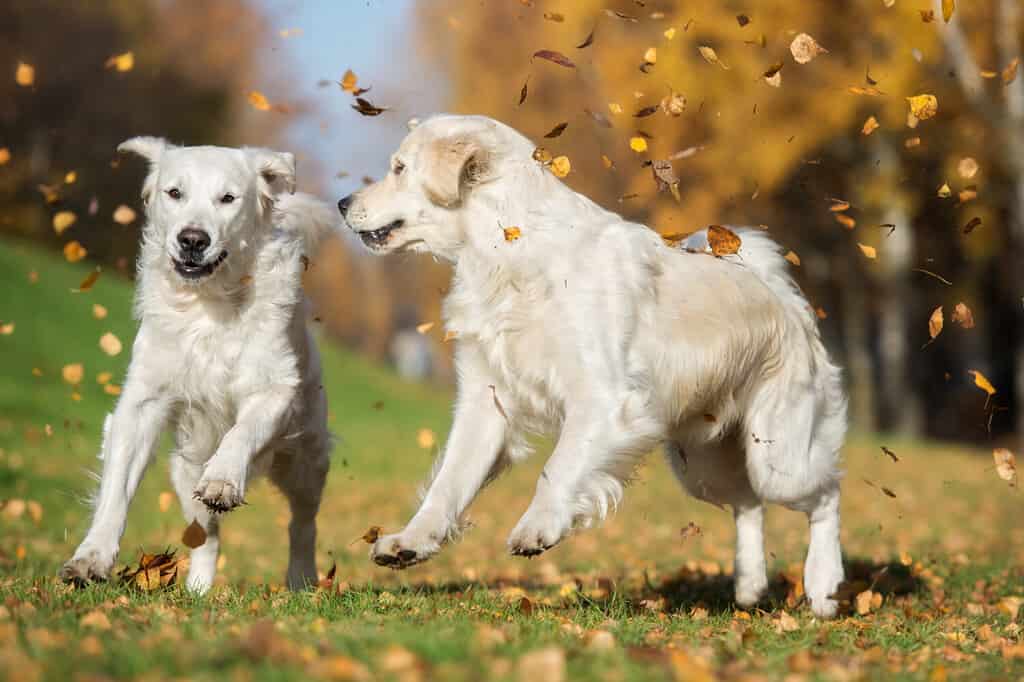
To avoid overexertion, take activities at your dog’s pace.
©otsphoto/Shutterstock.com
Learn to watch them for signs that they’re too tired, such as slowing their pace. If they become too hot, watch for bright red gums, excessive panting or drooling, labored breathing, weakness, and vomiting or diarrhea. These are early warning signs of heat stroke, and your dog should be taken to the vet immediately. If your dog crashes for long periods after exercise, this can be another sign that you’re overdoing it.
It’s also vital your dog gets enough sleep during the day. Puppies need up to 20 hours of sleep, while adult dogs may need as much as 14 hours. Seniors go back to sleeping more often and may need up to 20 hours of sleep per day.