
Quick Take
- The laziest dogs actually demand the most sleep, a fact whose explanation defies most owners' instincts. See why low-energy breeds sleep most →
- Your dog's midnight restlessness isn't insomnia. It's a built-in biological quirk that sets dogs apart from almost every other household pet. Discover the polyphasic sleep quirk →
- Most owners guess wrong about whether puppies or senior dogs need more sleep, and knowing the real answer should change how you structure their day. Compare puppies vs. seniors →
- Your dog's breed isn't just a personality type. It's a sleep prescription, and ignoring it could leave your dog chronically under-rested. Find your breed's sleep needs →
One thing many people don’t consider when adopting a dog is its sleep schedule. Some dogs require a full 16 hours of sleep, while others may be up and running in eight hours or less. Age also factors into a dog’s sleep schedule, along with its health, activity level, and overall sleep quality. If you’ve ever wondered how much your pup truly needs to snooze, we’ve got the answer.
Why Napping Is Essential for a Dog
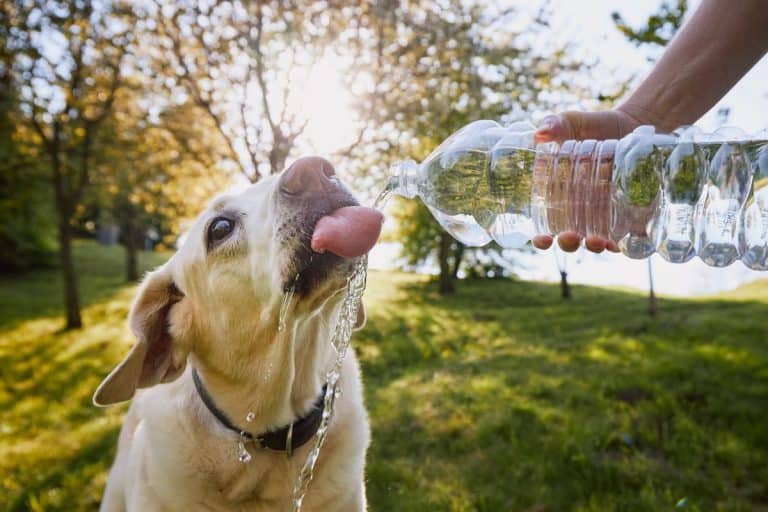
You may look over to see your dog snoring on the couch and wonder, “Why can’t I nap like that?” While humans can function without frequent naps, dogs need them as part of their daily routine. Dogs are polyphasic sleepers. Rather than sleeping throughout the night as humans do, they take short, frequent naps over a 24-hour period. Taking multiple naps offers benefits such as increased recovery time, a quick energy recharge, and a mental reset when a dog feels overwhelmed or exhausted.
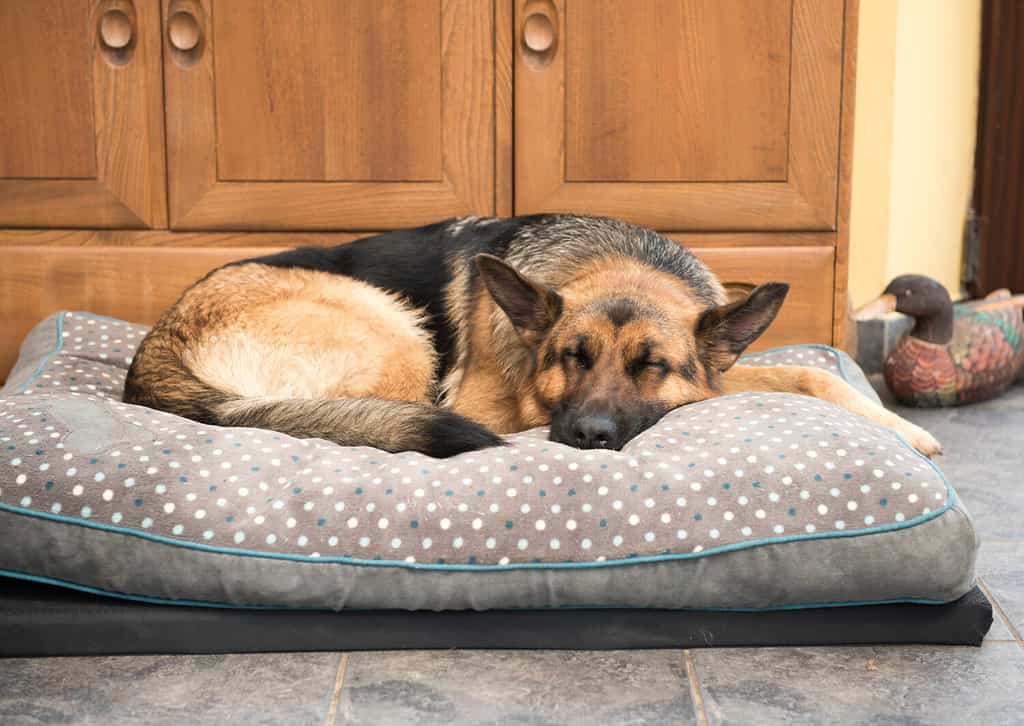
Frequent naps are all part of a dog’s life and are completely normal.
©Stephm2506/Shutterstock.com
This is also why your pup may stir or become restless in the middle of the night. Unless accompanied by other concerning symptoms, it’s likely just your dog’s way of releasing pent-up energy after sleeping for around six hours. Dogs may also sleep when they’re bored, which typically happens during the day between playtimes. This is usually nothing to worry about and is simply how your dog passes the time when there is little stimulation. If your dog becomes lethargic or anxious, it may be time to add a puzzle toy or an extra walk to their daily routine.
Sleep Needs Differ By Breed
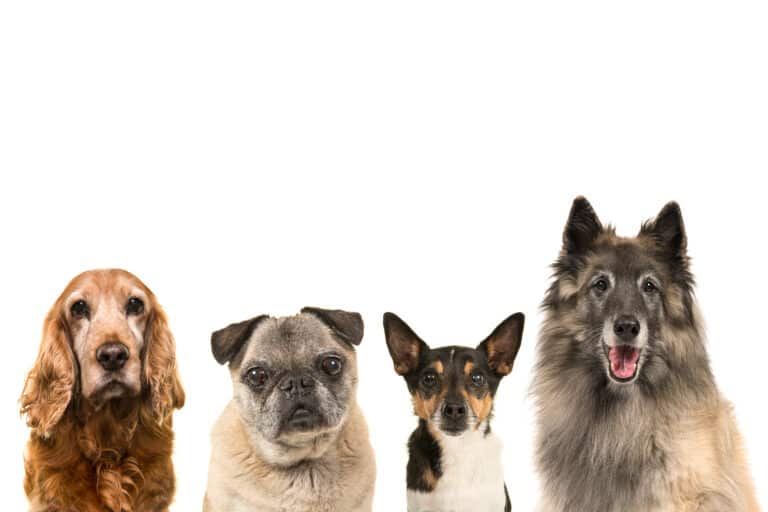
A dog’s breed reveals a great deal about its activity level and, consequently, how much sleep it needs. Active breeds, such as Labradors, Border Collies, Chihuahuas, and Pomeranians, tend to snooze less. Any working breed is prone to taking more short naps rather than sleeping through the entire night without waking. The overall alertness of these dogs contributes to their activity levels. The more hyper a dog is, such as a whippet, the less likely they are to nap with you on the couch. Not every dog will follow these general patterns. While most do, sleep also depends on each dog’s unique circumstances and daily routine.
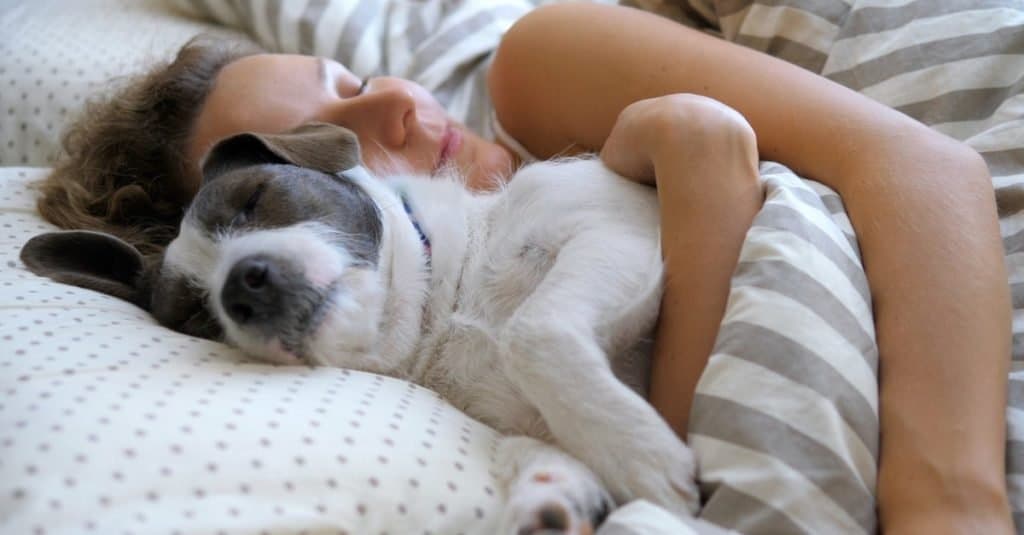
Not all dogs sleep through the night; it depends on their size and breed.
©DiMedia/Shutterstock.com
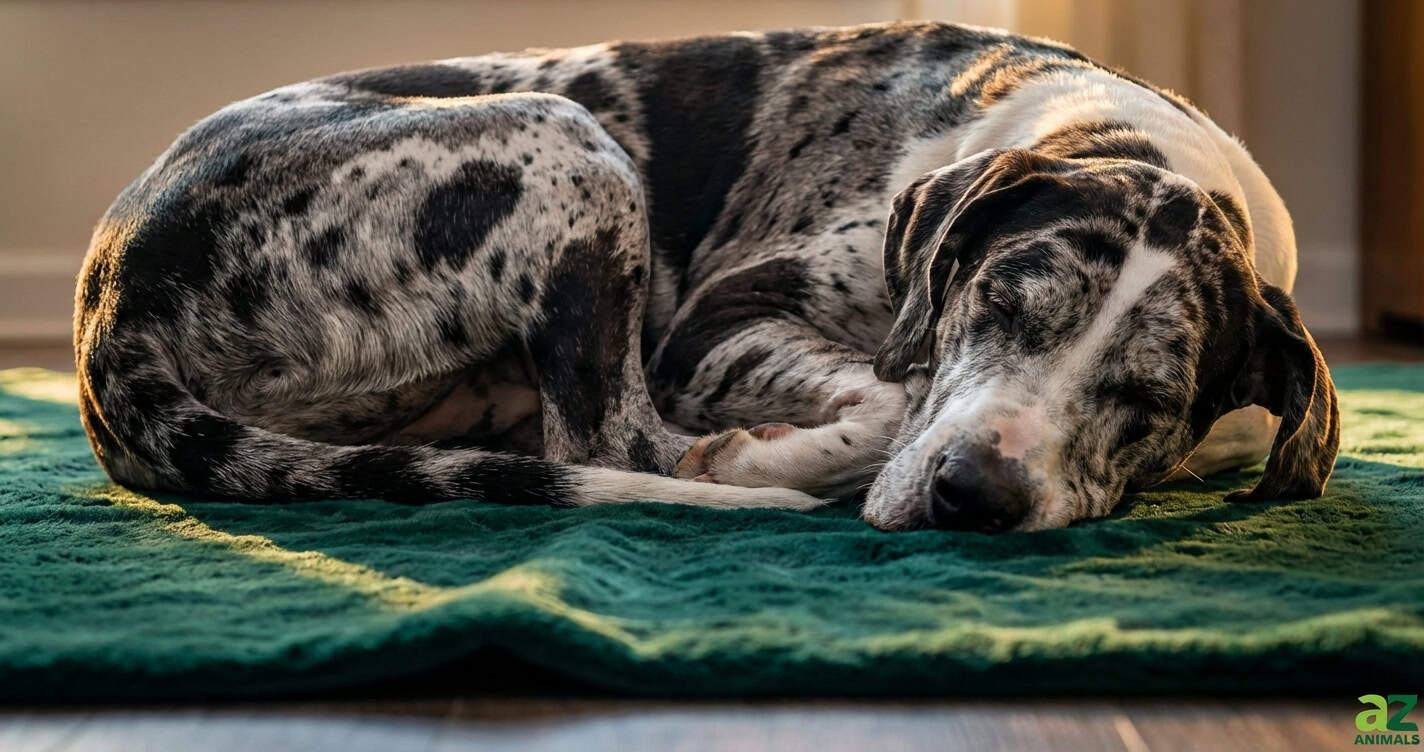
Alternatively, the big snoozers typically include large dog breeds. They require more time to recover from the energy they exert while awake. Great Danes, Saint Bernards, greyhounds, and mastiffs all have a heavier sleep schedule than their smaller, more hyperactive cousins. This also includes naturally low-energy breeds, such as English Bulldogs, Basset Hounds, and Shih Tzus. Counterintuitive as it may seem, the less active the pup, the more likely they are to sleep.
| Breed Size | Hours Napping | Nightly Sleeping Hours |
| Teacup | 4-6 | 10-12 |
| Small | 4-6 | 10-12 |
| Medium | 3-4 | 7-10 |
| Large | 6-8 | 12-14 |
Sleep Needs Differ By Age
You might think that puppies need less sleep than senior dogs, but it’s often the opposite. Many factors influence a dog’s sleep patterns, especially in seniors. However, puppies are actively growing, and their bones, muscles, and neurological systems require extra energy. To recover from these rapid growth spurts, puppies need plenty of naps and usually sleep for long periods at night.
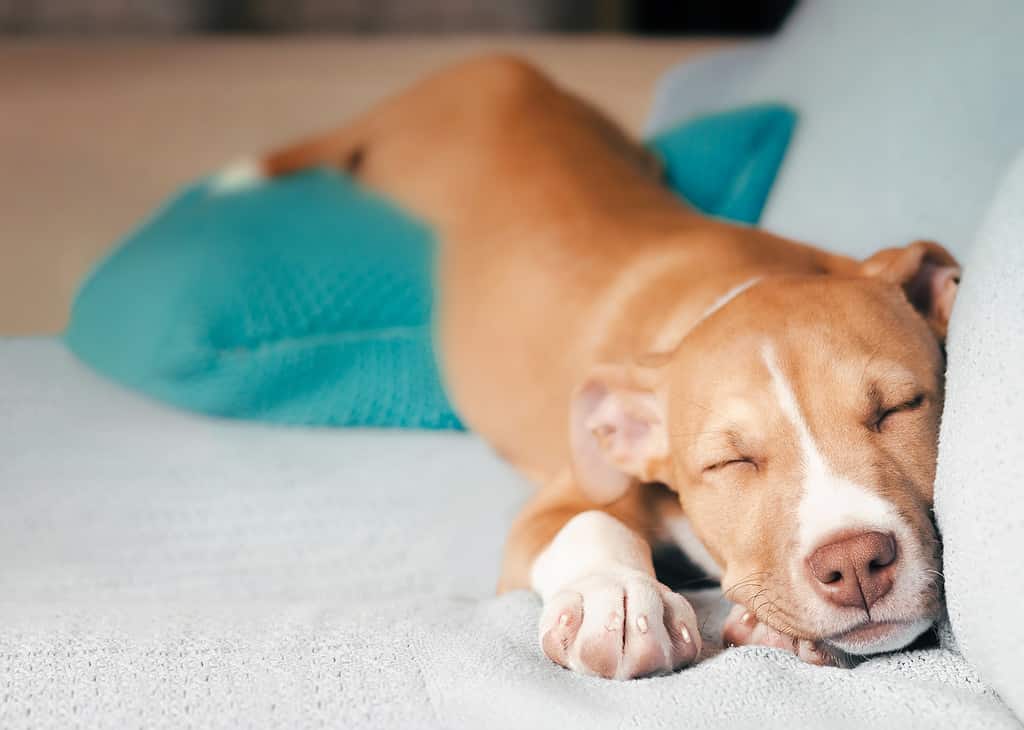
A bored dog may sleep more, which means it’s time for more exercise.
©Petra Richli/iStock via Getty Images
Senior dog sleep schedules vary from dog to dog. If a dog has any illnesses or health issues, they may require longer periods of rest. If a senior dog is mostly healthy, they might average 12–18 hours of sleep per day, though some may sleep up to 20 hours. These hours also depend on how much activity a dog gets; for example, it’s far easier to tire out a senior dog on a walk than a six-month-old puppy. When you combine age with breed type, there are countless possible sleep schedules your dog might follow as they get older.
| Age | Hours Napping | Nightly Sleeping Hours |
| Puppy (<6 months) | 6-8 | 10-14 |
| Adult (6 months – 10 years) | 4-6 | 8-12 |
| Senior (10 years+) | 6-8 | 8-14 |