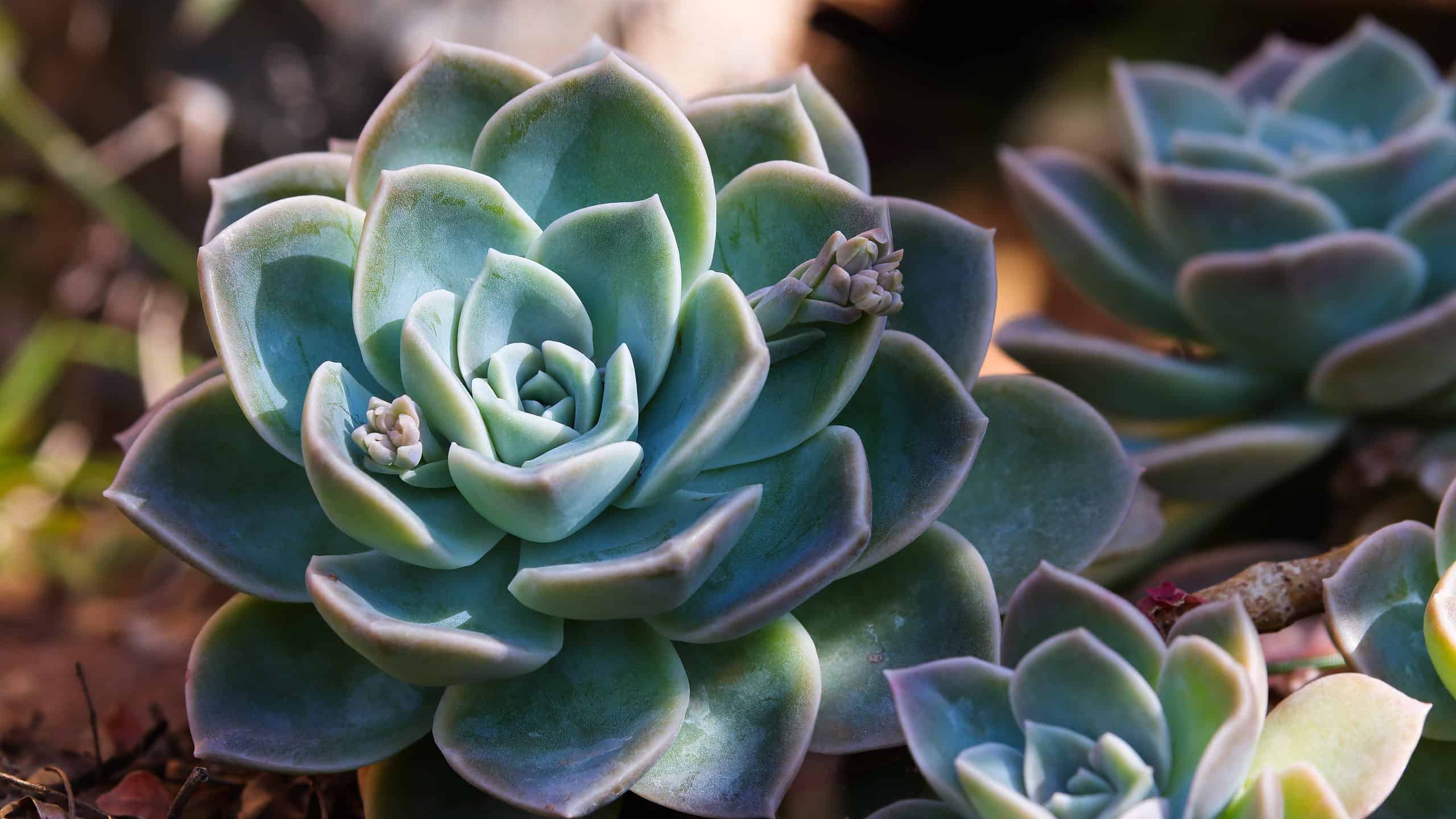

Echeveria succulents are diverse, colorful, and easy to care for—the new plant owner’s trifecta of greatness!
In this article, we’ll discuss the various types of echeveria succulents and how to grow, propagate, and care for these low-maintenance beauties.
Let’s dig in!
Echeveria Succulent: Origins
A closeup of Echeveria prolifica
©Wirestock Creators/Shutterstock.com
Echeveria succulents are a diverse genus of succulent species belonging to the Crassulaceae family. While the Echeveria genus was originally discovered and classified in Mexico, you can also find these drought-tolerant plants in Central America and South America.
Echeverias were named after the artist Atanasio Echeverría y Godoy, who contributed to the Torner Collection of Sessé and Mociño Biological Illustrations—a collection of botanical drawings observed during early forays to the Americas in the late 1700s.
One of the most notable aspects of echeveria succulents is its overlap with other genera. Many types of plants are “monophyletic,” sharing a clear common ancestor. Some echeveria species “cluster” with other genera, leading to confusion in their identification. If you’ve struggled to tell the difference between an echeveria succulent and a sedum succulent, this is likely why.
Echeveria Succulent: Appearance
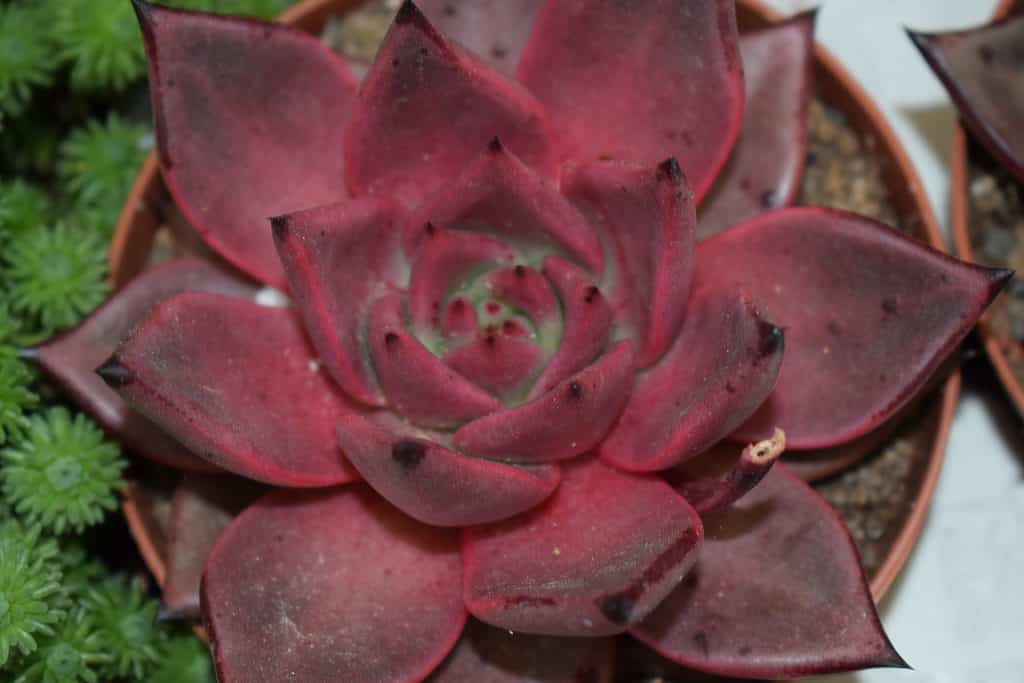
This Echeveria agavoides ‘Romeo’ is a stunning succulent plant
©Furiarossa/Shutterstock.com
Echeveria is a diverse genus with a lot of variety among species. However, like the snake plant succulent, there are some common traits most echeveria succulents share.
- Growth habits – these succulents tend to grow in compact clusters with a distinct rosette pattern.
- Offset production – these succulents are known for producing offsets or pups, replicating at a rapid rate compared to other species.
- Drought tolerance – like many succulents, these plants thrive in dry conditions.
- Hardiness – while they prefer warm climates, these succulents tend to be hardier and more cold-resistant than other species.
Echeveria species have diverse coloration, leaf patterns, and bloom colors. Their diversity could be considered another shared trait.
Echeveria Succulent: Benefits & Uses
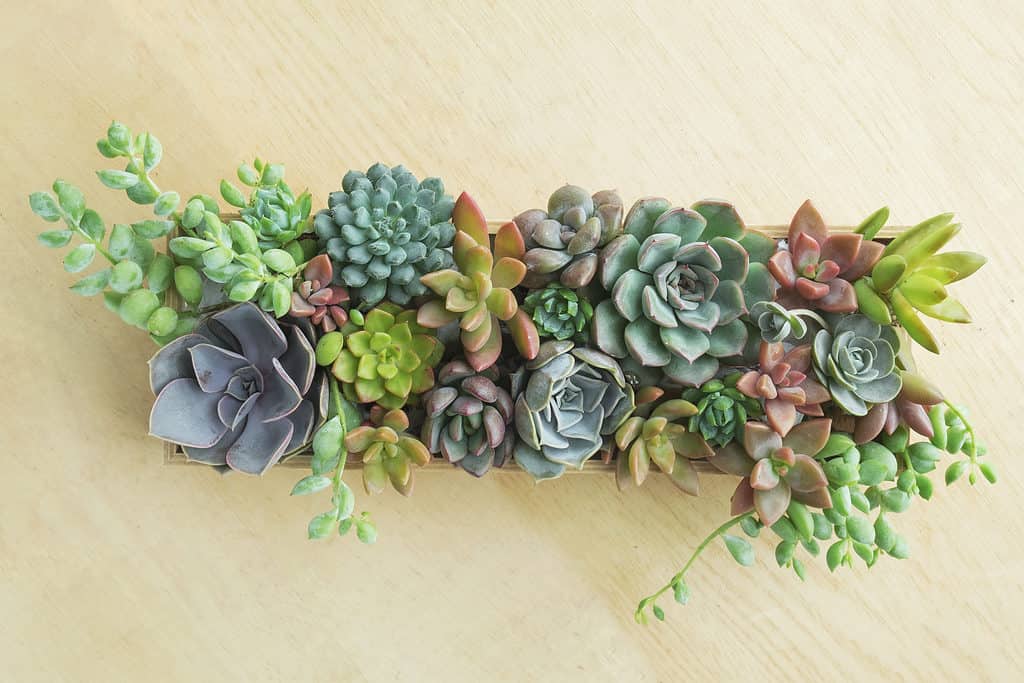
Get inspired and let your imagination run wild as you make beautiful succulent arrangements for your home or office.
©panattar/Shutterstock.com
Echeveria succulents are primarily used for decor and gardening. However, their resilient nature, visual appeal, and growth patterns make them incredibly versatile as an ornamental plant.
Some common uses for echeveria succulents include:
- Terrariums (or cemetariums for Halloween!)
- Green or living wall displays
- Centerpieces and bridal arrangements
- Mint tin and miniature gardens
- Rock gardens (exterior)
As these succulents are easy to propagate and reproduce quickly, they’re also ideal for gifting.
Common Varieties of Echeveria Succulents
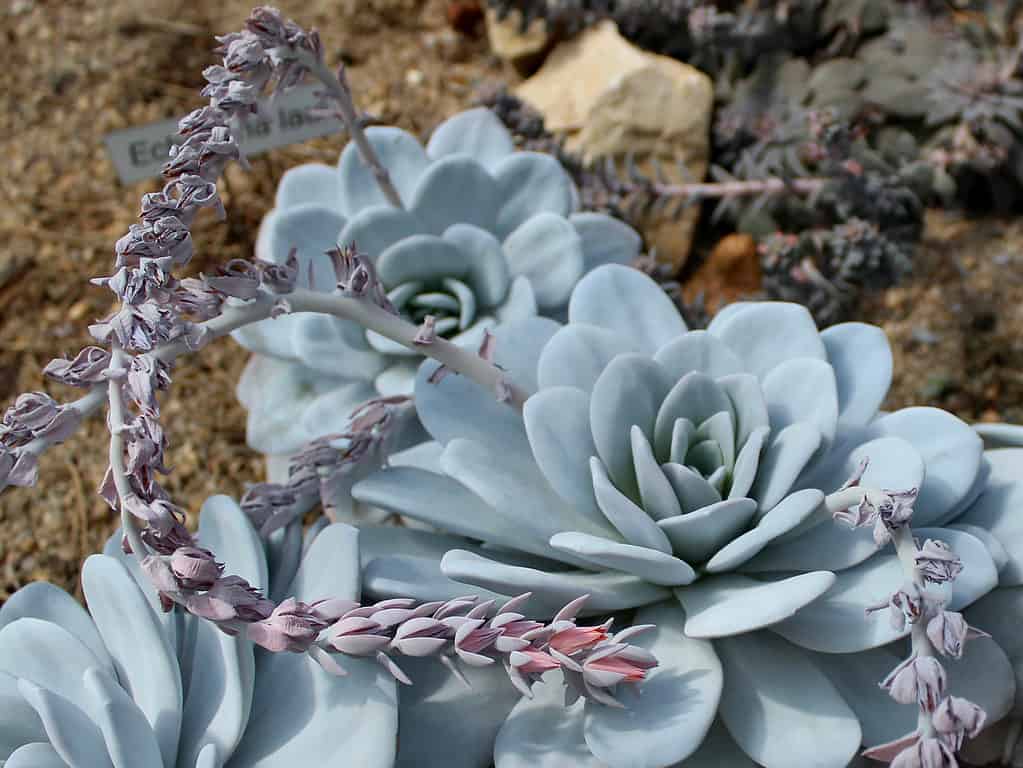
Close-up of the Echeveria laui succulent.
©Svetlanko/Shutterstock.com
There are over 100 species of Echeveria succulents. However, these breeds are some of the most popular for indoor and home gardening:
1. Echeveria elegans
The Echeveria elegans is often known as the Mexican snowball or hen and chicks. Its spoon-shaped leaves boast a delicate light green hue brushed with silvery tones that can transform into a captivating blue tint.
2. Echeveria imbricata
Echeveria imbricata is practically a doppelgänger to Echeveria elegans. They share the same size, shape, and general appearance, with a twist: Echeveria imbricata boasts a distinct blue tone punctuated with hints of serene light green, delicate pink, or even a soft purple along the edges.
3. Echeveria laui
Echeveria laui is enchanting, with plump leaves in a gentle blue-gray hue, casting a spell of elegance. Its extending stems from its base rosette unfurl into radiant red-gray offspring rosettes, with eye-catching orange blooms.
4. Echeveria agavoides
Also known as a lipstick echeveria, Echeveria agavoides is named for its resemblance to an agave plant. However, this beauty won’t be producing tequila any time soon (ever). This light green succulent has purplish red tips—a blush of color that makes it pop!
5. Echeveria lilacina
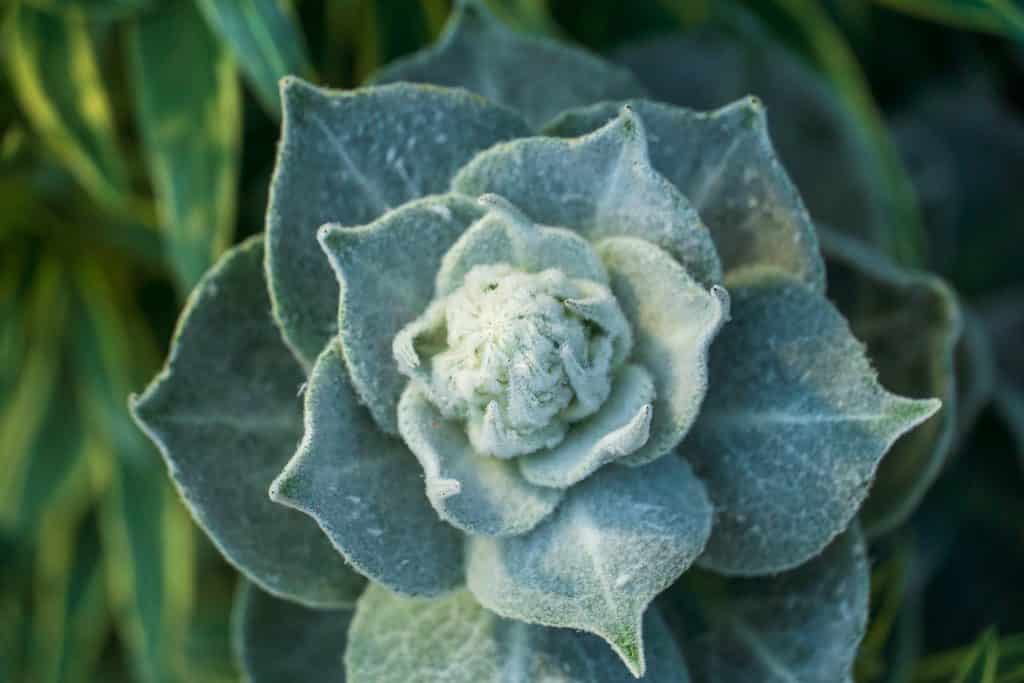
Also known as the ghost echeveria, Echeveria lilacina has a soft, silvery blue tone and velvety texture. This echeveria has a muted color, bordering on gray, lending to its haunting nickname.
How to Grow Echeveria Succulents From Seed
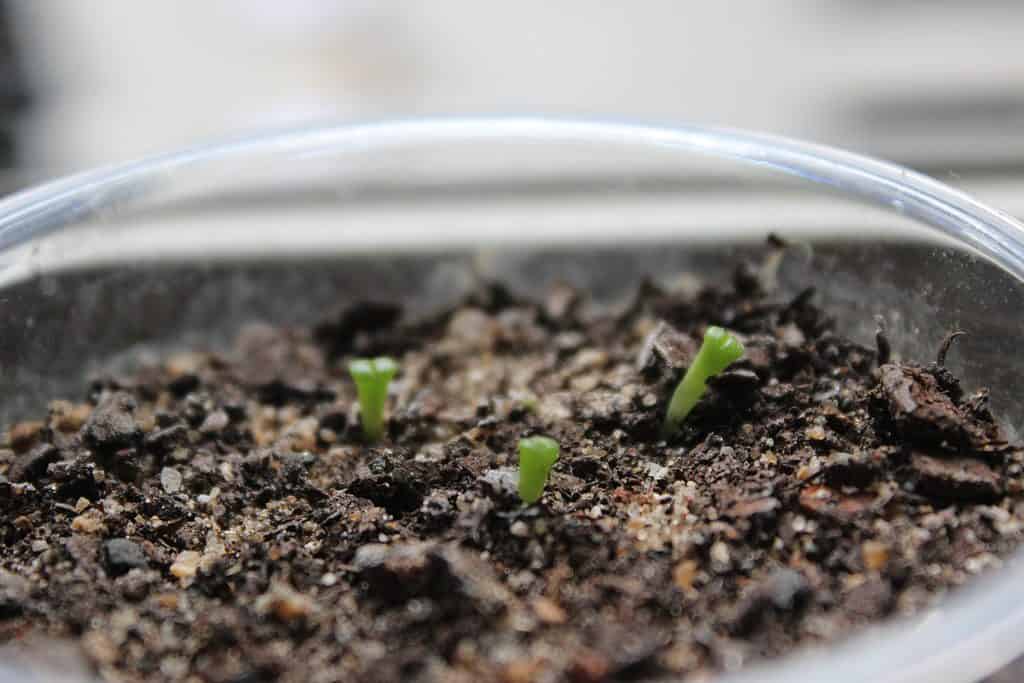
Succulent Lithops seeds germinated.
©Luciana_Oli27/Shutterstock.com
Echeveria is considered one of the easiest succulents to grow from seed (along with Sedum and Aeonium). Here’s a step-by-step guide for growing echeveria succulents from seed:
- Prepare the workspace by cleaning and sanitizing the area and tools. Consider laying down some newspaper or a garbage bag to keep the soil contained.
- Scoop 2-3 inches of succulent soil into well-draining planters (clay pots work best). Moisten the soil with a light sprinkle of water or mister.
- Sprinkle your echeveria succulent seeds on top of the moist soil, providing space to grow between seeds if possible.
- Cover the seeds with a fine layer of soil—just a dusting.
- Cover with plastic wrap to create a miniature greenhouse to trap moisture and promote growth.
Keep the soil moist until the sprouts germinate and establish roots. Succulent seedlings are sun-sensitive; keep them out of direct sunlight. They also require more moisture than established echeveria plants; mist daily until established.
Once the sprouts develop into rosettes, separate and repot for further growth.
How to Propagate Echeveria Succulents
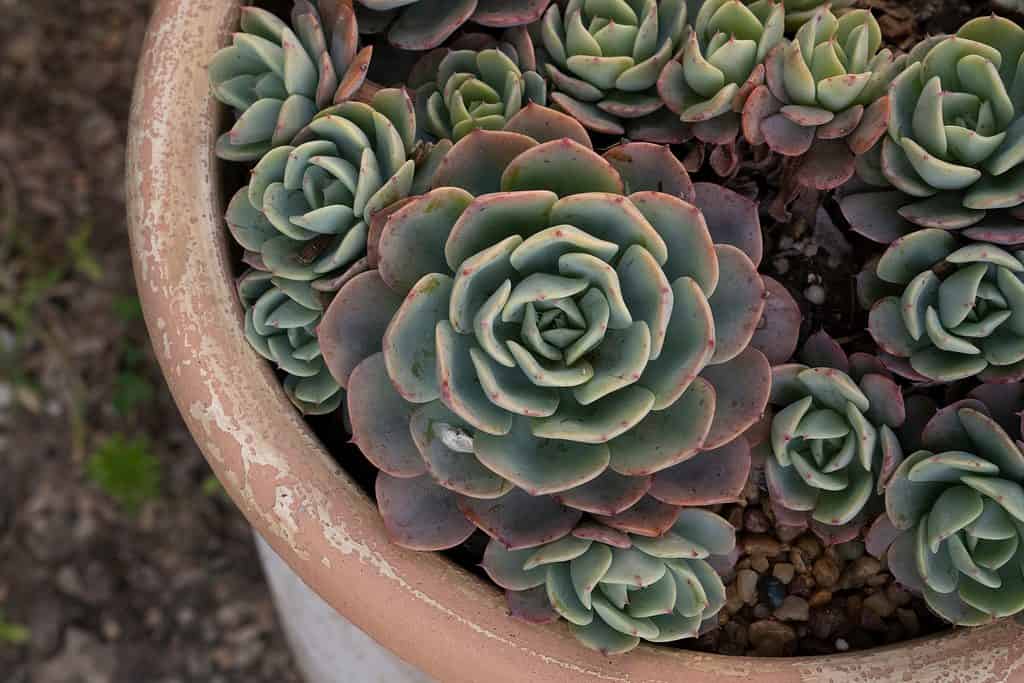
Echeveria succulents produce offshoots and are easy to propagate with leaf cuttings.
©Gonzalo de Miceu/Shutterstock.com
Echeveria succulents are also incredibly easy to propagate. When cared for properly, your echeveria will produce offsets that can be separated and repotted.
Alternatively, you can propagate your echeveria succulents with a leaf cutting:
- Water your echeveria 2-3 days before taking your leaf cutting to ensure ample hydration and health.
- Gently pull and twist a healthy, established leaf from your parent plant.
- Place the leaf out of direct sunlight in a dry area for 2-3 days to callous over.
- Prepare a workspace by cleaning and sanitizing the area and tools. Consider laying down some newspaper or a garbage bag to keep the soil contained.
- Scoop 2-3 inches of succulent soil into well-draining planters (clay pots work best). Moisten the soil with a light sprinkle of water or mister.
- Dip the calloused end of your cutting in rooting hormone and lay it on top of the soil. You can place several in one planter.
- Cover the calloused end with a fine layer of soil—just a dusting.
- Place in indirect sunlight, misting regularly until roots are established in 2-3 weeks.
Alternatively, you can use elastics to place your calloused leaf cutting slightly over a cup of clean water, changing the water every few days until roots develop. Most succulent enthusiasts prefer the soil method.
How to Care for Echeveria Succulents
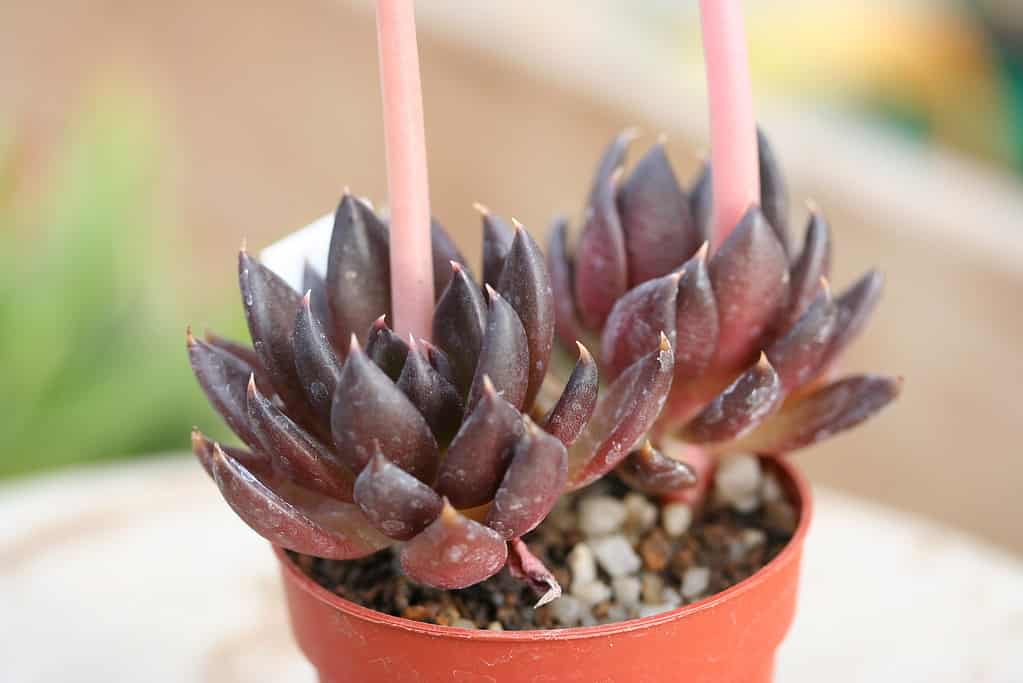
Close-up of Echeveria affinis in a pot.
©Michael Wolf, CC BY-SA 3.0, via Wikimedia Commons – Original / License
Echeveria succulents are one of the easiest plants to care for, making them ideal for beginners and busy (or forgetful) plant lovers.
1. Soil Selection
Opt for well-draining succulent soil (not cactus soil) with a high ratio of perlite or pumice. While echeveria succulents will grow in regular potting soil, they won’t thrive without the ample drainage that succulent soil provides.
2. Watering
Echeveria succulents require infrequent watering to thrive. It’s better to underwater than overwater these plants.
Test the soil by sticking your finger in an inch to assess dryness. If it’s dry, give the succulent a thorough soaking. If it’s moist, wait a few more days to prevent root rot.
3. Sunlight Exposure
Echeveria succulents require bright, indirect sunlight for 6-8 hours daily to thrive. Choose an East or south-facing window if possible. Avoid drafts and vents.
4. Maintenance and Care
Echeveria succulents are prone to pest infestations. The most common offenders include:
- Spider mites
- Mealybugs
- Scale insects
If you find these critters, wipe your echeveria down with a warm cloth moistened with water and dish soap. Apply a neem oil treatment to deter further invasions.
Consider repotting your echeveria every couple of years when they become overcrowded or need a new infusion of nutritious soil.
5. Fertilization and Overwintering
Echeveria succulents can thrive outdoors in USDA zones 9-12, with some species braving USDA zones 7-8. However, it’s best to overwinter your echeveria plants indoors if you’re outside 9-12.
Echeveria succulents typically don’t need fertilization. However, you can add a diluted, succulent-friendly formula at the start of the active growing season (in the spring).
How Do You Prevent Etiolation in Echeveria?
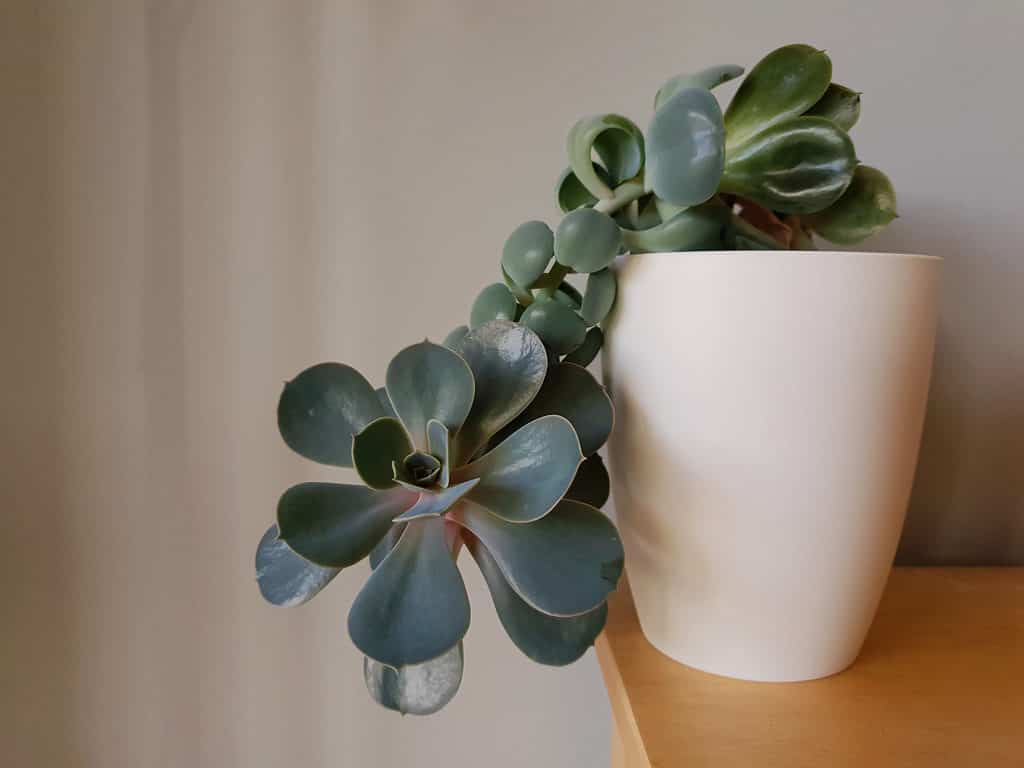
Echeveria succulent plant growing in a shade stretches and turns towards the light.
©Agnieszka Pas/Shutterstock.com
Etiolation, also known as “stretching,” occurs when a succulent plant gets insufficient light. It will stretch and become leggy, developing a stem and sparse leaves rather than a compact rosette.
If your echeveria is stretching, reconsider its proximity to light or supplement with a growth light. You can cut your echeveria at the base of the rosette, dipping the end in rooting hormone, and planting it as you would a leaf cutting to “start over.”
Are Echeveria Succulents Toxic?
Echeveria succulents are listed as non-toxic to pets. However, they should be kept out of reach of animals and children. It’s worth noting that touching echeveria succulents too much can diminish their protective, waxy, or fuzzy layer (depending on the species) and cause them harm.