Succulents come in all shapes and sizes, creating an endless variety of options for collectors to choose from. The ghost plant is a unique option that stands out from the crowd, offering a balance of low-maintenance care and a beautiful, eye-catching appearance.
In this article, we’ll cover everything you need to know about the ghost plant succulent, including care tips to help this ethereal plant thrive.
Note that this information covers Graptopetalum paraguayense (the ghost plant succulent), not Monotropa uniflora (the ghost plant wildflower).
Let’s dig in!
Ghost Plant: Origins
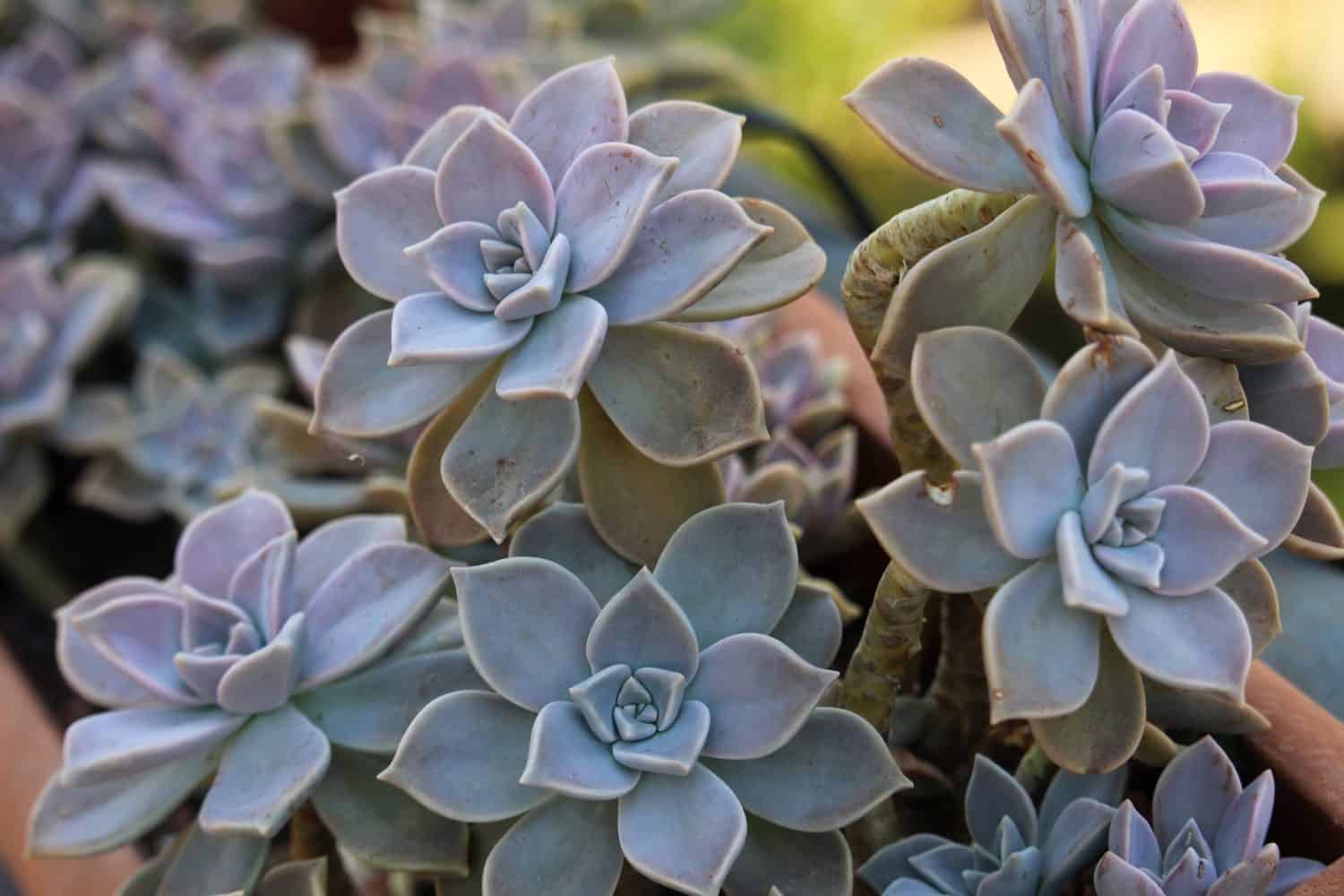
Ghost plants have a fine layer of farina, which mutes the blue and purple tones underneath.
©Jimenezar/Shutterstock.com
The ghost plant succulent, scientifically known as Graptopetalum paraguayense is native to Mexico, though some of these plants have been discovered in Central America. This member of the jade family is also known as the mother-of-pearl succulent and shares the “leatherpetal” genus with over a dozen similar species.
Ghost Plant: Appearance
The ghost plant gets its moniker from its white, muted tone. This ghostly shade is caused by the presence of epicuticular wax, also called farina, which is a protective layer that traps moisture and provides sun protection in hot environments. This coating is present on several species of Echeveria succulents.
Graptopetalum paraguayense grows in compact rosettes with pointed leaves. This succulent is a low grower, and reaches no more than 6-12 inches, but will spread and produce offsets with proper care.
How to Care for a Ghost Plant
The ghost plant succulent is relatively low maintenance and easy to care for. While it’s typically grown indoors as an ornamental plant, it will survive outside in USDA zones 9-11.
1. Soil Selection
Graptopetalum paraguayense requires a well-draining succulent soil to thrive. Provide soil with a balanced level of organic content with perlite or pumice for better water flow. Choose a well-draining pot as this succulent, like many others, is prone to root rot.
2. Watering Frequency
This heat-loving plant requires infrequent watering, allowing the soil to dry out before giving a deep soak. There’s a common misconception that drenching your succulent is bad for it. On the contrary, consistently moist soil and regular watering is the issue. Test the soil and water thoroughly, allowing excess water to run through and removing the tray so your plant isn’t left in a puddle.
3. Sun Exposure
The ghost plant succulent enjoys full sunlight—the farina helps keep it safe during extreme heat! It will tolerate indirect sunlight too. If you plan to move this plant outdoors for the summer, transition it slowly into the full sunlight over a few days.
4. Maintenance and Care
Ghost plants are low maintenance, but they do attract some common pests. Watch for mealybugs, scale insects, and spider mites. If you move your plant outdoors in the summer, watch for aphid infestations.
You can remove these pests with a blast of water or a damp cloth and dish soap. Use an insecticide or fungicide if issues persist.
5. Repotting and Fertilization
Graptopetalum paraguayense does well in shared spaces, making it ideal for terrariums or decorative arrays of several succulent species. You likely won’t need to repot this slow grower more than every two years.
Provide a diluted fertilizer in the spring, at the start of the growing season. Avoid fertilizing in the fall as your succulent enters dormancy, as the excess nutrient levels could negatively impact your plant.
How to Propagate a Ghost Plant

The ghost plant succulent loves the sun.
©Tarda Santo/Shutterstock.com
The easiest way to propagate a ghost plant is to divide and transplant offsets. You can also do a simple leaf cutting propagation.
- Water and fertilize your plant a few days before propagating. Plan to take your leaf cuttings during the spring, at the start of growing season.
- Identify the healthiest leaves on your plant and choose a few for propagation.
- Gently pull and twist healthy leaves from the plant.
- Set the leaves in a dry area to callous over.
- After the callous is formed, dip your leaves in rooting hormone and lay them atop some moistened succulent soil.
- Gently cover the calloused end with soil. Consider adding plastic wrap over the top to trap heat and moisture.
- Mist your cuttings regularly until roots are established and new foliage forms.
While established succulents don’t like regular watering, your ghost plant cuttings will need consistent moisture to grow. Once they’re established, you can transplant them to their own pots.
Where to Place a Ghost Plant
Place your ghost plant by a sunny window where it will receive 6-8 hours of sun each day. If this isn’t possible, supplement sunlight with a grow light.
Are Ghost Plants Toxic?
Graptopetalum paraguayense is listed as non-toxic to pets and humans. However, you should place this sensitive plant out of reach of curious kids and critters.