Are you starting your houseplant journey? If you’ve recently searched for easy and beautiful cacti to grow, there’s a good chance the rat tail cactus showed up in your results. Rat tail cacti are one of the most common houseplants in the world. These beautiful cacti have hundreds of cultivars ranging in color and size. The scientific name for this unique cacti is Aporocactus flagelliformis. They are easy to grow and require little care, but just how easy are rat tail cacti to grow?
Follow along to learn more about the rat tail cactus and how to care for it.
What is a Rat Tail Cactus?
This cactus is very unique but is often confused with the monkey-tail cactus because it trails similarly. It has long trailing light green stems that are typically planted in hanging pots. The stems are thin, about an eighth of an inch, and they can grow up to 5 feet long. Although most varieties have light green stems, some varieties, like the golden rat tail cactus, have yellowish stems. The flowers also vary in color, but most rat tail cacti produce purple, red, or pink flowers.
Interestingly, while it is very popular, there’s still a lot we don’t know about its origin or natural habitat. Some evidence suggests it’s native to Mexico, but it could also be native to parts of South America. This cactus was one of the first introduced to Europe around 1690. In the wild, they are found in dry forests, especially in Oaxaca, Mexico.
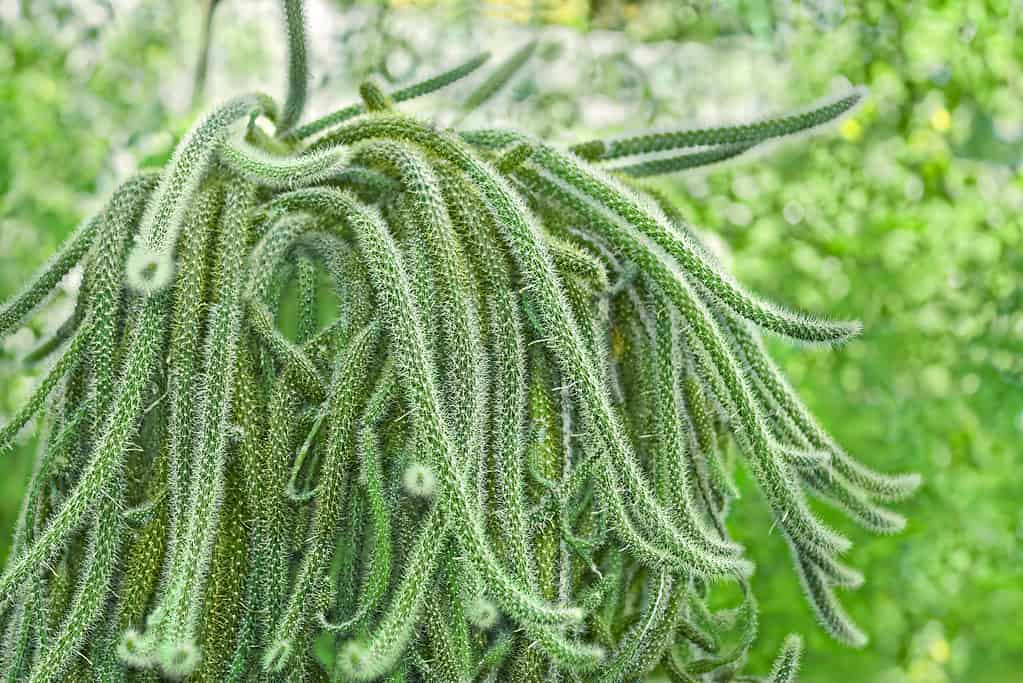
Rat tail cacti are long and thin cacti that are popular in hanging baskets.
©Marykit/Shutterstock.com
Colors of Rat Tail Cacti
They come in many different colors but typically have green stems. However, some varieties have green stems with hints of red, white, or yellow. As the stems age, they turn beige. Most flowers are vibrant pink or purple with yellow centers. They resemble orchids and are sometimes orange.
When Will My Rat Tail Cactus Bloom
Not all of them flower. However, the plants that do typically bloom in spring and early summer. If you have the right growing conditions, this succulent can blossom all year round. These flowers can easily grow over 1 inch long, but some varieties are larger. Rat tail cactus flowers grow after the winter resting period.
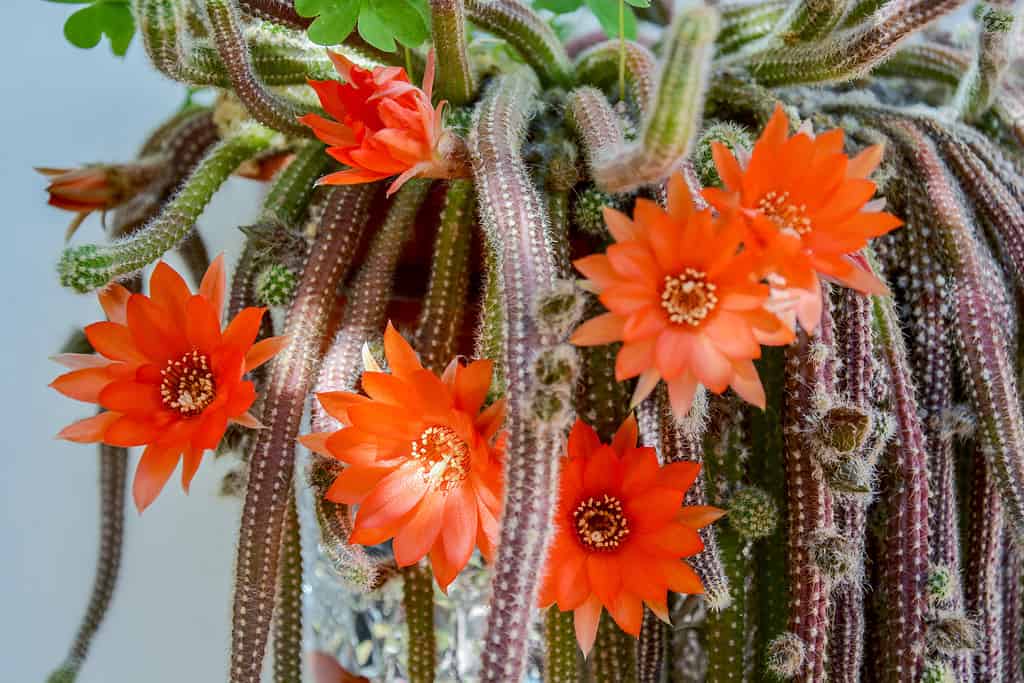
Rat tail cacti flowers bloom in spring and early summer.
©IKGM/Shutterstock.com
Caring for a Rat Tail Cactus
Despite their unique and interesting appearance, they are one of the easiest houseplants. But, without the right conditions, soil, light, and water, these plants won’t thrive. Follow along to learn more about how to care for rat tail cacti including many tips on what to do and not do.
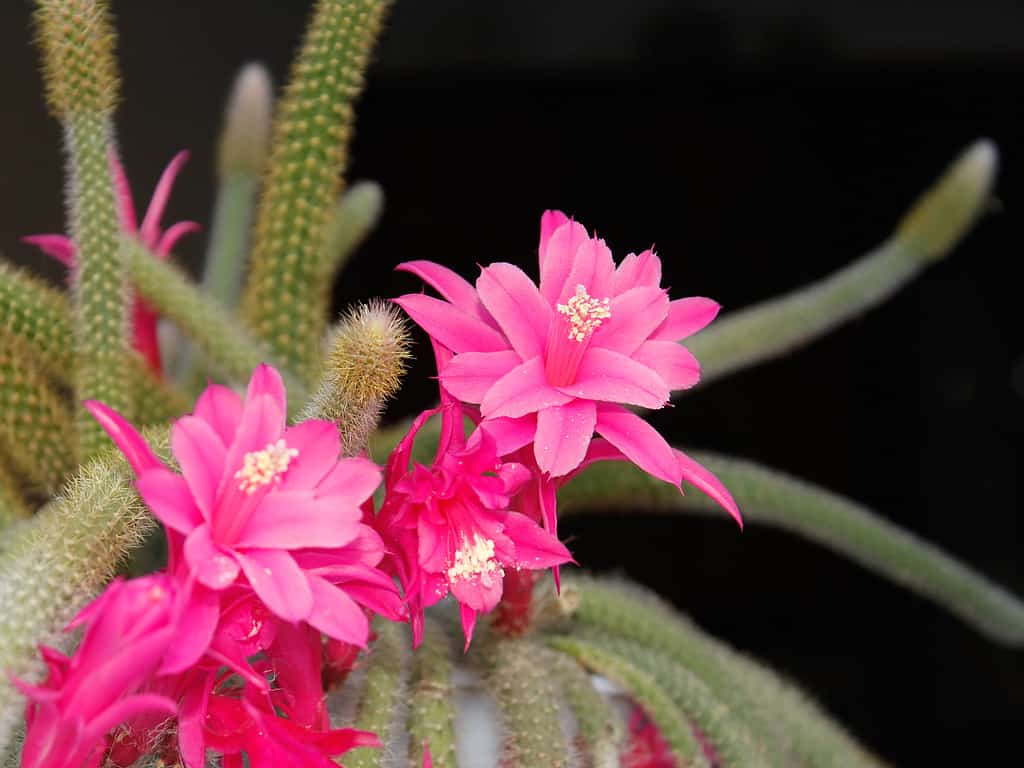
Rat tail cacti are easy to take care of and can be grown indoors and outdoors.
©Marykit/Shutterstock.com
Watering
Like other cacti, they don’t require a lot of water. Instead, too much water coupled with poor drainage can lead to root rot or attract pests with diseases. Watering regularly is important during the growing season as the plant uses more energy to grow. However, during winter, especially if the plant is exposed to colder temperatures or less sun, decrease the amount of watering.
In other words, during the growing season (which is about late April to November), water about once every week or two. If the top 1 to 2 inches of the soil is dry, the plant needs water. During winter, watering should be kept at a minimum. You may only need to water the plant about once a month.
How can you tell if you haven’t watered yours right? The biggest sign that you’ve over-watered your rat tail cactus is if the stems turn brown, droopy, and mushy. Sometimes the stems are yellow. This indicates the cactus is suffering from root rot.
Sunlight
They need a lot of sunlight. You can grow this beautiful plant indoors or outdoors. It needs about 6 to 8 hours of bright direct light, however, it can live in partial shade. If growing inside, it’s best to place this flowering succulent near a south or west-facing window.
Nutrition
Does yours need fertilizer? Not all plants require fertilizer or additional nutrients. It’s only necessary when there is a deficiency. However, you can fertilize yours during their growing periods with a liquid fertilizer. You can use a houseplant fertilizer or create your own. During spring and summer, use fertilizer every 2 weeks or twice a month.
Near its dormancy stage as it prepares to flower, lower the strength of the fertilizer until you seize to use it. Rat tail cactus fertilizer might not be necessary though as most potting soils contain slow-releasing fertilizers.
Soil-Type
They need nutrient-rich soil with good drainage. It’s best to plant your rat tail cacti in containers with succulent specialty soil. These soils are typically made with a blend of potting soil and organic materials like perlite. It’s important to choose the right soil since they grow fairly quickly. They grow so quickly that you need to re-pot them about once a year. After the flowering season is over, transplant your rat tail cacti into a larger space. This isn’t necessary if the plant is growing in-ground, however, usually, it’s planted as an ornamental hanging houseplant.
How to Grow Rat Tail Cacti From Seeds
Like with other cacti, propagation is quicker and easier, however, you can grow your rat-tail cactus with seeds. You can plant the seed immediately into a light succulent-friendly potting mix. Water lightly as too much water can destroy the seed by drowning it. Too much water also increases moisture and humidity, leading to the development of mold and attracting pests. While this is a method, it’s not the most recommended or widely used. Instead, most people grow rat tail cacti from cuttings. It’s quick, easy, and cost-efficient.
How to Propagate Rat Tail Cacti
Growing a rat-tail cactus doesn’t have to be hard. Growing this plant from seeds takes time, but if you grow this plant from a cutting, it matures quickly! In just a few months, you’ll start seeing the cutting root grow.
You first start by cutting off the stems or branches from your plant. Choose long ones that don’t show signs of aging. The cutting should not have cuts, bruises, or white markings that suggest diseases.
One of the best times to take a cutting is during summer and spring when the plant is growing. This way you don’t lose too much length from your original plant. You can also take cuttings with a knife after the flowering season. Ensure there are no flowers attached to the stem.
After you cut the piece, lay it somewhere dry and safe from harm to callous in about 3 days. It’s necessary to let the bottom of the cutting dry as it can show you signs of sickness. For instance, if your rat tail cactus cutting dries but shows black soft spots, these spots are likely infections and diseases like root rot. After the end dries, stick the cutting upright in a container with nutrient-rich potting soil. Only cover about an eighth of an inch of the cutting with soi. If you need to, you can use other materials to keep the plant straight as its roots. It takes this plant about 2 to 4 weeks to root. It’s best to start this process indoors and keep your container with the cutting by a warm and bright windowsill.