Social Structures

Pride

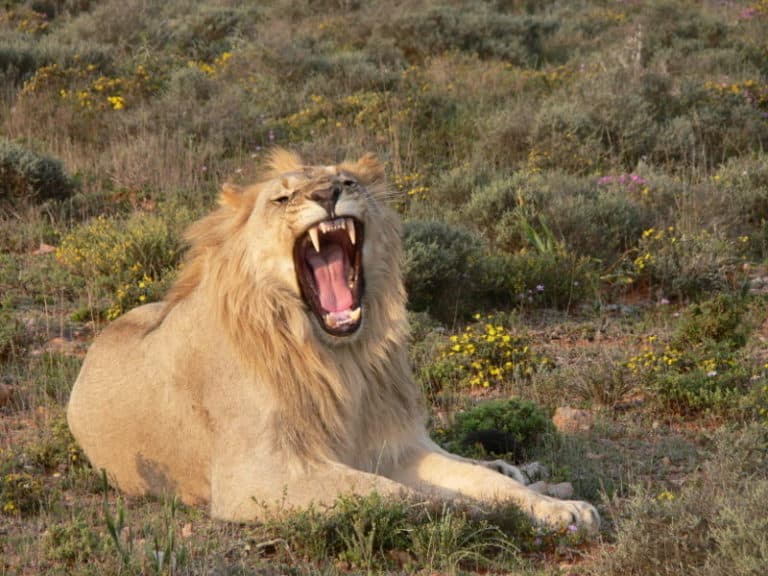
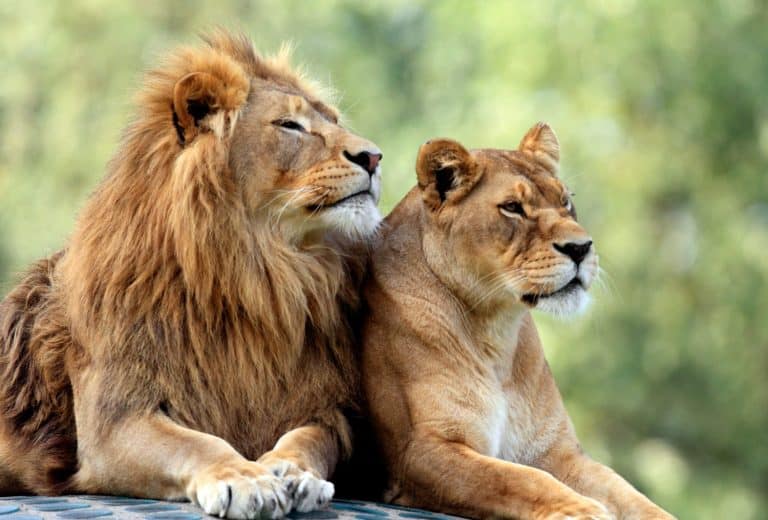
Family group of lions with related females and cubs
6 Animals
Overview

Understanding This Category

A pride is a stable, socially organized group in a mammalian species-most commonly lions (Panthera leo)-characterized by repeated association among identifiable individuals that share space, resources, and coordinated behaviors such as territorial defense and offspring care. In lions, pride structure typically centers on kin-related adult females and their dependent young, with one or more adult males that provide mating access and contribute to defense.

A pride is the social group of lions. It has related adult females, their cubs and subadults, and a few adult males, often a coalition. Females are the stable core; males come and go after fights with other males. Living in a pride helps lions defend their area, find prey, and protect den sites. Females may give birth around the same time and help raise and nurse each other's young, which helps cub survival against predators and male attacks. Pride members hunt together for large prey and share alerts about food, though group life can increase food competition. Pride size and makeup vary with habitat, prey and human pressure. Similar groups in other animals are called packs or troops.

Key Characteristics

Core membership typically composed of related adult females (matrilineal structure) and their offspring
Presence of one to several adult males (often a coalition) that tend to be less stable members than females
Cooperative territorial defense against neighboring groups and rival males
Communal care of young, including guarding and sometimes allonursing
Fission-fusion tendencies: membership and subgrouping can change with season, prey distribution, and social dynamics
Group-level coordination in hunting and/or scavenging, especially for large prey
Organization

Group Structure

Hierarchy

A pride's core is related adult females (lionesses) who stay long-term. Adult males are usually outsiders who join as a coalition and keep their spot by strength, while females keep the pride together day to day.

Member Roles

Core Lionesses (Resident Females)

Related adult females forming the stable nucleus of the pride; coordinate group cohesion, often lead movements, and provide most cub care and much of the cooperative hunting.

Pride Mothers / Allomothers

Females that nurse, guard, and babysit cubs (including others' cubs), enabling shared rearing and higher cub survival.

Cub Guardians / Babysitters

Individuals (often a subset of females) that remain with cubs while others hunt or patrol; provide immediate defense and supervision.

Hunt Leaders / Drivers

Lionesses that initiate and shape hunting attempts; may take positions that flush prey ("drivers") or set ambush points, influencing hunt coordination.

Sentinels / Lookouts

Members that pause on high points or at the edge of cover to watch for threats, rival lions, or opportunities; often an ad hoc duty rather than a fixed rank.

Territory Patrollers

Individuals that regularly scent-mark, patrol boundaries, and respond to intrusions; both females and males participate depending on threat level.

Male Coalition (Resident Males)

One to a few adult males (often related or allied) that defend the pride and its territory from rival males; their tenure is usually temporary and replaced after takeover.

Breeding Male(s)

Resident males that mate with pride females; may commit infanticide during takeovers to bring females back into estrus (not a 'role' chosen by the pride, but a common dynamic).

Subadults / Juveniles

Older cubs and subadults that learn hunting and social rules; may assist in hunts or defense as they mature.

Behavior

Group Dynamics

Formation

A pride usually forms around a coalition of related adult females (sisters, cousins, mother and daughters) that stay in their birth area. Daughters add to the core group. Adult males join later by takeover: small male coalitions (often 1–3) displace others and get to mate. Food, water, and competition shape pride size and stability.

Benefits & Costs

Advantages & Trade-offs

Benefits

For Survival
  • Cooperative defense against predators and rival groups, reducing individual risk during confrontations
  • Shared vigilance (more eyes/ears) increases early detection of threats and improves escape/defense coordination
  • Communal cub protection and "babysitting" lowers mortality from predation, injury, or infanticide
  • Group hunting or coordinated scavenging can bring down larger prey, improving overall nutritional status and resilience during tough periods
  • Social buffering and mutual support reduce stress and help injured or weak members persist long enough to recover
For Reproduction
  • Resident males defend access to females, increasing mating opportunities for pride females and reducing harassment from roaming males
  • Coalitions of males can hold tenure longer than single males, stabilizing reproduction for females over multiple breeding cycles
  • Females synchronize or overlap breeding, enabling communal nursing and shared care that improves cub survival to weaning
  • Protection from infanticide is improved when males effectively deter takeovers and when females can collectively defend cubs
  • Related females gain indirect fitness benefits by helping rear kin (inclusive fitness), boosting overall genetic success of the matriline
For Resources
  • Collective territory defense secures access to key resources (water, shade, prey-rich areas) and reduces displacement by competitors
  • Cooperative hunting increases capture success and allows exploitation of prey sizes that are risky for solitary individuals
  • Group dominance at carcasses can improve feeding time and reduce losses to scavengers or rival carnivores
  • Resource sharing within the pride (tolerated proximity at kills, caregiving) helps smooth short-term food shortages for vulnerable members
  • Spatial knowledge of the territory is pooled, improving efficient movement between water and hunting grounds
For Learning
  • Cubs learn hunting tactics, stalking, and prey handling by observing and practicing alongside experienced adults
  • Youngsters acquire social skills (greeting, submission, alliance-building) that reduce conflict and improve later integration
  • Knowledge of territory boundaries, safe resting sites, and water locations is transmitted through group movement and leadership
  • Mothers and alloparents model caregiving and defense behaviors, improving future parental competence
  • Experience with rival groups and predators (when to fight vs. retreat) is learned through repeated group encounters

Costs

Competition
  • Male takeover competition: incoming coalitions fight resident males; instability can cause cub mortality via infanticide and disrupt group cohesion.
  • Female feeding competition: multiple mothers and growing cub cohorts increase contest for kills, with subordinates/cubs often getting less.
  • Reproductive skew and conflict: dominant females/males may monopolize mating or resources, creating stress, aggression, and reduced breeding success for others.
  • Territory-edge crowding: more pride members can intensify competition over prime hunting areas and access to water within the territory.
  • Coalition maintenance costs: males competing to stay in the pride expend energy on displays and fights, risking injury and reducing foraging time.
Disease

High contact rates (allogrooming, huddling, shared dens, communal feeding on carcasses) increase transmission of parasites and pathogens. Pride-wide exposure can be amplified by scavenging and repeated use of resting sites; cubs are especially vulnerable. Outbreaks can reduce hunting efficiency and survival, and sickness in key adults undermines defense and caregiving.

Conspicuousness

A pride is easier to find than a lone animal: many individuals, loud roars, scent marks, tracks, and piled kills or feeding sites draw rivals, predators, or scavengers like hyenas, increasing fights and injury risk.

Other Costs
  • Energetic costs of coordination: synchronizing movements and hunts can force some individuals to travel farther or hunt at suboptimal times/places.
  • Resource depletion and local prey avoidance: repeated hunting/scavenging by the same group can lower prey availability and cause prey to shift ranges, increasing search time.
  • Injury risk from cooperative defense: group territorial clashes and carcass contests can cause serious wounds, disability, or death.
  • Cub-care trade-offs: communal rearing can dilute maternal attention; if caregivers are overburdened, individual cub growth/survival may drop.
  • Male tenure dependence: benefits of male protection come with the risk that losing males leaves the pride vulnerable to takeover, harassment, and reduced access to carcasses.
  • Social stress and aggression: dominance interactions and crowding at kills can elevate stress hormones, impacting immunity and reproduction.
  • Opportunity costs of staying with the group: individuals may forego dispersal or alternative foraging strategies that could be better under certain environmental conditions (e.g., low prey density).
Examples

Animal Examples

Iconic Examples

Lion The classic example: prides usually center on related adult females and their cubs, with one to a few adult males that defend territory and access to mating.
Asiatic lion Still forms prides, often smaller than many African lion prides; females tend to be the core social unit with males associated for defense and breeding.
Mountain lion (cougar) Often described as solitary, but can form temporary "pride-like" aggregations around abundant resources (e.g., shared prey) or overlapping kin-an instructive contrast to true lion prides.
Spotted hyena (clan) Commonly miscalled a "pride" in popular speech; true structure is a clan with female dominance and cooperative hunting/defense-functionally comparable in cooperation and territoriality.
African wild dog (pack) Also often loosely labeled a "pride" outside technical use; packs cooperate intensely in hunting, pup-rearing, and territory defense, paralleling some pride functions.

Surprising Examples

Cheetah (male coalition) Not a pride, but male coalitions (often brothers) can form stable groups that cooperate to hold territory and access females-sharing some 'male alliance' dynamics seen around lion prides.
Killer whale (orca) Lives in stable matrilines where related females and offspring stay together for life; cooperation in hunting and defense echoes pride-like benefits, though the structure is more like a matriline/pod.
Naked mole-rat (colony) Highly social groups with cooperative care and defense; although eusocial and subterranean (very different from lions), it's a striking example of group living with division of roles.

Found across: Big cats (Felidae): true, classic prides are primarily associated with lions (Panthera leo), Spotted hyenas (Hyaenidae): clan societies are sometimes colloquially called prides, Canids (Canidae): packs with cooperative hunting and pup-rearing (wolves, African wild dogs) are often compared to prides, Cetaceans (Odontoceti): stable matrilines/pods (notably orcas, some dolphins) show pride-like long-term kin grouping and cooperation, Rodents/Insects (various): colonies with cooperative breeding (e.g., naked mole-rats) are surprising analogs to pride benefits, though not termed 'prides' scientifically

Fun Facts

Did You Know?

Most of the hunting in a lion pride is done by the females, while males contribute more by protecting territory and cubs from rival males.

A pride's "social glue" isn't just roaring-frequent grooming, head-rubbing, and synchronized resting help maintain alliances and reduce conflict.

Lionesses often synchronize births and may nurse each other's cubs (allomothering), which can increase cub survival when food is scarce or a mother is injured.

New males taking over a pride may kill existing cubs (infanticide), which brings females back into breeding condition sooner-brutal, but a major driver of pride turnover.

Many lions spend far more time resting than most people expect-often 16-20 hours per day-saving energy for short, intense bursts of activity.

Like a tight-knit extended family community, core pride members are typically related females who share childcare and defend a shared "neighborhood."

Similar to a security coalition or rotating leadership, a small group of males provides defense for a limited "term," often replaced by challengers over time.

Territory defense resembles human border patrol and deterrence: loud signals (roars), patrol routes, and escalation only when needed to avoid costly fights.