
A
Species Profile

Akbash

Canis lupus familiaris

White guardian of the flock
bektasaydogan/Shutterstock.com

Akbash Distribution

Click a location to explore more animals from that region

Origin Location

This map shows the native origin of the Akbash. As a domesticated species, they are now found worldwide.

Loading map...

Found in 1 country

Size Comparison

Human 5'8"
Akbash 2 ft 6 in

Akbash stands at 44% of average human height.

sheepdog white dog pedigreed akbash

At a Glance

Domesticated
Also Known As Akbaş, Turkish Akbash
Diet Omnivore
Activity Cathemeral+
Lifespan 11 years
Weight 64 lbs
Status Not Evaluated
Did You Know?

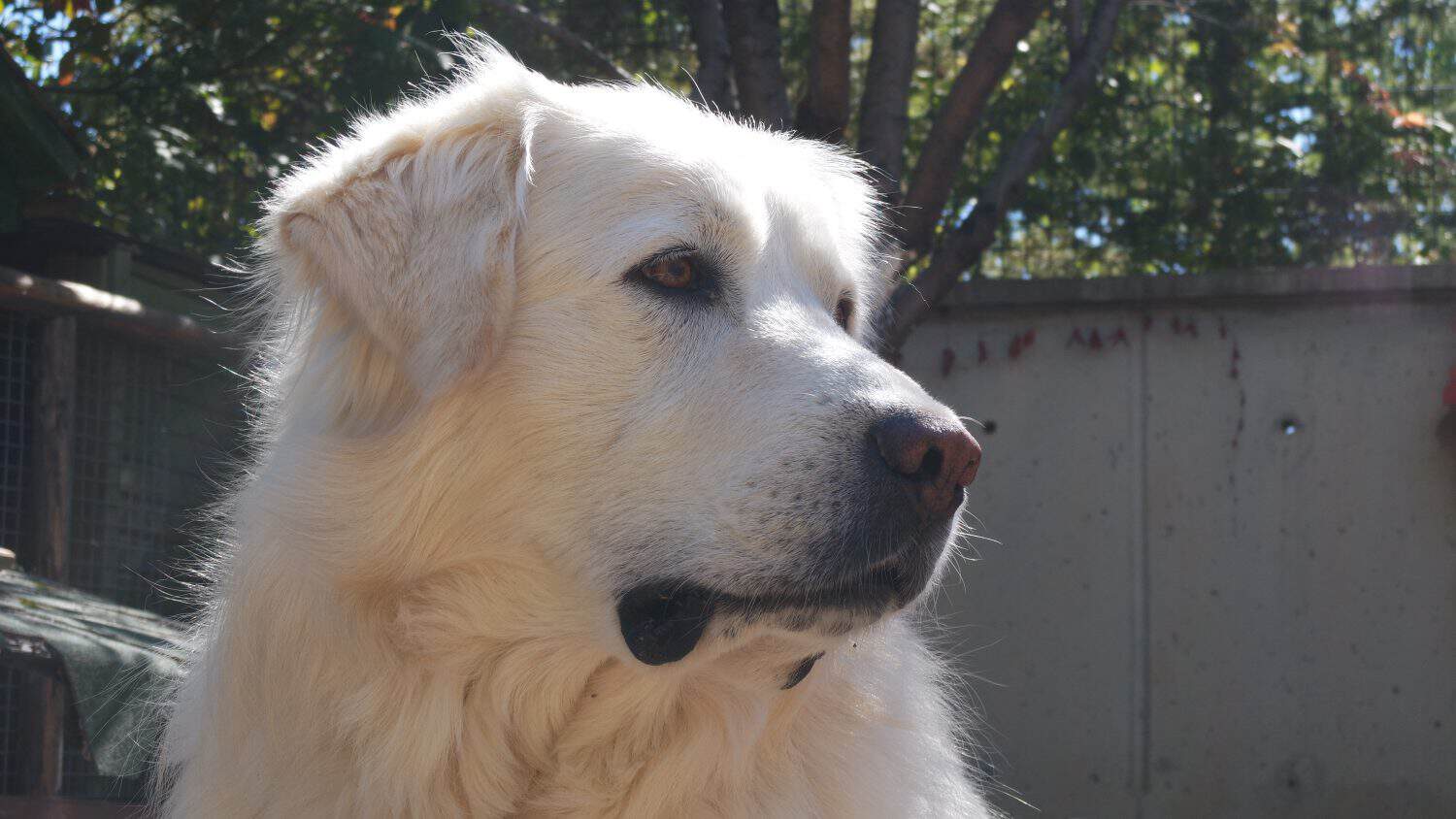
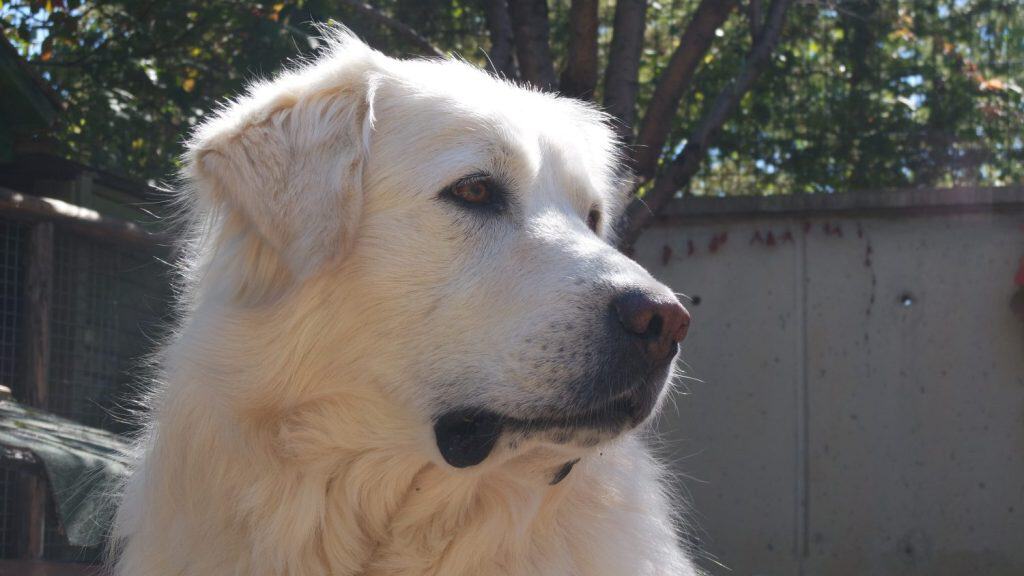
"Akbash" means "white head," a nod to the breed's hallmark pale coat.

Scientific Classification

The Akbash is a large, white Turkish livestock guardian dog developed to protect sheep and goats from predators. It is known for independence, attentiveness, and a strong guarding instinct rather than herding behavior.

Kingdom
Animalia
Phylum
Chordata
Class
Mammalia
Order
Carnivora
Family
Canidae
Genus
Canis
Species
lupus

Distinguishing Features

  • Large, robust livestock-guardian build
  • Typically solid white coat (often to blend with livestock)
  • Drop ears; long tail often carried in a curve when alert
  • Independent, territorial, and protective temperament suited to predator deterrence
  • Bred for endurance and vigilance outdoors

Physical Measurements

Males and females differ in size

Height
2 ft 7 in (2 ft 4 in – 2 ft 10 in)
2 ft 6 in (2 ft 3 in – 2 ft 8 in)
Length
4 ft 7 in (4 ft 1 in – 5 ft 1 in)
4 ft 8 in (4 ft 3 in – 5 ft 1 in)
Weight
115 lbs (90 lbs – 141 lbs)
93 lbs (75 lbs – 110 lbs)
Tail Length
1 ft 4 in (1 ft 2 in – 1 ft 6 in)
1 ft 6 in (1 ft 4 in – 1 ft 8 in)
Top Speed
30 mph
Short bursts, not sustained speed

Appearance

Primary Colors
Secondary Colors
Skin Type Mammalian canine skin with a dense, weather-resistant double coat (harsh outer guard hairs over insulating undercoat); loose-to-moderate skin with a thicker neck/ruff area typical of guardian breeds.
Distinctive Features
  • Large, white livestock-guardian dog with a dense double coat (short to medium length) and V-shaped drop ears; tail typically carried low and may curl upward when alert.
  • Origin: Turkey (Anatolia); traditional use is guarding sheep and goats against predators (e.g., wolves, jackals) through deterrence, vigilance, and confrontation if necessary rather than driving/flanking stock like herding breeds.
  • Large, tall, athletic guardian-dog morphology: long legs, deep chest, strong bone, and an overall leaner/less blocky outline than some other white guardian breeds; built for endurance patrols over rough terrain.
  • Coat: short-to-medium length double coat that sheds heavily seasonally; designed for sun/heat reflection and all-weather protection. White coat is a hallmark.
  • Head and expression: broad head with a strong muzzle; typically dark nose and eye rims; attentive, scanning demeanor.
  • Ears: medium, drop/pendant ears that often sit close to the head; may show light biscuit shading.
  • Tail: long tail often carried low at rest and raised/curved when alert; signaling/arousal during guarding.
  • Temperament/working style: independent, calm and steady with livestock when properly socialized; naturally wary of unfamiliar people and dogs; strong nighttime vigilance and territory boundary awareness.
  • Bonding behavior: tends to bond tightly to flock/territory more than to constant handler direction; reliable performance depends on early placement with stock, consistent boundaries, and controlled exposure to visitors.
  • Care requirements: needs secure fencing and space; not ideal for dense urban living due to patrol instincts and barking/alerting behavior; requires structured socialization to differentiate normal visitors from threats.
  • Training approach: responds best to calm, consistent handling and clear rules; less biddable than many pet breeds because it was selected to work autonomously without frequent cues.
  • Exercise: moderate daily activity with opportunities to patrol/explore safely; endurance-focused rather than high-intensity sport work.
  • Grooming: weekly brushing (more during seasonal coat blow); attention to ears, nails, and parasite control for outdoor working conditions.
  • Common health concerns seen in large guardian dogs: hip and elbow dysplasia; gastric dilatation-volvulus (bloat) risk; eye issues such as entropion/ectropion in some lines; routine screening and weight management recommended.
  • Heat/skin notes: pale coat reflects sun but the dense undercoat can trap heat-provide shade, water, and avoid strenuous work in high temperatures; watch for hot spots or skin irritation during heavy shedding.

Sexual Dimorphism

Males are typically larger and more heavily built than females, with a broader head/neck and more pronounced ruff; females are often slightly lighter-framed while retaining the same guardian structure and coat type.

  • Greater overall height and mass; broader skull and heavier neck/shoulder muscling
  • Often more pronounced mane/ruff and thicker forequarters
  • May show stronger territorial posturing, especially in intact males (management/socialization important)
  • Slightly smaller, lighter build with a more refined head while still large and powerful
  • Often matures with a somewhat less massive neck/ruff
  • Typically similar coat, color, and guarding instincts; may appear more agile/quick in movement

Did You Know?

"Akbash" means "white head," a nod to the breed's hallmark pale coat.

Akbash are livestock guardian dogs (LGDs): they're selected to protect, not to herd-very different job from herding breeds.

Rather than chasing, many Akbash rely on presence, posture, and booming alarm barks to discourage predators.

In the 1970s, Akbash were imported to the U.S. and evaluated in predator-control programs for protecting sheep.

The white coat isn't just pretty-among sheep it can make a guardian less visually conspicuous to predators at a distance.

Akbash tend to mature slowly, with adult steadiness and full protective instincts developing over time.

Compared with many pet breeds, Akbash typically prefer making their own decisions, a trait shaped by working far from shepherds.

Unique Adaptations

  • LGD temperament package: low interest in chasing livestock, strong protective drive, and independence-distinct from the base domestic dog's wide-ranging behaviors due to targeted selection.
  • White, weather-resistant double coat suited to outdoor life; sheds heavily seasonally and insulates against Anatolian temperature swings.
  • Large-boned, athletic guardian morphology: built to confront predators and endure long hours on rough terrain rather than sprint briefly.
  • Efficient communication: deep alarm barking and confident body language serve as primary "tools," reducing the need for physical conflict.
  • Context-driven decision-making: comfortable working away from handlers, a working adaptation for open-range pastoralism.
  • Strong homing/area fidelity: many develop attachment to a territory (pasture/home range), aiding consistent boundary defense.

Interesting Behaviors

  • Flock-bonding: as pups they're introduced to sheep/goats so they treat livestock as "their group," a social bond rooted in canid pack instincts.
  • Perimeter patrolling: they often circle or station themselves on high points to watch approach routes, then reposition as the flock moves.
  • Threat assessment: many hold a steady stance, stare, and bark before escalating-deterrence first, contact last when well-bred and well-managed.
  • Night vigilance: like many canids, they can be more alert after dusk, increasing barking/monitoring when predators are active.
  • Buffer positioning: they may place themselves between stock and a perceived threat, sometimes "escorting" animals away from fences or edges.
  • Selective sociability: typically calm with familiar people and animals but wary of strangers; they may stand off, observe, and decide when to engage.
  • Resource/territory guarding: strong sense of boundary can show as fence-line running or alert barking if not given enough space and structure.

Cultural Significance

Akbash dogs from Turkey's Anatolian farms guard sheep and goats from predators. White guardian dogs are a rural sign of the shepherd and flock bond. Abroad they help protect livestock without killing predators and live with wildlife.

Myths & Legends

Among Anatolian shepherding communities, white guardian dogs are traditionally favored because they "belong with the flock" in both appearance and purpose-an old pastoral belief that a sheep-colored protector watches more naturally over sheep.

A common naming tale says Akbash ("white head") uses its white color as a sign of its job: a guardian dog meant to be seen by the shepherd, accepted by the flock, warning predators away.

Turkish rural anecdotes often describe the ideal Akbash as a dog that works "without being told," a celebrated folk notion of the wise, self-directing guardian that chooses the right moment to bark, block, or pursue.

Livestock keepers' stories praise guardian dogs not for fighting but for stopping trouble—tales of the dog that never let a wolf come near, praised for watching and scaring off threats.

In modern ranching stories in Turkey and abroad, Akbash puppies raised with lambs are said to know and protect those sheep like family, backing the old belief that early flock life makes a guardian.

Conservation Status

NE Not Evaluated

Has not yet been evaluated against the criteria.

Population Stable

Life Cycle

Birth 7 pups
Lifespan 11 years

Lifespan

In the Wild
10–12 years
In Captivity
10–12 years

Reproduction

Mating System Polygynandry
Social Structure Managed Domestic
Breeding Pattern Serial
Fertilization Internal Fertilization
Birth Type Internal_fertilization

The Akbash (Canis lupus familiaris) breeds under human control: internal fertilization, serial matings, and often planned pairings. Free-breeding dogs often have many males and females mating. Akbash guard stock, may roam if intact, so secure fencing and controlled breeding are vital.

Behavior & Ecology

Social Pack Group: 2
Activity Cathemeral, Nocturnal, Crepuscular
Diet Omnivore Animal-protein-forward meals (commonly lamb or goat-based diets in working settings)

Temperament

Independent, self-reliant guardian; less handler-oriented than many companion breeds (breed-distinguishing trait vs typical pet-line dogs).
Highly vigilant and territorial; strong protective instinct toward bonded animals/space; may be reserved or suspicious with unfamiliar people/dogs without careful socialization.
Calm/steady at rest but rapid to escalate to warning behaviors when perceiving threat; tends to assess before engaging rather than impulsively chasing (guarding vs herding style).
Lower play/recall reliability compared with many breeds; benefits from consistent boundaries, calm leadership, and experienced handling rather than heavy compulsion methods.
HUB pattern across livestock guardian dogs: intense bonding to 'charges' (livestock/family), nighttime alertness, boundary patrolling; variation by individual and upbringing in sociability and reactivity.
Care requirements: early, broad socialization (people, dogs, stock); secure fencing and clear property boundaries; needs a job/purpose and space-can become nuisance-barker/escape-prone if under-stimulated.
Exercise: moderate daily activity with room to roam; avoid repetitive high-impact exercise during growth to protect joints in this large breed.
Grooming: dense coat-weekly brushing (more during seasonal shed); check ears/skin for debris after outdoor work.
Health concerns seen in large/guardian breeds: hip/elbow dysplasia risk; gastric dilatation-volvulus (bloat) risk-manage with meal scheduling and post-meal rest; monitor for obesity and joint strain; general working-dog wear (pads, dewclaws) if on rough terrain.

Communication

Deep, repetitive alarm barking Primary long-distance deterrent and boundary advertisement
Growling and low rumble as close-range warning.
Howling Less frequent; can occur with arousal or response to other canids
Whining/whimpering for affiliative or attention-seeking signals with bonded humans/animals.
Territorial scent marking (urine/feces placement) and frequent boundary patrol routes.
Body blocking/standing between perceived threat and flock/family; chest-forward posture and direct stare as deterrent.
Postural escalation: stiffening, raised hackles, tail carriage changes; silent watchfulness before vocal escalation is common.
Proximity control of flock/family-shadowing, circling, and positioning on high ground for visual monitoring.

Habitat

Biomes:
Temperate Grassland Mediterranean Temperate Forest Boreal Forest (Taiga) Tundra Desert Hot Desert Cold Alpine Wetland Savanna +4
Terrain:
Plains Hilly Plateau Mountainous Valley
Elevation: Up to 16404 ft 3 in

Ecological Role

Domestic omnivore functioning primarily as a livestock guardian in agro-pastoral ecosystems, indirectly shaping predator-livestock interactions rather than acting as a primary predator itself.

reduces livestock losses by deterring predators (e.g., wolves, coyotes, feral dogs) can reduce human-wildlife conflict and retaliatory predator control by providing non-lethal deterrence supports pastoral production systems by enabling grazing in predator-present landscapes may incidentally suppress local rodent populations around farms through opportunistic predation

Diet Details

Main Prey:
Rodents Rabbits and hares Ground-nesting birds and eggs Small mammals
Other Foods:
Grass Berries and fallen fruit Vegetable matter Grains and starches

Human Interaction

Domestication Status

Domesticated

Akbash (Canis lupus familiaris) is a Turkish livestock guardian dog (LGD), a domesticated descendant of the gray wolf. Bred to guard sheep and goats, it is very large, usually solid white, independent, and wary of strangers. It needs early socialization, secure fencing, and a job. Watch for hip and elbow dysplasia, osteoarthritis, bloat/GDV, and cruciate injuries.

Danger Level

Moderate
  • High bite/attack potential if poorly socialized, mishandled, or if strangers enter its perceived territory (especially when guarding livestock/property)
  • Territorial aggression and defensive reactions toward visitors, delivery personnel, or unfamiliar dogs
  • Roaming/escape risk leading to conflict with neighbors, pets, or livestock if fencing is inadequate
  • Nuisance barking and intimidation behavior; risk increases with lack of supervision, inadequate containment, or unsuitable urban/suburban placement

As a Pet

Not Suitable as Pet

Legality: Akbash dogs are usually legal in the U.S., but local laws, barking or roaming rules, breed or size bans, or insurance and housing/HOA rules can apply. Best in rural working homes; may struggle in suburbs.

Care Level: Expert Only

Purchase Cost: $800 - $2,500
Lifetime Cost: $18,000 - $45,000

Economic Value

Uses:
Livestock protection/working dog services (predator deterrence) Ranching and farm security Breeding and sale of working lines Property guardian/alerting role
Products:
  • Guardian services reducing livestock losses (economic benefit)
  • Breeding stock/puppies for working placements
  • Training/handling services for LGD integration with flocks
  • Deterrence-by-presence (patrolling, barking, territorial display)

Relationships

Ecological Equivalents 7

Animals that fill a similar ecological role in their ecosystem

Domestic dog
Domestic dog Canis lupus familiaris Akbash, a livestock guardian dog (LGD), is large and usually white. It guards flocks independently, is wary of strangers, and bonds closely to stock. Requires space, secure fencing, socialization, and calm handling. Monitor for hip and elbow dysplasia, ligament injuries, and bloat.
Kangal Shepherd Dog
Kangal Shepherd Dog Canis lupus familiaris Turkish livestock guardian. The Kangal is often fawn with a black mask and is seen as more powerful, while the often all-white Akbash tends to be more agile and sometimes quieter or more stealthy.
Anatolian Shepherd Dog
Anatolian Shepherd Dog Canis lupus familiaris Another Turkish/Anatolian livestock guardian dog (LGD) type used with sheep and goats. Both are independent and territorial. The Akbash is more consistently white (historically valued for blending with sheep), while Anatolian Shepherds occur in more colors and patterns and may vary more in type due to broader landrace roots.
Great Pyrenees
Great Pyrenees Canis lupus familiaris European mountain livestock guardian dog (LGD) with a similar role guarding flocks from wolves and bears. The Great Pyrenees has a thicker coat and is gentler with its family; the Akbash has a lighter coat and tends to be quieter and more watchful with strangers.
Maremma Sheepdog
Maremma Sheepdog Canis lupus familiaris Related to Italian livestock guardian dogs: both are calm, sturdy, white, and very territorial. The Akbash is longer-legged, more sighthound-like and more agile on patrol; the Maremma is fluffier, thicker, and blockier.
Kuvasz
Kuvasz Canis lupus familiaris Hungarian white livestock guardian dog with strong guarding instincts. Similar independence and wariness of strangers; both benefit from experienced owners, early socialization, and clear boundaries to prevent inappropriate territorial aggression.
Central Asian Shepherd Dog Canis lupus familiaris Steppe livestock-guardian dog/mastiff-type guardian used against large predators. Shares independence and toughness. Compared to many Akbash lines, the Alabai is often heavier-boned and more confrontational, whereas the Akbash is commonly more rangy and patrol-oriented.

Quick Take

  • This breed can face down wolves and bears, but the trait that makes it so effective against predators has nothing to do with aggression. Explore the Akbash's temperament →
  • Feeding an Akbash the wrong way can turn a health risk into a life-threatening emergency, and most owners never realize where that line is. See the dietary risks →
  • The Akbash treats children, livestock, and family members identically, and the reason why reveals something unexpected about how this breed thinks. See how it treats its flock →
  • It's classified as a working breed, yet the one activity most working dogs love is exactly what the Akbash refuses to do. Check its exercise needs →

The Akbash, also called the Coban Kopegi, the Akbas, or Aky, is an ancient large to giant dog breed from Turkey, dating back 3,000 years. It was brought to North America in 1970.

One of the best watchdogs, it is part of the Working group of Livestock Guardian Dogs, and one of the national dog breeds of Turkey. Its name means “white head,” and its white fur easily distinguishes it from predators. It is similar to and often compared to the Great Pyrenees.

With a calm, independent, and alert temperament, excellent sight, and lean, muscular body, Akbash dogs are powerful against predators and make excellent guardian dogs. Its lack of natural hostility also makes it a good companion pet.

A comprehensive infographic about the Akbash dog breed, highlighting its history, physical stats, and specific care requirements for prospective owners.
Bred to defend livestock from bears and wolves for over 3,000 years, this massive guardian is a loyal powerhouse—but its independent nature requires a master's touch. © A-Z Animals

3 Pros and Cons of Owning an Akbash

Pros!Cons!
It’s a great guardian. Although it protects livestock best with at least one other canine, it can take on predators such as coyotes, wolves, and even bears. Protective and territorial, it’s also great for watching children, farms, and homes.It needs a job to do. As a working breed, this is a breed that needs you to give it tasks, and it is not suitable for first-time dog owners. It does not have a strong prey drive and so does not enjoy playing fetch or catch. Also, it is prone to digging holes in the ground or otherwise being destructive if it is bored or cramped.
It thinks independently. The Akbash can act on its own without prompting. However, its independent streak and strong-headedness make it necessary to have early training.It needs roaming space. This breed is not suitable for small spaces due to its large size. It is also prone to wandering or escaping.
It’s not naturally hostile. In fact, it has strong maternal instincts and has been observed cleaning newborn calves.It sheds moderately. Having a double coat, it needs regular grooming and more when shedding or changing its coat.

Size and Weight

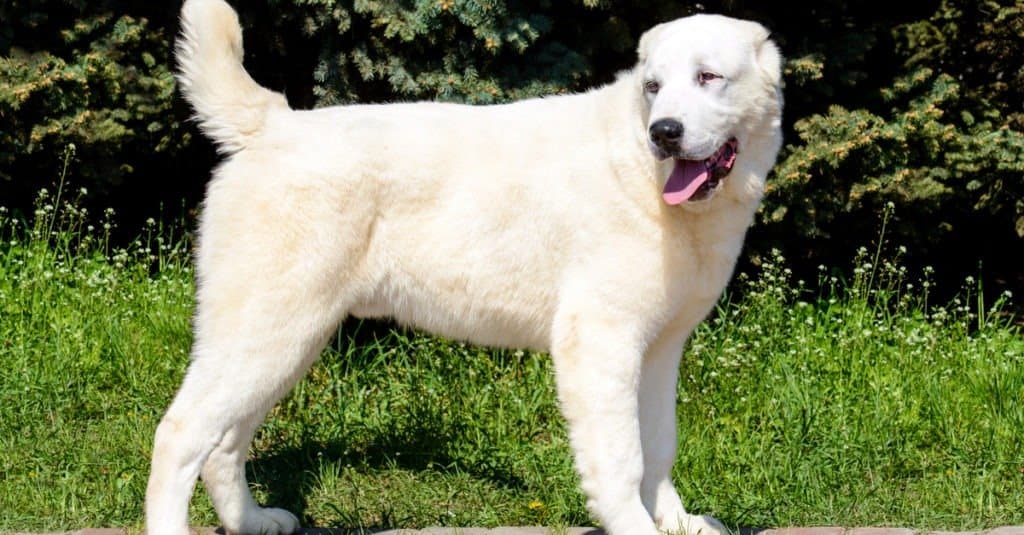
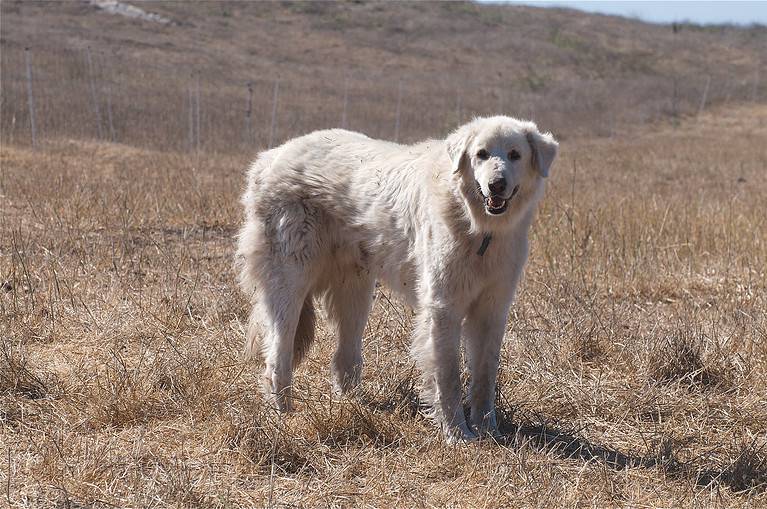
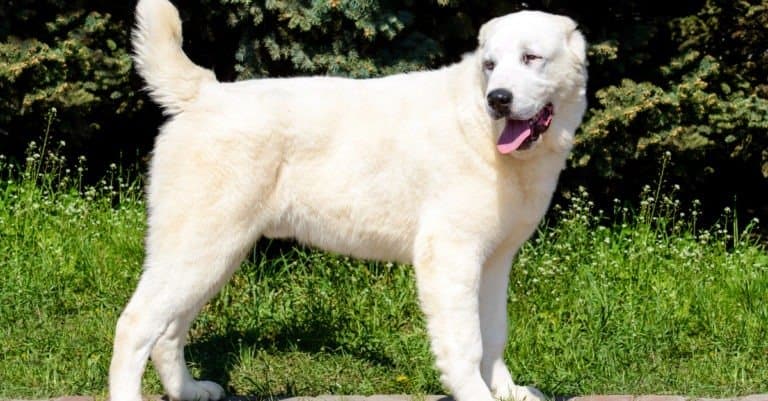
Akbash dog standing in the grass

The Akbash is a large to giant size short- to medium- or long-hair dog with an average height of 30″ for males and 28.5″ for females.

The Akbash is a large to giant size short- to medium- or long-hair dog with an average height of 30″ for males and 28.5″ for females. Males weigh about 120lbs fully grown, and females weigh about 90lbs fully grown. Akbash puppies weigh 13 lbs on average at 7 weeks of age and are typically fully grown between 24 and 36 months old.

Common Health Issues
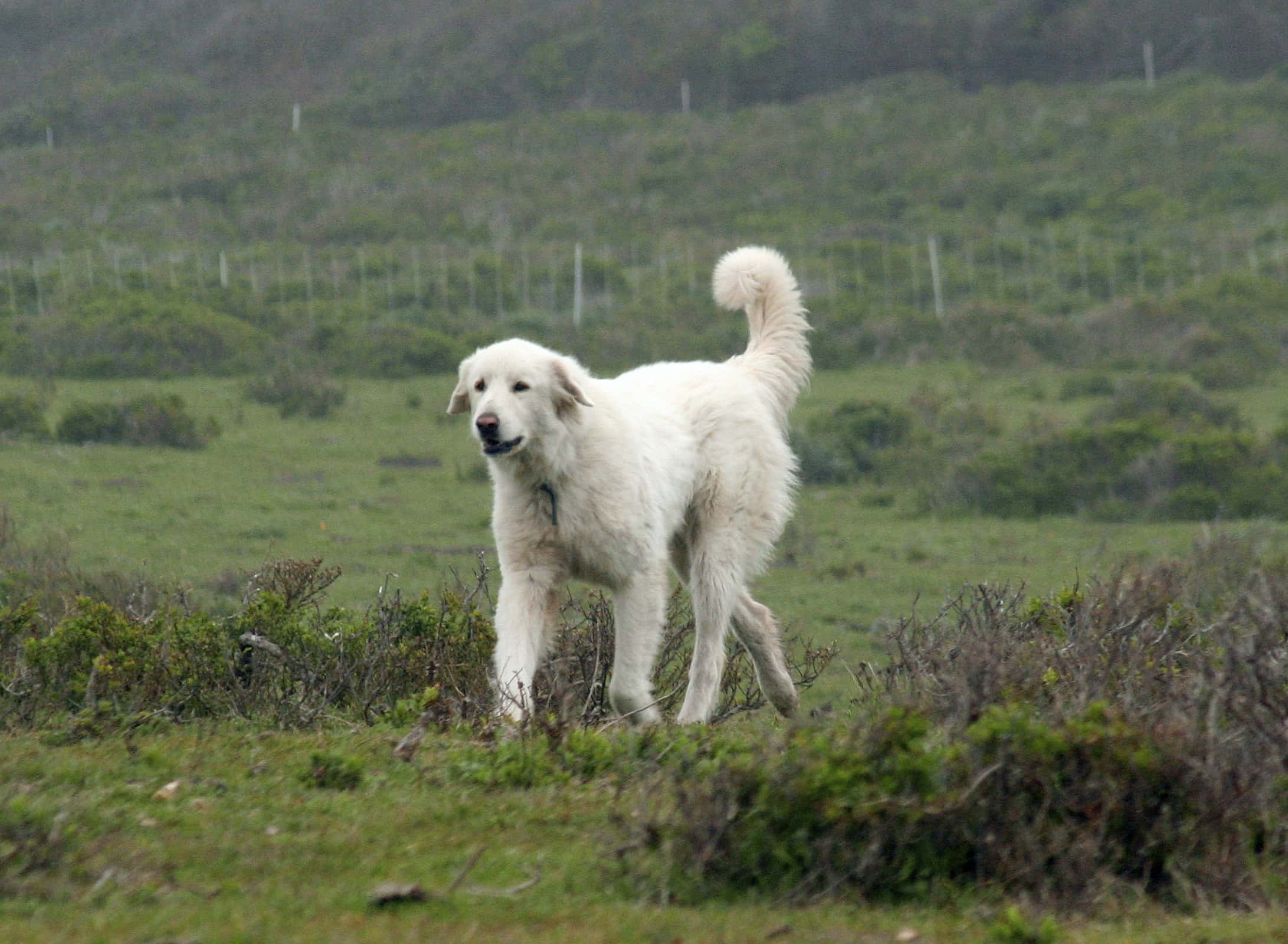
The purebred Akbash is vulnerable to certain health issues that are common in working breeds.

The purebred Akbash is vulnerable to certain health issues that are common in working breeds. The most common is hip dysplasia, which affects the ball-and-socket joints in the hips and can severely limit their movement and range of motion later in life, especially when arthritic.

You can decrease the chances of encountering this condition by buying from Orthopedic Foundation for Animals (OFA) hip-certified stock. Gastric torsion (bloat) is another possible condition, and it is seen in large breeds. Destructiveness is a main behavioral issue when the Akbash is bored or cooped up, which can lead to OCD.

Evolution and Origins

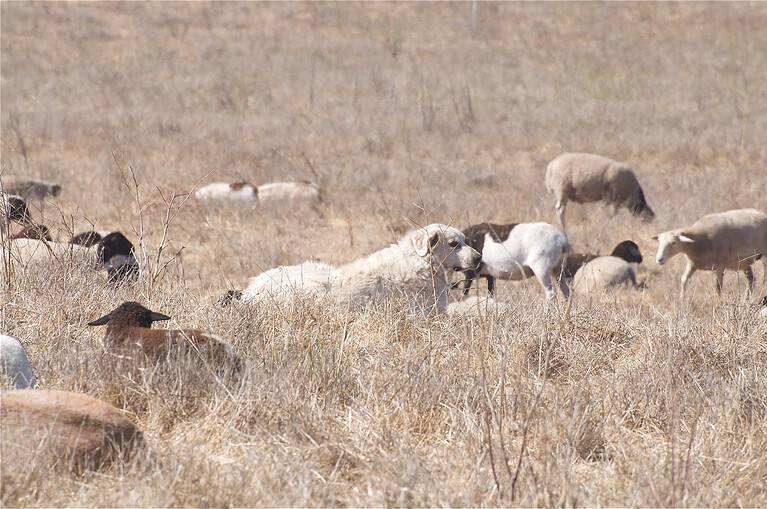
The Akbash originated in Turkey. They were developed as a livestock guardian breed and have been used for centuries to protect sheep and goats from predators such as wolves and bears.

The breed’s name, “Akbash,” means “white head” in Turkish, and refers to the breed’s distinctive white head. The breed is believed to have developed from crosses between local Turkish breeds and breeds brought to the region by nomadic tribes.

The Akbash was first imported to the United States in the 1970s, and the United Kennel Club recognized the breed in 1998, but the American Kennel Club has not recognized the Akbash.

Temperament
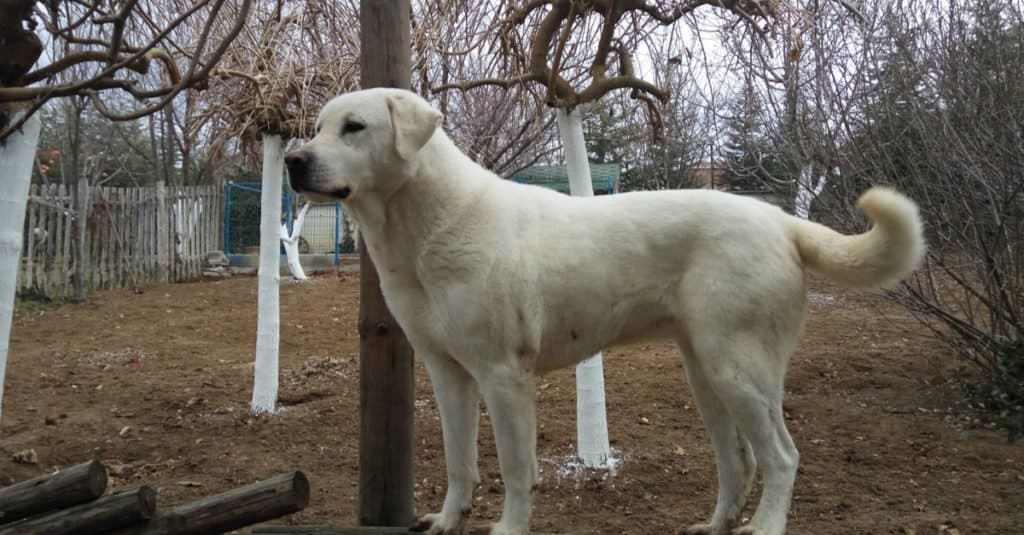
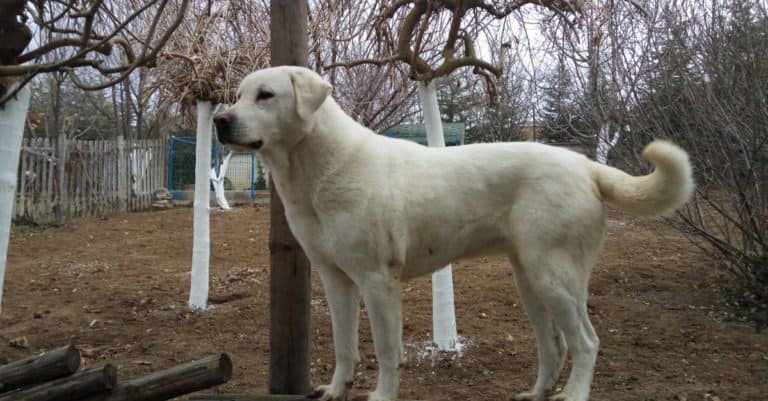
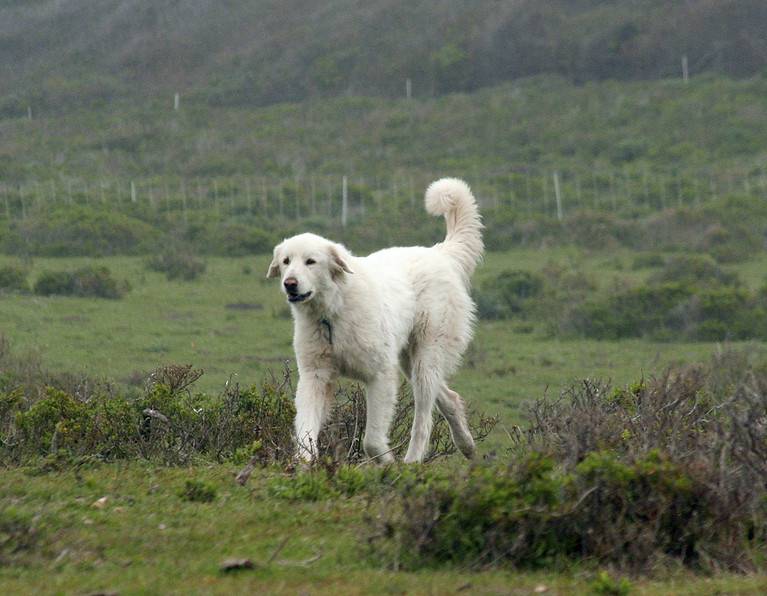
Akbash dog standing in a yard

The Akbash has a temperament that is neither shy nor aggressive. Its personality is adaptable.

The Akbash has a temperament that is neither shy nor aggressive. Its personality is adaptable. Words that describe its traits include: gentle, calm, patient, adaptable, stoic, protective, affectionate, alert, maternal, loyal, independent, and brave.

The Akbash is a popular choice for farmers needing guardians for livestock or for families with children, since it displays the same behavior towards its flock as it does towards family members, especially when socialized early in life. It is somewhat playful but has a low prey drive and takes longer to mature than smaller breeds, so they lack their full mental capacities until they reach full maturity.

You can count on the Akbash to have a low tendency to bite since its personality is not naturally hostile. Its natural behavior is suspicious towards strangers, yet its traits of mental awareness and gentleness make it a non-lethal predator deterrent.

How To Take Care of an Akbash

New pet owners caring for an Akbash, specifically Akbash puppies, must consider factors related to both its working group and its unique breed characteristics. Whether dealing with health issues like hip dysplasia or care needs related to coat type and large size, the Akbash has unique factors that owners should consider.

The Best Dog Food
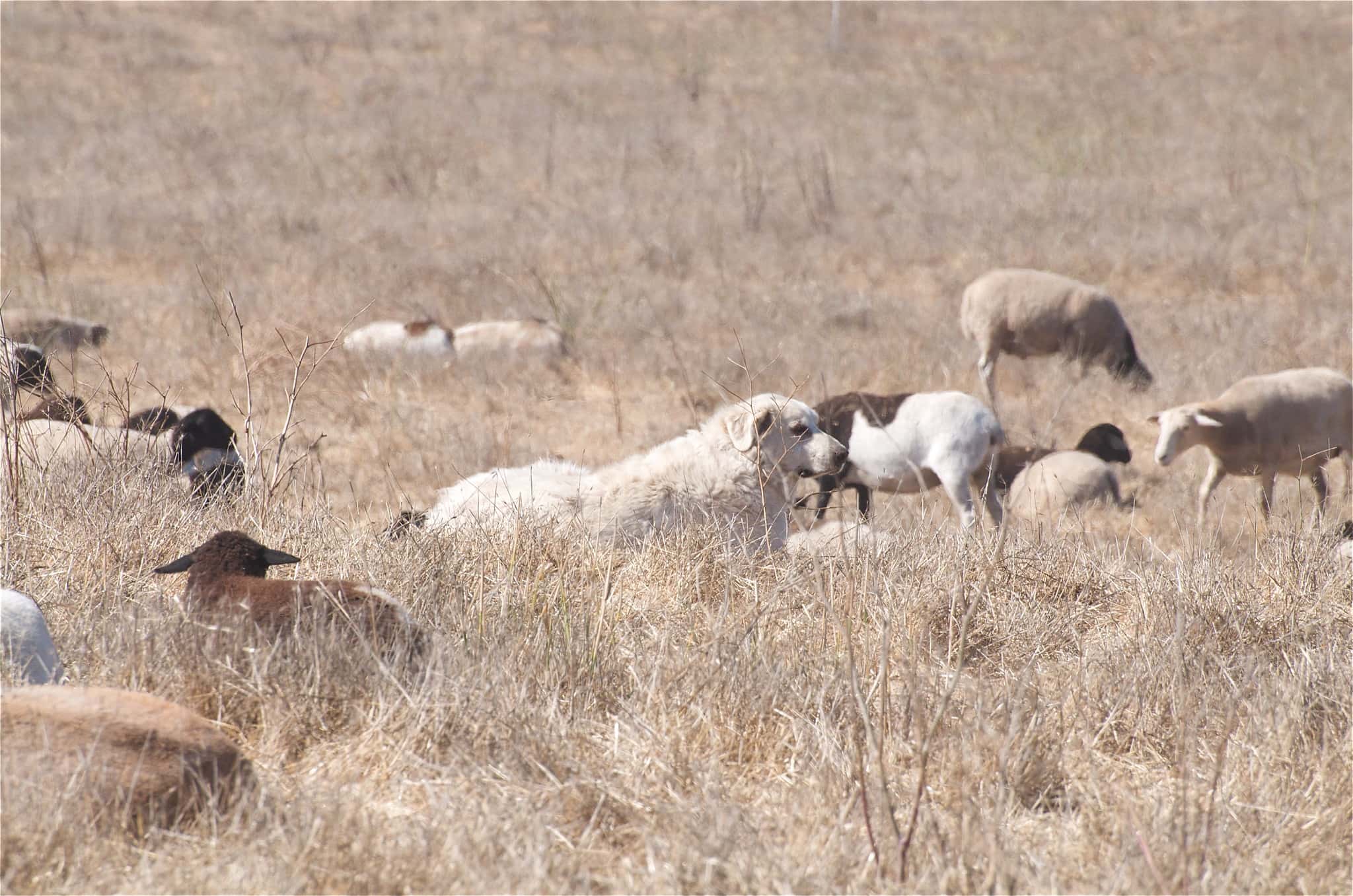
Its diet requirements should provide nutrition to maintain eyesight, mental awareness, and bone health, as well as speed and agility when necessary.

The Akbash, especially puppies, have different health considerations compared to other breeds and especially non-working dogs. Therefore, even experienced dog owners should consider certain factors when choosing food for their pets.

Its diet requirements should provide nutrition to maintain eyesight, mental awareness, and bone health, as well as speed and agility when necessary. High-quality, economical dog food is fine, but red meat is ideal. The Akbash also needs fiber in its diet, which you can provide with vegetables or with dog food containing vegetables. However, to avoid problems like excess weight or bloating (gastric torsion), do not overfeed.

Remove the food from your pet’s dish after 10-15 minutes, and feed your dog no more than two meals a day. Cooked egg, fruit, and cottage cheese are fine as long as they are no more than 10% of the diet. Avoid exercising your dog for one hour before or after meals.

Because Akbash dogs are so large, their diets need a little extra thought to ensure adequate nutrition for bone and joint support. Look for dog food with calcium, chondroitin, and glucosamine.

Akbash puppy dog food: Because of their size and genetic makeup, the Akbash has a tendency to develop hip dysplasia. Whether dry kibble or wet canned food, the food you choose for your Akbash puppy should not only be large-breed and age-appropriate but also contain high amounts of meat, calcium, and other nutrients to support its developmental needs. Feed your puppy 3-4 small meals a day or according to directions.

Akbash adult dog food: The Akbash has a slow metabolism and, as a natural working breed, does well on less food than other breeds, spending most of its time monitoring its environment and patrolling.

Maintenance And Grooming

The Akbash has a double coat which can be short, medium, or even longer. It requires weekly brushing as well as carpet vacuuming, plus more frequent brushing during seasonal shedding periods when it changes its coat. On the plus side, its fur does not mat and does not have much odor. It also does not need special grooming, making its maintenance needs fairly moderate.

Training

Like other breeds, the Akbash needs early training, and 3 months is the recommended starting point. It needs a strong, firm, but experienced and patient handler who will not be verbally harsh or physically punishing. This breed acts on its own and is very independent, being able to survive on its own by digging for gophers and other small animals to eat. It is eager to please, and once it learns tasks, it does not need prompting.

Exercise

Although the Akbash has a low energy level, it saves its energy for defense against predators. To stay lean, healthy, and happy, it needs 20 to 40 minutes of exercise every day as well as plenty of room to roam outside, as it does not enjoy playing indoors and prefers some alone time. Special care should be taken to place the Akbash in a suitable home and property or backyard so that it can patrol freely.

Puppies

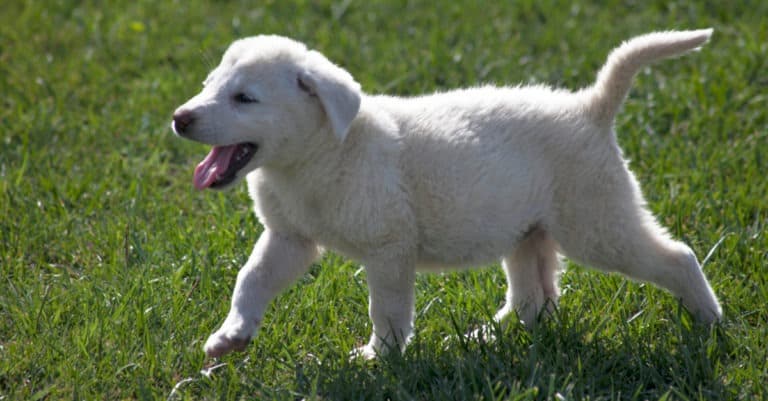
Akbash puppies are much like puppies of other breeds, with a moderate amount of mouthiness. This habit needs to be trained out of them to avoid continuing the behavior as adults. This breed is slow to reach adulthood, reaching full maturity and mental awareness at 2 to 3 years of age.
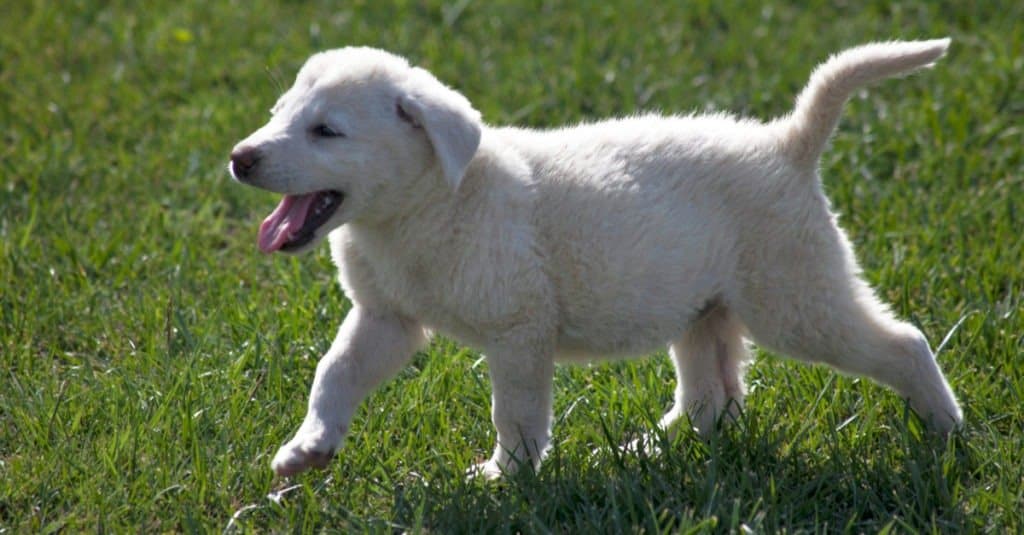
Akbash puppy playing in the grass

Akbash puppies are great with children. They are naturally protective of those around them.

Children

The Akbash is as submissive to and protective of children as it is of livestock, given early socialization. In fact, it considers children to be part of its flock. It is affectionate and loyal to its family, but shy and suspicious of strangers without being immediately aggressive towards them. This breed is moderately playful and a good option for families with children.

Dogs similar to the Akbash

Sighthounds and mastiffs or molossers are believed to be the Akbash’s ancestors. Breeds similar to the Akbash include other livestock guardian dogs, especially those from the Mediterranean Basin (Turkey, Hungary, Italy, Spain, and France). They include the Maremma Sheepdog, Polish Tatra, and Kuvasz.

  • Kangal (Canga): Like the Akbash, the Kangal is also from Turkey. However, whereas the Akbash can be exported, the Kangal was previously subject to export restrictions, but these restrictions have been eased as of late 2025.
  • Anatolian Shepherd: It is believed that this breed is a cross between the Akbash and Kangal. Like the Akbash, it is an ancient livestock guardian dog breed from Turkey, but it differs in its muzzle and coloring.
  • Bernese Mountain Dog: Another large dog, this breed dates back 2,000 years and has higher energy than the Akbash.
View all 327 animals that start with A

Sources

  1. Wikidepdia / Accessed October 20, 2019
  2. Dogell / Accessed October 20, 2019
  3. Dog Breeds List / Accessed October 20, 2019
  4. Dogtime / Accessed October 20, 2019
  5. Hills Pet / Accessed October 20, 2019
  6. Vetstreet / Accessed October 20, 2019
  7. Dog Breed Info / Accessed October 20, 2019
  8. 101 Dog Breeds / Accessed October 20, 2019
  9. Your Dog Advisor / Accessed October 20, 2019
  10. Puppy Find / Accessed October 20, 2019
  11. National Pure Bred Dog Day / Accessed October 20, 2019
  12. Puppy Weight Calculator / Accessed October 20, 2019
  13. My Dog Breeds / Accessed October 20, 2019

Rebecca Bales

About the Author

Rebecca Bales

Rebecca is an experienced Professional Freelancer with nearly a decade of expertise in writing SEO Content, Digital Illustrations, and Graphic Design. When not engrossed in her creative endeavors, Rebecca dedicates her time to cycling and filming her nature adventures. When not focused on her passion for creating and crafting optimized materials, she harbors a deep fascination and love for cats, jumping spiders, and pet rats.
Connect:

Thank you for reading! Have some feedback for us?


Akbash FAQs (Frequently Asked Questions)

The Akbash is a large to giant size, short to medium-haired, ancient working breed from Turkey that was bred as a livestock guardian.