
A
Species Profile

Australian Bulldog

Built for mateship, bred for Aussie days
iStock.com/Jodie Mulkearns

Australian Bulldog Distribution

Click a location to explore more animals from that region

Origin Location

This map shows the native origin of the Australian Bulldog. As a domesticated species, they are now found worldwide.

Loading map...

Size Comparison

Human 5'8"
Australian Bulldog 1 ft 7 in

Australian Bulldog stands at 27% of average human height.

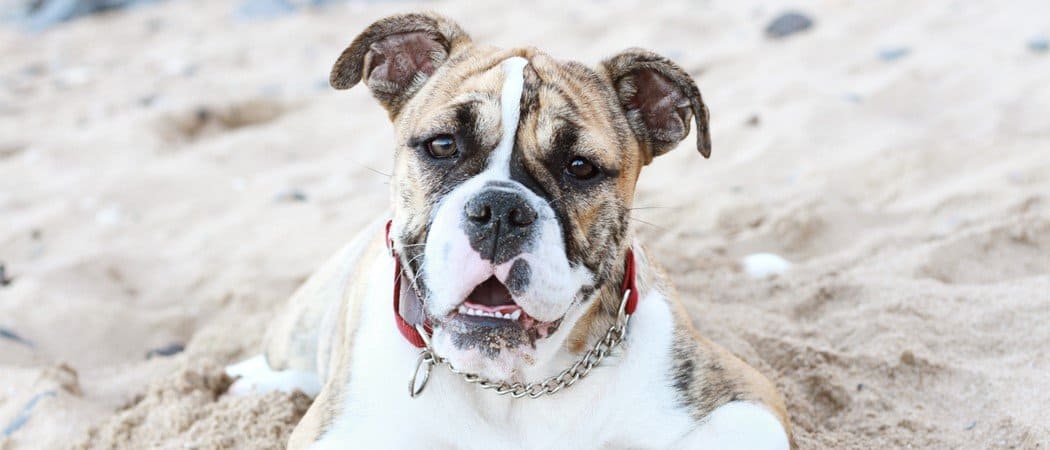
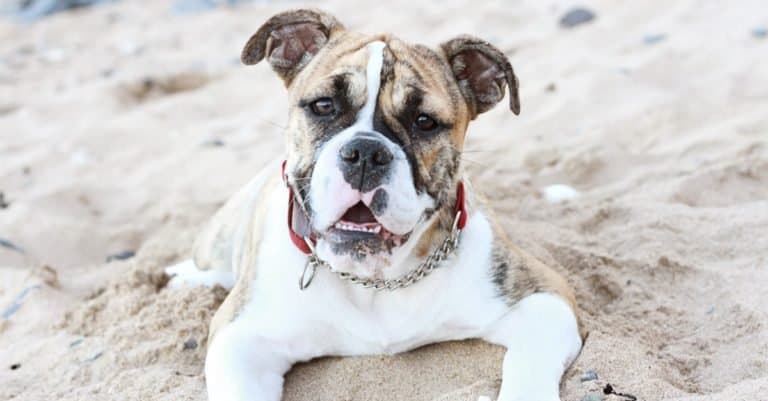
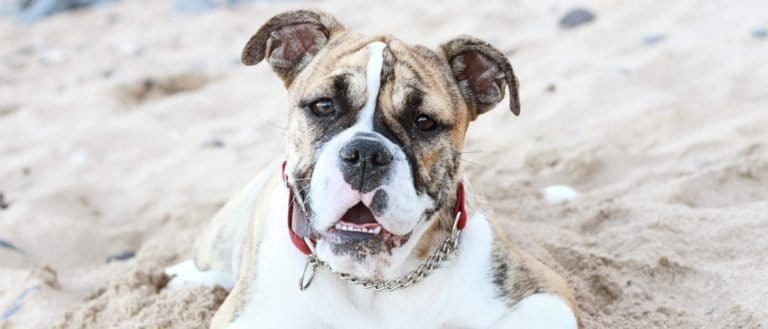
Australian Bulldog on Beach

At a Glance

Domesticated
Also Known As Aussie Bulldog
Diet Omnivore
Activity Diurnal+
Lifespan 10 years
Weight 38 lbs
Status Not Evaluated
Did You Know?

It's a domesticated dog (Canis lupus familiaris), selectively bred in Australia from bulldog-type stock to better suit local conditions.

Scientific Classification

The Australian Bulldog is a domesticated dog breed developed in Australia, broadly bulldog-type in build and temperament. It is typically described as more heat-tolerant and athletic than the English Bulldog, reflecting selection in Australian conditions.

Kingdom
Animalia
Phylum
Chordata
Class
Mammalia
Order
Carnivora
Family
Canidae
Genus
Canis
Species
lupus

Distinguishing Features

  • Bulldog-type, compact to medium, muscular build
  • Broad head and shorter muzzle than many breeds (often less extreme than some English Bulldog lines)
  • Short coat; commonly brindle, fawn, red, white, or pied patterns
  • Companion-oriented temperament typical of bulldog-type dogs

Physical Measurements

Males and females differ in size

Height
♂ 1 ft 7 in (1 ft 6 in – 1 ft 8 in)
♀ 1 ft 6 in (1 ft 5 in – 1 ft 7 in)
Length
♂ 2 ft 7 in (2 ft 4 in – 2 ft 9 in)
Weight
♂ 77 lbs (66 lbs – 88 lbs)
♀ 60 lbs (51 lbs – 68 lbs)
Tail Length
♂ 2 in (1 in – 4 in)
♀ 3 in (2 in – 5 in)
Top Speed
22 mph
Good short-burst speed

Appearance

Primary Colors
Secondary Colors
Skin Type Short, smooth, low-shedding coat, double or single. Loose skin with facial wrinkles and neck/chest folds. Nose and paw pad color match coat. Skin folds can get moist and irritated if not kept clean and dry.
Distinctive Features
  • Domesticated dog (Canis lupus familiaris) developed in Australia; selected as a companion bulldog-type suited to warmer Australian conditions rather than a wild/native species.
  • Compared with the base species (gray wolf, Canis lupus): much shorter muzzle (brachycephalic tendency), broader skull, heavier front assembly, and reduced athletic predatory build; behaviorally bred for companionship rather than hunting ecology.
  • Compared with the English/British Bulldog: typically described as more heat-tolerant and more athletic/functional in movement, often with slightly longer muzzle and less extreme exaggeration (though individuals vary).
  • Compact-to-medium, muscular body; broad chest and shoulders; strong bone; substantial head with pronounced stop; short-to-moderate muzzle for a bulldog type (aimed to be more functional than extreme brachycephaly).
  • Facial wrinkles may be present; ears are commonly rose or semi-pricked/button-like; tail can be straight or naturally short-tail/kinked tail can be associated with skin-fold issues around the tail pocket in some dogs.
  • Common health/welfare considerations (not universal): brachycephalic airway issues (snoring, exercise/heat intolerance), skin-fold dermatitis (face/tail pocket), allergies/atopy, ear infections, and orthopedic stress (hips/elbows/ACL) due to stocky build; responsible breeding focuses on breathing, mobility, and skin health.
  • Needs strict heat care—no hard exercise on hot days, shade, water, and AC. Use a harness if breathing is weak. Keep lean, do gentle exercise, and clean wrinkles, tail pocket, skin, and ears.
  • Coat care: minimal brushing needed but regular wipe-down and fold care may be higher-maintenance than coat length suggests; nails and paw pads should be monitored due to weight-bearing load.
  • Temperament-related appearance cues: confident, steady companion demeanor; typically people-oriented with a solid, 'bulldog' carriage rather than a high-strung outline.

Sexual Dimorphism

Moderate sexual dimorphism is typical: males tend to be larger, broader-headed, and more heavily muscled; females often appear slightly lighter and more refined while keeping the same bulldog-type proportions.

♂
  • Broader skull and thicker neck/shoulders; generally heavier bone and more pronounced musculature.
  • May show more pronounced head width and jowl development (varies by individual).
♀
  • Slightly smaller overall frame with a comparatively narrower head and lighter forequarter while retaining a compact, muscular outline.
  • Often shows a slightly more streamlined silhouette and less heavy neck/shoulder mass (varies by individual).

Did You Know?

It's a domesticated dog (Canis lupus familiaris), selectively bred in Australia from bulldog-type stock to better suit local conditions.

Compared with the English/British Bulldog, many lines aim for a slightly longer muzzle, better nares, and more athletic movement.

Like most bulldog-types, it's typically people-focused and thrives on being included in family routines.

Wrinkle and skin-fold care matters: clean and dry folds can help prevent irritation and infections.

Many Australian Bulldogs are enthusiastic "couch-to-yard sprinters"-brief bursts of play followed by serious lounging.

Because the breed is still developing and not universally standardized across all kennel systems, size and type can vary more than in long-established breeds.

Even with improved heat tolerance goals, hot-weather safety (shade, water, avoiding midday exercise) remains essential for many individuals.

Unique Adaptations

  • Selected-for climate practicality: many breeders emphasize improved breathing efficiency and heat management relative to traditional British Bulldog extremes (though results vary by line).
  • Sturdier athletic intent: selection often favors functional movement and endurance for family walks and play rather than purely heavy, ultra-low-slung build.
  • Protective skin and coat traits: short coat and prominent skin folds can protect in rough-and-tumble play, but require hygiene support from owners.
  • Human-directed temperament: intense social bonding is a hallmark of domestic dogs versus the more independent ecological role of wild Canis lupus.

Interesting Behaviors

  • Shadowing: often follows favorite people room-to-room, seeking closeness and reassurance.
  • Play "bursts": short, energetic zooms or tug sessions, then quick settling-common in stocky companion bulldogs.
  • Comedic vocalizing: snorts, grumbles, and "talking" sounds, especially during play or when asking for attention.
  • Stubborn streak: may pause and "think it over," responding best to short, upbeat training sessions.
  • Body-lean affection: tends to press its weight into people as a social, bonding gesture.
  • Heat-seeking comfort: will sprawl on cool tiles in summer or hog the warmest spot in winter.

Cultural Significance

The Australian Bulldog reflects a modern Australian breeding goal: keeping the classic "bulldog" companionship and look while selecting for better day-to-day function in a warmer climate. It's commonly positioned as a family companion-an "Aussie take" on a globally iconic bulldog-type, aligning with cultural ideals of friendliness, sturdiness, and mateship.

Myths & Legends

"Bulldog grit" as folklore: in British and Commonwealth popular tradition, bulldogs symbolize stubborn courage and tenacity-an image that carries into Australia and colors how bulldog-type breeds are perceived as determined and loyal.

Breeders and owners say the Australian Bulldog was developed to handle Australian heat and life. Clubs stress crossing with other bull-type dogs to get better breathing and more athletic dogs.

The wider dog mythos in Australia: while not breed-specific, dogs feature strongly in Australian cultural storytelling-from working-dog legends to bush yarns-framing companion breeds like the Australian Bulldog as loyal household "mates" rather than mere pets.

Conservation Status

NE Not Evaluated

Has not yet been evaluated against the criteria.

Population Stable

Life Cycle

Birth 5 pups
Lifespan 10 years

Lifespan

In the Wild
8–12 years
In Captivity
8–12 years

Reproduction

Mating System Polygynandry
Social Structure Managed Domestic
Breeding Pattern Transient
Fertilization Managed Selective
Birth Type Managed_selective

Species-level mating: polygynandry (multiple males and females). For Australian Bulldog, breeders control matings. Breeding may use timing tests, natural or assisted insemination. Brachycephaly can cause mating and whelping problems (dystocia). Females usually have ~1–2 heats/year.

Behavior & Ecology

Social Pack Group: 4
Activity Diurnal, Crepuscular, Cathemeral
Diet Omnivore Meat-forward meals (e.g., cooked chicken or beef) with a modest amount of fiber-rich vegetables

Temperament

Affectionate, people-oriented companion; typically seeks close proximity and physical contact (leaning, cuddling).
Confident and steady; often tolerant with familiar people and appropriately socialized children, but can be boisterous due to muscular build.
Breed distinction vs base species (wolf): reduced predatory/territorial drive and increased human-directed attachment; less persistent in goal-driven tasks than many working breeds, with more emphasis on companionship.
More heat-tolerant and athletic than the English Bulldog (selection in Australian conditions), but still at risk of overheating compared with non-brachy breeds; benefits from moderated exercise in warm/humid weather.
Can be stubborn/independent; responds best to short, consistent sessions with positive reinforcement and clear boundaries.
Watchful and sometimes protective (alert barking), generally not a specialist guard breed; friendliness toward strangers varies by individual and handling.
Affectionate, loyal, and people-oriented; typically friendly and good with children, though can be stubborn and benefits from early socialization and consistent training.
Health/behavior-linked concerns: brachycephalic airway tendencies (noisy breathing, lower heat/exertion tolerance), skin-fold dermatitis/itchiness affecting comfort and handling tolerance, hip/elbow dysplasia affecting willingness to exercise, and possible eye issues (irritation/dryness) influencing reactivity to face handling.
Keep Australian Bulldogs cool with shade and water, avoid midday exercise. Keep healthy weight for joints and breathing. Give moderate walks and low-impact play, and gentle care for face, ears, skin folds.

Communication

Barking Alerting, demand, play
Low grumbles/growls Discomfort, warning, play context varies
Whining/whimpering Attention, anxiety, frustration
Snorting/snoring/stertor Common in bulldog-types; can be normal but may signal airway compromise if excessive
Panting Thermoregulation; can escalate quickly in warm conditions
Body posture and blocking/leaning Bulldog-type 'body contact' affiliation
Facial expressions (wrinkled brow, lip tension) and direct gaze/averted gaze
Tail and rear-body wag Often short tail; whole-body wag more informative than tail alone
Play bows, bouncy approaches, pawing
Licking/nuzzling for appeasement and affiliation
Scent investigation and marking (urination, rubbing) typical of domestic dogs
Communication is highly context-dependent; individuals vary from quiet to vocal, and brachycephalic conformation can add respiratory noises that owners may misread as growling or distress.

Habitat

Biomes:
Temperate Forest Temperate Grassland Mediterranean Savanna Desert Hot Desert Cold Boreal Forest (Taiga) Tundra Alpine Tropical Rainforest Tropical Dry Forest Wetland Freshwater Marine +8
Terrain:
Plains Coastal Hilly
Elevation: Up to 16404 ft 3 in

Ecological Role

Domesticated companion/guardian (commensal omnivore) with minimal natural predation role; may become an opportunistic predator/scavenger if roaming

companionship and human well-being support property guarding/alerting participation in working roles (e.g., obedience, sport, some assistance/therapy contexts) limited pest deterrence in domestic settings

Diet Details

Main Prey:
Livestock-derived meats Fish Eggs Small mammals Ground-nesting birds or poultry
Other Foods:
Cooked grains and starches Vegetables Fruits Plant oils and fiber sources

Human Interaction

Domestication Status

Domesticated

Dogs (Canis lupus familiaris) come from the gray wolf (Canis lupus) and were shaped by people for work and company. The Australian Bulldog is an Australian bulldog bred to keep the friendly bulldog nature but be healthier and better in hot weather than the English Bulldog. People mostly keep them as pets, show dogs, and for breeding to improve health.

Danger Level

Low
  • Bite risk exists as with any dog, increased by poor socialization, rough handling, pain, or inadequate supervision with children.
  • Strong, stocky build can cause accidental knocks during play.
  • Potential dog-to-dog reactivity in some individuals; requires early socialization and controlled introductions.
  • Heat stress risk can create welfare emergencies during hot weather or overexertion; owners must manage activity and cooling.

As a Pet

Suitable as Pet

Legality: Usually legal as a pet where dogs are allowed. Some places have breed-specific laws or housing and insurance rules for bulldog types or look-alikes. Check local council, landlord/HOA, and insurer rules.

Care Level: Moderate

Purchase Cost: $1,500 - $4,500
Lifetime Cost: $20,000 - $55,000

Economic Value

Uses:
Companion animal market Professional breeding and stud services Veterinary care (including brachycephalic/orthopedic/dermatology management) Pet insurance Grooming, boarding, daycare Training and behavior services Conformation showing and breed clubs
Products:
  • puppies from registered or purpose-bred litters
  • stud services and breeding contracts
  • routine and specialty veterinary services (airway, skin/allergy, orthopedic)
  • preventives (vaccines, parasite control)
  • dietary products (weight-management and sensitive-skin formulations)
  • equipment (harnesses, cooling mats/vests, crates, chew items)
  • training classes and private behavior consults
  • grooming/skin-fold care products

Relationships

Predators 4

Dingo / feral dog
Dingo / feral dog Canis lupus dingo
Coyote
Coyote Canis latrans
Large raptors Aquila audax
Large cats Felidae

Ecological Equivalents 6

Animals that fill a similar ecological role in their ecosystem

English Bulldog
English Bulldog Canis lupus familiaris Common comparison within bulldog-type companion breeds. The Australian Bulldog is typically selected to be more heat-tolerant, more athletic, and often less extremely brachycephalic than many English Bulldogs, reflecting Australian climate and fitness goals.
Olde English Bulldogge Canis lupus familiaris Shares the breeding goal of producing a healthier, more functional bulldog-type with improved breathing and athleticism compared to modern extreme bulldog conformation; overlaps in temperament (companion- and guardian-leaning) and body type.
American Bulldog
American Bulldog Canis lupus familiaris Shares bulldog ancestry and a sturdy build. The American Bulldog is generally taller and more working/utility-oriented, while the Australian Bulldog is commonly positioned as a companion bulldog with an emphasis on heat tolerance and moderate activity.
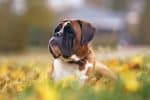
Boxer
Boxer Canis lupus familiaris Comparable niche as a muscular, people-focused companion and guardian breed. Serves as a functional, more athletic reference point for the Australian Bulldog's intended sturdiness and moderate exercise needs.
Staffordshire Bull Terrier
Staffordshire Bull Terrier Canis lupus familiaris Similar 'bull-type' companion niche with a robust build and strong human affinity. Provides a comparison for temperament management (socialization) and the need for consistent training despite a friendly disposition.
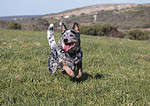
Australian Cattle Dog
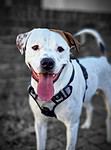
Australian Cattle Dog Canis lupus familiaris Not morphologically similar, but an Australian-developed dog selected for performance in heat and other demanding conditions; serves as an ecological analogue for Australian adaptation and highlights the need for climate-aware husbandry (hydration, heat stress avoidance).

The Australian bulldog is an exceptional pet. Among its delightful characteristics are fierce loyalty, intelligence, and its undeniably sweet nature.

The Aussie dog has an appearance and a similar temperament to its American relative. What differs is that the Down Under version is as much Boxer and Bullmastiff as American bulldog.

The Aussie dog will make a great addition to any household.

3 Pros and Cons of Owning an Australian Bulldog

The Australian Bulldog is a great dog for companionship. But nothing’s perfect. Here are a few good things as well as a few bad things about having this animal in your home.

ProsCons
Will get along with other pets
This bulldog is a social creature. He’s perfectly capable of integrating into an environment with other animals. This will be especially easy if he’s trained to get along with others.
He’s a hardhead
The bulldog is a stubborn crossbreed. Some might say the pug face says it all. This dog is capable of resisting your leadership. It’s important to establish the pecking order early.
Minimum exercise required
This dog doesn’t require a lot of physical activity. He’d love a walk or light run. But he’s just as happy lying around with you. But you should make sure he gets some exercise every day.
Messy eater
Maybe it has a lot to do with the shape of their head and those saggy jowls, but the bulldog is famous for leaving a meal with a messy face. You may have to get in the habit of cleaning the dog’s face after eating.
Great family companion
This special animal loves being around loved ones. He’ll look for you and set himself at your feet regularly. He anticipates spending time with you and wants you to feel loved all the time.
Could easily suffer from obesity
Unfortunately, as this hybrid doesn’t require a lot of exercise and is capable of lazing about, it is also prone to obesity. Tracking its weight and diet is going to be important, especially if you want to avoid issues that can crop up, like diabetes.

Origins

The Australian bulldog is something of a newcomer on the canine scene. As its name suggests, it is a descendant of the English bulldog. As a result, it bears a close resemblance to that much-loved canine whose laid-back demeanor belies its rather violent origins and several centuries of bull baiting and dog fighting.

The Australian bulldog is also the descendant of a few other breeds with reputations for toughness. Included in that list is the bullmastiff, bred to solve the issue of poaching in the 1800s. There is also the boxer whose tasks once included taking on bears and wild boars during hunting expeditions organized by German nobles. And of course, the American bulldog. 

The Australian bulldog owes its existence to the desire of dog enthusiasts, Pip Nobes and Noel and Tina Green, for a breed which was every inch as adorable and lovable as the English bulldog — but a great deal healthier. 

In 1998, the breed became known to the Australian public by means of a lifestyle TV show, Burke’s Backyard, and the rest, as they say, was history. 

Today, the Australian bulldog, which bears a close resemblance to its European forebears, is adored by canine enthusiasts, delighted to have a unique canine breed of their own.

Size and Weight
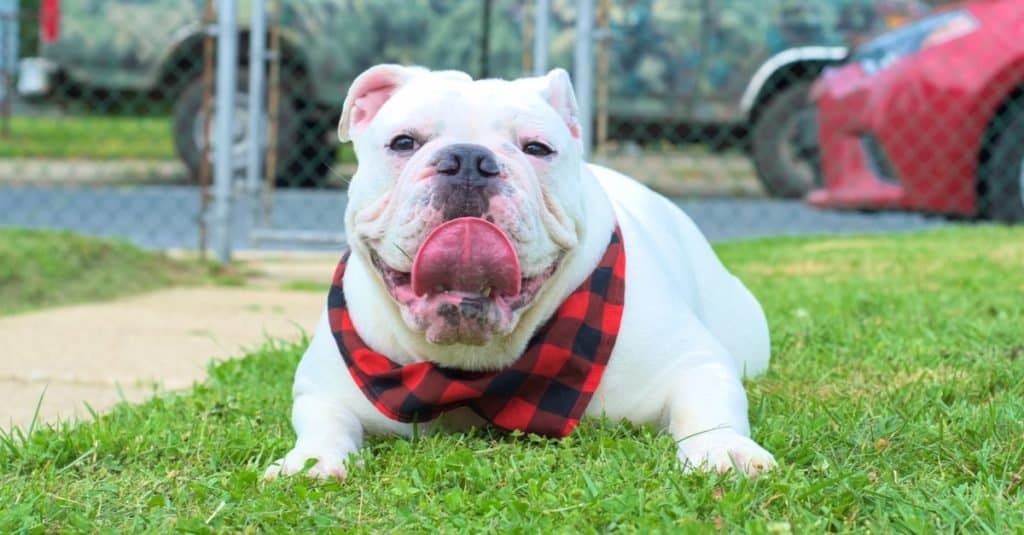
Australian bulldog

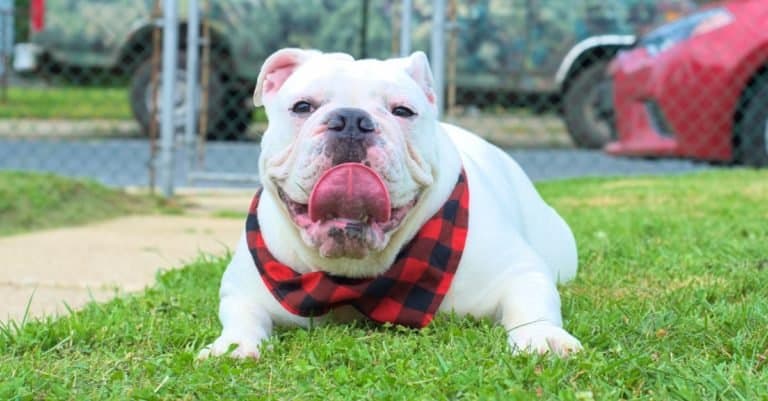
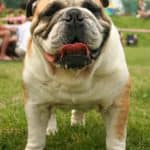
A cute white Australian bulldog sitting on the green grass during daytime.

On average, the male Australian Bulldog is between 18 and 20 inches tall. They usually weigh in the vicinity of 60 to 78 pounds. The female is slightly shorter, standing 17 to 18 inches, while weighing between 50 and 61 pounds.

Common Health Issues

Every potential owner should be aware of the most common health problems their Aussie dog may encounter.

  • Cherry eye
  • Hip dysplasia
  • Elbow dysplasia
  • Heart murmur
  • Diabetes
  • Epilepsy

Most bulldogs suffer from Brachycephalic syndrome. It’s a respiratory health issue that interferes with the dog’s breathing. Science attributes the condition to shorter, pushed-in faces.

Temperament

Separation anxiety is common with the breed. They’re also persistent and stubborn, which will make training a chore. You’ll have to take a firm hand with the dog, committing to a regular regimen of consistency and patience. Get started when these dogs are puppies.

How To Take Care of an Australian Bulldog

The Australian Bulldog needs companionship. It won’t matter how dog-friendly the environment is if you’re not around; they won’t be happy. From puppies through adulthood, if left alone for too long, your pooch will get stressed or bored. That can produce extended barking sessions or other bad behavior.

They might be more susceptible to you not being around if there’s another pet to keep them occupied. But even that won’t hold up for extended periods. If you’re a single owner, see what you can do to minimize the dog’s time alone.
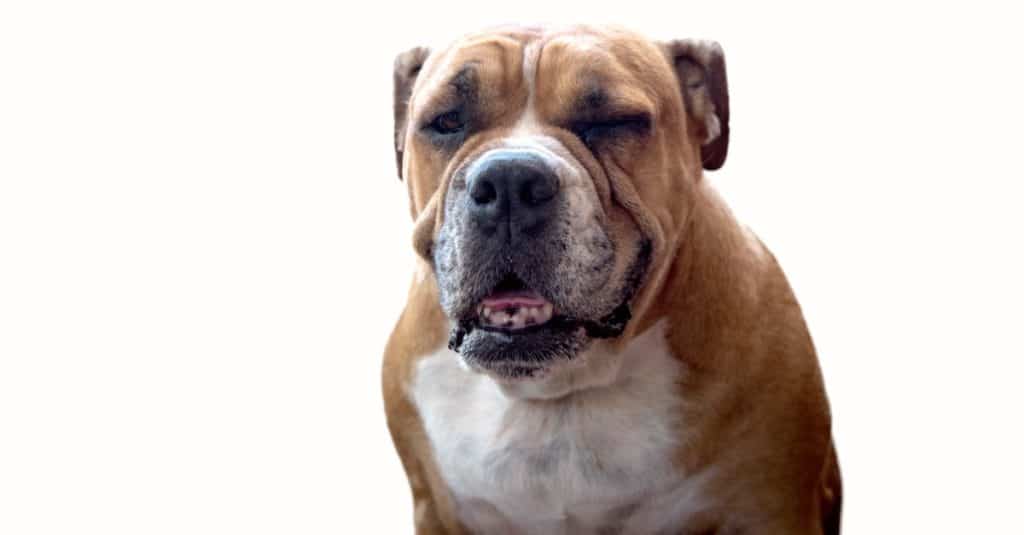
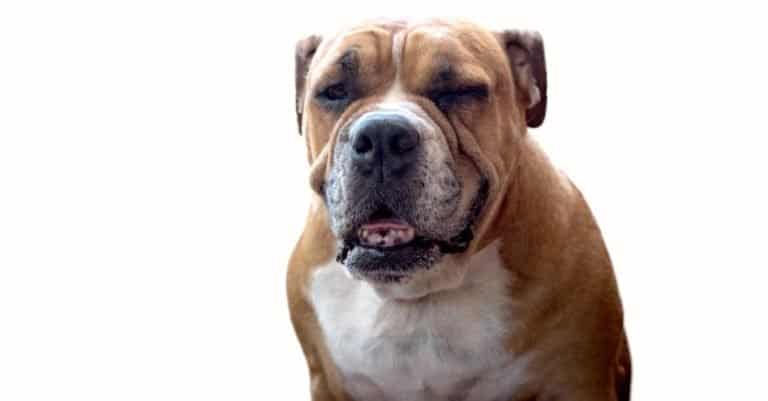
Australian Bulldog isolated on a white background.

Australian Bulldogs are prone to separation anxiety, which may be lessened by the presence of another pet

The Best Dog Food

Unless otherwise specified by your vet, the Australian Bulldog doesn’t have any unique dietary needs. They’re fine with standard OTC dog foods. It’s better to lean toward high-quality foods, though. Categorized as a medium-sized crossbreed, so feed them accordingly.

An important thing to note is this breed’s proclivity for heart murmurs. Know that legumes in dog food have been linked to heart failure, and read your dog food ingredients carefully to avoid legumes like chickpeas, lentils, and peas.

You do want to keep in mind that these aren’t particularly active dogs. That makes them prone to diabetes and obesity if their metabolisms aren’t balancing weight and caloric intake. You have to make sure your pooch gets its daily exercise, and you avoid overfeeding.

Feed puppies three to five times a day. They naturally burn off calories as they’re likely to run around and play. Like humans, as they get older, their metabolisms will slow down, and the dog will burn calories more slowly.

The medium-sized adult dog can enjoy between two and 2 2/3 cups at their meals, which should be dispensed twice a day. Mature dogs get a little less than adults.

Maintenance and Grooming

Good grooming is critical to your dog’s appearance, health, and well-being. The coat can get matted and will make your pooch uncomfortable. Healthy coats shed less and minimize threats like ear infections and fleas.

The Aussie Bulldog has a fine, short coat with a smooth feel. He’s an average shedder, and this is manageable with a firm bristle brush. The coats are shades of brindles, pied colors, reds, and fawns. The tri-colored and black coats usually come with a BBD lineage, as they aren’t common.

Before bathing, clip the coat as needed. Always clear the anal sac as the area can irritate the dog if it isn’t clean. Bathe and rinse with shampoo and conditioner to get a thorough cleaning of the coat. Take time to trim the toenails and brush their teeth. If you’re not brushing, the dog’s breath will be bad. So, you need to pay attention. If their coats aren’t smooth, it’s time to brush and trim. It’s time to cut the nails if their feet click as they walk.

Determine how often you groom based on what you see. We do recommend professional grooming as often as you can afford it.

Training
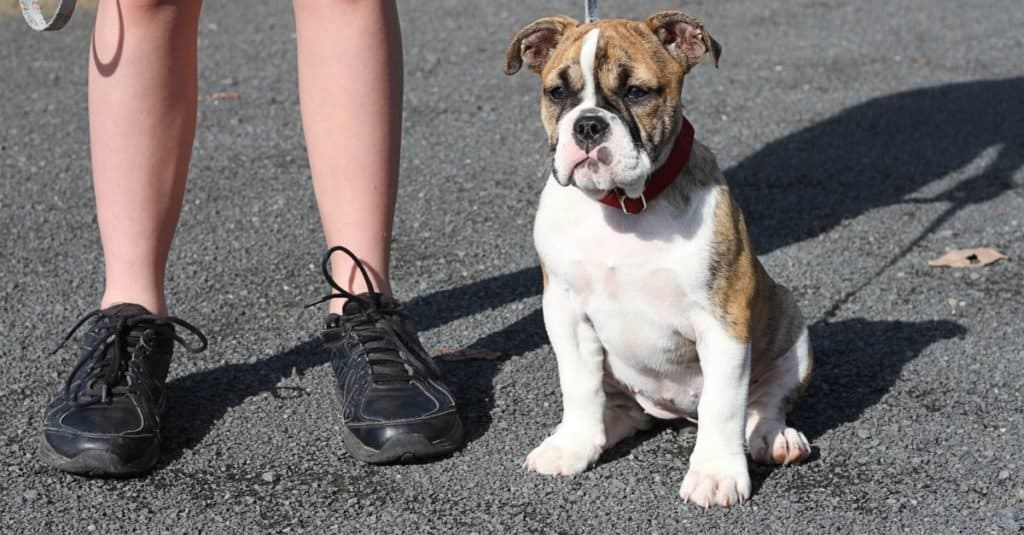
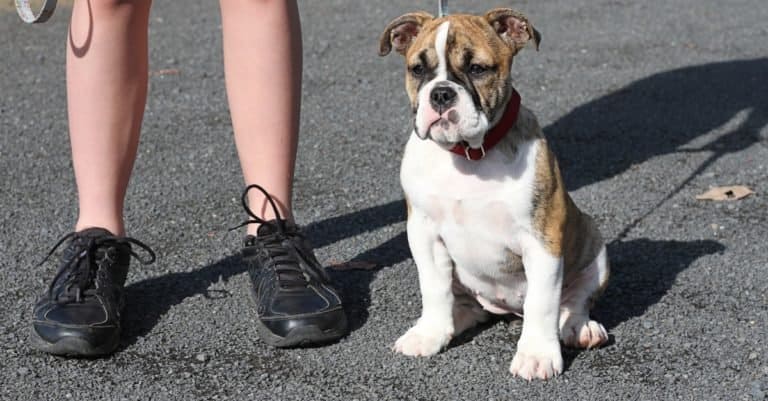
Cute Australian Bulldog puppy at obedience training.

Australian bulldogs might decide they’re done with training sessions before you are, and require extra patience as a result.

As the Aussie bulldog loves people, training can be quite manageable. But it can still take some time and patience. Though intelligent, they take their time learning.

With patience and encouragement, keep them engaged, and it shouldn’t be too much of a problem. Take note that this Aussie mix is stubborn, and negative reinforcement only gets you a dog that withdraws. The Aussie dog is famous for, upon not appreciating your approach to training, plopping down and refusing to participate.

Socialization

Expose your puppies to people, places, dogs, cats, and other animals. This bulldog leans more towards solitude. But it remains important that you get them used to strangers, family, playmates, and other animals that are a part of your lifestyle. Otherwise, you’ll find them turning into the grumpy dog their faces hint at.

Exercise

The Aussie Bulldog has no desire to hop, skip, and jump all the time. They’ll keep up with you. You may even convince the dog to engage in strenuous play as long as they enjoy your company. But these dogs are about chillin’.

Whether English Bulldog or English Staffordshire Bull Terrier, a bulldog needs regular play and mental exercise. If they don’t get it, expect them to pick up destructive habits like chewing chair legs. If you have the time for exercise or daily walks, get yourself a dog walker and let them keep doggy calm and happy.
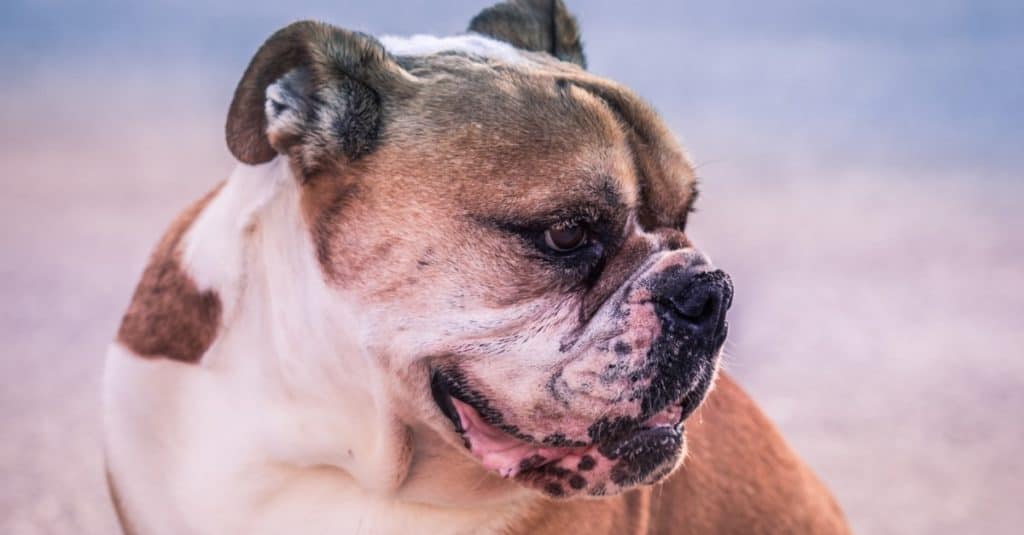
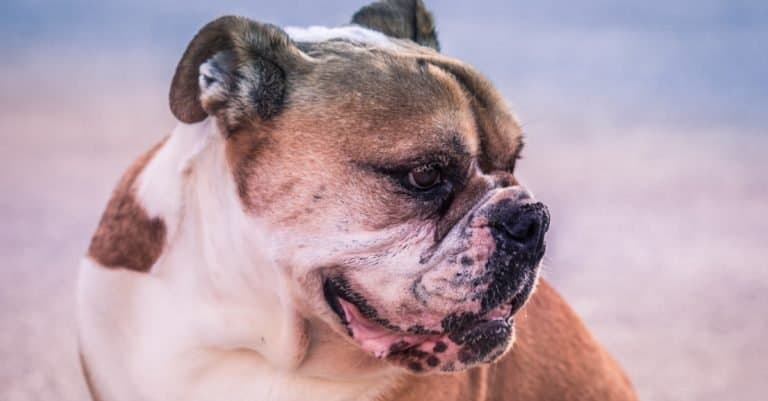
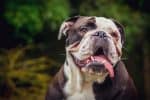
Australian Bulldog, close-up.

Australian Bulldogs prefer a laid-back lifestyle, although they do require regular exercise to keep destructive habits at bay.

Puppies

Australian Bulldog puppies are adorable. A little pug miniature that captures the heart. The litter of an Aussie Bulldog will fall between four and nine puppies, with seven being the average. Puppies will be impressionable and ready to learn.

Bulldogs are fiercely independent and have a lot of energy. You want to get a handle on both sooner than later. Get the puppies early training and socialization. A little a day will be beneficial.

Children

You want to get an Australian Bulldog who’s comfortable being around you and others in the household.

Always monitor small children and puppies. Puppies may nip out of instinct. Young children may be a little aggressive. Show older children how to be a leader in the dog’s presence, even as they play.

Dogs Similar to the Australian Bulldog
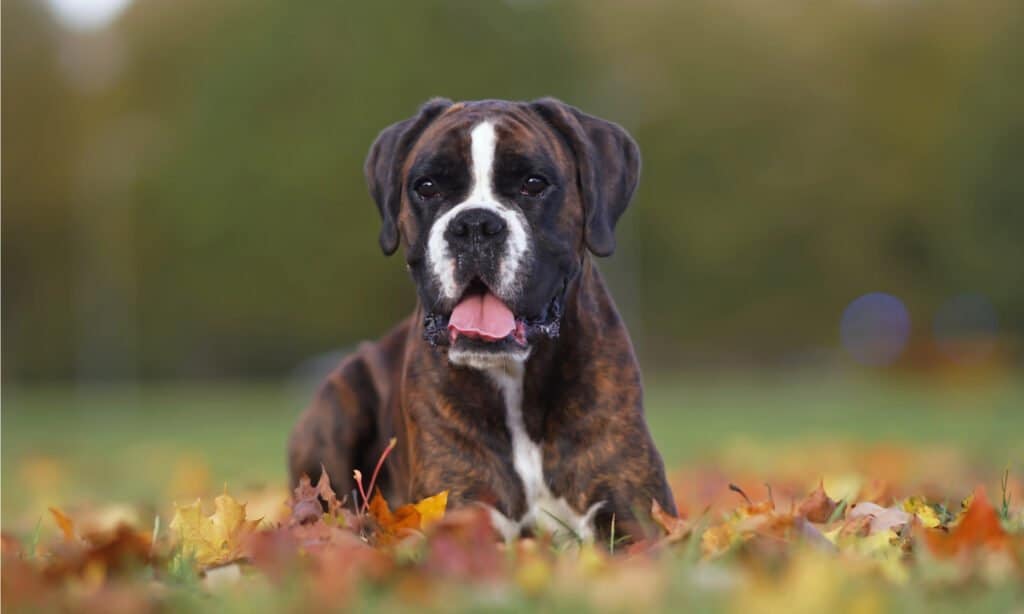
In spite of their size and intimidating exterior, boxers are lovable pets.

If you have an interest in the Australian Bulldog, but you’re not sure they’re the best choice, here are other breeds similar to the Australian Bulldog you can take a look at.

  • Boxer: Bright, alert, courageous, the Boxer’s a big dog, and you’ll need the space to accommodate it. They’re muscular and intimidating but incredibly loving.
  • Australian Shepherd: Used in search and research missions, the Australian Shepherd is on the list of the smartest dogs in the world. They love exercise and work.
  • Miniature English Bulldog: The miniature version of the bulldog is an excellent choice for smaller environments.
View all 328 animals that start with A

Sources

  1. Pet Guide / Accessed May 28, 2021
  2. Bow Wow Insurance / Accessed May 28, 2021
  3. Dog-Learn / Accessed May 28, 2021
  4. Pet Cloud / Accessed May 28, 2021
  5. Mad Paws / Accessed May 28, 2021
  6. Hill's Pet / Accessed May 28, 2021
  7. My Dog Breeds / Accessed May 28, 2021

Dana Mayor

About the Author

Dana Mayor

I love good books and the occasional cartoon. I am also endlessly intrigued with the beauty of nature and find hummingbirds, puppies, and marine wildlife to be the most magical creatures of all.
Connect:

Thank you for reading! Have some feedback for us?


Australian Bulldog FAQs (Frequently Asked Questions)

The Australian Bulldog is a crossbreed selectively designed for the Down Under environment.