
Quick Take
- One bird on this list hunts by completely submerging itself underwater, and its body is engineered for it in ways you wouldn't expect. See the osprey's diving adaptations →
- The fastest animal on Earth is not a cheetah, and it occasionally takes down other apex predators just for getting too close. Meet the fastest animal alive →
- One eagle has claws so large and powerful they're compared to dragon claws, and their preferred prey might surprise you. Explore the harpy's dragon claws →
- A bird on this list can communicate its emotions through color changes, and it is also capable of outliving most humans. Discover the condor's long life →
Birds of prey are apex predators, ruling the skies with razor-sharp talons and wingspans wide enough to envelop a full-grown man. They spend their lives at the top of the food chain because they have evolved exceptional senses and features that allow them to dominate their prey and conquer any rivals. Discover some of the most interesting birds of prey and their special features.
Golden Eagle
Golden eagles (Aquila chrysaetos) are highly regarded in ancient tribal cultures and are among the most familiar birds in falconry. They are among North America’s largest and fastest birds of prey, looking remarkable as they soar through the air with their golden feathers gleaming in the sunlight. A golden eagle has an average body length of 27.6 to 33.1 inches and an average wingspan of 6 to 7.2 feet.
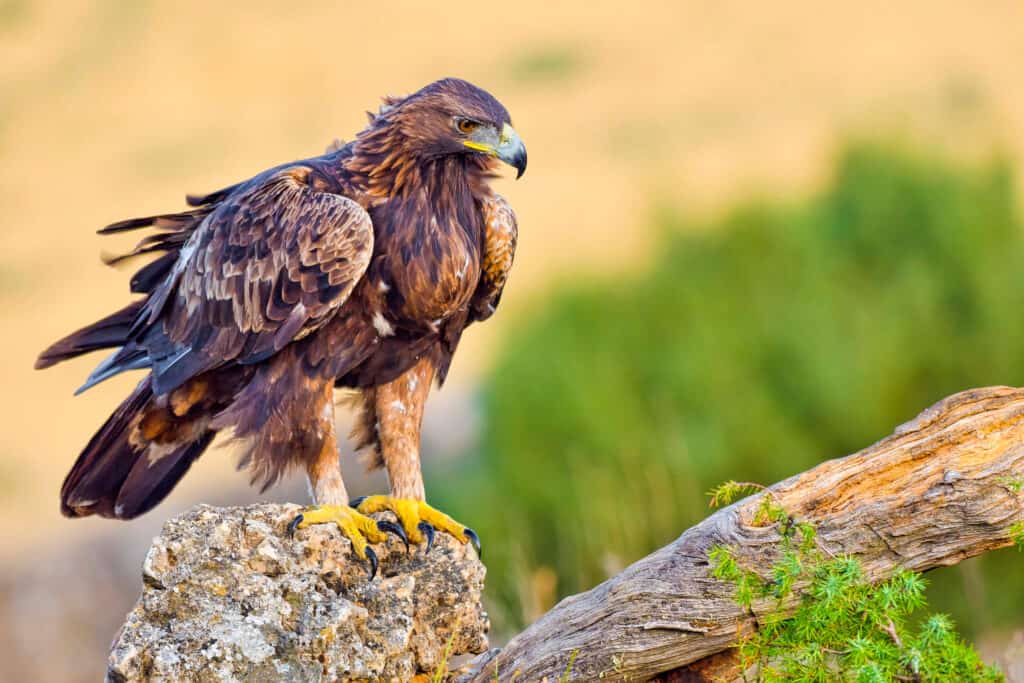
Golden eagles can reach speeds up to 150 miles per hour.
©Al Carrera/Shutterstock.com
Golden eagles can reach speeds up to 150 miles per hour and are ferocious enough to take down deer, rams, and wolves. They are also resourceful hunters, flying up to 60 feet above the ground and dropping tortoises onto rocks to crack open their shells.
Harpy Eagle
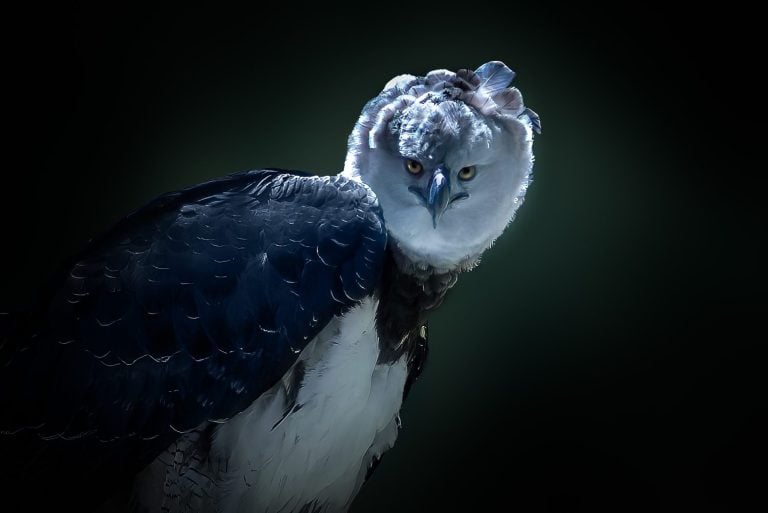
Harpy eagles (Harpia harpyja) are among the largest living eagle species in the world and the most powerful within their range. A harpy eagle averages 34 to 42 inches in length, with a wingspan of 5.7 to 7.3 feet. Their natural habitats include tropical lowland rainforests, and Brazilians call them royal hawks due to their stately and imposing appearance. These eagles are typically silent, but their occasional calls sound like sharp, wispy screams or wails.

Harpy eagles have the largest claws of any eagle.
©ChepeNicoli/Shutterstock.com
Harpy eagles are fierce predators with the largest claws of any eagle, which look similar to dragon claws and easily rip animals like sloths from their treetop homes.
Northern Goshawk
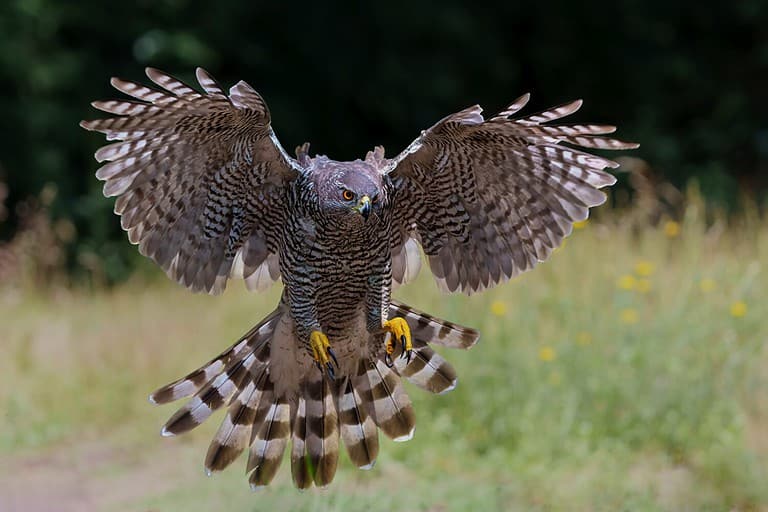
Northern goshawks (Accipiter gentilis) are medium to large hawks native to the Northern Hemisphere’s temperate regions. Overall, northern goshawks range from 20 to 26 inches in length with a wingspan of 40 to 46 inches, although females are noticeably larger than males of the species.
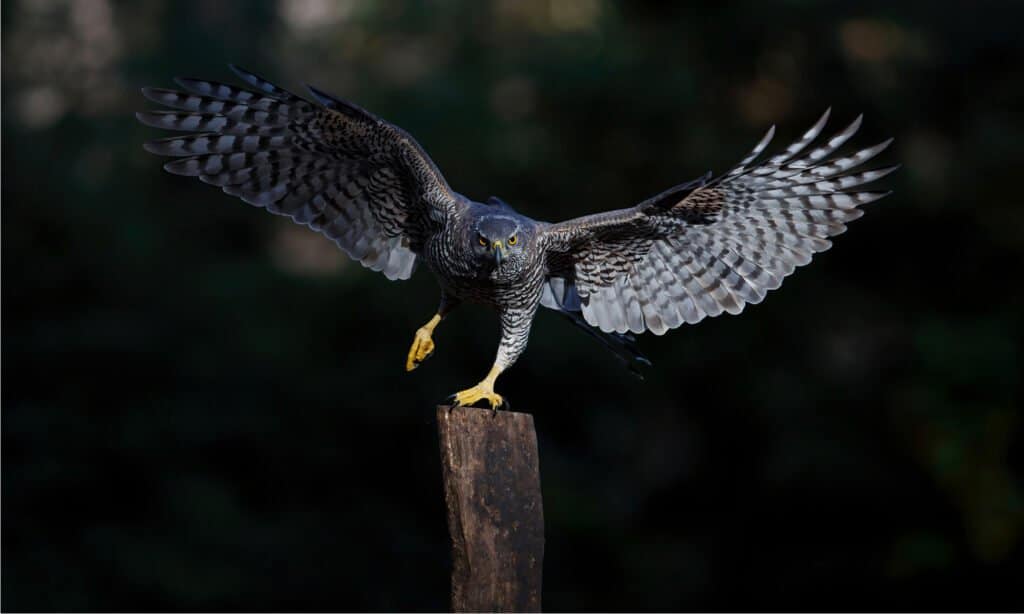
Northern goshawks are mainly solitary and can be highly territorial and aggressive.
©Henk Bogaard/Shutterstock.com
Northern goshawks were highly revered during the Middle Ages when nobles used them for falconry. Today, they are among the most prolific raptor predators in their range. Their natural habitats include mixed forests and woodlands, which they rapidly maneuver through at impressive speeds of up to 40 miles per hour. Northern goshawks are mainly solitary and can be highly territorial and aggressive, viciously defending their nests.
Common Kestrel
Kestrels (Falco tinnunculus) are raptors in the falcon genus and are well-known for their unique hunting behavior, where they hover 65 feet in the air before swooping down on their prey. They are the only birds of prey capable of true hovering, using the wind to keep themselves stationary in the air.

The average kestrel is 8.7 to 12.2 inches in length with a wingspan of 20.1 to 24 inches.
©Dennis Jacobsen/Shutterstock.com
Although they are the smallest falcons in North America, they are fierce predators, often hunting in family groups across open country. They use ultraviolet light to track their prey, which includes small mammals, lizards, and large insects. There are 15 kestrel species throughout the world, and they can be identified by their smaller size and brown plumage.
Peregrine Falcon
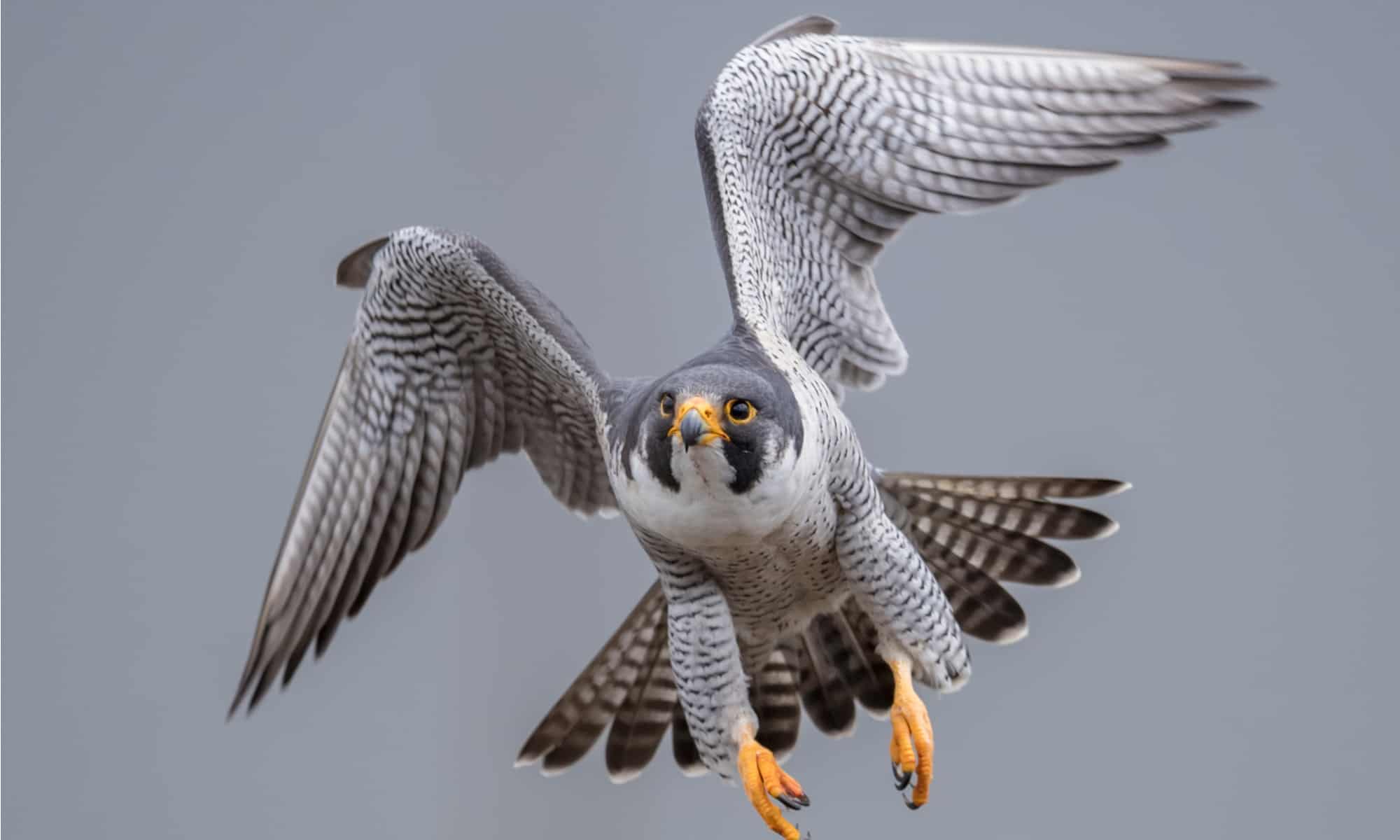
Peregrine falcons (Falco peregrinus) are large falcons renowned worldwide as the fastest animals on Earth, reaching speeds over 240 miles per hour. They are ferocious hunters that perform high-speed dives when attacking their prey and will even ambush other raptors that get too close to their nests.

Peregrine falcons have an average length of 14.2 to 19.3 inches and an average wingspan of 39.4 to 43.3 inches.
©TPCImagery – Mike Jackson/Shutterstock.com
Peregrine falcons will occasionally use their full-dive ambush attacks to kill birds of prey, such as golden eagles and bald eagles. The name peregrine means wanderer, an apt description, as they can travel over 15,000 miles in a single year. Some populations winter in South America and breed in the Arctic tundra. This species has one of the longest migrations of any North American bird.
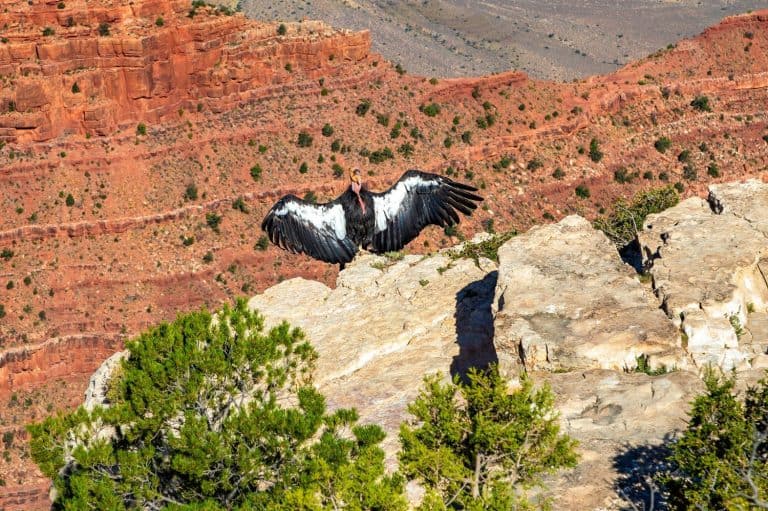
Andean Condor
Andean condors (Vultur gryphus) are giant vultures native to the Andes Mountains and the Pacific coast of South America. They are among the largest flying species on Earth. The average Andean condor is 39 to 51 inches long, with a wingspan between 9.3 and 10.8 feet, and weighs nearly 30 pounds.
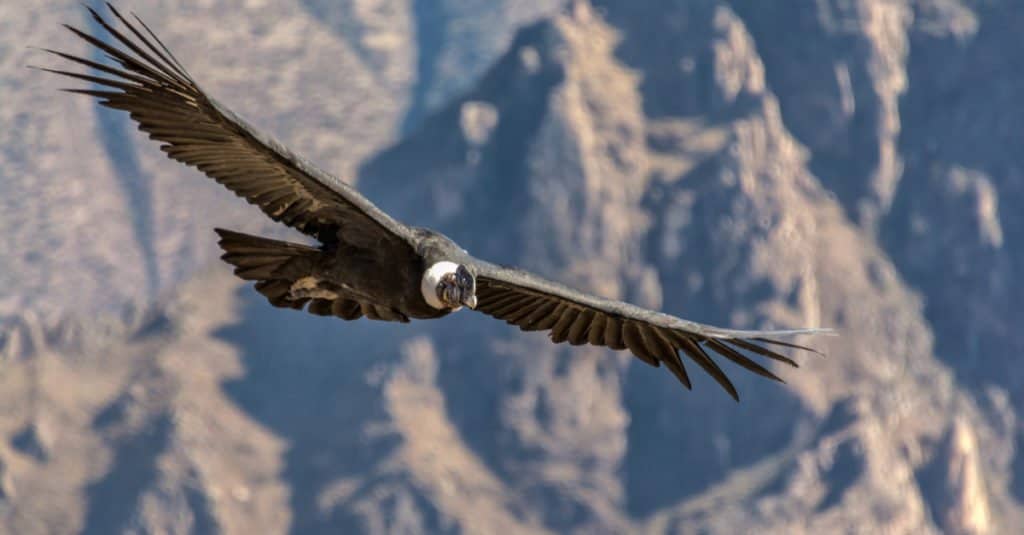
The Andean condor can live to be 50 years old.
©Gus Martinie/Shutterstock.com
Andean condors are intelligent and expressive creatures, able to communicate their emotional state through the color of their fleshy heads. Groups of condors also develop “pecking orders,” with mature condors at the top and young males at the bottom. These enormous birds can live up to 70 years and fly over 100 miles without flapping their wings.
African Fish Eagle
African fish eagles (Haliaeetus vocifer) are large birds of prey native to Sub-Saharan Africa and resemble the North American bald eagle. They are the national birds of several countries, and their shrill calls are widely considered the quintessential sound of Africa.
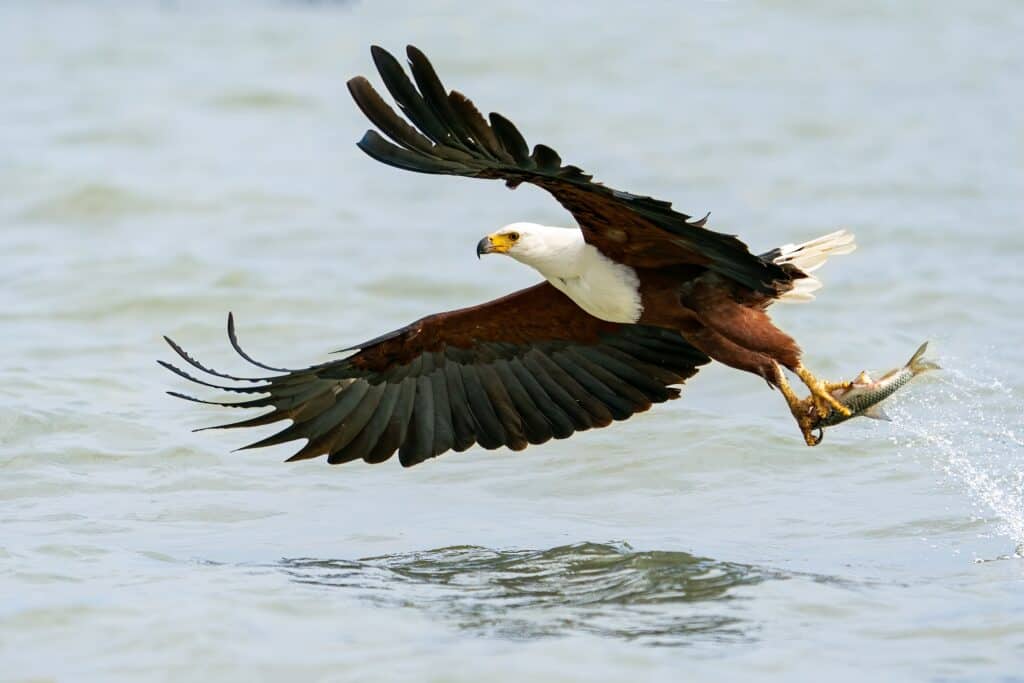
African fish eagles have a body length of 25 to 30 inches, with females being larger than males. Females have a wingspan of approximately 8 feet, while males top out at around six feet.
©Tomas Drahos/Shutterstock.com
African fish eagles feed primarily on fish, and they swoop down from a perch to grab their prey from the water. Their talons feature sharp barbs, which allow them to hold on to their slippery meal. They will also steal food from other birds when they are disinclined to hunt. These birds have a long lineage and are descendants of ancient sea eagles.
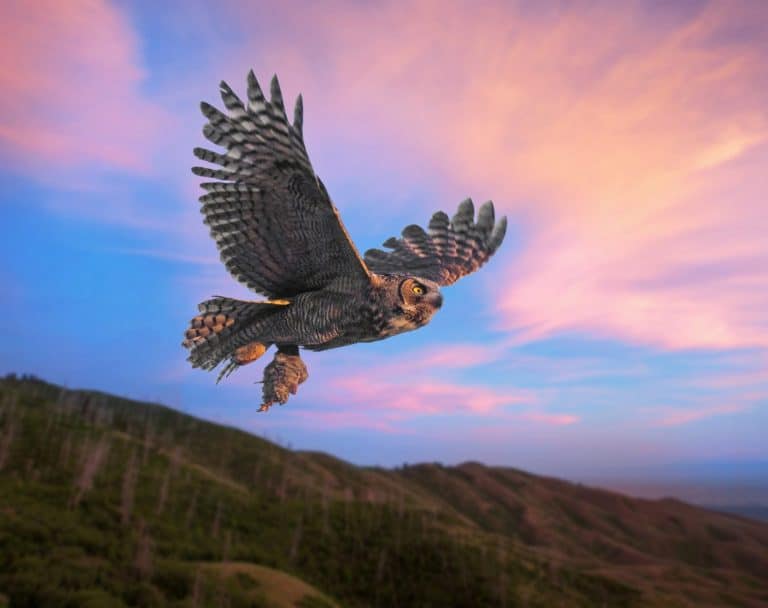
Great Horned Owl
Great horned owls (Bubo virginianus) are a large owl species native to North and South America. They have an extensive range and are highly adaptable, thriving in areas with human habitation. Great horned owls can deliver an intense stare using their huge, bright yellow eyes and swiveling necks; their nighttime call is solemn and terrifying. They are known as the tigers of the sky, viciously attacking anything small enough to carry off.
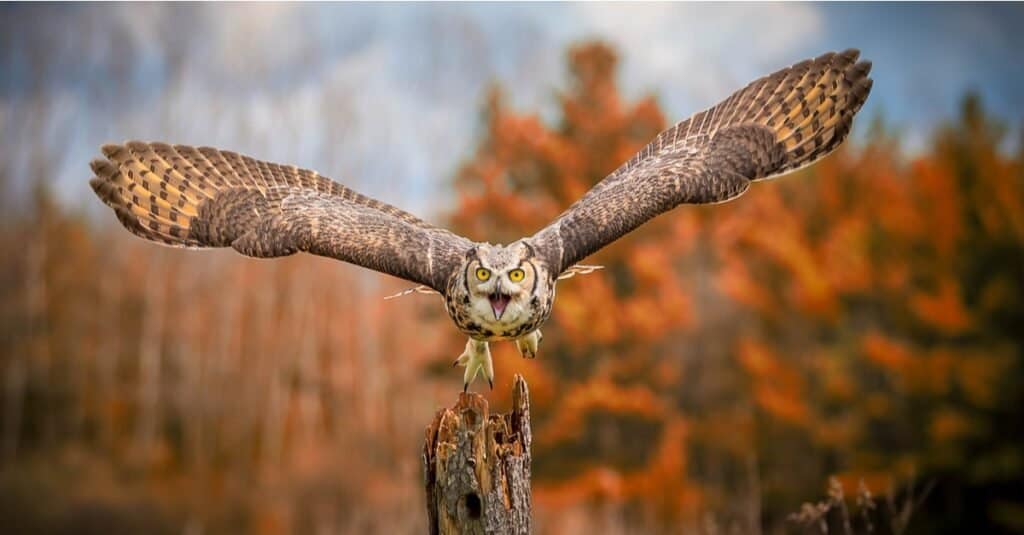
Great horned owls generally measure between 18.1 and 24.8 inches long with wingspans of 3.3 to 4.8 feet.
©Imran Ashraf/Shutterstock.com
Great horned owls are among the most dangerous birds of prey, often reported to attack pets and livestock. They can carry up to nine pounds and occasionally take off with small cats and dogs.
Red-Tailed Hawk
Red-tailed hawks (Buteo jamaicensis) are another North American bird of prey, and they are often called “chickenhawks” in the United States due to their tendency to prey on chickens. They are the most widely distributed raptors on the continent and are famous for their loud, hoarse screams as they soar through the air.
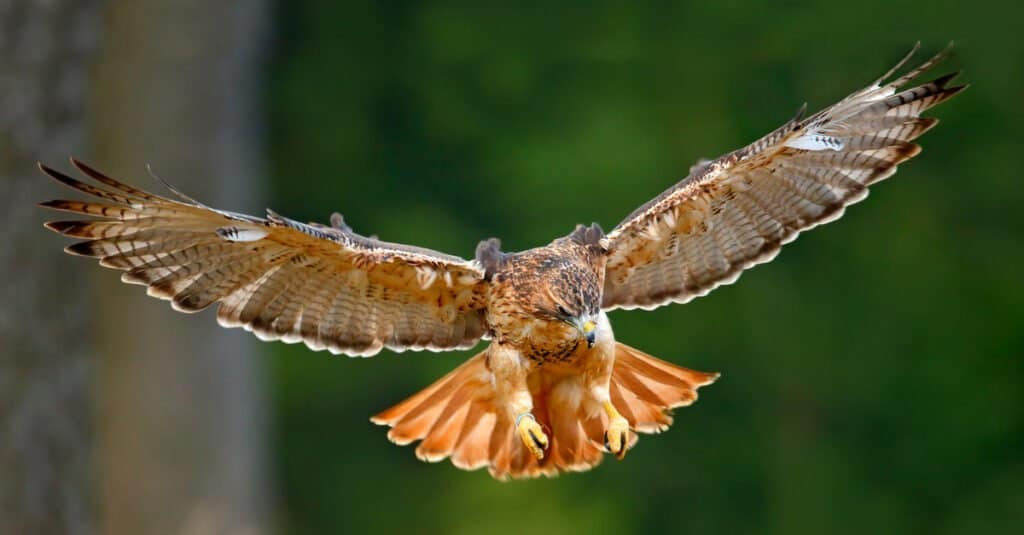
A red-tailed hawk typically measures between 17.7 and 25.6 inches in length and has a wingspan of about 3.6 to 4.4 feet.
©Ondrej Prosicky/Shutterstock.com
Fun fact: Movies and TV programs dub the red-tailed hawk’s call over the bald eagle’s because it sounds fiercer. These birds are skilled, tactical hunters that wait on a perch until they spot prey, then swoop down for the kill. They also hunt in pairs, especially when capturing tree squirrels. One flushes the squirrel from its hiding spot while the other attacks.
Osprey
Ospreys (Pandion haliaetus), sometimes called sea hawks, are large raptors found throughout the world’s coasts. Fish make up 99% of their diet, and they have specialized features to help them hunt, including excellent vision that allows them to spot prey moving beneath the surface. They can hover, then dive feet-first, hitting the water and completely submerging themselves.

Ospreys have an average body length of 21 to 23 inches and an average wingspan of 5 to 6 feet.
©LMIMAGES/Shutterstock.com
Ospreys also have sharp spikes on their claws and reversible outer toes for gripping slippery fish. Their nostrils close when underwater and their plumage is dense and waterproof to keep them from getting waterlogged.
Philippine Eagle
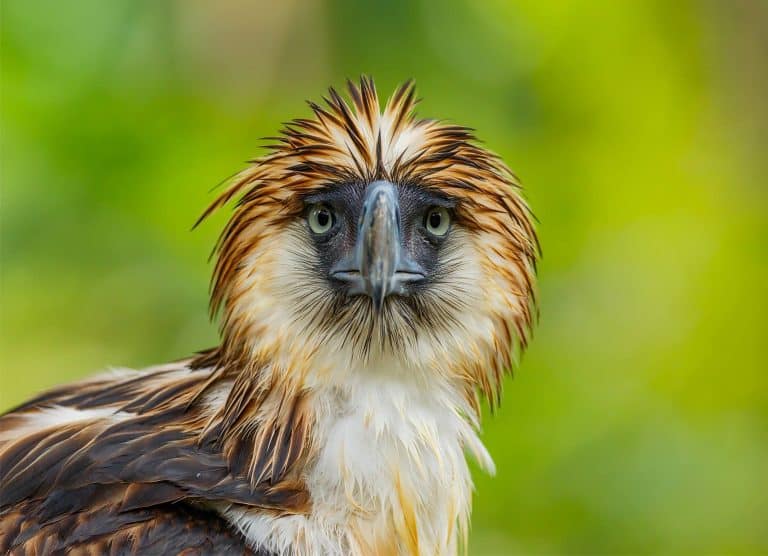
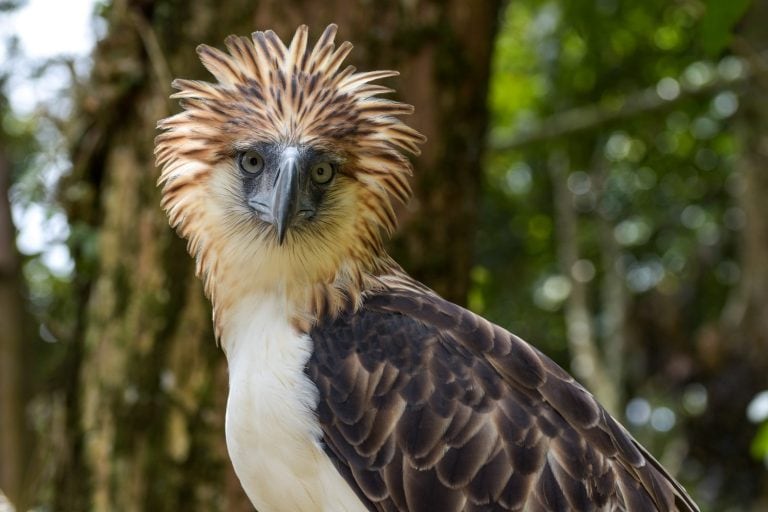
Philippine eagles (Pithecophaga jefferyi), also known as monkey-eating eagles, are fierce, striking birds. They feature a distinctive mane-like crest, dark facial features, and piercing blue eyes. Beyond their striking appearance, Philippine eagles feed on macaques native to the islands and are apex predators within their range. They are endemic to the Philippine forests, where they are endangered due to deforestation. Killing a Philippine eagle is punishable by up to 12 years in prison.

The average Philippine eagle has a total length of 33.9 to 40.2 inches and an average wingspan of 6 to 7.2 feet.
©Michal Lukaszewicz/Shutterstock.com
Bald Eagle
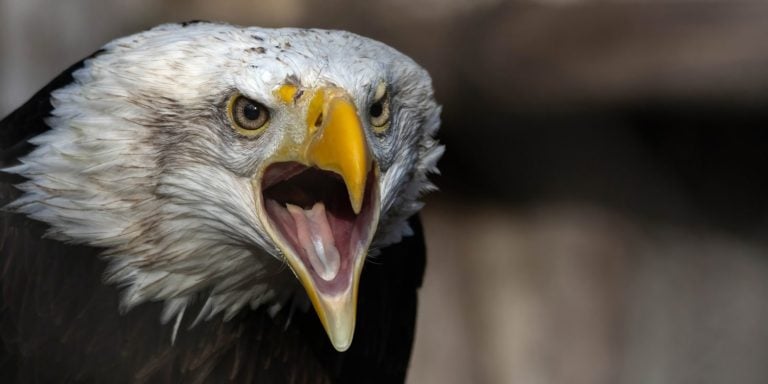
Bald eagles (Haliaeetus leucocephalus) are synonymous with freedom and are the national symbol of the United States. While they are relatively common in North America, these birds still captivate onlookers with their enormous wings and probing, no-nonsense gaze.

Bald eagles are between 27.9 and 37.8 inches long and have an average wingspan of 6.5 to 7 feet.
©FloridaStock/Shutterstock.com
The bald eagle is North America’s second-largest bird of prey, after the California condor. Bald eagles are fast fliers, diving at over 100 miles per hour and easily maneuvering through varied terrain, with wingspans exceeding seven feet.