Scientists are still trying to piece together the story of how birds became the most diverse life form on Earth. Some believe that modern birds evolved from dinosaurs. However, others say that they came into being after the extinction of the ancient reptiles. Now, though, researchers have found a new piece of evidence that supports the idea that modern birds originated long ago: they’ve discovered an extinct giant waterbird that lived in New Zealand about 60 million years ago. It’s called Waimanu, or “water bird”.
The Waimanu Inhabited Ancient New Zealand 60 Million Years Ago
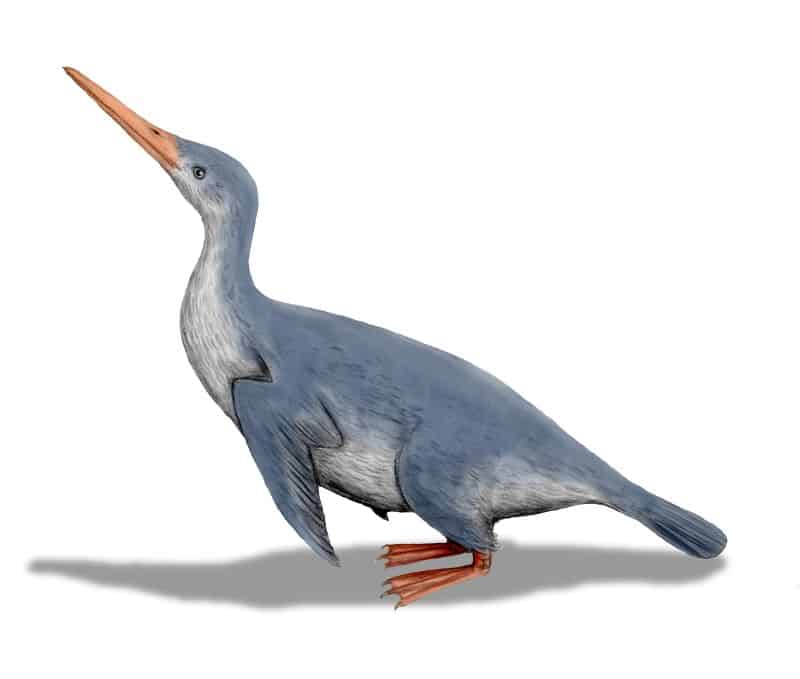
Waimanu is one of the largest penguins that ever lived.
©Size of this preview: 706 × 599 pixels. Other resolutions: 283 × 240 pixels | 566 × 480 pixels. – Original / License
The fossilized remains of ancient penguins appear shortly after the mass extinction event that ended the dinosaurs. The Waimanu and other ancient penguins are descendants of the surviving species from that era.
The discovery of the Waimanu sheds light on the evolution of penguins and birds. It likely lived in New Zealand between 60 and 50 million years ago. However, it’s not the first penguin to have lived there, as other fossils have been found that are older than this species. The fossilized bones were so well preserved that there’s a lot we can learn about how these birds lived in the past.
One of the Largest Penguins in History

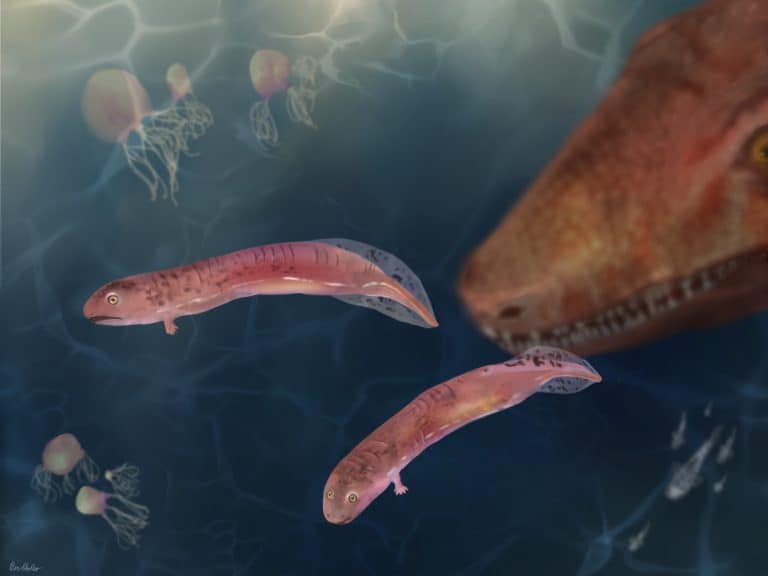
Waimanu probably ate fish and amphibians that lived in the wetlands of New Zealand’s North Island.
©ian woolcock/Shutterstock.com
For decades, paleontologists have studied the bird-like fossils of Waimanu, but their efforts were largely unsuccessful. While it’s true that they were able to put together some of its fossil pieces, they didn’t realize what a massive creature it was until recently.
Once researchers were able to discover the Waimanu’s true shape by putting together all of its fossil pieces, they found that Waimanu is one of the largest penguins ever found in history. The penguin-sized bird was an enormous creature. Standing about three or four feet tall and weighing between 22 and 66 pounds, it was of a similar size to an emperor penguin.
Although it was a type of penguin, it resembled a stork in its general shape, with long legs and sharp claws. It had massive wings, but they were not suitable for flight.
While they could not fly, their compressed and dense wing bones enabled them to swim underwater with minimal drag or resistance. They may have also used their wings as a defense against predators while on land.
Like modern-day water-loving birds, Waimanu probably ate fish and amphibians that lived in the wetlands of New Zealand’s North Island.
Not Shaped Like a Modern Penguin
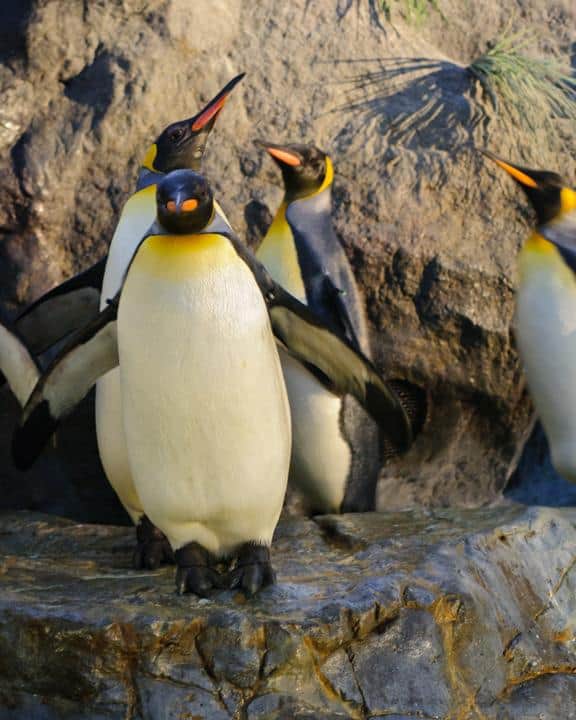
Like the modern penguin, Waimanu was a flightless bird that spent a lot of its time in water.
Unlike modern penguins, Waimanu likely had an elongated and slender body, with a long neck and head. Its wings were strongly curved like those of an eagle, and its feet were webbed like those of penguins and seals. This means that Waimanu probably spent much of its time in the water. They actually represent a fascinating mix of ancient and modern characteristics.
The bones of Waimanu were between today’s flying birds and living penguins. They were less compressed than modern penguins but more compressed than birds that fly. Today’s penguins have highly compressed bones that allow their wings to create a knife-like profile to cut through the water as they swim.
Although its legs were longer, Waimanu had short and stubby webbed feet and likely walked with an upright posture. So, it may have been comparable to a living penguin on land, but today’s penguins swim faster and more efficiently.
Living Dinosaurs, Birds are Diverse and Adaptable
By tying modern birds to ancient dinosaurs, the discovery of Waimanu sheds light on the evolution of penguins and the diversity of bird life on our planet. They are admired for their beauty and majesty but their importance to the history of life on earth is just as important.
You may not realize this, but birds are one of the most diverse groups of animals on earth. They have evolved over millions of years in a wide range of shapes, sizes, and colors. Birds inhabit every continent and have even been found as high up as Mount Everest. Some species are endemic to one country or region, while others migrate thousands of miles between their breeding grounds and winter homes.
Birds also have many physical adaptations that are useful to their survival, including hollow bones and feathers, which help them maintain body temperature and keep warm in cold weather. Birds are also the only living dinosaurs. Modern-day birds share an evolutionary history with Tyrannosaurus rex and Velociraptor dating back more than 200 million years.
Modern birds are different from ancient birds in several ways. They have larger brains, which allows them to be more intelligent than dinosaurs were. Bigger brains mean they can solve problems more easily and use tools and other objects to find solutions to challenges.
Waimanu Reveals Important Secrets About How Birds Evolved
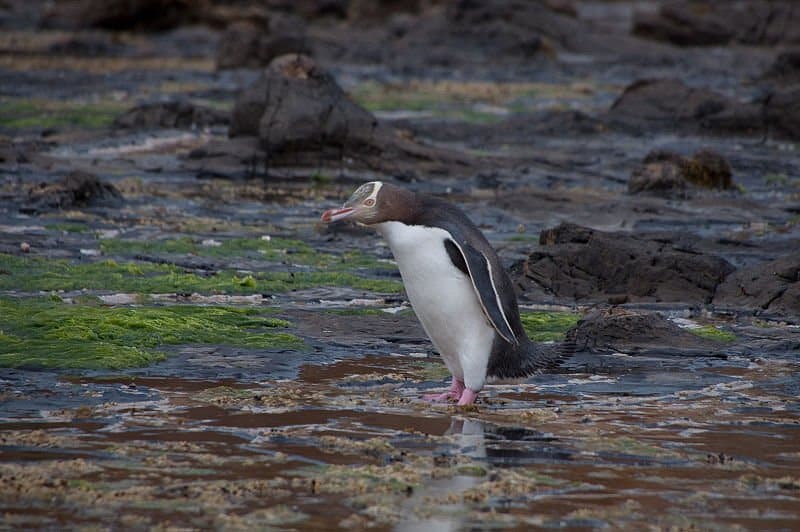
Waimanu was similar to a modern penguin.
©klaasmer / Creative Commons – Original
Together with other specimens from other sites, Waimanu will help scientists learn more about how birds evolved and spread across the world. Waimanu’s discovery provides scientists with an accurate picture of what ancient New Zealand looked like before humans arrived; it also provides valuable information about avian evolution that can help us better understand how modern birds came into being.
Giant penguins were alive on Earth until about 20 million years ago. So, just how did this bird’s species go extinct? It’s hard to say. However, their disappearance did coincide with the emergence of toothed whales, so they possibly became their prey.