







B
Species Profile

Boggle

Canis lupus familiaris

Nose of a hound, heart of an athlete
iStock.com/Lindsey Martin Webb

Boggle Distribution

Click a location to explore more animals from that region

Origin Location

This map shows the native origin of the Boggle. As a domesticated species, they are now found worldwide.

Loading map...

Found in 1 state/province

Size Comparison

Human 5'8"
Boggle 1 ft 7 in

Boggle stands at 28% of average human height.

Animal, Canine - Animal, Dog, Horizontal, Nature

At a Glance

Domesticated
Also Known As Boxer-Beagle mix, Beagle-Boxer mix, Beagle Boxer cross, Boxer × Beagle, Beagle/Boxer designer mix, Beagle-Boxer hybrid
Diet Omnivore
Activity Diurnal+
Lifespan 5 years
Weight 30 lbs
Status Not Evaluated
Did You Know?

Many Boggles inherit a Beagle-grade nose and will follow smells longer than they'll follow your plan.

Scientific Classification

The Boggle is a mixed-breed domestic dog produced by crossing a Beagle with a Boxer. Traits vary by individual, typically combining the Beagle’s scent-hound tendencies with the Boxer’s athletic, people-oriented temperament.

Kingdom
Animalia
Phylum
Chordata
Class
Mammalia
Order
Carnivora
Family
Canidae
Genus
Canis
Species
Canis lupus

Distinguishing Features

  • Medium-sized, athletic mixed-breed build
  • Coat often short and smooth
  • May show Beagle-like markings and ears
  • Energetic; strong exercise and training needs
  • Can inherit scent-driven tracking behavior

Physical Measurements

Males and females differ in size

Height
1 ft 6 in (1 ft 3 in – 1 ft 9 in)
Length
3 ft 1 in (2 ft 7 in – 3 ft 7 in)
2 ft 11 in (2 ft 6 in – 3 ft 5 in)
Weight
49 lbs (33 lbs – 66 lbs)
42 lbs (29 lbs – 60 lbs)
Tail Length
11 in (8 in – 1 ft 2 in)
9 in (7 in – 11 in)
Top Speed
31 mph
running

Appearance

Primary Colors
Secondary Colors
Skin Type Short coat
Distinctive Features
  • Mixed-breed variability; can resemble either Beagle or Boxer strongly.
  • Athletic, medium-to-sturdy build with deep chest and strong shoulders.
  • Short, smooth coat with moderate shedding; weekly brushing usually sufficient.
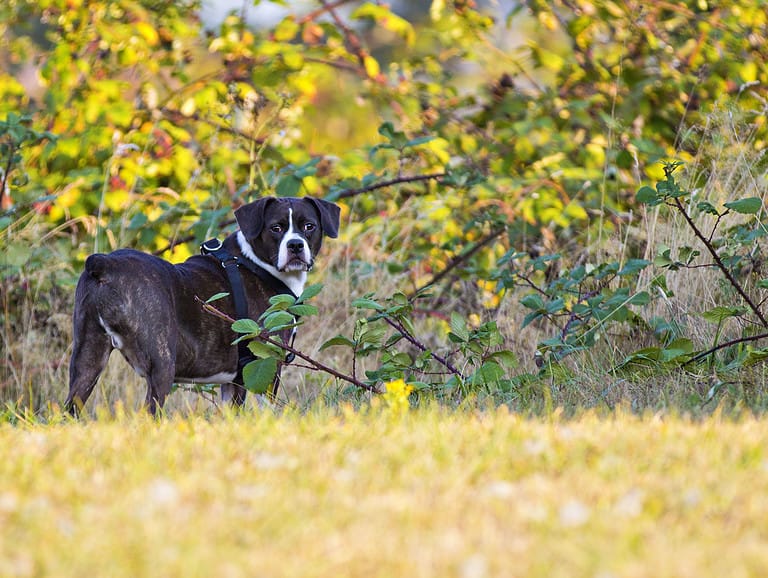
  • Broad head with moderately short muzzle; droopy hound ears are common.
  • Expressive eyes and dark facial mask occur in many individuals.
  • High scent drive; benefits from nosework games and leash reliability.
  • Needs daily exercise plus mental enrichment to prevent boredom behaviors.
  • Positive-reinforcement training; can be distractible when following scents.
  • Prone to ear infections; routine ear checks and drying after bathing.
  • Watch weight; Beagle lineage can increase food motivation and obesity risk.
  • Possible hip dysplasia; maintain fitness and avoid excessive impact when young.
  • Allergies and skin sensitivities may occur; monitor itching and hotspots.
  • Boxer-line concerns include heart disease; consider periodic veterinary screening.
  • Some inherit shorter muzzles; avoid overheating and strenuous heat exercise.
  • Risk of bloat in deep-chested types; use slow feeding and rest after meals.

Sexual Dimorphism

Sexual dimorphism is mild: males are often heavier and more muscular through chest and neck, while females tend to be slightly lighter and more streamlined. Individual variation from mixed ancestry can outweigh sex-based differences.

  • Broader chest and thicker neck musculature in many males.
  • Larger head and more pronounced jowls when Boxer-like traits dominate.
  • Heavier overall frame with stronger forequarter development.
  • Slightly narrower chest and lighter bone structure in many females.
  • More streamlined waistline and less pronounced head width.
  • Often shows a finer, more compact overall silhouette.

Did You Know?

Many Boggles inherit a Beagle-grade nose and will follow smells longer than they'll follow your plan.

The mix often blends Boxer playfulness with Beagle food-motivation, making training rewarding but snack-dependent.

Some Boggles "talk" with Beagle bays or Boxer grumbles; vocal style varies with the dominant parent traits.

Short coats are common, but shedding can be moderate year-round despite the sleek look.

They're typically medium-to-large dogs, but size and muzzle length can vary greatly within the same litter.

Common watch-outs include obesity and joint strain-especially if the dog inherits a Boxer-like, muscular build.

Unique Adaptations

  • Enhanced olfaction from hound ancestry supports nose-work games and long-distance tracking of faint scents.
  • Muscular, athletic frame in many individuals favors sprint play, agility, and strength-based enrichment.
  • Short, dense coat offers easy maintenance and decent protection during active outdoor play.
  • High social attunement-common in Boxer lines-can make them responsive to praise-based, relationship-focused training.
  • Mixed-breed variability can reduce predictability; tailoring exercise and diet to the individual is a practical advantage.

Interesting Behaviors

  • Scent-locking: once a trail is found, they may ignore cues unless recall is heavily reinforced.
  • Play-boxing: some use front paws like a Boxer, batting toys or gently sparring during play.
  • Food quests: counter-surfing and "sniff-and-scout" patrols increase if meals are boring or portions are small.
  • Shadowing people: many follow family members room-to-room, seeking interaction and reassurance.
  • Baying or chuffing: vocalizations can range from Beagle-style bays to Boxer-like snorts and rumbles.

Cultural Significance

As a modern companion mix, the Boggle reflects today's focus on family-friendly dogs-pairing scent-hound tradition with Boxer devotion, and showcasing how the domestic dog adapts to human homes and lifestyles.

Myths & Legends

In ancient Egypt, Anubis-jackal-headed guardian of the dead-guided souls, a myth that shaped reverence for canids and their watchfulness.

Welsh folklore tells of the Hounds of Annwn, otherworldly hounds whose hunt signaled the passing of souls through the night skies.

Mesoamerican tradition links the dog to Xolotl, who guided the dead across the underworld's river, a journey needing a faithful canine companion.

English hunting lore celebrates Beagles in royal packs; tales of tireless small hounds became symbols of perseverance and keen scenting.

Conservation Status

NE Not Evaluated

Has not yet been evaluated against the criteria.

Population Stable

Life Cycle

Birth 6 pups
Lifespan 5 years

Lifespan

In the Wild
2–10 years
In Captivity
9–14 years

Reproduction

Mating System Polygynandry
Social Structure Managed Domestic
Breeding Season Year-round; females cycle about twice yearly
Breeding Pattern Serial
Fertilization Managed Selective
Birth Type Managed_selective

Domestic dogs commonly show a promiscuous, multi-partner mating system; in pet breeding, Boggle (Beagle x Boxer mix) matings are typically human-arranged during the female's heat, with no enduring pair bond.

Behavior & Ecology

Social Pack Group: 4
Activity Diurnal, Crepuscular, Cathemeral
Diet Omnivore chicken

Temperament

Sociable
People-oriented
Scent-driven
Playful
Energetic
Protective
Stubborn
Food-motivated
Curious
Variable

Communication

barks
baying
whines
growls
grumbles
body language
scent marking
nose-to-ground tracking
play bows
pawing
leaning contact

Habitat

Biomes:
Temperate Forest Boreal Forest (Taiga) Tundra Alpine Temperate Grassland Mediterranean Desert Hot Desert Cold Savanna Tropical Dry Forest Tropical Rainforest Freshwater Wetland Marine +8
Terrain:
Plains Hilly Mountainous Valley Plateau Coastal Island Riverine +2
Elevation: Up to 16404 ft 3 in

Ecological Role

Domestic omnivore; athletic mix prone to obesity, allergies, bloat-requires balanced diet and exercise.

human companionship pest deterrence guarding alertness

Diet Details

Other Foods:
Rice Oats Sweet potato Pumpkin Carrots Blueberries

Human Interaction

Domestication Status

Domesticated

Domestic dogs were domesticated from gray wolves in Eurasia over 15,000 years ago. The Boggle is a recent Beagle×Boxer cross bred mainly for companionship, often blending scent-driven roaming with athletic, people-focused behavior.

Danger Level

Low
  • Mouthy play; nipping if untrained
  • Knocks down kids when excited
  • Dog aggression if poorly socialized
  • Chasing small pets via scent drive
  • Bite risk when scared or in pain

As a Pet

Suitable as Pet

Legality: Generally legal; some housing/insurance may restrict "bully-type" mixes.

Care Level: Moderate

Purchase Cost: Up to $800
Lifetime Cost: $15,000 - $35,000

Economic Value

Uses:
Companionship Sport Service Therapy Rescue
Products:
  • breeding
  • training

Quick Take

  • Successful owners must manage a physical frame that can reach 70 pounds and 30 inches tall.
  • Including legumes in daily nutrition creates a specific risk for early-onset heart failure.
  • Counter-intuitively, this loyal crossbreed’s high-energy play style makes it unsuitable for households with small children.
  • Intentional breeder selection is a critical requirement to mitigate the breed’s natural resistance to standard commands.

Created by mixing a beagle with a boxer, the boggle (or bogle) is a recognized designer crossbreed that has gained some popularity among dog enthusiasts. These pups have the loving and loyal personality of the beagle mixed with the strength and protective tendencies of their boxer parents.

Regarding the parent dog breeds, the beagle line, as we know it, was developed in England in the 1300s. Its prior ancestry goes back possibly to the Roman Empire and may even have been the dog that came to England with William the Conqueror in the 11th century. Likewise, the Boxer has a long history; it is related to the Tibetan mastiff line and was developed in Germany in the 16th century.

The result of combining these two breeds is a dog that is energetic, playful, and extremely attached to its owner. Boggles are fun dogs that love to spend time outside. If your family has a large yard and an active lifestyle, a boggle might be exactly the pet that you are looking for.

A comprehensive infographic titled 'BOGGLE: The Beagle-Boxer Mix' featuring an illustration of a brown and white dog alongside charts detailing its 70-pound size, high-energy temperament, and specific health warnings.
Mixing boxer strength with beagle loyalty sounds like a dream, but one specific diet choice could trigger early-onset heart failure. Discover the hidden risks and high-energy demands of this powerful designer hybrid. © A-Z Animals

Ownership: 3 Pros and Cons

ProsCons
Loyal and obedient: Boggles are loving dogs that stick close to their families. Expect your boggle to be incredibly attached to its primary owner.Overly energetic: Boggles are large dogs that need room to move around. Expect to take your boggle on regular walks, and play with them often to keep their energy levels down.
Great watchdog: Boggles have sharp senses and protect their territories. Your boggle will alert you of intruders, defend your home, and keep members of your family safe in case of a crisis.Heart issues: Boggles are occasionally prone to heart problems that can reduce their lifespan. Take your dog to the vet regularly to keep it in good health.
Loves to play: Both beagles and boxers are playful dogs that enjoy a game of fetch or tug-of-war. Their boggle descendants share similar tendencies and love toys, exercise, and exciting activities.Stubborn personality: Like their boxer parents, boggles are stubborn and may be difficult to train. Be patient with your dog, and maintain a positive attitude during training sessions to keep its attention.
boggle

The Boggle loves to play, makes a good watchdog, and is very attached to its primary owner.

Size and Weight

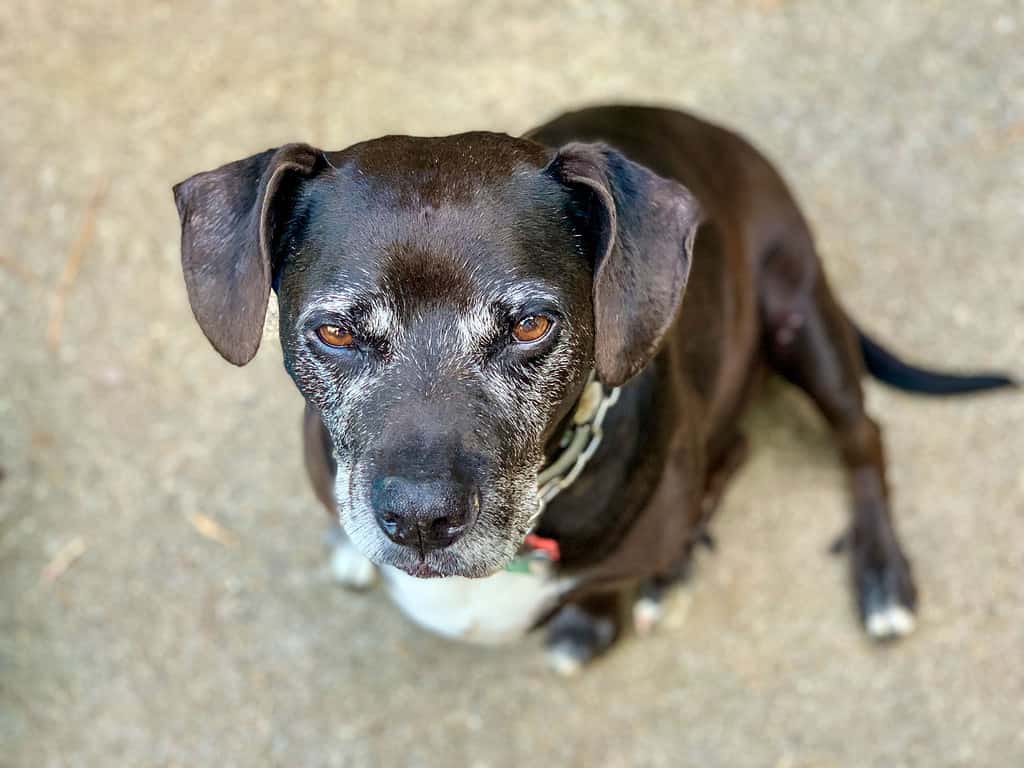
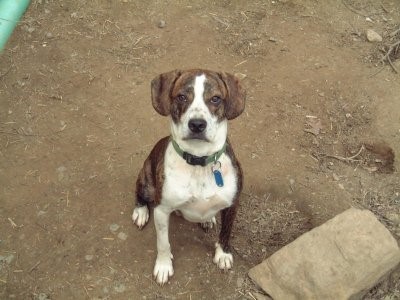
Boggles are medium to large-sized dogs with muscular frames, wide foreheads, and short coats of fur. Most of them share the same floppy ears and copper coats as their beagle parents. You can expect your boggle to weigh somewhere between 20 and 70 pounds, with the males typically weighing more than their female counterparts. Females weigh between 20 and 60 pounds. Most boggles stand somewhere between 23 and 30 inches tall.

Common Health Issues

Like most designer dog breeds, boggles are healthy dogs that don’t experience many health issues. One of the primary concerns that many of these dogs face is a tendency to develop heart problems, especially later in life. Ask your vet to check for a heart condition when you first adopt your puppy; then, have its heart checked again at least once a year. Other common problems include hip and elbow dysplasia, thyroid issues, and epilepsy.

    Temperament
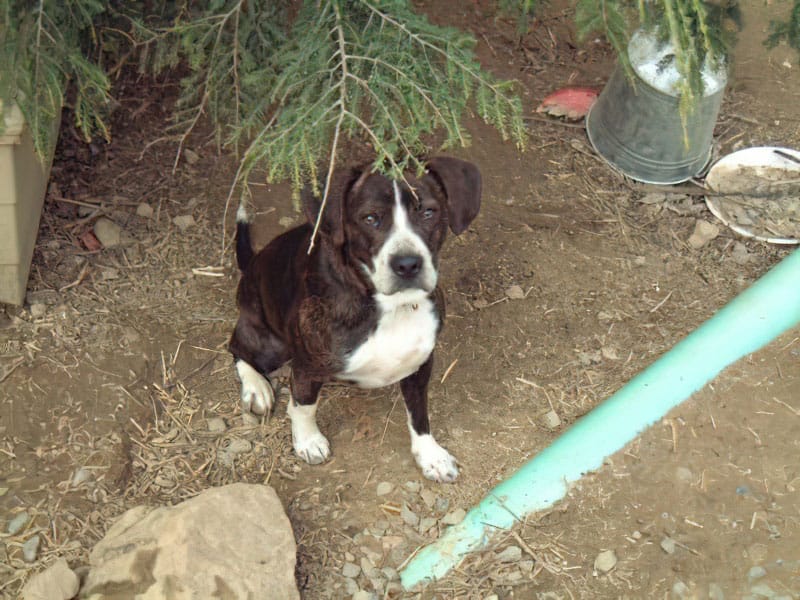
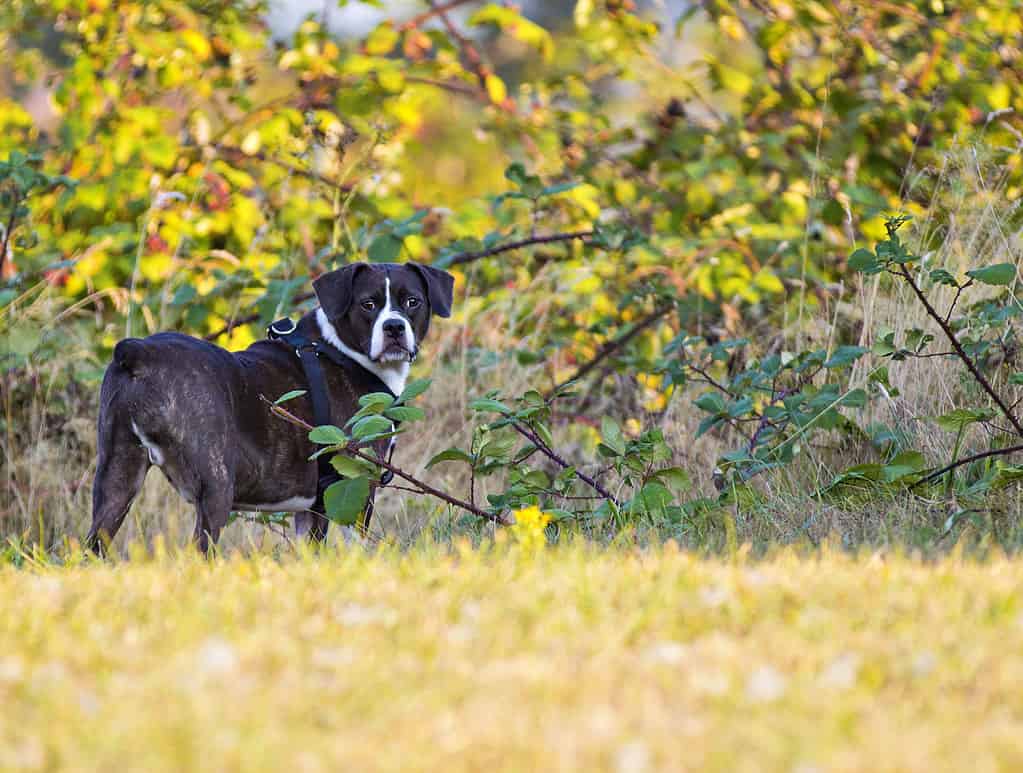
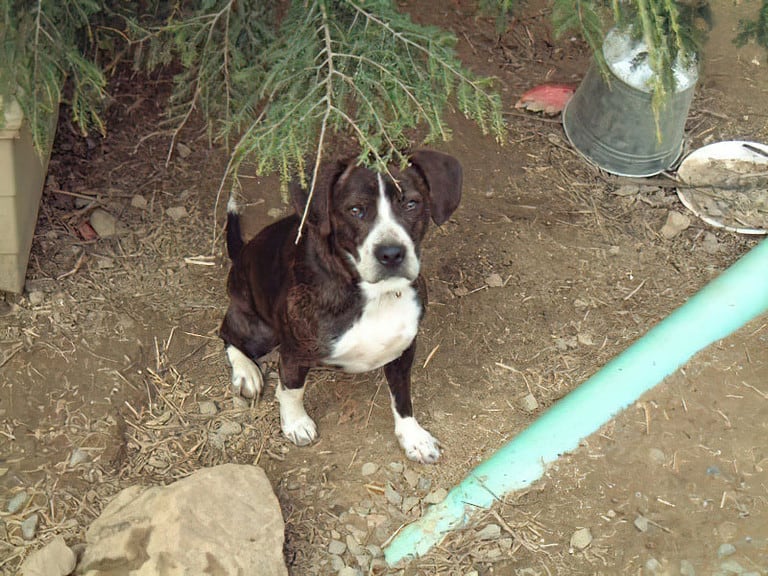
    Boggle sitting outside on the grass. ATTRIBUTION NOT FOUND

    Boggles have sweet, good-natured temperaments, and they are playful, energetic, loyal, and obedient.

    These dogs are playful, energetic, loyal, and obedient. Because of their high-energy nature, these hybrid dogs often have sweet but excitable temperaments that immediately win the hearts of their owners. Every Boggle’s personality is different, but most are attached, slightly stubborn, and generally good-natured. Like their boxer parents, these dogs love their families and don’t like to be transferred between homes if it can be avoided.

    One of the traits that many people notice in their dog is a strong desire to play. If your dog doesn’t burn off its energy, it’ll often engage in destructive behaviors like barking or destroying property. Instead, make sure that these pups have plenty of toys, and remember to spend time with them every day.

    Care

    These dogs are high-energy dogs that need plenty of space and individual attention. However, if you provide your boggle everything it needs, you’ll quickly realize that it is one of the most loving and attached dogs on the market. Taking care of a boggle is all about burning off the energy and watching its health so that it enjoys a lengthy lifespan.

    Best Dog Food

    These dogs burn a lot of energy and need to eat more food than the average dog of their size. Split your boggle’s meals up throughout the day to keep them from getting too hungry. If your dog is too energetic or is gaining weight, you should consider mitigating their portions. In general, feed your boggle a healthy kibble with high protein content. You can also make homemade dog food out of lean meats and vegetables. Remember to check with your vet if you’re having trouble determining how much to feed.

    Boggles are fortunate to not have too many serious health problems most of the time. One thing for Boggle owners to watch out for, however, is that legumes in dog food have been linked to heart failure. Since Boggles can develop heart issues, take some time to compare legume-free dog foods.

    Maintenance and Grooming

    Animal, Canine - Animal, Dog, Horizontal, Nature

    The Boggle dog requires little maintenance other than lots of exercise.

    Boggles are short-haired dogs that require very little maintenance. Bathe your dog every 4 to 6 weeks, and trim its nails at least once a month. You should also inspect your boggle’s ears regularly; if you’re worried about an infection, contact your vet to get a special cleaning solution. Finally, don’t forget to brush your boggle’s teeth to keep them as healthy as possible.

    Training

    These dogs are stubborn with strong personalities. Although they love their owners and want to be obedient, these puppies often need help paying attention and learning new commands. Some breeders work carefully to ensure that their boggles are easy to train; purchase from one of them to make your life easier. Then, start working with your new boggle as soon as possible to cement your relationship. You’ll get the best results with short training sessions, simple commands, and plenty of treats.

    Exercise

    These dogs are high-energy dogs that need a lot of exercise. Start by giving your dog access to a large yard or another space to run around in; these dogs are far too big and boisterous for apartments. Then, supplement your dog’s normal playful behavior with at least one long walk every day. You should also buy your dog toys and play with it regularly to maintain a close relationship. If regular exercise doesn’t seem to reduce your boggle’s energy levels and help curb its destructive behavior, consider mitigating its food portions to reduce calorie intake.

    Puppies

    The puppies are small, playful, and adventurous. Because boggles tend to have static personalities, it’s important to instill good traits and healthy behaviors as quickly as possible. Start training sessions as soon as your dog gets home, and remember to regularly reinforce the behaviors and commands that you want it to know.

    Children

    These are large and energetic dogs that do not get along well with small children. Because they love to play, these dogs may be a good choice for families with older kids or teenagers who want to spend plenty of time outdoors. However, these dogs do not handle social situations well and should not be left unsupervised with kids of any age. Remember to keep an eye on your dog’s behavior, and retire it from a social situation if you notice that it is starting to get tired.

    Similar Dogs

    Most well-adjusted boggles take strongly after their Beagle parents. If you’re looking for something similar, try adopting a different beagle hybrid.

    • Beagador: With all of the lovable traits of a beagle and a black lab combined, beagadors are sweet family dogs that love to spend time with their owners.
    • Beagle Shepherd: Beagle Shepherds have bright eyes, sharp ears, and an enthusiasm for the outdoors that is hard to compete with.
    • Boglen Terrier: With an adorable appearance and a playful personality, the boglen terrier is a sweet dog that fits in great with most families.

    View all 453 animals that start with B

    Sources

    1. K9 Web / Accessed April 26, 2021
    2. 101 Dog Breeds / Accessed April 26, 2021
    3. Doggie Designer / Accessed April 26, 2021
    4. Dog Breed Info / Accessed April 26, 2021
    5. Pet Guide / Accessed April 26, 2021
    6. Pet Keen / Accessed April 26, 2021
    Thank you for reading! Have some feedback for us?


    Boggle FAQs (Frequently Asked Questions)

    A boggle is a designer crossbreed created by mixing a boxer with a beagle. These dogs are also often referred to as bogles or boxels.