




C
Species Profile

Cinnamon Ferret

Mustela putorius furo

Cinnamon ferret: small hunter, big spark
Couperfield/Shutterstock.com

Cinnamon Ferret Distribution

Domesticated Species

Found Worldwide

Size Comparison

Human 5'8"
Cinnamon Ferret 6 in

Cinnamon Ferret stands at 9% of average human height.

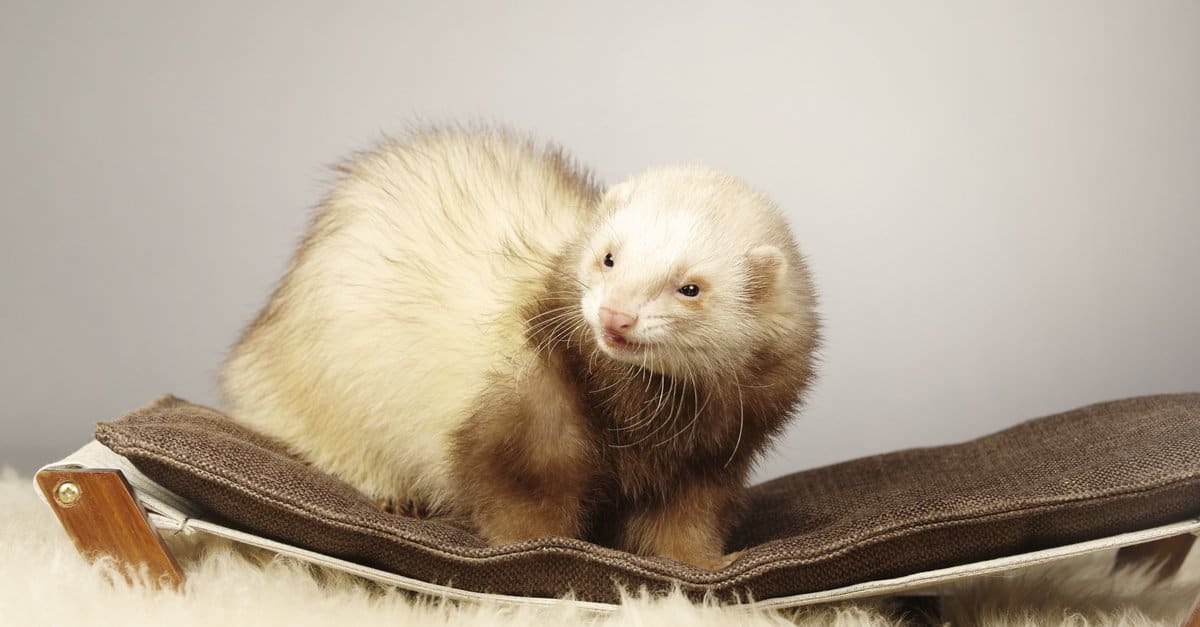
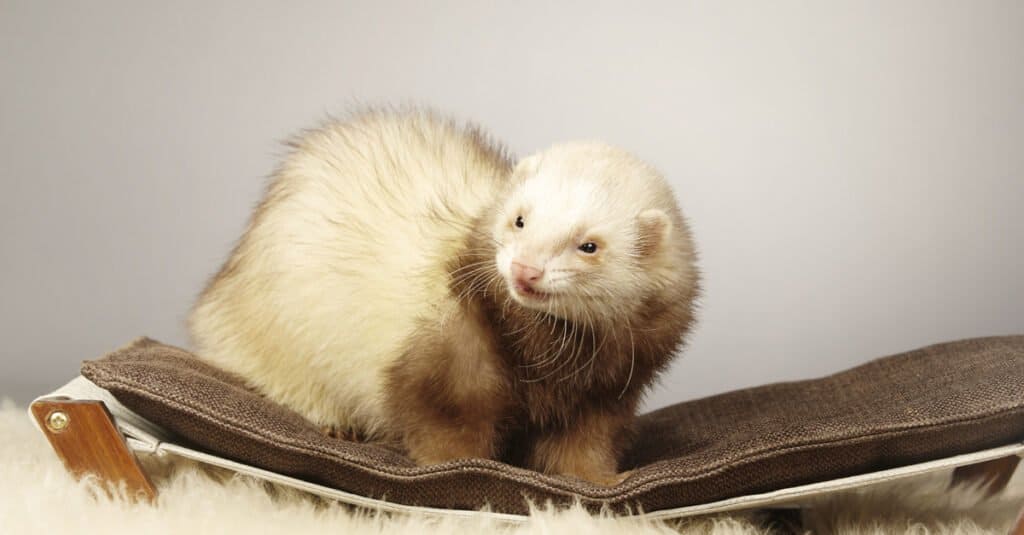
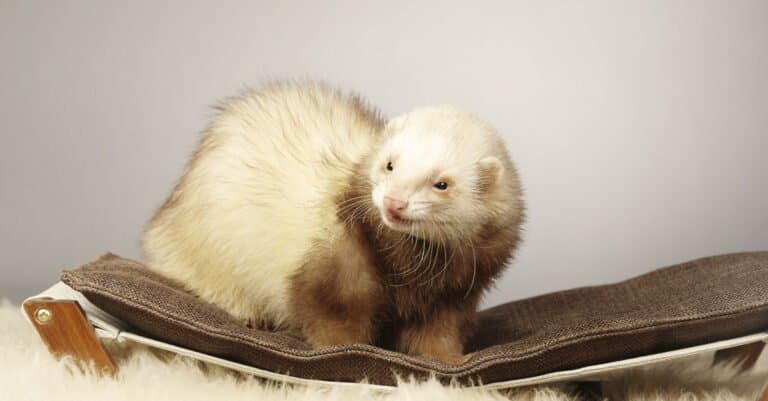
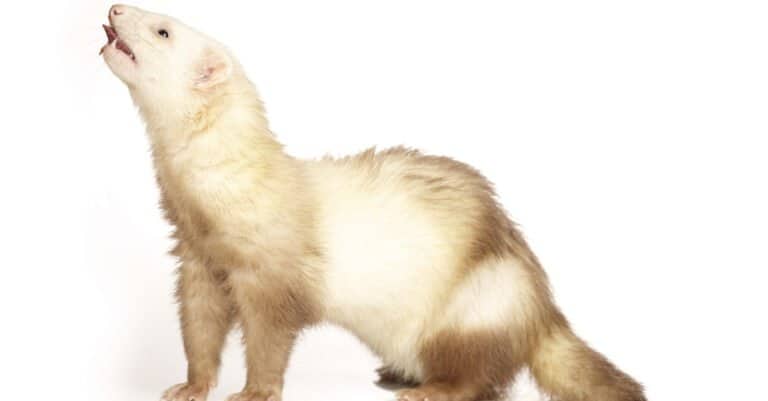
A pet Cinnamon ferret, portrait taken in studio.

At a Glance

Domesticated
Also Known As Ferret, Pet ferret, Domestic polecat, Fitch, Fitchew, House ferret
Diet Carnivore
Activity Cathemeral+
Lifespan 2.5 years
Weight 2 lbs
Status Not Evaluated
Did You Know?

"Cinnamon" is a pet-trade color phenotype (warm reddish-brown guard hairs over a lighter undercoat) of the domestic ferret, not a distinct subspecies or species.

Scientific Classification

The domestic ferret is a domesticated mustelid closely related to (and generally treated as a domesticated form/subspecies of) the European polecat. “Cinnamon” describes a coat-color phenotype used in the pet trade rather than a separate taxonomic unit.

Kingdom
Animalia
Phylum
Chordata
Class
Mammalia
Order
Carnivora
Family
Mustelidae
Genus
Mustela
Species
Mustela putorius

Distinguishing Features

  • Slender, elongated mustelid body with short legs and a long tail
  • Domesticated temperament and wide variety of coat colors/patterns
  • ‘Cinnamon’ typically refers to a warm reddish-brown/tan coat with lighter underfur and often a comparatively lighter mask (terminology can vary by registry)

Physical Measurements

Males and females differ in size

Height
6 in (5 in – 7 in)
Length
1 ft 8 in (1 ft 6 in – 1 ft 11 in)
1 ft 4 in (1 ft 2 in – 1 ft 6 in)
Weight
3 lbs (2 lbs – 4 lbs)
2 lbs (1 lbs – 2 lbs)
Tail Length
4 in (3 in – 5 in)
4 in (3 in – 5 in)
Top Speed
15 mph
About 24 km/h

Appearance

Primary Colors
Secondary Colors
Skin Type Mustela putorius furo has furred skin with a seasonal double coat: coarse guard hairs over a dense undercoat. Ferrets shed and change coat with day length; 'cinnamon' is a color, not a skin type.
Distinctive Features
  • “Cinnamon” is a pet-trade coat-color morph, not a wild subspecies or separate species. It is the domestic ferret (Mustela putorius furo), related to European polecat (Mustela putorius) in Mustelidae.
  • Adult domestic ferrets (Mustela putorius furo) are about 33–46 cm from head to body, tails 12–18 cm, and weigh 0.6–2.5 kg; males are larger.
  • Captive domestic ferrets commonly live about five to ten years; some reach eleven to twelve years with very good care. Older ferrets often have endocrine disease (adrenal-associated endocrinopathy) and neoplasia (tumors).
  • Head/face: elongated mustelid skull with a tapered muzzle; cinnamon morphs often show a faint or diluted facial mask rather than a high-contrast dark mask.
  • Feet/claws: five toes per foot with non-retractile claws adapted for digging and gripping; paw pads typically pale to brownish depending on pigmentation.
  • Scent glands/odor: anal scent glands present (typical mustelid feature) and sebaceous skin oils contribute to a musky odor; coloration does not eliminate scent production.
  • Domestic ferret (Mustela putorius furo) is very curious and playful, doing rapid twists and arches ("weasel war dance"), active at dawn and dusk with naps, stretches and bends into narrow spaces.

Sexual Dimorphism

Domestic ferrets show clear sexual size dimorphism: males are typically longer, heavier, and more robustly built than females; both sexes share the same cinnamon color phenotype when genetically expressed.

  • Typically larger body mass and greater head-neck breadth; more robust musculature and thicker neck/shoulders.
  • Common adult mass often ~1.0-2.5 kg; head-body length often toward the upper end of ~38-46 cm (with individual variation). (Refs: Fox & Marini 2014; Quesenberry & Carpenter 2020.)
  • Can appear 'blockier' in head shape with more prominent cheek/jaw musculature.
  • Typically smaller and more slender, with narrower head/neck and lighter overall build.
  • Common adult mass often ~0.6-1.1 kg; head-body length often ~33-40 cm (with individual variation). (Refs: Fox & Marini 2014; Quesenberry & Carpenter 2020.)
  • Overall silhouette tends to be finer-boned; coat color/pattern expression (cinnamon) is otherwise comparable to males.

Did You Know?

"Cinnamon" is a pet-trade color phenotype (warm reddish-brown guard hairs over a lighter undercoat) of the domestic ferret, not a distinct subspecies or species.

Adults are small mustelids: typical total length ~50-60 cm including a ~10-15 cm tail; males are usually larger than females (Nowak, 1999; Quesenberry & Carpenter, 2012).

Domestic ferrets commonly sleep ~14-18 hours per day, then switch to short, high-energy activity bouts-classic mustelid "burst" behavior (veterinary behavior texts; e.g., Quesenberry & Carpenter, 2012).

They are induced ovulators: if a jill remains in prolonged estrus without mating/ovulation, life-threatening estrogen-associated aplastic anemia can occur (Fox, 1998; Quesenberry & Carpenter, 2012).

Gestation is about 41-42 days, with litters commonly ~3-7 kits (larger litters can occur) (Fox, 1998).

They have 34 teeth (dental formula I 3/3, C 1/1, P 3/3, M 1/2), matching their carnivore-adapted skull and shearing cheek teeth (standard mammalogy references; e.g., Nowak, 1999).

Beyond pets, ferrets are widely used as biomedical models for human respiratory viruses (notably influenza) because their lung physiology and infection patterns are similar to humans (influenza model literature; widely documented).

Unique Adaptations

  • Elongate, flexible body with a narrow chest and highly mobile spine-excellent for moving through burrows and tight spaces (a shared mustelid trait).
  • Well-developed vibrissae (whiskers) and tactile sensitivity to navigate in low light and confined tunnels.
  • Carnivore dentition optimized for gripping and shearing meat; limited grinding surface compared with omnivores.
  • Efficient "burst" locomotion: rapid acceleration and sharp turning for close-quarters pursuit typical of small mustelids.
  • Physiological norms used in veterinary care: body temperature commonly ~37.8-40.0 °C, heart rate often ~200-250 bpm at rest/handling, and respiration commonly ~33-36/min (Quesenberry & Carpenter, 2012; veterinary references).
  • Strong musky scent glands (anal sacs) inherited from polecats; many pet ferrets are surgically descented, but skin oils still carry individual odor signatures.

Interesting Behaviors

  • "Weasel war dance": springing, side-hops, and back-arches during excited play or anticipation.
  • Dooking: a soft chuckling vocalization commonly heard during play, exploration, or social excitement.
  • Tunneling and burrow-seeking: persistent investigation of holes, blankets, and crevices-reflecting polecat ancestry and mustelid denning instincts.
  • Caching/hoarding: carrying and hiding favored objects (toys, socks, food) in a "stash," especially in multi-level enclosures or rooms.
  • Crepuscular flexibility: activity often peaks around dawn/dusk, but domestic schedules can shift with human routine.
  • Social sleep piles: bonded ferrets frequently sleep in contact for warmth and security.
  • Scent-mark investigation: intense sniffing, chin-rubbing, and occasional glandular scent use (reduced in descented pets) to map familiar routes.

Cultural Significance

Mustela putorius furo, the domestic ferret (cinnamon color morph), used to drive rabbits from burrows, became a common pet and key lab animal in flu research. Cinnamon is a modern coat-color name from human breeding, not a landrace.

Myths & Legends

Roman writers told of a small hunter that went into burrows to flush rabbits in Roman Spain. Later European tradition links this practice to ferrets (Mustela putorius furo), Pliny, and medieval stories.

In medieval and early-modern Europe, rural folk told stories about polecats/ferrets (fitchet/fitchew) as silent henhouse thieves, saying one could slip into coops at night and be clever and very smelly.

British ferreting keepers told folk tales about Domestic Ferret (Mustela putorius furo): prized lines of 'good worker' ferrets were traded, said to read warrens and pick the right tunnel, a skill passed down.

In some European homes, a good ratter ferret (Mustela putorius furo), a polecat-like mustelid, was once seen as a useful charm against vermin; barns and granaries were thought safe from pests by its scent.

Old names like "fitchet" or "fitchew" were used for polecat-like animals, mixing domestic ferrets (Mustela putorius furo) and wild polecats in folk tales that blurred pet, pest, and raider roles.

Conservation Status

NE Not Evaluated

Has not yet been evaluated against the criteria.

Population Stable

Life Cycle

Birth 8 kits
Lifespan 3 years

Lifespan

In the Wild
1–5 years
In Captivity
5–11 years

Reproduction

Mating System Polygynandry
Social Structure Managed Domestic
Breeding Pattern Seasonal
Fertilization Internal Fertilization
Birth Type Internal_fertilization

Behavior & Ecology

Social Business Group: 3
Activity Cathemeral, Crepuscular
Diet Carnivore Whole-prey small rodents (e.g., mice)

Temperament

Highly social with familiar conspecifics when properly introduced; can form strong affiliative bonds (co-sleeping, allogrooming).
Playful, exploratory, and persistent; high locomotor/play drive with frequent wrestling/chasing bouts typical of the species.
Neophobic or defensive toward unfamiliar ferrets if introductions are abrupt; hierarchy/spatial negotiation can include nipping and neck-grabbing during play.
Cinnamon coat-color morph is a pigmentation phenotype used in the pet trade; no peer-reviewed evidence indicates consistent temperament or social-behavior differences attributable to the cinnamon morph itself (variation is primarily individual, developmental, and husbandry-dependent).
Sleep is polyphasic; domestic ferrets commonly sleep ~14-18 hours per 24 hours in husbandry reports and laboratory/veterinary summaries, with wake bouts often clustering around dawn/dusk (supporting cathemeral/crepuscular characterization).

Communication

Dooking (soft, staccato clucks) commonly associated with positive arousal/exploration and social play in pet ferrets.
Hissing associated with fear, defensive aggression, pain, or intense arousal.
Screaming/shrieking associated with acute distress, pain, or panic E.g., restraint, injury, severe fright
Whimpering/crying by kits and occasionally adults in distress or when seeking contact.
Chattering/teeth clicking reported in some individuals during high arousal Context-dependent
Olfactory communication via scent marking (urine/feces; sebaceous/skin odors; and anal scent gland secretions). Anal glands are used in intense contexts (fear/startle) and can function in social/territorial signaling; descenting alters this channel but not urine/fecal marking.
Tactile social signaling: nipping/neck-grabbing during play, mutual grooming, and pile-sleeping for affiliation and social cohesion.
Visual/body-language signals: play bows, sideways hopping ("weasel war dance"), arched back/tail piloerection during high arousal, and freezing/avoidance postures during fear.
Spatial behavior: shared nest-site selection and scent-based recognition of familiar group members; conflict reduction often occurs through avoidance and retreat to sleeping areas.
Human-directed communication common in domestication context: pawing, nudging, and following as solicitation for interaction/food Learned/conditioned behaviors

Habitat

Biomes:
Temperate Forest Temperate Grassland Mediterranean Boreal Forest (Taiga) Tundra Alpine Wetland Freshwater Tropical Rainforest Tropical Dry Forest Savanna Desert Hot Desert Cold Temperate Rainforest +8
Elevation: Up to 16404 ft 3 in

Ecological Role

Domesticated mesocarnivore (companion animal); where escaped/feral, functions as a small-mammal and ground-nesting-bird predator.

Rodent suppression in human-associated environments (when used for pest control) Trophic regulation of small vertebrates in feral contexts Potential negative impact on native wildlife (predation on small mammals, birds, and eggs)

Diet Details

Main Prey:
Rodents Lagomorphs Small birds Bird eggs

Human Interaction

Domestication Status

Domesticated

Domestic ferret (Mustela putorius furo), a subspecies of the European polecat, was domesticated in Europe/Mediterranean ≥2,000 years ago for rabbit hunting, pest control, pets, and labs. The cinnamon morph is a coat-color variant, not a separate species. Adults ~0.4–2.7 kg, 33–50 cm body, live ~5–10 years. Roles: pet, worker, lab model, invasive, regulated.

Danger Level

Moderate
  • Bites and lacerations: domestic ferrets can bite, especially if poorly socialized, mishandled, or during fear/pain; bites can be serious in infants/young children due to small-body targeting and strong canine grip.
  • Zoonotic/communicable disease considerations: ferrets are susceptible to and can transmit some human respiratory viruses (notably influenza A) via close contact; reverse-zoonosis (human-to-ferret) and ferret-to-human transmission are both documented in the influenza literature (basis for their use as an influenza model).
  • Rabies exposure management: rabies in pet ferrets is rare in many regions but treated as a serious potential exposure; vaccination is recommended/required in some jurisdictions and post-bite protocols may be mandated by public health authorities.
  • Allergy/asthma triggers: dander/saliva can provoke allergic reactions in sensitized individuals.
  • Scratches and secondary infection risk: minor trauma can lead to bacterial infection (standard pet-associated wound care concerns).

As a Pet

Suitable as Pet

Legality: In the U.S. ferrets are legal in most states but banned or restricted in Hawaii and California; some cities, landlords/HOAs may forbid. Outside the U.S. rules vary: some require microchipping, others ban on islands. Check local laws before getting one.

Care Level: Moderate

Purchase Cost: $50 - $400
Lifetime Cost: $5,000 - $15,000

Economic Value

Uses:
Companion animal/pet industry Veterinary services (exotics) Biomedical research model organism Working animal (historical/present rabbiting and pest control) Education/outreach (animal ambassadors) Biosecurity and invasive-species management (costs and control programs where feral populations occur)
Products:
  • sale/adoption of pet ferrets (including color morph trade such as cinnamon)
  • caging/enrichment products (multi-level cages, tunnels, toys)
  • commercial diets and supplements
  • spay/neuter and endocrine-related veterinary care services (e.g., adrenal disease management)
  • vaccinations and parasite control products used in ferrets (where licensed/appropriate)
  • research animal supply and associated laboratory husbandry services (notably for influenza/respiratory-virus studies)
  • hunting/working services and equipment in regions where ferreting is practiced

Relationships

Related Species 8

European polecat
European polecat Mustela putorius Shared Species
Steppe polecat
Steppe polecat Mustela eversmanii Shared Genus
Black-footed ferret
Black-footed ferret Mustela nigripes Shared Genus
Stoat
Stoat Mustela erminea Shared Genus
Least weasel Mustela nivalis Shared Genus
European mink Mustela lutreola Shared Genus
American marten Martes americana Shared Family
European badger Meles meles Shared Family

Ecological Equivalents 5

Animals that fill a similar ecological role in their ecosystem

“The average heart rate of a cinnamon ferret is 225 beats a minute”

A cinnamon ferret gets its name from the brownish/red colors of its fur. Despite being popular as pets, the cinnamon ferret is a rare find in a pet shop. These slender mammals grow to a length of 12 to 16 inches. They have a lifespan of 7 to 10 years.

5 Cinnamon Ferret Facts

  • It requires a carnivore diet and eats several times each day
  • This animal sleeps up to 20 hours each day
  • It shares a similar appearance with the cinnamon panda ferret
  • This animal has a lifespan extending up to ten years
  • It is usually higher in cost because its coloration is so rare

Cinnamon Ferret Scientific Name

Mustela furo is the scientific name of domesticated ferrets. The cinnamon ferret is one of several domesticated ferrets named for the colors of its coat. Mustela is a Latin word meaning mouse and the word furo translates to a thief. Mouse thief refers to this animal’s habit of hunting small rodents.

This pet ferret belongs to the Mustelidae family and the class Mammalia.

Other domesticated ferrets known by their colors include:

  • Cinnamon panda ferret
  • Dark-eyed white ferret
  • Dalmatian
  • Roan
  • Champagne ferret
  • Pewter

Cinnamon Ferret Appearance & Behavior

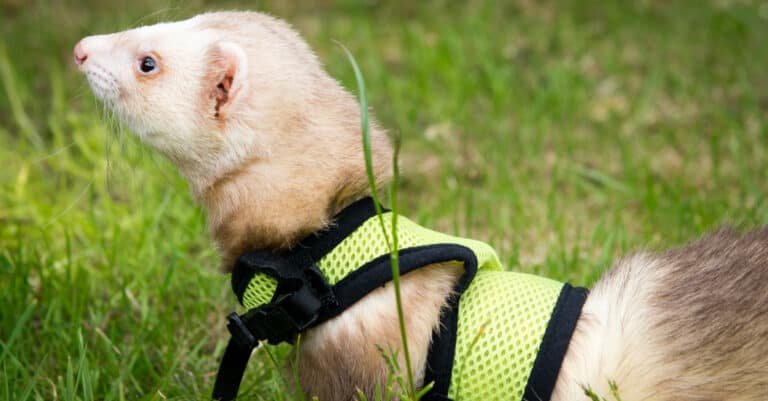
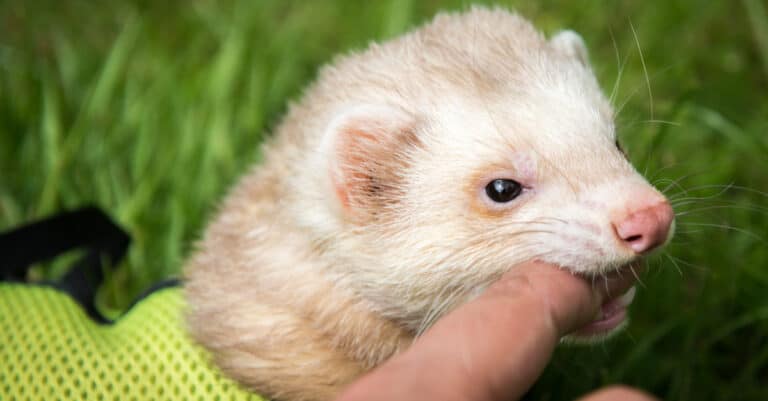
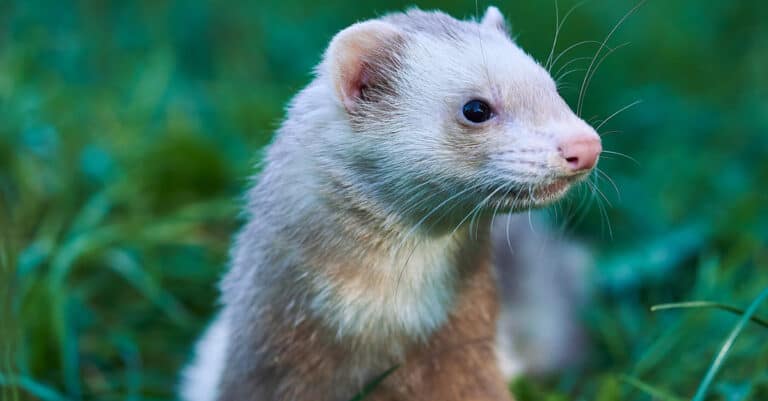
This pet ferret has a fur coat with a combination of colors including reddish/brown and white or cream. It has a small pink nose, whiskers, rounded ears, and brown eyes. They are well-known for their long, fluffy tails.

These ferrets weigh two to five pounds. However, the heaviest type of ferret is the bulldog ferret at up to four pounds. Cinnamon ferrets measure twelve to sixteen inches in size. Picture seven and a half golf tees lined up end to end on the ground and you’re looking at the length of a sixteen-inch cinnamon ferret.

A cinnamon panda ferret has fur colors very similar to the cinnamon ferret, but with dark circles around its eyes and more white fur on its head.

A champagne ferret also shares some color similarities with a cinnamon ferret. A champagne ferret has a combination of light brown and cream-colored fur. In fact, some ferret enthusiasts believe the cinnamon ferret is really just a champagne ferret with a few color variations. However, take a close look and you’ll find the fur of a cinnamon ferret definitely has a reddish tone. This is a subtle difference, but helpful in proper identification.

Weasels look a lot like ferrets and belong to the same family. But there are differences between these two mammals that make identification easy. For one, weasels are much smaller in size. Weasels can be six to eight and a half inches long and weigh around seven ounces. Also, weasels have longer tails than ferrets.

Ferrets are fast and can wiggle into narrow spaces. These are two solid defenses it has against owls, coyotes, and other predators in the wild. They also have sharp teeth to defend themselves.

Cinnamon ferrets are social animals. A large group of ferrets is called a business. Anyone interested in a pet ferret may want to consider buying a pair of them or even more than two. One ferret can get lonely even if it gets a lot of attention from its owner. It’s best to have a male ferret neutered before putting it into an enclosure with a female. This prevents the addition of baby ferrets!

Cinnamon ferrets are playful and social with people as well as other ferrets. While they are usually friendly, even a cute ferret can become aggressive when threatened by the family dog or cat. They have sharp teeth that can injure other pets in a household. Also, keep in mind wild ferrets hunt mice and other small rodents. This is a natural instinct for a pet ferret as well. So, it’s best to keep gerbils and other small pets away from a pet ferret.

Though they are not nocturnal, cinnamon ferrets are active in the evening and early morning. This means they are diurnal animals. Ferrets monitor their surroundings in the semi-dark using their excellent peripheral vision. Peripheral vision is essential in helping wild ferrets stay alert to predators in their habitat.
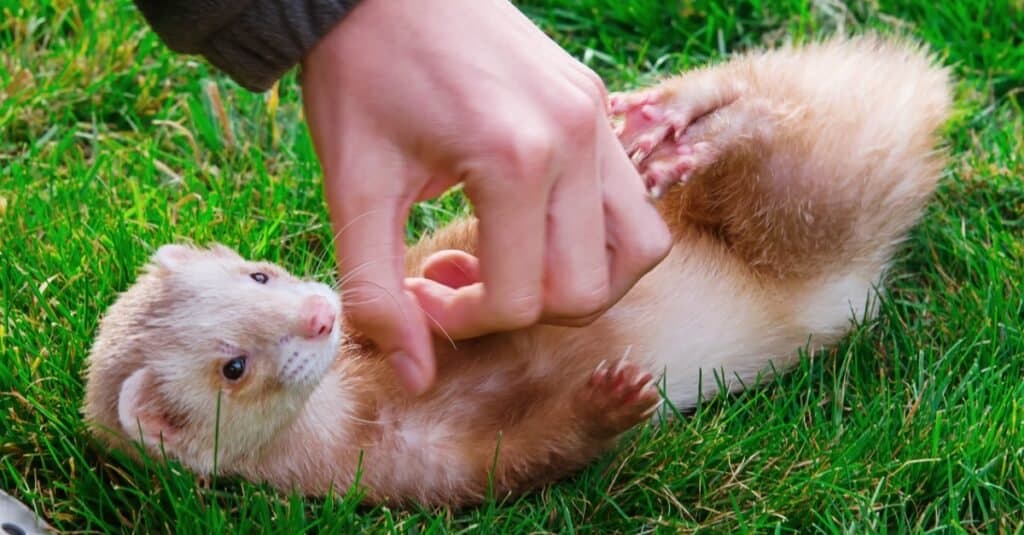
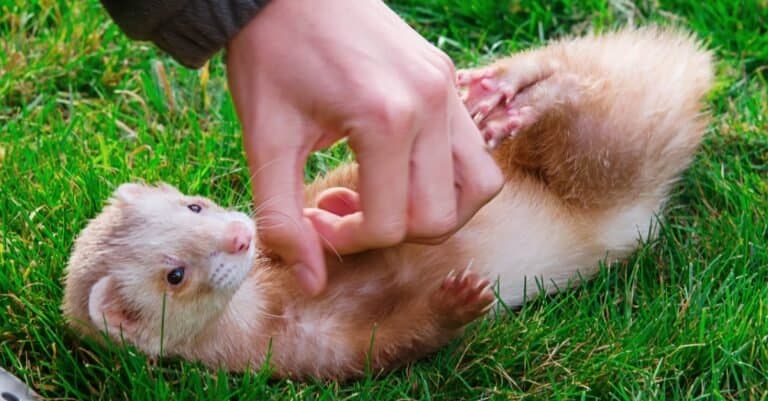
Man playing with a pet Cinnamon Ferret outside on the grass.

Man playing with a pet Cinnamon Ferret outside on the grass.

Cinnamon Ferret Habitat

Domesticated ferrets like the cinnamon ferret are commonly kept as pets in the United States.

Wild ferrets like the black-footed ferret live in a semi-arid climate in the western central section of North America. Their range stretches from Canada into the U.S.

Wild ferrets live in a grassland, plains, or scrubland habitat. They don’t migrate.

Wild ferrets live in underground tunnels, so don’t be surprised if you see your pet ferret digging and burrowing. Anyone with a pet ferret or two should certainly supply them with toy tunnels and plenty of bedding to dig in and throw around.

Cinnamon Ferret Predators and Threats

All ferrets are carnivores. They have a short digestive tract and need to eat several times a day to stay healthy.

What does a cinnamon ferret eat?

A pet ferret eats food containing animal protein and fat. Some pet owners feed them a diet featuring lean meats and eggs. Fortunately, there are quality foods designed to fulfill the nutritional needs of pet ferrets. These are available at pet shops and online.

Wild ferrets capture mice, rabbits, and other rodents. They also have bird eggs in their diet. Wild ferrets are very fast and strong so capturing a rabbit or mouse is not a big challenge.

What eats cinnamon ferrets?

Well, if someone is caring for a pet cinnamon ferret hopefully this never becomes a concern! However, it’s a good idea to keep a pet ferret away from large dogs or cats that may mistake it for prey.

Some of the predators of wild ferrets include coyotes, hawks, and owls. These animals are all active at about the same time as wild ferrets, making them vulnerable to attack.

While pet ferrets are common in the United States, the black-footed ferret is listed as Endangered with a decreasing population. This is linked to a decreasing population of prairie dogs. Prairie dogs are part of the diet of wild ferrets. Unfortunately, these prairie dogs are routinely killed as pests by farmers. So, a decrease in prairie dogs has led to a falling population of black-footed ferrets.

Cinnamon Ferret Reproduction and Life Cycle

The mating season of ferrets happens from March to August. Female ferrets have an average of two litters each year. After mating, the male leaves the care of the young to the female. The gestation period for this mammal is 42 days. The female gives live birth to three to seven babies. One of the most intriguing facts about this animal is its babies are born without hair as well as blind, and deaf. They nurse for at least the first three weeks of life.

At four to five weeks old, the ferret babies also called kits, open their eyes and ears. They are on their way to having a full coat of fur like an adult ferret. Kits are weaned somewhere between three and six weeks of age. They are able to live independently at six weeks old.

A young ferret in the wild eats mice, rabbits, moles, and other small rodents. Alternatively, a pet like a cinnamon ferret can eat commercial ferret food that contains all of the vitamins, calcium, and other nutrients it needs to stay healthy.

Like other pet ferrets, cinnamon ferrets are prone to various dental diseases as well as ferret lymphoma, a form of cancer. They can also develop blockages in their digestive system. Fortunately, there are small animal veterinarians who are knowledgeable about ferrets and their health issues.

Cinnamon ferrets have a lifespan of seven to ten years.

Cinnamon Ferret Population

These ferrets are rare, and their exact population is unknown. If you walk into a local pet shop in search of a cute ferret with cinnamon fur, you probably won’t find one. A ferret breeder is more likely to have cinnamon ferrets available. Keep in mind cinnamon ferrets are usually sold at a higher cost simply because they are so rare.

View all 395 animals that start with C

Sources

  1. Vet Tech Prep / Accessed February 7, 2022
  2. SumoPet / Accessed February 7, 2022
  3. Quick Pet Guide / Accessed February 7, 2022
  4. Wikipedia / Accessed February 7, 2022
  5. Ferret-World / Accessed February 7, 2022
  6. Pet MD / Accessed February 7, 2022
  7. Beyond The Threat / Accessed February 7, 2022

Thank you for reading! Have some feedback for us?


Cinnamon Ferret FAQs (Frequently Asked Questions)

This cute ferret with cinnamon-colored fur is a carnivore. Their digestive system would not tolerate vegetables.